Table of Contents
The landscape of deer hunting continues to evolve, and savvy hunters understand that strategic decoy placement can transform an ordinary hunt into an extraordinary one. As we look toward the 2026 season, advanced materials, hyper-realistic detailing, and innovative motion systems are setting new standards for what constitutes an effective deer decoy. Whether you’re pursuing whitetails in the Midwest or mule deer in the West, understanding the features that separate exceptional decoys from mediocre ones will directly impact your success rate.
Selecting the right deer decoy involves far more than choosing between a buck or doe silhouette. Modern hunting experts evaluate decoys based on durability, anatomical accuracy, setup efficiency, and how well they perform under real-world conditions. This comprehensive guide breaks down the essential characteristics that define top-rated decoys in 2026, helping you make an informed decision without getting lost in marketing hype. We’ll explore material innovations, realistic motion features, portability considerations, and strategic deployment tactics that the most successful hunters employ.
Top 10 Deer Decoys
Detailed Product Reviews
1. Flambeau Outdoors 5965MS Boss Buck - Masters Series Deer Decoy
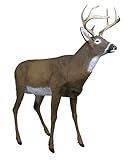
Overview: The Flambeau Boss Buck is a premium 3D deer decoy engineered for serious whitetail hunters. Constructed from durable blow-molded HDPE plastic, this 60-inch decoy replicates a large mature buck with anatomically correct posture and impressive 8-point antlers. The collapsible design allows legs to store inside the body cavity, making it surprisingly portable despite its substantial size. During peak rut, this decoy triggers territorial responses from dominant bucks seeking to challenge intruders.
What Makes It Stand Out: The ultra-realistic detailing sets this decoy apart, from precise muscle definition to natural head positioning. The heavy-duty threaded leg posts with locking lugs ensure stability in windy conditions, while the blaze orange carry sling facilitates safe transport. Unlike flimsy alternatives, the HDPE construction withstands harsh field conditions season after season.
Value for Money: Positioned at the premium end of the market, the Boss Buck justifies its price through exceptional durability and proven effectiveness. While cheaper foam or inflatable options exist, they lack the structural integrity and realistic presence that consistently produces results. This one-time investment eliminates the need for annual replacements.
Strengths and Weaknesses: Strengths include unmatched realism, rugged durability, collapsible portability, and rut-season effectiveness. Weaknesses involve considerable weight (around 20 lbs), assembly time in the field, and storage space requirements. The price point may deter casual hunters.
Bottom Line: For dedicated hunters seeking a reliable, high-performance decoy that delivers results year after year, the Boss Buck is an excellent investment worth every dollar.
2. Flambeau Outdoors 5965MD Boss Babe - Masters Series Deer Decoy

Overview: The Flambeau Boss Babe provides hunters with a meticulously crafted doe decoy that capitalizes on buck curiosity during the rut. This 41-inch decoy mimics a 1.5-year-old doe using the same durable HDPE construction as its buck counterpart. The anatomically correct posture and lifelike proportions trigger investigative behavior from bucks of all maturity levels. Its collapsible leg system stores components within the body cavity, streamlining transport through dense terrain.
What Makes It Stand Out: Versatility defines this decoy, featuring interchangeable submissive and alert ear sets to match different hunting scenarios. The integrated scent pad peg on the rear leg allows hunters to apply doe-in-estrus attractants, creating a multi-sensory illusion that proves irresistible to rutting bucks. The true-to-life size strikes a perfect balance between visibility and realism.
Value for Money: Sharing the premium price tier with other Masters Series decoys, the Boss Babe delivers specialized performance that justifies the cost. Its ability to draw bucks from long distances reduces hunting time and increases opportunity. Compared to generic doe decoys, the anatomical accuracy and feature set provide measurable advantages.
Strengths and Weaknesses: Strengths include dual ear configurations, scent attachment capability, durable construction, and proven rut effectiveness. Weaknesses include the premium price, assembly requirements, and moderate weight. The smaller profile may be less visible in open terrain compared to larger buck decoys.
Bottom Line: An exceptional tool for rut-focused hunters, the Boss Babe excels at attracting bucks through visual and olfactory cues, making it a worthwhile addition to any serious hunter’s arsenal.
3. MONTANA DECOY 23 Dreamy Doe Whitetail Decoy, Brown

Overview: The Montana Decoy Dreamy Doe revolutionizes portable deer decoying with its patented folding design and photo-realistic imagery. Unlike bulky 3D alternatives, this decoy utilizes actual deer photography printed on lightweight fabric, creating stunning visual authenticity from a distance. Weighing mere ounces and folding to briefcase size, it caters to mobile hunters who prioritize speed and stealth. Setup takes seconds, allowing rapid deployment when opportunities arise.
What Makes It Stand Out: The groundbreaking portability cannot be overstated—this decoy disappears into a daypack without adding significant weight. The photographic realism surpasses painted surfaces, capturing natural hide patterns and subtle color variations that fool even wary bucks. The folding mechanism is intuitive and durable, withstanding repeated use without degradation.
Value for Money: Positioned as a budget-friendly alternative to 3D decoys, the Dreamy Doe offers exceptional value for hunters covering large territories. While it lacks dimensional depth, the cost savings and mobility benefits outweigh this limitation for many hunting styles. It’s an ideal entry point for decoy-curious hunters.
Strengths and Weaknesses: Strengths include extreme lightweight portability, rapid deployment, photographic realism, and affordability. Weaknesses involve 2D limitations at close range, vulnerability to strong winds without proper staking, and potential fabric shine in direct sunlight. Durability is lower than rigid plastic options.
Bottom Line: Perfect for spot-and-stalk hunters or those prioritizing mobility over absolute realism, the Dreamy Doe delivers impressive performance at an unbeatable weight and price point.
4. TCDesignerProducts Whitetail Buck Flat Silhouette Decoy, Realistic Deer Hunting Decoy, Lightweight Weatherproof Design, Motion-Activated for Rut Season, Scouting, Land Management & Education

Overview: The TCDesignerProducts Whitetail Buck Silhouette decoy offers a pragmatic 2D solution for hunters seeking visual impact without bulk. This 40x46-inch decoy features photo-quality buck images printed on both sides of weatherproof corrugated plastic, complete with UV coating to minimize glare. The single-stake design enables natural wind-induced movement, adding lifelike motion to the static image. Its flat profile stores effortlessly in vehicles, eliminating transport headaches.
What Makes It Stand Out: The motion-activated design sets this decoy apart, creating subtle movement that catches deer attention without spooking them. The dual-sided printing ensures visibility from multiple approaches, while the UV-resistant coating maintains image integrity through seasons of sun exposure. The corrugated plastic construction balances durability with light weight.
Value for Money: This mid-priced decoy delivers excellent value for hunters needing multiple units or those with limited storage space. While less expensive than 3D options, it maintains essential functionality. The all-weather construction eliminates replacement costs associated with fabric decoys, making it a smart long-term investment for field-edge hunting.
Strengths and Weaknesses: Strengths include wind-activated movement, weatherproof durability, compact storage, and dual-sided visibility. Weaknesses involve obvious 2D appearance at close range, dependence on wind for optimal effect, and less convincing realism compared to sculpted decoys. The stake system requires firm soil.
Bottom Line: A reliable, cost-effective choice for hunters focusing on field edges or food plots where distance viewing favors silhouette impact over dimensional detail.
5. Flambeau Outdoors 5965SB Scrapper Buck - Masters Series Deer Decoy

Overview: The Flambeau Scrapper Buck Masters Series decoy targets mature bucks through psychological manipulation rather than intimidation. Replicating a 2.5-year-old buck’s curious, non-threatening posture, this decoy provokes territorial aggression from dominant whitetails without scaring them off. Award-winning sculptor Chris Schiller’s carving ensures anatomical precision throughout. The complete nesting design stores legs, head, ears, and antlers inside the body, packing into an included blaze orange bag for streamlined transport.
What Makes It Stand Out: The aggressive-youth posture uniquely triggers dominant buck responses by presenting a manageable challenger rather than an overwhelming rival. This strategic design difference from mature buck decoys reduces intimidation while maximizing curiosity. The comprehensive nesting system achieves unparalleled portability for a 3D decoy, making it ideal for deep-woods hunts where gear weight matters significantly.
Value for Money: As a premium specialized tool, the Scrapper Buck commands a higher price but delivers targeted results that general-purpose decoys cannot match. For hunters specifically pursuing trophy-class bucks, the investment pays dividends through increased aggressive responses. It eliminates the need for multiple decoy types.
Strengths and Weaknesses: Strengths include unique psychological design, award-winning sculpting, complete portability, and rut effectiveness on mature bucks. Weaknesses include premium pricing, limited effectiveness on young deer, and assembly time. The specialized nature may not suit all hunting scenarios.
Bottom Line: An outstanding specialized decoy for trophy hunters who understand mature buck behavior and want a proven tool to exploit territorial instincts.
6. Flambeau Outdoors 5967GD Masters Series Grazing Doe Deer Decoy

Overview: The Flambeau Outdoors 5967GD Masters Series Grazing Doe represents premium full-body decoy craftsmanship. At 41 inches nose-to-tail with true-to-life 33-inch shoulder height, this decoy creates an authentic calming presence that convinces even mature trophy bucks to lower their guard. The grazing posture specifically communicates contentment and safety, while the collapsible leg design stores conveniently in the body cavity for transport.
What Makes It Stand Out: Opposable ears and intricate hair detailing provide unmatched realism at close range. The heavy-duty threaded leg posts with locking lugs ensure stability in windy conditions without wobbling. The Made-in-USA construction uses durable polymers that withstand years of field abuse. The paint scheme captures subtle color variations and shadows that flat decoys simply cannot replicate.
Value for Money: Positioned at the higher end, this decoy justifies its cost through multi-season durability and proven effectiveness. Unlike 2D silhouettes, the 3D design provides visual depth from any angle, crucial when deer circle downwind. The collapsible feature essentially provides two products: a rigid hunting tool and a packable storage configuration that protects components.
Strengths and Weaknesses: Strengths include exceptional realism, robust construction, stable deployment, and excellent paint adhesion. The removable leg system genuinely simplifies transport. Weaknesses include significant weight compared to flat decoys, requiring separate stake purchase for high winds, and longer setup time. The 11-inch width demands substantial pack space.
Bottom Line: For dedicated whitetail hunters prioritizing absolute realism over minimalist weight, this decoy delivers consistent rut success. The investment proves worthwhile when trophy encounters hinge on convincing detail.
7. TCDesignerProducts Whitetail Doe Flat Silhouette Decoy, Realistic Deer Hunting Decoy with Motion, Photo Finish & Easy Setup for Rut Season, Landowners, Educators, Youth Programs & Wildlife Events

Overview: The TCDesignerProducts Whitetail Doe Flat Silhouette Decoy offers practical mobility without sacrificing visual impact. Measuring 34 inches high by 45 inches wide, this life-size decoy deploys in minutes using included 45-inch wires and pushnut retainers. The single-stake design harnesses wind to create subtle, natural movement that static decoys lack, mimicking a live deer’s relaxed posture.
What Makes It Stand Out: The double-sided photo finish with UV coating provides realistic visuals from any direction, eliminating one-sided limitations common in budget silhouettes. Corrugated plastic construction withstands rain, snow, and sun while remaining exceptionally lightweight. The motion-activated design requires no batteries or complex mechanics—breeze alone creates convincing animation.
Value for Money: This decoy dominates the budget segment, delivering 80% of premium decoy effectiveness at a fraction of the cost. The included hardware and weather-resistant build mean zero hidden expenses. Hunters can deploy multiple units for the price of one 3D decoy, creating convincing spreads that attract bucks from various approach angles.
Strengths and Weaknesses: Strengths include exceptional portability, rapid deployment, dual-sided printing, and wind-powered motion. The material handles seasons of abuse. Weaknesses include reduced realism at close range, wind dependency for motion, and instability in gusty conditions without extra anchoring. The flat profile requires precise positioning relative to expected deer trails.
Bottom Line: Ideal for mobile hunters or those new to decoying. Combine with quality calls and scent control for a highly effective, budget-conscious rut strategy that won’t burden your pack.
8. Primos Hunting unisex adult The Original CAN Deer Estrus Bleat Call from Primos, Green, One Size US

Overview: The Primos Original CAN Deer Estrus Bleat Call has earned legendary status among deer hunters for reliably simulating receptive doe vocalizations. This compact mechanical call produces the distinctive breeding bleat that triggers instinctive responses in mature bucks during peak rut. The raised thumb hole locator ensures consistent hand placement, creating repeatable sound quality that doesn’t degrade over time.
What Makes It Stand Out: Its proven track record spans decades, with countless hunters crediting it for their trophy success. The foolproof thumb hole design eliminates the steep learning curve of mouth-blown calls. Unlike electronic alternatives, it requires no batteries and operates silently in your pocket until the critical moment, then delivers instant, authentic sound.
Value for Money: At an entry-level price, this call delivers arguably the highest ROI in deer hunting gear. It consistently converts sightings into shot opportunities for less than the cost of a box of broadheads. While decoy setups cost hundreds, this sub-$15 tool reliably pulls bucks into range with minimal investment and zero maintenance.
Strengths and Weaknesses: Strengths include bulletproof reliability, instant deployment, proven effectiveness, and simple operation. The mechanical design functions in any weather. Weaknesses include single-sound limitation, requiring practice for proper timing, and potential inconsistency in extreme cold. The plastic housing can crack if dropped on hard surfaces.
Bottom Line: Every serious deer hunter should own this call. While not a visual decoy replacement, it’s the most reliable audio trigger available. Pair with scent lures for maximum rut effectiveness.
9. Montana Decoy 0053: Trixie Whitetail Doe Decoy
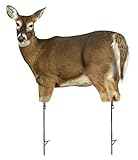
Overview: The Montana Decoy 0053 Trixie Whitetail Doe Decoy bridges the gap between bulky 3D models and basic silhouettes. This two-dimensional decoy uses advanced printing technology to achieve photographic realism that fools both bucks and does at typical hunting distances. The removable teaser tails add critical motion that static decoys lack, creating dynamic presentation without mechanical complexity or wind dependency.
What Makes It Stand Out: The print quality captures subtle color gradients, muscle shading, and hair patterns that rival actual photographs. The calming pose reduces alarm in approaching deer, while the dual teaser tails flutter convincingly in light breeze. Montana’s field-tested design includes reinforced grommets and lightweight polyester fabric that withstands seasons of folding and deployment.
Value for Money: Mid-priced yet high-performing, Trixie offers exceptional value for hunters wanting realism without weight penalty. You save 60-70% over 3D decoys while sacrificing minimal effectiveness. The compact folded size fits any daypack, and durability ensures multiple seasons of reliable service.
Strengths and Weaknesses: Strengths include outstanding print realism, effective teaser tail motion, true one-pound portability, and sub-two-minute setup. The decoy folds flat for transport. Weaknesses include potential tail tangling in thick brush, reduced effectiveness in zero-wind conditions, and 2D limitations at extremely close range. The stake system requires firm soil for stability.
Bottom Line: An excellent primary decoy for mobile hunters or perfect secondary decoy for fixed stands. Trixie consistently draws deer within bow range when positioned with attention to wind and cover.
10. Montana Decoy 0069: Deer Rump

Overview: The Montana Decoy 0069 Deer Rump takes an unconventional minimalist approach, displaying only the hindquarters—a view deer frequently see in natural settings. This ultra-compact decoy exploits deer psychology by providing just enough visual cue to pique curiosity without overwhelming the scene. Weighing mere ounces and folding to pocket size, it solves transport issues while offering unique tactical applications in dense cover.
What Makes It Stand Out: Its radical simplicity is its genius. The rear-only view actually enhances realism in thick vegetation where full-body decoys appear unnatural. Montana’s proven print quality ensures authentic rump patterns visible from 20 to 200 yards. It stakes into the ground in seconds, allowing hunters to adjust setups on the fly without committing to full decoy weight.
Value for Money: As the most affordable premium decoy, it delivers specialized value as a confidence booster or backup option. Hunters can carry it effortlessly as a tactical tool for tight timber or run-and-gun scenarios. It’s not a primary attractant but excels where space and weight are critical constraints.
Strengths and Weaknesses: Strengths include ultimate portability, lightning-fast deployment, effectiveness in thick cover, and unbeatable price. It fits anywhere in your gear. Weaknesses include extremely limited visibility angle, minimal realism in open fields, and niche application. It won’t attract deer from distance like full-body models and requires careful positioning. The small profile can disappear in tall grass.
Bottom Line: Consider this a specialized tactical tool rather than primary decoy. Perfect for tight setups, mobile hunting, or as confidence decoy near existing spreads. Worth the minimal investment for its unique capabilities.
Understanding Modern Deer Decoy Categories
Today’s market offers several distinct types of decoys, each engineered for specific hunting scenarios. Recognizing these categories helps narrow your options based on your typical hunting style and terrain.
Full-Body Realistic Decoys
Full-body decoys represent the gold standard for visual authenticity. These three-dimensional models capture every anatomical detail from muscle structure to hair texture. Top-rated versions in 2026 feature advanced polymer blends that maintain their shape in extreme temperatures while remaining lightweight enough for backcountry hunts. The most effective designs include subtle posture variations that communicate different behavioral states to approaching deer.
Silhouette Decoys for Mobility
When covering large properties or hunting public land where portability is paramount, silhouette decoys offer compelling advantages. Modern silhouettes have evolved far beyond simple cardboard cutouts. Leading designs incorporate photographic layering techniques and UV-reflective coatings that create depth perception in various lighting conditions. Their flat profile allows hunters to carry multiple decoys without excessive weight burden.
Inflatable and Collapsible Options
For the run-and-gun hunter covering vast terrain, inflatable and collapsible decoys provide an unbeatable combination of realism and packability. 2026’s top-tier inflatables utilize reinforced seams and dual-layer construction that prevents the balloon-like appearance of older models. When deflated, these decoys compress to the size of a sleeping bag while maintaining anatomically correct proportions when deployed.
Critical Material and Construction Features
The longevity and effectiveness of any deer decoy directly correlate with its material composition and build quality. Understanding these technical aspects prevents costly replacements mid-season.
UV-Resistant Outer Coatings
Premium decoys now incorporate military-grade UV inhibitors that prevent fading and maintain color integrity through multiple seasons. This technology ensures the reddish-brown tones of a summer coat don’t bleach to unnatural orange hues by late season. The best coatings also provide a subtle sheen that mimics natural hair oils rather than creating an artificial gloss.
Structural Integrity in Extreme Weather
Top-rated decoys must withstand everything from early-season heat to late-season ice storms without warping or cracking. Advanced thermoplastic elastomers (TPE) offer flexibility in freezing temperatures while maintaining rigidity in heat. Look for decoys with reinforced stress points at legs, neck joints, and antler bases—these areas experience the most torque during transport and setup.
Realistic Texturing Techniques
Modern manufacturing employs multi-stage molding processes that create variances in surface texture across different body regions. The coarse hair patterns around the neck and shoulders contrast with finer textures on the belly and inner legs. This attention to detail triggers a subconscious recognition response in mature deer that flat, uniform surfaces cannot achieve.
Anatomical Accuracy and Posture Realism
The most sophisticated decoys in 2026 prioritize biological accuracy over artistic interpretation. Subtle details in posture and proportion make the difference between attracting deer and alerting them.
Proper Body Proportions and Scale
Expert-designed decoys adhere to average field measurements for regional deer populations. A top-rated buck decoy should display correct antler-to-body ratios, with spread widths that reflect realistic age-class expectations. Doe decoys must capture the slightly larger head-to-body ratio that distinguishes females from younger bucks.
Behavioral Posture Selection
Different hunting phases demand different decoy attitudes. Early-season decoys should display relaxed feeding postures with lowered heads and neutral ear positions. During the rut, aggressive buck decoys feature forward-leaning stances, flared neck hair textures, and ears rotated slightly back. The best decoy systems allow hunters to adjust these elements without carrying multiple units.
Ear and Tail Positioning
These small details communicate vast amounts of information to approaching deer. Rotatable ears that lock into alert, relaxed, or aggressive positions provide versatility throughout the season. Similarly, tail attachments that can be positioned raised, lowered, or flicking add another layer of behavioral authenticity that seasoned hunters leverage strategically.
Motion and Sound Integration
Static decoys still work, but adding subtle movement dramatically increases effectiveness. Modern systems integrate motion in ways that don’t spook wary deer.
Natural Head Movement Systems
Battery-powered head movement mechanisms have become remarkably sophisticated. Rather than jerky, repetitive motions, premium systems use randomized timing intervals and micro-movements that simulate a deer scanning its surroundings. The quietest motors operate below 20 decibels—quieter than falling leaves—preventing auditory detection.
Wind-Activated Features
For hunters preferring non-electronic options, advanced wind-activated systems use balanced counterweights and flexible joints to create lifelike tail flicks and head turns in breezes as light as 3 mph. The best designs include damping mechanisms that prevent over-animation in strong winds, which would appear unnatural.
Scent Dispersion Technology
Innovative decoys now incorporate integrated scent wicks and airflow channels that distribute attractants naturally as wind passes through the body cavity. This creates a scent plume that originates from the decoy’s location rather than your hunting position, adding olfactory confirmation to the visual presentation.
Setup Efficiency and Portability Factors
A decoy that takes 30 minutes to assemble in the field rarely gets used. Top-rated designs prioritize rapid deployment without sacrificing stability.
Tool-Free Assembly Systems
Leading decoys feature intuitive snap-fit connections, cam-lock leg systems, and magnetic antler attachments that require no tools or loose hardware. Hunters should be able to transition from packed to fully deployed in under three minutes, even while wearing gloves in cold conditions.
Backpack-Friendly Profiles
The most portable decoys break down into components that nest together efficiently. Look for designs where legs store inside the body cavity and antlers clip securely to the exterior. The packed unit should have a flat side that rides comfortably against your back and dimensions that fit standard hunting pack compartments.
Ground Anchor Innovation
Forget the flimsy stakes of yesterday. Modern decoys employ spiral auger systems, sand-fillable bases, and retractable ground claws that maintain stability in soft soil, snow, and rocky terrain. The best systems allow angle adjustments to compensate for uneven ground while keeping the decoy perfectly vertical.
Safety and Legal Compliance Considerations
Responsible hunters understand that decoy regulations vary significantly by jurisdiction. Top-rated decoys incorporate features that keep you legal and safe.
Blaze Orange Transport Bags
Many states require decoys to be covered with hunter orange during transport. Premium models include purpose-built carry bags that meet these requirements while protecting the decoy from damage. These bags should feature quick-release zippers and backpack straps for hands-free carrying.
Non-Target Species Deterrence
In areas with high predator populations, some decoys now incorporate subtle features that discourage unwanted attention from bears or mountain lions. This includes optional odor barriers and reflective elements that are invisible to deer but visible to other hunters, preventing accidental targeting of your setup.
Jurisdiction-Specific Modifications
The most versatile decoys allow hunters to add or remove antlers quickly, converting a buck decoy to a doe configuration where antlerless decoys are required. This adaptability ensures compliance across different hunting zones and seasons without purchasing multiple units.
Seasonal Strategy and Decoy Selection
Matching your decoy to the time of year and deer behavior patterns dramatically improves success rates. Understanding these seasonal nuances separates casual users from strategic hunters.
Early Season Subtlety
From September through mid-October, deer remain in predictable feeding patterns and display minimal aggression. Top-rated early-season decoys feature neutral postures and realistic feeding positions. Doe and young buck decoys work exceptionally well during this phase, as they communicate safety rather than competition.
Pre-Rut Tension Building
As October progresses toward November, mature bucks begin establishing dominance hierarchies. Decoys showing slight aggression—ears back, head slightly lowered—start triggering territorial responses. The best setups during this window include a buck decoy positioned to face away from your stand, encouraging approaching deer to circle for a broadside shot opportunity.
Peak Rut Aggression
During the peak breeding period, nothing beats a mature buck decoy in full challenge posture. However, the key is realistic subordinate behavior. Top hunters use decoys with slightly offset antler positioning and turned heads that suggest a wary but confident intruder. This presentation draws dominant bucks in to investigate without immediately triggering full-blown combat aggression.
Late Season Caution
Post-rut deer are exhausted and hyper-cautious. Decoy use during December requires finesse. Single doe decoys in bedded or feeding postures work best, as they suggest a safe area without the social complications of group dynamics. The most effective late-season decoys feature frost-resistant materials and subdued coloration that matches winter coat patterns.
Maintenance and Longevity Practices
Even the best decoy requires proper care to maintain effectiveness across multiple seasons. Implementing these practices protects your investment.
Cleaning Without Damaging Finishes
Avoid harsh detergents that strip UV coatings. Instead, use scent-free soap and soft brushes to remove mud and debris. For blood or scent contamination, enzyme-based cleaners designed for hunting gear break down organic material without leaving residue. Always air dry decoys completely before storage to prevent mold growth inside hollow cavities.
Antler and Attachment Care
Synthetic antlers can develop stress cracks at the bases after repeated assembly. Apply a thin layer of silicone grease to attachment points annually to reduce friction. Store antlers separately in padded sleeves rather than leaving them attached to the decoy body, which can cause permanent deformation.
Seasonal Inspection Checklist
Before each season, inspect all ground contact points for wear, test motion system batteries, and check for rodent damage to stored units. Replace any faded scent wicks and examine anchor systems for rust or weakness. This 15-minute inspection prevents field failures when that trophy buck is approaching.
Budget Tiers and Value Assessment
Quality deer decoys exist across various price points, but understanding what features justify higher costs helps maximize your hunting budget.
Entry-Level Essentials
Budget-friendly decoys (typically under $150) should prioritize durability over advanced features. Focus on solid body construction and realistic paint schemes. Accept that motion systems and premium materials may be limited, but a well-placed static decoy still outperons no decoy at all. The best value in this tier comes from silhouette styles that offer multiple posture options.
Mid-Range Sweet Spot
The $150-$300 range represents the best balance of features for most hunters. Decoys in this category offer realistic texturing, tool-free assembly, and basic motion capabilities. Look for models with interchangeable components that allow you to update or repair specific parts rather than replacing the entire unit. This tier often includes the best warranty coverage.
Premium Performance Features
High-end decoys exceeding $300 incorporate every technological advantage: whisper-quiet electronic motion, scent integration systems, and materials that withstand decade-long use. While the initial investment is significant, cost-per-use over a 10-year lifespan often justifies the expense for dedicated hunters. These decoys frequently include lifetime warranties and replacement part programs.
Field Deployment Strategies
Owning a top-rated decoy means little without proper placement. Strategic positioning leverages terrain, wind, and deer psychology to create irresistible presentations.
Wind Direction and Scent Flow
Always position decoys upwind of your hunting location, allowing your scent to drift away from approaching deer. The decoy should face quartering toward the expected approach path, giving deer a clear visual while encouraging them to circle downwind for scent confirmation. This natural movement pattern creates ideal shot angles.
Terrain Feature Integration
Place decoys where deer naturally expect to see other deer—along field edges, near water sources, or in natural funnels between bedding and feeding areas. Avoid open field centers where solitary deer appear unnatural. Instead, position decoys 10-15 yards inside cover lines, using shadows and background vegetation to enhance realism.
Decoy Spacing for Group Setups
When using multiple decoys, maintain realistic social distances. Buck decoys should stand 20-30 yards from doe decoys during the rut, simulating courtship behavior. Grouped doe decoys work best at 10-15 yard intervals in feeding scenarios. Overcrowding triggers suspicion in mature deer, so resist the urge to create an artificial herd.
Frequently Asked Questions
How far should I place a deer decoy from my hunting stand?
Optimal distance ranges from 15 to 25 yards. This proximity keeps the decoy within your effective shooting range while providing enough separation to prevent spooking deer that investigate the decoy. In open terrain, extend this to 30-35 yards to keep the setup looking natural.
Do deer decoys spook more deer than they attract?
When used improperly, yes. Decoys placed in unnatural positions, over-used during late season, or positioned without wind consideration can educate deer. Success comes from matching decoy type to season, maintaining scent control, and setting up in areas where deer expect to encounter others of their kind.
Can I use a buck decoy during early season?
Generally, avoid aggressive buck decoys before the pre-rut phase. Early-season bucks are in bachelor groups and not territorial. A neutral doe or young buck decoy works better. If you must use a buck decoy, select one in a relaxed feeding posture without aggressive antler positioning.
How do I keep my decoy from blowing over in strong winds?
Use the auger-style ground anchors included with premium decoys, or add sandbags to the interior cavity. Position the decoy’s broadside to prevailing winds rather than head-on, reducing wind resistance. Some hunters stake decoys through the body into the ground for maximum stability during storms.
Should I add scent to my deer decoy?
Yes, but sparingly. Apply doe-in-estrus scent to doe decoys during the rut, or buck urine to challenge decoys. Use scent wicks placed inside the decoy body rather than directly on the surface to create a natural dispersal pattern. Always wear gloves when handling scents to avoid contaminating the decoy with human odor.
What’s the best decoy color for late-season hunting?
Select decoys with winter coat coloration—grayer, duller tones without the rich reddish-brown of early season. Some premium decoys feature removable “summer coat” sleeves that reveal winter patterns underneath. If using a year-round decoy, position it in shadows where color nuances are less visible.
How many decoys should I use at once?
One well-placed decoy outperforms multiple poorly positioned units. For most scenarios, a single doe or buck decoy is sufficient. During peak rut, a buck-doe pair can be effective. Avoid using more than three decoys unless you’re specifically simulating a feeding group in an open agricultural field.
Can turkeys or other animals damage my deer decoy?
Yes. Turkeys, cattle, and curious predators may investigate decoys. Use decoys with robust ground anchors to prevent tipping, and consider removing them during midday if hunting near livestock. Synthetic materials resist pecking and claw damage better than foam-based older models.
How do I transport a deer decoy without spooking deer on my way to the stand?
Use the included blaze orange cover bag during transport. Carry the decoy in components rather than fully assembled. Approach your stand from downwind, and wait until legal shooting light to deploy the decoy rather than setting up in pre-dawn darkness when deer are still active nearby.
Are electronic motion decoys worth the extra cost?
For hunters targeting mature, pressured deer, the subtle, randomized motion justifies the investment. However, in areas with minimal hunting pressure or for younger deer populations, quality static decoys remain highly effective. Consider your target deer age class and hunting pressure levels when deciding if electronics are necessary for your situation.