Table of Contents
Access to safe drinking water can make or break a backpacking adventure. While pristine mountain streams may look inviting, they often harbor invisible threats like giardia, cryptosporidium, and E. coli that can turn your dream trek into a miserable experience. Modern water filtration technology has revolutionized backcountry travel, offering lightweight solutions that fit easily into your pack while providing peace of mind with every sip.
Choosing the right water treatment system requires balancing multiple factors: weight, filtration speed, effectiveness against different contaminants, ease of use, and maintenance requirements. With 2026 bringing advances in filter materials and purifier designs, understanding what features truly matter will help you make an informed decision without getting overwhelmed by marketing hype. This guide breaks down everything you need to know to select the perfect water filtration solution for your specific backpacking style and destinations.
Top 10 Water Filters for Backpackers
Detailed Product Reviews
1. Sawyer Products SP128 Mini Water Filtration System, Single, Blue

Overview: The Sawyer MINI is a pocket-sized water filtration powerhouse designed for adventurers who prioritize weight and space. Weighing just 2 ounces, this 0.1-micron absolute filter delivers military-grade water purification for hiking, camping, travel, and emergencies. Each unit is individually tested three times before packaging, ensuring reliability when you need it most.
What Makes It Stand Out: The MINI’s versatility sets it apart. It attaches to the included 16-ounce pouch, standard disposable bottles, hydration packs, or works as a straw for direct source drinking. The 100,000-gallon lifespan is extraordinary—potentially decades of use. Sawyer’s rigorous triple-testing protocol provides confidence that cheaper competitors can’t match. It removes 99.99999% of bacteria and 99.9999% of protozoa, plus 100% of microplastics, exceeding EPA standards.
Value for Money: At around $20-25, the MINI delivers unmatched longevity. Competing filters often require replacement cartridges after 200-1,000 gallons. The MINI’s 100,000-gallon capacity means you’re paying fractions of a penny per gallon. For solo hikers and minimalist backpackers, this represents exceptional ROI compared to pump filters or chemical treatments that require ongoing purchases.
Strengths and Weaknesses: Strengths: Ultralight (2 oz), extremely compact, versatile attachment options, incredible filter lifespan, individually tested, no pumping required, removes microplastics. Weaknesses: Small 16-ounce pouch requires frequent refilling, flow rate slows as filter clogs, requires regular backflushing, freezing can damage filter fibers, not effective against viruses.
Bottom Line: The Sawyer MINI is the gold standard for ultralight water filtration. For solo adventurers prioritizing weight and reliability, it’s nearly unbeatable. While the small pouch size can be limiting, the filter’s versatility and extraordinary lifespan make it a must-have for serious backpackers and emergency kits.
2. Sawyer Products SP129 Squeeze Water Filtration System w/Two 32-Oz Squeeze Pouches, Straw, and Hydration Pack Adapter

Overview: The Sawyer Squeeze system builds on the MINI’s foundation with enhanced capacity for serious backpackers. This kit includes the same reliable 0.1-micron filter but pairs it with two 32-ounce pouches, doubling your water processing capability. Weighing barely more than the MINI alone, it’s designed for multi-day trips where water availability is uncertain.
What Makes It Stand Out: The dual 32-ounce pouches are game-changers, allowing you to filter larger quantities efficiently or carry untreated water to filter later. The included hydration pack adapter seamlessly integrates with your existing reservoir system. The squeeze mechanism is intuitive—just fill, screw on the filter, and drink directly or squeeze into bottles. Like all Sawyer filters, it’s triple-tested and boasts a 100,000-gallon lifespan, removing bacteria, protozoa, and microplastics.
Value for Money: Priced around $40-45, it costs roughly double the MINI but includes two large pouches and a hydration adapter. Compared to pump filters ($80-100) or UV purifiers ($70-100) with limited lifespans, the Squeeze offers superior long-term value. For couples or hikers needing more capacity, the extra pouches justify the premium over the MINI.
Strengths and Weaknesses: Strengths: Larger 32-oz pouches, dual-pouch system for efficiency, hydration pack compatibility, ultralight filter, exceptional lifespan, simple operation, no batteries or chemicals. Weaknesses: Pouches can develop leaks over time, flow rate decreases with turbid water, requires diligent backflushing, freezing temperatures damage filter, not virus-rated.
Bottom Line: The Sawyer Squeeze is ideal for backpackers who need more capacity than the MINI provides. While the pouches require careful handling, the system’s versatility and proven reliability make it a top-tier choice for multi-day adventures. It’s a smart upgrade for those filtering water for two or processing larger quantities at camp.
3. Sawyer Squeeze Water Filtration System, Cnoc Premium 2 Liter Bladder

Overview: This premium bundle pairs the proven Sawyer Squeeze filter with Cnoc’s 2-liter bladder, creating a high-capacity system for demanding adventures. The Cnoc bladder’s wide-mouth opening solves the most common frustration with standard pouches—difficult filling. Weighing under 6 ounces total, it’s a lightweight solution for solo hikers and pairs who need reliable water processing.
What Makes It Stand Out: The Cnoc bladder’s wide-mouth design allows effortless filling from streams and lakes, eliminating the contortions required by narrow pouches. Made from durable TPU (BPA and PVC-free), it withstands rough handling better than standard pouches. The 2-liter capacity means fewer trips to water sources. The Sawyer filter’s robust hollow fiber membrane handles backwashing more aggressively than competitors, extending field life. The included cleaning coupling and plunger simplify maintenance.
Value for Money: This package typically runs $50-60, a modest premium over the standard Squeeze kit. The Cnoc bladder’s superior durability and convenience justify the cost, especially considering replacement Sawyer pouches are $10-15 each. For frequent backpackers, the time saved and frustration avoided at water sources provides excellent ROI compared to cheaper, less durable alternatives.
Strengths and Weaknesses: Strengths: Wide-mouth bladder for easy filling, high 2-liter capacity, durable TPU construction, complete cleaning accessories, ultralight system weight, proven Sawyer filtration, versatile attachment options. Weaknesses: Higher upfront cost, bladder still vulnerable to punctures, system requires careful freezing protection, flow rate slows with heavy sediment, not effective against viruses.
Bottom Line: This Cnoc-enhanced bundle is the most user-friendly Sawyer configuration available. The wide-mouth bladder transforms the filling experience, making it worth every penny for serious backpackers. If you prioritize convenience and durability over minimal cost, this is the Sawyer Squeeze system to buy.
4. Katadyn BeFree 1.0L Water Filter, Fast Flow, 0.1 Micron EZ Clean Membrane for Endurance Sports, Camping and Backpacking, One Size, 8018006

Overview: The Katadyn BeFree targets ultralight athletes with its integrated filter-and-flask design. Weighing 2.3 ounces, this system pairs a 0.1-micron hollow fiber filter with a collapsible Hydrapak flask. It’s engineered for trail runners, fast-packers, and cyclists who need rapid hydration without stopping. The Swiss-made quality comes with a 2-year guarantee, reflecting confidence in its construction.
What Makes It Stand Out: The BeFree’s EZ-Clean membrane requires just a simple shake or swish to clear debris—no backflushing tools needed. This is revolutionary for on-the-go users. The Stay Clean nozzle prevents contamination between sips. With a 2-liter-per-minute flow rate, it’s significantly faster than Sawyer filters. The collapsible flask packs down tiny when empty, fitting in running shorts or jersey pockets. The wide-mouth flask opening makes filling surprisingly easy.
Value for Money: At $35-40, it’s competitively priced but offers only 1,000 liters (264 gallons) of filtration—far less than Sawyer’s 100,000 gallons. For occasional users or athletes prioritizing speed and convenience, this is acceptable. However, frequent backpackers will find replacement costs ($25 per filter) add up quickly. It’s best valued for specific use cases where flow rate and cleaning ease trump longevity.
Strengths and Weaknesses: Strengths: Exceptional 2L/min flow rate, tool-free cleaning, wide-mouth flask, ultralight and compact, perfect for endurance sports, Swiss quality guarantee, simple operation. Weaknesses: Very limited 1,000-liter lifespan, replacement filters expensive, flask less durable than rigid bottles, not virus-rated, narrow use case compared to more versatile systems.
Bottom Line: The BeFree excels for runners and fast-packers who prioritize speed and simplicity over filter longevity. While its lifespan pales compared to Sawyer, the hassle-free cleaning and rapid flow make it unbeatable for athletic pursuits. Choose this for day missions and races, not multi-month thru-hikes.
5. Straw Water Filter 5 Pack – Outdoor Camping & Hiking Survival Gear Kit for Family Use, Ultra-Light Personal Filter Straws for Backpacking, Travel, Bug-Out Bags and Emergency Preparedness

Overview: This five-pack of personal straw filters offers group preparedness at an unbeatable price point. Designed for families, scout troops, or emergency kits, each straw provides 0.1-micron hollow fiber filtration in a minimalist package. The multi-pack approach ensures everyone has their own filter, addressing hygiene concerns while delivering essential water safety for casual outdoor use and emergency scenarios.
What Makes It Stand Out: The five-pack configuration is the primary selling point—providing individual filters for under $10 each. Each straw includes a sediment prefilter, extending the main filter’s life in turbid conditions. The food-grade, BPA-free construction meets basic safety certifications. The ultra-light design fits anywhere, and the low-effort sipping works well when you’re exhausted. Having spares for vehicles, packs, and home storage creates a distributed preparedness network.
Value for Money: At roughly $30-35 for five filters, the per-unit cost is dramatically lower than name brands. For families introducing kids to hiking or building emergency kits on a budget, this is compelling. However, the unspecified filter lifespan and lack of rigorous testing claims raise durability questions. They’ll likely require more frequent replacement than premium options, potentially evening out long-term costs.
Strengths and Weaknesses: Strengths: Excellent group value, individual use prevents cross-contamination, includes sediment prefilter, food-grade materials, ultra-compact, ideal for emergency preparedness, simple operation. Weaknesses: Unspecified filter lifespan, unknown brand reliability, no stated testing protocol, likely shorter field life, lacks accessories (pouches, cleaning tools), not virus-rated, questionable long-term durability.
Bottom Line: This five-pack serves a specific niche: budget-conscious group preparedness. While not replacing premium filters for serious adventurers, it’s perfect for family car camping, scout groups, or emergency caches. Buy these as backup insurance and入门-level gear, but invest in tested brands for backcountry reliability.
6. Membrane Solutions Personal Water Filter, Survival Filtration Straw Portable Gear, Emergency Preparedness, Supply for Drinking Hiking Camping Travel Hunting Fishing Team Family Outing (Blue, 4 Pack)
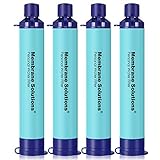
Overview: The Membrane Solutions Personal Water Filter four-pack delivers laboratory-grade water purification in a go-anywhere format. Each 7.1-inch straw weighs just two ounces and meets stringent NSF/ANSI 42, 372, and 401 standards, certified to eliminate 99.9999% of total coliforms including E. coli. The five-stage filtration system employs coarse screens, dual PP cotton, coconut shell activated carbon, and hollow fiber ultrafiltration membranes to remove threats while preserving essential minerals.
What Makes It Stand Out: The rare triple NSF certification validates both performance and material safety—most competitors claim standards without independent verification. The 1,320-gallon lifespan per unit and 28mm bottle compatibility make it exceptionally versatile for hiking, camping, or emergency storage. The four-pack configuration allows immediate distribution among family members or multiple gear kits.
Value for Money: This bundle is compelling for groups, effectively reducing the per-unit cost to under $10 compared to $15-20 for individually certified filters. This makes professional-grade protection accessible for family outings and team adventures without sacrificing verified safety standards.
Strengths and Weaknesses: Strengths include verified certifications, compact portability, mineral preservation, and multi-unit convenience. Weaknesses are the moderate flow rate and absence of cleaning accessories or gravity bags that some competitors include.
Bottom Line: For families seeking scientifically verified water safety across multiple users, this certified four-pack offers unmatched confidence and economy.
7. Waterdrop Gravity Water Filter Straw, Camping Water Filtration System, Water Purifier Survival for Travel, Backpacking and Emergency Preparedness, 1.5 gal Bag, 5 Stage Filtration, Pack of 1
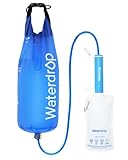
Overview: The Waterdrop Gravity Water Filter Straw redefines convenience with its integrated 1.5-gallon gravity-fed system designed for base camp hydration. This five-stage filtration unit combines coconut shell activated carbon and 0.1-micron ultrafiltration to reduce chlorine, sediment, and harmful contaminants while delivering an impressive 700 ml/min flow rate. The package includes a large-capacity water bag that collapses for transport yet provides all-day drinking water for multiple people, equivalent to eleven 500ml bottles.
What Makes It Stand Out: The professional-grade combination of straw and gravity bag—an all-in-one solution competitors rarely bundle. The innovative backwash purifier function allows field cleaning by simply attaching a standard bottle or bag of clean water, extending filter life without additional tools. Both ends disassemble for versatile connections to bottles or hydration systems.
Value for Money: This integrated package exceeds purchasing components separately. Similar quality straw filters cost $20-25 alone, while compatible gravity bags run $15-20, making this a smart investment for regular campers seeking convenience and efficiency.
Strengths and Weaknesses: Strengths include the high flow rate, large capacity bag, backwash capability, and versatile connections. Weaknesses involve the single-unit packaging limiting group distribution and potential bag durability concerns with extended use.
Bottom Line: For campers establishing base camps, this gravity system delivers hands-free filtration convenience that justifies every penny.
8. LifeStraw Personal Water Filter for Hiking, Camping, Travel, and Emergency Preparedness, 2 Pack, Blue
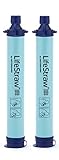
Overview: The LifeStraw Personal Water Filter two-pack represents the gold standard in portable water purification, backed by a decade of proven field performance. Each unit weighs less than two ounces and eliminates 99.999999% of bacteria, 99.999% of parasites, and 99.999% of microplastics without chemicals or batteries. The membrane microfilter delivers up to 1,000 gallons of safe drinking water—over five years of individual supply—while maintaining an unlimited shelf life for emergency storage.
What Makes It Stand Out: The brand’s unparalleled reputation and rigorous global testing in the harshest conditions. The humanitarian impact program provides one child with safe water for one year per purchase, adding purpose to practicality. Its simplicity—just sip directly from any water source—requires no setup or maintenance, making it foolproof in crisis situations.
Value for Money: Premium reliability at approximately $15-20 per unit. While priced higher than generic alternatives, the proven track record and charity component justify the investment for those prioritizing trusted performance over bargain pricing.
Strengths and Weaknesses: Strengths include legendary durability, extreme filtration percentages, ultralight design, and social responsibility. Weaknesses are the lower capacity compared to newer competitors and lack of bottle threading or accessories.
Bottom Line: For adventurers who demand time-tested reliability and want their purchase to matter, LifeStraw remains the benchmark.
9. Sawyer Products SP2101 MINI Water Filtration System, 2-Pack, Blue and Green

Overview: The Sawyer MINI Water Filtration System two-pack delivers extreme longevity in a palm-sized package. Each 0.1-micron absolute inline filter weighs two ounces and is individually tested three times to ensure it removes 99.99999% of bacteria and 99.9999% of protozoa. The remarkable 100,000-gallon rating per filter dwarfs competitors, potentially providing decades of safe water for the average user. The package includes two 16-ounce squeeze pouches, drinking straws, and cleaning plungers for immediate deployment.
What Makes It Stand Out: The rigorous quality control—100% individual testing versus batch sampling—and the versatile accessory package. The filter attaches to standard 28mm bottles, hydration packs, or functions as a standalone straw, adapting to any situation from trail drinking to emergency water storage.
Value for Money: Exceptional for serious adventurers. While the upfront cost exceeds basic straws, the 100,000-gallon capacity makes the cost-per-gallon fractions of a penny, outperforming all competitors in long-term economics.
Strengths and Weaknesses: Strengths include unparalleled lifespan, comprehensive accessories, verified testing, and connection versatility. Weaknesses involve the higher price point and potential overkill for occasional weekend campers who won’t exhaust the capacity.
Bottom Line: For dedicated outdoorsmen and emergency preppers planning for the long haul, Sawyer MINI offers unmatched durability and value.
10. 5 High-Capacity Emergency Water Straws – Lightweight, Reusable, 1800-gallon Filters for Camping, Hiking, Travel, Biking, Survival, and Emergencies. No Expiration Date, Perfect for preparedness

Overview: The 5 High-Capacity Emergency Water Straws package delivers bulk preparedness in an ultra-portable format. Each two-ounce filter measures eight inches and removes over 99.99% of waterborne bacteria and parasites down to 0.1 microns. With a 1,800-gallon lifespan per unit and no expiration date, this five-pack provides potentially 50 years of individual drinking water or immediate protection for an entire family. Each filter comes individually sealed with its own backflushing plunger for maintenance.
What Makes It Stand Out: The exceptional per-filter capacity combined with true bulk packaging—five individually sealed units each with dedicated maintenance tools. This comprehensive approach ensures extended life and consistent flow rates through proper backflushing, unlike competitors that sell cleaning tools separately.
Value for Money: Outstanding for emergency planners. At roughly $8-10 per filter, the cost-per-gallon drops below half a cent, making it the most economical choice for stocking multiple vehicles, bags, and home kits simultaneously.
Strengths and Weaknesses: Strengths include massive capacity, quantity discount, maintenance tools, and indefinite shelf life. Weaknesses involve the lesser-known brand without NSF certifications and basic packaging lacking accessories like squeeze bags or gravity systems.
Bottom Line: For families building comprehensive emergency reserves, this five-pack delivers maximum coverage and longevity at an unbeatable bulk price.
Understanding Water Contamination Risks on the Trail
Before selecting any filtration system, you need to understand what you’re protecting yourself against. Different water sources present varying levels of risk depending on location, season, and human or animal activity upstream.
Microbial Threats: Bacteria, Protozoa, and Viruses
Backcountry water primarily contains two categories of pathogens: bacteria and protozoa. Bacteria like E. coli and salmonella are relatively large microorganisms that most quality filters easily remove. Protozoa, including giardia and cryptosporidium, form hardy cysts that resist chlorine and require mechanical filtration or UV treatment. Viruses, while less common in North American wilderness areas, pose serious risks in developing countries or areas with poor sanitation. These tiny particles demand purifier-level treatment rather than standard filtration.
Chemical and Heavy Metal Concerns
Agricultural runoff, mining operations, and industrial pollution can introduce chemicals, pesticides, and heavy metals into water sources. Standard backpacking filters typically don’t remove these contaminants effectively. If you’re traveling in areas with known pollution issues, you’ll need specialized activated carbon filters or consider alternative water sources entirely. Always research your destination’s environmental history before relying solely on microbial filtration.
Turbidity and Sediment Issues
Murky water from glacial melt, heavy rains, or stagnant sources can clog filters quickly and reduce their effectiveness. High sediment levels also provide hiding places for microorganisms, potentially allowing them to pass through filtration media. Understanding how to handle cloudy water becomes crucial for maintaining your system’s performance throughout a long trip.
Types of Water Filtration Systems for Backpackers
Today’s market offers several distinct approaches to water treatment, each with unique advantages and trade-offs. Your choice should reflect your typical group size, trip duration, and personal preferences for convenience versus weight.
Pump Filters: How They Work and When to Choose Them
Pump systems force water through filtration media using a hand-operated mechanism. These units excel at drawing water from shallow sources like puddles or trickling seeps where other systems struggle. They typically offer fast flow rates and allow you to fill multiple containers efficiently. However, the pumping action requires physical effort and the systems tend to be heavier than alternatives. Pump filters shine on solo trips or small groups where you need reliable access to questionable water sources.
Gravity Filters: Hands-Free Convenience for Groups
Gravity systems use elevation difference to push water through a filter, requiring minimal effort beyond the initial setup. You simply fill a dirty water reservoir, hang it from a tree branch, and let physics do the work while you set up camp or prepare meals. These systems process large volumes efficiently, making them ideal for groups of three or more. The main drawbacks include the need for a hanging point and slower overall processing times compared to pump filters.
Squeeze and Bottle Filters: Ultralight Simplicity
Squeeze systems attach directly to soft bottles or reservoirs, letting you filter by squeezing the container. Bottle filters integrate the filter directly into a drinking vessel. Both approaches minimize weight and complexity, appealing to ultralight backpackers and thru-hikers. The trade-off comes in convenience for collecting water from shallow sources and the physical effort required for each liter processed. These systems work best when water is plentiful and easily accessible.
Straw-Style Filters: Emergency and On-the-Go Options
Straw filters allow you to drink directly from a water source through a filtration membrane. While extremely lightweight and simple, they limit you to drinking only at the source and don’t allow you to carry treated water. Consider these as backup devices or for day hikes where you can reliably reach water every few hours. They shouldn’t be your primary system for multi-day trips where dry camps are possible.
UV Purification: High-Tech Solutions
UV light pens and devices disrupt the DNA of microorganisms, rendering them harmless. These systems work quickly and don’t alter water taste, but they require batteries and clear water to function effectively. They also don’t provide residual protection, meaning your water can be recontaminated in your bottle. UV purifiers work best as part of a multi-barrier approach or in areas with reliably clear water sources.
Chemical Treatments: Backup and Supplemental Methods
Iodine tablets, chlorine dioxide drops, and other chemical treatments offer lightweight backup options. Modern formulations kill viruses, bacteria, and protozoa (though some require longer contact times for cryptosporidium). The main disadvantages include wait times of 30 minutes to 4 hours and potential taste changes. Chemical treatments excel as emergency backups or for treating water used exclusively for cooking where taste matters less.
Key Features to Evaluate Before Buying
Beyond basic type selection, several technical specifications determine how well a filter will perform in real-world conditions. Understanding these metrics helps you compare options objectively.
Filtration Pore Size and Micron Ratings Explained
A filter’s micron rating indicates the size of particles it can remove. Absolute ratings (like 0.1 microns) guarantee removal of everything larger than that size, while nominal ratings suggest average performance. For backpacking, look for absolute ratings of 0.2 microns or smaller for bacteria removal, and 0.1 microns or smaller for protozoa. Virus removal requires purification (not just filtration) or extremely small pore sizes around 0.02 microns.
Flow Rate and Processing Speed
Flow rate, measured in liters per minute, determines how long you’ll spend at each water source. Pump filters typically process 1-2 liters per minute, while gravity systems might manage 0.5-1 liter per minute depending on height difference. Squeeze filters vary widely based on how vigorously you squeeze. Consider your daily water needs and patience level when evaluating speed specifications.
Weight and Packability Considerations
Every ounce matters when you’re carrying gear for days or weeks. Complete systems range from under 2 ounces for straw filters to over 16 ounces for robust pump units. Remember to consider the total system weight including reservoirs, hoses, and accessories. Packability matters too—some systems pack flat while others require careful arrangement around other gear.
Filter Lifespan and Capacity
Most manufacturers rate their filters by the number of liters they can process before replacement. Ratings typically range from 1,000 to 10,000+ liters. Consider your annual usage and whether replacement cartridges are readily available. A cheaper filter requiring frequent replacements might cost more long-term than a pricier option with extended lifespan.
Ease of Field Maintenance and Cleaning
All filters eventually clog, especially in silty conditions. Look for systems that allow easy backflushing without tools. Some designs include integrated cleaning mechanisms like shake-to-clean or tool-free disassembly. The ability to maintain your filter in the backcountry directly impacts its reliability on extended trips.
Matching Your Filter to Your Adventure Style
Your typical backpacking scenarios should heavily influence your filtration choice. A system perfect for weekend trips in familiar terrain might fail on a month-long expedition in remote mountains.
Solo Ultralight Backpacking Priorities
If you count every gram and prefer fast-paced solo travel, prioritize simplicity and minimal weight. Squeeze filters or integrated bottle systems likely serve you best, accepting the trade-off of more frequent water stops. Consider whether you’re willing to risk occasional filter clogging against the benefit of a sub-3-ounce system.
Group Trip Water Management
Leading friends or family requires processing larger volumes efficiently. Gravity systems become invaluable for groups, allowing you to filter 4+ liters with minimal effort while attending to other camp chores. The weight penalty distributes across multiple packs, making the group efficiency gain worthwhile. Ensure your system can handle the daily water needs of your entire party.
International Travel and Virus Protection
Venturing beyond North America demands virus protection that standard filters don’t provide. Choose purifiers meeting EPA standards for virus removal, or combine filtration with chemical treatment. Research your destination’s waterborne illness risks and plan accordingly. Some regions require multiple treatment methods for true safety.
Winter and Cold Weather Challenges
Freezing temperatures can destroy filter elements by expanding frozen water inside the microscopic pores. In winter conditions, you must sleep with your filter in your sleeping bag and keep it warm during the day. Some filter types handle freezing better than others, but all require careful management. Chemical treatments often become more reliable in sub-freezing environments.
Fastpacking and High-Mileage Days
When you’re covering 25+ miles daily, stopping to filter water feels like a major interruption. Look for systems that integrate with hydration reservoirs, allowing you to filter on the move or during brief breaks. Speed becomes paramount, potentially justifying slightly heavier pump systems that minimize downtime.
Maintenance and Care in the Field
Proper maintenance extends filter life and ensures consistent performance. Developing good habits keeps your water safe and your gear functioning trip after trip.
Daily Backflushing and Cleaning Routines
Most manufacturers recommend backflushing after each use or daily during extended trips. This reverses water flow through the filter, clearing trapped sediment from the membrane. Many systems include syringes or integrated mechanisms for this purpose. Even brief backflushing significantly extends filter life and maintains flow rates.
Proper Storage Between Trips
Never store a filter wet for extended periods. After your final trip use, backflush thoroughly with clean water, then air dry completely before storage. Some users add a small amount of diluted bleach solution during final flushing to prevent bacterial growth inside the filter element. Check manufacturer guidelines for specific storage recommendations.
Troubleshooting Common Issues
Clogged filters, leaky seals, and cracked housings represent the most common field problems. Learn to recognize reduced flow rates that indicate imminent clogging. Carry appropriate O-rings and seals as backups. Understand how to bypass a failed filter temporarily using chemical treatments while you address the mechanical issue.
When to Replace Your Filter Cartridge
Don’t push your filter beyond its rated capacity. Many filters show gradually declining performance, but some fail suddenly when the membrane breaks. Track your usage throughout each season. If you’re approaching the rated limit before a major trip, replace the cartridge preemptively rather than risking failure miles from the trailhead.
Safety Protocols and Best Practices
Even the best filter can’t compensate for poor technique. Following established safety protocols ensures your water treatment system provides the protection you expect.
Pre-Filtering Murky Water Sources
When faced with cloudy water, pre-filter through a bandana, coffee filter, or specialized sediment filter before running it through your main filter. This simple step dramatically extends filter life and improves effectiveness. Let silty water settle in your container for 30 minutes before filtering to allow heavy particles to sink to the bottom.
Protecting Your Clean Water Container
Cross-contamination defeats your filtration efforts. Never let your “dirty” water container or hose touch your clean water bottle threads or interior. Use clearly marked or color-coded containers. Clean bottle threads with a small amount of treated water before drinking. These simple habits prevent accidentally contaminating your purified water.
Understanding Filter Limitations
No single method removes every contaminant. Mechanical filters don’t remove viruses or chemicals. UV doesn’t work in murky water. Chemicals take time and don’t remove sediment. Know what your chosen system can and cannot do. In high-risk situations, combine methods—filter first to remove sediment and protozoa, then use chemicals or UV for virus protection.
Creating a Multi-Barrier Approach
Smart backpackers carry a primary treatment method plus a lightweight backup. Your main filter might handle daily needs, while chemical tablets serve as emergency backup. This redundancy weighs mere ounces but provides critical safety margin if your primary system fails or you encounter unexpected water quality challenges.
Frequently Asked Questions
How often should I replace my water filter cartridge?
Replace cartridges based on manufacturer ratings, typically after 1,000-2,000 liters for most backpacking filters, or sooner if you notice significantly reduced flow rates despite proper cleaning. Track your usage in a logbook or app to avoid guessing.
Can I use a backpacking filter for tap water in developing countries?
Standard backpacking filters don’t remove viruses or chemicals common in contaminated municipal water. For international travel, use a purifier rated for virus removal or combine filtration with chemical treatment for complete protection.
What should I do if my filter freezes overnight?
Assume the filter is damaged and replace it before using it again. Freezing expands water inside the filter element, creating cracks that allow pathogens through. In cold weather, always sleep with your filter in your sleeping bag.
How do I know if my filter is still working properly?
Signs of proper function include steady flow rates and clear water output. Sudden flow increases or visibly cloudy output indicate membrane damage. Most filters don’t give obvious failure signs, so replace them on schedule rather than waiting for problems.
Are squeeze filters as effective as pump filters?
When properly maintained, quality squeeze filters use identical membrane technology to pump filters and provide equal protection. The difference lies in convenience and flow rate, not filtration effectiveness. Both remove bacteria and protozoa when rated appropriately.
Can I filter salt water with a backpacking filter?
No, standard backpacking filters cannot desalinate water. Removing salt requires reverse osmosis or distillation—technologies far too heavy and complex for backpacking. Always locate freshwater sources and carry adequate maps showing water availability.
How long do chemical treatments take to work?
Iodine tablets typically require 30 minutes for bacteria and viruses but don’t effectively kill cryptosporidium. Chlorine dioxide kills all pathogens but needs 4 hours for cryptosporidium cysts. Always follow manufacturer instructions and wait times precisely.
What’s the difference between a filter and a purifier?
Filters physically remove particles down to specific micron sizes, typically removing bacteria and protozoa. Purifiers also eliminate viruses, either through smaller pore sizes, UV light, or chemical disinfection. Purifiers meet EPA standards for treating all three pathogen types.
Should I filter water from high mountain springs?
Even pristine-looking springs can contain animal feces upstream. Giardia exists in remote alpine environments where animals roam. Always treat water from any natural source. The only exception might be water directly melting from ancient glacial ice in completely pristine areas.
How do I clean my filter in the field without wasting water?
Use the cleanest available water for backflushing—this still uses far less than discarding a clogged filter. Many systems require only a few ounces per backflush. In water-scarce environments, carry the minimum water needed to reach your next reliable source, then perform thorough cleaning there.
Related Buying Guides
- Top 10 Best Portable Water Filters for Backpackers in 2026
- 10 Backpacker Water Filters That Solve Weight and Space Issues in 2026
- The 10 Best Gravity Water Filters for Camping Families in 2026
- 10 Best Value Gravity Water Filters for Family Camping in 2026
- Top 10 Best Water Filters for Backpacking Adventures in 2026