Table of Contents
When you’re miles from civilization with a tag in your pocket and an elk down in the canyon, the last thing you want to worry about is whether that stream water will leave you incapacitated. Water purification isn’t just another piece of gear—it’s your lifeline in the backcountry. Hunters face unique challenges that weekend campers never encounter: you’re out longer, traveling farther, and often processing game near water sources that may be compromised by animal activity upstream.
The technology behind portable water purification has evolved dramatically, with options ranging from simple straw filters to sophisticated UV devices that weigh mere ounces. But here’s the reality: no single solution works perfectly for every hunting scenario. What excels for a solo bowhunter in September might fail miserably for a late-season rifle party of four. Understanding the nuances of filtration technologies, flow rates, and field maintenance will save you from costly mistakes and potentially dangerous situations when you’re completely self-reliant.
Top 10 Water Purifiers for Hunting Trips
Detailed Product Reviews
1. LifeStraw Personal Water Purifier for Hiking, Camping, Travel, and Emergency Preparedness
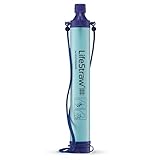
Overview: The LifeStraw is a pioneering personal water filter that revolutionized portable hydration safety. This straw-style purifier delivers instant filtration directly from water sources, making it indispensable for solo hikers, travelers, and emergency kits. Weighing mere ounces, it eliminates the need to carry heavy water supplies while providing microbiological protection in the backcountry.
What Makes It Stand Out: LifeStraw’s rigorous laboratory verification through EPA, NSF, and ASTM protocols sets it apart from generic competitors. The social impact program is genuinely meaningful—each purchase provides safe water to a school child for a year. Its microfiltration membrane removes 99.999999% of bacteria and 99.999% of parasites down to 0.2 microns, while also capturing microplastics, addressing modern environmental concerns.
Value for Money: With 4,000 liters of capacity, this $20-25 investment costs roughly half a cent per liter. Compared to pump filters costing $80-100, LifeStraw delivers essential protection at a fraction of the price. While it lacks virus removal, its price-to-performance ratio for bacterial threats is unmatched for personal use scenarios.
Strengths and Weaknesses: Pros: Proven third-party testing; ultralight and portable; no moving parts to break; infinite shelf life; meaningful social impact; filters microplastics. Cons: Cannot filter water for storage or cooking; requires direct suction which can fatigue users; no virus protection; no chemical/contaminant removal; relatively slow flow rate.
Bottom Line: The LifeStraw remains the gold standard for personal straw filters. It’s an essential backup for any outdoor enthusiast and a non-negotiable emergency kit component. For solo day hikes and survival preparedness where viruses aren’t a concern, it’s arguably the best value available.
2. SimPure Gravity Water Filter, Portable Gravity-Fed Water Purifier with 3L Bag, Tree Strap, BPA Free Survival Gear and Equipment for Camping Hiking Emergency Preparedness
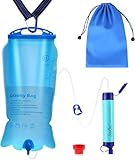
Overview: SimPure’s gravity-fed system transforms campsite water procurement through hands-free operation. This versatile kit includes a 3-liter reservoir, tree strap, and multi-use filter that adapts to various scenarios. Designed for backpackers prioritizing convenience, it eliminates the physical exertion of pumping while delivering filtered water directly to your bottle or camp kitchen.
What Makes It Stand Out: The filter’s remarkable versatility distinguishes it from single-purpose units. It functions as a gravity system, personal straw, or connects to bottles with an extension tube. The 5,000-liter lifespan serves a family of four for 3.5 years, while the 27 liters/hour flow rate outpaces most competitors. Its 0.1-micron ultrafiltration plus GAC and PP fiber stages address biological and aesthetic concerns simultaneously.
Value for Money: Priced around $40-50, this system undercuts traditional pump filters while offering superior capacity. The multi-functionality essentially provides three products in one, making it economical for budget-conscious adventurers. Replacement filters remain affordable, extending the system’s value proposition across years of use.
Strengths and Weaknesses: Pros: Exceptional versatility; high flow rate; impressive lifespan; ultralight construction; hands-free operation; comprehensive three-stage filtration. Cons: Bag durability questionable with rough handling; requires hanging point; slower than press systems; no virus removal; backwashing capability limited compared to some rivals.
Bottom Line: SimPure excels for group camping and extended trips where convenience matters. The versatility justifies its modest price premium over basic straw filters. For families and backpacking duos seeking reliable, effortless water purification, this system delivers exceptional utility without breaking the bank.
3. Waterdrop Gravity Water Filter Straw, Camping Water Filtration System, Water Purifier Survival for Travel, Backpacking and Emergency Preparedness, 1.5 gal Bag, 5 Stage Filtration, Pack of 1
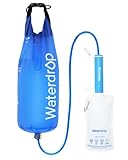
Overview: Waterdrop’s gravity-fed solution combines a 1.5-gallon reservoir with a five-stage filter straw, creating a comprehensive campsite water station. This system targets serious outdoor enthusiasts needing higher volumes for cooking, drinking, and hygiene. The setup prioritizes filtration quality and maintenance longevity over minimalist simplicity, appealing to preparedness-minded users.
What Makes It Stand Out: The innovative backwash function extends filter life dramatically—simply flush with clean water to restore flow rates. Five-stage filtration incorporates activated carbon, ultrafiltration membrane, and multiple pre-filters for superior contaminant reduction. The massive 1.5-gallon bag supplies 11 bottles of water per fill, eliminating frequent trips to the water source for group scenarios.
Value for Money: At approximately $30-35, Waterdrop positions itself as mid-tier value. The 1,400-gallon capacity translates to roughly 2-3 cents per liter—not the cheapest, but the cleanable design potentially doubles practical lifespan. The included large reservoir adds $10-15 of value compared to purchasing separately.
Strengths and Weaknesses: Pros: Backwash capability maintains performance; large capacity bag reduces refilling frequency; five-stage filtration improves taste; versatile bottle connectivity; BPA-free construction. Cons: Shorter rated lifespan than competitors; bulky for solo hikers; gravity systems require setup time; bag can be awkward to fill in shallow sources; no virus protection.
Bottom Line: Waterdrop suits group campers and basecamp scenarios where water demand is high. The backwash feature addresses the primary failure mode of hollow fiber filters, making it more reliable for extended trips. For those prioritizing taste and maintenance over absolute longevity, it’s a smart choice.
4. GRAYL GeoPress 24 oz Water Purifier Bottle - Filter for Hiking, Camping, Survival, Travel (Oasis Green)
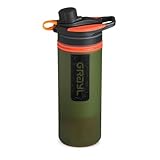
Overview: GRAYL’s GeoPress redefines purification speed and simplicity through its press-action design. This 24-ounce bottle transforms contaminated water into safe drinking water in 8 seconds—no pumping, waiting, or sucking required. Engineered for international travel and wilderness adventures alike, it addresses the full spectrum of waterborne threats including viruses, making it uniquely comprehensive.
What Makes It Stand Out: Unlike most filters that only handle bacteria and protozoa, GeoPress removes viruses—a critical feature for developing countries and areas with human waste contamination. The one-press operation is genuinely effortless, purifying water while you apply body weight. It also tackles chemicals, heavy metals, pesticides, and microplastics, functioning as a complete water treatment solution rather than just a microbiological filter.
Value for Money: At $90-100, this is a premium investment. The 65-gallon cartridge life costs about $1.50 per gallon, making it expensive for high-volume use. However, for travelers facing unknown water quality, the virus protection and chemical removal justify the price. Consider it insurance against serious illness rather than a daily camping filter.
Strengths and Weaknesses: Pros: Removes viruses and pathogens; eliminates chemicals and heavy metals; incredibly fast purification; simple operation; no setup; excellent for urban and wilderness travel. Cons: Short cartridge lifespan; expensive replacements; heavier than straw filters; limited capacity per fill; overkill for low-risk backcountry water.
Bottom Line: The GeoPress is essential for international travelers and emergency kits where water quality is completely unknown. For North American backcountry use, it’s over-engineered and costly. If your adventures cross borders or include urban emergencies, this is unmatched. For routine camping, more economical options suffice.
5. Gravity Water Filtration System – 2 High Capacity Lightweight Hanging Bags for Backpacking, Camping, Survival, Hiking, Hunting - Dirty, Clean Water Bags, Water Filter and Cleaning Plunger Included

Overview: This comprehensive gravity system provides a complete water infrastructure for basecamps and emergency preparedness. Featuring dual 6-liter bags (dirty and clean), a high-capacity filter, cleaning plunger, and carry pouch, it creates a turnkey solution for groups. The universal threading ensures compatibility with standard water bottles, offering flexibility beyond proprietary systems.
What Makes It Stand Out: The dual-bag design with dedicated clean and dirty reservoirs prevents cross-contamination—a thoughtful detail often overlooked. The included cleaning plunger maintains filter performance without requiring backflushing through the mouthpiece. With 1,800-gallon capacity and universal threading, this kit adapts to existing gear and supports nearly a decade of personal use, according to the manufacturer.
Value for Money: Priced at $50-60, this kit delivers exceptional component value. Individual purchase of similar-capacity bags, filter, and accessories would exceed $80. The long filter lifespan and included maintenance tools reduce long-term costs. For families or survival groups, the per-person cost is minimal compared to individual filter purchases.
Strengths and Weaknesses: Pros: Complete turnkey system; dual bags prevent contamination; universal filter compatibility; impressive 1,800-gallon capacity; includes dedicated cleaning tools; lightweight for capacity. Cons: Bulkier than minimalist options; generic brand may lack customer support; bag zippers and seals potential failure points; no virus removal; slower flow than press systems.
Bottom Line: This system excels for preparedness-minded families and group leaders who need reliable, high-volume filtration. The universal compatibility and maintenance tools provide long-term sustainability. While not the lightest option, its comprehensive nature and capacity make it ideal for car camping, basecamps, and emergency storage where weight is secondary to capability.
6. GRAYL GeoPress 24 oz Water Purifier Bottle - Filter for Hiking, Camping, Survival, Travel (Black Camo)

Overview: The GRAYL GeoPress is a premium water purifier bottle designed for adventurers who demand immediate, safe hydration. This 24-ounce bottle uses an innovative press system to transform questionable water from any fresh source into clean, drinkable water in seconds, making it ideal for hiking, international travel, and emergency preparedness.
What Makes It Stand Out: The one-press mechanism sets it apart from traditional filters—simply fill, press, and drink with no pumping, chemicals, or waiting. It removes viruses, bacteria, protozoa, chemicals, heavy metals, and microplastics in one motion. The Black Camo finish offers a tactical aesthetic while the 65-gallon cartridge lifespan provides months of reliable use.
Value for Money: Priced around $90-100, the GeoPress costs more than basic filters but delivers virus protection typically found in UV purifiers or chemical treatments. When compared to buying bottled water abroad or replacing multiple filter types, it pays for itself within a few trips. The cartridge replacement cost ($30) is reasonable for 65 gallons of purified water.
Strengths and Weaknesses: Pros: Instant purification (15 seconds), comprehensive pathogen removal including viruses, intuitive operation, durable construction, zero setup time, and no aftertaste. Cons: Heavier than squeeze filters (15.9 oz), limited 24 oz capacity per cycle, cartridge requires replacement after 65 gallons, and the press mechanism requires firm pressure that may challenge users with limited hand strength.
Bottom Line: The GRAYL GeoPress is an excellent investment for international travelers and backcountry users prioritizing speed and safety. While heavier and pricier than minimalist options, its ability to handle viruses and deliver instant results justifies the cost for those venturing into regions with questionable water quality.
7. P&G Purifier of Water Portable Water Purifier Packets. Emergency Water Filter Purification Powder Packs for Camping, Hiking, Backpacking, Hunting, and Traveling. (12 Packets)
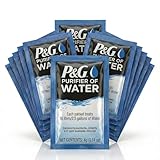
Overview: P&G Purifier of Water packets offer a chemical treatment solution for emergency water purification. Each packet treats 2.5 gallons using a flocculation and disinfection process that eliminates 99.9999% of bacteria and 99.99% of viruses. This 12-pack provides a lightweight, long-term solution for groups or emergency kits.
What Makes It Stand Out: These EPA-registered packets use an advanced coagulation process that visibly removes dirt and contaminants while killing pathogens. The 30-minute treatment time is faster than many chemical options, and the 10-liter capacity per packet efficiently serves groups. With an August 2027 expiration date, they offer reliable long-term storage.
Value for Money: At roughly $15-20 per box, treating 30 gallons total, the cost per liter is exceptionally low. This makes it far cheaper than most mechanical filters for high-volume needs. For emergency preparedness or backup purification, the price is negligible compared to the security provided. However, frequent users will find ongoing costs add up.
Strengths and Weaknesses: Pros: Ultra-lightweight (negligible pack weight), treats large volumes, proven effectiveness, visual confirmation of purification, no filter to clog, and excellent shelf life. Cons: Requires waiting 30 minutes, leaves chemical taste (though less than iodine), doesn’t filter dissolved chemicals or heavy metals, needs a separate container for mixing, and the powder can be messy in field conditions.
Bottom Line: P&G packets are an outstanding emergency backup and group solution, but not ideal as a primary daily purifier. They excel in survival kits, vehicle emergency bags, and humanitarian applications. Pair with a basic sediment filter for the best of both worlds in challenging water conditions.
8. GRAYL GeoPress 24 oz Water Purifier Bottle - Filter for Hiking, Camping, Survival, Travel (Bali Blue)
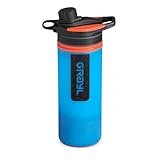
Overview: The GRAYL GeoPress in Bali Blue offers identical performance to its tactical counterpart in a vibrant, highly visible colorway. This 24-ounce purifier bottle delivers the same one-press convenience, removing all waterborne pathogens, chemicals, and heavy metals in seconds for travelers and outdoor enthusiasts.
What Makes It Stand Out: The Bali Blue color provides excellent visibility in packs and against natural backgrounds, reducing loss risk. Like all GeoPress models, its revolutionary press system eliminates the need for pumping, batteries, or chemical wait times. The comprehensive filtration handles viruses that most hollow-fiber filters cannot, making it suitable for international travel.
Value for Money: Matching the Black Camo version’s $90-100 price point, the Bali Blue variant offers the same strong value proposition. The 65-gallon cartridge life translates to roughly 350 fills, making the per-use cost competitive with disposable options. For users prioritizing visibility and style over tactical discretion, this colorway delivers identical performance.
Strengths and Weaknesses: Pros: Same instant purification, virus-level protection, durable BPA-free construction, and intuitive operation as other GeoPress models. The bright blue color is easier to locate in dim conditions. Cons: Shares the same limitations—15.9 oz weight, 24 oz capacity per cycle, and firm press requirement. The vibrant color may not appeal to those seeking low-profile gear.
Bottom Line: Choose the Bali Blue GeoPress if visibility and aesthetics matter to you. Functionally identical to other colorways, it’s a top-tier choice for travelers and hikers who refuse to compromise on water safety. The color difference is purely preferential, but the core technology remains best-in-class for press-and-drink convenience.
9. Trailgo Pro Water Purifier Water Purification System for Survival - High-Volume Hand Pump Portable Water Filter for Camping, Hiking, Hunting, Emergency Preparedness - 3-Stage Water Filtration System
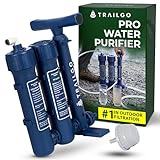
Overview: The Trailgo Pro is a robust hand-pump filtration system built for group hydration needs. This high-volume purifier processes water through a 3-stage filtration system at an impressive 1.5 liters per minute, making it ideal for basecamps, family camping, and emergency scenarios where serving multiple people quickly is critical.
What Makes It Stand Out: The exceptional flow rate significantly reduces pumping time compared to traditional filters like the Katadyn Hiker. Its heavy-duty, BPA/BPS-free construction withstands field abuse while the 3-stage system targets sediment, bacteria, and protozoa. The included carry bag adds convenience for group leaders managing camp logistics.
Value for Money: Positioned in the $80-120 range, it competes with established pump filters while offering superior flow rates. For groups exceeding two people, it eliminates the need for multiple personal filters, creating immediate value. The durable construction suggests a longer lifespan than budget alternatives, though filter replacement costs should be factored in.
Strengths and Weaknesses: Pros: Rapid 1.5L/minute output, handles group volumes efficiently, rugged build quality, no chemical aftertaste, and straightforward operation. Cons: Manual pumping requires physical effort, heavier and bulkier than personal straw filters (though specifics aren’t listed), unclear virus removal claims, and the pump mechanism may be vulnerable to freezing. Not ideal for ultralight solo missions.
Bottom Line: The Trailgo Pro excels for group scenarios and vehicle-based camping where weight is secondary to output. While not the lightest option for solo hikers, its speed and capacity make it invaluable for families and emergency prep. Verify virus protection claims before international travel, but for backcountry water, it’s a reliable workhorse.
10. Yuclet Gravity Water Filter System w/ 2-Gal Bag & 0.1-Micron Water Filter Straw, Gravity-Fed Water Filtration System Water Purifier Survival for Camping, Backpacking, Hiking & Emergency Preparedness

Overview: The Yuclet Gravity System combines a 2-gallon reservoir with a 0.1-micron hollow fiber filter straw, creating a hands-free water purification solution. Ideal for basecamps and group scenarios, it uses gravity to filter water at 600ml/minute without manual pumping, letting you multitask while producing clean water.
What Makes It Stand Out: The versatile design allows use with the included bag, standard soda bottles, or direct-from-source drinking. Its 1,300-gallon filter lifespan exceeds many competitors, while the 2-gallon bag provides substantial batch processing capacity. The gravity-fed operation eliminates the physical effort required by pump systems.
Value for Money: Typically priced $40-60, it undercuts many gravity systems while offering comparable performance. The Sawyer Mini alone costs $20-25, making this complete system an excellent value. For car camping, emergency prep, or group backpacking, the cost-per-gallon is among the lowest available, especially considering the high filter capacity.
Strengths and Weaknesses: Pros: Hands-free operation, high 1,300-gallon filter life, versatile attachment options, lightweight components, and excellent for multitasking at camp. Cons: Slower 600ml/minute flow rate means waiting, bag durability concerns over time, requires hanging setup that may be challenging in open terrain, and like most hollow fiber filters, it doesn’t remove viruses or chemicals. The straw can clog in very turbid water.
Bottom Line: The Yuclet Gravity System delivers exceptional value for stationary applications. It’s perfect for basecamps, vehicle kits, and emergency storage where hands-free operation matters. While not ideal for on-the-go solo hikers, it excels in scenarios where you can set it and forget it. Pair with chemical treatment for virus concerns in developing regions.
Understanding Water Contamination Risks for Hunters
Common Waterborne Threats in Wilderness Areas
Wilderness water sources harbor microorganisms that can turn a dream hunt into a medical emergency. Giardia and Cryptosporidium top the list of protozoan parasites, surviving for weeks in cold mountain streams. Bacteria like E. coli and Salmonella thrive near beaver ponds and livestock grazing areas. Viruses, though less common in remote North American backcountry, become serious concerns when hunting near human settlements or internationally. Unlike municipal water, these sources lack treatment and can be contaminated by everything from wildlife feces to decaying carcasses upstream.
Why Hunting Locations Pose Unique Challenges
Your hunting spot determines your water risk profile more than any other factor. High-elevenation basins with concentrated wildlife populations create natural contamination hotspots. Areas near cattle grazing allotments face bacterial loads that remote alpine streams don’t. Late-season hunts mean breaking through ice to access water, potentially stirring up sediment that clogs filters. Field dressing game near water sources introduces blood and tissue matter that can harbor additional pathogens. The solitude that makes hunting appealing also means you’re hours from medical help if waterborne illness strikes.
Key Types of Portable Water Purification Technologies
Pump Filters and How They Work
Pump filters remain the workhorse for serious backcountry hunters, using manual force to push water through microscopic filter media. These systems typically feature a intake hose, hand pump, and filter cartridge, delivering clean water directly into your bottle or bladder. The manual operation gives you control over water sources, allowing you to draw from shallow seeps or deep pools alike. Most hunting-specific models filter 1-2 liters per minute, with cartridges rated for hundreds of gallons before replacement. The trade-off is weight and bulk—pump systems run 12-20 ounces, plus the effort required during operation.
Gravity-Fed Filtration Systems
Gravity systems flip the script by letting physics do the work. You fill a dirty water reservoir, hang it from a tree branch, and let water slowly seep through the filter into a clean container. These shine in base camp scenarios where you’re processing large volumes for cooking and drinking. Flow rates vary dramatically based on filter condition and elevation difference, typically producing 1-2 liters in 5-15 minutes. The hands-free operation lets you focus on other camp tasks, but you’re limited to water sources deep enough to fill the reservoir bag and need a suitable hanging location.
UV Light Purification Devices
UV purifiers use ultraviolet light to scramble the DNA of microorganisms, rendering them harmless without chemicals or filters. These battery-powered units work by stirring a UV lamp through your water container for 60-90 seconds. The technology treats viruses, bacteria, and protozoa equally effectively, making it ideal for international hunts or areas near human activity. However, UV only works on clear water—sediment and tannins block the light, requiring pre-filtering. Battery life becomes critical, and cold temperatures sap power quickly. The treatment leaves no residual protection, so water can be recontaminated in your container.
Chemical Treatment Options
Iodine tablets and chlorine dioxide drops have been around for decades, and for good reason—they’re ultralight and foolproof. Modern chlorine dioxide formulations kill all pathogens including viruses and Cryptosporidium (with extended wait times). The treatment process takes 30 minutes to 4 hours depending on the organism and water temperature, requiring advance planning. Chemical taste bothers some users, though neutralizing tablets help. These treatments work regardless of water clarity and make excellent backup systems. The main drawback is wait time and inability to remove sediment or chemical contaminants.
Squeeze and Bottle Filters
Squeeze filters attach directly to soft bottles or reservoirs, letting you drink straight through the filter or squeeze water into another container. These minimalist systems weigh 2-4 ounces and fit in a pocket, perfect for ultralight hunters who prioritize mobility. The filtration happens on-demand, eliminating wait times. However, flow rates drop significantly as the filter loads with debris, and they struggle with turbid water. Most are rated for bacteria and protozoa only, lacking virus protection. The small filter surface area means more frequent replacements compared to larger systems.
Critical Features for Hunting-Specific Purifiers
Weight and Packability Considerations
Every ounce matters when you’re humping gear up a mountainside before first light. Water purification systems range from 2-ounce straw filters to 20-ounce pump setups. Consider your hunting style: spot-and-stalk mule deer hunters need minimalist solutions, while stationary blind hunters can afford heavier base camp systems. Look for systems that nest inside cook pots or strap securely to pack frames. Some pump filters break down into components for better weight distribution. Remember that water treatment is essential gear—not the place to cut weight if it compromises safety.
Flow Rate and Capacity Needs
Flow rate determines how long you’ll spend hunched over a stream instead of glassing ridges. Personal filters might process 0.5 liters per minute, adequate for solo hunters who sip throughout the day. Group hunts require 2+ liters per minute to keep everyone hydrated and cooking efficiently. Consider your daily water needs: a strenuous hunt in dry terrain might require 4-6 liters per person. Calculate total capacity based on filter lifespan and trip length—a 500-gallon filter covers a month-long hunt for one person but only a week for a party of four.
Durability for Rugged Field Use
Hunting gear must survive being dropped, frozen, and crammed into overstuffed packs. Pump filter housings should be impact-resistant plastic or aluminum, with protected gauge points. Soft reservoirs need reinforced seams and durable hose connections. Electronic purifiers require waterproof ratings and battery compartments that won’t pop open. Field-replaceable parts separate reliable systems from disposable ones. Consider the environment: desert hunts demand dust protection, while mountain hunts require cold-weather durability. The best systems can be partially disassembled for cleaning without tiny parts that disappear in leaf litter.
Cold Weather Performance Factors
Late-season hunts in freezing temperatures introduce unique challenges. Water freezes in filter elements, potentially rupturing the microscopic pores and creating pathways for pathogens. Some filters are rated for sub-freezing use if kept from fully freezing, while others fail permanently after one freeze-thaw cycle. Chemical treatments slow down dramatically in cold water, requiring longer contact times. UV batteries drain faster in the cold. Smart hunters sleep with their filters inside sleeping bags and insulate chemical bottles. Consider systems that can be easily blown out or drained to prevent ice expansion damage.
Evaluating Filter Micron Ratings and Certifications
What Micron Ratings Actually Mean
Micron ratings indicate the absolute smallest particle a filter can reliably remove. Absolute ratings (like 0.2 microns) mean nothing larger passes through; nominal ratings are averages with some larger particles slipping by. For hunting purposes, 0.2-micron absolute filtration stops bacteria and protozoa. Viruses are smaller (0.02 microns) and require additional treatment. Some manufacturers use “0.1 micron” as marketing, but without absolute certification, it’s meaningless. The sweet spot for most backcountry hunting is 0.2 microns absolute, balancing flow rate with pathogen protection.
NSF Standards and What to Look For
NSF International certifications provide third-party verification of manufacturer claims. NSF/ANSI 42 covers aesthetic improvements (taste, odor). NSF/ANSI 53 addresses health-related contaminants like lead and Cryptosporidium. NSF/ANSI P231 tests microbiological purification for bacteria, viruses, and protozoa under worst-case conditions. For hunting, prioritize P231 certification as it simulates field conditions. Be wary of vague “tested to NSF standards” claims without actual certification numbers. The testing process is expensive, so legitimate certification indicates a manufacturer serious about performance.
Virus Protection vs Bacteria/Protozoa
Most North American backcountry water sources primarily contain bacteria and protozoa, making standard 0.2-micron filtration adequate. However, hunting near human settlements, agricultural areas, or internationally increases virus risk. Viruses are too small for physical filtration alone, requiring UV treatment, chemical disinfection, or specialized virus-rated filters. Some filter systems include iodine resin stages that kill viruses chemically while removing larger pathogens physically. Assess your hunting locations realistically—remote wilderness hunts need different protection than hunts near rural communities with questionable sanitation.
Situational Factors That Influence Your Choice
Solo Hunting vs Group Expeditions
Solo hunters can use simple, lightweight systems since they control their own water needs. A 3-liter reservoir with an inline filter provides adequate capacity for a day of still-hunting. Group hunts multiply complexity—different hydration rates, cooking water needs, and someone always forgetting their bottle at the last water source. Base camp gravity systems become efficient for processing large volumes, while individuals might carry personal squeeze filters as backup. Communication is key: establish water protocols before leaving trailhead, including treatment methods and capacity responsibilities.
Base Camp vs Spike Camp Setups
Spike camps demand minimalist gear since you’re moving daily. Every item must justify its weight, favoring compact pump filters or UV pens that treat water in your existing bottles. Base camps allow for luxury items like large-volume gravity filters that can process 10 liters while you set up tents. Consider hybrid approaches: carry a personal filter for daily drinking and a lightweight gravity system for camp. Some hunters stash a gravity filter at base camp and carry only chemical tablets while hunting, returning to base for main water needs.
Backcountry vs Vehicle-Accessible Hunting
Truck hunting near forest roads changes the equation entirely. You can bring heavier, higher-capacity systems without weight penalties. Large-volume hand pumps or even powered filters become viable when weight isn’t critical. Water availability also differs—road systems often parallel reliable streams, while backcountry hunts depend on seasonal seeps. Vehicle access means you can bring backup treatment methods and extra filter cartridges. However, don’t get complacent; vehicle-accessible areas often have more human and livestock contamination requiring robust treatment.
Maintenance and Field Care Best Practices
Backflushing Procedures in the Field
Filter clogging is inevitable when drawing from silty streams or water with leaf litter. Backflushing reverses flow to purge trapped debris from filter pores. Most pump filters include a dedicated backflush syringe or lever—use it every 2-3 liters in dirty water. Gravity systems often backflush by raising the clean water bag above the dirty bag and letting water flow backward. In freezing conditions, backflush with treated water to avoid introducing new contaminants. Never backflush with untreated water unless the manufacturer specifically allows it, as this can force pathogens through the filter media.
Filter Lifespan and Replacement Indicators
Cartridge lifespan depends on water quality more than total gallons filtered. Murky glacier-fed streams load filters with rock flour, while clear mountain springs extend life dramatically. Most manufacturers rate cartridges for 500-2000 gallons under ideal conditions. Field indicators include dramatically reduced flow rate, difficulty pumping, or visible tears in the filter media. Smart hunters log water sources and volumes to predict cartridge exhaustion. Always carry a backup treatment method on extended trips—a failing filter shouldn’t end your hunt. Some filters include transparent housings letting you inspect the media for discoloration or damage.
Cleaning and Storage Between Seasons
Post-hunt maintenance prevents nasty surprises next season. Disassemble the system completely, removing hoses and O-rings. Wash components with mild soap, rinsing thoroughly to remove biological films. Air dry every part for 48-72 hours before storage—trapped moisture grows mold. For filters, some manufacturers recommend a final flush with dilute bleach solution (check your manual). Store filters in the freezer if recommended, or in a breathable bag with desiccant packs. UV pens need fresh batteries removed for storage. Chemical treatments have expiration dates—rotate stock annually. Inspect O-rings and gaskets; replacement kits cost pennies compared to ruined hunts.
Water Source Considerations for Hunters
Assessing Stream, Lake, and Pond Water Quality
Not all water sources are created equal. Fast-moving streams above vegetation line are generally safest, while beaver ponds are bacterial soup. Look upstream for animal trails, carcasses, or unusual colors/odors. Avoid water with excessive algae growth or near heavy game concentrations. Snowmelt streams carry fine sediment that clogs filters quickly. Lake water often contains more microorganisms than flowing streams due to stagnation. When possible, draw water from the surface rather than stirring up bottom sediment. A simple pre-filter bandana over your intake hose prevents large debris from reaching the main filter.
Dealing with Sediment and Turbid Water
Murky water challenges every purification method. Filters clog rapidly, UV can’t penetrate, and chemicals bind to suspended particles. Pre-filtering through a bandana or coffee filter extends main filter life dramatically. Let water settle in a container for 30 minutes so sediment drops to the bottom, then treat from the top. Some hunters carry alum powder to flocculate suspended particles—just a pinch causes sediment to clump and settle. In extreme cases, dig a seep hole near the water source, allowing water to filter through soil before collection. Never skip treatment just because water looks clear—pathogens are microscopic.
Snow and Ice Melting Strategies
Winter hunts require melting snow for water, introducing unique challenges. Snow can contain pollutants and microorganisms, especially wind-blown surface snow. Always melt ice preferentially—it contains less air pollution and more water volume. Melt snow in small batches to avoid scorching your pot, which imparts bad taste. Start with a small amount of water in the pot bottom to prevent burning. Snow-water lacks minerals, potentially causing electrolyte issues on long hunts—consider adding a pinch of salt. Purify melted snow just like surface water; freezing doesn’t kill pathogens. Dark-colored pots or solar melters speed the process during sunny days.
Budget and Value Considerations
Long-Term Cost Analysis Beyond Initial Purchase
That $40 filter seems like a bargain until replacement cartridges cost $50 every season. Calculate cost-per-gallon over five years of hunting trips. Pump systems often have cheaper replacement filters but higher initial cost. UV pens need $8 batteries every 50 treatments. Chemical treatments appear cheap but add up on month-long hunts. Gravity systems strike a balance with moderately priced filters lasting for years of typical hunting use. Consider durability—a $150 filter lasting a decade beats replacing a $60 filter every two seasons. Factor in warranty coverage; some premium brands replace filters damaged by freezing or manufacturing defects.
Replacement Filter Expenses
Replacement cartridges represent the hidden cost of water purification. Prices range from $20 for simple carbon filters to $80 for virus-rated multimedia cartridges. Compatibility matters—proprietary designs lock you into one manufacturer’s ecosystem. Universal thread patterns let you shop for deals. Some filters are cleanable, extending life significantly. Track your usage; a hunter drinking 3 liters daily for 10-day trips uses 30 gallons—barely breaking in a 500-gallon cartridge. However, dirty water can clog a filter in days. Buy replacements in spring when last year’s models go on sale, and always verify shelf life before purchasing.
Warranty and Manufacturer Support
A solid warranty indicates manufacturer confidence. Look for 2-5 year warranties covering manufacturing defects and freezing damage. Some companies offer pro-rated replacement for filters that fail prematurely. Customer support accessibility matters when you’re troubleshooting at base camp with spotty cell service. Companies with detailed online resources, video tutorials, and responsive email support save hunts. Check hunting forums for real-world warranty experiences—not all promises are honored. Consider brands with proven track records in the hunting community; peer recommendations reveal how systems perform under actual field conditions, not just lab tests.
Common Mistakes Hunters Make with Water Purification
Overlooking Pre-Filtering Needs
The biggest filter killer is debris that could be easily removed. That crystal-clear stream contains microscopic plant matter and insect larvae that load filters unnecessarily. A simple coffee filter or bandana over the intake prevents 90% of clogging issues. Some hunters skip this step to save time, spending hours later backflushing or replacing cartridges. Pre-filtering also improves UV effectiveness and chemical distribution. The weight penalty is negligible—carry a 0.1-ounce coffee filter or cut a square from an old t-shirt. Your filter will last twice as long, and flow rates stay consistent throughout the hunt.
Ignoring Temperature Effects on Performance
Water treatment fails more often from temperature issues than equipment malfunction. Filters freeze and crack, batteries die, chemical reactions slow to ineffective rates. Hunters who treat their water filter as indestructible learn harsh lessons in November. Read specifications carefully—many filters are only guaranteed above 32°F. Chemical treatments might require 4+ hours in near-freezing water. UV devices need warm batteries to function. The solution is simple: keep purification gear in your sleeping bag, inside your jacket, or insulated in your pack. Test your system at home in a freezer before relying on it during a late-season elk hunt.
Waiting Until Water Is Critically Low
Hydration discipline breaks down when you’re focused on game. Hunters often push until their bottles are empty, then chug untreated water in desperation. This is how giardia happens. Establish water discipline: fill up at every reliable source, treat more than you think you need, and drink proactively. In dry areas, plan water stops into your hunting route. Carry emergency chemical tablets for situations where you can’t use your primary filter. A good rule: when you’re down to your last liter, start thinking about the next source, not the current thirst. Dehydration impairs judgment, leading to risky water decisions.
Frequently Asked Questions
How do I know if my water filter is still effective after several seasons?
Test flow rate with clean tap water at home—if it’s significantly slower than new, the filter media may be clogged or damaged. Inspect for visible cracks, discoloration, or mold. Some filters have built-in indicators, but these aren’t always reliable. When in doubt, replace it; a new cartridge costs far less than a medical evacuation.
Can I use melted snow without purification if it looks clean?
Never skip purification with snowmelt. Snow collects airborne pollutants and can contain microorganisms. The freezing process doesn’t kill pathogens—it preserves them. Always treat melted snow exactly like surface water, regardless of how pristine it appears.
What’s the best purification method for a week-long solo backcountry hunt?
For solo hunters, a compact pump filter or high-quality squeeze system offers the best balance of weight, speed, and reliability. Bring chemical tablets as backup. The key is choosing something you’ll actually use consistently, not the lightest or fastest option on paper.
How do I prevent my filter from freezing overnight in camp?
Sleep with it. Keep your filter in a waterproof bag inside your sleeping bag, or at minimum in the footbox. For gravity systems, drain residual water and store filters inside your tent. If a filter freezes solid, assume it’s compromised and use backup treatment until you can test it.
Are UV purifiers reliable enough for remote hunting trips?
UV devices work excellently for clear water but require batteries and pre-filtering. For remote hunts, they’re best as a primary treatment paired with a simple pre-filter and chemical backup. The technology is reliable; the limitation is user error and battery management.
How long do chemical treatments really take to work?
Chlorine dioxide kills bacteria and viruses in 30 minutes but needs 4 hours for Cryptosporidium. Iodine works faster (30 minutes for most pathogens) but doesn’t kill Cryptosporidium. Cold water doubles these times. Always wait the full recommended time, especially in cold conditions.
Can I filter water through clothing in an emergency?
Clothing fabric removes large debris but not pathogens. It’s useful as a pre-filter to extend life of your main filter or to clarify water for UV treatment. In true emergencies where you have no treatment method, it’s better than nothing but carries significant risk.
What’s the difference between a filter and a purifier?
Filters physically remove pathogens based on size—most block bacteria and protozoa but not viruses. Purifiers eliminate viruses too, either through smaller pore size, chemical media, or UV treatment. In remote North America, filters usually suffice; near human activity or internationally, purifiers are essential.
How do I treat water at a base camp for cooking and drinking?
Gravity systems excel here, processing large volumes with minimal effort. Fill the reservoir, hang it, and let it filter while setting up camp. For groups, consider a two-stage approach: gravity filter for cooking water, and personal filters for drinking bottles. This speeds camp operations significantly.
Should I carry multiple purification methods?
Yes. Redundancy is critical for water treatment. Your primary method might fail, clog, or run out of capacity. A backup system weighing 2-3 ounces (chemical tablets or a small UV device) provides insurance. Many experienced hunters carry three methods: primary filter, chemical backup, and boiling as a last resort.
Related Buying Guides
- 10 Best Hunting Knives After 6 Months of Testing in 2026
- 10 Best Hunting Knives After 6 Months of Field Testing in 2026
- 10 Best Hunting Skinning Knives After 6 Months of Testing in 2026
- 10 Best Hunting Trail Cameras After 6 Months of Field Testing in 2026
- 10 Best Hunting Trail Cameras After 6 Months of Testing in 2026