Table of Contents
Summer heat and camping adventures demand reliable gear that keeps perishables safe without weighing down your pack. Forget bulky hard-sided coolers that dominate your trunk space—soft cooler bags have evolved into serious contenders for outdoor enthusiasts. These flexible, lightweight alternatives now deliver impressive ice retention while tucking neatly into kayak hatches, strapping to bike racks, or stashing in crowded car trunks. Whether you’re planning a weekend backpacking trip, a lakeside picnic, or a multi-day festival, understanding what makes a soft cooler truly perform in summer conditions is crucial for avoiding soggy sandwiches and spoiled drinks.
Choosing the right soft cooler isn’t just about picking the prettiest color or the biggest discount. It’s about matching critical performance features to your specific adventures. How long must ice last when temperatures soar past 90°F? Will it withstand rocky trails or sandy beaches? Can it handle the rigors of being tossed in a boat or dragged through brush? With so many options flooding the market, it’s easy to get overwhelmed by marketing claims. This guide cuts through the noise, focusing on the engineering, materials, and practical design elements that genuinely impact your summer camping experience, ensuring your food stays cold and your focus stays on the adventure.
Top 10 Soft Cooler Bags for Camping
Detailed Product Reviews
1. Maelstrom Soft Sided Cooler Bag,30 Can Collapsible Insulated Ice Chest – Large Leakproof, Portable for Camping, Kayaking & Beach, Gray

Overview:
This 30-can (22L) collapsible cooler bag targets outdoor enthusiasts needing reliable, portable cold storage. Its compact dimensions (14.43"x8.97"x10.14") suit day trips to beaches, campsites, or kayaks, emphasizing leakproof convenience and space efficiency when stored flat.
What Makes It Stand Out:
Five-layer insulation—including food-grade PEVA and ultrasonic-welded seams—delivers 24-hour temperature retention while ensuring 100% leakproof performance. Unique features include a detachable bottle opener, multi-pocket organization (iPad-sized rear pocket, phone slots), and triple carry options: adjustable straps, top handle, and dual side grips for shared carrying.
Value for Money:
Competitively priced for its premium build, it outperforms basic coolers with durable oxford fabric and welding tech typically found in costlier models. While larger-capacity alternatives exist, its balanced size, leakproof guarantee, and thoughtful extras (like the bottle opener) justify the investment for frequent users.
Strengths and Weaknesses:
Strengths: Exceptional leakproofing; versatile carry system; smart pocket layout; ultralight when collapsed; 24-hour ice retention. Weaknesses: 30-can capacity may suit only 1-2 people; side pockets lack structure for heavy items; no explicit warranty details.
Bottom Line:
Ideal for solo adventurers or couples prioritizing reliability and portability. Its leakproof design and clever features make it a top-value pick for beach days or short trips, though larger groups should consider higher-capacity models.
2. Youngoa Cooler Bag 48 Cans Insulated Soft Cooler Ice Chest Large Collapsible Cooler Bag 32L Soft Side Coolers for Picnic, Beach, Camping, Travel

Overview:
Designed for group outings, this 32L (48-can) collapsible cooler offers family-friendly capacity in a portable soft-sided design. Measuring 16.5"x11.5"x10.25", it targets picnics, beach trips, and camping where space-saving storage is essential.
What Makes It Stand Out:
Its high-density foam insulation paired with a heat-sealed leakproof liner ensures extended cold retention—critical for group meals. The spacious main compartment accommodates bulky items like ice packs, while multiple pockets (front zip, mesh sides) organize essentials without adding bulk.
Value for Money:
An affordable solution for larger groups, it undercuts hard-sided coolers while offering comparable capacity. Though lacking premium extras like bottle openers, its easy-clean lining and robust fabric deliver practical value for casual users on a budget.
Strengths and Weaknesses:
Strengths: High 48-can capacity; simple wipe-clean interior; adjustable shoulder strap eases transport; collapses efficiently. Weaknesses: Insulation duration unspecified (likely <24 hours); mesh pockets may tear; minimal padding on straps for heavy loads.
Bottom Line:
A solid budget-friendly choice for families needing large, collapsible storage. Best for short trips where maximum ice retention isn’t critical, though serious adventurers may prefer more insulated alternatives.
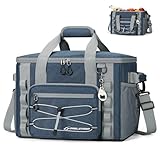
3. Maelstrom Soft Sided Cooler Bag, 30/40 Can Collapsible Insulated Ice Chest, Large Leakproof Portable Storage for Camping, Travel, Kayaking & Beach
Overview:
This versatile 30/40-can (22L) cooler bag balances compact portability with robust performance for kayaking, camping, or daily commutes. Identical to Product 1 in specs but marketed with dual capacity claims, it emphasizes leakproof reliability in rugged settings.
What Makes It Stand Out:
The five-layer insulated construction—featuring ultrasonic-welded PEVA—ensures 24-hour cold retention and absolute leakproofing, a rarity in soft coolers. Standout extras include a detachable bottle opener, iPad-sized rear pocket, and three carry modes (straps, top handle, side grips for team hauling).
Value for Money:
Priced mid-range, it excels in durability-focused features often omitted in cheaper models. While capacity matches Product 1, its multi-pocket system and shared-carry handles offer better utility per dollar for active users versus generic 30-can bags.
Strengths and Weaknesses:
Strengths: Industry-leading leakproofing; ergonomic carry options; thoughtful organization; ultralight collapsed form. Weaknesses: Capacity stretches to “40 cans” only with minimal ice; rear pocket too snug for modern tablets; no warranty mentioned.
Bottom Line:
A refined upgrade for those needing dependable, portable cooling. Choose this over basic coolers if leakproofing and multi-activity versatility are non-negotiable, despite modest capacity limits.
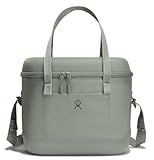
4. Hydro Flask Cooler Bag - Insulated Portable Soft Cooler - 20 L Capacity in Agave Green
Overview:
Hydro Flask’s 20L Agave Green soft cooler merges eco-conscious design with compact utility, holding 38 cans sans ice. Its hinge-top opening and recycled materials cater to sustainability-focused users seeking a stylish, everyday carry solution.
What Makes It Stand Out:
Made from 100% recycled 600D polyester (bluesign® approved), it champions sustainability without sacrificing function. The rigid, compression-molded base ensures freestanding stability, while the large hinge lid simplifies access—uncommon in soft coolers. Retains cold 24 hours with ice packs.
Value for Money:
Premium-priced but justified by eco-materials and Hydro Flask’s reputation. Outperforms cheaper bags in durability and temperature control, though its smaller 20L capacity suits individuals better than groups. Ideal for those prioritizing ethics and convenience.
Strengths and Weaknesses:
Strengths: Sustainable materials; sturdy molded base; easy hinge-top access; sleek aesthetic; leakproof lining. Weaknesses: Limited 20L capacity; no side pockets for organization; cross-body strap sold separately in some bundles.
Bottom Line:
The top eco-friendly pick for solo adventurers or commuters. Worth the splurge for its ethical build and user-friendly design, but larger groups should seek higher-capacity options.
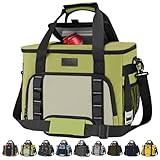
5. BALEINE Extra Large Soft Cooler Bag, Portable Leakproof Cooler, 40/60 Cans Volume for Beach, Camping, Kayaking, Travel, and Road Trips (9.5 Gallon, Aqua-Beige)
Overview:
BALEINE’s dual-capacity cooler (40 or 60 cans) targets group adventures with its massive 9.5–12.5-gallon volume. The Aqua-Beige design focuses on leakproof reliability for road trips, beaches, or kayaking where spills could ruin gear.
What Makes It Stand Out:
Uniquely offers two size tiers in one product line, accommodating anything from couples to large families. The leakproof lining handles condensation effortlessly, and padded shoulder straps enhance portability for heavy loads—rare in collapsible models.
Value for Money:
Excellent value for group use, undercutting hard-sided coolers while providing comparable capacity. The 30-day guarantee reduces purchase risk, though insulation details are vaguer than competitors like Maelstrom.
Strengths and Weaknesses:
Strengths: Scalable capacity options; robust leakproofing; comfortable padded straps; compact fold for storage. Weaknesses: Insulation claims lack specificity (e.g., “hours” vs. 24h); no bottle opener or tech pockets; material durability unproven long-term.
Bottom Line:
A smart buy for frequent group travelers needing flexible, spill-proof storage. Opt for the 60-can XL if ice retention isn’t the top priority, but verify size needs before purchasing.
6. TOURIT Soft Sided Cooler Bag Insulated 48/60 Cans, Large Collapsible & Leakproof Ice Chest for Picnic, Beach, Camping, Travel

Overview:
The TOURIT 32L soft-sided cooler bag targets outdoor enthusiasts seeking portable, space-saving cooling for picnics, beaches, or camping. Its collapsible design and 48-can capacity (355ml) prioritize convenience without sacrificing core functionality, weighing just 700g for easy transport.
What Makes It Stand Out:
High-density PEVA insulation ensures 12-hour cooling while remaining 100% leakproof—a rarity in collapsible designs. The thoughtful extras shine: a built-in bottle opener, elastic top rope for towels or compact folding, and versatile carrying options (padded handle + detachable strap). Dual mesh side pockets and a front pocket enhance organization.
Value for Money:
Priced mid-range, it outperforms cheaper coolers with superior leakproofing and insulation. While premium hard-shell coolers last longer, TOURIT’s collapsibility saves significant storage space, making it ideal for infrequent users or those with limited vehicle room. The included bottle opener adds unexpected utility.
Strengths and Weaknesses:
Strengths: Exceptional leakproofing, easy cleaning, 12-hour cooling, space-saving collapsible design, and practical pockets.
Weaknesses: 700g weight is slightly heavy for ultra-light backpacking; mesh pockets lack zippers, risking small-item loss.
Bottom Line:
A reliable, user-friendly cooler for casual outdoor use—perfect for families or weekend trips where portability and leakproofing matter most. Avoid for extended backcountry hikes.
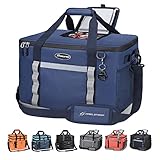
7. Maelstrom Collapsible Soft Cooler Bag,35/55/75 Cans Beach Cooler with Flip Top Lid, Ice Chest, Leakproof & Portable for Beach, Camping, Road Trips & Grocery Shopping (Blue, 75 Can)
Overview:
Maelstrom’s ultra-lightweight (1.8 lbs), high-capacity cooler targets serious outdoor users needing robust cooling for large groups. Its 75-can capacity (13-gallon) and 12-hour retention suit camping, road trips, or grocery hauls, blending commercial durability with portability.
What Makes It Stand Out:
The 5-layer construction—including ultrasonic-welded PEVA lining and 600D Oxford fabric—delivers exceptional leak/tear resistance. The flip-top lid locks in cold efficiently, while double-stitched handles support heavy loads. At just 1.8 lbs, it’s remarkably light for its size.
Value for Money:
Competitively priced for its premium materials and commercial-grade durability. Outperforms budget coolers in longevity and insulation, while undercutting hard-shell alternatives. Ideal for frequent users prioritizing weight savings and ruggedness without overspending.
Strengths and Weaknesses:
Strengths: Industry-leading durability, flip-top convenience, ultra-light build, 12-hour cooling, and versatile grocery/outing use.
Weaknesses: No side pockets for quick-access items; flip-top may snag if not secured properly.
Bottom Line:
A top-tier choice for adventurers or families needing heavy-duty, lightweight cooling—especially for extended trips where reliability is non-negotiable.
8. Maelstrom Soft Sided Cooler Bag, 30/40 Can Collapsible Insulated Ice Chest, Large Leakproof Portable Storage for Camping, Travel, Kayaking & Beach

Overview:
This compact Maelstrom cooler (22L capacity) balances portability with performance for day trips, kayaking, or work commutes. Designed for 30 cans (330ml), it emphasizes 24-hour insulation and multi-scene versatility in a lightweight, foldable package.
What Makes It Stand Out:
Five insulated layers—including food-grade PEVA and ultrasonic welding—achieve rare 24-hour cooling in a soft-sided bag. Clever storage abounds: two front zipper pockets, side mesh holders, a tablet-sized rear pocket, and a detachable bottle opener. Three carry modes (strap, handles, dual-grip) enhance mobility.
Value for Money:
Offers premium insulation rivaling pricier brands at a mid-range cost. The 24-hour performance justifies the investment over cheaper 12-hour alternatives, especially for professionals needing lunch security or kayakers requiring compact reliability.
Strengths and Weaknesses:
Strengths: Outstanding 24-hour cooling, leakproof construction, abundant organized storage, and effortless collapsibility.
Weaknesses: Smaller capacity limits group use; shoulder strap may feel thin under heavy loads.
Bottom Line:
A stellar daily-driver cooler for commuters, anglers, or solo adventurers prioritizing longevity of cold retention and smart organization.
9. Carhartt Camping Cooler, Worksite Lunchbox, Soft Shell Lunch Bag for Construction Sites, Work and Everyday Use, Black

Overview:
Carhartt’s rugged 10"x9"x7" lunchbox merges construction-site toughness with everyday practicality. Built for tradespeople but versatile enough for camping, it focuses on durability and compact organization over large capacity or extended cooling.
What Makes It Stand Out:
Legendary Carhartt durability shines via weather-resistant fabric and reinforced stitching, surviving工地 abuse effortlessly. Dual compartments separate food/drink, while sturdy handles ensure easy carrying. Its compact size fits seamlessly into work bags or car seats.
Value for Money:
Priced higher than basic lunchboxes, but Carhartt’s reputation for longevity justifies the cost for professionals. Outlasts flimsy alternatives, making it cost-effective for daily worksite use—though overkill for casual picnics.
Strengths and Weaknesses:
Strengths: Unmatched ruggedness, dual-compartment organization, and seamless work-to-outdoor transition.
Weaknesses: Limited capacity (suited for one person); cooling duration unspecified—likely under 8 hours; no pockets for accessories.
Bottom Line:
The definitive choice for laborers or minimalists needing a bombproof, no-frills cooler for lunch—skip if you prioritize cooling time or group capacity.
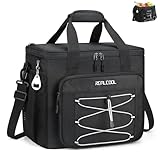
10. RealCool Soft Cooler Bag 35/45Can, Collapsible Cooler Insulated Leak Proof, Large Lunch Box for Men Women, Soft-Sided Cooler for Picnic, Grocery, Beach, Camping, Travel
Overview:
RealCool’s affordable 35/45-can cooler delivers essential cooling in a featherlight (2 lbs), ultra-compact design. Targeting budget-conscious travelers, it emphasizes space efficiency and leakproof reliability for groceries, beaches, or daily commutes.
What Makes It Stand Out:
Hot-pressed seamless PEVA lining guarantees 24-hour cooling and absolute leakproofing—a standout at this price. When folded (just 2.35" thick), it vanishes in luggage. Exterior elastic ropes stabilize top items, while mesh pockets offer practical storage without bulk.
Value for Money:
Exceptional value under $30. Matches premium coolers’ leakproofing and cooling time while costing half as much. Ideal for occasional users unwilling to invest in high-end models but tired of disposable alternatives.
Strengths and Weaknesses:
Strengths: Best-in-class cooling duration for price, extreme portability, reliable leakproofing, and easy cleaning.
Weaknesses: Basic shoulder strap lacks padding; no bottle opener included.
Bottom Line:
The smart pick for frugal shoppers needing dependable, packable cooling—perfect for weekend trips or grocery runs where value trumps luxury.
Understanding Soft Cooler Fundamentals
What Exactly Defines a Soft Cooler Bag?
Soft cooler bags differ fundamentally from traditional hard-sided models through their flexible construction. Instead of rigid rotomolded plastic, they utilize layered fabric exteriors combined with insulated cores, often featuring roll-top closures or zippered lids. This design prioritizes portability and space efficiency while still aiming for significant cold retention. They typically incorporate welded seams and waterproof materials to prevent leaks, making them ideal for dynamic activities where space is limited and movement is constant.
The Critical Role of Insulation Technology
Insulation isn’t just about thickness; it’s about the science of thermal resistance. High-performance soft coolers utilize advanced closed-cell foams or proprietary synthetic insulating materials sandwiched between inner and outer fabric shells. The quality of this insulation layer directly dictates how effectively the cooler slows heat transfer from the outside environment. Look for details on the type of insulation and its density, as these factors significantly impact real-world ice retention far more than just exterior dimensions might suggest.
Why Material Durability Matters Beyond Looks
The outer shell faces constant abrasion against rocks, branches, sand, and rough surfaces. Premium soft coolers use heavy-duty, puncture-resistant fabrics like ballistic nylon, reinforced polyester, or TPU-coated materials that resist tears and scuffs. Similarly, the interior lining must be robust, leak-proof, and easy to clean—often featuring medical-grade polyurethane or seamless welded construction. Don’t be fooled by aesthetics alone; the toughest exteriors often have a slightly textured or matte finish designed for maximum resilience.
Key Features for Summer Camping Success
Evaluating Realistic Ice Retention Claims
Manufacturers often tout ice retention times like “5 days,” but context is everything. These figures are usually achieved under controlled lab conditions with pre-chilled contents and optimal ice-to-product ratios. For summer camping, prioritize coolers specifying retention times under realistic use—think 24-72 hours in ambient temps of 80-100°F. Check if the brand provides independent testing data or clear methodology; vague claims without temperature context are red flags.
Capacity vs. Portability: Finding Your Sweet Spot
Soft coolers range from compact 10-quart models for day trips to massive 50+ quart beasts for car camping. Consider your transport method: a large cooler might fit perfectly in an SUV trunk but be impossible to carry more than a few feet. For backpacking or kayak trips, prioritize weight-to-capacity ratio. Remember, a cooler packed only half-full with ice won’t stay cold nearly as long as one filled to 2/3 capacity with contents and ice.
Closure Systems: More Than Just Keeping Water In
How you seal the cooler is vital for maintaining cold temperatures. Roll-top closures with multiple folds and secure buckles create an airtight seal that minimizes warm air infiltration but can be slower to access. Heavy-duty waterproof zippers offer quick access but require meticulous sealing and are potential failure points if debris gets trapped. Magnetic closures are rare but offer speed; assess the seal integrity carefully. The best systems often combine methods, like a zippered lid with a secondary roll-top storm flap.
Design Elements That Impact Your Experience
Ergonomic Carrying Solutions for Rough Terrain
How you transport the cooler matters immensely on uneven ground. Integrated backpack straps with padding and sternum straps transform heavy loads into manageable carries. Comfortable, reinforced top handles are essential for short lifts, while side haul loops allow attaching carabiners for custom rigging to bikes or rafts. Avoid coolers relying solely on flimsy webbing handles; padded, adjustable options significantly reduce fatigue during extended carries.
External Pockets: Convenience vs. Insulation Compromise
Exterior pockets offer handy storage for utensils, condiments, or dry snacks, but their placement affects insulation. Pockets directly on the main cooler body can create thermal bridges where cold escapes. The best designs position pockets on non-critical insulation zones or use minimal, well-sealed compartments. Ensure any external pocket has secure closures to prevent sand or rain from entering, and never store ice packs or cold items in external pockets—they’ll warm up rapidly.
Drain Plugs: Essential for Practical Cleanup
A reliable, leak-proof drain plug is non-negotiable. It allows you to easily empty melted ice water without tipping the entire cooler, which is crucial when space is tight or surfaces are uneven. Look for oversized, threaded plugs made from solid rubber or thermoplastic that seal tightly but are easy to twist open, even with cold, wet hands. Avoid pop-up plugs or tiny drains that clog easily with ice chunks.
Performance Under Summer Stress
How Ambient Temperature Affects Ice Longevity
Ice retention plummets as external temperatures rise. A cooler performing well at 70°F might struggle significantly at 100°F. Understand that doubling the temperature difference between the inside and outside of the cooler roughly quadruples the rate of heat transfer. Pre-chilling the cooler itself with ice for 24 hours before your trip and using block ice (which melts slower than cubes) are critical strategies for combating extreme summer heat.
Optimizing Ice-to-Content Ratio for Maximum Efficiency
The magic ratio isn’t fixed—it depends on your trip length and ambient temps. For short trips (under 24 hours), a 2:1 ice-to-contents ratio often suffices. For multi-day summer excursions in high heat, aim for a 3:1 or even 4:1 ratio. Fill every air pocket; empty space fills with warm air. Freeze items like juice boxes or water bottles to act as additional ice packs—they serve double duty as cold drinks later. Always pack ice on top of contents, as cold air sinks.
Sun Exposure: The Silent Cooler Killer
Direct sunlight dramatically increases heat load. Even the best-insulated soft cooler will fail quickly if left baking in full sun. Always position the cooler in shade, under a tarp, or cover it with a light-colored reflective blanket. Some advanced models incorporate reflective exterior coatings or attachable sun shields; while not a substitute for shade, these provide an extra layer of defense against radiant heat.
Practical Considerations for Campers
Weight When Full: A Critical Factor Often Overlooked
An empty soft cooler might weigh 5-10 lbs, but add 20 lbs of ice and 15 lbs of food/drinks, and you’re suddenly handling 40+ lbs. This total loaded weight determines how far you can realistically carry it. Factor this in heavily if you need to hike significant distances from your car. Lightweight insulation materials and minimal hardware become crucial for backpacking or bikepacking where every ounce counts.
Cleaning and Maintenance for Longevity
Residue from melted ice, spilled drinks, or food leaks harbors bacteria and odors. Choose coolers with smooth, seamless interiors that prevent grime buildup in seams. Most can be cleaned with mild soap and water, but avoid harsh chemicals that degrade liners. Thoroughly air-dry inside and out before storage to prevent mildew—storing a damp cooler is the fastest way to ruin it. Regular maintenance extends usable life significantly.
Repairability and Warranty Realities
Zippers jam, buckles break, and punctures happen. Investigate the brand’s warranty policy—does it cover accidental damage or just manufacturing defects? Are replacement parts (like zippers or plugs) available? Some brands offer robust repair programs, while others treat coolers as disposable. A repairable cooler saves money and reduces waste long-term, especially for frequent campers investing in quality gear.
Frequently Asked Questions
Frequently Asked Questions
How long should I realistically expect ice to last in a soft cooler during a hot summer day? Most quality soft coolers maintain ice for 24-48 hours in ambient temperatures of 85-95°F when properly pre-chilled and packed with a high ice-to-content ratio. Extreme heat (100°F+) typically reduces this to 18-30 hours.
Can soft coolers be used for hot items as well as cold? Yes, the same insulation principles work for retaining heat. Pre-warm the cooler with hot water, then add hot food or drinks. Effectiveness for hot retention is generally shorter than for cold retention due to faster heat dissipation.
Do I need to pre-chill my soft cooler before packing it? Absolutely. Filling a room-temperature cooler with ice means half your ice melts just cooling down the cooler itself. Pre-chill it for 12-24 hours with ice packs or frozen water bottles for maximum ice longevity.
Are soft coolers allowed on airplanes as carry-on luggage? Generally, no. Most airlines prohibit coolers containing ice, ice packs, or gel packs in carry-on baggage due to liquid restrictions. Empty coolers might be allowed as personal items if they fit size requirements, but check with your specific airline.
What’s the best type of ice to use in a soft cooler? Block ice melts significantly slower than cubed ice due to less surface area exposure. Dry ice is extremely effective but requires careful handling (use gloves) and venting, as it sublimates into CO2 gas. Never use dry ice in a completely sealed cooler.
How do I prevent my soft cooler from developing odors? Thoroughly clean and completely dry the interior after every use. Avoid storing food with strong odors directly against the liner. For persistent smells, wipe down with a solution of water and baking soda or diluted vinegar, then air dry fully.
Can soft coolers be submerged in water? Most premium soft coolers are designed to be waterproof and float, making them ideal for kayaking or rafting. However, submersion depth and duration vary—check the manufacturer’s specifications. Always ensure closures are fully sealed before submerging.
Is there a weight limit for soft coolers? While there’s no universal limit, exceeding the cooler’s designed capacity strains seams and closures, compromising insulation and waterproofing. Respect the manufacturer’s stated capacity, remembering that ice adds substantial weight.
How should I store my soft cooler when not in use? Store it completely empty, clean, and bone dry with all closures unfastened in a cool, dark, well-ventilated place. Never store it compressed or with the lid sealed shut, as this traps moisture and promotes mildew.
Do soft coolers work better in a car trunk than in the cabin? Surprisingly, the car cabin is often cooler than the trunk, especially in direct sunlight, as the trunk acts like an oven. Park in shade whenever possible, and consider covering the cooler with a reflective blanket regardless of location in the vehicle.
Related Buying Guides
- 10 Most Durable Camping Sleeping Bags Based on Real User Reviews in 2026
- We Tested 50 Camping Sleeping Bags - Here are the 10 Best for Durability and Warmth
- 10 Best Camping Stoves After 6 Months of Testing in 2026
- 10 Most Durable Camping Stoves Based on Real User Reviews in 2026
- 10 Most Durable Camping Tents Based on Real User Reviews in 2026