Table of Contents
There’s something primal about sitting in the darkness, your senses heightened, waiting for a predator to respond to your call. Night hunting for coyotes, foxes, and bobcats presents unique challenges that daylight hunters never experience—the sound carries differently, animals behave more boldly, and your equipment becomes your lifeline to success. A quality predator call isn’t just a tool; it’s the bridge between you and an animal’s natural instincts, amplified by the cover of darkness when they’re most active and least wary.
After extensive field testing across diverse terrains and conditions, certain patterns emerge that separate effective calls from disappointing ones. The difference often lies not in marketing claims, but in understanding how specific features translate to real-world performance when that mature coyote hangs up at 300 yards, assessing whether your distress sounds represent a genuine meal opportunity. This guide distills those findings into actionable insights, focusing on the characteristics that truly matter when selecting predator calls specifically for nocturnal pursuits.
Top 10 Predator Calls
Detailed Product Reviews
1. Icotec Model 300 Predator Caller (300+ Predator Call)

Overview: The Icotec Model 300 delivers reliable performance for hunters seeking a straightforward electronic caller. With its industry-leading 300-yard remote range, this unit lets you maintain excellent concealment while drawing predators in. The system includes 15 professional-grade sounds and features high-fidelity audio technology that ensures realistic calls carry across the terrain. Backlit buttons enable confident operation during dawn and dusk hunts.
What Makes It Stand Out: The ability to play multiple sounds simultaneously sets the Model 300 apart from basic single-sound units. This feature creates more realistic scenarios, mimicking distressed prey with background vocals. The exceptional remote range exceeds most competitors at this price point, giving hunters crucial setup flexibility. The high-fidelity sound reproduction ensures every distress call maintains clarity without distortion, even at maximum volume.
Value for Money: Positioned as an entry-level unit, the Model 300 offers impressive range and sound quality that rivals pricier options. While the 15-sound library seems limited compared to premium models, the included calls cover essential predator scenarios. You’re investing in core performance rather than expandable features, making it sensible for budget-conscious hunters who prioritize operational distance over extensive libraries.
Strengths and Weaknesses:
- Pros: Exceptional 300-yard range; simultaneous sound playback; high-fidelity audio; backlit buttons for low-light use; simple, durable design
- Cons: Limited to 15 included sounds; no built-in decoy; lacks Bluetooth connectivity; no SD card expansion
Bottom Line: The Icotec Model 300 is an excellent choice for beginners and intermediate hunters wanting reliable, long-range performance without unnecessary complexity.
2. Icotec Furnado Predator Game Caller Decoy Combo - Designed for Coyote, Fox, Bobcat, Raccoon Hunting - 15 Sounds Included, 150 Yard Remote Range.
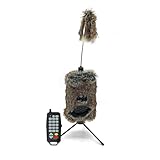
Overview: The Furnado combo unit integrates calling and decoy functions in a budget-friendly package designed for coyote, fox, and bobcat hunting. Its realistic fur wrapping and furry decoy topper create visual appeal that complements the 15 professional sounds. With 40-hour battery life and durable construction, this unit is built for extended field sessions. The 150-yard remote range provides adequate separation for most hunting scenarios.
What Makes It Stand Out: The all-in-one design eliminates separate decoy purchases, saving money and simplifying setup. The realistic fur covering adds visual authenticity that plastic-only units lack. Exceptional battery life outlasts most competitors, reducing field failures. The durable plastic housing withstands rough terrain and transport abuse, making it ideal for hunters who prioritize toughness over high-tech features.
Value for Money: This combo delivers exceptional bang for your buck by combining caller and decoy. While the 150-yard range trails premium models, most successful setups don’t require extreme distances. The included sounds, though limited, are professionally curated for effectiveness. For hunters wanting a complete system without breaking $200, the Furnado is hard to beat.
Strengths and Weaknesses:
- Pros: Integrated decoy topper; realistic fur wrapping; outstanding 40-hour battery life; highly durable construction; all-in-one convenience
- Cons: Shorter 150-yard remote range; only 15 sounds with no expansion; lacks simultaneous playback; no Bluetooth connectivity
Bottom Line: Perfect entry-level combo for new predator hunters wanting visual and audio attraction without managing multiple devices.
3. Icotec Nomad+ Programmable Predator Call/Decoy Combo with Bluetooth - 165 Professional Sounds Included - Plays 2 Sounds simultaneously - Holds up to 2,000 Sounds - Pristine Sound Quality

Overview: The Nomad+ represents Icotec’s flagship offering, combining advanced programming capabilities with premium sound quality. With 165 professional sounds—including 15 from Tony Tebbe of Predator University—this unit arrives ready for any scenario. The 300-yard remote plus 100-yard Bluetooth connectivity provides versatile control options. Store up to 2,000 sounds on the included 32GB SD card for ultimate customization.
What Makes It Stand Out: Dual simultaneous sound playback with independent controls creates incredibly realistic soundscapes. The massive pre-loaded library eliminates immediate additional purchases. Bluetooth connectivity allows smartphone app control, while the 2,000-sound capacity future-proofs your investment. The inclusion of expert-curated sounds from Predator University adds professional credibility and proven effectiveness.
Value for Money: While priced at the premium end, the Nomad+ justifies cost through unmatched expandability and features. Comparable units with similar libraries cost $100+ more. You’re essentially purchasing a lifetime calling system rather than a seasonal tool. For serious hunters who demand versatility, the investment pays dividends through adaptability to any region or species.
Strengths and Weaknesses:
- Pros: Huge 165-sound library; 2,000-sound storage capacity; dual simultaneous playback; Bluetooth and remote control; professional-grade audio quality
- Cons: Premium price point; complexity may overwhelm beginners; shorter Bluetooth range than remote
Bottom Line: The ultimate choice for dedicated predator hunters wanting maximum versatility and professional-grade performance in one package.
4. Icotec 320+ Predator Call/Decoy Combo - Perfect for Coyote, Fox, and Raccoon Hunting - 300 Yard Remote Range

Overview: The Icotec 320+ bridges the gap between basic and premium callers, offering advanced features at a mid-range price. This combo unit provides 300-yard remote range plus 100-yard Bluetooth connectivity, letting you control sessions from your preferred position. With 30 professional audio calls and crystal-clear sound reproduction, it handles most hunting scenarios effectively. Backlit buttons ensure reliable operation during nighttime hunts.
What Makes It Stand Out: The crystal audio clarity delivers distortion-free sound that cuts through wind and distance better than standard models. Dual simultaneous playback allows mixing distress calls with prey sounds for enhanced realism. The integrated decoy combo eliminates separate purchases while maintaining the extended range of premium units. Bluetooth connectivity adds modern convenience without sacrificing traditional remote reliability.
Value for Money: The 320+ hits a sweet spot, offering premium features like Bluetooth and dual playback at a moderate price increase over entry-level models. You gain significant capability without reaching the Nomad+’s premium cost. The 30 included sounds cover essential scenarios, though expansion limitations exist. It’s ideal for hunters wanting advanced features without paying for massive sound libraries they’ll never fully utilize.
Strengths and Weaknesses:
- Pros: Excellent 300-yard range; Bluetooth connectivity; dual sound playback; crystal audio clarity; integrated decoy; backlit buttons
- Cons: Only 30 included sounds; limited storage expansion; fewer pre-loaded calls than premium competitors
Bottom Line: A smart mid-tier investment for serious hunters wanting modern connectivity and quality performance without unnecessary extras.
5. FOXPRO Hellcat American Made Electronic Predator Call Remote Operated and Programmable Coyote, Fox, Crow, Hog Call for Hunting

Overview: The FOXPRO Hellcat stands out as a proudly American-made electronic caller offering portability and affordability without sacrificing capability. With 175 sounds—including 75 premium calls plus access to FOXPRO’s free sound library—this unit arrives ready for coyote, fox, crow, and hog hunting. The TX433XL transmitter features a large LCD screen and intuitive elastomeric keypad for easy navigation through sound categories.
What Makes It Stand Out: American manufacturing ensures quality control and supports domestic business. The built-in decoy with bluebird topper adds visual attraction without extra cost. The TX433XL transmitter’s larger LCD and ergonomic keypad surpass competitors’ basic remotes. FOXPRO’s reputation for reliable, field-tested designs gives confidence in harsh conditions. The unit’s compact size makes it ideal for mobile hunters covering large areas.
Value for Money: The Hellcat competes aggressively with Icotec’s mid-range offerings, providing more included sounds than most at this price. While remote range specifications are less emphasized, the 175 sounds and built-in decoy create strong value. American-made quality typically commands premium pricing, yet the Hellcat remains accessible. You’re investing in proven FOXPRO reliability and domestic craftsmanship without breaking the bank.
Strengths and Weaknesses:
- Pros: Made in USA; 175 included sounds; built-in decoy with bluebird topper; user-friendly LCD transmitter; compact and portable; excellent brand reputation
- Cons: Remote range not specified as 300 yards; limited sound storage (300 max) vs some competitors; lacks Bluetooth connectivity
Bottom Line: An excellent American-made alternative for hunters prioritizing quality construction, brand reputation, and included sound variety over maximum remote range.
6. FOXPRO Hellcat PRO American Made Electronic Predator Call Remote Operated and Programmable Coyote, Fox, Hog Call for Hunting

Overview: The FOXPRO Hellcat PRO represents American-made excellence in predator calling technology. This all-in-one digital game call delivers professional-grade performance for hunters pursuing coyotes, fox, hogs, and numerous other species. Combining high volume output with sophisticated programming capabilities, it stands as FOXPRO’s commitment to quality and field-tested reliability.
What Makes It Stand Out: The TX-1000 remote features a full-color backlit LCD with durable raised buttons and advanced Fox Features: FoxBang automatically switches to a preset after shooting, FoxCast enables custom sequences, and Auto-Volume modulates sound levels. The included lithium battery pack eliminates constant AA battery purchases, while the USB-C port stores up to 1,000 sounds. Ten professional pre-programmed sequences automatically execute species-specific calling strategies without manual intervention, keeping your focus on the field.
Value for Money: Positioned as a premium offering, the Hellcat PRO justifies its price through professional features that cheaper units lack. The lithium battery alone saves substantial long-term costs, while the 100 premium sounds plus access to FOXPRO’s free library provide exceptional content. Comparable units with similar capabilities cost significantly more, making this a smart long-term investment for dedicated hunters.
Strengths and Weaknesses: Strengths include USA manufacturing, advanced automation features, superior battery life, and massive sound storage. Weaknesses involve the higher initial investment, learning curve for programming features, and remote batteries not being included. The weather resistance is adequate but not fully waterproof.
Bottom Line: For serious predator hunters seeking a reliable, feature-rich system that performs in demanding conditions, the Hellcat PRO delivers exceptional value and deserves strong consideration as a primary weapon in your arsenal.
7. WESTERN RIVERS Mantis Pro 100 Compact Easy-to-Use Electronic Game Call - 4" Reflex Loudspeaker for Hunting with Removable Remote Control

Overview: The Western Rivers Mantis Pro 100 offers hunters a lightweight, compact electronic game call that prioritizes portability and straightforward operation. With 100 permanently downloaded sounds and a removable remote, this unit targets hunters wanting reliable performance without unnecessary complexity. Its weatherproof ABS construction ensures durability in typical field conditions.
What Makes It Stand Out: The 4-inch reflex loudspeaker produces 110dB of volume, sufficient for long-range attraction. Its swiveling legs offer versatile positioning on uneven terrain. The removable remote features a backlit screen displaying 4-6 lines of text and operates up to 300 yards away, providing reliable control from your stand. The external mounting bracket allows decoy attachment, enhancing setup flexibility and predator appeal.
Value for Money: This mid-range caller delivers solid performance for budget-conscious hunters. While it lacks premium features like lithium batteries or massive sound libraries, its 100 pre-loaded sounds cover essential scenarios. The reliance on 8 AA batteries increases operating costs over time compared to rechargeable alternatives, impacting long-term value for frequent users.
Strengths and Weaknesses: Strengths include exceptional portability, straightforward interface, adequate loudness, and weatherproof construction. Weaknesses include limited sound capacity, no expansion options, external power jack vulnerability, and weatherproofing that won’t withstand submersion or extreme conditions. The 32 MB internal memory is outdated by modern standards.
Bottom Line: The Mantis Pro 100 serves beginners or hunters needing a simple, portable secondary unit well, though serious callers may outgrow its limitations and should consider upgrade paths before purchasing.
8. Hunters Specialties Johnny Stewart Executioner Electronic Game Caller

Overview: The Hunters Specialties Johnny Stewart Executioner Electronic Game Caller delivers the renowned Johnny Stewart sound library through a powerful digital platform. With 100 premium calls and a high-decibel horn speaker, this unit emphasizes sound quality and volume for serious predator hunters seeking authenticity in their setups and proven effectiveness.
What Makes It Stand Out: The 3.5-inch horn speaker reaches 120dB, making it one of the loudest in its class and ideal for open terrain calling. The QSET feature allows quick favorite call assignment for efficient operation, while the Sequential Call Feature enables automated playback chains without manual intervention. The unit comes pre-loaded with authentic Johnny Stewart sounds, a trusted name in wildlife recordings for decades, providing unmatched realism that predators recognize.
Value for Money: Positioned competitively in the mid-range market, the Executioner offers excellent sound fidelity for the price. However, the requirement for 12 total AA batteries (8 in base, 4 in remote) creates substantial ongoing expense and frequent replacements. No lithium or rechargeable option limits its long-term value compared to similarly priced units with included battery packs and lower operating costs.
Strengths and Weaknesses: Strengths include exceptional volume, premium sound authenticity, intuitive favorites system, and sequential calling. Weaknesses include high battery consumption, lack of advanced programming features like motion simulation, and no weatherproofing specifications mentioned. The horn design, while loud, lacks directional control of modern speaker arrays.
Bottom Line: Hunters prioritizing raw volume and authentic Johnny Stewart sounds will appreciate this caller, but battery costs and basic features may deter tech-oriented users seeking more sophisticated automation and data tracking capabilities.
9. FOXPRO X24 American Made Electronic Predator Call Remote Operated and Programmable Coyote, Fox, Crow, Hog Call for Hunting

Overview: The FOXPRO X24 pushes electronic predator calling into the data-driven age. This American-made unit combines traditional sound playback with innovative features that track environmental conditions and simulate moving prey, giving tech-savvy hunters a sophisticated advantage in the field. It includes 100 high-quality sounds plus over 100 from FOXPRO’s free library.
What Makes It Stand Out: FOXMOTION technology fades sound between left and right speakers, creating realistic prey movement that draws predators in. FOXDATA records real-time temperature, barometer, moon phase, stand duration, and shot time, building a personal database to predict animal activity patterns based on hard evidence. FOXCAST enables hands-free calling through customizable sequences, while AUTO VOLUME automatically adjusts output levels for natural, realistic sound projection throughout your stand.
Value for Money: As a premium-priced unit, the X24 justifies cost through unique data-logging capabilities that improve hunting success over time. The 200+ included sounds provide extensive variety, and the motion simulation eliminates need for separate decoys in some situations. This intelligence-gathering feature set offers value unmatched by standard callers, particularly for hunters who analyze patterns across multiple seasons.
Strengths and Weaknesses: Strengths include cutting-edge motion simulation, comprehensive data tracking, premium sound quality, and hands-free operation. Weaknesses include complexity that may overwhelm beginners, premium pricing, and potentially unnecessary features for casual hunters who prefer simplicity and immediate usability without setup time.
Bottom Line: The X24 excels for dedicated hunters wanting to leverage technology for pattern recognition and realistic presentation, making it a worthy investment for serious sportsmen focused on long-term success and data-driven hunting strategies.
10. Primos Hunting Primos 372 The Third Degree Xtra Loud Cottontail Predator Call by Randy Anderson

Overview: The Primos 372 The Third Degree Xtra Loud Cottontail Predator Call represents traditional hunting methodology in a modern market. Designed by Team Primos member Randy Anderson, this manual mouth call produces super-high-pitched, raspy distress sounds specifically engineered for long-range coyote attraction across open terrain and challenging conditions.
What Makes It Stand Out: Unlike electronic callers, this handheld device requires no batteries, electronics, or programming. The specialized design creates authentic cottontail distress vocalizations with exceptional pitch and raspiness that electronics struggle to replicate convincingly. Its simplicity ensures reliability in any weather condition, and the lightweight design fits easily in any pocket or pack, making it always available when needed without fear of technical failure.
Value for Money: At a fraction of electronic caller prices, this call offers exceptional value as a primary tool for dedicated callers or backup for electronic users. No maintenance costs, battery expenses, or technical failures make it economically unbeatable over years of use. However, its single-species focus limits versatility compared to multi-sound electronic units, potentially requiring additional purchases for comprehensive coverage.
Strengths and Weaknesses: Strengths include extreme affordability, bulletproof reliability, authentic sound production, and zero operating costs. Weaknesses include steep learning curve for beginners, limited to cottontail distress sounds, and requiring manual operation that demands practice, breath control, and skill to master effectively in the field under pressure.
Bottom Line: Every predator hunter should own this call either as a primary tool for traditionalists or a dependable backup. Its simplicity and effectiveness make it a timeless, cost-effective addition to any hunting arsenal that performs when electronics fail or batteries die at critical moments.
Understanding Predator Calls for Night Hunting
The Psychology Behind Predator Calling
Predators hunt at night because darkness gives them advantages—reduced visibility for prey, cooler temperatures, and less human activity. Your call must override their natural caution by triggering intense biological drives: hunger, territorial defense, or maternal instinct. The most effective calls exploit these motivations through sound sequences that tell a convincing story. A rabbit distress isn’t just random screams; it’s a narrative of vulnerability, fatigue, and imminent death that predators recognize from countless real encounters. Understanding this psychology helps you select calls capable of producing nuanced sounds rather than just loud noises.
Types of Predator Calls
Predator calls generally fall into two categories, each with distinct advantages for night hunting. Hand calls require manual operation through mouth blowing or manipulation, offering unlimited versatility and zero dependence on electronics. They excel in situations where subtlety and immediate sound control matter most. Electronic callers pre-record sounds played through speakers, providing consistent, fatigue-free operation and allowing hunters to remain motionless. For night hunting, electronic options dominate because they enable remote operation and can project sounds while you maintain a low profile in darkness.
Electronic vs. Hand Calls for Darkness
The nighttime hunter faces visibility challenges that make electronic calls particularly valuable. You can’t easily read instructions or fiddle with components while wearing night vision or holding a weapon. Electronic callers with pre-programmed sequences and remote controls allow you to initiate complex calling routines without moving or making noise yourself. Hand calls remain relevant as backup options and for finishing animals at close range, but your primary nocturnal system should prioritize hands-free operation and remote functionality to minimize movement that could be detected by approaching predators.
Essential Features for Night Hunting Success
Sound Quality and Realism
Sound fidelity makes or breaks your setup when hunting after dark. High-quality calls reproduce the subtle inflections, pitch variations, and emotional distress patterns that separate authentic animal sounds from artificial noise. Look for systems with wide frequency response ranges and minimal distortion at high volumes. The best calls capture the breathy gasps of a dying rabbit, the raspy cough of a rodent in distress, and the ultrasonic components that predators detect but humans barely notice. These details become critical when animals circle downwind and rely on auditory cues to verify authenticity.
Volume Control and Effective Range
Night air often carries sound farther than daytime conditions due to temperature inversions and reduced ambient noise. Your call needs adjustable volume spanning whisper-quiet to ear-piercing loud—sometimes reaching 120+ decibels for open-country situations. More importantly, the volume control should allow fine incremental adjustments. That mature coyote approaching from 400 yards needs different volume than one at 40 yards. Premium calls offer smooth volume transitions rather than stepped increments, letting you match sound intensity to the animal’s distance without startling them with sudden changes.
Durability and Weather Resistance
Night hunting exposes equipment to dew, frost, and unexpected weather changes. Your call must withstand moisture intrusion, temperature fluctuations, and the inevitable drops on rocky terrain. Look for sealed housings with rubberized coatings and weather-resistant speaker cones. The control unit should have sealed buttons and protective port covers. Remember, darkness amplifies accidents—you’re more likely to fumble equipment when you can’t see clearly. Robust construction isn’t a luxury; it’s a necessity for gear that must perform reliably when you’re miles from your truck at 2 AM.
Ease of Operation in Low Light
Fumbling with tiny buttons or complex menus while wearing night vision or holding a weapon creates movement and noise that spook predators. The best night hunting calls feature large, tactile buttons you can operate by feel alone. Backlit controls should offer adjustable brightness or red-light options that preserve your night vision. Menu systems must be intuitive enough to navigate without looking at screens. Some advanced units even offer voice-activated controls or smartphone apps, though these introduce their own complexity. Prioritize simplicity—when that coyote appears at the edge of your light, you need instant sound activation, not a tech support session.
Portability and Weight Considerations
Your calling setup becomes part of a larger system including weapon, night vision, seat, and possibly decoys. Every ounce matters when hiking to remote stands in darkness. Effective calls balance durability with reasonable weight, typically under 3 pounds for the main unit plus remote. Consider how the unit packs—does it fit in your backpack? Are there carrying handles or strap attachments? Some hunters prefer compact units that strap to their leg or attach to shooting sticks, keeping the call close to their position while projecting sound outward.
Technical Considerations
Power Source and Battery Life
Nothing ends a night hunt faster than dead batteries, especially when you’ve hiked miles from your vehicle. Quality calls offer multiple power options—rechargeable lithium packs, standard AA batteries, or external power banks. Lithium batteries excel in cold weather where alkaline cells fail. Look for units providing 6-8 hours of continuous play at moderate volumes, with battery level indicators you can check without turning on bright lights. Smart power management features like auto-shutoff during quiet periods extend field life. Always carry spare batteries, but your primary system should last an entire night without swapping.
Remote Control Functionality
The remote transforms your calling effectiveness after dark. Wireless remotes should work reliably at 100+ yards, allowing you to place the call upwind while you hide downwind. Key features include backlit buttons, holster options, and straightforward sound selection. Some remotes display the current sound playing, which prevents you from accidentally repeating sequences. The best systems use radio frequency rather than Bluetooth, as RF penetrates vegetation better and doesn’t drain phone batteries. Test the remote’s range in your typical hunting terrain—dense woods reduce effective distance significantly.
Speaker Systems and Sound Projection
Single-speaker units work fine for close-range calling, but dual-speaker systems dramatically improve sound directionality and volume for night hunting. Separate speakers let you project different sounds—distress from one, coyote vocalizations from another—creating realistic scenarios. Look for speakers with wide dispersion angles that fill the night soundscape rather than narrow beams. Some systems offer detachable speakers you can position 10-20 yards from the main unit, creating spatial separation that convinces predators multiple animals exist. Ensure speaker cables are long enough for flexible positioning but store neatly to prevent tangles during setup in darkness.
Decoy Integration Capabilities
Modern predator calling increasingly combines audio with visual attraction. The best electronic calls include auxiliary ports for controlling motion decoys. Synchronized sound and movement create irresistible scenarios—a distressed rabbit sound paired with a furry decoy’s twitching motion triggers a predator’s visual confirmation instinct. For night hunting, decoys with LED eyes or intermittent movement patterns work exceptionally well. Your call should allow independent or synchronized control of decoy activation, letting you start motion only when animals approach close enough to see it. This integration separates basic callers from sophisticated systems designed for serious night hunters.
Practical Application Strategies
Setting Up for Night Success
Proper call placement separates successful nights from fruitless ones. Position your call 30-50 yards upwind of your location, allowing approaching predators to circle downwind toward the sound while staying within your shooting lane. Elevate the call 2-3 feet off the ground on a tripod or hung from branches—this projects sound over vegetation and mimics natural prey height. Place yourself downwind with good visibility of the call location. Use natural cover but ensure clear shooting lanes. In darkness, predators often approach silently, so maintain constant visual scanning rather than expecting to hear them coming.
Common Calling Sequences
Effective night sequences differ from daytime approaches. Start with subtle sounds—soft rodent squeaks or quiet bird distress—for 2-3 minutes. This attracts nearby predators without alarming them. If no response, escalate to louder rabbit or fawn distress for 5-8 minutes, then incorporate predator sounds like coyote pup distress or female invitation howls. The “15-minute rule” applies at night: if nothing responds within 15 minutes, move to a new location. Avoid continuous screaming; real prey animals pause, gasp, and resume irregularly. Program your calls with realistic intervals and volume fluctuations that tell a believable story of struggle.
Avoiding Common Mistakes
The biggest night-calling mistake is overcalling. Continuous loud sounds seem unnatural and educate predators. Another error is calling too close to roads or houses where human activity makes predators wary. Don’t call from the same location repeatedly—predators learn patterns quickly. Failing to account for wind direction ruins more stands than any other factor; always set up so predators must cross open terrain to circle downwind. Finally, inadequate light scanning causes missed opportunities. Use your light intermittently—constantly sweeping beams educates animals, but failing to check surroundings regularly means you’ll never see that silent approach.
Maintenance and Care
Night hunting conditions are harsh on equipment. After each hunt, wipe down your call with a dry cloth to remove dew and moisture. Store it with desiccant packs in airtight containers between hunts. Check battery contacts monthly for corrosion, especially if using alkaline cells. Update sound libraries periodically—predators in heavily hunted areas become conditioned to common sounds, so fresh recordings maintain effectiveness. Test your system at home before each season, verifying speaker function, remote range, and battery life. Keep spare speakers and remotes if possible; these components fail most frequently under field conditions.
Legal and Ethical Considerations
Understanding Local Regulations
Predator calling regulations vary dramatically by state and sometimes by county. Some jurisdictions restrict electronic calls entirely, while others limit them during certain seasons. Night hunting itself faces heavy regulation—many states require special permits, restrict calibers, or ban artificial lights altogether. Federal lands often have different rules than state or private property. Always verify current regulations before hunting, as predator management policies change frequently. Ethical considerations include avoiding areas near livestock where calling might habituate predators to easy meals, and respecting property boundaries that are harder to see in darkness. Responsible hunters know the rules and hunt ethically, even when no one is watching.
Frequently Asked Questions
How far can predators hear calls at night?
Under ideal conditions with calm wind and open terrain, predators can detect distress sounds up to 2-3 miles away. However, effective calling range—where they actually respond—typically extends 1 mile for loud calls and 1/4 mile for subtle sounds. Terrain, wind direction, and ambient noise dramatically affect these distances.
What’s the best volume setting for night calling?
Start quiet and build gradually. Begin at 30-40% volume for subtle rodent sounds, increasing to 60-70% for rabbit distress. Save maximum volume for open-country situations or when trying to reach distant animals. Overly loud calling often spooks predators rather than attracting them.
Should I use lights while calling at night?
Use lights sparingly and strategically. Constant light beams educate predators. Instead, scan intermittently in short bursts, focusing on high-probability areas like trails, ridges, and downwind approaches. Red or green lights preserve your night vision while being less visible to approaching animals.
How long should I call at each stand?
The standard is 15-20 minutes per stand at night. Predators respond more quickly after dark since they’re already active. If nothing appears within this timeframe, relocate. Repeatedly calling the same spot educates local predators and reduces future success.
Can I reuse the same sounds night after night?
Rotate your sounds weekly in heavily hunted areas. Predators learn to associate specific distress sequences with danger. Maintain a library of 8-10 different distress sounds and vary your selection. Even changing the order or adding pauses can make familiar sounds seem fresh.
What’s better: one speaker or two?
Two speakers provide significant advantages for night hunting. They allow directional sound placement, create realistic soundscapes with multiple sources, and increase overall volume without distortion. Single-speaker units work for close-range hunting but limit your versatility.
How do I prevent my call from freezing up in cold weather?
Use lithium batteries that perform better in cold than alkaline. Keep the unit inside your jacket until setup time. Some hunters place hand warmers near battery compartments. Store the call in an insulated bag between stands. Premium calls with sealed electronics resist moisture that causes freezing.
Is it worth adding a decoy to my calling setup?
Absolutely. Decoys increase response rates by 30-50% at night. The combination of sound and visual movement triggers a predator’s hunting instincts more effectively than sound alone. Use decoys with intermittent motion and LED eyes for maximum night effectiveness.
What’s the ideal distance between me and my call?
Position the call 30-50 yards away. This distance keeps approaching predators within effective shooting range while giving you a buffer zone. It also allows them to focus on the call location rather than your position, especially important when they circle downwind.
How do I know if a predator is approaching?
Unlike daytime hunts, you rarely hear night approaches. Watch for eyeshine in your light beam—predator eyes reflect distinct colors (coyotes often appear greenish, foxes reddish). Also look for silhouettes against skyline or background light. Motion-activated trail cameras near your call location can alert you to approaching animals without requiring constant scanning.