Table of Contents
Tired of pulling your trail camera only to find the memory card filled with hundreds of useless wind-blown branches and false triggers? You’re not alone. Every year, wildlife enthusiasts, hunters, and property owners waste countless hours and gigabytes of storage on footage that captures nothing but empty frames and frustration. The culprit isn’t just bad luck—it’s a fundamental mismatch between camera capabilities and real-world conditions.
Night vision trail cameras have revolutionized how we monitor wildlife and secure remote properties, but without the right features and setup strategies, they become memory-hungry machines that fill cards with digital noise. The good news? Understanding what makes these cameras efficient storage managers is easier than you might think. This guide walks you through the essential technologies and configuration strategies that separate memory-wasting models from intelligent capture systems, ensuring every gigabyte counts when the sun goes down.
Top 10 Night Vision Trail Cameras
Detailed Product Reviews
1. KJK Trail Camera 36MP 2.7K, Mini Game Camera with Night Vision 0.1s Trigger Time Motion Activated 130°Wide-Angle, Waterproof Trail Cam with 2.0” HD TFT Screen, Hunting Camera for Wildlife Monitoring

Overview:
The KJK Trail Camera delivers a compact, user-friendly solution for wildlife monitoring without the complexity of wireless connectivity. This mini game camera captures 36MP still images and 2.7K video, featuring a 130° wide-angle lens and lightning-fast 0.1-second trigger speed. The built-in 2.0-inch color TFT screen enables immediate field playback, while the IP66 waterproof rating ensures reliable performance from -22°F to 158°F.
What Makes It Stand Out:
The exceptional 130° detection range surpasses most competitors, providing expansive coverage that captures more animal activity. The 17,000-image battery life rating is remarkable for a non-solar camera, minimizing field visits. Its 22 low-glow 850nm infrared LEDs offer adaptive illumination technology that automatically adjusts brightness to prevent overexposure, delivering clear night vision up to 75 feet while maintaining reasonable stealth.
Value for Money:
Positioned as an entry-level workhorse, this camera offers tremendous value for users prioritizing simplicity and reliability. Without WiFi or cellular components, there are zero subscription fees and reduced power consumption. The optical quality and trigger speed rival pricier models, making it an excellent choice for budget-conscious researchers, hunters, and property owners who don’t mind manually retrieving SD cards.
Strengths and Weaknesses:
Strengths: Ultra-fast 0.1s trigger; extra-wide 130° detection angle; outstanding battery efficiency; robust IP66 waterproofing; intuitive TV-remote-style controls; adaptive night vision prevents washed-out images.
Weaknesses: No wireless connectivity requires physical SD card retrieval; 36MP resolution trails 48MP+ competitors; 850nm low-glow LEDs remain slightly visible to some animals; 2.7K video falls short of 4K standard; batteries not included.
Bottom Line:
The KJK Trail Camera excels as a dependable, no-frills monitoring tool for users who value wide coverage and battery longevity over wireless convenience. It’s ideal for remote locations where extended deployment matters more than instant image access.
2. MAXDONE Solar Trail Camera WiFi Bluetooth - 4K 64MP Game Camera with 6000mAh Battery, Rechargeable Trail Cam with Night Vision Motion Activated IP66, Wildlife Cameras Deer Cams for Outdoor Backyard

Overview:
The MAXDONE Solar Trail Camera integrates sustainable power with high-resolution imaging in a feature-rich package. This 4K 64MP camera pairs with smartphones via its own WiFi hotspot (not home network) and includes a detachable 6000mAh solar panel with adjustable angle positioning. The IP66 waterproof rating and triple charging modes (solar, Type-C, battery) make it suitable for extended outdoor deployment.
What Makes It Stand Out:
The innovative split solar panel design allows manual angle adjustment to maximize seasonal sun exposure, a significant improvement over fixed panels. Its 4K video and 64MP photo resolution represent the highest imaging specs in its class. The “TrailCamGO” app enables wireless file transfer without removing the SD card, while the camera continues recording independently of the connection.
Value for Money:
While priced higher than basic models, the rechargeable system eliminates ongoing battery costs and reduces maintenance trips. The three power options provide reliability during cloudy periods. Considering the 4K resolution, solar hardware, and wireless capability without subscription fees, it offers strong long-term value for serious wildlife enthusiasts and property monitors.
Strengths and Weaknesses:
Strengths: 4K/64MP ultra-clear imaging; flexible solar panel positioning; 6000mAh rechargeable battery; triple charging versatility; wireless file transfer; records autonomously without connection; no monthly fees.
Weaknesses: WiFi range limited to 33-49 feet; requires manual solar panel adjustment; cannot connect to home networks for remote viewing; app-only interface excludes PC users; initial cost premium.
Bottom Line:
Perfect for users seeking high-resolution imaging with minimal battery maintenance, the MAXDONE shines in sunny locations where its adjustable solar panel can be optimized. Accept the range limitations as a trade-off for subscription-free wireless convenience.
3. DEATTI Trail Camera 48MP 4K Game Camera with 8 Batteries 32GB SD Card,WiFi Bluetooth Connection,Trail Cameras with Night Vision Motion Activated Waterproof for Wildlife Deer Outdoor 0.1s Trigger Time

Overview:
The DEATTI Trail Camera positions itself as a complete starter kit, bundling 8 batteries and a 32GB SD card with a 48MP 4K WiFi-enabled camera. This motion-activated trail cam features 0.1-second trigger speed, 120° wide-angle detection, and triple PIR sensors for enhanced sensitivity. The built-in WiFi/Bluetooth creates a local hotspot for smartphone connectivity via a dedicated app.
What Makes It Stand Out:
The all-inclusive package eliminates the common frustration of purchasing accessories separately, allowing immediate deployment out of the box. The 4K video resolution and triple PIR sensor array provide excellent capture capability, while the WiFi connectivity offers convenient file access without disturbing the camera site. The 30-meter (98-foot) trigger distance is competitive for both day and night operation.
Value for Money:
This bundle represents exceptional value, essentially providing “free” batteries and SD card while matching competitors’ core specifications. For first-time trail camera buyers, the convenience factor alone justifies the price. The 4K resolution and wireless features typically command premium pricing, yet DEATTI maintains affordability despite the included accessories.
Strengths and Weaknesses:
Strengths: Complete ready-to-deploy kit; 4K/48MP high-resolution imaging; triple PIR sensors improve detection; 0.1s trigger speed; 120° wide coverage; convenient WiFi file transfer.
Weaknesses: Extremely limited WiFi range (5-8 meters); brand lacks GardePro’s established reputation; unspecified battery life expectancy; app reliability unproven; 850nm LEDs not true no-glow.
Bottom Line:
An outstanding value proposition for beginners wanting immediate deployment and wireless convenience. However, the severely restricted WiFi range demands close proximity for file retrieval, making it best suited for backyard monitoring rather than remote wilderness applications.
4. GardePro E6 WiFi Trail Camera (Non-Cellular), 48MP Photos, 1296P HD Video, App Control with Live View, 110° Wide-Angle, No-Glow Night Vision, Motion Activated

Overview:
The GardePro E6 elevates WiFi trail cameras with its unique Live View capability, allowing real-time positioning verification and wildlife observation. This non-cellular camera captures 48MP photos and 1296P HD video with H.264 encoding for rapid preview. The 940nm no-glow infrared LEDs provide completely invisible night illumination up to 75 feet, while Bluetooth and ultra-low-power WiFi connect directly to the GardePro Mobile App within a 45-foot range.
What Makes It Stand Out:
Live View functionality sets the E6 apart, enabling users to frame shots perfectly and observe wildlife in real time without physically approaching the camera. The adaptive illumination system automatically adjusts IR brightness to prevent overexposure, a sophisticated feature for consistent night image quality. H.264 video encoding allows instant preview without full download, saving time and smartphone storage.
Value for Money:
Priced in the mid-to-premium range, the E6 justifies its cost through professional-grade features and brand reliability. The no-glow LEDs and Live View capability are typically found in more expensive cellular models. While batteries and solar panel are sold separately, the absence of subscription fees makes it economical for long-term use compared to cellular alternatives.
Strengths and Weaknesses:
Strengths: Live View real-time monitoring; true 940nm no-glow stealth; proven GardePro app ecosystem; H.264 efficient video preview; 0.1s trigger speed; adaptive night illumination.
Weaknesses: Video limited to 1296P (not 4K); 110° angle narrower than some rivals; batteries not included; solar panel separate purchase; no PC/web browser support.
Bottom Line:
The E6 is the ideal choice for serious naturalists and researchers who require precise camera positioning and maximum stealth with wireless convenience. Live View alone makes it worth the premium for applications where perfect placement is critical.
5. GardePro E5S Trail Camera (Non-Cellular, Non-WiFi), 64MP Photo & 1296P HD Video, 0.1s Trigger, 100ft No-Glow Night Vision, Motion Activated Wildlife Camera

Overview:
The GardePro E5S strips away connectivity to focus on pure imaging performance and zero electronic disturbance. This traditional trail camera captures ultra-sharp 64MP photos and 1296P HD video with a lightning-fast 0.1-second trigger. Three PIR sensors provide wide detection coverage, while 940nm no-glow infrared LEDs deliver invisible night illumination up to 100 feet—longer than most competitors. The IP66 waterproof housing ensures durability in extreme conditions.
What Makes It Stand Out:
The 64MP photo resolution is among the highest available in non-cellular trail cameras, providing exceptional detail for wildlife identification and research. The complete absence of WiFi or cellular components eliminates electromagnetic interference and battery drain, making it ideal for sensitive wildlife studies. The 100-foot no-glow night vision range exceeds standard 75-foot limitations, capturing more distant nocturnal activity.
Value for Money:
As a premium non-connected camera, the E5S offers excellent value for users who prioritize image quality and animal behavior authenticity over convenience. The efficient power design extends battery life significantly compared to wireless models. While requiring manual SD card retrieval, the absence of subscription fees and minimal battery replacement costs make it economical for long-term, multi-camera deployments.
Strengths and Weaknesses:
Strengths: Class-leading 64MP photo resolution; true 940nm no-glow stealth; exceptional 100ft night range; triple PIR sensors; ultra-low power consumption; rugged IP66 construction; 0.1s trigger.
Weaknesses: No wireless connectivity; manual retrieval only; 1296P video lags behind 4K trend; batteries not included; solar panel sold separately; no instant image access.
Bottom Line:
Perfect for researchers, hunters, and property owners who demand maximum image quality and minimal animal disturbance. The E5S proves that exceptional hardware and thoughtful design outperform gimmicky features when serious monitoring is the priority.
6. GardePro A3S Trail Camera (Non-Cellular, Non-WiFi), 64MP Photo & 1296P HD Video, 0.1s Trigger, 100ft No-Glow Night Vision, Motion Activated Wildlife Camera

Overview: The GardePro A3S is a purpose-built trail camera for serious wildlife enthusiasts who prioritize image quality and reliability over connectivity. This non-cellular, non-WiFi camera captures stunning 64MP photos and 1296P HD video with a professional-grade Starvis sensor. Its lightning-fast 0.1-second trigger and three PIR sensors ensure you never miss critical moments, while the 100-foot no-glow night vision range delivers exceptional after-dark performance without spooking game.
What Makes It Stand Out: The Starvis sensor sets this camera apart, delivering superior low-light performance that rivals more expensive units. The absence of wireless connectivity isn’t a limitation but a deliberate design choice—eliminating WiFi and cellular radios dramatically extends battery life and reduces environmental impact. The IP66 weatherproof rating and robust construction mean it thrives in harsh conditions where other cameras fail. The 1/4"-20 mounting thread provides versatile installation options beyond standard straps.
Value for Money: Priced competitively for a premium non-connected trail camera, the A3S offers exceptional value. You’re getting professional-grade optics and sensors typically found in units costing significantly more. The extended battery life translates to fewer site visits and lower operational costs over time. For users who don’t need instant photo delivery, this represents a smarter long-term investment than budget cellular models with recurring fees.
Strengths and Weaknesses: Pros:
- Outstanding image quality with 64MP resolution and Starvis sensor
- Extremely fast 0.1s trigger speed with three PIR sensors
- Excellent 100ft no-glow infrared range
- Superior battery life due to non-connected design
- Rugged IP66 weatherproof construction
Cons:
- No remote access requires physical SD card retrieval
- No real-time notifications or instant image viewing
- Initial setup requires on-site configuration
Bottom Line: The GardePro A3S is an excellent choice for dedicated wildlife researchers and hunters who value image quality and reliability over convenience. Its exceptional low-light performance and battery efficiency make it ideal for remote, long-term deployments.
7. WOSODA 2 Pack Trail Cameras with Night Vision Motion Activated Waterproof,30MP Game Camera,1080P HD Trail Cam with SD Card for Wildlife Monitoring,Outdoor Scouting & Security
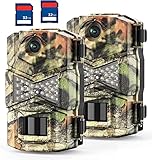
Overview: The WOSODA 2 Pack delivers dual surveillance capability at an accessible price point, making it perfect for monitoring multiple locations simultaneously. Each camera captures 30MP still images and 1080P HD video with motion-activated recording. The package includes two 32GB SD cards, providing everything needed for immediate deployment. With 0.3-second trigger speeds and 60-foot detection range, these cameras offer reliable performance for wildlife observation and property security.
What Makes It Stand Out: Getting two complete camera systems in one package immediately doubles your coverage area without doubling your investment. The mimetic camouflage design helps these cameras blend naturally into forest environments, reducing the chance of detection by both wildlife and potential trespassers. The inclusion of two 32GB memory cards eliminates extra purchases. Upgraded 850nm low-glow IR LEDs provide clear nighttime imaging while minimizing visible light that could alert animals or intruders.
Value for Money: This twin-pack represents exceptional value, effectively costing less per unit than most single-camera packages. The included accessories—mounting straps, stands, and SD cards—add approximately $40 of value. While resolution and trigger speed don’t match premium models, the ability to monitor two locations simultaneously makes this an unbeatable budget option for homeowners, small-scale researchers, or hunters establishing multiple bait sites.
Strengths and Weaknesses: Pros:
- Excellent value with two complete camera systems
- Includes two 32GB SD cards ready for use
- Effective camouflage design for concealment
- IP66 waterproof rating for outdoor durability
- Versatile mounting options included
Cons:
- 0.3s trigger slower than premium 0.1s models
- 60ft detection range shorter than high-end alternatives
- 30MP resolution lower than newer 60MP+ cameras
- Night images are black and white only
Bottom Line: For budget-conscious buyers needing multiple coverage points, the WOSODA 2 Pack is a practical, cost-effective solution. It’s ideal for property security and casual wildlife monitoring where extreme trigger speed and ultra-high resolution aren’t critical requirements.
8. MRSCRET 4K 60MP WiFi Trail Camera,Game Cameras with Night Vision Motion Activated Waterproof,Suitable for Outdoor Wildlife Detection, Monitoring Home Security

Overview: The MRSCRET trail camera bridges the gap between traditional trail cameras and modern connectivity, offering WiFi access without recurring cellular fees. It captures impressive 60MP photos and 4K video while allowing smartphone control via the Trailcam Go app. The built-in 2-inch color LCD screen enables on-site previewing, and the included 32GB SD card means immediate deployment. With three PIR sensors and a 130° wide-angle lens, it provides comprehensive area coverage.
What Makes It Stand Out: The WiFi connectivity, limited to a direct camera-to-phone connection, provides modern convenience without subscription costs. This design lets you download footage and adjust settings from within range while maintaining the battery efficiency of a non-cellular camera. The 130° wide-angle lens captures broader scenes than standard lenses, revealing more context about animal movement patterns. Three PIR sensors create an overlapping detection zone that reduces blind spots and improves trigger reliability across the entire frame.
Value for Money: Positioned in the mid-range price category, this camera delivers strong value by combining high-resolution imaging with wireless convenience at no monthly cost. The included 32GB card and robust feature set justify the price premium over basic models. While WiFi range is limited to approximately 30-50 feet, the ability to check cameras without opening the case preserves site integrity—a valuable feature for wildlife research.
Strengths and Weaknesses: Pros:
- High-resolution 60MP images and 4K video
- WiFi connectivity with free app control
- Three PIR sensors for reliable detection
- 130° wide-angle lens for expansive coverage
- IP66 waterproof and included 32GB SD card
Cons:
- WiFi cannot connect to home networks (camera hotspot only)
- Limited WiFi range requires close proximity
- Battery life shorter than non-WiFi alternatives
- App interface occasionally reported as glitchy
Bottom Line: The MRSCRET is an excellent mid-range choice for users wanting wireless convenience without subscription fees. Its wide-angle lens and reliable detection make it perfect for monitoring feeding stations, game trails, or property perimeters where occasional close-range access is feasible.
9. Fargarloo Trail Camera 4K, WiFi Game Camera, 120°Wide Angle, Night Vision Cameras, 32GB TF Card, IP66 Waterproof, Deer Scouting or Home Security, 0.2s Trigger Motion Activated for Wildlife
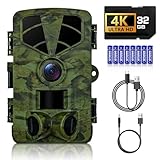
Overview: The Fargarloo trail camera combines wireless convenience with thoughtful design features for both wildlife enthusiasts and security-conscious homeowners. It delivers 4K video and 48MP photos through a 120° wide-angle lens, controlled via the Trailcam Go app. Unique among its peers, it features built-in 32GB storage alongside SD card support. The 0.2-second trigger speed and low-glow IR LEDs ensure comprehensive coverage with minimal disturbance, while dual power options provide deployment flexibility.
What Makes It Stand Out: Built-in 32GB internal memory provides a backup recording solution if the SD card fails or fills unexpectedly—crucial for security applications. The dual power system accepts either 8 AA batteries or a 6V external power source, enabling solar panel integration for indefinite operation. The camera’s unique physical design blends exceptionally well into forest environments. Bluetooth pairing option offers an alternative connection method when WiFi is impractical, adding another layer of convenience for field adjustments.
Value for Money: This camera offers strong value through its versatility and included features. The built-in memory, dual power capability, and included accessories eliminate additional purchases that competitors require. While priced slightly above basic models, the feature set justifies the premium. The combination of wireless access and flexible power options creates a lower total cost of ownership for long-term deployments compared to cellular alternatives with monthly fees.
Strengths and Weaknesses: Pros:
- Built-in 32GB memory plus SD card slot for redundancy
- Dual power options (batteries or external 6V)
- WiFi and Bluetooth connectivity with free app
- Effective camouflage design
- Wide operating temperature range (-4°F to 140°F)
Cons:
- 0.2s trigger slower than top-tier 0.1s models
- 48MP resolution below some competitors’ 60MP+ offerings
- WiFi range limited to ~60 feet
- Setup process can be confusing for first-time users
Bottom Line: The Fargarloo excels for users needing reliable, long-term deployment flexibility. Its backup memory and dual power options make it ideal for remote security monitoring and serious wildlife research where camera failure is not an option.
10. Zivolixd 4K 84MP WiFi Trail Camera, Wildlife Camera 0.1s Trigger, Game Camera with 130°Wide Angle, Trail Cameras with Night Vision Motion Activated Waterproof Suitable for Outdoor Wildlife Detection

Overview: The Zivolixd trail camera pushes the boundaries of consumer trail camera technology with an unprecedented 84MP photo resolution and 4K video capability. This WiFi-enabled unit features customizable motion detection zones and location tracking via a built-in map function—features rarely seen in this category. The lightning-fast 0.1-second trigger, 130° wide-angle lens, and 45 powerful 850nm IR LEDs create a comprehensive monitoring solution for demanding wildlife professionals and security applications.
What Makes It Stand Out: The ability to define specific motion detection zones sets this camera apart, allowing users to ignore high-traffic areas like roads or focus on precise entry points. The innovative location tracking function maps the camera’s last connected position, solving the common problem of forgetting camera locations in vast properties. With 84MP resolution, it captures finer detail than any competitor, crucial for identifying individual animals or distant license plates. The one-click WiFi connection simplifies what competitors make complicated.
Value for Money: Despite premium pricing, the Zivolixd delivers professional features that justify the cost. The resolution exceeds many scientific-grade cameras costing twice as much. Customizable zones reduce false triggers and SD card waste, saving money long-term. For security professionals and serious researchers, the zone customization and location tracking alone warrant the price premium. The included accessories and robust build quality ensure this investment performs reliably for multiple seasons.
Strengths and Weaknesses: Pros:
- Industry-leading 84MP photo resolution
- Customizable motion detection zones reduce false alarms
- Location tracking prevents lost camera situations
- Lightning-fast 0.1s trigger speed
- 45 IR LEDs provide exceptional 25-meter night vision
Cons:
- Highest price point in its class
- Large file sizes require high-capacity SD cards
- WiFi cannot connect to home networks
- Battery life shorter due to high power consumption
Bottom Line: The Zivolixd is the ultimate choice for users demanding maximum resolution and advanced control. Its zone customization and location tracking make it invaluable for research and security, while the 84MP sensor captures details other cameras simply cannot resolve.
Understanding Night Vision Trail Camera Technology
How Infrared Illumination Works
Night vision trail cameras rely on infrared LED arrays to illuminate darkness without alerting animals or intruders. These LEDs emit light at wavelengths beyond what the human eye can detect, typically in the 850nm or 940nm range. The camera’s image sensor captures this reflected infrared light and translates it into visible black-and-white footage. The efficiency of this system directly impacts memory usage—cameras with weak illumination often produce grainy, compressed files that eat up storage through excessive digital noise and longer exposure times.
Black Flash vs Low Glow vs No Glow LEDs
The type of infrared LEDs your camera uses affects both detection success and file sizes. Black flash (completely invisible) LEDs require more power and longer exposure times, often creating larger files due to increased sensor gain. Low-glow LEDs produce a faint red glow visible to some animals but deliver cleaner images with smaller file footprints. No-glow LEDs sit in the middle, offering a balance between stealth and image quality. For memory efficiency, low-glow systems typically produce the most consistent file sizes because they can use faster shutter speeds and lower ISO settings.
Image Sensor Quality and Memory Impact
The image sensor is the heart of your camera’s efficiency. Larger sensors with better low-light performance capture cleaner images at lower compression rates, resulting in surprisingly smaller files compared to cheaper sensors that rely on heavy compression to mask noise. A high-quality sensor paired with proper infrared illumination reduces the digital artifacts that bloat file sizes and waste storage space on every trigger event.
Memory Card Management Fundamentals
Storage Capacity vs. Usage Patterns
Choosing the right card capacity isn’t just about maximum storage—it’s about matching your retrieval schedule with realistic capture rates. A camera positioned on a busy game trail might generate 500+ triggers daily, while a security camera in a remote location might only capture 50 events per week. Calculate your expected daily captures multiplied by average file size, then multiply by days between visits. This prevents both premature card filling and wasted capacity on oversized cards that sit half-empty.
File Formats and Compression Technologies
Modern trail cameras typically record in MP4 or AVI formats, but the compression codec makes all the difference. H.265 (HEVC) compression creates files up to 50% smaller than older H.264 codecs without quality loss. Some cameras offer adjustable compression levels—higher compression means smaller files but potential quality loss in critical detail areas like antler points or facial features. Understanding these tradeoffs helps you balance storage efficiency with usable evidence.
Resolution Settings and Their Storage Impact
That 4K resolution setting looks impressive on paper but can fill a 32GB card in a single night of heavy activity. Each resolution jump exponentially increases file sizes—1080p footage typically uses 2-3GB per hour, while 4K can consume 10-12GB for the same duration. For most wildlife applications, 1080p at 30fps offers the sweet spot of detail and storage efficiency. Consider dropping to 720p for high-traffic areas where identification matters less than activity patterns.
Key Features That Prevent Memory Waste
Motion Detection Sensitivity Optimization
The difference between a smart camera and a storage hog often lies in its passive infrared (PIR) sensor configuration. Adjustable sensitivity settings let you fine-tune detection based on ambient temperature, target size, and distance. Cameras with multiple sensitivity levels and temperature compensation algorithms dramatically reduce false triggers from moving vegetation or distant heat sources. Look for models that allow you to set detection distance independently from trigger zone width.
Trigger Speed and Recovery Time
A fast trigger speed (0.2-0.5 seconds) ensures you capture the animal, not just an empty frame after it’s passed. Equally important is recovery time—the interval between captures. Cameras with sub-1-second recovery times prevent missing sequential animals but can create redundant footage. The best systems offer programmable burst modes (1-9 images per trigger) with intelligent spacing, ensuring you get the shot without filling cards with near-identical images.
Detection Zone Configuration
Advanced cameras feature adjustable detection zones that let you mask out areas with moving vegetation or roads where vehicles might trigger constantly. This software-based solution physically prevents the camera from waking up and recording when motion occurs in masked areas. Some systems use grid-based masking, allowing precise control over which portions of the frame can trigger recording—a game-changer for cameras positioned near busy trails or swaying grass fields.
Time-Lapse vs Motion-Activated Modes
Time-lapse mode captures images at set intervals regardless of motion, creating predictable file sizes but often wasting storage on empty scenes. Hybrid modes that combine time-lapse with motion-triggered events offer the best of both worlds—regular habitat monitoring plus triggered wildlife captures. For pure memory efficiency, motion-activated mode with proper sensitivity tuning wins every time, especially when paired with intelligent video length control.
Power Management and Memory Correlation
Battery Life Impact on File Integrity
Low battery voltage doesn’t just shut down your camera—it can corrupt files and cause incomplete writes that waste space with unreadable data. Cameras with stable power management systems maintain consistent voltage to the memory card, preventing partial file writes. Lithium batteries maintain higher voltage throughout their discharge cycle compared to alkaline, reducing corruption risks and ensuring every triggered event results in a complete, usable file.
External Power Options
Solar panels and external battery packs extend deployment time but introduce variables that affect memory performance. Inconsistent power from partial solar charging can cause the same corruption issues as dying batteries. Quality external power systems include voltage regulators that maintain steady 6V or 12V supply, ensuring your camera and memory card operate within optimal parameters. This stability directly translates to fewer corrupted files and maximized usable storage.
Data Management Strategies
Loop Recording Functionality
Loop recording automatically overwrites oldest files when the card reaches capacity—a controversial but effective feature for security applications where recent activity matters more than historical data. While not ideal for wildlife research, loop recording ensures continuous operation during extended deployments without manual intervention. The key is setting appropriate file protection windows to preserve important captures while recycling routine footage.
Wireless Transfer Capabilities
Cellular-enabled cameras can transmit thumbnails or low-resolution previews via 4G networks, letting you assess activity levels before making a physical trip. Some systems offer selective download, where you remotely request full-resolution files only for events of interest. This dramatically reduces wasted travel and lets you manage storage proactively—deleting unwanted captures remotely to free space for future triggers.
Cloud Storage Integration
Advanced systems automatically upload footage to cloud servers, effectively providing unlimited storage and eliminating the memory card limitation entirely. While requiring subscription services and strong cellular signals, cloud integration ensures you never lose important footage to card failure or theft. The best implementations use smart compression and upload scheduling to minimize data usage while preserving critical evidence quality.
Installation Best Practices
Camera Positioning for Optimal Detection
Mounting your camera north-facing prevents direct sunlight from causing false triggers and reduces temperature fluctuations that affect PIR accuracy. Positioning at a 45-degree angle to trails captures more profile shots and extends the time animals spend in frame, reducing the need for multiple redundant triggers. Height matters too—mounting 8-10 feet high and angled downward creates a focused detection zone that ignores distant background movement while capturing clear identification shots.
Avoiding False Triggers
Beyond sensitivity settings, physical installation choices dramatically impact memory waste. Clearing vegetation within the detection cone, positioning away from heat-reflective surfaces, and using mounting brackets that isolate the camera from tree movement all reduce unnecessary triggers. In windy areas, consider installing windbreaks or choosing locations on the lee side of terrain features to minimize motion-based false alarms from swaying branches.
Weather Protection and Card Longevity
Extreme temperatures and moisture don’t just damage cameras—they corrupt memory cards. Cameras with sealed compartments and desiccant slots protect cards from humidity that can cause write failures. In frigid conditions, cards can become brittle and develop bad sectors. Using industrial-grade SD cards rated for extreme temperatures ensures reliable operation and prevents the partial file writes that waste storage space and create unusable footage.
Troubleshooting Common Issues
Card Formatting Protocols
Always format memory cards in the camera, not your computer. Camera-native formatting creates the exact file system structure the device expects, including proper allocation table sizes and cluster configurations. Formatting on a PC often creates incompatible file systems that cause write errors, fragmentation, and wasted space. For best results, perform a full format (not quick format) in-camera every 3-4 months to refresh the card’s memory cells and maintain performance.
Firmware Updates and Compatibility
Manufacturers regularly release firmware updates that improve compression algorithms, refine motion detection logic, and enhance memory card compatibility. Outdated firmware can cause write errors, incompatible file formats, and inefficient storage usage. Check for updates quarterly and read release notes carefully—some updates specifically address memory management issues that could be causing your storage headaches.
Signs of Failing Memory Cards
Memory cards have finite write cycles, and degraded cards exhibit specific symptoms: increasingly frequent corrupted files, write speed slowdowns causing missed triggers, and unexplained capacity reductions. If your camera’s file count drops unexpectedly or you see frequent “card full” errors with plenty of space remaining, it’s time to retire the card. Using cards past their lifespan wastes more storage through failures than the cost of replacement justifies.
Frequently Asked Questions
How much storage do I really need for a two-week deployment? For a typical wildlife monitoring scenario with moderate activity, a 32GB card recording 1080p video at 30fps provides adequate storage. High-traffic areas or 4K recording may require 64GB or 128GB cards. Calculate based on expected daily triggers multiplied by average file size, then add a 20% buffer for safety.
Does higher resolution always mean better identification? Not necessarily. A clean, well-lit 1080p image with proper infrared illumination often provides better identification than a grainy, compressed 4K file. Sensor quality, lens clarity, and proper focus matter more than raw pixel count for most trail camera applications.
Can I use any SD card in my trail camera? No. Use SDHC or SDXC cards rated Class 10 or UHS-I with a minimum write speed of 30MB/s. Avoid generic or off-brand cards, as they often fail in extreme temperatures and have inconsistent write speeds that cause missed triggers and corrupted files.
How often should I format my trail camera memory card? Format in-camera every 3-4 months during regular use, or immediately if you notice corrupted files or performance issues. Always back up important footage first, as formatting erases all data.
What’s the best way to prevent false triggers at night? Lower the PIR sensitivity setting, narrow the detection zone if your camera supports it, and ensure the camera is mounted on a stable tree away from swaying vegetation. Positioning the camera to face away from rising heat sources like rocks or roads also helps.
Are cloud-connected trail cameras worth the subscription cost? For remote properties or critical security applications, yes. The ability to monitor activity and manage storage remotely prevents wasted trips and ensures you never miss important events due to card failure. For casual wildlife observation, traditional cards remain more economical.
How does temperature affect memory card performance? Extreme cold slows write speeds and can cause cards to become brittle, while extreme heat increases error rates. Industrial-grade cards rated for -40°F to 185°F provide reliable performance in harsh conditions and prevent data loss from temperature-related corruption.
What’s the difference between loop recording and overwrite protection? Loop recording continuously overwrites oldest files when the card fills, ensuring uninterrupted operation. Overwrite protection preserves all files until you manually delete them, requiring periodic card swaps. Hybrid systems protect a set number of recent files while looping older footage.
Can wireless trail cameras really save me money on memory cards? Yes, by allowing remote deletion of unwanted footage and selective downloading of important clips. However, factor in cellular data costs and subscription fees. The real savings come from reduced travel and time spent physically checking cameras.
Why does my camera fill the card faster in summer than winter? Heat sensitivity in PIR sensors causes more false triggers from thermal currents and moving warm air. Additionally, longer daylight hours and increased animal activity during summer months naturally increase capture frequency. Adjust sensitivity lower in hot weather to compensate.
Related Buying Guides
- How to Solve Blurry Night Images with the 10 Best Night Vision Trail Cameras in 2026
- 10 Expert-Recommended Night Vision Binoculars for Nocturnal Surveillance in 2026
- 10 Expert-Recommended Night Vision Scopes for No-Light Environments in 2026
- How to Use Night Vision Binoculars Effectively for Nocturnal Wildlife Observation
- The 10 Most Revolutionary Night Vision Binoculars of 2026