Table of Contents
Ever had that sinking feeling mid-hunt when your point of impact suddenly shifts? You squeeze the trigger, confident in your hold, only to watch your bullet sail high and left where it never has before. That frustrating inconsistency often isn’t your marksmanship failing—it’s your scope rings silently betraying you. Mounting failures are the hidden thieves of accuracy, stealing confidence shot after shot, and they plague shooters of all experience levels. Whether you’re zeroing a new precision rifle or relying on optics for critical defensive scenarios, unstable rings turn even the finest glass into a liability. The good news? This preventable headache boils down to smart selection and proper technique, not magic or luck.
Choosing the right scope rings isn’t just about slapping metal onto your rail; it’s the critical foundation that translates your scope’s potential into real-world precision. Too many shooters treat rings as generic afterthoughts, grabbing whatever fits the budget, only to wrestle with inconsistent zeros, baffling point-of-impact shifts, or worse—complete scope failure under recoil. The reality is stark: the rings are the vital, often overlooked, link between your rifle’s stability and your optic’s performance. Investing time to understand the nuances of ring selection, compatibility, and installation is the single most impactful step you can take to ensure your scope performs flawlessly, shot after shot, season after season. Let’s dismantle the mystery and build your confidence from the ground up.
Top 10 Rifle Scope Rings
Detailed Product Reviews
1. Vortex Optics Hunter Riflescope Rings, 1 inch - Medium, Black, 2 Count (Pack of 1)
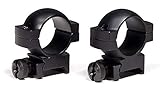
Overview:
The Vortex Optics Hunter Riflescope Rings offer a reliable 1-inch mounting solution for hunters seeking a balance of strength and simplicity. Crafted from aircraft-grade 6061-T6 aluminum, these medium-height rings position scopes at 0.87 inches above the rail and feature a straightforward 2-screw design for Picatinny or Weaver bases.
What Makes It Stand Out:
Their standout feature is Vortex’s unparalleled VIP Warranty—a fully transferable, lifetime guarantee covering defects and damage without limitations. The precise torque specs (15–30 in/lbs) ensure secure mounting while avoiding over-tightening, and the lightweight aluminum construction maintains rifle balance.
Value for Money:
Priced competitively for mid-tier optics, they deliver exceptional value through Vortex’s warranty and consistent machining. While not ideal for heavy-recoil firearms, they outperform budget alternatives in durability and ease of installation, making them a smart investment for light-to-moderate use.
Strengths and Weaknesses:
Strengths: Lightweight yet sturdy aluminum build; clear torque guidelines; industry-leading warranty; smooth installation. Weaknesses: Limited to 2 screws (less secure for high-recoil rifles); medium height may not suit all cheek welds; not recommended for magnum calibers.
Bottom Line:
Ideal for hunters using standard calibers like .223 or .308, these rings offer hassle-free reliability and unmatched warranty support, though avoid them for heavy-recoil applications. A confident recommendation for budget-conscious enthusiasts.
2. Monstrum Deadlock Series Scope Rings | 1 inch Diameter | 1.00" Center Height

Overview:
Monstrum’s Deadlock Series Scope Rings merge rugged durability with weight efficiency for shooters demanding unwavering stability. These 1-inch rings feature a reinforced aluminum frame with strategic lightening cuts, mounting securely to Picatinny or Weaver rails at a 1.00-inch center height.
What Makes It Stand Out:
The unique “beefed-up” design with custom locking bolts guarantees zero retention under extreme recoil—a rarity in this price bracket. Hardened steel Torx hardware prevents stripping during tightening, while the minimalist cuts reduce weight without sacrificing rigidity.
Value for Money:
Offering military-grade resilience at a mid-range cost, they outclass similarly priced rings in recoil management. The lifetime guarantee adds significant value, though premium brands like Nightforce may justify higher costs for specialized tactical use.
Strengths and Weaknesses:
Strengths: Exceptional recoil resistance; lightweight yet rigid; anti-strip Torx bolts; versatile rail compatibility; lifetime warranty. Weaknesses: Aesthetic finish is utilitarian (not premium); height options are limited; torque specs not explicitly stated.
Bottom Line:
A top choice for hunters or tactical shooters facing heavy recoil, these rings deliver outstanding stability and value. Their weight-saving design and ironclad warranty make them highly recommended for serious applications.
3. CVLIFE 1 inch Scope Rings Medium Profile Precision Mount - Compatible with Picatinny Rails - 20mm See Through Rifle Scope Mount - 2 Pieces

Overview:
CVLIFE’s Medium Profile Scope Rings provide an affordable, versatile mounting solution for 1-inch scopes, featuring a 1.00-inch center height and compatibility with Picatinny rails. CNC-machined from 6061-T6 aluminum, they include a T25 wrench and extra screws for immediate setup.
What Makes It Stand Out:
The enhanced recoil lugs and Type III hard-anodized finish ensure scratch resistance and zero retention—uncommon in budget rings. The “see-through” compatibility (for rimfire/airsoft optics) and beveled edges for user safety add thoughtful versatility.
Value for Money:
Exceptional for entry-level users, these rings undercut competitors while including essential tools and multi-caliber support (e.g., .22LR to .308). Though lacking Vortex’s warranty prestige, their included hardware and robust finish justify the low price for casual shooters.
Strengths and Weaknesses:
Strengths: Includes torque wrench and spare screws; effective recoil lugs; durable anodization; wide caliber compatibility; lightweight. Weaknesses: Warranty less comprehensive than Vortex; torque limits slightly restrictive (18 in/lbs); finish may chip under extreme abuse.
Bottom Line:
Perfect for beginners or rimfire enthusiasts needing a no-fuss, economical mount. While not for high-end optics, their precision engineering and included extras make them a standout budget pick.
4. Vortex Optics Pro Series Riflescope Rings - 30mm - Medium Height [1.0 Inches | 25.4 mm], Black
![Vortex Optics Pro Series Riflescope Rings - 30mm - Medium Height [1.0 Inches | 25.4 mm], Black](https://m.media-amazon.com/images/I/41Cj3bkkiTL._SL160_.jpg)
Overview:
Vortex’s Pro Series 30mm Rings deliver professional-grade mounting for medium-recoil rifles, positioning scopes at 1.0 inch above the rail. Made in the USA from lightweight aluminum, these rings use four T-25 Torx screws for rock-solid stability on Weaver or Picatinny platforms.
What Makes It Stand Out:
The four-screw design distributes pressure evenly—critical for larger 30mm tubes—while reducing weight (1.72 oz per ring). Combined with Vortex’s VIP Warranty and precise machining, they ensure repeatable zero retention even under field stress.
Value for Money:
Priced above entry-level but below tactical elites, they justify cost through US manufacturing, weight efficiency, and the unmatched VIP promise. Comparable to Warne rings but with better warranty terms, they’re ideal for hunters prioritizing reliability.
Strengths and Weaknesses:
Strengths: Four-screw security for 30mm tubes; ultra-lightweight; USA-made precision; VIP Warranty; easy Torx installation. Weaknesses: Medium height may not fit all cheek welds; no high-mount option in this pack; slight premium over 2-screw alternatives.
Bottom Line:
A superb choice for 30mm-scope owners seeking lightweight, dependable mounting. The VIP Warranty and consistent performance make these highly recommended for serious hunters.
5. Vortex Optics Pro Series Riflescope Rings - 34mm - Medium Height [1.10 Inches]
![Vortex Optics Pro Series Riflescope Rings - 34mm - Medium Height [1.10 Inches]](https://m.media-amazon.com/images/I/41MVfcxUYML._SL160_.jpg)
Overview:
Designed for larger 34mm riflescope tubes, Vortex’s Pro Series Rings offer 1.10-inch center height with the same rugged reliability as their 30mm counterparts. These medium-height rings use four Torx screws for secure mounting on Weaver/Picatinny rails and weigh 2.05 oz each.
What Makes It Stand Out:
Tailored for modern high-magnification optics, the 34mm diameter support accommodates wider adjustment ranges without tube interference. The four-screw system and VIP Warranty—backing lifetime repairs—provide confidence for long-range or high-recoil scenarios.
Value for Money:
While targeting a niche market, they outperform generic 34mm rings in consistency and warranty coverage. The US manufacturing and precision justify the cost versus imports, especially for shooters investing in premium 34mm scopes.
Strengths and Weaknesses:
Strengths: Optimized for 34mm tubes; four-screw stability; VIP Warranty; lightweight for size; consistent zero retention. Weaknesses: Limited height adjustability; slight weight increase over 30mm version; no low-profile option.
Bottom Line:
Essential for 34mm-scope users needing flawless integration. With Vortex’s legendary support and robust build, these rings are a top-tier recommendation for precision riflery.
6. Modkin 1 Inch Scope Rings Set of 4, 2 Pieces High Profile Scope Mounts and 2 Pieces Medium Profile Scope Rings for Picatinny Rail
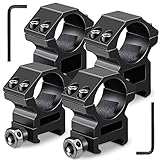
Overview: This versatile 4-piece set provides both medium (0.8") and high (0.71") profile rings for 1-inch scope tubes on Picatinny rails. Designed for adaptability across different rifle setups and cheek weld preferences. What Makes It Stand Out: The inclusion of two distinct heights in one package offers exceptional flexibility. Built-in tape protection prevents scope scratching and recoil-induced movement, while the hollowed-out aluminum design ensures lightweight construction without sacrificing stability. The single rail clamp screw per side simplifies installation. Value for Money: Priced competitively, the dual-height set eliminates the need for separate purchases, offering significant savings for shooters needing multiple configurations. The included Allen wrenches add convenience, though the basic finish is less refined than premium brands. Strengths and Weaknesses: Strengths: Lightweight aircraft aluminum, dual-height versatility, effective recoil prevention tape, straightforward installation. Weaknesses: Basic anodization may wear over time, medium profile height measurement (0.8") differs slightly from industry naming conventions, limited height options beyond the included pair. Bottom Line: An excellent budget-friendly choice for hunters or recreational shooters needing adaptable mounting heights. Its practical features and included hardware deliver solid reliability for the price, making it a smart entry-level or backup option.
7. Vortex Sport Riflescope Rings (1" - Medium (.90"))

Overview: Vortex’s precision-engineered medium-height rings position the scope tube center at 0.90 inches, providing a balanced cheek weld for many shooters. Sold as a pair, they cater to standard 1-inch tube scopes on Picatinny or Weaver rails. What Makes It Stand Out: Universal compatibility with both Picatinny and Weaver systems is a major advantage. The integrated recoil lug ensures consistent zero retention, while laser-engraved torque specs guarantee correct tightening. The VIP lifetime warranty is exceptionally robust and transferable. Value for Money: Justifying a mid-range price, the Vortex rings offer premium features like recoil lugs and precise machining typically found in costlier models. The lifetime warranty covering defects and damage (excluding misuse) adds immense long-term value compared to competitors. Strengths and Weaknesses: Strengths: Dual rail compatibility, reliable recoil lug, precise laser torque markings, outstanding VIP warranty, durable 6061 aluminum construction. Weaknesses: Medium height (0.90") may not suit all stock configurations, slightly heavier per ring (1.76 oz) than some minimalist designs. Bottom Line: Highly recommended for serious shooters seeking dependable performance and unparalleled warranty support. The combination of build quality, recoil management, and Vortex’s commitment makes these rings a worthwhile investment for durability-focused users.
8. Monstrum Precision Picatinny Scope Rings | 1 inch Diameter | 0.80 inch Center Height
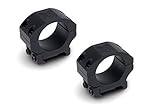
Overview: These precision-machined rings deliver a specific 0.80-inch center height, ideal for achieving a lower cheek weld on rifles with higher comb stocks or for use with long-eye-relief scopes. Designed exclusively for Picatinny rails and 1-inch scope tubes. What Makes It Stand Out: Monstrum emphasizes exact center height specification (0.80"), crucial for optimizing sight alignment and shooter ergonomics. The dedicated anti-recoil lug locks securely into Picatinny slots, eliminating movement under heavy recoil. Availability in four precise heights caters to highly customized setups. Value for Money: Offering significant savings over top-tier brands while maintaining solid performance, these rings provide excellent value for shooters needing a specific low height. The lifetime guarantee backs their durability claims effectively at this price point. Strengths and Weaknesses: Strengths: Precise 0.80" height for low-profile setups, secure anti-recoil lug, Picatinny-specific zero-wiggle fit, lifetime guarantee, cost-effective. Weaknesses: Picatinny-only compatibility (no Weaver), requires careful height selection pre-purchase, finish may be less refined than premium options. Bottom Line: A top choice for budget-conscious shooters requiring a true low-mount solution. Its precise height calibration and recoil-proof design deliver reliable performance, making it ideal for AR platforms or rifles needing minimal scope height.
9. Monstrum Precision Picatinny Scope Rings | 1 inch Diameter | 1.00 inch Center Height
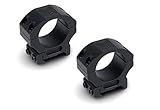
Overview: Engineered for a 1.00-inch center height, these rings offer a versatile mid-height solution, balancing eye relief and cheek weld for many standard sporting rifles. Built exclusively for Picatinny rails and 1-inch scope tubes. What Makes It Stand Out: The exact 1.00-inch center height specification ensures optimal sight alignment for common rifle stocks. Like all Monstrum Picatinny rings, it features a dedicated anti-recoil lug that locks into rail slots for absolute zero retention, even under extreme recoil. Part of a 4-height system for tailored setups. Value for Money: Providing exceptional precision at an accessible price, these rings undercut major brands significantly. The included lifetime guarantee reinforces confidence in their durability, making them a cost-efficient alternative to more expensive mid-height rings. Strengths and Weaknesses: Strengths: Accurate 1.00" height for standard applications, robust anti-recoil lug, Picatinny-specific stability, lifetime warranty, strong value proposition. Weaknesses: Picatinny rails only (not Weaver), requires correct height selection upfront, basic aesthetic finish. Bottom Line: Highly recommended for hunters and target shooters needing a reliable, mid-height mount. Its precision engineering, recoil resistance, and affordability make it a standout value for building or upgrading a versatile rifle optic system.
10. LONSEL 1’’ Scope Rings, 2Pcs High Profile & 2Pcs Medium Profile 1 Inch Scope Mount Rings for Picatinny Rail (High Profile - 2 Pack)
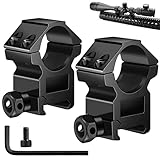
Overview: This 2-ring high-profile set (0.71" gap) is designed for mounting 1-inch scopes on Picatinny rails, offering sufficient clearance for larger objective lenses. Features a hollowed-out design and protective tape. What Makes It Stand Out: The hollowed-out “see-through” design reduces weight while maintaining rigidity. Built-in internal tape lining prevents scope marring and enhances grip against recoil. Aircraft-grade 6061 aluminum combined with steel components ensures strength without excessive weight (2 oz per ring). Value for Money: An economical high-profile solution, the LONSEL rings deliver core functionality reliably. The inclusion of an Allen wrench and spare screws adds practical value. While not as refined as premium brands, they offer solid performance for the price, especially for occasional use. Strengths and Weaknesses: Strengths: Lightweight hollow design, effective anti-slip tape, durable aluminum/steel build, simple single rail clamp screw installation, includes tools. Weaknesses: Medium profile not included in this specific 2-pack (despite title), basic finish, potential for slight movement under very heavy recoil compared to recoil-lug designs. Bottom Line: A practical, budget-friendly choice for hunters needing high clearance. While lacking advanced recoil features of higher-end models, its durability, included hardware, and scratch protection make it a dependable option for moderate-recoil firearms.
Understanding Scope Ring Fundamentals
The Critical Role of Scope Rings in Accuracy
Scope rings are far more than simple clamps; they are precision alignment tools. Their primary job is to hold the scope perfectly straight and secure relative to the rifle’s bore and action, ensuring consistent return to zero after recoil. Any movement, flex, or misalignment introduces variables that directly sabotage accuracy. High-quality rings minimize stress on the scope tube, prevent canting, and maintain perfect bore-sight alignment, forming the bedrock of reliable shot placement.
Material Matters: Aluminum vs. Steel vs. Titanium
The metal used significantly impacts performance, weight, and cost. Aircraft-grade 6061-T6 or 7075-T6 aluminum offers an excellent strength-to-weight ratio, resists corrosion, and is common for most applications. Steel rings (often 4140 chrome-moly) provide maximum strength and rigidity for extreme recoil scenarios but add noticeable weight. Titanium strikes a balance with near-steel strength at roughly 60% of the weight, though it commands a premium price. Avoid lower-grade alloys prone to deformation.
Ring Height: More Than Just Clearance
Height selection is crucial for both functionality and ergonomics. Low rings position the scope close to the barrel, offering a lower center of gravity and potentially better cheek weld, ideal for rifles with ample clearance between scope bell and barrel. Medium height is the versatile “sweet spot” for many standard bolt-actions. High rings accommodate large objective lenses, night vision devices, or scopes with significant elevation travel, ensuring proper eye relief and preventing barrel obstruction. Consider your specific scope dimensions and rifle profile.
Inner Diameter Compatibility is Non-Negotiable
Scope tubes come in standard diameters: 1 inch (25.4mm), 30mm, and increasingly 34mm or larger. Rings must match your scope tube diameter exactly. Using mismatched rings (e.g., 30mm rings on a 1-inch scope) creates gaps, leading to tube stress, slippage, or crushing. Verify your scope tube size before purchasing rings—never assume based on the scope model alone. Precision-machined rings for the exact diameter ensure uniform clamping force.
Compatibility and Fitment Essentials
Rail and Base Interface Standards
Your rifle’s receiver likely has a specific mounting platform: Weaver, Picatinny (MIL-STD-1913), Dovetail (various widths), or proprietary systems like ARCA or Zeiss rails. Rings must be designed specifically for your rail type. Picatinny slots are wider than Weaver, and dovetail angles vary. Using incompatible rings leads to poor alignment, instability, or inability to mount securely. Always confirm rail compatibility.
Action-Specific Considerations
Rifle actions vary significantly in height, width, and recoil lug design. Bolt-action rifles often require specific ring heights to clear the bolt handle or ensure proper scope eye relief. Semi-automatic platforms like AR-15s frequently need higher rings to accommodate charging handles and lower 1/3 co-witnessing with iron sights. Lever-actions have unique ejection port and lever clearance needs. Consider your action’s physical constraints.
Recoil Management Features
High-recoil calibers demand rings engineered to withstand violent forces without shifting. Look for key features: recoil lugs that engage the rail slots to prevent forward/backward movement, thick clamping surfaces, and robust crossbolts. Multi-screw top clamps (4+ screws) distribute pressure more evenly than traditional two-screw designs, significantly enhancing stability under heavy recoil. Don’t underestimate this factor with magnum cartridges.
Twist-Lock vs. Traditional Crossbolt Designs
Traditional rings use crossbolts that clamp the scope tube when tightened from the sides. Twist-lock systems feature a central bolt that, when tightened, causes the ring halves to rotate slightly inward, applying even, 360-degree pressure on the scope tube. Twist-lock designs often provide superior clamping force distribution and are less prone to tube distortion, though they may require specific torque tools.
Precision Installation Techniques
The Non-Negotiable: Proper Torque Values
Guessing torque is a recipe for disaster. Under-tightening leads to slippage; over-tightening can crush scope tubes, distort internal mechanisms, or strip threads. Always use a calibrated torque wrench set to the manufacturer’s specifications for both the base screws and ring cap screws. Values vary significantly between materials and designs—aluminum typically requires less torque than steel. This simple step prevents most mounting failures.
Optimal Torque Sequence for Uniform Pressure
How you tighten matters as much as the torque value. For traditional crossbolt rings, follow a criss-cross pattern (like lug nuts on a wheel), tightening incrementally in multiple passes. For twist-lock systems, follow the specific sequence in the instructions, usually tightening the central bolt in stages. This ensures even pressure distribution around the scope tube, preventing ovaling or stress points that cause zero shift.
Bore Alignment: Eliminating Cant
Misaligned rings induce cant, causing the reticle to be off-vertical. This leads to inconsistent windage adjustments and trajectory errors. Use a bore alignment tool or visual inspection through the unloaded barrel to ensure rings are perfectly straight relative to the bore axis before final tightening. Some high-end rings include alignment features or shims to correct minor receiver inconsistencies.
Anti-Cant Solutions and Verification
Even with aligned rings, scope installation can introduce cant. Use an anti-cant bubble level mounted on the scope’s elevation turret during installation. Alternatively, utilize a plumb line at the range to verify the vertical reticle is truly perpendicular to the ground. Many serious shooters employ both methods for critical applications to eliminate this subtle accuracy killer.
Specialized Applications and Scenarios
Long-Range Precision Ring Requirements
Extreme precision demands the utmost stability. High-magnification scopes amplify even microscopic movement. Opt for rings with maximum clamping surface area, multi-screw top caps, recoil lugs, and potentially integrated anti-cant features. Material choice often leans towards steel or high-grade titanium for absolute rigidity, accepting the weight penalty for unwavering performance at distance.
Tactical and Duty Use: Speed and Reliability
Tactical environments prioritize rapid mounting/dismounting without losing zero and absolute reliability under harsh conditions. QD (Quick Detach) rings are essential here, but not all QD systems are equal. Seek designs proven to maintain zero through repeated removal/reinstallation and endure impacts, dust, and moisture. Robust construction and secure locking mechanisms are non-negotiable for duty carry.
Hunting in Extreme Environments
Hunters face temperature swings, moisture, and rough handling. Prioritize rings with excellent corrosion resistance (anodized aluminum or stainless steel) and secure locking mechanisms that won’t loosen from vibration during long hikes. While weight matters, don’t sacrifice necessary strength for marginal weight savings in critical hunting optics. Ensure rings won’t snag on brush during stalks.
Night Vision and Thermal Imaging Compatibility
Mounting night vision or thermal devices often requires exceptionally high rings to clear the device body and allow proper eye relief. Ensure the chosen height provides sufficient clearance for the specific device and maintains a natural head position. Verify the ring material and design can handle the unique weight distribution and potential recoil characteristics of these often heavier optics.
Maintenance and Longevity Practices
Regular Inspection Protocols
Treat ring tightness like any critical mechanical component: inspect it regularly. Before every important outing or after significant recoil events, check the torque on ring cap screws and base screws using your torque wrench. Look for signs of movement like shifted tape lines, scuff marks on the rail, or loosened screws. Prevention is infinitely easier than fixing a shifted zero in the field.
Cleaning and Corrosion Prevention
Dirt, grit, and moisture trapped between rings and the rail or scope tube can cause slippage or corrosion. Periodically remove the scope (following safe procedures) to clean the rail, bases, and ring mounting surfaces with appropriate solvents and a soft brush. Apply a thin coat of high-quality gun oil or anti-seize compound (designed for firearms) to rail slots and screw threads during reassembly to prevent galling and corrosion, especially in harsh environments.
Recognizing Wear and When to Replace
Rings endure significant stress. Signs they may need replacement include stripped screw threads, cracked ring bodies (especially aluminum), visible deformation of the clamping surfaces, persistent zero shift despite proper torque, or inability to achieve consistent torque without slippage. Don’t push worn rings beyond their limits; replacing them is far cheaper than replacing a damaged scope or missing a critical shot.
Frequently Asked Questions
How do I know if my scope rings are too tight?
Excessive torque can crush the scope tube, causing internal fogging, distorted reticles, or permanent zero shift. If you notice sudden accuracy degradation, internal lens issues after mounting, or if the torque wrench clicks significantly before the ring feels snug, you’ve likely over-torqued. Always adhere strictly to manufacturer specs.
Can I mix different brands of scope rings?
While physically possible if dimensions match, it’s strongly discouraged. Different brands have varying tolerances, clamping geometries, and torque requirements. Mixing increases the risk of uneven pressure, tube distortion, and inconsistent performance. For optimal stability and reliability, use a matched set from the same manufacturer.
Why does my zero shift after the first few shots?
This often indicates insufficient torque on the ring cap screws or base screws, allowing the scope to settle under recoil. It can also be caused by poorly aligned rings inducing stress. Always torque to spec using a calibrated wrench and verify ring alignment before final zeroing. Re-check torque after the first 3-5 shots.
Are higher scope rings less stable than lower ones?
Generally, yes. Increased height creates a longer lever arm, potentially amplifying any minor movement or flex. However, modern high-quality high rings designed for stability (with robust construction, recoil lugs, and proper clamping) perform exceptionally well. Stability depends more on ring quality and proper installation than height alone—using the correct height for your setup is paramount.
Do I need to lap my scope rings?
Lapping (smoothing the ring clamp surfaces) is often debated. With modern, precision-machined rings, it’s usually unnecessary and can even reduce clamping effectiveness if done poorly. Only consider lapping if you visually or physically detect significant misalignment or gaps between ring halves after initial assembly and torque. Most high-end rings come ready to use.
How often should I re-torque my scope rings?
Re-torque is recommended after the initial mounting (fire 3-5 rounds, then re-check), after any significant recoil event or impact, and periodically (e.g., every few hundred rounds or before critical use). Environmental factors like extreme temperature swings can also cause metal to expand/contract, potentially loosening screws over time. Regular checks are good practice.
What’s the biggest mistake people make when mounting scope rings?
Guessing torque values is the most common and critical error. Using a standard hex key without a torque wrench leads to inconsistent, often incorrect tightness. Under-torquing causes slippage; over-torquing damages scopes. Investing in a quality, calibrated torque wrench specific to firearms is the single best step for reliable mounting.
Can I use steel rings on an aluminum scope tube?
Yes, and it’s common practice. The critical factor is applying the correct torque for the ring material and design. Steel rings require higher torque than aluminum rings to achieve the same clamping force without crushing the scope tube. Always follow the ring manufacturer’s torque specifications, not generic advice.
Do quick-detach rings maintain zero reliably?
High-quality QD rings from reputable manufacturers, designed specifically for zero retention, can be extremely reliable. However, not all QD systems are equal. Look for designs with positive mechanical locks (not just friction), robust construction, and independent verification of zero retention through repeated cycles. Test any QD system rigorously before relying on it.
How do temperature changes affect scope ring stability?
Extreme cold can cause metals to contract slightly, potentially loosening screws over time. Extreme heat can have the opposite effect. Using a thread-locking compound rated for the expected temperature range (e.g., blue Loctite) on base screws helps prevent loosening from thermal cycling. Always re-check torque after significant temperature exposure before critical use.
Related Buying Guides
- Stop Shaky Aim with the 10 Best Rifle Scope Rings in 2026
- 10 Top-Rated Rifle Scope Rings According to Experts in 2026
- 10 Rifle Scope Mounts Recommendations for Stable Performance in 2026
- Stop Image Distortion with the 10 Best Rifle Scopes This Year
- 10 Best Air Rifle Scopes for Pest Control and Target Practice in 2026