Table of Contents
That gut-wrenching fear of giardia doesn’t have to be part of your backpacking experience anymore. Every hiker knows the anxiety of staring at a pristine mountain stream, wondering if that crystal-clear water harbors microscopic parasites waiting to turn your dream trip into a week-long nightmare. The good news? Modern water filtration technology has evolved far beyond the bulky, slow systems of yesterday, giving you reliable protection against giardia and other waterborne pathogens without adding significant weight to your pack.
Understanding how to choose the right water filter is the key to transforming your hydration strategy from constant worry to confident sipping. This comprehensive guide breaks down everything you need to know about selecting a backpacking water filtration system that effectively eliminates giardia cysts while matching your specific outdoor lifestyle, trip duration, and personal preferences. We’ll explore the science behind filtration, the various types available, critical features to evaluate, and practical tips for maintaining your system in the field.
Top 10 Backpacker Water Filters
Detailed Product Reviews
1. Sawyer Squeeze Water Filtration System, Cnoc Premium 2 Liter Bladder

Overview: This pairing combines Sawyer’s legendary hollow fiber filter with Cnoc’s premium 2-liter bladder, creating a robust backcountry water system. The Sawyer Squeeze removes bacteria, protozoa, cysts, and 100% of microplastics, while the Cnoc bladder’s wide-mouth design simplifies filling from streams and lakes. Weighing under six ounces complete, this system balances durability with packability for serious adventurers.
What Makes It Stand Out: The Cnoc bladder’s extra-durable TPU construction and wide-mouth opening distinguish this from standard kits. While typical squeeze pouches feel flimsy, the Cnoc bag withstands rigorous use and abuse. The fiber walls in Sawyer’s filter are thicker than competitors, enabling more aggressive backwashing and extending lifespan to an incredible 100,000 gallons—essentially a lifetime of use for most outdoor enthusiasts.
Value for Money: At approximately $50-60, this system costs more than basic squeeze kits but delivers superior longevity and reliability. Purchasing the filter and premium bladder separately would cost significantly more. Considering the filter’s 100,000-gallon lifespan versus competitors offering 1,000-5,000 gallons, the cost-per-gallon is negligible. For frequent backpackers, this represents exceptional long-term value.
Strengths and Weaknesses: Strengths include the virtually indestructible Cnoc bladder, lifetime filter capacity, ultralight system weight, and comprehensive cleaning accessories. Weaknesses involve the higher upfront cost and the Cnoc bag’s rigidity, which some users find harder to roll tightly than standard pouches. The wide mouth, while convenient for filling, requires careful sealing to prevent leaks.
Bottom Line: This system excels for dedicated backpackers and international travelers who prioritize reliability and long-term value over minimal upfront savings. The premium bladder justifies its cost through durability, making it a smart investment for those who venture deep into the backcountry regularly.
2. Sawyer Products SP128 Mini Water Filtration System, Single, Blue

Overview: The Sawyer MINI is a palm-sized powerhouse that delivers serious filtration in a 2-ounce package. This inline filter attaches to the included 16-ounce pouch, standard disposable bottles, hydration packs, or functions as a straw for direct-source drinking. It removes 99.99999% of bacteria and 99.9999% of protozoa, making it ideal for solo hikers, travelers, and emergency kits where space and weight are paramount.
What Makes It Stand Out: The MINI’s versatility is unmatched in its size class. It seamlessly integrates with virtually any 28mm-threaded bottle, transforming convenience store purchases into safe hydration. The 100,000-gallon lifespan is extraordinary for such a compact unit, and Sawyer’s rigorous triple-testing of each unit ensures reliable performance when you need it most.
Value for Money: Priced around $20-25, the MINI offers incredible bang for your buck. The filter’s longevity means you’ll likely never need a replacement, amortizing the cost to nearly zero over time. While the included 16-ounce pouch is small, the ability to use common disposable bottles eliminates the need for expensive proprietary reservoirs.
Strengths and Weaknesses: Strengths include featherlight weight, universal compatibility, exceptional filter lifespan, and affordability. Weaknesses are the frustratingly slow flow rate compared to larger filters, the tiny 16-ounce pouch requiring frequent refills, and reduced efficiency with murky water. The MINI also clogs more easily than its bigger Squeeze sibling, demanding diligent backflushing.
Bottom Line: Perfect for ultralight soloists, trail runners, and emergency preparedness kits. Accept the flow rate tradeoff for unparalleled portability and lifetime value. For group trips or high-volume needs, consider stepping up to the full-size Squeeze system.
3. Waterdrop Gravity Water Filter Straw, Camping Water Filtration System, Water Purifier Survival for Travel, Backpacking and Emergency Preparedness, 1.5 gal Bag, 5 Stage Filtration, Pack of 1
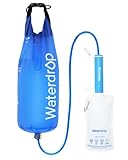
Overview: Waterdrop’s gravity-fed system combines a 1.5-gallon reservoir with a five-stage filtration straw, creating a hands-free hydration station for basecamps and group outings. The system employs coconut shell activated carbon and a 0.1-micron ultrafiltration membrane to reduce chlorine, particulates, and harmful pathogens. With a 1,400-gallon lifespan and 700 ml/min flow rate, it balances capacity with convenience.
What Makes It Stand Out: The massive 1.5-gallon bag sets this apart from personal filters, providing enough water for multiple people or all-day basecamp needs without constant refilling. The five-stage filtration process, including activated carbon, improves taste and odor beyond typical hollow fiber-only systems. The innovative backwash function allows easy cleaning using any standard 27.5mm-threaded bottle.
Value for Money: At roughly $30-40, this system undercuts premium brands while offering superior capacity. The 1,400-gallon lifespan, while shorter than Sawyer’s 100,000 gallons, still delivers years of service for occasional users. The included large-capacity bag eliminates additional reservoir purchases, making it cost-effective for group camping scenarios.
Strengths and Weaknesses: Strengths include the generous reservoir size, multi-stage filtration for better taste, easy backwashing, and versatile connectivity. Weaknesses involve the shorter filter lifespan, slower 700 ml/min flow rate, and less established brand reputation. The bag’s durability hasn’t been proven over decades like competitors, and replacement filters may be harder to source.
Bottom Line: An excellent choice for family camping, basecamps, and emergency preparedness where capacity trumps ultralight concerns. The gravity-fed convenience and taste-improving carbon stage make it ideal for car camping and home emergency kits. Hardcore backpackers should consider lighter options.
4. Katadyn BeFree 1.0L Water Filter, Fast Flow, 0.1 Micron EZ Clean Membrane for Endurance Sports, Camping and Backpacking, One Size, 8018006

Overview: Engineered for speed demons, the Katadyn BeFree prioritizes flow rate and simplicity in a 2.3-ounce package. The collapsible Hydrapak flask integrates seamlessly with the 0.1-micron hollow fiber filter, delivering clean water at an impressive 2 liters per minute. Designed for trail runners, ultralight hikers, and fast-packers, this Swiss-made system emphasizes minimal fuss and maximum output.
What Makes It Stand Out: The BeFree’s 2 L/min flow rate crushes competitors, filling bottles in seconds rather than minutes. The EZ-Clean Membrane requires no backflushing—simply shake or swish in water to clear debris. The Stay Clean nozzle prevents contamination between uses, a thoughtful detail for multi-day trips. Katadyn’s Swiss engineering and two-year guarantee instill confidence.
Value for Money: At $40-50, the BeFree commands a premium but delivers tangible performance benefits. The 1,000-liter lifespan, while shorter than Sawyer’s offerings, suffices for 2-3 years of regular use. The convenience of tool-free cleaning saves time and frustration, justifying the cost for athletes who value efficiency over absolute longevity.
Strengths and Weaknesses: Strengths include blazing-fast flow rate, foolproof cleaning, true ultralight design, and Swiss quality assurance. Weaknesses are the relatively short 1,000-liter filter lifespan, potential durability concerns with the soft flask, and higher cost-per-liter than lifetime filters. The flask can develop leaks if over-tightened or punctured.
Bottom Line: The ultimate filter for trail runners, endurance athletes, and ultralight enthusiasts who prioritize speed and simplicity. If you demand the fastest flow and easiest maintenance, the premium is worth it. For budget-conscious backpackers, longer-lasting options exist.
5. Sawyer Products SP129 Squeeze Water Filtration System w/Two 32-Oz Squeeze Pouches, Straw, and Hydration Pack Adapter

Overview: Sawyer’s SP129 Squeeze kit represents the goldilocks solution for versatile backcountry water treatment. The 0.1-micron absolute filter removes bacteria, protozoa, cysts, sediment, and microplastics while weighing only 2 ounces. This comprehensive package includes two 32-ounce pouches, a drinking straw, and hydration pack adapters, enabling multiple configurations from personal drinking to gravity-fed group systems.
What Makes It Stand Out: The included hydration pack adapter transforms this into a inline filtration system for backpacking packs, a feature absent in basic kits. Having two pouches allows continuous filtration—fill one while drinking from the other. The removable cap enables direct drinking or bottle filtering, and the system’s compatibility with standard 28mm threads ensures universal utility.
Value for Money: Priced around $40-45, the SP129 offers excellent value through included accessories that would cost $15-20 separately. The 100,000-gallon filter lifespan provides lifetime value, making the initial investment negligible over years of use. For backpackers wanting versatility without buying piecemeal components, this kit saves money and guesswork.
Strengths and Weaknesses: Strengths include the versatile accessory bundle, lifetime filter capacity, ultralight weight, and proven reliability. Weaknesses involve the standard pouches, which are less durable than premium alternatives and prone to failure after repeated freezing or rough handling. The flow rate, while adequate, lags behind the Katadyn BeFree. Cleaning requires diligent backflushing.
Bottom Line: The most versatile filtration system for general backpacking and group use. If you want one kit that does everything—squeeze, gravity, inline—the SP129 is your answer. Upgrade to a Cnoc bladder later if pouches fail, but this package covers all bases brilliantly.
6. LifeStraw Personal Water Filter for Hiking, Camping, Travel, and Emergency Preparedness, 2 Pack, Blue
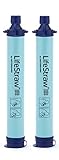
Overview: The LifeStraw is the iconic personal water filter that revolutionized portable water purification. This 2-pack provides individual filtration devices that weigh under 2 ounces each, making them ideal for ultralight backpacking, emergency kits, and international travel where water quality is questionable.
What Makes It Stand Out: LifeStraw’s social impact program delivers a year of safe water to a child in need for every purchase. The filtration is extraordinarily thorough, removing 99.999999% of bacteria and 99.999% of parasites and microplastics. With an unlimited shelf life and 1,000-gallon capacity per unit, it’s designed for long-term preparedness.
Value for Money: Priced around $35-40 for two, each LifeStraw costs under $20 and provides over five years of drinking water. This represents exceptional value compared to chemical treatments or bottled water, especially considering the proven durability and global testing.
Strengths and Weaknesses: Strengths include proven reliability in harsh conditions, featherlight weight, no expiration date, simple operation, and philanthropic impact. Weaknesses are the inability to attach to water bottles, lack of virus protection, requiring direct suction from water sources, and occasional difficulty with backwashing maintenance.
Bottom Line: For ultralight adventurers and emergency preparedness, the LifeStraw 2-pack delivers proven, life-saving technology with the added benefit of supporting global water initiatives.
7. Straw Water Filter 5 Pack – Outdoor Camping & Hiking Survival Gear Kit for Family Use, Ultra-Light Personal Filter Straws for Backpacking, Travel, Bug-Out Bags and Emergency Preparedness

Overview: This 5-pack of personal water filter straws addresses group hydration needs with individual units for each family member or team member. Designed for camping, hiking, and emergency scenarios, these straws emphasize hygiene and convenience without sharing equipment.
What Makes It Stand Out: The family-focused packaging ensures everyone has their own dedicated filter, eliminating cross-contamination concerns. The low-effort sipping mechanism works well when fatigued, and the 5-stage filtration system combines sediment prefilters with 0.1-micron hollow fiber membranes to remove 99.99999% of harmful substances.
Value for Money: Typically retailing for $45-50, this 5-pack brings the per-unit cost below $10, making it one of the most economical options for families or groups. The value multiplies when considering organized preparedness for multiple people.
Strengths and Weaknesses: Strengths include exceptional group value, food-grade BPA-free materials, pocket-sized portability, and intuitive operation. Weaknesses include less brand recognition than category leaders, unspecified total lifespan, potentially less rigorous independent testing, and no virus protection.
Bottom Line: This 5-pack delivers outstanding value for families seeking organized, hygienic water filtration solutions for outdoor adventures and emergency preparedness.
8. Membrane Solutions Personal Water Filter, Survival Filtration Straw Portable Gear, Emergency Preparedness, Supply for Drinking Hiking Camping Travel Hunting Fishing Team Family Outing (Blue, 4 Pack)
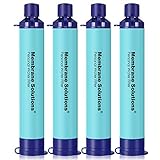
Overview: Membrane Solutions offers a scientifically-certified water filtration straw in a convenient 4-pack configuration. Meeting stringent NSF/ANSI standards, this filter targets discerning outdoor enthusiasts who prioritize verified performance for hiking, camping, and emergency use.
What Makes It Stand Out: Triple NSF certification (42, 372, 401) distinguishes this filter from most competitors. The 5-stage system preserves essential minerals while removing contaminants, and the 1,320-gallon lifespan exceeds many alternatives. Its universal 28mm threading integrates with standard bottles for versatile use.
Value for Money: At $30-40 for four units, this pack delivers certified performance at under $10 per filter. The extended lifespan and scientific validation provide premium features without premium pricing, offering excellent cost-per-gallon value.
Strengths and Weaknesses: Strengths include rigorous NSF certifications, mineral retention, higher flow rate (16.9 oz/min), longer lifespan, and bottle compatibility. Weaknesses include slightly larger size than minimalist straws, lesser brand recognition, and potential warranty support uncertainties compared to established competitors.
Bottom Line: For those seeking certified filtration performance without sacrificing essential minerals, this 4-pack provides scientifically-proven reliability at an accessible price point.
9. Sawyer Products SP2101 MINI Water Filtration System, 2-Pack, Blue and Green

Overview: The Sawyer MINI is a versatile inline filtration system that transcends basic straw functionality. This 2-pack includes filters, 16-ounce pouches, drinking straws, and cleaning plungers, providing a complete solution for outdoor recreation and emergency preparedness.
What Makes It Stand Out: Each MINI filter is individually tested three times to ensure absolute 0.1-micron performance. The remarkable 100,000-gallon lifespan dwarfs competitors, and the multiple attachment options—pouches, standard bottles, hydration packs, or direct straw use—offer unmatched versatility in the field.
Value for Money: Priced at $40-50 for two complete systems with accessories, the MINI delivers extraordinary value through its virtually unlimited lifespan. This single purchase could serve decades of adventures, making it the most cost-effective long-term solution available.
Strengths and Weaknesses: Strengths include incredible durability, multiple configuration options, included cleaning and maintenance kit, proven brand reputation, and 100% microplastic removal. Weaknesses include slightly more complex operation than simple straws, requiring periodic backwashing, and decreasing flow rate as the filter accumulates debris.
Bottom Line: The Sawyer MINI 2-pack is the ultimate choice for serious outdoor enthusiasts prioritizing longevity, versatility, and proven performance in their water filtration system.
10. Camco Tastepure RV Water Filter - Advanced 6-Step Patent-Protected Filtration - Camping Essentials for Fresh Drinking Water - 2-Pack of RV Inline Water Filters, Made in USA (40045)
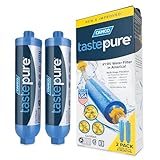
Overview: Camco’s Tastepure RV filters provide heavy-duty water purification for vehicle-based camping rather than personal backpacking. This 2-pack of inline filters attaches to standard garden hoses, delivering clean water to RVs, trailers, and basecamp setups.
What Makes It Stand Out: The patented 6-step Hex-Flow filtration system combines multiple media types for comprehensive treatment. NSF/ANSI 42 and 53 certification ensures lead-free construction and effective contaminant reduction. Proudly manufactured in the USA, these filters address chlorine, sediment, taste, and odor issues while controlling bacterial growth during storage.
Value for Money: At $50-60 for two, these filters represent solid value for RV owners and car campers. The multi-stage filtration and certifications justify the price point compared to simpler carbon filters, though they’re not designed for backpacking.
Strengths and Weaknesses: Strengths include robust 6-stage filtration, NSF certifications, lead-free assurance, versatile hose connections, and USA manufacturing. Weaknesses include lack of portability for hiking, requirement for pressurized water source, larger physical size, and inability to filter viruses or provide absolute microfiltration.
Bottom Line: For RV enthusiasts and basecamp setups, the Camco Tastepure delivers certified, great-tasting water, but backpackers should look to portable straw filters instead.
Understanding Giardia and Waterborne Threats
Backpackers face invisible enemies in untreated water sources that can derail adventures within days. These microorganisms don’t care how remote or pristine your water source appears.
What is Giardia and Why Should Backpackers Care?
Giardia lamblia is a microscopic parasite that thrives in water contaminated by animal or human feces. The parasite forms hardy cysts that survive for months in cold water, making even high-altitude streams potentially risky. Ingesting as few as ten cysts can cause giardiasis, leading to severe diarrhea, cramps, bloating, and dehydration that can persist for weeks. The insidious nature of giardia lies in its delayed onset—symptoms typically appear 1-2 weeks after exposure, meaning you might not connect your illness to that “perfect” campsite water source.
Other Waterborne Pathogens to Know
While giardia gets the most attention, savvy backpackers protect against a broader spectrum of threats. Cryptosporidium, another protozoan parasite, features even smaller oocysts that resist chlorine treatment. Bacteria like E. coli, Salmonella, and Campylobacter cause rapid-onset gastrointestinal distress. Viruses such as norovirus and hepatitis A, though less common in remote North American wilderness, pose serious risks in popular backcountry areas or international travel. A robust filtration strategy addresses this entire spectrum, not just giardia alone.
How Water Filters Work Against Giardia
The mechanical process of removing giardia cysts from water relies on physical barriers rather than chemical reactions. Understanding this mechanism helps you evaluate filter effectiveness.
The Science of Mechanical Filtration
Water filters create a physical barrier with microscopic pores smaller than the pathogens they’re designed to catch. Giardia cysts typically measure 8-12 microns in diameter, so filters with pores under 1 micron effectively block them. As water passes through the filter media—typically hollow fiber membranes or ceramic elements—the cysts become trapped on the surface while clean water flows through. This process requires no chemicals, waiting periods, or power sources, providing immediate safe drinking water.
Understanding Micron Ratings
Micron ratings describe the size of particles a filter can remove, but the numbers can be misleading. Absolute micron ratings indicate the largest pore size guaranteed, while nominal ratings represent average performance. For giardia protection, you need an absolute rating of 1 micron or less. Many quality backpacking filters achieve 0.2-0.4 microns absolute, which not only blocks giardia but also captures smaller bacteria. Always look for “absolute” in specifications rather than “nominal” when evaluating filters for pathogen removal.
Types of Backpacking Water Filters
The market offers several distinct filter categories, each with unique advantages for different backpacking scenarios. Your choice depends on group size, trip length, and personal preferences.
Pump Filters
Pump filters force water through filter media using a hand-operated mechanism. These systems excel at processing water from shallow sources like puddles or trickles where other methods struggle. The pumping action gives you control over the process, allowing you to fill multiple containers efficiently. However, they require physical effort and typically weigh more than other options. The moving parts also create potential failure points that demand occasional maintenance in the field.
Gravity Filters
Gravity systems use elevation difference to move water through a filter, requiring no pumping or squeezing. You fill a dirty water reservoir, hang it from a tree branch, and let physics do the work while you set up camp or relax. These filters shine for group cooking and basecamp scenarios, processing large volumes with minimal effort. The trade-off includes slower flow rates and the need for a suitable hanging location. They’re less practical for quick solo hydration on the move.
Squeeze and Bottle Filters
Squeeze systems integrate the filter directly into a soft bottle or pouch that you compress to push water through. These ultralight options work for both on-the-go drinking and filling other containers. The simplicity and minimal weight appeal to solo hikers and ultralight enthusiasts. However, they require manual pressure that can become tiring for large water volumes, and the flexible bottles may puncture if mishandled.
Straw and Personal Filters
Straw-style filters allow you to drink directly from a water source through a filter element. These are the lightest options available and work instantly without setup. They’re ideal for emergency kits and ultralight day hikes where you can drink at the source. The limitation is obvious—you can’t easily fill bottles for later, and they offer no solution for cooking water. They’re also less practical for murky water sources that might clog the filter quickly.
UV Purification Devices
UV purifiers use ultraviolet light to disrupt the DNA of microorganisms, rendering them unable to reproduce. These devices work against all pathogens including viruses, making them versatile for international travel. They’re fast, treating a liter in 90 seconds, and add minimal taste alteration. The downsides include battery dependency, ineffectiveness in cloudy water, and the need for pre-filtering sediment. They also don’t provide residual protection, so purified water can be recontaminated.
Critical Features to Consider
Beyond basic filter type, several features determine how well a system matches your specific needs. Evaluating these characteristics prevents buyer’s remorse on the trail.
Filter Pore Size and Certification Standards
The gold standard for backpacking filters is meeting NSF/ANSI Standard 53 or 58 for cyst reduction, or Standard 42 with specific pathogen claims. Some manufacturers also test against EPA Guide Standard and Protocol for microbiological purifiers. Look for explicit statements about giardia, cryptosporidium, and bacteria removal rather than vague “removes 99.9% of pathogens” claims. The best filters provide independent lab test results on their websites or packaging.
Flow Rate: Speed vs. Efficiency Trade-offs
Flow rate, measured in liters per minute, directly impacts your time at water sources. Fast-flowing filters (1+ liters/minute) minimize group wait times but may sacrifice some longevity or require more frequent cleaning. Slower filters (0.5 liters/minute) often last longer and clog less frequently. Consider your patience level and typical water needs—a solo hiker needs less speed than a group of four cooking dinner. Remember that flow rates decline as filters clog, so initial speed ratings can be misleading.
Maintenance and Longevity
A filter’s lifespan and upkeep requirements significantly affect its long-term value and reliability. Neglecting maintenance can turn your trusted filter into a useless weight.
Filter Lifespan and Capacity Ratings
Manufacturers rate filters by the number of liters they can process before replacement. These ratings range from 1,000 liters for ultralight options to 10,000+ for robust pump filters. However, these numbers assume clear water—sediment-heavy sources can reduce lifespan by 75% or more. Calculate your typical usage: a weekend warrior processing 4 liters per trip needs less capacity than a thru-hiker drinking 6 liters daily for months. Always carry a backup method when relying on a filter near its rated capacity.
Cleaning and Backflushing Procedures
Most hollow fiber filters require regular backflushing—forcing clean water backward through the filter—to remove trapped sediment and restore flow rate. Some systems include syringes or built-in mechanisms for this process. Ceramic filters can be scrubbed clean with an abrasive pad. Understand the recommended cleaning frequency and required tools before purchase. Filters that are difficult to backflush in the field can leave you with a slow, frustrating system after just a few days of silty water.
Winterization and Storage
Freezing temperatures can destroy hollow fiber filters by expanding water trapped inside the microscopic pores. If you’ve used your filter in sub-freezing conditions, assume it’s compromised unless you kept it warm against your body. For storage between trips, thoroughly dry the filter element according to manufacturer instructions—often by air drying for several days—to prevent mold and bacterial growth. Never store a wet filter in an airtight container for extended periods.
Weight and Packability Factors
Every ounce matters when you’re carrying it for miles, but water treatment is one area where ultralight choices require careful consideration.
Ultralight Options for Ounce-Counters
Straw filters and minimalist squeeze systems weigh under 3 ounces, fitting easily in a pocket. These appeal to experienced ultralight backpackers who accept trade-offs in convenience and versatility. However, consider your entire water system weight—including bottles, reservoirs, and backup methods. Sometimes a slightly heavier but more efficient system reduces overall pack weight by eliminating redundant gear or allowing smaller water carries due to faster, more reliable treatment.
Ecosystem and Ethical Considerations
Your water treatment choices impact the environments you love to explore. Responsible backpackers consider these factors.
Environmental Impact of Filter Waste
Disposable filter cartridges contribute to plastic waste, with most lasting only one season of heavy use. Some manufacturers offer recycling programs for spent cartridges. UV devices create electronic waste when batteries or units fail. Consider the full lifecycle of your system—durable ceramic filters may last years with proper care, while replaceable hollow fiber cartridges generate more waste but often process more water per unit. Choose brands with demonstrated environmental responsibility and take advantage of recycling programs when available.
Budget and Value Assessment
Price ranges for quality backpacking filters span from $20 to $300, but cost involves more than the initial purchase.
Cost Per Liter Analysis
Calculate true value by dividing the filter’s price by its rated capacity. A $80 filter rated for 2,000 liters costs $0.04 per liter, while a $30 filter lasting 500 liters costs $0.06 per liter. Factor in replacement cartridge costs and frequency. Also consider the cost of failure—getting giardia incurs medical expenses and lost time that far exceed any filter price. Sometimes spending more upfront for reliability and capacity saves money and misery over time.
Real-World Usage Tips
Field experience reveals nuances that product descriptions never mention. These practical insights help you maximize effectiveness.
Pre-Filtering and Turbid Water Strategies
Murky water clogs filters rapidly and can reduce effectiveness. Always carry a bandana, coffee filter, or purpose-built pre-filter to strain out sediment before it reaches your main filter. Let silty water settle in a container for 30 minutes before treating. Some systems include pre-filters that attach directly to the intake hose. This simple step can double your filter’s lifespan and maintain flow rates in challenging conditions.
Cross-Contamination Prevention
The cleanest filter output is useless if you contaminate it afterward. Keep “dirty” water containers and hoses completely separate from clean water vessels. Mark components clearly with colored tape. Never dip your clean water bottle directly into a water source after filtering—always pour from the filter output. Wash hands with purified water or sanitizer after handling contaminated equipment. One careless moment can undo all your careful filtration.
Testing Your Filter Before Trips
Never assume your filter works after months in storage. Test it at home before every major trip by filtering tap water and checking for leaks, cracks, or dramatically reduced flow. Some manufacturers recommend sanitizing stored filters by running a weak bleach solution through them annually. This pre-trip ritual identifies problems when you can still order replacements or repairs, not when you’re miles from the trailhead with a failing system.
Common Mistakes to Avoid
Even experienced backpackers make errors that compromise their water safety. Learning from others’ mistakes saves you from repeating them.
When to Replace Your Filter
Don’t push your filter beyond its rated capacity hoping for “just one more trip.” Performance degrades gradually, and you won’t know when protection fails. Replace filters after hitting 80% of rated capacity for critical trips. Visible damage, permanent flow rate reduction despite cleaning, or any freezing incident also mandate immediate replacement. The $30-50 cost of a new cartridge is cheap insurance against weeks of gastrointestinal misery.
Alternative Purification Methods
Filters aren’t your only option. Chemical treatments using chlorine dioxide or iodine work against all pathogens including viruses, though they require wait times (30 minutes to 4 hours) and may affect taste. Boiling remains the gold standard—bringing water to a rolling kill for one minute (three minutes above 6,500 feet) eliminates everything. These methods make excellent backups when your filter clogs, freezes, or fails. Smart backpackers carry a secondary treatment method for emergencies.
Making Your Final Decision
Choosing the right water filter involves balancing competing priorities. There’s no single perfect solution for every backpacker.
Consider your typical trip profile: solo weekend warrior, group basecamper, or international traveler? Evaluate your tolerance for maintenance, your budget, and your willingness to trade convenience for weight. Read user reviews focusing on long-term reliability and field maintenance rather than just initial impressions. Most importantly, practice with your chosen system at home until operation becomes second nature. The best filter is the one you’ll use correctly every time, without fail.
Frequently Asked Questions
How small are giardia cysts, and what micron rating do I need?
Giardia cysts measure 8-12 microns in diameter. You need a filter with an absolute micron rating of 1.0 or smaller for reliable removal. Most quality backpacking filters achieve 0.2-0.4 microns absolute, which effectively blocks giardia while also removing smaller bacteria.
Can I use a filter that’s been frozen?
No—if a hollow fiber filter has been frozen after use, the water trapped inside expands and cracks the fibers, creating pathways for pathogens to pass through. The filter may look fine but is compromised. Ceramic filters can sometimes survive freezing if completely dry, but it’s risky. Always keep filters warm against your body in sub-freezing conditions.
How do I know when my filter needs replacement?
Replace your filter after reaching 80% of its rated capacity, if flow rate remains poor after cleaning, if you see visible cracks or damage, or if it has been frozen. Some filters include indicators or become noticeably harder to pump when clogged. Don’t wait for complete failure—gradual degradation means you’re drinking increasingly contaminated water.
Do I need to filter clear mountain stream water?
Yes—crystal-clear water can still contain giardia and other pathogens. You cannot see microorganisms with the naked eye. Animal feces upstream, even from wildlife, contaminate seemingly pristine water. The only safe assumption is that all untreated water contains pathogens requiring filtration or purification.
What’s the difference between a filter and a purifier?
Filters physically remove pathogens based on size—most block bacteria and protozoa like giardia but not viruses. Purifiers eliminate viruses too, either through smaller pore sizes (often 0.02 microns), chemical treatment, or UV light. In North American backcountry, filters usually suffice. For international travel or areas with human waste contamination, purifiers are recommended.
How long do filtered water bottles keep water safe?
Filtered water can be recontaminated if stored improperly. Use clean containers, keep them sealed, and drink within 24 hours for best safety. In hot conditions, bacteria can regrow quickly. Treat stored water with chlorine dioxide tablets if keeping longer than a day, especially in warm weather. Always store bottles away from direct sunlight.
Can I filter saltwater or chemically contaminated water?
Standard backpacking filters do not remove salt, heavy metals, pesticides, or chemical pollutants. They only block microorganisms. For saltwater, you need a desalination system. For chemical contamination, activated carbon filters can help but have limited capacity. Avoid water sources near mining operations, agricultural runoff, or industrial areas when possible.
Why does my filter’s flow rate slow down so quickly?
Sediment, algae, and organic matter clog filter pores. Always pre-filter murky water through a bandana or coffee filter first. Hard water minerals can also scale filters over time. Regular backflushing according to manufacturer instructions restores flow. If cleaning doesn’t help, the filter may be at end-of-life or damaged.
Are chemical treatments better than filters for giardia?
Both work, but filters provide immediate protection while chemicals require wait times (typically 30 minutes for chlorine dioxide, 4 hours for cryptosporidium). Filters also improve taste by removing sediment. Chemicals are lighter and work against viruses. Many backpackers use filters as primary treatment and carry chemicals as backup for emergencies.
How do I clean my filter in the field without a sink?
Most squeeze and gravity filters include a backflushing syringe or mechanism. Use clean, filtered water to backflush—never use unfiltered water. For pump filters, some allow reversing the flow. In a pinch, you can carefully blow air backward through straw filters. Always follow manufacturer-specific instructions to avoid damaging the filter element.
Related Buying Guides
- 10 Backpacker Water Filters That Solve Weight and Space Issues in 2026
- The 10 Most Revolutionary Backpacker Water Filters of 2026
- Stop Drinking Contaminated Water with the 10 Best Camping Water Filters in 2026
- Stop Drinking Unsafe Water with the 10 Best Camping Water Filters This Year
- The 10 Best Gravity Water Filters for Camping Families in 2026