Table of Contents
Nothing ruins a camping trip faster than a waterborne illness picked up from what looked like a pristine mountain stream. That crystal-clear water bubbling over rocks might harbor invisible threats like giardia, cryptosporidium, or E. coli—microscopic organisms that can turn your wilderness adventure into a miserable experience. The reality is that visual clarity is no guarantee of safety, and even remote water sources can be contaminated by wildlife, livestock runoff, or other hikers upstream. Understanding how to properly treat water isn’t just a convenience; it’s a fundamental survival skill that protects your health and lets you explore further with confidence.
Choosing the right water treatment system can feel overwhelming with so many options flooding the market. From ultralight squeeze filters to heavy-duty basecamp purifiers, each design serves different needs, group sizes, and environments. Rather than pushing specific brands or models that might be outdated by next season, this guide focuses on the essential features, technologies, and selection criteria that will help you make an informed decision for your unique outdoor pursuits. We’ll break down how different filtration methods work, what contaminants they target, and how to match a system to your specific adventure style—whether you’re a solo thru-hiker counting every ounce or a car camper prioritizing convenience.
Top 10 Camping Water Filters
Detailed Product Reviews
1. Waterdrop Gravity Water Filter Straw, Camping Water Filtration System, Water Purifier Survival for Travel, Backpacking and Emergency Preparedness, 1.5 gal Bag, 5 Stage Filtration, Pack of 1
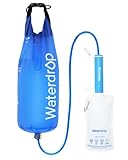
Overview: The Waterdrop Gravity Water Filter Straw integrates a 5-stage filtration system with a 1.5-gallon gravity-fed bag, creating a hands-free water purification solution for outdoor enthusiasts and emergency preparedness. This combination eliminates the need for pumping or manual suction, making it ideal for base camps, group settings, and home emergency storage where convenience outweighs ultralight priorities.
What Makes It Stand Out: The gravity-fed design delivers an impressive 700 ml/min flow rate without physical effort, setting it apart from manual straw filters. Its innovative backwash purifier function extends the 1,400-gallon lifespan by allowing easy cleaning with any standard 27.5mm threaded bottle. The versatile connection system supports both the included bag and personal water bottles, offering seamless transition from stationary camp use to individual on-the-go drinking.
Value for Money: Priced around $30-40 for the complete system, it significantly undercuts competitors like the LifeStraw Mission while providing similar capacity. The included 1.5-gallon bag eliminates additional accessory purchases. With a lifespan of 1,400 gallons, the cost per liter drops to approximately $0.02—exceptional value for group camping scenarios where multiple people require sustained water access throughout the day.
Strengths and Weaknesses: Pros include effortless gravity filtration, large capacity, versatile connections, and easy maintenance. The backwash feature significantly extends practical usability in sediment-heavy water. Cons involve potential bag durability concerns under rugged use, reduced portability compared to simple straw designs, and the need to hang the system at adequate height for optimal flow.
Bottom Line: Perfect for car camping, emergency home storage, or group backpacking where weight is secondary to convenience. Solo ultralight hikers should consider simpler straw options instead.
2. Camco Tastepure RV Water Filter - Advanced RV Inline Water Filter with Flexible Hose Protector - GAC & KDF Filtration - Made in USA - Camping Essentials for Fresh Drinking Water (40043)

Overview: The Camco Tastepure RV Water Filter delivers professional-grade water purification through a garden hose connection, specifically engineered for recreational vehicles and diverse outdoor applications. This inline system processes water at the source, ensuring clean water for drinking, cooking, and cleaning throughout your campsite without requiring individual point-of-use filters.
What Makes It Stand Out: The proprietary Hex-Flow Technology implements a sophisticated 6-step filtration process with GAC and KDF media, certified to NSF/ANSI 42, 53, and 372 standards. The KDF component uniquely controls bacterial and mold growth during storage periods—a critical advantage for seasonal RV users. Proudly manufactured in the USA, the patented design meets stringent federal lead-free requirements while delivering consistent performance.
Value for Money: At approximately $25-30, it competes favorably with bulkier canister systems costing twice as much. While portable straw filters appear cheaper, they cannot service an entire RV’s water system. The filtration capacity handles an entire camping season for most users, making it cost-effective for regular RV enthusiasts who prioritize whole-vehicle water quality over individual devices.
Strengths and Weaknesses: Pros include robust certifications, versatile hose compatibility, bacterial growth prevention, and American manufacturing quality. It effectively reduces chlorine, sediment, and odors while maintaining legal compliance. Cons are limited to stationary use requiring hose connectivity, and reduced effectiveness with extremely sediment-heavy water sources compared to multi-stage canister systems with replaceable elements.
Bottom Line: An essential investment for RV owners and seasonal campers seeking whole-vehicle filtration. For backpacking or personal use, portable straw filters remain superior.
3. LifeStraw Personal Water Purifier for Hiking, Camping, Travel, and Emergency Preparedness
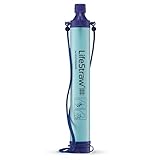
Overview: The LifeStraw Personal Water Purifier has become the gold standard for portable water filtration, trusted by hikers, travelers, and emergency preppers worldwide. This ultralight straw filter provides immediate access to safe drinking water from virtually any freshwater source without chemicals, batteries, or waiting time, making it indispensable for survival kits.
What Makes It Stand Out: The microbiological purification membrane achieves extraordinary removal rates—99.999999% of bacteria and 99.999% of parasites—verified by rigorous EPA, NSF, and ASTM testing protocols. The social impact program delivers a year’s worth of clean water to a school child for every purchase, adding meaningful value beyond the product itself. Its 4,000-liter lifespan supports years of adventures while maintaining consistent flow.
Value for Money: At approximately $20, it offers one of the lowest costs per liter among certified purifiers. While slightly pricier than basic filters, the verified pathogen removal justifies the premium for international travel and survival situations. The intangible social benefit enhances its overall value proposition significantly for conscientious consumers who want their purchase to create positive global impact.
Strengths and Weaknesses: Pros include exceptional pathogen removal, ultralight portability (2 oz), instant use, and verified third-party testing. The social mission creates powerful purchase motivation. Cons involve lack of activated carbon for taste improvement, shorter lifespan than some competitors, and no backwash capability to restore flow rates once clogged with sediment.
Bottom Line: Indispensable for international travel, bug-out bags, and emergency kits. Car campers prioritizing taste should pair it with a carbon-based system for optimal results.
4. Membrane Solutions Personal Water Filter, Survival Filtration Straw Portable Gear, Emergency Preparedness, Supply for Drinking Hiking Camping Travel Hunting Fishing Team Family Outing (Blue, 4 Pack)
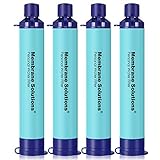
Overview: The Membrane Solutions 4-Pack delivers portable water filtration for groups and families in a compact, shareable format. Each straw filter provides individual access to clean drinking water from natural sources, making it economical for outfitting multiple people for outdoor adventures, scout troops, or family emergency preparedness kits.
What Makes It Stand Out: Triple NSF certification (42, 372, 401) distinguishes this filter from many competitors, ensuring lead-free materials, chlorine reduction, and microplastic removal. The 5-stage filtration system maintains essential mineral balance by not reducing TDS, preserving water’s natural taste and health benefits. The pack-of-four configuration offers immediate 25% cost savings over individual purchases while ensuring everyone has dedicated personal filters.
Value for Money: At approximately $40-50 for four units, the per-straw cost drops to $10-12—significantly less than buying comparable filters separately. With 1,320-gallon capacity per straw, families achieve exceptional value at under $0.01 per liter. The 4-pack eliminates repeated purchases and ensures hygienic individual use, preventing cross-contamination during group activities.
Strengths and Weaknesses: Pros include robust certifications, cost-effective multi-unit packaging, mineral preservation, and extreme portability (7.1" long, 2 oz). The 0.1-micron filtration balances speed with protection. Cons involve shared packaging requiring group commitment, lack of gravity bag option for stationary use, and no stated backwash capability for flow restoration after heavy sediment exposure.
Bottom Line: Ideal for families, scout troops, or group expeditions seeking certified protection at bulk pricing. Solo adventurers should consider single-filter options instead.
5. Camco Tastepure RV Water Filter - Advanced 6-Step Patent-Protected Filtration - Camping Essentials for Fresh Drinking Water - 2-Pack of RV Inline Water Filters, Made in USA (40045)
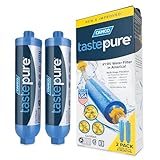
Overview: The Camco Tastepure 2-Pack provides dual RV inline water filters for extended camping seasons or backup protection. This package delivers the same professional-grade 6-step Hex-Flow filtration as the single unit, ensuring consistent water quality across multiple trips or simultaneous use at different connection points throughout your RV or campsite setup.
What Makes It Stand Out: The two-filter configuration offers strategic advantages—use one while the other rests, preventing bacterial growth during off-season storage, or filter water at both the intake and outdoor kitchen simultaneously. The patented KDF media controls microbial contamination uniquely well, making this ideal for intermittent RV use. Maintains full NSF/ANSI 42, 53, and 372 certifications with American manufacturing quality.
Value for Money: Priced around $45-55 for two units, the per-filter cost drops approximately 15-20% compared to individual purchases. For full-time RVers or seasonal campers storing equipment, the second filter prevents rush replacements and ensures continuous protection. This bulk option saves $10-15 over separate purchases while providing critical redundancy for extended trips or unexpected filter failures.
Strengths and Weaknesses: Pros include cost savings, backup availability, certified lead-free construction, and versatile hose compatibility. The KDF technology excels during storage periods, extending practical usability. Cons mirror the single unit—stationary-only use and dependency on hose connections limit portability. Two filters may be excessive for occasional weekend campers who don’t need simultaneous multi-point filtration.
Bottom Line: Excellent value for dedicated RV enthusiasts, seasonal campers, or those wanting backup filtration. Occasional users should purchase the single filter instead.
6. LifeStraw Personal Water Filter for Hiking, Camping, Travel, and Emergency Preparedness, 2 Pack, Blue
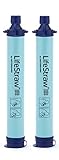
Overview: The LifeStraw Personal Water Filter 2-Pack delivers essential backcountry water purification in an ultralight package. Weighing under two ounces each, these proven filters remove 99.999999% of bacteria and 99.999% of parasites, while also eliminating microplastics and sediment. Each unit processes up to 1,000 gallons—over five years of drinking water for one person. The two-pack configuration provides immediate redundancy for couples or allows you to stash a backup in your vehicle while keeping one in your pack. With unlimited shelf life, these filters remain ready for emergencies indefinitely.
What Makes It Stand Out: LifeStraw’s social impact program sets it apart: each purchase provides safe water for one child for a full year. The near-perfect filtration rates exceed EPA standards, and the device requires no batteries or chemicals. Its simplicity is its genius—just sip directly from any water source.
Value for Money: At approximately $40 for two ($20 per unit), this pack offers solid savings over individual purchases while ensuring you’re never without clean water. For casual hikers building emergency kits, this represents reasonable insurance against waterborne illness.
Strengths and Weaknesses: Pros include proven reliability, extreme portability, zero maintenance requirements, and meaningful social impact. Cons involve the lack of a backflushing mechanism, limiting the filter’s lifespan in murky water, and the awkwardness of lying prone to drink directly from sources. The 1,000-gallon capacity trails competitors offering 100,000+ gallons.
Bottom Line: This two-pack excels for emergency preparedness and occasional hikers who prioritize simplicity and social responsibility over maximum longevity. For dedicated backcountry travelers, consider a backflushable alternative. For everyone else, it’s an affordable, life-saving essential.
7. 5 High-Capacity Emergency Water Straws – Lightweight, Reusable, 1800-gallon Filters for Camping, Hiking, Travel, Biking, Survival, and Emergencies. No Expiration Date, Perfect for preparedness

Overview: This five-pack of emergency water straws addresses bulk preparedness needs for families or groups. Each 2-ounce filter removes 99.99% of bacteria and parasites while filtering microplastics down to 0.1 microns. The standout specification is the 1,800-gallon lifespan per filter—potentially a decade of drinking water per person. Every filter includes its own backflushing plunger, a critical feature for maintaining flow rate and extending service life in turbid conditions. The individual sealing allows for distribution across multiple kits or gradual deployment over time.
What Makes It Stand Out: Quantity and maintenance tools define this offering. Five filters equip an entire family or create redundant backups for vehicles, bug-out bags, and home emergency stores. The included plungers add value rarely found in budget multi-packs, allowing users to clear clogged filters in the field.
Value for Money: At roughly $60 for five units ($12 per filter), this represents exceptional bulk pricing. The per-gallon cost rivals any competitor, and the included maintenance tools eliminate additional purchases. For group preparedness, it’s unmatched economics.
Strengths and Weaknesses: Pros include bulk quantity, individual backflushing tools, impressive 1,800-gallon capacity, and no expiration date. Cons feature slightly lower filtration percentages than premium brands and the absence of a squeeze-pouch system for water storage. Brand recognition also lags behind LifeStraw or Sawyer.
Bottom Line: Perfect for families prioritizing emergency readiness over brand prestige. The maintenance tools and massive capacity make it superior to basic straws for serious preparedness, though ultralight enthusiasts may prefer established names with slightly higher filtration specs.
8. Sawyer Squeeze Water Filtration System, Cnoc Premium 2 Liter Bladder

Overview: The Sawyer Squeeze with Cnoc Premium Bladder represents a complete water purification system rather than a simple straw. The Sawyer filter itself delivers an astonishing 100,000-gallon lifespan while removing bacteria, protozoa, cysts, sediment, and 100% of microplastics. Paired with the durable 2-liter Cnoc bladder with its wide-mouth opening, this system enables efficient collection, filtration, and storage. Weighing under six ounces total, it maintains ultralight credentials while offering versatility the straw-only designs cannot match.
What Makes It Stand Out: The 100,000-gallon capacity dwarfs competitors, potentially lasting a lifetime of adventures. Sawyer’s rigorous triple-testing of every unit ensures reliability, while the included cleaning coupling and plunger enable effective backwashing. The Cnoc bladder’s wide mouth solves the frustrating problem of filling narrow pouches from shallow water sources.
Value for Money: At approximately $50, this premium system costs more than basic straws but delivers exponentially more value. The filtration capacity alone justifies the price—equivalent to thousands of LifeStraws. For serious backpackers, the cost-per-gallon is negligible.
Strengths and Weaknesses: Pros include unmatched longevity, versatile squeeze/pouch system, effective backwashing capability, and durable bladder design. Cons involve slightly more bulk than straw-only options and a higher initial investment. The system requires more user engagement than passive straws.
Bottom Line: The ultimate choice for dedicated adventurers and preparedness enthusiasts. While overkill for occasional hikers, anyone venturing regularly into the backcountry or building comprehensive emergency supplies will find this system’s capacity and versatility impossible to beat. It’s a lifetime investment in safe hydration.
9. Sawyer Products SP128 Mini Water Filtration System, Single, Blue

Overview: The Sawyer MINI packs remarkable capability into a palm-sized 2-ounce filter. This versatile system removes 99.99999% of bacteria and 99.9999% of protozoa while eliminating all microplastics. Its 0.1-micron absolute filtration meets the highest standards. The 100,000-gallon lifespan essentially makes it a lifetime purchase. What distinguishes the MINI is its adaptability: attach it to the included 16-ounce pouch, thread it onto standard 28mm water bottles, integrate it with hydration packs, or use the straw for direct sipping.
What Makes It Stand Out: Extreme longevity combined with multiple configuration options creates unmatched versatility. Every unit undergoes triple performance testing, ensuring consistent quality. The ability to transition from personal straw to group gravity system with additional accessories makes it infinitely scalable.
Value for Money: At around $25, the MINI delivers the best cost-per-gallon ratio in the market. The 100,000-gallon capacity means you’re paying fractions of a penny per liter filtered. For regular outdoorspeople, it’s the most economical long-term choice.
Strengths and Weaknesses: Pros include extraordinary lifespan, ultralight weight, versatile attachment options, and proven reliability. Cons feature the small 16-ounce pouch capacity and potential flow rate reduction without diligent backwashing. The direct-sip straw is shorter than dedicated straw filters.
Bottom Line: The Sawyer MINI is the ultralight champion for serious backpackers and global travelers. Its versatility and lifetime capacity justify every penny. While the included pouch is modest, the filter’s adaptability to bottles and reservoirs makes it the most flexible and cost-effective solution for individual users who demand proven performance without compromise.
10. LifeStraw Personal Water Filter for Hiking, Camping, Travel, and Emergency Preparedness, 3 Pack, Blue

Overview: The LifeStraw 3-Pack extends the brand’s iconic personal water filter into a family-sized bundle. Each 2-ounce device removes 99.999999% of bacteria and 99.999% of parasites while filtering microplastics and sediment. With 1,000-gallon capacity per filter, the three units provide over 15 years of clean water for one person or 5 years for a family of three. The unlimited shelf life ensures these remain viable in emergency kits indefinitely. As with all LifeStraw products, each purchase funds safe water for a child for one year, multiplying the social impact threefold with this bundle.
What Makes It Stand Out: The three-pack configuration perfectly suits family emergency preparedness or allows individuals to strategically place filters in home, vehicle, and go-bag simultaneously. LifeStraw’s laboratory-grade filtration rates and field-proven reliability across harsh global conditions inspire confidence.
Value for Money: Priced around $55-60 for three units, the per-filter cost drops to approximately $18-20, offering meaningful savings over individual purchases. For families building comprehensive emergency supplies, this bundle delivers essential protection at reasonable cost.
Strengths and Weaknesses: Pros include proven filtration performance, extreme portability, zero maintenance, unlimited shelf life, and amplified social impact. Cons center on the lack of backflushing capability, limiting effectiveness in murky water, and the awkward drinking position required. Capacity trails Sawyer alternatives by a factor of 100.
Bottom Line: This 3-Pack excels for family emergency planning and casual outdoor enthusiasts who value simplicity and social responsibility. While not ideal for murky water sources or ultralight purists, it provides reliable, maintenance-free protection for typical hiking and emergency scenarios. The social impact multiplier makes it particularly appealing for conscientious consumers.
Why Clean Water Matters in the Wilderness
Waterborne pathogens don’t discriminate based on how experienced you are. A single sip from contaminated sources can lead to days of severe gastrointestinal distress, dehydration, and in worst cases, require medical evacuation. The wilderness environment concentrates risks—limited access to healthcare, physical exhaustion, and dehydration from hiking all compound the dangers of waterborne illness. Proper filtration isn’t just about comfort; it’s about maintaining your ability to make sound decisions and physically perform when you’re miles from civilization.
Beyond immediate health concerns, reliable water treatment transforms how you plan trips. Instead of carrying heavy water loads, you can travel lighter and refill from available sources. This freedom changes your route options, reduces pack weight, and extends how long you can stay in the backcountry. The psychological benefit is equally valuable—knowing you have a dependable method to create safe drinking water reduces anxiety and lets you focus on enjoying your surroundings.
Understanding Water Contaminants You Might Encounter
Bacteria and Protozoa
These are the most common threats in North American backcountry water. Bacteria like salmonella and E. coli are single-celled organisms that can cause severe digestive issues. Protozoa such as giardia and cryptosporidium form protective cysts that make them resistant to chemical treatments and allow them to survive longer in water. These parasites attach to intestinal walls, causing persistent diarrhea that can last for weeks without treatment. Most quality camping filters are designed specifically to handle these threats, with pore sizes small enough to physically block these organisms from passing through.
Viruses and Chemical Pollutants
Viruses like hepatitis A and norovirus are much smaller than bacteria—so small they typically require purification rather than simple filtration. They’re more common in areas with poor sanitation or high human traffic. Chemical contaminants including pesticides, heavy metals, and industrial runoff present different challenges. These dissolved substances can’t be physically filtered and require activated carbon or other adsorption methods. Understanding what threats exist in your destination helps determine whether you need basic filtration or full purification capabilities.
Types of Camping Water Filters and Purifiers
Pump Filters
Pump systems force water through a filter element by manual operation. These units typically consist of an intake hose, filter housing, and output hose or attachment. The main advantage is versatility—you can draw water from shallow puddles, narrow streams, or any source deep enough for the intake. Pump filters generally offer good flow rates and work well for both solo hikers and small groups. The trade-off is the physical effort required and the mechanical complexity that can fail if not maintained properly.
Gravity Filters
Gravity systems use elevation difference to move water through a filter, with a dirty water reservoir hanging above a clean water bag. These shine in group camping scenarios where you need to process large volumes with minimal effort. Simply fill the reservoir, hang it from a tree branch, and let physics do the work while you set up camp. They’re low-effort but require a suitable hanging location and clean water containers. Gravity filters typically have slower flow rates but process larger total volumes with less hands-on time.
Squeeze and Bottle Filters
These integrated systems combine a filter element with a water bottle or soft flask. You fill the container and either squeeze it to force water through the filter or drink directly through it. The primary benefit is simplicity and weight savings—no hoses, pumps, or separate reservoirs. They’re ideal for solo hikers prioritizing minimalism. The limitation is small capacity; filtering water for cooking or filling multiple bottles requires repeated cycles. Some models allow you to squeeze filtered water directly into a cooking pot or other container.
Straw and Inline Filters
Straw filters let you drink directly from a water source through a filtering element, while inline filters connect to hydration reservoirs. Straws are the lightest option and work for immediate drinking needs but don’t allow you to carry treated water. Inline filters process water as you drink from your hydration pack, offering hands-free operation while hiking. Both types are ultralight but share limitations around processing water for cooking or group use.
UV Light Purifiers
These battery-powered devices use ultraviolet light to disrupt the DNA of microorganisms, rendering them harmless. UV purifiers work quickly—typically 60-90 seconds per liter—and don’t affect water taste. They’re effective against all pathogens including viruses, making them suitable for international travel. The downsides include battery dependence, potential bulb breakage, and ineffectiveness in murky water since particles can shield organisms from the light. They also don’t remove chemical contaminants or improve water clarity.
Chemical Treatment Options
Iodine tablets, chlorine dioxide drops, or chlorine tablets offer lightweight backup or primary treatment. These kill pathogens through chemical oxidation. Modern chlorine dioxide treatments are effective against all pathogens including cryptosporidium (with extended wait times). Chemical treatments are virtually weightless and work regardless of water temperature. The drawbacks include wait times of 30 minutes to 4 hours, potential taste issues, and ineffectiveness against chemical pollutants or particulates.
Key Features to Evaluate When Choosing Your System
Micron Ratings and NSF Certifications
Micron ratings indicate the absolute size of particles a filter can remove. A 0.1-micron absolute filter blocks anything larger than 0.1 microns—sufficient for bacteria and protozoa but not viruses. Look for “absolute” rather than “nominal” ratings, as nominal ratings only indicate average performance. NSF/ANSI certifications provide third-party verification of claims. The NSF P231 standard tests against specific pathogens, while NSF 42 and 53 cover aesthetic and health-related contaminants. These certifications ensure the filter performs as advertised under standardized conditions.
Flow Rate and Processing Speed
Flow rate, measured in liters per minute, determines how quickly you can access clean water. Pump filters might process 1-2 liters per minute, while gravity systems can be slower at 0.5-1 liter per minute but work unattended. Squeeze filters vary based on how forcefully you apply pressure. Consider your patience level and group size—a solo hiker might tolerate a slower flow, but a group will appreciate faster processing. Remember that flow rates decrease as filters clog and require more pressure or cleaning.
Total Filter Lifespan and Capacity
Filter lifespan is measured in liters or gallons before the element needs replacement. A typical filter might last 1,000-2,000 liters depending on water clarity. Some ceramic elements can be cleaned and reused indefinitely until they crack, while hollow fiber filters have fixed lifespans. Consider the cost and availability of replacement elements. For extended trips or international travel, a longer-lasting filter reduces resupply concerns. Track your usage or choose a filter with an integrated gauge to avoid unexpected failures deep in the backcountry.
Weight and Packability
Ultralight backpackers scrutinize every ounce, making straw filters (2-3 ounces) or squeeze systems (3-5 ounces) attractive. Pump filters typically weigh 12-16 ounces, while gravity systems can exceed a pound with reservoirs. Consider not just the filter weight but the total system including hoses, reservoirs, and accessories. Packability matters too—rigid pump housings versus collapsible squeeze bottles affect how easily the system fits in your pack. Balance weight against functionality; the lightest option isn’t always the most practical for your needs.
Material Construction and Durability
Field conditions are harsh. Drop a ceramic filter on rocks and it might crack irreparably. Plastic housings can crack in freezing temperatures. Look for robust construction with protective elements around fragile components. Consider freeze resistance—water expands when frozen and can destroy filter elements. Some manufacturers specify whether their filters can withstand freezing after being dried. Metal or reinforced plastic pump handles, protective caps for intake/outtake ports, and durable reservoir materials all contribute to long-term reliability.
Situational Selection: Matching Filters to Your Adventure
Solo Backpacking and Ultralight Trips
When you’re alone and counting grams, simplicity and weight trump processing speed. Squeeze bottle systems or straw filters make sense for personal use. You only need to filter what you’ll drink, and you can always dip your bottle directly into the source. Consider the longest stretch between water sources—if you’ll need to carry capacity, a small pump or gravity system might be worth the weight penalty. For thru-hikers, fast flow rates and easy field maintenance matter more than absolute minimal weight since you’ll use the system multiple times daily for months.
Group Camping and Basecamp Scenarios
Processing water for four people requires volume and efficiency. Gravity systems excel here—fill the reservoir once and let it filter several liters while you attend to camp chores. Large-capacity pump filters also work, passing water through quickly for multiple bottles. Consider the total daily water needs for cooking, drinking, and cleanup. A system that can process 10+ liters with minimal effort saves collective time and energy. Durability becomes more important when multiple people handle the equipment.
International Travel and Virus Protection
In developing regions or areas with questionable sanitation, viruses become a real concern. Standard 0.1-micron filters won’t catch viruses—you need purification. Options include UV purifiers, chemical treatments, or filters with integrated iodine resin stages. Some pump filters are specifically rated for virus removal. Always research your destination’s water risks. In many parts of the world, combining filtration for particulates with chemical purification for viruses provides comprehensive protection. Never rely on basic filtration alone in high-risk areas.
Emergency Preparedness Kits
For home emergency kits, prioritize reliability, long shelf life, and ability to handle varied water sources. Gravity systems work without power and can process large volumes for families. Chemical treatments store indefinitely and weigh nothing. Consider systems that don’t rely on batteries or complex parts that can fail. Ceramic filters with cleanable elements offer indefinite lifespan if maintained properly. Storage conditions matter—keep filters from freezing and protect chemical treatments from moisture and extreme heat.
Maintenance, Storage, and Troubleshooting
Cleaning and Backflushing Techniques
Most filters clog over time as particulates accumulate. Many hollow fiber filters can be backflushed—forcing clean water backwards through the element to dislodge debris. This restores flow rate and extends lifespan. Pump filters often have pre-filters or sediment screens that need regular cleaning. Ceramic elements can be scrubbed with an abrasive pad to remove the outer clogged layer. Always carry the manufacturer’s cleaning tool or a compatible syringe for backflushing. Follow specific instructions—improper cleaning can damage filter media.
Proper Storage Between Trips
Never store a filter wet long-term. Mold and bacteria can grow inside the element, contaminating your next trip’s water. After your final use, flush the filter with clean water, then either air dry completely or use a diluted bleach solution for disinfection. Some manufacturers recommend storing elements in the freezer once dry to prevent bacterial growth. For short-term storage between weekend trips, ensure the filter is completely dry. Chemical treatments should be sealed tightly and stored in a cool, dry place away from direct sunlight.
Common Issues and Solutions
Slow flow rate usually indicates clogging—try backflushing or cleaning. Leaks at connection points often need new O-rings or gaskets, which are worth carrying as spares. If a ceramic element cracks, it’s finished; carry a spare on extended trips. UV purifiers that won’t turn on likely need new batteries—always carry spares and test before trips. Strange tastes after filtration might mean the filter needs cleaning or replacement. Cloudy output suggests a damaged filter element or improper sealing. Most issues are preventable with proper maintenance and carrying basic spare parts.
Frequently Asked Questions
How can I tell if my filter is actually working in the field?
You can’t visually confirm pathogen removal, but you can check for proper function. Clean water should flow through at expected rates without unusual taste or cloudiness. Many filters have integrity tests—some hollow fiber filters can be air-pressure tested. If water flows too easily or you see particles in the output, the element may be compromised. Always follow the manufacturer’s field test procedures and replace elements according to schedule, not just when flow slows.
What’s the real difference between a filter and a purifier?
Filters physically remove contaminants based on pore size, typically blocking bacteria and protozoa. Purifiers eliminate or inactivate all microorganisms including viruses, usually through UV light, chemicals, or advanced filtration to 0.02 microns or smaller. In North American backcountry, filtration usually suffices. For international travel or areas with human waste contamination, purification becomes necessary. Some systems combine both methods for comprehensive protection.
How long should I expect my filter to last before replacement?
Lifespan varies dramatically by type and water quality. Hollow fiber filters typically last 1,000-2,000 liters of clear water but clog faster in silty conditions. Ceramic elements can last indefinitely with proper cleaning unless cracked. Activated carbon stages lose effectiveness after 100-200 liters. Track your usage and water clarity—muddy water can reduce lifespan by 75%. Always carry a backup method on long trips and replace elements at the first sign of compromised performance.
Can any camping filter make salt water safe to drink?
No standard camping filter removes dissolved salt. Desalination requires reverse osmosis or distillation—processes beyond portable filter capabilities. Some advanced survival devices exist but are heavy, slow, and not practical for typical camping. If you’re coastal camping, you must bring all fresh water or locate inland freshwater sources. Never rely on a standard filter for salt water conversion; it will not make it safe and may damage the filter element.
Do I need to worry about viruses in North American backcountry?
Generally, viruses are not a major concern in remote North American wilderness areas. They typically require human or specific animal hosts to persist. However, high-use areas near popular campsites or trails with improper waste disposal can pose some risk. If you’re immunocompromised or particularly cautious, adding a purification step provides extra safety. For most wilderness backpacking in the U.S. and Canada, a quality filter handling bacteria and protozoa is sufficient.
What’s the best way to clean my filter during a multi-week trip?
Backflush hollow fiber filters every few days or when flow decreases noticeably. Use clean water from your filtered supply, forcing it backwards through the element 2-3 times. For pump filters, clean pre-filters and sediment screens regularly. If you have a ceramic element, gently scrub the surface with the provided abrasive pad when flow drops. Avoid using untreated water for cleaning as it can introduce contaminants into the clean side of the filter. Always follow manufacturer-specific field cleaning protocols.
Which filter type is most reliable for solo ultralight backpacking?
Squeeze bottle systems offer the best balance of weight, simplicity, and reliability for solo hikers. They weigh 3-5 ounces, have no moving parts to break, and let you filter directly into your bottle or cooking pot. Straw filters are lighter but less versatile. Choose a squeeze system with a backflush capability to maintain flow. Carry chemical tablets as a 1-ounce backup. Avoid pump filters for ultralight—the mechanical complexity and weight don’t justify the benefits for solo use.
Are chemical treatments like iodine or chlorine dioxide safe for regular use?
Chlorine dioxide is considered safe for extended use and doesn’t have iodine’s health concerns. Iodine is not recommended for pregnant women, people with thyroid conditions, or long-term use beyond a few weeks. Modern chlorine dioxide treatments leave minimal taste and effectively kill all pathogens (though cryptosporidium requires a 4-hour wait). For regular backpacking, rotate between filtration and chemical treatment to minimize any potential issues. Always follow dosage instructions precisely.
How do freezing temperatures affect my water filter?
Water expands when frozen and can rupture filter elements, rendering them ineffective. Never let a wet filter freeze. On cold-weather trips, sleep with your filter in your sleeping bag. If you suspect a filter has frozen, replace it—damage isn’t always visible. Some manufacturers claim their filters can withstand freezing if completely dry first. Ceramic elements are most vulnerable to freeze damage. Chemical treatments remain effective when frozen and thawed, making them excellent cold-weather backups.
What’s the proper way to store my filter between camping seasons?
After your final trip, flush the filter thoroughly with clean water, then either air dry completely for several days or disinfect with a weak bleach solution (check manufacturer guidelines). Once bone dry, store it in a breathable container—not sealed plastic which can trap moisture. Some hikers store dried ceramic elements in the freezer to prevent bacterial growth. Keep chemical treatments in their original packaging in a cool, dark place. Test your system before each season and replace any questionable elements.
Related Buying Guides
- Stop Drinking Unsafe Water with the 10 Best Camping Water Filters This Year
- The 10 Best Gravity Water Filters for Camping Families in 2026
- 10 Best Value Gravity Water Filters for Family Camping in 2026
- The Complete Guide to the 10 Best Gravity Water Filters for Group Camping in 2026
- Stop Worrying About Giardia with the 10 Best Backpacker Water Filters This Year