Table of Contents
There’s nothing quite like the frustration of watching your camping stove’s flame sputter and dance uncontrollably as gusts of wind whip across your campsite. You’ve hiked miles to reach that perfect spot, your stomach is growling, and instead of enjoying a hot meal, you’re hunched over your cooker like a dragon guarding its eggs, desperately trying to shield it with your body. This all-too-common scenario has plagued outdoor enthusiasts for decades, turning what should be a simple task into a battle of wills against Mother Nature.
Fortunately, the camping gear industry has evolved dramatically, and 2026 brings a new generation of wind-resistant stoves that fundamentally change the game. These aren’t your grandfather’s finicky backpacking burners—they’re engineered systems designed to maintain consistent heat output even when the weather turns nasty. This guide will walk you through everything you need to know about selecting and using wind-resistant camping stoves, focusing on the features that matter most, the design innovations that actually work, and practical strategies to ensure you can cook confidently no matter how hard the wind blows.
Top 10 Camping Stoves
Detailed Product Reviews
1. Gas One GS-3400P Propane or Butane Stove Dual Fuel Stove Portable Camping Stove - Patented - with Carrying Case Great for Emergency Preparedness Kit
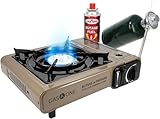
Overview: The Gas One GS-3400P is a versatile dual-fuel camping stove designed for flexibility and safety. Compatible with both butane and propane, this portable stove includes a propane converter regulator and operates on standard 8oz butane cartridges or 16.4oz propane cylinders. Its automatic piezo-electric ignition eliminates the need for matches, while built-in safety features like the pressure sensor cartridge ejection system provide peace of mind during operation.
What Makes It Stand Out: The dual-fuel capability is the star feature, offering unmatched versatility for campers and emergency preppers. The patented design includes a pressure-sensitive safety system that automatically ejects butane cartridges when irregular pressure is detected, a crucial feature rarely found in portable stoves. The included carrying case enhances its portability for emergency kits.
Value for Money: For a dual-fuel stove with advanced safety mechanisms, the GS-3400P delivers excellent value. While fuel costs add up, the ability to switch between butane and propane based on availability or price makes it more economical long-term than single-fuel alternatives. It’s essentially two stoves in one.
Strengths and Weaknesses: Strengths include dual-fuel versatility, automatic ignition, robust safety features, and included carrying case. Weaknesses are the unspecified BTU output, fuel not included, and the safety ejection system only works with butane. It’s also a single-burner unit, limiting cooking capacity.
Bottom Line: An excellent choice for emergency preparedness and solo campers prioritizing fuel flexibility and safety over raw cooking power. The dual-fuel design justifies its place in any survival kit.
2. Coleman Triton 2-Burner Propane Stove, Portable Camping Cooktop with 2 Adjustable Burners & Wind Guards, 22,000 BTUs of Power for Camping, Tailgating, Grilling, BBQ, & More
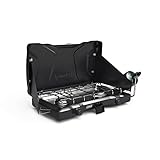
Overview: The Coleman Triton 2-Burner Propane Stove is a robust portable cooktop delivering 22,000 BTUs across two independently adjustable burners. Built for outdoor enthusiasts, this stove features dual wind guards, a heavy-duty latch, and an improved knob rotation system for precise temperature control. The chrome-plated grate removes easily for cleaning, making it ideal for regular campsite use.
What Makes It Stand Out: Coleman’s legendary build quality combined with practical wind protection sets this stove apart. The heavy-duty latch ensures secure transport, while the enhanced knob rotation offers simmering capabilities often lacking in camping stoves. The 22,000 BTU output provides serious cooking power for demanding outdoor meals.
Value for Money: Positioned as a mid-range two-burner stove, the Triton offers solid value through durability and brand reliability. While more expensive than single-burner options, its dual-burner configuration and wind resistance justify the premium for family camping. Comparable stoves with similar BTU output typically cost more.
Strengths and Weaknesses: Strengths include high BTU output, effective wind guards, easy-clean grate, sturdy construction, and precise heat control. Weaknesses include propane-only fuel limitation, no integrated ignition system mentioned, and bulkier design compared to single-burner stoves. It’s heavier than ultralight alternatives.
Bottom Line: A dependable workhorse for family camping and tailgating. The Triton excels in windy conditions and offers enough power for serious cooking, making it worth the investment for frequent outdoor cooks.
3. ODSD 2 Burner Camping Stove with Windshield, 20000 BTU Propane Camp Stove, Portable Folding Gas Stove, Camping Essentials Gear Includes Frying Pan, Coffee Stand & Carry Bag, Green

Overview: The ODSD 2 Burner Camping Stove combines compact design with impressive 20,000 BTU output across dual independently adjustable burners. Weighing just 3.98 lbs and folding to 10.63 × 9.06 × 5.12 inches, this propane stove includes a windproof shield, magnetic closure system, and bonus accessories like a coffee stand and frying pan. The 304 stainless steel construction ensures durability.
What Makes It Stand Out: The innovative magnetic closure system provides quick, secure setup unlike traditional latches. The inclusion of a coffee stand and frying pan creates an all-in-one cooking solution. Its remarkable power-to-weight ratio challenges bulkier competitors while maintaining wind resistance and safety features.
Value for Money: This stove delivers exceptional value as a complete cooking system. Purchasing a separate stove, coffee maker, and cookware would cost significantly more. The lightweight design also saves on transport costs and energy, making it ideal for backpackers and minimalists who don’t want to compromise on cooking capability.
Strengths and Weaknesses: Strengths include ultra-portable design, included accessories, magnetic closure, windproof shield, and stainless steel durability. Weaknesses are slightly lower BTU output than premium competitors, potential long-term durability concerns with magnetic closure, and the coffee stand may not suit all users’ needs.
Bottom Line: Perfect for space-conscious campers wanting maximum functionality. The ODSD’s accessory bundle and compact form factor make it an unbeatable value for solo or duo adventurers.
4. Coleman Triton+ 2-Burner Propane Camping Stove with InstaStart Ignition, Portable Camping Cooktop with 2 Adjustable Burners & Wind Guards, 22,000 BTUs of Power for Camping, Tailgating, Grilling

Overview: The Coleman Triton+ enhances the classic Triton design with push-button InstaStart ignition and advanced heat management technologies. Delivering 22,000 BTUs through two adjustable burners, this stove features PerfectFlow and PerfectHeat systems for consistent performance. A built-in handle and heavy-duty latch improve portability, while wind guards protect flames in challenging conditions.
What Makes It Stand Out: The InstaStart ignition eliminates matches, while PerfectFlow technology maintains steady heat output regardless of fuel level or weather. These premium features, combined with Coleman’s proven durability, create a stove that performs like a backyard grill in the wilderness. The integrated handle is a practical upgrade for frequent movers.
Value for Money: The Triton+ commands a modest premium over the standard Triton, justified by the matchless ignition and enhanced heat control. For campers who light their stove multiple times daily, the convenience factor alone warrants the upgrade. It competes favorably with higher-priced stoves lacking these smart features.
Strengths and Weaknesses: Strengths include push-button ignition, advanced heat regulation, built-in handle, wind protection, and easy-maintenance cooktop. Weaknesses are propane-only operation and higher cost than basic two-burner stoves. The aluminized steel cooktop, while rust-resistant, may not feel as premium as stainless steel alternatives.
Bottom Line: The Triton+ is the smart upgrade for campers seeking convenience without sacrificing power. The InstaStart ignition and heat management technologies make it a top-tier choice for serious outdoor cooking enthusiasts.
5. Gas One Portable Butane Camping Stove with Case: Automatic Ignition, Precise Heat Control - Camping & Tailgating and Outdoor Cooking

Overview: The Gas One Portable Butane Stove is a compact single-burner unit delivering 7,650 BTU with exceptional fuel efficiency. CSA-approved for safety, this stove features automatic piezo-electric ignition, a safety shut-off system, and a cartridge ejection mechanism that activates under excessive pressure. The included carrying case and quiet operation make it ideal for discrete outdoor cooking.
What Makes It Stand Out: This stove claims the title of most fuel-efficient butane portable stove, boiling water quickly while operating silently. The CSA certification ensures rigorous safety standards, and the automatic cartridge ejection system provides critical protection against pressure irregularities. Its quiet burn is a rare feature in portable stoves.
Value for Money: As an affordable single-burner option, this stove offers excellent value for solo campers and emergency kits. The fuel efficiency reduces long-term operating costs, while the included case adds convenience. However, its single-fuel limitation and lower BTU output mean it’s best as a secondary stove or for minimal cooking needs.
Strengths and Weaknesses: Strengths include high fuel efficiency, quiet operation, CSA safety certification, automatic ignition, and portability. Weaknesses are butane-only fuel restriction, lower 7,650 BTU output, single burner limitation, outdoor-use-only designation, and fuel canisters sold separately.
Bottom Line: An excellent budget-friendly choice for solo campers, tailgaters, or as a backup emergency stove. Prioritize this for lightweight trips and quiet operation, but consider a more powerful dual-burner for group cooking.
6. Coleman Classic 1-Burner Butane Stove, Portable Camping Cooktop with Carry Case & InstaStart Ignition, Adjustable Burner with 7650 BTUs of Power for Camping, Grilling, Tailgating, & More
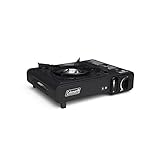
Overview: The Coleman Classic 1-Burner Butane Stove delivers reliable single-burner performance in an ultra-portable package, producing 7,650 BTUs for camping, tailgating, and picnics. Its lightweight design and included hard-shell carry case make transportation effortless, while the compact footprint fits easily in vehicle trunks or gear bins.
What Makes It Stand Out: Coleman’s InstaStart ignition eliminates the need for matches, lighting instantly with the push of a button. The porcelain-coated grate removes quickly for cleaning, and the rust-proof aluminum burner resists corrosion. Most impressively, the oversized base provides exceptional stability compared to competitors, reducing spills during vigorous stirring.
Value for Money: Positioned in the budget-friendly segment, this stove offers tremendous value from a legacy outdoor brand. While the BTU rating is modest, you’re investing in reliability and convenience rather than raw power. Comparable units cost 20-30% more without the premium carry case and ignition system.
Strengths and Weaknesses: Pros: Matchless ignition, superior portability, stable cooking platform, easy maintenance, and brand reputation. Cons: Butane performance drops significantly below 40°F, single burner limits meal complexity, modest output struggles with large pots, and proprietary fuel canisters are less common than propane.
Bottom Line: Perfect for casual campers and day-trippers prioritizing convenience over capacity. The Coleman Classic excels at simple heating tasks but falls short for serious backcountry cooking or feeding groups larger than two people.
7. GasOne High Pressure Single Propane Burner - Outdoor Cooking with Heat Shield and Guard – Propane Burner Head for Camping, Tailgating, Seafood Boil, Home Brewing - Patent Pending

Overview: The GasOne High-Pressure Single Propane Burner is a heavy-duty outdoor cooking station engineered for demanding applications like home brewing, seafood boils, and high-heat grilling. Delivering intense, concentrated flame, this burner transforms any outdoor space into a professional cooking environment.
What Makes It Stand Out: The patent-pending design features dual heat shields—top and bottom—that protect both the user and components from extreme temperatures. The cast iron burner head withstands intensive use, while the high-quality hose assembly ensures consistent gas flow and durability. This is professional-grade equipment, not a typical camp stove.
Value for Money: While priced higher than recreational stoves, the GasOne offers commercial-level construction at a fraction of professional equipment costs. For serious outdoor cooks, the durability and output justify the investment. Cheaper alternatives fail under sustained high heat, making this a smart long-term purchase.
Strengths and Weaknesses: Pros: Exceptional heat output, robust cast iron construction, superior safety shields, reliable hose assembly, and versatile applications. Cons: Heavy and bulky, not truly portable, overkill for simple camping meals, requires separate propane tank, and lacks simmer control.
Bottom Line: An outstanding choice for homebrewers, seafood enthusiasts, and serious outdoor chefs needing maximum heat. It’s impractical for backpacking but unbeatable for stationary, high-intensity cooking tasks where power trumps portability.
8. OGERY 2-Burner Foldable Camping Stove with Griddle (Textured & Smooth) and Carrying Bag, Portable Propane Camp Stove with 2 Adjustable Burners & Piezo Ignition, for Camping Tailgating Essentials Gear

Overview: The OGERY 2-Burner Foldable Camping Stove distinguishes itself with a unique reversible griddle design, offering both textured and smooth cooking surfaces. With 10,000 BTUs across two burners, it provides versatile cooking options for campers seeking more than standard pot supports.
What Makes It Stand Out: The dual-function griddle is genuinely innovative—grill steaks on the textured side and cook eggs on the smooth surface simultaneously. The foldable design collapses to just 3.5 inches tall, and the included carrying bag enhances portability. Push-button piezo ignition adds modern convenience.
Value for Money: Mid-priced for a dual-burner stove, the OGERY justifies its cost through griddle versatility. Purchasing separate griddles and a two-burner stove would cost significantly more. For campers wanting integrated grilling capability, this represents solid value.
Strengths and Weaknesses: Pros: Unique reversible griddle, compact folding design, dual burners, piezo ignition, and stainless steel construction. Cons: 5,000 BTUs per burner is modest, cooking surface fits only two 10-inch pans, stainless steel may warp under sustained heat, and wind resistance is limited.
Bottom Line: Excellent for small families or groups wanting griddle flexibility without packing separate gear. The OGERY shines for breakfast cooks and grill-style meals, though dedicated chefs may find the heat output limiting for rapid boiling or large batches.
9. Grill Boss Dual Fuel Camp Stove - 12,000 BTU Butane & Propane Portable Stoves for Camping, Emergencies, BBQ, Hiking & Backpacking - Double Wind Guard, Instant Piezo Ignition System - 90057

Overview: The Grill Boss Dual Fuel Camp Stove offers unmatched fuel flexibility, running on both butane and propane with a simple adapter switch. Delivering 12,000 BTUs through a single burner, this stove prioritizes adaptability for unpredictable outdoor conditions and emergency preparedness.
What Makes It Stand Out: The dual-fuel capability is the headline feature, allowing users to adapt to whatever fuel is available. Enhanced safety features include an automatic gas shutoff for irregular flow and double wind guards for stable flames. The hard-shell carrying case provides superior protection during transport.
Value for Money: This premium-priced single-burner stove justifies its cost through versatility and safety. For adventurers traveling internationally or preparing emergencies, the fuel flexibility alone warrants the investment. Standard single-fuel stoves can’t match this adaptability.
Strengths and Weaknesses: Pros: Dual-fuel compatibility, robust safety shutoff, effective wind protection, hard-shell case, and 12,000 BTU output. Cons: Single burner limits cooking capacity, fuel switching requires careful adapter management, higher price point, and the ignition system has a learning curve.
Bottom Line: Ideal for international travelers, emergency preppers, and campers facing variable fuel availability. The Grill Boss excels when versatility is paramount, though families needing multiple burners should look elsewhere. It’s a specialized tool that performs brilliantly within its niche.
10. Cofiyard 20,000 BTUs 2 Burner Propane Camping Stove, Portable Folding Camp Stove with Adjustable Burners, Regulator and Carrying Bag, Dual Gas Stoves Easy Carrying Handle for Tailgating, Camping, BBQ

Overview: The Cofiyard 20,000 BTU 2-Burner Propane Camping Stove delivers serious cooking power in a surprisingly portable package. With 10,000 BTUs per burner, this foldable stove handles multiple pots simultaneously, making it ideal for family camping and group tailgating.
What Makes It Stand Out: The impressive heat output dwarfs most portable dual-burner stoves, enabling rapid boiling and proper sautéing. The corrosion-resistant construction withstands harsh outdoor conditions, while the integrated carrying handle and foldable design maintain portability despite the power. Independent burner controls offer precise heat management.
Value for Money: Competitively priced for a high-output dual-burner stove, the Cofiyard offers exceptional BTU-per-dollar value. Comparable stoves with similar power cost 30-50% more, making this an attractive option for budget-conscious campers needing serious performance.
Strengths and Weaknesses: Pros: High combined BTU output, dual independent burners, compact folding design, corrosion-resistant materials, and easy setup. Cons: Propane-only fuel limits cold-weather flexibility, weight is substantial for backpacking, wind resistance could be better, and the regulator quality is unproven long-term.
Bottom Line: A powerhouse choice for families and groups who refuse to compromise on cooking speed. The Cofiyard transforms camp cooking from survival to satisfaction, though solo backpackers will find it excessive. For car camping and tailgating, it’s hard to beat this performance-to-price ratio.
Understanding Wind Challenges for Camp Cooking
The Science Behind Wind and Flame Disruption
Wind affects your camping stove through two primary mechanisms: oxygen dilution and convective heat loss. When gusts hit an exposed flame, they disrupt the carefully balanced fuel-to-air ratio your stove needs for efficient combustion. This forces the burner to work harder while producing less usable heat, creating a vicious cycle of fuel waste and poor performance. Modern wind-resistant designs counteract this by creating controlled combustion chambers that regulate airflow regardless of external conditions, maintaining the precise oxygen levels needed for optimal burning.
How Wind Affects Fuel Efficiency and Cooking Times
A stove operating in 10 mph winds can consume up to three times more fuel to boil the same amount of water compared to calm conditions. This dramatic inefficiency stems from heat being stripped away from your pot before it can transfer to the contents. Wind-resistant stoves minimize this effect through strategic windscreen integration and burner designs that focus heat upward rather than letting it dissipate sideways. Understanding this relationship helps you pack appropriate fuel quantities and set realistic cooking timelines for exposed campsites.
Key Features of Wind-Resistant Camping Stoves
Integrated Windshield Design
The most effective wind-resistant stoves incorporate permanent windshields that wrap around the burner and pot, creating a protected micro-environment. These aren’t the flimsy aftermarket screens of the past—they’re engineered components that channel wind around the cooking area while maintaining proper ventilation. Look for designs with strategic venting patterns that allow just enough airflow for complete combustion without letting gusts penetrate the cooking zone. The best models position these vents on the leeward side when properly oriented, using the wind’s own pressure to create a stabilizing effect.
Burner Technology and Flame Stability
Advanced burner heads in 2026’s stoves feature multiple flame rings, pressure regulation, and specialized port designs that maintain flame continuity even when wind attempts to extinguish it. These burners create a more robust flame structure that resists being blown off the fuel source. Some designs use concave burner surfaces that cradle the flame, while others employ tiny flame ports that create a dense matrix of heat points. The key is consistent fuel delivery combined with physical flame protection, ensuring your cooking doesn’t stop when the breeze picks up.
Base Stability and Low-Profile Construction
A stove that rocks or tips in wind is both inefficient and dangerous. Modern wind-resistant models feature wide, stable bases with low centers of gravity that resist tipping even on uneven terrain. Many designs integrate the fuel canister into the base structure, creating a unified system that won’t separate during gusts. Low-profile construction reduces the surface area wind can push against, while adjustable legs accommodate rocky or sloped surfaces without sacrificing stability.
Types of Wind-Resistant Stove Designs
Canister Stoves with Built-in Wind Protection
Canister stoves have evolved far beyond the basic screw-top burners of a decade ago. Current wind-resistant canister models feature integrated heat exchangers and full-wrap windscreens that attach directly to the canister, creating a cohesive system. These designs often position the canister remotely, allowing you to shield it from wind and cold while maintaining safe operation. The remote canister configuration also enables the use of windscreens that completely encircle the burner—a safety impossibility with traditional top-mounted designs.
Liquid Fuel Stoves for Extreme Conditions
For expedition-level wind resistance, liquid fuel stoves remain the gold standard. Their pump-based pressurization systems deliver consistent fuel flow regardless of external pressure changes, and their robust construction withstands harsh conditions. Modern liquid fuel models feature enhanced windscreen systems and burner designs specifically optimized for high-altitude and high-wind environments. While heavier than canister options, their reliability in sustained adverse weather justifies the weight penalty for serious wilderness travelers.
Alternative Designs: Tabletop and System Stoves
Tabletop stoves offer wind resistance through sheer mass and integrated design, with wide cooking surfaces and heavy-duty windscreens that protect multiple burners. System stoves—those that integrate pot and stove into a single unit—provide exceptional wind resistance by eliminating gaps where wind can penetrate. These designs often feature heat exchanger bottoms on the pots that work synergistically with the windscreen, capturing heat that would otherwise be lost and creating a highly efficient, weather-resistant cooking solution.
Fuel Types and Wind Performance
Propane and Isobutane Performance in Wind
Pressurized canister fuels perform adequately in moderate winds when paired with proper stove design, but their output drops significantly as canister temperature decreases. Wind exacerbates this by cooling the canister during operation. The latest canister stoves combat this through pre-heat tubes that vaporize fuel before it reaches the burner, maintaining performance even when the canister gets cold. For windy conditions, choose blended fuels with higher propane content rather than pure butane, as they maintain pressure better in cool, blustery weather.
Liquid Fuel Advantages for Windy Environments
White gas and kerosene stoves shine in wind because their manual pressurization system delivers consistent fuel pressure regardless of ambient temperature. This means your flame stays strong even when wind chills the fuel tank. Liquid fuel also allows you to use full-wrap windscreens safely, since the fuel bottle sits remote from the burner. The ability to pump additional pressure when needed gives you direct control over flame intensity, letting you compensate for wind-related heat loss by increasing fuel delivery.
How to Evaluate Wind Resistance Ratings
Understanding BTU and Wind-Adjusted Output
Manufacturers often list maximum BTU output, but this figure means little in real-world wind conditions. Look instead for wind-adjusted BTU ratings or boil times measured in specific wind speeds. Some 2026 models now include standardized testing results at 5, 10, and 15 mph wind speeds. These metrics give you realistic performance expectations. A stove that boils water quickly in calm conditions but struggles in 8 mph winds isn’t truly wind-resistant, regardless of its peak output rating.
Real-World Testing vs. Laboratory Ratings
Laboratory wind tunnel tests don’t always replicate actual camping conditions where wind direction changes constantly and gusts exceed steady speeds. Seek out field test reviews that evaluate stoves in genuine backcountry conditions. Pay attention to descriptions of how stoves handle variable gusts rather than steady breezes. The best wind-resistant designs perform consistently across changing conditions, not just in controlled tests. Consider the stove’s performance envelope—does it maintain efficiency across a range of wind speeds and directions, or only in optimal orientations?
Essential Accessories for Windy Conditions
Secondary Wind Barriers and Screens
Even the best stove benefits from supplemental wind protection. Portable folding screens create a larger protected zone around your cooking area, reducing wind speed before it reaches your stove’s integrated protection. Look for lightweight, reflective screens that can be positioned independently of your stove, allowing you to adapt to changing wind directions. Some designs feature adjustable panels that let you create custom protection configurations based on your specific campsite layout.
Stable Cooking Surfaces and Platforms
Wind often accompanies uneven terrain, creating a double challenge. Packable cooking platforms provide a level, stable surface that enhances your stove’s inherent stability. These platforms also elevate your cooking system above cold ground, improving fuel efficiency. For snow camping, insulated platforms prevent your stove from melting into the snowpack as it operates. Some ultralight options weigh mere ounces but transform a precarious boulder into a secure kitchen.
Setup Strategies for Maximum Wind Protection
Site Selection and Natural Windbreaks
Smart campsite selection remains your first line of defense. Look for natural windbreaks like boulders, dense vegetation, or terrain features that block prevailing winds. Even a slight depression in the ground can significantly reduce wind speed at stove level. Set up your kitchen on the leeward side of your tent or vehicle, using them as wind blocks. Remember that wind patterns change throughout the day, so observe conditions for a few minutes before committing to a cooking spot.
Positioning Techniques for Optimal Performance
Orient your stove so its integrated windscreen vents face away from the prevailing wind direction. This uses the wind’s pressure to create a positive airflow through the system rather than fighting against it. For stoves with directional windscreens, position the solid side toward the wind source. When using a supplemental windscreen, create a V-shaped configuration that deflects wind around your cooking area rather than a flat wall that wind can push against. Keep your fuel canister upwind of the burner when possible, preventing it from being chilled by the stove’s own convective cooling.
Maintenance and Care for Wind-Resistant Stoves
Cleaning and Inspecting Wind Protection Components
Windscreens and burner ports collect soot and debris that clog venting systems and reduce efficiency. After each trip, clean these components with a soft brush and appropriate solvent. Inspect windscreens for cracks or deformation that could compromise their protective function. For stoves with moving windscreen parts, ensure hinges and adjustment mechanisms operate smoothly without binding. A clogged burner port in calm conditions becomes a non-functional stove in wind, so meticulous maintenance is non-negotiable.
Storage Tips for Longevity
Store your wind-resistant stove with windscreens extended rather than compressed to prevent spring mechanisms from taking a set. Keep burner heads covered to prevent dust from clogging ports during transport. For liquid fuel stoves, empty the fuel line completely before storage to prevent varnish buildup that could affect pressurization. Store canister stoves with the canister detached to prevent slow leaks from compromising the seal. Proper storage ensures your stove’s wind-resistant features function as designed when you need them most.
Troubleshooting Common Wind-Related Issues
Dealing with Partial Flame Failure
When wind causes your flame to sputter or partially extinguish, resist the urge to simply turn up the fuel flow. This wastes fuel and can create dangerous flare-ups. Instead, adjust your wind protection first, then gradually increase fuel delivery while monitoring flame color—a yellow, sooty flame indicates incomplete combustion from either too much fuel or insufficient oxygen. If your stove features a pressure regulator, ensure it’s functioning properly, as inconsistent pressure mimics wind-related flame issues.
When Your Stove Struggles Despite Wind Resistance
If your supposedly wind-resistant stove still performs poorly, examine your setup rather than blaming the equipment. Are you using a pot that’s too large for the windscreen, creating gaps? Is your cooking surface stable, or is micro-movement disrupting the flame? Check that your fuel canister isn’t low, as pressure drops exacerbate wind sensitivity. Sometimes the issue isn’t insufficient wind resistance but rather a mismatch between the stove’s design and your specific cooking scenario—perhaps you need a more robust liquid fuel model for sustained high-wind conditions.
Frequently Asked Questions
How much wind can a truly wind-resistant stove handle?
Quality wind-resistant stoves maintain efficient operation in sustained winds of 15-20 mph when properly set up, with some expedition-grade models performing reliably in gusts exceeding 25 mph. Real-world performance depends on wind direction consistency, setup quality, and whether you’re using supplemental wind protection. For context, 15 mph wind is strong enough to move small branches and create whitecaps on water—conditions where standard stoves become nearly unusable.
Are wind-resistant stoves heavier than regular camping stoves?
Generally, yes, but the weight penalty has decreased significantly. Integrated wind protection adds 2-6 ounces compared to basic models, though system stoves that combine pot and stove can actually be lighter overall due to enhanced efficiency reducing required fuel weight. For most backpackers, the extra few ounces are worthwhile for reliable cooking capability. Car campers face virtually no weight penalty, as tabletop wind-resistant stoves weigh similarly to traditional models.
Can I make my existing stove wind-resistant with aftermarket accessories?
While aftermarket windscreens can improve performance, they can’t match integrated designs and may create safety hazards by trapping heat around fuel canisters. If using an add-on screen with a canister stove, maintain at least two inches of clearance and never fully enclose the canister. For liquid fuel stoves, full enclosure is safer but still less effective than purpose-built integrated systems. Upgrading to a truly wind-resistant design is ultimately more reliable than retrofitting.
Do wind-resistant stoves cost significantly more?
Expect to pay 20-40% more for a stove with genuine integrated wind resistance compared to basic models. However, this premium often includes other upgrades like better pressure regulation, more stable bases, and improved build quality. When factoring in fuel savings and the ability to cook in conditions that would otherwise drive you to town for meals, most users find the investment pays for itself within a few trips.
How do I test my stove’s wind resistance before a major trip?
Create controlled conditions using a powerful fan or by positioning your stove near a windy area like a coastal bluff or open field. Use a wind meter app on your smartphone to measure actual wind speed. Test with a full fuel canister at different wind speeds and directions, timing how long it takes to boil a set amount of water. Pay attention to flame consistency and whether you can maintain a simmer. Document which orientations work best so you can replicate successful setups in the field.
Are liquid fuel stoves always better than canister stoves in wind?
Not necessarily. Modern canister stoves with integrated windscreens and pressure regulation perform admirably in moderate winds and offer convenience advantages. Liquid fuel stoves excel in sustained high winds, cold temperatures, and extended trips where fuel resupply is uncertain. For weekend backpackers in temperate climates, a quality wind-resistant canister stove is often the better choice. Expedition leaders and winter campers should lean toward liquid fuel for its reliability extremes.
What’s the most important feature to prioritize for windy conditions?
Integrated windscreen design that protects the burner while maintaining proper ventilation is paramount. Without this, even the most powerful stove becomes inefficient in wind. Look for designs where the windscreen is a permanent, structural component rather than a detachable accessory. Secondary priorities include a low center of gravity and pressure regulation, but effective wind protection is the foundation everything else builds upon.
Can I use a wind-resistant stove inside a tent vestibule?
Never cook inside tents or enclosed spaces due to carbon monoxide risk and fire hazards. Some wind-resistant stoves burn more completely, producing less CO, but the danger remains significant. Use your wind-resistant features to cook outside, positioning the stove in a safe location. If conditions are truly extreme, consider cold-soaking food or waiting out the weather rather than risking indoor cooking. Your stove’s wind resistance is designed for outdoor use.
How does altitude affect wind-resistant stove performance?
Altitude compounds wind challenges by reducing oxygen availability and lowering ambient temperatures, which decreases canister pressure. Wind-resistant stoves with pressure regulation maintain more consistent performance at elevation, but all stoves lose some efficiency. Liquid fuel stoves can be pumped harder to compensate, while canister stoves perform better with higher-propane fuel blends. Above 8,000 feet, consider stepping up to a more robust expedition-grade model regardless of fuel type.
Will a wind-resistant stove also work better in cold weather?
Many wind-resistant features, particularly pressure regulation and integrated heat exchangers, also improve cold-weather performance. However, wind resistance doesn’t automatically equal cold-weather capability. Canister stoves still struggle in sub-freezing temperatures unless they feature pre-heat tubes and remote canister designs that allow inverted operation. Liquid fuel stoves inherently perform better in cold but require more skill to operate. For true four-season use, prioritize stoves specifically rated for both wind and cold rather than assuming wind resistance alone will suffice.
Related Buying Guides
- How to Solve Windy Cooking Conditions with the 10 Best Dual Fuel Stoves in 2026
- The 10 Ultimate Best Jet Boil Stoves for Fast Cooking in 2026
- 10 Best Dual Fuel Stoves for Extreme Weather Conditions in 2026
- 10 Best Dual Fuel Stoves for International Travelers in 2026
- The 10 Best Goose Decoys for Windy Field Conditions in 2026