Table of Contents
Every serious trophy hunter knows that success in the field isn’t just about skill with a rifle or bow—it’s about understanding your quarry’s movements, patterns, and habits before you even set foot in the woods. A premium hunting trail camera isn’t just another piece of gear; it’s your 24/7 scouting partner that never sleeps, never spooks game, and provides the intelligence you need to make every hunt count. While budget-friendly options might work for casual wildlife watchers, trophy hunters need equipment that performs flawlessly in the harshest conditions and delivers crystal-clear data that can mean the difference between a filled tag and a missed opportunity.
Investing in a high-end trail camera means gaining access to cutting-edge technology that transforms how you scout. These devices offer lightning-fast trigger speeds that catch even the quickest deer on camera, advanced night vision that won’t alert nocturnal bucks, and cellular connectivity that keeps you updated without disturbing your hunting area. But with so many features and specifications to consider, how do you determine which premium capabilities are truly worth the investment? This comprehensive guide breaks down everything serious trophy hunters need to know about selecting trail cameras that deliver actionable intelligence season after season.
Top 10 Hunting Trail Cameras for Trophy Hunters
Detailed Product Reviews
1. GardePro E5S Trail Camera (Non-Cellular, Non-WiFi), 64MP Photo & 1296P HD Video, 0.1s Trigger, 100ft No-Glow Night Vision, Motion Activated Wildlife Camera

Overview: The GardePro E5S is a high-performance non-cellular trail camera engineered for serious wildlife enthusiasts who prioritize image quality and reliability. It captures stunning 64MP photos and 1296P HD video with a lightning-fast 0.1-second trigger speed. Featuring three PIR sensors and 100ft no-glow night vision, it excels at capturing nocturnal wildlife without disturbance. The IP66 waterproof rating and rugged construction ensure dependable performance in harsh outdoor conditions, while solar panel compatibility supports extended field deployments.
What Makes It Stand Out: The E5S distinguishes itself through exceptional 64MP resolution—among the highest available—and an industry-leading 0.1s trigger speed that captures even the fastest-moving animals. Its 100ft no-glow night vision range significantly outperforms most competitors. The three-sensor array provides superior motion detection coverage, and dedicated solar panel compatibility (SP350) offers sustainable power for remote locations. This combination of speed, clarity, and endurance makes it ideal for professional wildlife monitoring and hunting applications.
Value for Money: Positioned at a premium tier, the E5S delivers professional-grade imaging without recurring cellular fees. It competes favorably against costlier cellular models, offering comparable image quality at substantially lower long-term operating costs. For users who don’t require remote access, it provides exceptional return on investment through its superior specs and minimal maintenance requirements.
Strengths and Weaknesses: Pros: Ultra-high 64MP resolution, fastest 0.1s trigger speed, exceptional 100ft no-glow night vision, rugged IP66 construction, solar panel support for extended use. Cons: No wireless connectivity requires manual SD card retrieval, 8AA batteries not included, larger footprint than mini models, initial cost higher than basic units.
Bottom Line: The GardePro E5S is an outstanding choice for dedicated wildlife researchers and hunters prioritizing image quality and capture speed over remote access. Its professional-grade specifications and reliable performance justify the investment for serious monitoring applications where every detail matters.
2. KJK Trail Camera 36MP 2.7K, Mini Game Camera with Night Vision 0.1s Trigger Time Motion Activated 130°Wide-Angle, Waterproof Trail Cam with 2.0” HD TFT Screen, Hunting Camera for Wildlife Monitoring

Overview: The KJK Trail Camera is a compact, user-friendly game camera delivering 36MP still images and 2.7K video resolution. Its 0.1-second trigger time and 130° wide-angle detection capture comprehensive wildlife activity with minimal blind spots. The integrated 2.0" HD TFT screen enables immediate on-site viewing, while 22 low-glow infrared LEDs provide clear night vision up to 75ft. IP66 waterproofing ensures reliable operation across extreme temperatures from -22°F to 158°F.
What Makes It Stand Out: This camera’s ultra-wide 130° detection angle captures significantly more area than standard models, dramatically improving scouting efficiency. The remarkable 17,000-image battery life and compact “mini” size make it exceptionally efficient and easy to conceal. TV remote-style controls and the built-in screen eliminate setup frustration, creating a truly plug-and-play experience suitable for all ages and skill levels without requiring apps or WiFi.
Value for Money: Positioned in the mid-range segment, the KJK offers excellent value by balancing solid performance with intuitive operation. It undercuts premium WiFi models while delivering superior specs to entry-level options, making it a smart choice for hobbyists and semi-serious wildlife observers seeking reliable performance without complexity.
Strengths and Weaknesses: Pros: Extraordinarily wide 130° coverage, lightning-fast 0.1s trigger, remarkable 17,000-image battery life, intuitive screen interface, compact stealthy design. Cons: 850nm low-glow LEDs may be slightly visible to some animals, 36MP resolution lower than 64MP competitors, limited to 32GB SD card, no wireless connectivity for remote access.
Bottom Line: The KJK Trail Camera is perfect for beginners and experienced users wanting hassle-free operation with maximum coverage. Its user-friendly design and exceptional battery efficiency make it a reliable field companion for extended wildlife monitoring without the learning curve of wireless models.
3. Meidase P90 Pro WiFi (Non-Cellular) Trail Camera, WiFi Bluetooth Game Camera with 64MP 1296p 120° View Angle Night Vision Motion Activated Waterproof Live Stream to Cell Phone for Game Cameras

Overview: The Meidase P90 Pro WiFi trail camera combines high-resolution imaging with convenient wireless connectivity for modern wildlife monitoring. It captures crisp 64MP photos and 1296p HD video with audio, featuring a 120° wide-angle lens and no-glow infrared LEDs for covert night vision up to 75ft. The 0.2-second trigger speed ensures reliable motion capture, while Bluetooth and WiFi pairing to the Meidase app enables on-site control without monthly subscription fees.
What Makes It Stand Out: Seamless wireless integration distinguishes this camera, allowing instant preview and download via a stable external antenna connection. True no-glow infrared technology provides completely covert nighttime monitoring without spooking wildlife. The 120° wide-angle lens maximizes coverage area, while the intuitive app interface simplifies settings adjustment and media management directly from your smartphone within a 60-100ft range.
Value for Money: Though priced higher than non-wireless models, the P90 Pro eliminates ongoing cellular costs while providing valuable wireless convenience. It competes well against premium brands like Bushnell and Browning, offering comparable app functionality and superior 64MP resolution at a more accessible price point for budget-conscious tech users.
Strengths and Weaknesses: Pros: Convenient WiFi/Bluetooth connectivity, high 64MP resolution, invisible no-glow night vision, wide 120° coverage, no subscription required. Cons: 0.2s trigger slightly slower than 0.1s competitors, WiFi range limited to ~60-100ft, battery drain increases with wireless use, app dependency may frustrate traditional users, external antenna adds bulk.
Bottom Line: The Meidase P90 Pro is ideal for tech-savvy wildlife enthusiasts wanting wireless access without monthly fees. Its high-resolution imaging and covert night vision make it excellent for both hunting reconnaissance and property security applications where smartphone convenience is valued.
4. OUTDOOR EXPERT 20MP MINI Trail Camera,1080P Hunting Trail Camera with No Glow 940nm Night Vision Motion Activated IP66 Waterproof,80ft Illumination Range Hunting Game Cam for Wildlife Monitoring
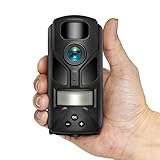
Overview: The OUTDOOR EXPERT 20MP MINI Trail Camera is an ultra-compact, entry-level wildlife monitoring solution designed for maximum discretion. It captures 20MP photos and 1080P HD video using truly invisible 940nm no-glow infrared LEDs that illuminate up to 80ft without any visible light. The palm-sized design makes it incredibly portable and easy to conceal, while ROHS certification ensures environmental safety. IP66 waterproofing enables reliable operation from -22°F to 158°F in harsh environments.
What Makes It Stand Out: Its remarkably small footprint—described as “half hand size”—makes this camera exceptionally easy to deploy covertly on any object or tree. The 940nm truly invisible infrared technology is superior to low-glow alternatives, ensuring zero disturbance to wildlife. ROHS certification demonstrates a commitment to safety and environmental standards rarely highlighted in trail cameras, making it suitable for sensitive ecological studies.
Value for Money: This is among the most affordable trail cameras offering true no-glow technology. It’s perfect for budget-conscious buyers, casual wildlife observers, educators, or those needing multiple units for comprehensive coverage without significant financial investment. The low power consumption reduces long-term operating costs.
Strengths and Weaknesses: Pros: Extremely compact and concealable, truly invisible 940nm night vision, ROHS certified safe materials, budget-friendly price, simple operation, low battery consumption. Cons: Lower 20MP resolution limits detail, basic 1080P video, limited to 32GB SD card, 6AA battery requirement, narrow field of view compared to wide-angle models, no screen for on-site review.
Bottom Line: The OUTDOOR EXPERT MINI is an excellent starter camera for children, educators, or anyone wanting discreet, no-fuss wildlife monitoring. Its tiny size and true no-glow performance make it perfect for close-range observation where concealment is paramount over high-resolution capture.
5. Fargarloo Trail Camera 4K, WiFi Game Camera, 120°Wide Angle, Night Vision Cameras, 32GB TF Card, IP66 Waterproof, Deer Scouting or Home Security, 0.2s Trigger Motion Activated for Wildlife
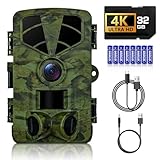
Overview: The Fargarloo Trail Camera delivers premium 4K video recording capability alongside 48MP still images and wireless app control. It features a 120° wide-angle lens, low-glow infrared night vision, and an integrated 32GB TF card for immediate out-of-box use. The IP66 weatherproof rating and dual power flexibility (8AA batteries or 6V external port) ensure reliable operation from -4°F to 140°F. The 0.2-second motion trigger captures wildlife action with minimal delay.
What Makes It Stand Out: The built-in 32GB storage eliminates the need for separate SD card purchase—a genuine value-add that saves $15-30. Its 4K video resolution is a significant step up from mainstream 2.7K/1080P models, capturing wildlife behavior with cinematic clarity. The “Trailcam Go” app provides intuitive remote control, while the unique camouflage design blends seamlessly into forest environments for undetected monitoring and authentic behavioral documentation.
Value for Money: Competitively priced for a 4K WiFi-enabled trail camera, the Fargarloo includes storage that typically costs extra. It bridges the gap between basic HD models and expensive professional units, offering advanced features without a premium price tag. The included batteries further enhance its out-of-box value proposition.
Strengths and Weaknesses: Pros: 4K ultra-HD video, built-in 32GB storage, convenient WiFi app control, wide 120° angle, dual power options, includes batteries. Cons: 0.2s trigger slower than 0.1s models, low-glow IR may be detectable vs no-glow alternatives, battery life reduced with WiFi and 4K recording, app connectivity limited to ~60ft range, 48MP lower than some 64MP competitors.
Bottom Line: The Fargarloo is a compelling choice for users wanting 4K video and wireless convenience in one package. Its integrated storage and solid performance make it an excellent value for serious wildlife videography, deer scouting, and home security applications where high-definition video is prioritized.
6. LANTOOCAM Trail Camera, 60MP Hunting Camera with WiFi, 32GB TF Card, Night Vision, Motion Activated, IP66 Waterproof, 120°Wide-Angle for Deer Scouting or Home Security, APP Control, H.264 MP4 Video

Overview: The LANTOOCAM Trail Camera delivers impressive 60MP images and 1296P video through a robust feature set designed for serious wildlife enthusiasts. This WiFi-enabled camera includes a 32GB TF card and offers smartphone connectivity via the “TrailCam GO” app, eliminating the need for physical card retrieval. Its camouflage housing and compact form factor enhance concealment while the 120° wide-angle lens captures expansive scenes.
What Makes It Stand Out: The combination of WiFi connectivity and ultra-high resolution sets this apart. The no-glow infrared LEDs provide stealthy night vision up to 50 feet without disturbing wildlife. The built-in WiFi network (not home WiFi) allows immediate media preview and download within range, while H.264 MP4 compression ensures efficient storage. The IP66 waterproof rating guarantees reliable performance through harsh conditions.
Value for Money: Priced competitively for a WiFi-enabled model, it undercuts premium brands while delivering comparable specs. The included 32GB card adds $10-15 value, and the wireless connectivity saves countless trips to the field. Non-WiFi alternatives with similar image quality cost 20-30% less but sacrifice convenience.
Strengths and Weaknesses: Pros: High-resolution 60MP sensor, convenient WiFi access, wide 120° field of view, complete kit, strong waterproofing. Cons: WiFi drains batteries faster than non-connected models, 50-foot night vision is shorter than some competitors, app connectivity range can be limited in dense forest.
Bottom Line: An excellent choice for tech-savvy users seeking high-resolution imaging with modern conveniences. The WiFi functionality justifies the modest price premium over basic models, making it ideal for deer scouting and property monitoring where remote access adds significant value.
7. MAXDONE Solar WiFi Trail Camera Bluetooth Game Camera, 4K 64MP Wildlife Cameras 2000mAh Built-in Battery Rechargeable Power Hunting Cameras with Night Vision Trail Cam Bluetooth Wi-Fi Deer Cams
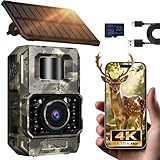
Overview: The MAXDONE Solar WiFi Trail Camera represents the cutting edge of eco-friendly wildlife monitoring, combining 4K video capability with an integrated solar power system. This premium game camera features a 2000mAh rechargeable battery and detachable solar panel, virtually eliminating battery replacement concerns. With 64MP photo resolution and Bluetooth/WiFi6 connectivity, it’s built for extended field deployment.
What Makes It Stand Out: The solar charging system is the headline feature, providing continuous power in sunny conditions. Ultra-low power WiFi6 maintains connection while sipping minimal juice. The enhanced 850nm infrared LEDs deliver clear night vision up to 65 feet with adaptive lighting technology. A comprehensive kit includes mounting hardware and SD card, backed by rare 2-year support.
Value for Money: While commanding a higher price point, the solar system pays for itself within 2-3 hunting seasons by eliminating battery costs. Comparable non-solar WiFi cameras run $30-50 less but require $40+ in batteries annually. The 4K video and 64MP resolution match flagship models costing significantly more.
Strengths and Weaknesses: Pros: Unlimited solar power, 4K video resolution, ultra-low power consumption, strong night vision, excellent app features. Cons: Higher upfront investment, solar panel adds bulk for concealment, 100° field of view is narrower than some competitors, performance drops in heavily shaded areas.
Bottom Line: The ultimate “set it and forget it” solution for serious long-term monitoring. The solar power system and premium specs justify the cost for dedicated hunters and researchers who need reliable, continuous operation without maintenance trips.
8. GardePro A3S Trail Camera (Non-Cellular, Non-WiFi), 64MP Photo & 1296P HD Video, 0.1s Trigger, 100ft No-Glow Night Vision, Motion Activated Wildlife Camera

Overview: The GardePro A3S takes a back-to-basics approach, eschewing WiFi and cellular connectivity for maximum reliability and battery life. This rugged trail camera captures 64MP photos and 1296P HD video with a specialized Starvis sensor optimized for low-light performance. Its no-frills design prioritizes core performance over flashy features, making it a workhorse for dedicated wildlife monitors.
What Makes It Stand Out: The Starvis sensor delivers exceptional low-light clarity, pushing night vision to an impressive 100 feet with true no-glow IR LEDs. A blazing 0.1-second trigger speed with three PIR sensors ensures nothing escapes detection. The non-connected design achieves incredible power efficiency—batteries last months rather than weeks. IP66 waterproofing and a standard 1/4"-20 mounting thread provide versatile, durable deployment options.
Value for Money: This camera offers outstanding value, priced similarly to entry-level WiFi models while delivering superior sensor quality and reliability. By eliminating wireless features, you avoid both the price premium and battery drain. For the cost of one premium WiFi camera, you could deploy two A3S units for better coverage.
Strengths and Weaknesses: Pros: Incredible battery life, class-leading 100ft night vision, ultra-fast 0.1s trigger, superior low-light sensor, reliable operation. Cons: No remote access requires physical visits, no instant notifications, retrieving SD cards can disturb locations, limited to 1296P video (not 4K).
Bottom Line: Perfect for users who prioritize reliability and longevity over convenience. The A3S excels in remote locations where battery changes are impractical. It’s the smart choice for researchers and hunters who value consistent performance above all else.
9. WOSODA Mini Trail Camera 4 Pack 24MP 1080P HD, Game Cam with SD Card, Waterproof Tiny Deer Camera Night Vision Motion Activated with Fast Trigger Time for Outdoor Wildlife Monitoring

Overview: The WOSODA Mini Trail Camera 4-Pack delivers exceptional value for those needing multiple monitoring points without breaking the bank. Each compact unit captures 24MP images and 1080P HD video, making this bundle ideal for covering large properties, fence lines, or multiple trails simultaneously. The complete kit includes four 32GB SD cards and 16 AA batteries, providing everything needed for immediate deployment.
What Makes It Stand Out: The multi-pack configuration offers unbeatable per-unit pricing, making widespread coverage financially feasible. These mini cameras run on just four AA batteries each—half the typical requirement—while maintaining impressive standby times. The camouflage housing and compact dimensions enhance concealment, reducing theft risk. A respectable 0.3-second trigger speed ensures reliable motion capture for most wildlife applications.
Value for Money: At roughly the cost of one premium camera, you receive four complete units with accessories. This represents a 60-70% savings compared to buying individual cameras. While specs are modest, the ability to monitor multiple locations simultaneously provides strategic advantages that outweigh raw resolution numbers for many users.
Strengths and Weaknesses: Pros: Incredible bulk value, ultra-compact design, low power consumption, complete kit with batteries/cards, good for large-scale deployment. Cons: Lower 24MP/1080P resolution, night vision range not specified (likely limited), build quality reflects budget pricing, 0.3s trigger slower than premium models.
Bottom Line: An outstanding starter set or solution for budget-conscious buyers needing area coverage over individual camera performance. Perfect for property surveillance, farm monitoring, or beginner wildlife enthusiasts who want to experiment with multiple angles without significant investment.
10. WOSPORTS Mini Trail Camera,24MP 1080P HD Game Camera Motion Activated with IR Night Vision Waterproof Video Deer Cam for Outdoor Wildlife Monitoring

Overview: The WOSPORTS Mini Trail Camera targets entry-level users seeking simplicity and discretion in a compact package. This lightweight game camera captures 24MP photos and 1080P HD video while operating on just four AA batteries, making it exceptionally portable. Its diminutive size allows placement in tight spaces where larger cameras would be conspicuous, ideal for both wildlife observation and discrete home security monitoring.
What Makes It Stand Out: The ultra-compact form factor is the primary differentiator—this is among the smallest trail cameras available. The four-battery system reduces weight by 40% compared to standard models while delivering surprisingly long standby times. The automatic IR filter ensures consistent day/night transitions, and the straightforward interface requires minimal technical knowledge. Included mounting accessories provide flexible installation options.
Value for Money: Positioned as one of the most affordable trail cameras available, it delivers essential functionality without premium features. While resolution matches the WOSODA mini, this single-unit price allows entry into trail camera use for under $40—less than a dinner out. Non-mini alternatives at this price typically offer 20MP or lower resolution.
Strengths and Weaknesses: Pros: Extremely compact and lightweight, very affordable, simple operation, low power consumption, versatile mounting. Cons: Basic 24MP/1080P specs, unspecified night vision range (likely under 50ft), plastic construction feels less durable, no wireless connectivity, limited advanced features.
Bottom Line: A reliable introductory camera for casual users or those needing a small, inexpensive monitoring solution. It won’t compete with premium models, but excels as a first trail camera, backup unit, or for situations where size and cost matter more than cutting-edge performance.
Why Premium Features Matter for Trophy Hunting Success
Trophy hunting demands a different level of performance from your equipment. When you’re targeting mature, nocturnal bucks that have survived multiple seasons, they’ve learned to detect and avoid subpar trail cameras. Premium models incorporate stealth technology, superior detection circuits, and robust construction that stands up to months of harsh weather while providing the detailed data needed to pattern elusive game animals. The initial investment pays dividends through reliability, image quality, and the kind of performance that doesn’t miss critical moments.
Understanding Trigger Speed and Recovery Time
What Constitutes Fast Trigger Speed
Trigger speed—the time between when a camera detects motion and captures an image—is arguably the most critical specification for trophy hunters. Premium cameras typically offer trigger speeds of 0.2 seconds or faster, ensuring that even animals moving at full speed appear centered in the frame rather than as partial blurs or missed opportunities. When a mature buck trots through your shooting lane, you need confidence that your camera captured usable intelligence, not just a tail or empty background.
Why Recovery Time Impacts Your Data
Recovery time determines how quickly your camera resets to capture a second image after the first. High-end models feature sub-1-second recovery times, crucial for capturing multiple angles of the same animal or documenting group dynamics when several deer travel together. This rapid-fire capability builds a comprehensive picture of deer behavior, revealing whether that big buck is traveling alone, with does, or trailing behind younger bucks—intelligence that directly influences your stand placement strategy.
Image Quality: Beyond Megapixels
Resolution vs. Clarity in Low Light
While many hunters focus on megapixel counts, premium cameras differentiate themselves through low-light performance and image clarity. A 20MP sensor with poor optics and substandard processing will produce worse results than a 12MP camera with high-quality glass and advanced image processing. Look for cameras that maintain sharpness and color accuracy during the critical dawn and dusk periods when mature bucks are most active. The ability to distinguish antler points, body condition, and unique identifying features from a distance separates professional-grade equipment from consumer models.
The Importance of Lens Quality
The lens assembly significantly impacts image quality more than most hunters realize. Premium trail cameras utilize multi-coated glass lenses that maximize light transmission and minimize distortion. Wide-angle lenses provide broader coverage of trails and feeding areas, while adjustable focus systems ensure both near and distant subjects remain sharp. This optical superiority means you can identify specific animals from further away, reducing the need to place cameras dangerously close to bedding areas.
Detection Range and Zone Coverage
PIR Sensor Technology Explained
Passive Infrared (PIR) sensors detect heat and movement, triggering the camera when warm-bodied animals enter the detection zone. High-end models feature advanced PIR circuits with adjustable sensitivity and wider detection angles. Premium sensors can distinguish between small animals and deer-sized targets, reducing false triggers from swaying branches or squirrels while ensuring nothing larger slips past undetected. The best sensors maintain consistent performance across temperature extremes, critical for late-season hunting when temperatures plummet.
Detection Width vs. Distance
A camera’s detection zone determines how much area it monitors. Premium cameras offer 80-100 foot detection ranges with 50-60 degree detection angles, creating a substantial monitoring footprint. This extended coverage means fewer cameras needed to monitor large properties and less chance of missing deer that skirt the edges of trails. Some advanced models feature multiple detection zones that can be customized based on terrain, allowing you to focus on specific trails while ignoring background movement.
Night Vision Capabilities
Infrared vs. No-Glow Flash
Night vision technology directly impacts your ability to pattern nocturnal bucks. Standard infrared cameras emit a faint red glow that educated deer can detect, potentially altering their behavior. No-glow (black) infrared LEDs operate at a wavelength invisible to deer and humans, allowing completely covert monitoring. Premium no-glow cameras illuminate subjects up to 100 feet away while remaining completely undetectable, ensuring you capture natural behavior without spooking your target buck.
Black Flash Technology for Stealth
The most advanced night vision systems utilize black flash technology that delivers crisp, clear nighttime images without any visible light emission. These systems employ high-powered LEDs and sensitive image sensors to capture detailed photos even on moonless nights. For trophy hunters targeting mature bucks that have learned to avoid camera locations, black flash technology isn’t just a luxury—it’s a necessity for obtaining honest intelligence about their movements.
Power Management and Battery Life
Lithium vs. Alkaline Performance
Power management separates reliable cameras from those that die mid-season. Premium cameras are engineered for extreme efficiency, often running 8-12 months on a single set of lithium batteries. Lithium batteries outperform alkaline in cold weather, maintaining consistent voltage when temperatures drop below freezing. This reliability ensures your cameras keep running during the critical late-season period when trophy bucks are vulnerable and patternable.
Solar Panel Integration
For extended deployments in remote locations, premium cameras offer integrated solar panel options that provide indefinite power. These systems include internal rechargeable batteries that store solar energy, ensuring continuous operation even during weeks of overcast weather. Solar integration eliminates the need for mid-season battery changes that can contaminate your hunting area with human scent and disturbance.
Storage Solutions and Data Management
SD Card Capacity and Speed Classes
High-resolution images and HD video require substantial storage capacity and fast write speeds. Premium cameras support SDXC cards up to 512GB, allowing months of continuous recording without card changes. Look for cameras that specify UHS-I or UHS-II compatibility, ensuring they can handle rapid-fire shooting and video recording without buffer delays. Some advanced models feature dual card slots for redundant backup or extended storage.
Cloud Storage vs. Local Storage
Cellular-enabled cameras offer cloud storage options that automatically upload images, protecting your data even if the camera is stolen or damaged. Premium cloud services provide organized galleries, species tagging, and weather data overlays that enhance scouting efficiency. However, local storage remains essential for areas without cellular coverage, making hybrid systems that support both methods the most versatile choice for serious hunters.
Cellular and Wireless Connectivity
Data Plans and Transmission Frequency
Modern premium trail cameras offer 4G LTE connectivity with flexible data plans that send images directly to your smartphone. Look for cameras that allow adjustable transmission frequency—sending immediate alerts for new images while batch-sending during low-activity periods to conserve data. The best systems provide free mobile apps with real-time notifications, allowing you to monitor activity without physically checking cameras and leaving scent in your hunting area.
App Integration and Remote Access
Professional-grade cellular cameras include sophisticated mobile apps that go beyond simple image viewing. These platforms offer remote settings adjustment, allowing you to change trigger sensitivity, image resolution, or recording modes without visiting the camera. GPS mapping integration helps you track camera locations across large properties, while pattern recognition tools can identify peak activity times and movement corridors based on weeks of accumulated data.
Durability and Weather Resistance
IP Ratings Explained
Trophy hunters deploy cameras for months through rain, snow, and extreme temperatures. Premium cameras carry IP66 or IP67 ratings, ensuring complete dust protection and resistance to powerful water jets or temporary submersion. This robust sealing prevents internal fogging and corrosion that can destroy lesser cameras. The housing materials themselves matter—high-end models use reinforced polymers or metal cases that withstand impacts from falling branches and curious bears.
Camouflage and Anti-Theft Features
Beyond standard camouflage patterns, premium cameras feature textured finishes that break up outlines and blend with tree bark. Advanced models include reinforced security boxes with custom key locks and steel cables that resist cutting attempts. Some incorporate GPS tracking that activates if the camera is moved, providing location data to help recover stolen equipment. These features protect your investment and the intelligence it has gathered.
Advanced Features Worth the Investment
AI and Species Recognition
The newest generation of premium cameras incorporates artificial intelligence that can distinguish between deer, humans, vehicles, and other animals. This technology filters out irrelevant images and sends alerts only when your target species appears, saving data costs and reducing time spent reviewing hundreds of photos. Some systems can even estimate animal age and antler size, automatically flagging shooter bucks for immediate notification.
Time-Lapse and Field Scan Modes
Advanced time-lapse modes capture images at set intervals during daylight hours, documenting feeding patterns and habitat use even when animals don’t trigger the PIR sensor. Field Scan technology combines time-lapse with motion detection, ensuring comprehensive coverage of food plots and large openings. These modes reveal subtle patterns—like which specific oak trees deer prefer for acorns—that trigger-based monitoring alone might miss.
Strategic Camera Placement Strategies
Understanding Animal Movement Patterns
Even the best camera produces poor results if placed incorrectly. Premium scouting involves understanding terrain funnels, bedding areas, and travel corridors. Place cameras on the downwind side of trails 10-15 yards back to avoid detection. Focus on natural bottlenecks like creek crossings, fence gaps, and ridge lines where deer movement becomes predictable. The goal is gathering intelligence on mature bucks without them ever knowing they’re being monitored.
Height and Angle Best Practices
Mount cameras 8-10 feet high, angled slightly downward, to keep them above a deer’s normal line of sight and reduce the risk of theft. This elevated position also expands the detection zone and provides better perspective for identifying individual animals. For trail monitoring, position cameras at 45-degree angles to the trail rather than perpendicular, giving you more time to capture full-body images as animals approach and pass by.
Maintenance and Troubleshooting
Seasonal Maintenance Checklist
Premium cameras require minimal maintenance, but proactive care ensures peak performance. Check battery levels monthly through your cellular app. Inspect mounting straps for UV degradation before each season. Clean the PIR sensor window and lens with a microfiber cloth to remove dust, pollen, and spider webs that can reduce sensitivity. Update firmware when manufacturers release improvements to detection algorithms or cellular connectivity.
Common Issues and Solutions
False triggers from vegetation can be reduced by trimming grass and branches within the detection zone. If night images appear washed out, check for reflective surfaces like dew-covered leaves or facing the camera toward rising/setting sun. Inconsistent cellular transmission often results from weak signal—consider external antenna accessories for remote locations. Moisture inside the housing indicates seal failure and requires immediate manufacturer service to prevent permanent damage.
Frequently Asked Questions
How long should a premium trail camera last?
Quality trail cameras designed for serious hunters typically last 5-7 years with proper maintenance. The investment in premium construction, weather sealing, and robust components pays off through multiple hunting seasons. Many professional hunters report using the same high-end cameras for a decade when they’re properly cared for and stored during off-seasons.
What’s the realistic battery life for cameras in cold climates?
In sub-freezing temperatures, expect 4-6 months from lithium batteries versus 2-3 months from alkaline. Cameras with solar panels can operate indefinitely, though battery performance may decline 20-30% during the coldest weeks of winter. Cellular transmission frequency significantly impacts battery drain in cold weather.
Do no-glow cameras really make a difference for mature bucks?
Absolutely. Mature bucks that have encountered standard infrared cameras often begin avoiding those locations. No-glow technology is completely invisible to deer, allowing you to monitor the same site continuously without altering natural behavior patterns. This is especially critical for cameras placed near bedding areas or on heavily used trails.
How much data do cellular cameras typically use?
On average, a cellular camera transmits 2-5MB per image. With moderate activity (10-15 images daily), expect 1-3GB monthly. Video clips consume significantly more data. Premium cameras offer compression algorithms and thumbnail preview options that reduce data usage by 30-40% while still delivering full-resolution images on demand.
Can trail cameras spook deer with sound?
Premium cameras operate silently, with shutter noise below 20 decibels—quieter than a whisper. The faint click is imperceptible to deer beyond a few feet. However, the mechanical sound of the filter switching between day and night mode can be slightly more noticeable. Top-tier models minimize this with slower, more deliberate filter movements that blend with natural forest sounds.
What’s the advantage of 4K video over standard HD?
4K video provides four times the resolution of 1080p, allowing you to zoom in on distant subjects while maintaining clarity. For trophy hunters, this means being able to confirm antler points, estimate age class, and study body language from footage captured at longer distances. The increased detail also helps distinguish individual animals when reviewing weeks of recordings.
How do I prevent camera theft on public land?
Use security boxes bolted to trees with hardened steel cables. Mount cameras 12+ feet high with climbing sticks left nearby. Enable GPS tracking if available. Consider placing cameras in less obvious locations away from main trails. Some hunters use dummy cameras in obvious spots while placing real cameras nearby facing the decoy to catch thieves.
Are solar panels worth the extra cost?
For cameras deployed more than 3 months or in remote locations, solar panels typically pay for themselves in avoided battery costs and reduced disturbance. They also ensure continuous operation during peak rut activity when you can’t afford a dead camera. Premium integrated systems are more reliable than aftermarket panels and maintain cleaner aesthetics.
What’s the best time of year to deploy cameras for patterning trophy bucks?
Begin placing cameras in late spring to monitor antler development and summer feeding patterns. This establishes baseline behavior before hunting pressure changes routines. Keep cameras running through summer to identify bachelor groups, then maintain coverage through the rut and late season. The intelligence gathered across seasons reveals how individual bucks adapt to changing conditions.
How many cameras do I need to effectively monitor a 100-acre property?
For comprehensive coverage, plan on 6-8 strategically placed premium cameras. Position one at each primary entry/exit point, two on major travel corridors, one overlooking a primary food source, and one near suspected bedding areas. Quality over quantity applies—two premium cameras in perfect locations outperform six budget cameras placed haphazardly.
Related Buying Guides
- 10 Premium Cellular Trail Cameras for Hunters (Worth the Investment)
- 10 Premium Combat Knives for Hunters (Worth the Investment)
- 10 Premium Elk Calls for Serious Hunters (Worth the Investment)
- 10 Premium Hunting Daypacks for Hunters (Worth the Investment) in 2026
- 10 Premium Men’s Hunting Boots (Worth the Investment) for 2026 Expeditions