Table of Contents
There’s a moment every serious waterfowler experiences when an incoming flock flares at the last second, and you can’t figure out why. You’ve scouted the X, your calling was crisp, and the wind is perfect. The culprit? Often, it’s a spread that looks like plastic army men to a goose’s incredibly sharp vision. Premium decoys aren’t just about having more birds on the ground—they’re about creating a scene so convincing that even the wariest old honker can’t resist.
The investment in high-quality goose decoys separates weekend warriors from consistently successful hunters. While that bargain dozen might save you cash upfront, the hidden costs show up in missed opportunities, frequent replacements, and spreads that spook more birds than they attract. Serious waterfowlers understand that every decoy in their spread is a tool, and premium tools build premium results season after season.
Top 10 Goose Decoys for Serious Hunters
Detailed Product Reviews
1. Avery GHG Hunter Series Canada Harvester Goose Full Body Pack Decoys | Bodies with Flocked Heads, RealMotion Stakes (71597)

Overview: The Avery GHG Hunter Series Canada Harvester Pack represents the pinnacle of full-body goose decoy engineering. This six-pack set includes four feeders, one rester, and one active decoy, each featuring flocked heads and anatomically precise body sculpting. Designed for dedicated waterfowl hunters who demand maximum realism, these decoys combine premium materials with innovative motion technology to create spreads that fool even the wariest Canada geese in any flyway.
What Makes It Stand Out: The PermaLoc threaded stud system revolutionizes head attachment, virtually eliminating breakage during transport—a common frustration with lesser decoys. The RealMotion stake system delivers subtle, lifelike movement in breezes as light as 5 mph, creating dynamic visual cues that live birds find irresistible. High-resolution feather detailing and advanced paint adhesion technology ensure these decoys maintain their pristine appearance season after season, even under harsh UV exposure and extreme weather conditions.
Value for Money: Positioned at the premium end of the market, these decoys justify their higher price tag through exceptional durability and proven field performance. While budget options may save money initially, the Harvester Pack’s resistance to wear and realistic presentation translates to more successful hunts and fewer replacement costs over multiple seasons, making them a sound long-term investment for serious enthusiasts.
Strengths and Weaknesses: Strengths include unmatched realism, innovative flocked head security system, effective motion technology, and superior weather resistance. Weaknesses involve significant weight for transport, substantial storage space requirements, and premium pricing that may deter casual hunters. The full-body design, while realistic, demands more effort to deploy than shell or silhouette options.
Bottom Line: For committed waterfowl hunters prioritizing realism and durability, the Avery GHG Harvester Pack delivers exceptional performance that translates to more birds in the bag. The investment pays dividends through seasons of reliable use.
2. Heerweiyi Realistic Canadian Goose Decoys - Durable and Detailed Hunting Decoy Set with Lifelike Feather Patterns - 6-Pack Floating Water for Outdoor Sports and Waterfowl Hunting

Overview: Heerweiyi’s six-pack floating goose decoys offer an accessible entry point for hunters and outdoor enthusiasts seeking realistic water presentations without breaking the bank. Constructed from lightweight EVA foam, these decoys prioritize versatility, serving equally well for waterfowl hunting, pond decoration, wildlife photography, or educational purposes. Their floating design and natural balance make them immediately deployable on any water surface.
What Makes It Stand Out: The remarkable versatility distinguishes this set from hunting-specific alternatives. While functional for waterfowl pursuit, these decoys excel as multi-purpose tools—enhancing garden ponds, serving as photography props, or facilitating wildlife education. The EVA construction provides waterproof reliability and weather resistance at a fraction of the weight of traditional decoys, enabling effortless transport and rapid deployment.
Value for Money: Representing exceptional affordability, this six-pack delivers functionality that belies its budget-friendly price point. For novice hunters testing the sport or property owners seeking aesthetic enhancement, the value proposition is compelling. However, experienced hunters should note that detail and durability don’t match premium brands, making these ideal for supplementary spreads rather than primary hunting setups.
Strengths and Weaknesses: Strengths include lightweight portability, versatile applications, floating capability, and attractive pricing. Weaknesses encompass less intricate detailing compared to high-end decoys, EVA foam’s potential for punctures, and paint that may fade faster under intense UV exposure. The generic poses lack the variety needed for sophisticated spreads targeting pressured birds.
Bottom Line: Perfect for beginners, decorators, or as economical filler decoys. Serious hunters should consider these as secondary options rather than primary spread components, but they deliver solid performance for their price tier.
3. VEVOR Canada Goose Decoys, Outdoors Goose Decoy for Waterfowl Hunting, Durable Plastic Floaters with Ultra Realistic Paint, for Pool, Pond, Lake, Garden Yard Decoration, Easy to Carry and Use, 6-Pack

Overview: VEVOR’s six-pack floating goose decoys bridge the gap between budget foam options and premium rigid decoys through innovative XPE material construction. The set includes three standing alert and three resting postures, creating natural flock diversity. Engineered for mobile hunters and multi-scene applications, these decoys feature compression storage capability and cold-weather performance down to -40°C, making them suitable for harsh late-season conditions.
What Makes It Stand Out: The compression storage feature revolutionizes transport efficiency, allowing hunters to pack dozens of decoys in minimal space. The exclusive keel design enables natural floating movement with water flow or light wind, while bionic painting technology maintains color accuracy and feather detail through extended outdoor exposure. This combination of portability and realism addresses key challenges for hunters accessing remote locations.
Value for Money: Positioned in the mid-range price category, these decoys offer compelling value for mobile hunters prioritizing packability. The durability of XPE foam exceeds traditional EVA options, while the realistic paint scheme rivals more expensive brands. For hunters hiking long distances or using small boats, the weight and space savings justify the investment over cheaper alternatives.
Strengths and Weaknesses: Strengths include compressible storage, cold-weather durability, realistic floating motion, lightweight design, and versatile posing. Weaknesses involve foam’s inherent vulnerability to punctures versus hard plastic, less detailed sculpting than premium full-bodies, and potential compression memory issues if stored compressed long-term.
Bottom Line: An excellent choice for mobile hunters and those with storage constraints. The compression feature and realistic water movement make these superior to basic foam decoys while remaining affordable and practical.
4. DEADLY DECOYS® Duck and Goose Flyer Decoys -1 Decoy

Overview: DEADLY DECOYS® offers a revolutionary approach to waterfowl attraction with their wind-activated flyer decoy. Unlike traditional static decoys, this single-unit flyer creates dynamic overhead movement that captures birds’ attention from great distances. Available in multiple species including Canada Goose, the decoy features foldable wings for portability and requires no batteries or external power sources, operating purely on wind energy.
What Makes It Stand Out: The wind-activated motion system provides continuous, realistic wing movement that static spreads cannot replicate. This unique visual signature helps differentiate your setup from others, crucial for hunting pressured birds. The foldable wing design enables compact transport in standard decoy bags, solving the traditional bulk problem associated with motion decoys. Operating without batteries eliminates maintenance concerns and ensures reliability in remote locations.
Value for Money: As a single decoy purchase, this represents an affordable entry into motion decoy technology. Rather than investing hundreds in electronic spinning wing decoys, hunters can add realistic movement for a fraction of the cost. The durability and battery-free operation translate to minimal ongoing expenses, making it a cost-effective enhancement to any spread.
Strengths and Weaknesses: Strengths include wind-powered operation, portability, unique presentation, species variety options, and low maintenance. Weaknesses involve dependence on wind (ineffective on calm days), single decoy limitation requiring multiple units for impact, potential for tangling in vegetation, and less realistic body detail since movement is the primary feature.
Bottom Line: An excellent addition to any serious hunter’s spread, particularly for targeting wary birds in windy areas. Combine multiple flyers with static decoys for maximum effectiveness. Best used as a supplement rather than standalone solution.
5. Higdon Outdoors Full-Size Half Shell Canada Goose Decoys for Waterfowl Hunting | 6pk

Overview: Higdon Outdoors’ half-shell Canada Goose decoys deliver premium realism in a transport-friendly format. This six-pack features removable heads in multiple positions—Tru Sentry, Rester, Tru Walker, and Feeder—enabling diverse spread configurations. Designed by an award-winning wildlife carver, these decoys showcase intricate feather detail and proprietary UV painting techniques that minimize glare while maximizing visibility to approaching geese.
What Makes It Stand Out: The removable head system combined with stackable half-shell bodies creates unprecedented transport efficiency without sacrificing presentation quality. Hunters can carry several dozen decoys in the space of a dozen full-bodies. Higdon’s UV painting process enhances feather definition while reducing unnatural shine, a critical advantage when hunting educated birds on bright days. The variety of included head positions allows for authentic feeding, resting, and alert postures.
Value for Money: While priced in the premium tier, these decoys offer value through space savings and durability. The ability to transport 48 decoys where 12 full-bodies would fit changes the economics for hunters traveling to fields. The award-winning design and UV paint technology justify the cost for serious hunters who understand that finishing detail determines success with mature birds.
Strengths and Weaknesses: Strengths include excellent transportability, detailed UV paint, versatile head positions, stackable design, and professional carving quality. Weaknesses involve half-shell format being less realistic than full-body at close range, premium pricing, and potential for head loss if not properly secured. The lightweight design may require additional anchoring in strong winds.
Bottom Line: Ideal for hunters needing to transport large numbers of decoys to field locations. The combination of realism and packability makes these a smart investment for serious waterfowlers who prioritize both quality and logistics.
6. Flambeau Outdoors 8866SGS Storm Front 2 Canada Goose Shell 4-Pack Hunting Decoys
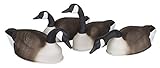
Overview: The Flambeau Storm Front 2 series represents a premium solution for dedicated waterfowl hunters seeking maximum realism in a portable package. These 24-inch full-sized Canada goose shell decoys combine advanced paint technology with practical storage design, delivering professional-grade performance for field hunting scenarios where concealment and authenticity drive success.
What Makes It Stand Out: The patented UVision paint technology is the star feature, replicating the actual ultraviolet reflectance of real goose plumage to deceive even wary birds. The stackable shell design with removable heads solves the chronic storage problem that plagues hunters, allowing compact transport of multiple dozens. The four-pack includes strategically varied poses—Sentry, Feeder, Semi-Feeder, and Semi-Rester—creating natural-looking spreads without redundant postures.
Value for Money: Positioned in the mid-to-high price tier for shell decoys, this four-pack justifies its cost through technological innovation and space-saving design. Comparable shell sets lack UV-matching capabilities, making this a smart investment for hunters who prioritize effectiveness over economy. The durability ensures seasons of use, amortizing the initial premium.
Strengths and Weaknesses: Strengths include revolutionary UVision paint, realistic high-definition detailing, space-efficient stackability, and pose diversity. The darker color scheme enhances visibility in agricultural fields. Weaknesses: shell decoys require separate stakes, offer less depth than full-body models in sparse cover, and the premium price may deter beginners testing the sport.
Bottom Line: An exceptional choice for serious hunters wanting cutting-edge realism and portability. The UVision technology provides a genuine edge, while the stackable design makes large spreads logistically feasible.
7. AUSCAMOTEK Waterproof Goose Silhouette Decoy Bag with Camouflage Pattern, Large Capacity with Stake Holes, Durable Design for Easy Storage and Transport of Decoys

Overview: This specialized decoy bag addresses the logistical nightmare of transporting silhouette goose decoys through wet, demanding hunting environments. Measuring 75x35x50cm with a 20x34cm bottom opening, the AUSCAMOTEK bag combines waterproof protection with hunter-centric design features that streamline setup and breakdown in the field.
What Makes It Stand Out: The ingenious stake slit design allows stakes to protrude during transport, preventing damage to both decoys and stakes while enabling grab-and-go deployment. The authentic camouflage pattern maintains stealth during ingress and egress, while the waterproof fabric shields expensive decoys from rain, snow, and mud—critical for maintaining paint integrity.
Value for Money: This bag delivers premium features at a mid-range price point. Protecting a $200+ silhouette spread from moisture damage pays dividends immediately. Compared to generic bags that require stake removal and offer no weather resistance, this purpose-built solution saves time and extends decoy lifespan, delivering strong ROI.
Strengths and Weaknesses: Strengths include robust waterproof construction, generous capacity holding dozens of silhouettes, innovative stake access ports, ergonomic adjustable strap, and camouflage integration. Weaknesses: the silhouette-specific design won’t accommodate shell or floater decoys; single-compartment design limits organization; lacks wheels which would help for extremely heavy loads.
Bottom Line: An indispensable accessory for silhouette decoy hunters operating in wet conditions. The stake slit innovation and waterproofing justify every penny, making transport and setup significantly more efficient.
8. Bird-X 2D Hunting Coyote Predator Decoy - Targets Canada Geese, Deer and Rabbits Deterrent, Yard Ornament

Overview: The Bird-X 2D Coyote Decoy serves a dual purpose as both a humane pest deterrent and decorative yard ornament. Manufactured in the United States, this decoy targets property owners battling Canada geese, deer, rabbits, and smaller pests like gophers and squirrels without chemicals or traps—offering a maintenance-free solution for protecting lawns, gardens, and landscaping.
What Makes It Stand Out: This versatile deterrent covers an unusually broad pest spectrum, from large grazing animals to burrowing rodents. Its 2D silhouette design creates a convincing predator presence from a distance, while the weather-resistant construction ensures year-round deployment. The dual functionality as a yard ornament means it doesn’t look out of place in residential settings.
Value for Money: Extremely affordable compared to recurring pest control services or chemical treatments. A one-time purchase provides continuous protection with zero operating costs. While cheaper than electronic deterrents, it offers comparable effectiveness for many common pests, delivering exceptional long-term value for homeowners.
Strengths and Weaknesses: Strengths include chemical-free humane deterrence, broad pest targeting, weather-resistant durability, zero maintenance requirements, and attractive pricing. Made in USA quality ensures decent construction. Weaknesses: the 2D design loses realism up close; effectiveness diminishes as animals habituate; limited placement options without mounting hardware; not designed for hunting applications.
Bottom Line: A cost-effective, low-maintenance solution for property owners seeking humane pest control. While not a hunting tool, it provides reliable deterrence value for its modest price point.
9. Top Down Decoys - Horizontal Canada Goose/Snow Goose Decoy - 12 Pack

Overview: Top Down Decoys delivers innovative versatility with this 12-pack of horizontal silhouette decoys featuring dual-species printing. Each 4mm corrugated plastic decoy displays a lifelike Canada goose on one side and a snow goose on the reverse, allowing hunters to adapt spreads based on daily conditions without carrying duplicate sets—ideal for mixed-species hunting scenarios.
What Makes It Stand Out: The reversible design effectively provides 24 decoys in one purchase, maximizing versatility while minimizing weight and storage space. The horizontal feeder pose mimics relaxed feeding behavior, and the 4mm corrugated plastic construction offers exceptional durability. UV-protective inks with textured matte finish eliminate glare, a critical factor for wary birds in bright conditions.
Value for Money: Outstanding value proposition—comparable quality single-species silhouette packs cost similar amounts, but this provides two species. The durable corrugated plastic withstands field abuse better than cheaper cardboard alternatives, ensuring multiple seasons of use. For hunters targeting both Canada and snow geese, this eliminates the need for separate investments.
Strengths and Weaknesses: Strengths include brilliant reversible dual-species design, robust 4mm corrugated plastic, glare-resistant UV-protective finish, realistic horizontal pose, and made-in-USA quality. The 12-pack builds a substantial spread quickly. Weaknesses: single pose limits spread diversity; silhouettes lack 3D depth for close-range work; horizontal orientation may not suit all field layouts.
Bottom Line: An exceptional value for versatile hunters. The dual-species design and durable construction make this a smart, space-saving investment for those pursuing both Canada and snow geese.
10. Final Approach Last Pass Canada Goose Floater Decoys, 6 Pack

Overview: The Final Approach Last Pass series represents the pinnacle of floating goose decoy craftsmanship, with world champion carver Wayne Simkin’s artistry evident in every detail. These one-piece floaters combine championship-level realism with rugged FA construction, designed specifically for water hunts where authentic motion and detail separate successful hunts from empty bags.
What Makes It Stand Out: Simkin’s carving expertise delivers anatomical accuracy and posture authenticity unmatched by mass-produced decoys. The one-piece design eliminates weak seam points that cause leaks, while the weighted keel with cord lock system ensures proper self-righting and allows precise depth adjustment. This engineering creates natural floating motion that convinces circling flocks.
Value for Money: Positioned at the premium tier, these decoys justify their price through artistry and durability. Comparable hand-carved quality costs significantly more, while cheaper floaters lack the realism and structural integrity. For serious water hunters, the investment translates to more birds and fewer replacements, amortizing the cost over many productive seasons.
Strengths and Weaknesses: Strengths include world-class realism from champion carver, bombproof one-piece construction, functional weighted keel system, and Final Approach’s reputation for durability. The paint schemes accurately reflect live birds. Weaknesses: premium pricing limits accessibility; floater design restricts use to water; six decoys insufficient for large spreads; paint eventually wears requiring touch-up.
Bottom Line: The ultimate choice for dedicated waterfowlers who demand championship realism and bulletproof durability. The Simkin carving pedigree and one-piece construction make these worth every dollar for serious hunters.
Why Premium Goose Decoys Make a Difference
The Psychology of Realism
Geese possess visual acuity that puts human eyesight to shame. They see ultraviolet light, detect subtle movement patterns, and can spot inconsistencies from hundreds of yards away. Premium decoys leverage this understanding through meticulous attention to detail—precise feather texturing, anatomically correct head positions, and species-specific behaviors captured in plastic. The difference between a generic silhouette and a carefully crafted full-body isn’t just aesthetic; it’s psychological warfare. When a flock approaches, each bird’s tiny brain is running rapid-fire calculations: does this scene match thousands of years of evolutionary programming about what safe, comfortable geese look like? Cheap decoys fail these subconscious tests, while premium options pass with flying colors.
Durability in Harsh Conditions
Field hunting in December means frozen ground, brutal winds, and the inevitable moment when you accidentally step on a decoy. Premium decoys are engineered for this abuse. They use high-density polyethylene or advanced polymer blends that flex instead of shatter, paint adhesion systems that resist chipping when decoys knock together in your trailer, and UV inhibitors that prevent sun-fading after seasons of exposure. That initial price tag includes the peace of mind that your spread won’t look like faded yard ornaments by year three. Serious waterfowlers hunt 30-50 days per season; durability isn’t a luxury, it’s a necessity.
Long-Term Cost Efficiency
A $400 dozen might seem steep compared to $150 for budget birds, but spread that cost over a decade of reliable service. Premium decoys often last 10-15 years with proper care, while economy options typically need replacement every 2-3 seasons. Factor in the value of birds you might have missed due to unconvincing decoys, and the math becomes clear. Additionally, premium decoys retain resale value remarkably well. A well-maintained spread can recoup 60-70% of its original cost, while cheap decoys have zero secondary market value. Think of it as investing in a quality tool versus disposable equipment.
Key Features That Define Premium Decoys
Material Quality and Construction
The foundation of any premium decoy lies in its material composition. Look for rotational-molded construction that creates seamless, thick-walled bodies without weak points. The plastic should have a slight flex when pressed—brittle decoys crack in cold weather. Advanced models incorporate keeled bottoms for water stability and weighted bases that maintain position in heavy winds without requiring separate anchors. Some even feature reinforced stake holes that won’t oval out after repeated use. The material’s density affects how light interacts with the surface, creating realistic shadows and depth that flat, thin plastic can’t replicate.
Paint Durability and UV Resistance
Premium paint systems involve multiple layers: primer, base coats, detail layers, and UV-resistant clear coats. These aren’t just sprayed on—they’re heat-fused or chemically bonded to the plastic. Look for feather detail that includes subtle color transitions, iridescence on wing patches, and shadowing in neck grooves. The best decoys use automotive-grade pigments that maintain their richness after years in the sun. Some manufacturers embed metallic flakes to mimic the natural sheen of real feathers. Touch-up paint should match perfectly, which is why premium brands offer exact-match kits rather than generic colors.
Body Postures and Flock Realism
A convincing spread mimics natural flock behavior through variety. Premium lines offer 8-12 distinct body postures: aggressive sentries, relaxed feeders, preening birds, sleeping geese with heads tucked, and courting pairs. Each posture serves a strategic purpose. Sentries positioned on the spread’s perimeter signal “all clear” to approaching birds. Feeder bodies in the center suggest a food source. Resting birds indicate comfort and safety. The head positions matter too—alert heads facing different directions create a lived-in feel that uniform decoys can’t achieve. This variety transforms a static display into a snapshot of living behavior.
Motion Systems and Realism Enhancement
Modern premium decoys integrate motion directly into the design rather than treating it as an afterthought. Magnetic head systems allow for quick position changes without tools. Spring-loaded bases create subtle bobbing movements in light winds. Some models feature interchangeable motion stakes that convert from ground spikes to water keels. The best systems use low-profile, natural-motion technology that doesn’t look mechanical from above. Consider how the decoy moves at the stake connection point—premium designs use ball-and-socket or flexible rubber grommets that eliminate the jerky, unnatural pivoting common in cheap decoys.
Weight and Portability Considerations
A premium decoy balances durability with manageable weight. Full-bodies typically weigh 4-7 pounds each—heavy enough to stay put in wind, light enough to transport dozens without a forklift. Shell decoys offer weight savings while maintaining realism from above. Some premium systems use hollow bodies with removable weights, allowing you to adjust based on conditions. The stakes matter too: collapsible, corrosion-resistant stakes with sharp points that penetrate hard ground save setup time and frustration. Consider how the decoys nest together for transport—efficient stacking designs can reduce trailer space by 30%.
Understanding Decoy Species and Subspecies
Canada Goose Varieties
Not all Canada geese are created equal, and your decoys shouldn’t be either. The giant Canada goose dominates many flyways, but interior, lesser, and Vancouver subspecies all have distinct size and plumage differences. Premium decoy lines offer subspecies-specific models with accurate proportions and markings. A giant Canada decoy next to a lesser looks obviously wrong to educated geese. Pay attention to bill shape, neck length, and body bulk. Migration timing affects which subspecies you’ll encounter, so serious hunters build species-specific spreads or choose versatile models that represent the most common local population.
Snow Goose and Ross’s Goose Options
Snow goose hunting demands massive spreads, making quality even more critical since you’ll be deploying hundreds. Premium snow goose decoys feature the correct pinkish bill bases, subtle gray feather shading on the wings, and proper head shape. Ross’s geese are smaller with stubbier bills—mixing them into your spread adds crucial size variation. The best decoys capture the slightly disheveled appearance of molting snows. Since these hunts often involve layout blinds in open fields, decoys must withstand being stepped on and driven over. Look for reinforced bodies and stakes that can survive the chaos of a 500-decoy spread.
Specklebelly Considerations
Specklebelly (white-fronted) geese require specialized decoys due to their unique markings and behavior. Premium speck models showcase the distinctive black belly bars, orange bill, and mottled brown plumage accurately. These birds often feed in different postures than Canadas, so look for decoys that capture their characteristic stretched-neck feeding style. Since specks frequently mix with snow goose flocks, having a few high-quality speck decoys can add realism to a snow spread. Their smaller size means details matter even more—poor paint jobs are immediately obvious.
Flock Composition Strategies
The Importance of Sentry Postures
Sentry decoys are the sentinels of your spread, and premium models nail the alert, upright posture that signals safety to incoming flocks. Position sentries on the outer edges, typically 15-20 yards from your main group. The key is variety—some looking left, some right, some forward. Premium lines offer multiple sentry head positions: high alert with neck fully extended, moderate alert with slight head tilt, and relaxed observation. Mix these to avoid the “soldiers on guard” look. A good rule: 15-20% of your spread should be sentries, with more on the downwind side where birds first approach.
Feeder Decoys: The Heart of Your Spread
Feeding postures make up the bulk of any convincing spread because they indicate food. Premium feeder decoys show birds in various stages of feeding: heads down aggressively digging, mid-stride with head slightly raised, and the classic “head-up feeder” position. The body angles should vary—some facing into the wind, others quartering, a few broadside. This creates a chaotic, natural appearance. Look for decoys with detailed breast feathers and mud-stained feet, details that signal authenticity. In field hunts, position feeders in small family groups of 3-6 birds, each group oriented slightly differently to simulate natural feeding pods.
Resting and Sleeping Positions
Resting birds tell approaching geese that the area is safe enough for vulnerability. Premium sleeping decoys feature heads tucked perfectly into back feathers with closed eye detail. Resting birds show heads drooped but not tucked, often standing on one leg. These postures are crucial for finishing birds—place them in the center of your spread where you want geese to land. The contrast between active feeders and resting birds creates visual depth. In water setups, sleeping floaters are deadly for late-season birds that have seen every spinner and jerk rig in existence.
Aggressive and Courting Postures
During early season and peak migration, aggressive and courting postures add critical social dynamics. Premium lines include decoys with wings partially spread in dominance displays, heads low in threat postures, and pairs in courtship positioning. These create the impression of an active, socially complex flock. Use sparingly—2-3 pairs in a 50-decoy spread is plenty. Position them on the periphery where they’ll be visible from a distance. These specialized postures can trigger territorial or social responses that bring birds in for a closer look, especially during the early season when family groups are still intact.
Size and Profile Considerations
Full Body vs. Shell Decoys
Full-body decoys provide unmatched realism from all angles but require significant storage space and transport capacity. Premium full-bodies use textured surfaces that catch light like real feathers, with detailed tails and primary wing feathers visible from behind. Shell decoys offer 70% of the realism at 40% of the weight and bulk, making them ideal for hunters who run large spreads or have limited transport. The best shell decoys have detailed backs and sides since that’s what birds see from above. Many serious hunters run a hybrid system: full-bodies on the perimeter for initial attraction, shells in the interior for volume.
Silhouette Options for Field Hunting
Modern silhouette decoys have evolved far beyond the plywood cutouts of decades past. Premium silhouettes are made from corrugated plastic with photographic-quality prints, double-sided with different postures, and feature stake systems that allow 360-degree rotation in the wind. They weigh ounces, not pounds, enabling 200-decoy spreads that one person can deploy. The key is using them correctly—position silhouettes in rows where approaching birds see the broadside profile, not the thin edge. Mix 3D decoys among silhouettes to break up the pattern. For snow goose hunters, silhouettes are essential for building massive spreads without a semi-truck.
Wind Sock Decoys: When and Where
Wind socks offer unparalleled motion but sacrifice detail. Premium wind socks use Tyvek or similar materials with printed feather detail and reinforced stitching. They excel in open fields with consistent wind, creating lifelike movement that static decoys can’t match. The best systems use collapsible wire frames that maintain body shape even in light breezes. Use them downwind of your main spread where motion will be most visible. Be cautious in areas with light or variable winds—nothing looks more unnatural than limp wind socks. Many hunters deploy 2-3 dozen wind socks as a “motion wing” on the downwind edge of their spread.
Motion and Realism Enhancement
Motion Bases and Stakes
The connection point between decoy and stake is where cheap systems fail and premium designs shine. Look for ball-and-socket joints that allow natural, fluid movement in any direction. Some advanced systems use magnetic couplings that let decoys wobble and spin freely. The stake itself should be carbon fiber or aircraft aluminum—strong enough to support the decoy but flexible enough to absorb wind energy and transfer it as motion. Premium stakes feature sharpened tips with spiral flutes that screw into frozen ground rather than hammer in, saving your hands and the decoy’s base from impact damage.
Wind-Activated Systems
Beyond simple stake wobble, premium wind systems include spinning-wing decoys that rotate horizontally like landing birds, and “flapper” decoys where the wings move up and down. The key is natural speed—geese are suspicious of anything that spins too fast. Look for systems with variable pitch blades or friction adjustments that let you tune speed to conditions. Some advanced setups use pulley systems where one wind decoy activates several others in sequence, creating a ripple effect through the spread. These systems must be durable enough to withstand 30+ mph winds without self-destructing.
Electronic Motion Options
When wind dies, electronic systems keep your spread alive. Premium options include programmable jerk rigs that create random feeding ripples across water spreads, and spinning-wing decoys with remote control operation. Battery life becomes crucial—look for systems that run 8+ hours on a single charge. The best electronic decoys use sealed, waterproof battery compartments and motors quiet enough not to spook birds. For field hunting, some systems use vibrating pads under decoys to simulate subtle ground movement. While effective, these add significant cost and maintenance, making them best for dedicated hunters who hunt water regularly.
Field vs. Water Setup Strategies
Field Hunting Configurations
Field spreads require different logic than water setups. Position decoys in a horseshoe or X-pattern with the opening 20-30 yards downwind of your blind. Place sentries on the outer edges facing outward, feeders in the middle, and resting birds near the landing zone. Premium decoys allow for precise spacing—geese in fields maintain 2-3 feet between individuals, so your spread should too. Use tire tracks or tractor lines as natural placement guides. In dry fields, dust the decoys with local soil to eliminate shine and match the environment. For layout blind concealment, place decoys right up to the blind’s edge, using the blind itself as a “decoy” in the pattern.
Water Setup Strategies
Water spreads must account for current, wind direction changes, and the fact that geese approach differently over water. Premium floating decoys feature multiple anchor attachment points allowing different rigging styles. The “V” or “J” hook pattern works well, with the open end toward your blind. Place decoys in pods of 5-7 birds, each pod oriented slightly differently to mimic family groups. Use sleeper decoys heavily in the center—70% of real water geese are resting. For river hunting, position decoys in eddies and slack water, never in the main current. Premium decoys with realistic water lines and wet-feather texturing look more natural once they’re waterlogged.
Transition Zone Considerations
Hunting the edge where field meets water requires hybrid thinking. Use field decoys on the bank gradually transitioning to floaters in the water. Premium decoy lines often include “bank feeders”—field decoys with extended stakes for shallow water edges. Position these as a bridge between your land and water spread. The key is creating a continuous flock, not two separate groups. Place sentries on high ground overlooking the water, with feeders working down the bank. This setup mimics geese that have flown from field to water for resting, a common pattern during peak migration.
Transport and Storage Solutions
Decoy Bag Features
Premium decoy bags are as important as the decoys themselves. Look for bags that hold 6-12 decoys with individual compartments to prevent paint scuffing. Heavy-duty zippers, reinforced bottoms, and backpack straps are non-negotiable. Some advanced bags feature ventilation panels to prevent mildew during storage. For full-bodies, bags with rigid frames protect heads and paint from crushing. Consider bags with external stake pockets—keeping stakes separate prevents them from scratching decoy paint. The best bags have color-coded tags or clear windows for quick identification in pre-dawn darkness.
Trailer Systems for Large Spreads
Serious waterfowlers running 100+ decoys need trailer organization that goes beyond pile-and-pray. Premium trailer systems use modular shelving that keeps decoy bags accessible and secure during transport. Some hunters build custom PVC pipe racks that allow decoys to ride fully assembled, saving setup time. For massive snow goose spreads, consider a trailer with slide-out drawers that organize silhouettes by posture. Always strap loads securely—decoys become dangerous projectiles in a sudden stop. Weatherproofing matters too; a trailer that leaks ruins decoys fast.
Organization and Accessibility
Time is precious during setup and takedown. Develop a system where your most-used decoys (sentries, feeders) are most accessible. Store specialty postures (sleepers, courting pairs) in clearly marked bags. Create a “go-bag” with 2-3 dozen essential decoys for quick scouting trips. Many serious hunters photograph their ideal spread layout and tape the photo inside the trailer door for reference. This ensures consistent, proven setups without guesswork. Keep touch-up paint, extra stakes, and repair materials in a dedicated toolbox that travels with your decoys.
Investment Protection and Maintenance
Cleaning and Touch-Up Techniques
Mud, corn residue, and bird droppings degrade paint over time. Clean decoys mid-season with a soft brush and mild soap, never pressure washers that strip paint. For shine removal, dust decoys with corn starch or specialized decoy dust before each hunt. Touch-up chips immediately using brand-specific paint pens—waiting allows moisture under the paint, causing larger flakes. Store decoys head-down to prevent water pooling in body cavities. For water decoys, rinse with fresh water after saltwater hunts to prevent corrosion of anchor attachments.
Off-Season Storage Best Practices
Never store decoys in direct sunlight or hot sheds—UV degradation continues even when not in use. Ideal storage is cool, dark, and dry. Use decoy bags or original boxes to prevent scratching. For long-term storage, place silica gel packs in each bag to control moisture. Inspect every decoy before storage, repairing damage while it’s fresh in your mind. Loosen motion system springs to prevent fatigue. Some hunters apply a light coat of automotive wax to painted surfaces before storage, creating an extra UV barrier. Store stakes separately, wiped clean and dry, to prevent rust transfer.
Repair and Warranty Considerations
Premium manufacturers stand behind their products with warranties ranging from 3 years to lifetime on certain components. Understand what’s covered—paint is rarely warrantied against normal wear, but structural cracks usually are. Keep purchase receipts and register your decoys online. For repairs, use manufacturer-approved parts; third-party stakes or heads may void warranties. Many premium brands offer repair clinics at waterfowl conventions. Learn basic repairs: plastic welding for cracks, automotive pinstriping tape for replacing lost detail lines, and two-part epoxy for reattaching heads. A well-maintained premium spread can outlast multiple hunting dogs.
Building Your Premium Spread Over Time
Starting with a Core Flock
Don’t try to buy everything at once. Start with 2-3 dozen premium full-bodies in key postures: 6 sentries, 12 feeders, 6 resting, and 6 sleepers. This core flock handles 80% of hunting situations. Focus on the subspecies most common in your area. Buy the best you can afford rather than more of lesser quality. A 30-decoy premium spread outperforms a 100-decoy budget spread every time. Many hunters buy half their core flock one season, the other half the next, spreading the financial hit while immediately improving results.
Strategic Additions by Season
Add decoys based on your hunting calendar. Before early season, invest in aggressive and courting postures to exploit family group dynamics. Pre-migration, add more feeder decoys as birds become food-focused. Late season demands sleeper and resting decoys for wary, educated birds. Each year, add a dozen specialized decoys rather than replacing your entire spread. This evolutionary approach lets you adapt to changing bird behavior and hunting pressure. Track which postures produce results and double down on those. Some hunters rotate decoys seasonally, storing off-season types properly to extend their lifespan.
Trading Up: When to Replace
Even premium decoys eventually need retirement. Replace decoys when paint loss exceeds 30% of the surface—beyond this, they become counterproductive. Cracked bodies that can’t be repaired warrant replacement. However, don’t discard premium decoys lightly; they have value. Sell them to beginning hunters at 30-40% of original cost, funding your upgrades. Many hunters maintain a “B-team” of older premium decoys for dangerous situations—flooded timber, public land where theft is risk, or training new hunting partners. The key is recognizing when a decoy’s effectiveness has dropped below your standards and acting before it costs you birds.
Frequently Asked Questions
How many premium decoys do I need for a successful hunt?
Quality trumps quantity, but numbers still matter. For field hunting Canada geese, 3-4 dozen premium full-bodies create a convincing spread. Add more for high-pressure areas or late-season hunts. Snow goose hunting requires volume—plan on 200+ decoys, but premium silhouettes and wind socks make this manageable. Water hunts need fewer decoys; 2-3 dozen floaters often suffice. Start with a core flock of 30-40 premium decoys and build strategically.
What’s the realistic lifespan of a premium goose decoy?
With proper care, premium decoys last 10-15 years. Paint durability is the limiting factor—expect 5-7 years before significant touch-ups are needed. Structural integrity often exceeds 15 years. Hunters who store decoys properly, clean them regularly, and perform seasonal maintenance see the longest lifespans. Budget decoys typically last 2-3 seasons before becoming ineffective.
Are full-body decoys worth the extra cost and weight?
For consistent field hunting success, yes. Full-bodies provide 360-degree realism that shells and silhouettes can’t match, especially for finishing birds. However, they’re not always practical. Many serious hunters use a hybrid approach: full-bodies on the perimeter for initial attraction, shells in the interior for volume. If you hunt alone or have limited transport, prioritize shells and silhouettes in premium quality over mediocre full-bodies.
How do I choose between Canada, snow, and specklebelly decoys?
Base your decision on your local flyway and hunting locations. Atlantic and Mississippi Flyway hunters primarily need Canada goose decoys. Central and Pacific Flyway hunters benefit from mixed spreads including snows and specks. Scout your hunting areas to identify dominant species. Many premium hunters build species-specific spreads over several seasons, starting with the most common local geese and expanding as budget allows.
What’s the best way to remove shine from new decoys?
New decoys often have factory gloss that looks unnatural. Rub them with corn starch or commercial decoy dust before the first hunt. Some hunters lightly scuff the surface with fine steel wool, though this risks damaging paint. The best long-term solution is simply hunting them—mud and field dust naturally dull shine after a few uses. Never use matte clear coat sprays, as they can affect paint adhesion and create an unnatural flatness.
Should I buy decoys with motion built-in or add it later?
Built-in motion systems are more durable and natural-looking than aftermarket add-ons. Premium decoys with integrated motion bases maintain proper balance and center of gravity, preventing the tipping issues common with clamp-on systems. However, they’re more expensive. If budget is tight, buy static premium decoys first and add motion systems later, but plan for this when selecting decoys—some brands offer motion bases that retrofit their static models.
How do I protect my investment from theft on public land?
Use cable locks threaded through decoy bodies and stakes, securing them to permanent objects when possible. Hunt with partners who can watch gear. Some hunters mark decoys with subtle UV-visible paint for identification. Consider insurance—many homeowner’s policies cover hunting equipment with a rider. The best prevention is hunting remote areas where foot traffic is minimal. Premium decoys are unfortunately theft targets, so factor security into your hunt planning.
Can I mix different brands of premium decoys in one spread?
Yes, but with caution. Different brands may have slight variations in size, coloration, and posture style that create subtle inconsistencies. Stick to one brand for each species to maintain uniformity. If mixing, use different brands in separate pods rather than intermingling them. Some hunters intentionally mix brands to create “flock diversity,” but this works best with high-end decoys where differences are minimal. Always compare decoys side-by-side before buying to ensure compatibility.
What’s the maintenance difference between field and water decoys?
Water decoys require more frequent cleaning to remove algae, mineral deposits, and organic matter. Rinse them after every hunt, especially in saltwater environments. Field decoys mainly need dusting and mud removal. Both types benefit from seasonal touch-ups, but water decoys’ paint deteriorates faster due to constant moisture and UV reflection off water. Store water decoys fully dry to prevent mildew. Field decoys can tolerate more abrasion but need inspection for stake hole wear.
When is the best time of year to buy premium decoys for savings?
Post-season (February-March) and pre-season (July-August) offer the best deals. Retailers clear inventory after season ends, and manufacturers run pre-season promotions. Black Friday sales sometimes include decoys, but selection is limited. The worst time to buy is peak season (October-November) when demand is highest. Consider buying during tax return season when you have extra cash and retailers are hungry for sales. Some premium manufacturers offer “pro staff” discounts at waterfowl conventions worth the admission price.
Related Buying Guides
- 10 Premium Cellular Trail Cameras for Serious Hunters (Worth the Investment)
- 10 Premium Cellular Trail Cameras for Serious Sportsmen (Worth the Investment)
- 10 Premium Coyote Calls for Serious Predators Hunters (Worth the Investment)
- 10 Premium Fixed Blade Knives for Serious Hunters (Worth the Investment)
- 10 Premium Full-Body Decoys for Trophy Bucks (Worth the Investment)