Table of Contents
When that moment of truth arrives in the field—a mature buck stepping into your shooting lane or a bull elk bugling at 30 yards—your equipment must perform flawlessly. The arrow rest, often overlooked in favor of flashier accessories, actually plays a pivotal role in determining whether your arrow finds its mark or sails off into disappointment. Cable-driven arrow rests represent the pinnacle of this technology, offering unmatched precision and reliability that can justify their premium price tags through performance alone.
Unlike basic whisker biscuits or spring-loaded rests, cable-driven systems synchronize with your bow’s draw cycle, lifting into position as you draw and dropping away at precisely the right moment during release. This timing eliminates fletching contact while providing full arrow support throughout the shot sequence. For serious hunters who demand consistency across varying weather conditions, angles, and shooting positions, understanding what makes these premium rests worth the investment becomes essential knowledge. Let’s explore the technology, features, and considerations that separate exceptional cable-driven rests from their budget-conscious counterparts.
Top 10 Cable-Driven Arrow Rests
Detailed Product Reviews
1. Ripcord Rest Ratchet Compact Durable Cable Driven Archery Arrow Rest - Right Handed/Standard Non Micro (RC11635X04-R)

Overview: The Ripcord Ratchet Cable Driven Arrow Rest (Standard Non-Micro) delivers precision engineering for right-handed archers seeking consistent performance. This compact rest features a cable-driven ratcheting system that replaces outdated bungee cords and springs, ensuring reliable arrow containment from draw to release. Designed for hunters and target shooters alike, it prioritizes both accuracy and user-friendly operation.
What Makes It Stand Out: The Speed Set Technology distinguishes this rest, allowing rapid cable tension adjustments via a simple dial click—no tools required. The anti-bounce back launcher prevents arrow contact during release, while the ability to lock the launcher in the up position provides extra security during stalks or climbs. Noise reduction features include a padded launcher and over-molded containment arm, making it exceptionally quiet for hunting scenarios.
Value for Money: Positioned in the mid-range category, this rest offers premium features without the micro-adjust price premium. The durable construction eliminates the recurring cost of replacing worn bungees, while the tool-free adjustment system saves time and frustration. For archers who don’t require micro-adjustments, this represents excellent return on investment compared to budget rests that sacrifice reliability.
Strengths and Weaknesses: Strengths include rock-solid containment, whisper-quiet operation, innovative Speed Set adjustment, and the secure lock-up feature. The cable-driven system provides consistent performance regardless of temperature or conditions. Weaknesses are limited to the standard model’s coarser adjustments compared to its micro-adjust sibling, and the right-hand-only configuration for this specific SKU.
Bottom Line: This rest excels for serious archers who value reliability and ease of use over ultra-fine tuning. It’s an ideal choice for hunting applications where durability and quiet performance are paramount.
2. Ripcord Rest Ratchet Compact Durable Cable Driven Archery Arrow Rest - Right Handed/Standard Micro (RC11635X03-R)
Overview: The Ripcord Ratchet Cable Driven Arrow Rest (Standard Micro) builds upon the proven platform of its non-micro counterpart, adding precision adjustment capabilities for discerning right-handed archers. This model retains the compact design, cable-driven reliability, and Speed Set Technology while introducing micro-adjustments for both horizontal and vertical positioning. It’s engineered for competitors and hunters who demand exact tuning.
What Makes It Stand Out: Beyond the standard model’s features, the micro-adjust system allows minute corrections without loosening mounting bolts—critical for achieving perfect center shot and arrow flight. The same anti-bounce back launcher, lock-up capability, and noise-dampening components remain, but with enhanced tunability. The ratcheting mechanism ensures consistent launcher timing shot after shot.
Value for Money: While priced higher than the standard version, the micro-adjust capability justifies the premium for serious tuners. Competitive archers will appreciate avoiding the trial-and-error of standard adjustments, saving time and arrows during setup. Compared to other micro-adjust rests, Ripcord’s Speed Set Technology provides additional value through rapid cable tension tuning.
Strengths and Weaknesses: Strengths include all the benefits of the standard model plus infinite tuning precision, robust construction, and exceptional arrow containment. The tool-free Speed Set system remains a standout feature. The primary weakness is cost—beginners may not utilize the micro-adjust features enough to justify the price. Additionally, the learning curve for proper micro-adjustment is steeper.
Bottom Line: Perfect for competitive shooters and dedicated hunters who treat their equipment as a precision instrument. The micro-adjustments enable ultimate accuracy, making it worth every penny for those who will use them.
3. NIKA ARCHERY Arrow Rest Down Draft Cable Driven Full Containment Drop Away High Speed Landing Equipment for Compound Bow Left Hand

Overview: The NIKA ARCHERY Down Draft Cable Driven Arrow Rest addresses a specific market gap: affordable, full-containment drop-away performance for left-handed compound bow archers. This lightweight rest supports arrows both horizontally and vertically, promoting improved flight characteristics. Designed for hassle-free installation, it requires no bow press and attaches to various cable or limb positions.
What Makes It Stand Out: Left-hand-specific design is the headline feature in a market dominated by right-handed options. The sealed bushings accelerate launcher drop speed, reducing fletching contact, while integrated technical rubber dampeners create a nearly silent draw and release. The full containment design secures arrows during awkward hunting positions.
Value for Money: This rest sits firmly in the budget-friendly category, offering drop-away technology at a fraction of premium brand prices. For left-handed archers previously limited to universal or right-hand-converted rests, this represents exceptional value. The no-bow-press installation saves additional money on pro-shop visits.
Strengths and Weaknesses: Strengths include easy installation, fast drop-away action, effective noise dampening, and dedicated left-hand orientation. The lightweight design aids bow balance. Weaknesses involve brand recognition—NIKA lacks the established reputation of industry leaders. Build quality, while adequate, may not match the refinement or longevity of premium alternatives. Adjustment granularity is also less precise than micro-adjust models.
Bottom Line: An excellent entry-level drop-away rest for left-handed hunters and recreational shooters. It delivers core performance features at an accessible price, making it ideal for those upgrading from whisker biscuits or basic rests.
4. Trophy Ridge Propel Limb Driven Archery Arrow Rest, Right Hand

Overview: The Trophy Ridge Propel Limb Driven Arrow Rest offers a simplified approach to arrow containment for right-handed archers, utilizing limb activation rather than cable-driven systems. This full-containment rest eliminates unwanted arrow contact and operates with deadly quiet efficiency. Its versatile design configures for either upper or lower limb attachment without requiring a bow press.
What Makes It Stand Out: Limb-driven reliability stands as the primary differentiator—fewer moving parts mean fewer failure points in harsh hunting conditions. The configurable mounting system provides flexibility for various bow setups and personal preferences. The Propel’s operation is notably silent, with full containment that keeps arrows secure regardless of shooting angle or movement.
Value for Money: Competitively priced within the limb-driven category, the Propel offers straightforward performance without premium cost. It eliminates the complexity and potential timing issues of cable-driven rests while providing modern drop-away functionality. For hunters prioritizing simplicity and reliability over micro-adjustments, this represents strong value.
Strengths and Weaknesses: Strengths include simple installation, dependable limb-driven operation, whisper-quiet performance, and versatile mounting options. The no-bow-press design is user-friendly. Weaknesses include limited adjustability compared to cable-driven alternatives—coarse adjustments only. Limb-driven rests may feel different to archers accustomed to cable-driven timing. The design offers less fine-tuning for competitive precision.
Bottom Line: Ideal for hunters seeking a “set it and forget it” solution. The Propel delivers reliable performance with minimal maintenance, making it perfect for those who value simplicity and durability in the field over competitive-level tuning precision.
5. NIKA ARCHERY Arrow Rest Down Draft Cable Driven Full Containment Drop Away High Speed Landing Equipment for Compound Bow Right Hand
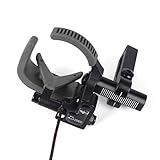
Overview: The NIKA ARCHERY Down Draft Cable Driven Arrow Rest provides right-handed compound bow archers with an affordable, high-performance drop-away solution. This full-containment rest supports arrows horizontally and vertically for improved flight, featuring a lightweight design that won’t weigh down your setup. Installation requires no bow press, attaching easily to limbs or cables.
What Makes It Stand Out: The combination of budget pricing and full drop-away performance makes this rest accessible to entry-level and intermediate archers. Sealed bushings enhance launcher speed, minimizing fletching contact, while technical rubber dampeners ensure quiet operation. The full containment design secures arrows during challenging hunting situations.
Value for Money: Positioned as a cost-effective alternative to premium drop-away rests, this model delivers essential features without brand-name markup. Right-handed archers gain access to high-speed landing equipment at an entry-level price point. The tool-free installation saves both time and professional service costs.
Strengths and Weaknesses: Strengths include simple setup, fast drop-away action, effective noise reduction, and attractive pricing. The lightweight construction is beneficial for long hunts. Weaknesses center on build quality—materials and finish reflect the lower price point. Long-term durability may not match established competitors. Adjustment mechanisms lack the precision of micro-adjust rests, and brand support may be limited.
Bottom Line: A solid choice for right-handed archers entering the drop-away market. It performs admirably for hunting and recreational shooting, offering significant upgrades over whisker biscuits at a modest price. Perfect for those wanting performance without premium investment.
6. TRUGLO Hyper Strike Click-Up Drop-Away Cable-Driven Archery Black Arrow Rest - Quiet Full-Arrow Containment - Left-Handed

Overview: The TRUGLO Hyper Strike Click-Up Drop-Away Arrow Rest delivers precision engineering specifically for left-handed archers seeking tournament-grade performance. This cable-driven rest employs a click-up mechanism that provides full-arrow containment throughout the draw cycle, ensuring your arrow remains secure until release. The design attaches to your downward-traveling buss cable and offers independent windage and elevation adjustments for meticulous tuning.
What Makes It Stand Out: The Hyper Strike’s quiet operation sets it apart from competitors, with a wear-resistant launcher insert that minimizes friction and noise. The click-up design offers tactile feedback during setup, while the full-containment system means nothing contacts your arrow as it clears the riser—critical for maintaining fletching integrity and accuracy. TRUGLO includes a spare launcher insert, demonstrating foresight for long-term durability.
Value for Money: Positioned in the mid-to-premium tier, this rest justifies its price through specialized left-handed construction and proven drop-away reliability. Unlike universal rests that compromise ergonomics for left-handed shooters, the Hyper Strike offers purpose-built performance without the premium cost of flagship models from competitors like QAD or Hamskea.
Strengths and Weaknesses: Strengths include whisper-quiet operation, robust arrow containment, precise independent adjustments, and included spare parts. The primary weakness is its left-hand exclusivity, limiting resale value and versatility. Setup requires patience to synchronize cable timing properly, though the cable clamp simplifies the process considerably.
Bottom Line: For dedicated left-handed archers demanding consistent accuracy and silent operation, the TRUGLO Hyper Strike is an exceptional choice that balances performance, durability, and specialized design without breaking the bank.
7. Ripcord Rest Ratchet Compact Durable Cable Driven Archery Arrow Rest - Right Handed/IMS Micro (RC11635X01-R)
Overview: The Ripcord Ratchet Compact Arrow Rest represents a significant advancement in cable-driven technology for right-handed archers pursuing perfection. This micro-adjustable rest features a revolutionary ratcheting mechanism that eliminates traditional bungee cords and springs, replacing them with consistent, controlled containment. The IMS dovetail mounting system provides rock-solid attachment to compatible bows, while Speed Set Technology enables rapid cable tension adjustments.
What Makes It Stand Out: The micro-adjustment capability allows for extremely precise horizontal and vertical positioning, essential for archers seeking to eliminate minute errors. The anti-bounce back launcher design ensures zero arrow contact post-release, while the lockable up-position provides extra security during stalks or climbing. Padded launcher arms and over-molded containment nearly eliminate noise, crucial for hunting scenarios.
Value for Money: As a premium offering, the Ratchet commands a higher price point but delivers professional-grade features competitors charge even more for. The micro-adjustments alone justify the investment for serious target shooters and hunters who understand that millimeters matter at long range.
Strengths and Weaknesses: Strengths include the ratchet system’s reliability, Speed Set Technology’s convenience, exceptional noise dampening, and micro-adjustment precision. Weaknesses include the right-hand-only configuration and IMS-specific mounting, which limits compatibility. The premium price may deter beginners who won’t utilize the micro-adjustments fully.
Bottom Line: Serious right-handed archers who demand micro-precision, unwavering reliability, and whisper-quiet operation will find the Ripcord Ratchet a worthy investment that elevates accuracy to the next level.
8. Ripcord Rest RAK Cable-Driven Accurate Archery Arrow Rest - IMS Non Micro/Right Handed (RC12220X01-R)

Overview: The Ripcord RAK Cable-Driven Arrow Rest bridges the gap between affordability and high performance for right-handed archers. This non-micro-adjustable model retains the core ratcheting mechanism that makes Ripcord rests reliable while streamlining features to hit a more accessible price point. The cable-driven system ensures consistent arrow containment without the failure-prone bungee cords of budget competitors.
What Makes It Stand Out: Speed Set Technology remains the standout feature, allowing quick cable tension adjustments with a simple dial click—typically reserved for premium rests. The anti-bounce back launcher and lockable up-position provide the same accuracy benefits as pricier models, while the padded launcher and over-molded containment arm deliver impressive noise reduction.
Value for Money: The RAK offers exceptional value, delivering 90% of the performance of flagship rests at roughly half the cost. For archers who don’t require micro-adjustments, this represents one of the best price-to-performance ratios in the cable-driven category, outperforming similarly priced rests from Trophy Ridge and TRUGLO’s entry-level offerings.
Strengths and Weaknesses: Strengths include the ratchet system’s dependability, Speed Set Technology, silent operation, and budget-friendly pricing. The primary weakness is the lack of micro-adjustments, requiring more traditional tuning methods. Right-hand-only configuration limits its audience, and the IMS mounting system may not suit all bow setups.
Bottom Line: The Ripcord RAK is the smart choice for budget-conscious archers who refuse to compromise on core performance, offering professional-grade reliability and accuracy without the premium price tag.
9. Trophy Ridge HX Arrow Left Hand Rest, Black

Overview: The Trophy Ridge HX Arrow Rest employs exclusive Vertical Drop Technology to deliver reliable performance for left-handed archers across hunting and target applications. This cable-driven rest provides complete arrow clearance upon release while maintaining 100% containment throughout the draw cycle. The rugged machined aluminum construction ensures durability in harsh field conditions, while the quick-cocking button simplifies arrow loading.
What Makes It Stand Out: The Vertical Drop Technology differentiates the HX from standard drop-away rests, providing a unique vertical motion pattern that some archers find more consistent. The quick-cocking button is genuinely innovative, allowing one-handed arrow loading without compromising containment—particularly valuable when hunting from a tree stand or ground blind.
Value for Money: The HX sits in the mid-range price bracket, offering left-handed archers a solid alternative to TRUGLO’s offerings. While it lacks the micro-adjustments of premium rests, the durable construction and unique loading system justify the investment for hunters prioritizing convenience and reliability over tournament-level precision.
Strengths and Weaknesses: Strengths include the innovative quick-cocking button, robust machined aluminum build, 100% arrow containment, and left-handed configuration. Weaknesses include limited noise dampening details compared to competitors, absence of micro-adjustments, and the vertical drop mechanism’s learning curve for archers accustomed to traditional drop-away rests.
Bottom Line: Left-handed hunters seeking a durable, easy-loading rest with reliable containment will appreciate the Trophy Ridge HX’s practical design, though target shooters may desire more adjustment granularity.
10. TRUGLO Carbon Hybrid Drop-Away Cable-Driven Archery Black Arrow Rest - Fits Left & Right-Handed Bows - Great for Target Shooting, 3D & Hunting

Overview: The TRUGLO Carbon Hybrid Drop-Away Arrow Rest offers versatile performance for both left and right-handed archers seeking a no-compromise hunting and target solution. This cable-driven rest features a high-strength torsion spring and stainless steel launcher arm mounted on a machined aluminum bracket, delivering durability without excessive weight. The ambidextrous design makes it ideal for clubs, families, or archers who shoot both orientations.
What Makes It Stand Out: The universal left/right compatibility is the defining feature, rare among quality drop-away rests. The high-strength torsion spring provides faster launcher arm response than traditional springs, while the no-bounce-back design ensures clean arrow flight. Installation requires no bow press, making it accessible for home tuners.
Value for Money: The Carbon Hybrid’s price point reflects its versatility—costing slightly more than single-orientation rests but delivering double the compatibility. This represents excellent value for pro shops, families with multiple shooters, or ambidextrous archers who would otherwise need two separate rests.
Strengths and Weaknesses: Strengths include ambidextrous design, tool-free installation, durable hybrid construction, and full windage/elevation adjustments. Weaknesses include the compromise design potentially lacking the perfect ergonomics of dedicated left or right-hand models, and the absence of micro-adjustments found in premium rests. Some users report the universal fit requires careful tuning.
Bottom Line: For archers needing flexible hand orientation without sacrificing performance, the TRUGLO Carbon Hybrid is a unique, cost-effective solution that delivers reliable accuracy across disciplines.
Understanding Cable-Driven Arrow Rest Technology
How Cable-Driven Systems Work
Cable-driven arrow rests operate through a sophisticated timing mechanism that connects the rest’s launcher arm to your bow’s cable or slide. As you draw the bowstring back, the cables move in a specific pattern that activates the rest, causing the launcher arm to rise and support your arrow. At full draw, the arm holds your arrow securely in perfect alignment. Upon release, the cables continue their movement, triggering the launcher to drop away instantly—typically within the first few inches of arrow travel. This drop-away action eliminates any contact between the rest and the arrow fletching, resulting in cleaner arrow flight and tighter groups downrange.
Evolution from Traditional Rests
Traditional arrow rests provided basic support but introduced significant variables that compromised accuracy. Prong-style rests allowed arrows to fall off during awkward shooting positions common in hunting scenarios. Whisker biscuits offered full containment but created constant fletching contact that robbed speed and affected arrow flight. Cable-driven technology revolutionized this landscape by solving both problems simultaneously—full containment during the draw and zero contact during release. The evolution from mechanical to cable-driven systems marked a quantum leap in repeatable accuracy, particularly for hunters who shoot from tree saddles, spot-and-stalk positions, or steep terrain where maintaining perfect vertical bow orientation isn’t always possible.
Key Components and Mechanics
Premium cable-driven rests consist of several precision-machined components working in harmony. The launcher arm, typically constructed from lightweight aluminum or carbon composite, must balance strength with minimal weight. The internal timing mechanism uses sealed bearings or bushings to ensure smooth, consistent operation through thousands of cycles. The cable attachment system—whether clamp, slide, or cord—must maintain positive engagement without slipping or stretching. High-end models feature micro-adjustment knobs with tactile clicks, allowing precise windage and elevation changes measured in thousandths of an inch. The containment system, often a combination of prongs and a housing, keeps your arrow secure regardless of bow angle while remaining quiet during the shot sequence.
Why Premium Arrow Rests Matter for Hunting
The Difference Between Budget and Premium
The distinction between budget and premium cable-driven rests extends far beyond price alone. Entry-level models might function adequately on the range but reveal their limitations under hunting conditions. Plastic components can become brittle in extreme cold, bushings may develop play after repeated use, and timing mechanisms can drift, requiring constant re-tuning. Premium rests utilize aircraft-grade aluminum, stainless steel hardware, and sealed stainless bearings that maintain tolerances regardless of temperature fluctuations. The difference becomes apparent when you’re hunting in sub-zero conditions or after hundreds of practice shots—premium rests deliver the same smooth, quiet performance on day 100 as they did on day one.
Long-Term Value Proposition
While the initial investment in a premium cable-driven rest might cause sticker shock, the cost-per-shot over its lifetime often proves more economical than replacing budget alternatives every season. Quality rests typically carry lifetime warranties, reflecting manufacturer confidence in their durability. More importantly, the consistency they provide translates to fewer missed opportunities and more ethical harvests. When you factor in the cost of hunting tags, fuel, gear, and time invested in scouting, an arrow rest that contributes even marginally to higher success rates pays for itself many times over. The frustration of equipment failure during a hunt-of-a-lifetime far outweighs the upfront cost difference.
Performance in Critical Moments
Hunting situations rarely provide perfect conditions. You might need to take a steep quartering-away shot from a tree stand, or shoot from a kneeling position on a mountainside. Premium cable-driven rests maintain arrow security and proper timing regardless of bow cant or angle. Their reliable containment systems prevent arrows from falling off during the awkward movements required to get into shooting position. When that shot opportunity lasts mere seconds, you cannot afford to worry about whether your arrow will stay on the rest or if the timing is still correct. The mental confidence that comes from trusting your equipment allows you to focus entirely on shot execution—the ultimate performance advantage.
Essential Features to Evaluate
Micro-Adjustability and Precision Tuning
The hallmark of a premium cable-driven rest is its micro-adjustment capability. Look for models offering tool-less or tool-assisted windage and elevation adjustments with clearly marked scales. Each click should correspond to a precise, measurable movement—typically 1/32-inch or less. This granularity proves invaluable when paper tuning or making sight-in adjustments at long distances. Some advanced models feature separate micro-adjustments for the launcher arm angle itself, allowing you to fine-tune the amount of contact with your arrow shaft. The ability to make minute changes without loosening major bolts and losing your baseline setting separates professional-grade rests from amateur equipment.
Noise Dampening Technology
Silence kills in the hunting woods, and your arrow rest must contribute to a quiet shot sequence. Premium rests incorporate multiple noise-reduction features: laser-etched reference marks eliminate adhesive stickers that can peel and buzz; launcher arms receive proprietary coatings that dampen vibration; internal mechanisms use Delrin or similar polymers to eliminate metal-on-metal contact. The containment prongs should feature soft-touch overmolding or replaceable silencing sleeves. Even the cable attachment points receive attention, with some designs using rubber isolation bushings to prevent cable buzz from transmitting through the riser. Test a rest by dry-firing it (with proper safety precautions) in a quiet room—any audible noise will be amplified in the field.
Full Containment vs. Launcher Only
Premium cable-driven rests offer various containment configurations. Full containment systems use prongs or a cage that completely surrounds the arrow, preventing it from falling out regardless of bow orientation. This design excels for hunters who frequently shoot from odd angles or move through thick brush with an arrow nocked. Launcher-only designs provide a simple platform without side containment, relying on gravity and careful handling. While these can be slightly quieter and offer cleaner arrow flight for some setups, they sacrifice the security that full containment provides. Many premium rests offer convertible systems where you can add or remove containment features based on your hunting style or even specific hunts.
Timing and Synchronization
Proper timing represents the most critical aspect of cable-driven rest performance. The launcher must rise to full support position before you reach full draw, then drop completely clear of the fletching within the first 3-4 inches of arrow travel. Premium rests feature adjustable timing via cord length or an internal adjustment mechanism. The best designs allow you to fine-tune timing without re-serving the cable or using multiple served connection points. Look for rests with positive stops that prevent over-travel in either direction, as this protects the internal mechanism and ensures repeatability. Some advanced models even allow you to adjust the speed of the drop, letting you match the rest’s performance to your specific arrow speed and fletching configuration.
Materials and Construction Quality
Examine the materials list carefully when evaluating premium rests. The launcher arm should be aircraft-grade 6061-T6 aluminum or carbon fiber—both offering excellent strength-to-weight ratios. Internal components deserve stainless steel or titanium hardware to prevent corrosion. Bearings should be sealed stainless steel, not open or plastic bushings. The finish matters too: hard-coat anodizing penetrates the aluminum surface, creating exceptional wear resistance compared to standard anodizing or powder coating. Even small details like stainless steel fasteners with nylon patches prevent vibration loosening without requiring excessive torque that could strip aluminum threads.
Ease of Installation and Setup
Despite their sophisticated internals, premium rests should install intuitively. Look for designs that offer multiple mounting holes to accommodate different bow riser configurations. The cable attachment system should be straightforward, with clear instructions for determining proper cord length. Some top-tier models include laser-etched reference marks on the cable itself, showing exactly where to attach based on your draw length. Tool-less adjustments for centershot and vertical position speed up initial setup, while still offering set screws to lock everything down permanently once tuned. The best rests include detailed setup videos from the manufacturer, walking you through timing, tuning, and troubleshooting.
Performance Factors for Precision Hunting
Arrow Flight Consistency
The ultimate measure of any arrow rest is its contribution to consistent arrow flight. Premium cable-driven rests minimize variables that affect downrange accuracy. The rigid, repeatable launcher position ensures each arrow leaves the bow from an identical platform. Drop-away timing consistency means every shot experiences the same clearance dynamics. This repeatability translates to tighter groups at all distances, but particularly beyond 40 yards where minor inconsistencies become magnified. When evaluating rests, shoot multiple arrow types and weights through the same rest—premium models maintain consistency across different setups, while lesser rests might require re-tuning for each arrow configuration.
Durability in Harsh Conditions
Hunting environments subject equipment to moisture, dust, extreme temperatures, and impacts that range practice never replicates. Premium rests undergo testing in these conditions, with seals that keep water and debris from internal mechanisms. The launcher arms should withstand accidental impacts against tree stand railings or rocky terrain without bending or losing alignment. Cold-weather performance proves particularly important—internal lubricants must remain fluid at temperatures well below freezing, and plastics cannot become brittle. Some hunters in extreme conditions even remove rests from their bows and store them inside jackets between hunts, a testament to the importance of durable construction.
Speed and Efficiency Impact
While cable-driven rests inherently create no fletching contact and thus don’t rob speed like whisker biscuits, their weight and design can still affect bow efficiency. Premium models minimize weight at the end of the riser where it matters most—every ounce of mass added to the sight window area affects how quickly your bow settles on target. The lightest rests achieve this through skeletonized aluminum designs or carbon fiber construction. However, don’t sacrifice durability for minimal weight; the rest must survive a season of abuse. The most advanced designs position mass low and close to the riser, reducing moment of inertia while maintaining robust construction.
Vibration and Shot Noise Reduction
The moment of release generates significant vibration that can translate into noise if not properly managed. Premium rests address this through isolation systems that decouple the rest from the riser. Look for models with rubber isolation bushings between the mounting block and rest body. The launcher arm itself should feature vibration-dampening materials or cutouts that dissipate energy. Some designs incorporate small weights at specific locations to tune out resonant frequencies. The result is not just a quieter shot, but also reduced hand shock that improves shooter comfort and follow-through during long practice sessions.
Compatibility with Your Setup
Not all premium rests work optimally with every bow configuration. Consider your bow’s axle-to-axle length—shorter bows may require rests with faster drop-away timing to clear the fletching before arrow exit. Your cam system matters too; binary cam bows create different cable travel patterns than single cam or hybrid systems. Some rests offer specific models optimized for different cam designs. Arrow diameter affects containment system choice—micro-diameter shafts may require different prong spacing than standard carbon arrows. Even your arrow length relative to draw length influences rest selection; longer arrows extending far past the rest need more robust containment than shorter arrows.
Common Configurations and Designs
Over-the-Top vs. Under-the-Arrow Designs
Cable-driven rests mount the launcher arm in two primary configurations. Over-the-top designs position the launcher above the arrow shelf, dropping down and away upon release. These often provide better clearance for large fletching or helical vanes. Under-the-arrow designs mount below the shaft, lifting up to support the arrow then dropping down. Many hunters prefer this configuration for its more natural arrow loading and typically quieter operation. Premium rests in either style should offer full fletching clearance and timing adjustments. The choice often comes down to personal preference and how the design integrates with your specific bow’s riser geometry and cable routing.
Launcher Arm Styles and Shapes
Launcher arm geometry significantly affects arrow support and release dynamics. Wide, flat launchers provide maximum surface area contact, ideal for heavy arrows or less-than-perfect shots where stability trumps absolute precision. Narrow, V-shaped launchers minimize contact points, reducing potential for interference but requiring more precise arrow placement. Some premium rests offer interchangeable launcher arms, letting you switch styles based on your arrow build or hunting application. The arm’s angle relative to the arrow shaft also matters—slightly upward-tilted arms provide better containment, while level arms offer cleaner release. Advanced models allow you to adjust this angle independently of vertical position.
Cable Attachment Methods
How the rest connects to your bow’s cables fundamentally affects timing consistency and ease of setup. The most common method uses a short length of serving cord looped around the down cable and attached to the rest’s actuation arm. Premium systems include a clamp or slide that positively engages the cable without crushing or damaging the strands. Some designs route the cord through a slide that moves along the cable, reducing wear and allowing more precise timing adjustments. The best attachment systems include a quick-disconnect feature, letting you remove the rest for maintenance without cutting and re-serving the connection. Look for stainless steel clamps with smooth edges that won’t fray serving material over time.
Integration with Different Bow Types
Modern hunting bows range from ultra-short 28-inch axle-to-axle models to longer 35-inch target-style bows. Premium rest manufacturers offer different models or mounting configurations to optimize performance across this spectrum. Short bows benefit from rests with rapid drop-away timing and minimal overhang past the riser. Longer bows accommodate more robust designs with larger containment systems. The rest must also clear your bow’s cable guard or cable slide system—some designs conflict with certain cable guard geometries. Crossbow-specific cable-driven rests exist, though they operate on different principles. For compound bows, ensure the rest mounts without interfering with your sight, quiver, or stabilizer setup.
Installation and Tuning Considerations
Centershot Alignment Procedures
Proper centershot alignment ensures your arrow leaves the bow perpendicular to the riser, critical for horizontal accuracy. Start by aligning the rest’s launcher arm with your bow’s string path when viewed from behind. Many premium rests include laser-etched marks on the mounting bar that correspond to common centershot measurements. Use a bow square to measure from the riser’s deepest part of the grip to the center of the launcher—most modern bows require 13/16-inch to 15/16-inch centershot. Fine-tune this setting through paper tuning, making micro-adjustments until you achieve a bullet-hole tear. The best rests allow you to lock down centershot independently of vertical adjustments, preventing one setting from affecting the other.
Timing the Drop-Away Motion
Correct timing ensures the launcher clears your fletching completely before the arrow passes. To check timing, draw your bow slowly while watching the launcher arm—it should reach full height approximately 1-2 inches before full draw. At release, the launcher must drop completely below the fletching path within the first 3-4 inches of arrow travel. Adjust timing by changing the length of the activation cord—shortening the cord delays the drop, while lengthening it speeds up the drop. Premium rests include micro-adjustment screws or sliding clamps that allow precise cord length changes without re-tying. Always check timing after making any adjustments to draw weight or length, as these changes affect cable travel patterns.
Paper Tuning with Cable-Driven Rests
Paper tuning reveals how your rest affects arrow flight. Shoot arrows through a taut sheet of paper positioned 6-8 feet in front of your bow. A perfect bullet-hole tear indicates proper centershot and vertical alignment. Tears to the left or right require windage adjustments. Vertical tears indicate nock point or launcher position issues. With cable-driven rests, pay special attention to timing—late-dropping launchers create tail-left or tail-right tears as the fletching contacts the arm. Paper tuning should occur after setting initial centershot and timing, then repeated after any adjustments. Premium rests maintain their settings during this process, while lesser models may drift and require constant re-checking.
Walk-Back Tuning Techniques
Walk-back tuning validates your rest setup across different distances. Start at 20 yards, shooting at a vertical line on a target. Adjust your sight to center the group on the line. Then move back to 30, 40, and 50 yards, using the same 20-yard pin and aiming at the same vertical line. If your arrows track straight down the line, your rest centershot is perfect. If groups drift left or right as distance increases, make small windage adjustments to the rest and repeat. This method proves more reliable than paper tuning alone for hunting setups, as it tests arrow flight under actual shooting conditions. Premium rests with precise micro-adjustments make walk-back tuning efficient, allowing you to dial in perfect centershot with minimal trial and error.
Maintenance and Care for Longevity
Regular Inspection Checkpoints
Treat your arrow rest as a critical component requiring periodic inspection. Before each hunting season, check all fasteners with a torque wrench to ensure they haven’t vibrated loose. Examine the launcher arm for bending or wear, particularly at the contact point with your arrow. Inspect the cable attachment cord for fraying or serving separation. Cycle the rest manually while watching for smooth, consistent motion—any binding or hesitation indicates internal wear or contamination. Check containment prongs for cracks or deformation, especially if you’ve bumped the rest on tree stands or rocks. These inspections take only minutes but can prevent catastrophic failure when it matters most.
Cleaning and Lubrication Protocols
Dirt, dust, and moisture infiltrate even sealed mechanisms over time. Remove your rest every few months for thorough cleaning. Use compressed air to blow out debris from internal cavities, being careful not to force contaminants deeper. Wipe down the launcher arm and mounting block with a damp cloth, then dry completely. If your rest uses open bearings or bushings, a single drop of premium synthetic lubricant on each pivot point suffices—avoid over-lubricating, which attracts dust. Sealed bearings require no additional lubrication. Never use petroleum-based products on plastic components, as they can cause degradation. After cleaning, cycle the rest multiple times to distribute lubricant and verify smooth operation.
Seasonal Pre-Hunt Servicing
Before your primary hunting season, dedicate time to comprehensive rest servicing. This includes complete disassembly if you’re comfortable with the process, or professional servicing if you’re not. Replace the activation cord annually, as it experiences significant stress and can develop internal wear invisible from the outside. Check the launcher arm for sharp edges that could damage arrow wraps or fletching, polishing them smooth if necessary. Apply fresh bow wax to any exposed serving on the activation cord to prevent moisture absorption. Finally, verify all adjustment scales and reference marks remain legible—re-apply paint or use a fine-tip marker to refresh them if needed.
Troubleshooting Common Issues
Even premium rests occasionally develop issues. If your rest fails to rise completely, check for cable stretch or a slipped cord attachment—this often appears after increasing draw weight. Inconsistent drop-away timing usually indicates internal wear or contamination; a thorough cleaning often resolves this. Launcher arm bounce at release suggests the internal damper or bumper has worn out; most premium rests offer replacement parts for these wear items. If you notice increased shot noise, inspect all metal-to-metal contact points for looseness and ensure silencing materials haven’t worn away. For persistent issues, contact the manufacturer—premium brands offer technical support and repair services that budget companies cannot match.
Investment Justification and Cost Analysis
Price vs. Performance Curve
The relationship between price and performance in arrow rests follows a distinct curve. Below $100, you sacrifice durability, precision, and consistency. The $100-150 range offers solid performance for casual hunters, but lacks the refinement serious hunters demand. Premium rests typically start around $150 and can exceed $250. This premium tier delivers materials, machining, and engineering that justify the cost through measurable performance gains. The curve flattens above $200—while you gain marginal improvements, the core technology remains similar. Focus on rests in the $150-200 sweet spot for maximum value, where you receive professional-grade features without paying for exotic materials or marginal gains.
Warranty and Manufacturer Support
A lifetime warranty signals manufacturer confidence and protects your investment. Read warranty terms carefully—some cover only manufacturing defects while others include wear items like launcher arms and containment prongs. Premium manufacturers typically offer no-questions-asked replacement policies, understanding that equipment failure during a hunt damages their reputation. Beyond warranty, consider customer support availability. Can you call and speak with a technician who understands hunting applications? Do they offer detailed setup videos and documentation? This support network proves invaluable when troubleshooting issues or learning advanced tuning techniques. Budget brands often lack these resources, leaving you to figure out problems alone.
Resale Value Considerations
Quality archery equipment retains value remarkably well, and premium arrow rests are no exception. A well-maintained premium rest can command 60-70% of its original price on the used market, while budget rests become nearly worthless. This resale value effectively reduces your total cost of ownership. When you upgrade bows or change setups, being able to sell your rest recoups significant investment. Premium rests also maintain compatibility across bow generations, unlike some accessories that become obsolete. The used market specifically seeks out certain premium models known for durability, creating consistent demand that protects your investment.
When to Upgrade Your Current Rest
Consider upgrading if your current rest shows any of these signs: inconsistent timing that won’t hold adjustment, excessive noise that silencing efforts cannot eliminate, launcher arm wobble or play, or difficulty achieving paper-tear perfection. Advancements in technology also justify upgrades—if your rest is more than 5-7 years old, newer designs offer improved micro-adjustments, better materials, and refined timing mechanisms. Perhaps most importantly, upgrade when your confidence wanes. If you find yourself second-guessing whether your rest will perform during critical moments, that mental distraction alone warrants investing in equipment you can trust implicitly.
Frequently Asked Questions
How do I know if a cable-driven rest is timed correctly?
Draw your bow slowly and watch the launcher arm—it should reach its full upright position 1-2 inches before you hit full draw. At release, the launcher must drop completely below the arrow’s fletching path within the first 3-4 inches of arrow travel. You can also test timing by placing a piece of lipstick on your launcher arm; if it marks your fletching, the rest is dropping too late.
Will a cable-driven rest work with any arrow diameter?
Most premium rests accommodate standard diameter (0.245-0.300 inch) arrows without issue. For micro-diameter shafts (0.165-0.204 inch), you may need specific launcher arms or prong spacers. Some rests include multiple launcher options or adjustable containment systems. Always verify your specific arrow diameter works with the rest’s containment system before purchasing.
How often should I replace the activation cord?
Replace the activation cord at least once per year if you shoot regularly, or immediately if you notice any fraying, serving separation, or timing inconsistency. The cord experiences significant stress during each shot cycle and can develop internal wear invisible from the outside. Carry a spare cord in your hunting pack as emergency backup.
Can I install a cable-driven rest myself, or do I need a pro shop?
With basic mechanical skills and the right tools, you can install most cable-driven rests yourself. You’ll need a bow press to attach the activation cord to your cable. Premium rests include detailed instructions and online videos. However, if you’re uncomfortable pressing your bow or making precise adjustments, a qualified pro shop can ensure proper installation and initial tuning.
Do cable-driven rests require different tuning than other rest types?
The tuning process is similar but includes the critical timing step unique to cable-driven rests. After setting centershot and nock height like any rest, you must adjust the activation cord length to achieve proper drop-away timing. Paper tuning and walk-back tuning remain the same, but you’ll check timing first, as improper drop-away affects all other tuning efforts.
Are premium rests worth it for beginners?
Beginners actually benefit more from premium rests because they eliminate equipment variables, allowing focus on form and execution. The consistency and reliability help develop proper shooting habits. However, the investment makes sense only if the beginner is committed to learning and practicing. For someone just trying archery, mastering fundamentals with simpler equipment first may be more appropriate.
How do I maintain my rest in extreme cold weather?
In sub-zero temperatures, cycle your rest manually several times before shooting to ensure smooth operation. Avoid over-lubricating, as thick grease can become sluggish when cold. Store your bow indoors or in a heated vehicle when possible. Some hunters use graphite-based dry lubricants specifically formulated for cold weather. Inspect plastic components for brittleness if temperatures drop below -20°F.
What’s the difference between cable-driven and limb-driven rests?
Cable-driven rests activate from the bow’s cable movement during the draw cycle, while limb-driven rests attach directly to the limb and activate from limb flex. Cable-driven systems typically offer more precise timing adjustment and maintain consistency across different draw weights. Limb-driven rests can be slightly simpler with fewer moving parts but may require more frequent timing checks as limbs settle or temperature changes affect limb flex.
Can I use a cable-driven rest for target shooting as well as hunting?
Absolutely. Many competitive archers use cable-driven rests for target shooting due to their consistency and adjustability. However, target-specific models may prioritize absolute precision over durability and noise reduction. A premium hunting rest works excellently for target practice, though you might prefer a lighter, more minimalist design for pure target competition where shot noise and ruggedness matter less.
How do I choose between different containment designs?
Full containment systems with prongs or cages excel for hunting in challenging terrain or from tree stands where maintaining perfect bow orientation is difficult. They add slight weight and potential noise but prevent arrow loss. Launcher-only designs offer maximum simplicity and potentially cleaner arrow flight but require more careful arrow handling. Many premium rests offer convertible systems—start with full containment for hunting, then remove prongs for practice sessions to minimize variables.
Related Buying Guides
- 10 Premium Cellular Trail Cameras for Hunters (Worth the Investment)
- 10 Premium Combat Knives for Hunters (Worth the Investment)
- 10 Premium Elk Calls for Serious Hunters (Worth the Investment)
- 10 Premium Hunting Daypacks for Hunters (Worth the Investment) in 2026
- 10 Premium Hunting Trail Cameras for Serious Trophy Hunters (Worth the Investment)