Table of Contents
Nighttime wildlife monitoring demands equipment that works as silently and invisibly as nature itself. Whether you’re tracking elusive nocturnal species for research, securing remote property, or simply satisfying your curiosity about what visits after dark, traditional trail cameras with visible flashes can alter animal behavior and compromise your surveillance goals. The solution lies in no glow infrared technology, which has revolutionized how we observe the natural world without leaving a trace of our presence.
As we look toward 2026, the landscape of stealth trail cameras continues evolving with improved sensor sensitivity, extended battery life, and smarter connectivity options that weren’t available just a few years ago. Understanding what separates exceptional no glow cameras from mediocre ones requires more than comparing spec sheets—it demands insight into how various features work together in real-world field conditions. This comprehensive guide walks you through everything you need to know before investing in a stealth monitoring system, ensuring your choice matches your specific needs without falling for marketing hype.
Top 10 No Glow Trail Cameras
Detailed Product Reviews
1. GardePro E5S Trail Camera (Non-Cellular, Non-WiFi), 64MP Photo & 1296P HD Video, 0.1s Trigger, 100ft No-Glow Night Vision, Motion Activated Wildlife Camera

Overview: The GardePro E5S is a non-cellular trail camera engineered for serious wildlife monitoring and hunting applications. It captures ultra-sharp 64MP photos and smooth 1296P HD video through a high-quality optical lens and advanced image sensor. Operating without WiFi or cellular connectivity, this model prioritizes extended battery life and minimal disturbance, making it ideal for remote locations where access is infrequent. The IP66 waterproof rating and 1/4"-20 mounting thread ensure durable, versatile installation options.
What Makes It Stand Out: The E5S boasts an exceptional 0.1-second trigger speed powered by three PIR sensors, capturing even the fastest-moving animals without delay. Its 100-foot no-glow infrared night vision uses invisible 940nm LEDs that won’t alert wildlife, while the low-power design delivers months of operation on eight AA batteries. Compatibility with the optional SP350 Solar Panel enables virtually unlimited deployment time, a crucial advantage for long-term studies.
Value for Money: By eliminating cellular subscription fees, the E5S provides significant long-term savings compared to wireless models. The efficient power management reduces battery replacement frequency, and the solar panel option further cuts operational costs. For users comfortable with manual SD card retrieval, the upfront investment pays dividends through years of maintenance-free monitoring.
Strengths and Weaknesses: Strengths include lightning-fast trigger speed, invisible night vision, rugged weatherproofing, flexible power options, and zero ongoing costs. Weaknesses include lack of remote access requiring physical checks, no included batteries, and the need to purchase SD cards and solar panel separately.
Bottom Line: The GardePro E5S is an outstanding choice for hunters and researchers who demand reliability, superior image quality, and economical long-term operation. Its performance rivals premium cellular cameras without the monthly fees.
2. GardePro E5S 2-Pack Trail Camera (Non-Cellular, Non-WiFi), 64MP Photo & 1296P HD Video, 0.1s Trigger, 100ft No-Glow Night Vision, Motion Activated Wildlife Camera

Overview: The GardePro E5S 2-Pack delivers identical specifications to the single unit but doubles monitoring coverage. Each camera captures 64MP photos and 1296P HD video with the same 0.1-second trigger speed, three PIR sensors, and 100-foot no-glow night vision. This bundle serves hunters and wildlife managers needing comprehensive coverage of large properties, travel corridors, or multiple bait sites without wireless network complexity.
What Makes It Stand Out: Purchasing as a twin pack provides immediate cost savings over buying two individual units while enabling strategic multi-camera deployment. The non-cellular design ensures both cameras operate for months on minimal power, perfect for monitoring different habitat zones simultaneously. The unified mounting system and identical interface simplify setup and maintenance across locations.
Value for Money: The 2-Pack delivers compelling bulk pricing, typically saving 10-15% compared to separate purchases. When combined with elimination of cellular subscription fees, total cost of ownership becomes highly attractive. Users can cover twice the area for a fraction of what two cellular cameras would cost over two years, making it economically efficient for property-wide surveillance.
Strengths and Weaknesses: Strengths include discounted twin-pack pricing, consistent performance across multiple sites, extended battery life, invisible night flash, and robust weatherproofing. Weaknesses mirror the single unit: no remote viewing, requiring manual SD card retrieval from both locations, and additional costs for batteries and SD cards for two units.
Bottom Line: The E5S 2-Pack is ideal for serious outdoor enthusiasts needing comprehensive area coverage. The bulk savings and coordinated performance make it a smart investment for multi-location wildlife monitoring strategies.
3. GardePro A3S Trail Camera (Non-Cellular, Non-WiFi), 64MP Photo & 1296P HD Video, 0.1s Trigger, 100ft No-Glow Night Vision, Motion Activated Wildlife Camera

Overview: The GardePro A3S builds upon the E5S platform with enhanced low-light capabilities while maintaining 64MP photos and 1296P video. This non-cellular trail camera incorporates a Starvis Sensor for superior performance during dawn, dusk, and nighttime conditions. The A3S retains the 0.1-second trigger speed, three PIR sensors, and 100-foot no-glow infrared range, making it a premium option for wildlife photographers demanding optimal image quality across all lighting scenarios.
What Makes It Stand Out: The Starvis Sensor is the defining feature, delivering significantly improved image clarity and reduced noise in challenging light conditions. This technology captures details that other cameras miss during the critical twilight hours when many species are most active. The same robust feature set—including IP66 weatherproofing and extended battery life—ensures the A3S excels where image fidelity is paramount.
Value for Money: While priced slightly higher than the E5S, the A3S justifies the premium through tangible image quality improvements. For wildlife photographers, researchers documenting behavior, or hunters scouting trophy animals, enhanced low-light performance can be the difference between usable and exceptional footage. The investment eliminates the need for supplemental lighting that could disturb wildlife.
Strengths and Weaknesses: Strengths include superior Starvis low-light sensor, blazing trigger speed, invisible night vision, rugged construction, and efficient power usage. Weaknesses are marginally higher cost than the E5S, lack of wireless connectivity, and the need for manual media retrieval. Starvis benefits are most noticeable to discerning users.
Bottom Line: The A3S is the photographer’s choice within GardePro’s non-cellular lineup. If maximum image quality in all conditions justifies a modest price increase, this camera delivers exceptional results.
4. Meidase P70 (Non-Cellular,Non-WiFi) Trail Camera, 64MP 1296p, Game Cameras with No-Glow IR Night Vision, Motion Activated, Waterproof for Wildlife Deer Cams, Hunting

Overview: The Meidase P70 enters the competitive non-cellular trail camera market with specifications matching industry leaders. It captures 64MP photos and 1296p HD video through a high-performance f/1.6 aperture lens that enhances light gathering. The 0.1-second trigger speed with side sensors and 100-foot no-glow night vision position it as a direct competitor to premium brands. A 2.4-inch color display and H.264 video compression add user-friendly features for efficient field operation.
What Makes It Stand Out: The f/1.6 aperture lens is notably faster than typical trail camera optics, improving low-light performance and depth of field. H.264 compression technology creates smaller video files without quality loss, enabling faster SD card downloads and longer recording times. The larger 2.4-inch display facilitates easier on-site footage review and menu navigation compared to smaller screens on competing models.
Value for Money: The P70 delivers strong value by combining high-end optics and modern compression technology at a competitive price. Users benefit from reduced storage costs due to efficient file sizes and superior lens performance typically found in more expensive units. The absence of subscription fees enhances long-term affordability for multi-camera setups.
Strengths and Weaknesses: Strengths include fast f/1.6 aperture lens, efficient H.264 compression, large color display, rapid trigger speed, and invisible night vision. Weaknesses include lesser brand recognition than established competitors, unknown long-term durability compared to market leaders, and lack of solar panel ecosystem integration.
Bottom Line: The Meidase P70 is a technically sophisticated alternative that prioritizes optical quality and storage efficiency. It’s an excellent choice for tech-savvy users seeking advanced features without premium brand pricing.
5. KJK Trail Camera 36MP 2.7K, Mini Game Camera with Night Vision 0.1s Trigger Time Motion Activated 130°Wide-Angle, Waterproof Trail Cam with 2.0” HD TFT Screen, Hunting Camera for Wildlife Monitoring

Overview: The KJK Trail Camera positions itself as an accessible entry-level option with 36MP still images and 2.7K video resolution. This compact mini camera features a 130-degree wide-angle lens, 0.1-second trigger speed, and 75-foot low-glow infrared night vision. The 2.0-inch HD TFT screen and TV remote-style controls prioritize ease of use for beginners. Its IP66 waterproof rating and operating range of -22°F to 158°F ensure reliable performance across diverse environments.
What Makes It Stand Out: The ultra-wide 130-degree detection angle surpasses most competitors, capturing more habitat in each frame and reducing blind spots. Its miniature size enhances concealment and portability while the simplified interface makes setup intuitive for all ages. The camera’s low-glow LEDs, while not completely invisible, provide adequate nighttime illumination with adaptive technology to prevent overexposure.
Value for Money: As a budget-conscious alternative, the KJK delivers respectable performance at a significantly lower price point than premium models. Reduced resolution and shorter night vision range are reasonable compromises for casual wildlife observation, backyard monitoring, or property security. The impressive 17,000-image battery life further reduces operating costs.
Strengths and Weaknesses: Strengths include extra-wide 130-degree angle, compact stealthy design, user-friendly controls, excellent battery efficiency, and affordable pricing. Weaknesses are lower 36MP resolution versus 64MP competitors, 75-foot night vision range (25% shorter), low-glow LEDs that may alert some animals, and less robust build quality than premium brands.
Bottom Line: The KJK is perfect for beginners, casual observers, or those needing discreet, wide-area coverage on a budget. While not matching flagship specs, it provides reliable monitoring where extreme detail isn’t critical.
6. GardePro A3S 2-Pack Trail Camera (Non-Cellular, Non-WiFi), 64MP Photo & 1296P HD Video, 0.1s Trigger, 100ft No-Glow Night Vision, Motion Activated Wildlife Camera

Overview: The GardePro A3S 2-Pack delivers professional-grade wildlife monitoring with its Starvis sensor technology, capturing crisp 64MP images and 1296P video even in challenging low-light conditions. This dual-camera bundle targets serious hunters and researchers who need reliable, high-performance equipment across multiple locations without the complexity of wireless connectivity.
What Makes It Stand Out: The Starvis sensor represents a significant leap in low-light performance, producing usable images at dawn and dusk where competitors struggle. The blistering 0.1-second trigger speed with three PIR sensors ensures you won’t miss fleeting moments, while the 100-foot no-glow night vision range exceeds most premium alternatives. The two-pack configuration provides immediate value for comprehensive property coverage.
Value for Money: While priced higher than entry-level options, the A3S justifies its cost through superior sensor technology and dual-camera convenience. Comparable single units with Starvis sensors often exceed this 2-pack’s price, making it economical for users needing multiple deployment points without recurring subscription fees.
Strengths and Weaknesses:
- Starvis sensor delivers exceptional low-light clarity
- Lightning-fast 0.1s trigger captures the quickest wildlife
- 100ft no-glow night vision range
- IP66 weatherproofing handles extreme conditions
- No wireless connectivity requires manual SD card retrieval
- Higher upfront cost than basic models
- 8AA battery requirement adds to operating expense
Bottom Line: Ideal for serious wildlife enthusiasts who prioritize image quality and reliability over convenience. The A3S 2-Pack excels in capturing nocturnal activity with minimal disturbance, though the lack of wireless features demands more field visits.
7. iZEEKER Trail Camera, HD Game Camera with 940nm No Glow Night Vision Motion Activated 0.2s Trigger Time, Hunting Camera No WiFi, IP66 Waterproof for Wildlife Monitoring Outdoor Security Deer Scouting

Overview: The iZEEKER Trail Camera balances user-friendly design with solid performance, offering 36MP photos and 2K video through an innovative package designed for hassle-free outdoor operation. Its thoughtful engineering addresses common pain points like moisture intrusion and complicated setup, making it accessible for beginners while satisfying experienced users.
What Makes It Stand Out: The clamshell design with bottom-opening battery compartment effectively eliminates lens fogging—a chronic issue in humid climates. The illuminated keyboard with icon-labeled buttons enables confident operation in low-light forest conditions. Additionally, the continuous overwrite function transforms it into a reliable security sentinel that never stops recording.
Value for Money: Positioned in the mid-range segment, this camera competes aggressively with features typically found in premium models. The moisture-prevention design alone can save users from costly replacements, while the included mounting strap and intuitive UI reduce setup time significantly compared to similarly priced competitors.
Strengths and Weaknesses:
- Innovative clamshell design prevents moisture buildup
- Illuminated buttons simplify field operation
- Sound recording adds valuable context to wildlife behavior
- Overwrite function perfect for security applications
- 0.2s trigger slightly slower than top-tier models
- 36MP resolution lags behind newer 48MP+ sensors
- SD card and batteries not included
Bottom Line: An excellent choice for users battling humidity or those prioritizing ease-of-use. The iZEEKER shines as a versatile tool for both wildlife observation and property security, though speed demons might prefer faster triggers.
8. GardePro E6 WiFi Trail Camera (Non-Cellular), 48MP Photos, 1296P HD Video, App Control with Live View, 110° Wide-Angle, No-Glow Night Vision, Motion Activated

Overview: The GardePro E6 WiFi Trail Camera bridges the gap between traditional trail cameras and modern connectivity, offering smartphone-controlled operation without cellular subscription costs. Capturing 48MP photos and 1296P video, this unit lets you preview and download content within a 45-foot range via its dedicated app, revolutionizing camera placement and monitoring efficiency.
What Makes It Stand Out: Live View capability allows real-time framing during setup, eliminating the guesswork that plagues traditional mounting. The ultra-low-power WiFi and Bluetooth system preserves battery life while providing instant access to footage. H.264 video encoding enables previewing clips without full downloads—a significant time-saver when reviewing multiple recordings.
Value for Money: Though pricier than non-wireless alternatives, the E6 eliminates recurring fees associated with cellular cameras. The ability to check cameras without physically disturbing locations reduces human scent impact and saves fuel. For users with multiple units, the efficiency gains compound quickly, justifying the premium within one season.
Strengths and Weaknesses:
- Live View ensures perfect camera positioning
- No monthly fees unlike cellular models
- H.264 encoding enables quick video previews
- Solar panel compatibility for extended deployment
- 45ft WiFi range limits remote checking
- Cannot connect to home WiFi networks
- Requires smartphone; no PC/laptop support
Bottom Line: Perfect for tech-savvy users wanting wireless convenience without subscription costs. The E6 excels on properties where cameras remain within moderate checking distance, though true remote monitoring still demands cellular alternatives.
9. OUTDOOR EXPERT 20MP MINI Trail Camera,1080P Hunting Trail Camera with No Glow 940nm Night Vision Motion Activated IP66 Waterproof,80ft Illumination Range Hunting Game Cam for Wildlife Monitoring
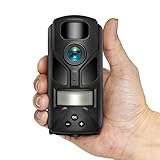
Overview: The OUTDOOR EXPERT 20MP MINI Trail Camera prioritizes portability and discretion with its compact, half-hand-sized design that slips easily into any pack. Despite its diminutive stature, it delivers respectable 20MP photos and 1080P video through 940nm no-glow LEDs, making it an unobtrusive observer for casual wildlife enthusiasts and security-conscious homeowners alike.
What Makes It Stand Out: The MINI’s exterior design maximizes placement versatility, mounting discreetly where bulkier cameras attract unwanted attention. ROHS certification ensures environmentally responsible construction, while the unique form factor reduces battery consumption through efficient component integration. The front-facing LCD and lens simplify angle adjustments during installation.
Value for Money: As one of the most budget-friendly options in its class, this camera democratizes trail camera ownership. While lacking high-end specs, it provides essential functionality at a fraction of premium prices. For users needing multiple units for basic monitoring, the low cost enables broader coverage without significant investment.
Strengths and Weaknesses:
- Extremely compact and lightweight design
- ROHS certified environmentally friendly build
- Simple operation ideal for beginners
- IP66 waterproofing provides reliable protection
- 20MP resolution limits enlargement quality
- 1080P video outdated compared to 2K/4K options
- 32GB max SD card restricts storage capacity
- 6AA batteries (not included) add to initial cost
Bottom Line: Best suited for entry-level users or those prioritizing stealth over image quality. The MINI excels in urban security applications and close-range wildlife observation, though serious hunters will desire higher resolution and faster triggers.
10. WOSODA 3 Pack Mini Trail Cameras, 48MP 4K No-Glow Night Vision Game Camera, Trail Cam with Motion Activated, IP66 Waterproof,2’‘LCD Screen,120° Wide Lens Wildlife Camera,Outdoor Scouting & Security

Overview: The WOSODA 3-Pack Mini Trail Cameras deliver exceptional value by bundling three high-performance units with included batteries and SD cards, ready for immediate deployment. Each camera captures stunning 4K video and 48MP photos through a 120° wide-angle lens, while the 0.2-second trigger ensures minimal missed action across multiple property zones.
What Makes It Stand Out: The comprehensive bundle includes all essentials—32GB microSD cards, AA batteries, and card readers—eliminating the frustrating additional purchases required by most competitors. The 120° wide-angle sensor captures broader scenes than standard 70-90° units, while the mini size reduces visibility to both wildlife and potential thieves. The 2-inch LCD screen enables on-site review without external devices.
Value for Money: This 3-pack rivals single-camera prices from premium brands, making it arguably the best multi-unit deal available. Including batteries and memory cards saves approximately $30-40 per camera in additional accessories. For users needing broad coverage—whether for hunting, security, or research—the per-camera cost becomes exceptionally competitive.
Strengths and Weaknesses:
- Outstanding 3-pack value with included accessories
- 4K video resolution exceeds most competitors
- 120° wide-angle lens captures more territory
- Mini size enhances concealment
- Mini size may be vulnerable to theft if not well-hidden
- 4K video demands more storage space
- Brand recognition lags behind established names
- 0.2s trigger adequate but not class-leading
Bottom Line: An unbeatable choice for budget-conscious buyers needing multiple cameras. The WOSODA 3-Pack provides premium specs and complete accessories, perfect for covering large properties or sharing among friends, though brand-conscious users may prefer established alternatives.
Understanding No Glow Technology
What Makes a Trail Camera Truly No Glow
No glow cameras utilize black infrared LEDs that emit light at the 940-nanometer wavelength, completely invisible to both humans and animals. Unlike low glow models that produce a faint red shimmer, true no glow technology operates in total darkness without any detectable illumination. This stealth capability comes at a cost—shorter flash range compared to visible or low-glow alternatives—but the trade-off proves invaluable for behavioral studies and security applications where any light signature would compromise the mission.
Infrared Spectrum Explained for Wildlife Monitoring
The infrared spectrum spans from 700nm to 1mm, but trail cameras only use a narrow portion. No glow technology sits at the far end of the near-infrared spectrum, just beyond what most mammals can detect. Deer, for instance, have vision extending slightly into the infrared range but cannot detect 940nm illumination. This biological fact makes no glow cameras particularly effective for monitoring sensitive species that would otherwise spook at any visible light source, giving researchers authentic behavioral data rather than reactions to equipment.
Comparing Flash Types: No Glow vs Low Glow vs White
White flash cameras capture full-color night images but alert every creature within visual range, completely altering natural behavior. Low glow models offer a middle ground with slightly better range and illumination but still produce a visible red glow that cautious animals notice. No glow technology sacrifices some illumination distance—typically 30-50% less range than low glow—but gains complete invisibility. For security purposes, no glow cameras provide the ultimate advantage: intruders remain unaware they’re being documented, while wildlife monitoring benefits from undisturbed natural activity.
Key Features to Evaluate
Trigger Speed and Recovery Time
Trigger speed—the time between motion detection and image capture—separates effective cameras from missed opportunities. Sub-0.3-second triggers capture fast-moving animals like coyotes or bobcats that would blur past slower units. Recovery time, the interval before the camera can shoot again, proves equally critical. A 1-second recovery might miss a trailing animal or second subject. Premium no glow cameras achieve sub-0.2-second triggers with under-5-second recovery, ensuring you don’t miss sequential action in front of your lens.
Detection Range and Angle Optimization
Detection zones vary dramatically between models, typically spanning 50-100 feet. However, the detection angle—the width of the sensing area—impacts real-world performance as much as distance. Wider angles (up to 60 degrees) monitor more area but increase false triggers from peripheral movement. Narrower angles (30-40 degrees) focus on specific trails but might miss approaching animals. The sweet spot depends on your target location: wide-open meadows benefit from broader detection, while forested trail monitoring favors narrower, more focused zones.
Image Resolution: Beyond the Megapixel Marketing
Manufacturers love touting 30+ megapixel specifications, but these numbers often represent interpolated resolution—software-enhanced images rather than true optical quality. The sensor’s native resolution determines actual detail capture, while high megapixel counts can create larger file sizes without meaningful quality improvement. For no glow night images, sensor size and pixel quality matter more than megapixel count, since infrared illumination produces different image characteristics than daylight photography. Focus on sample image quality from independent reviewers rather than spec sheet numbers.
Resolution and Image Quality Considerations
Nighttime Image Quality Factors
No glow night images appear in black and white—that’s unavoidable with infrared illumination. However, image clarity depends on multiple factors beyond flash type. Lens aperture (measured in f-stops) determines light-gathering ability—wider apertures (lower f-numbers) capture sharper images in limited illumination. Image noise reduction algorithms separate premium cameras from budget options, reducing graininess that plagues dark scenes. Dynamic range matters too; quality cameras preserve detail in both shadowy backgrounds and illuminated foreground subjects without blowing out highlights.
Video Capabilities in No Glow Models
Modern no glow cameras offer video recording from 720p to 4K resolution, but nighttime video quality presents unique challenges. Frame rates below 30fps create choppy footage, while higher resolutions demand more storage and battery power. Look for cameras with adjustable video length settings—10-second clips conserve resources while 60-second captures provide behavioral context. Audio recording adds another dimension to wildlife documentation but may be disabled in some jurisdictions for security use. Consider whether you need time-lapse functionality, which captures images at set intervals regardless of motion, perfect for monitoring slow processes like den activity.
Detection Zone and Trigger Speed
PIR Sensor Sensitivity Settings
Passive Infrared (PIR) sensors detect heat differentials between moving objects and background temperatures. Sensitivity adjustments let you customize detection for target species while ignoring irrelevant movement. High sensitivity captures small mammals like raccoons but triggers on swaying vegetation in wind. Low sensitivity filters false alarms but might miss smaller creatures. Advanced cameras offer multi-zone detection with adjustable sensitivity levels, allowing fine-tuning based on seasonal temperature fluctuations that affect PIR performance.
Avoiding False Triggers Through Smart Placement
False triggers waste battery life and fill storage cards with useless images of moving branches or shadows. Position cameras facing north or south to avoid direct sunrise/sunset exposure that confuses sensors. Mount units slightly above eye level angled downward to reduce ground-level vegetation triggers. Clear vegetation within the immediate detection zone, creating a 10-foot radius of trimmed area. During windy seasons, reduce sensitivity settings or use time-lapse mode to bypass motion detection entirely. Some advanced models include AI-powered filtering that distinguishes animal shapes from vegetation movement.
Battery Life and Power Options
Battery Types and Longevity Strategies
Lithium batteries deliver superior performance in no glow cameras, maintaining consistent voltage output in extreme temperatures where alkaline batteries fail. A quality no glow camera should capture 10,000+ images on lithium cells, though real-world results vary based on video usage, transmission frequency, and temperature extremes. Rechargeable NiMH batteries offer environmental benefits but suffer voltage drop-off, causing cameras to shut down prematurely. For maximum longevity, lithium remains the field-proven choice, especially in sub-zero conditions where alkaline performance plummets by 60%.
Solar Panel Integration for Remote Locations
Extended deployments in inaccessible locations demand external power solutions. Solar panel kits designed for trail cameras maintain battery charge indefinitely in adequate sunlight conditions. Panel output measured in watts determines charging efficiency—2-5 watt panels suffice for moderate climates, while cloudy regions need higher output. Critical considerations include panel positioning for optimal sun exposure, weatherproof connections that won’t corrode, and built-in charge controllers that prevent battery overcharging. Some integrated systems combine solar panels with rechargeable battery packs, creating self-sustaining units for year-round monitoring.
Storage Solutions and Connectivity
SD Card Selection and Management
No glow cameras generate substantial data, especially when capturing HD video or operating on busy game trails. Class 10 or UHS-I rated SD cards ensure write speeds keep pace with rapid-fire image capture. Capacity depends on your retrieval schedule—32GB cards store approximately 15,000 12MP images, while 128GB cards support months of unattended operation. Format cards in-camera before deployment to ensure compatibility, and consider cameras with dual card slots for seamless overflow storage. For security applications, look for password-protected cards that prevent unauthorized image viewing if the camera is stolen.
Cellular Transmission and Data Plans
Cellular-enabled no glow cameras transmit images directly to your phone, eliminating the need for physical retrieval that disturbs monitoring sites. 4G LTE connectivity dominates the market, with 5G integration emerging in 2026 models. Data plans range from pay-as-you-picture to monthly subscriptions with unlimited transfers. Key considerations include carrier compatibility (Verizon vs AT&T networks), signal strength at your location, and compression settings that reduce data usage. Some cameras offer thumbnail previews with optional full-resolution downloads, conserving data while confirming capture success. Be aware that cellular transmission drains batteries 3-5x faster than standard operation.
Stealth and Concealment Strategies
Camouflage Techniques for Different Environments
Effective camouflage extends beyond the camera’s exterior pattern. In deciduous forests, attach local bark, moss, or lichen to break up the camera’s outline. For desert deployments, use tan burlap or native grasses to disrupt the rectangular shape. Snowy conditions demand white covers or natural snow accumulation on ledges. The goal isn’t invisibility—it’s making the camera look like natural debris. Avoid reflective surfaces, tape over brand logos, and ensure the lens port remains the only uncovered element. Some hunters create false fronts using hollow logs or birdhouses that completely conceal cameras while providing clear viewing ports.
Anti-Theft Features and Security Boxes
Remote cameras face theft and vandalism risks. Steel security boxes bolted around the camera body prevent removal while allowing lens and sensor operation. Python cable locks threaded through the box and around trees add deterrence. GPS tracking modules hidden inside cameras help recover stolen units, though they require cellular service. For public land installations, position cameras 15+ feet high angled downward—out of casual sightlines but within effective flash range. Some manufacturers offer insurance programs or replacement discounts for stolen units registered with their monitoring services.
Durability and Weather Resistance
Understanding IP Ratings for Trail Cameras
Ingress Protection (IP) ratings indicate resistance to dust and water intrusion. IP66 means complete dust protection and resistance to powerful water jets—adequate for most deployments. IP67 offers temporary submersion protection, valuable in flood-prone areas. IP65 handles rain but not pressurized water. The second digit matters most for trail cameras; 6 or higher ensures survival through heavy storms. However, ratings test new equipment—aged seals and cracked housings compromise protection. Inspect O-ring seals annually and apply silicone grease to maintain water resistance in harsh environments.
Operating Temperature Extremes
Quality no glow cameras operate from -20°F to 120°F, but performance varies across this range. Batteries suffer most in cold weather—lithium maintains 80% capacity at -4°F while alkaline drops to 20%. Extreme heat degrades LCD screens and can warp plastic housings. Desert deployments require cameras with UV-resistant coatings and reflective colors that reduce internal temperatures. For sub-zero operation, external battery packs kept insulated in nearby boxes maintain power while the camera operates in the cold. Consider cameras with operational temperature ratings matching your deployment climate, not just storage ratings.
Legal and Ethical Considerations
Navigating Wildlife Camera Regulations
Public land management agencies increasingly regulate trail camera use. Some national forests require permits for research cameras, while others ban cameras during hunting seasons to prevent scouting advantages. State wildlife agencies may restrict cameras near water sources during sensitive periods. Always check current regulations before deploying, as rules change frequently. Private land monitoring faces fewer restrictions but still requires landowner permission. For security purposes, cameras must avoid capturing neighboring properties where privacy expectations exist. When in doubt, contact local wildlife biologists or conservation officers for guidance specific to your region.
Privacy Concerns on Private and Public Land
No glow cameras raise privacy questions due to their invisible operation. On private property, position cameras to monitor only your land, avoiding angles that capture public trails or neighboring yards. Posting visible signage about camera surveillance provides legal protection and ethical transparency. For research on public lands, obtain institutional review board approval if your work involves human subjects inadvertently captured on trails. Data protection matters too—encrypted storage prevents unauthorized access if cameras are stolen. Some jurisdictions require consent for any camera recording in areas where people have reasonable privacy expectations, even on private property.
Price Ranges and Value Proposition
Budget-Friendly Features Worth Considering
Entry-level no glow cameras ($80-$150) offer legitimate stealth capabilities but make compromises elsewhere. Expect slower trigger speeds (0.5-0.8 seconds), shorter detection ranges (50-60 feet), and basic build quality. However, many budget models include essential features like 1080p video, adjustable sensitivity, and adequate battery life for casual monitoring. The key is identifying which corners are cut—avoid cameras with poor weather sealing or unreliable PIR sensors even at low prices. Look for user-replaceable battery compartments and standard SD card slots rather than proprietary formats that lock you into expensive accessories.
Premium Features That Justify Higher Costs
High-end no glow cameras ($250-$400) deliver sub-0.2-second triggers, 100+ foot detection ranges, and robust aluminum housings. Advanced features include integrated solar charging, cellular connectivity, GPS tagging, and AI-powered species recognition that filters human vs animal triggers. Premium optics with wider apertures capture sharper night images despite the no glow flash limitation. These cameras justify costs through reliability in harsh conditions, extended warranty periods, and manufacturer support. For professional researchers or security applications requiring 99% uptime, premium models eliminate the frustration and data loss associated with budget camera failures.
Installation and Setup Best Practices
Optimal Height and Angle Placement
Mount no glow cameras 8-10 feet high on trees, angled downward at 15-20 degrees. This height provides security from theft and positions the camera to capture animal profiles rather than tops of heads. For trail monitoring, aim the camera 10-15 feet down the trail to capture approaching animals within the optimal flash range. Avoid mounting directly across from trails—offset positioning by 10-15 feet reduces perpendicular movement that creates motion blur. Test your angle by walking the detection zone before finalizing placement, ensuring the camera captures subjects within the upper two-thirds of the frame where focus is sharpest.
Pre-Deployment Testing Protocols
Never deploy cameras untested. After mounting, conduct a walk-through test at various distances, speeds, and angles to verify detection and image quality. Check battery voltage with a multimeter to ensure full charge. Format SD cards in-camera and capture test shots to confirm write capability. For cellular models, verify signal strength and transmission success before leaving the site. Set a calendar reminder to check cameras after 48 hours for initial performance assessment. This quick return visit catches configuration errors, dead batteries, or memory card failures before they cost you weeks of missed data. Bring spare batteries and cards to swap during this check.
Troubleshooting Common Issues
Solving Battery Drain Problems
Premature battery death plagues trail camera users. First, verify you’re using fresh lithium batteries—voltage drops below 1.4V per cell cause shutdowns even with substantial remaining capacity. Disable unnecessary features like LCD screen review, audio recording, and excessive video length. Reduce PIR sensitivity to minimize false triggers from vegetation. For cellular cameras, limit transmission frequency to twice daily rather than real-time. Check for firmware updates that optimize power management. In cold weather, external battery packs in insulated containers maintain voltage better than internal cells. If drain persists, the camera may have a parasitic draw—contact manufacturer support for warranty evaluation.
Improving Blurry or Dark Night Images
Blurry night images stem from three primary causes: subject movement, camera shake, or insufficient illumination. Increase minimum shutter speed in settings to freeze motion, accepting slightly darker images over blurry ones. Ensure the camera mounts firmly to stable trees—wind-induced vibration ruins images. Clean the IR flash window; dirt and spider webs diffuse illumination dramatically. If images remain dark, your subjects are likely beyond effective flash range—either move the camera closer or accept that no glow technology has distance limitations. Some premium cameras offer adjustable IR power settings; increasing output extends range at the cost of battery life.
Future Trends in 2026 and Beyond
AI-Powered Species Recognition
Emerging trail cameras integrate machine learning algorithms that identify species in real-time, transmitting only relevant images and reducing data costs. These systems distinguish between deer, humans, vehicles, and livestock, tagging images automatically for easier cataloging. Early versions show 85-90% accuracy, improving through cloud-based learning. For researchers, this eliminates hours of manual image sorting. Security users receive instant alerts only for human intruders, ignoring wildlife. Expect this technology to become standard in mid-range models by late 2026, though initial costs remain premium.
Next-Generation Sensor Technology
Sensor manufacturers continue developing back-illuminated CMOS sensors with improved infrared sensitivity, potentially extending no glow flash range by 30-40% without increasing power consumption. Quantum dot sensor technology promises even greater gains, capturing usable images in near-total darkness. Combined with advanced noise reduction algorithms, 2026 cameras will deliver clearer night images at higher resolutions than current models. These improvements may finally close the performance gap between no glow and low glow flash ranges, making the stealth advantage absolute rather than a trade-off.
Frequently Asked Questions
How far can no glow trail cameras see at night?
Most no glow cameras illuminate subjects effectively out to 50-65 feet, with premium models reaching 80 feet under ideal conditions. Range depends on IR LED power, sensor sensitivity, and ambient temperature. Colder nights improve IR illumination visibility, while humidity and fog reduce effective distance. For subjects beyond 60 feet, consider low glow alternatives or position cameras closer to target areas.
Will no glow cameras spook deer or other wildlife?
Quality no glow cameras operating at 940nm remain invisible to deer, who cannot detect infrared light at that wavelength. However, other factors can alert animals: the sound of the shutter, human scent during setup, or the camera’s silhouette if improperly concealed. Deploy cameras with scent-free gloves, treat them with odor eliminators, and mount them out of direct sightlines to maximize stealth.
How long do batteries last in no glow trail cameras?
Lithium batteries in efficient no glow cameras capture 15,000-25,000 images or operate for 6-12 months on standby. Heavy video use, frequent cellular transmissions, or extreme cold reduce longevity by 50-70%. Alkaline batteries last 30-40% as long as lithium and perform poorly below freezing. For extended deployments, solar panels with lithium battery packs provide indefinite operation in sunny locations.
What’s the difference between no glow and black flash?
“Black flash” and “no glow” describe the same technology—940nm infrared illumination invisible to humans and animals. “Black flash” is a marketing term some manufacturers use to emphasize the complete lack of visible light. Both terms indicate true stealth operation, distinguishing these cameras from “low glow” or “red glow” models that emit faint red light at 850nm.
Can no glow cameras capture color images at night?
No, no glow cameras cannot capture true color at night. The 940nm infrared illumination falls outside the visible color spectrum, resulting in monochrome (black and white) images. Some cameras offer “color night” modes using white flash, but this eliminates the stealth advantage. Daylight images appear in full color when the IR filter disengages, but all no glow night footage will be black and white.
Are cellular no glow cameras worth the extra cost?
Cellular cameras justify their cost when monitoring inaccessible locations or requiring real-time alerts. They eliminate travel costs and disturbance from frequent site visits. For security applications, instant notification of human intruders provides immediate value. However, data plans add ongoing expense, and transmission drains batteries faster. For casual wildlife observation within easy driving distance, standard SD card models offer better value.
How do I prevent my no glow trail camera from being stolen?
Mount cameras 10+ feet high using screw-in tree mounts, making them difficult to spot and reach. Use steel security boxes bolted around the camera with python cables securing the box to the tree. Install GPS trackers inside the housing for recovery if stolen. On public land, deploy during off-peak seasons and check frequently. Some hunters place decoy cameras in obvious locations while concealing primary units nearby.
What SD card size should I use for no glow cameras?
32GB Class 10 cards suit most applications, storing roughly 15,000 high-resolution images or 8 hours of HD video. For cellular cameras transmitting thumbnails, 16GB suffices. Extended deployments without retrieval benefit from 128GB cards, supporting 60,000+ images. Always use name-brand cards (SanDisk, Lexar) as off-brands fail more frequently. Format cards in-camera before each deployment to prevent corruption.
Do no glow cameras work through glass windows?
Infrared illumination reflects off glass, making no glow cameras ineffective for monitoring through windows at night. During daylight, they work fine through glass with IR disabled. For indoor security monitoring through windows, use cameras with disabled IR and rely on external lighting, or mount cameras outside in weatherproof housings. The IR reflection creates a white-out effect that obscures all detail beyond the glass.
How often should I check my no glow trail cameras?
Check cameras every 2-4 weeks during active seasons to swap batteries and cards, adjust for vegetation growth, and retrieve data. More frequent visits increase human scent and disturbance. During critical research periods or security events, weekly checks may be necessary. In off-seasons, quarterly checks suffice for equipment maintenance. Always approach from downwind, wear clean clothes, and minimize time on site to preserve the area’s natural state for future wildlife activity.
Related Buying Guides
- 10 Must-Have No Glow Trail Cameras for Stealth Night Monitoring in 2026
- How to Solve Poor Night Images with the 10 Best No Glow Trail Cameras in 2026
- Solving Blurry Night Images: How to Optimize Infrared Trail Cameras for 2026
- Why No Glow Trail Cameras Are Essential for Ghosting Mature Bucks
- 10 Best 4K Trail Cameras for Ultra-High-Definition Wildlife Footage in 2026