Table of Contents
Picture this: you’re twenty miles offshore, the wind has kicked up to 25 knots, and the deck is slick with spray. Your hard-earned catch is secured, but the real test begins on the journey back – keeping everything perfectly chilled against relentless sun, salt, and pounding waves. A standard cooler, fine for a backyard barbecue, becomes utterly useless in this environment. It might leak, crack under pressure, or surrender its ice to the elements within hours, turning your prize tuna into a warm, soggy disappointment. Offshore fishing demands equipment engineered for survival, and your cooler isn’t just storage; it’s the critical final link in preserving your success from hookset to dockside.
The marine environment is uniquely brutal. Constant exposure to UV radiation degrades plastics, saltwater corrodes metals and compromises seals, and the physical stresses of a moving vessel subject gear to impacts and crushing forces regular coolers never face. Choosing the wrong container isn’t just inconvenient; it risks ruining your entire trip, wasting valuable resources, and potentially creating unsafe conditions with spoiled bait or food. Investing in a true marine-grade cooler means investing in reliability, performance, and the peace of mind that your hard work won’t melt away before you reach the ramp. It’s about transforming a potential point of failure into a dependable asset for every offshore adventure.
Top 10 Marine Grade Coolers for Fishing
Detailed Product Reviews
1. Igloo 100 QT Latitude Marine Ultra White Cooler

Overview: The Igloo 100 QT Latitude Marine Ultra is a large-capacity cooler designed for extended boating or camping trips, offering substantial storage (149 cans) and marine-specific durability in a clean white finish.
What Makes It Stand Out: Its standout feature is Cool Riser Technology, elevating the cooler base to enhance airflow and ice retention. Combined with THERMECOOL Foam insulation (eco-friendly) and a fully insulated lid/body promising up to 5 days of ice retention, it targets serious outdoor enthusiasts. Marine-grade hinges and UV-resistant construction further ensure longevity in harsh conditions.
Value for Money: Positioned as a premium marine cooler, its price reflects the high-capacity build, eco-conscious insulation, and proven ice retention. While pricier than basic coolers, it competes well against rivals like Yeti for similar performance at a lower cost, making it a smart investment for frequent boaters needing reliability.
Strengths and Weaknesses: Strengths: Exceptional 5-day ice retention; robust marine-grade hinges; eco-friendly THERMECOOL insulation; large 100-qt capacity. Weaknesses: No cup holders or seat lid; heavier than ultra-light alternatives; white color may show stains easily.
Bottom Line: An excellent, durable choice for group outings requiring maximum ice retention and marine resilience; ideal for anglers or sailors prioritizing performance over portability features.
2. Coleman Marine Cooler with Fully Insulated UV Guard Lid & Body, Keeps Ice for 3+ Days, Great for Boating & Fishing, 52qt/100qt Wheeled/120qt Options

Overview: Coleman’s versatile marine cooler line offers multiple sizes (52–120 qt) with UVGuard insulation, targeting boaters and anglers seeking reliable ice retention and practical add-ons like cup holders and seating.
What Makes It Stand Out: The fully insulated lid and body maintain ice up to 6 days in 90°F heat—a standout claim exceeding many competitors. The HAVE-A-SEAT lid (supports 250 lbs) doubles as seating, while molded cup holders fit large tumblers. Swing-up handles enhance portability, especially on wheeled 100-qt models.
Value for Money: Coleman delivers exceptional value with its 6-day retention promise at a mid-range price. Though ice retention may not match premium brands in extreme testing, the inclusion of seating, cup holders, and wheeled options provides unmatched utility for casual users at this price point.
Strengths and Weaknesses: Strengths: 6-day ice retention claim; lid doubles as seat; convenient cup holders; wheeled options for larger sizes; affordable. Weaknesses: Insulation less robust than rotomolded rivals; cup holders may feel flimsy; hinges less durable than stainless-steel marine alternatives.
Bottom Line: A highly practical, feature-rich cooler perfect for budget-conscious boaters who prioritize convenience and seating over absolute top-tier ice retention.
3. Igloo 54 Qt Marine Ultra Cooler, White

Overview: The Igloo 54 Qt Marine Ultra is a mid-sized cooler built for rugged marine use, balancing capacity (80 cans), durability, and ease of handling for day trips or small crews.
What Makes It Stand Out: Its hybrid latch system uses stainless steel in high-stress hinge areas and plastic in snap zones for longevity and secure closure. Riteflex resin hinges resist impacts and corrosion, while UV inhibitors and rust-proof stainless steel straps withstand sun and saltwater. Non-slip swing handles ensure grip in wet conditions.
Value for Money: Offering marine-grade materials at a reasonable price, it outperforms cheaper coolers in durability without reaching premium brand costs. The focus on corrosion resistance justifies its cost for frequent boaters, though casual users might find smaller models sufficient.
Strengths and Weaknesses: Strengths: Hybrid stainless-plastic latch; UV-resistant; non-slip handles; corrosion-proof hardware; compact yet spacious (54 qt). Weaknesses: Ice retention unconfirmed beyond 3–4 days; no seat lid or cup holders; less insulation thickness than larger Igloo models.
Bottom Line: A dependable, mid-sized marine workhorse ideal for anglers needing corrosion resistance and secure latching—best for day trips where portability and durability matter most.
4. Igloo 70 QT Latitude Marine Ultra White Cooler

Overview: Bridging capacity and portability, the Igloo 70 QT Latitude Marine Ultra offers 102-can storage with advanced cooling tech for multi-day adventures on water or land.
What Makes It Stand Out: Cool Riser Technology elevates the base for optimal cooling, while THERMECOOL Foam (eco-friendly) and full-body insulation deliver up to 5 days of ice retention. The hybrid latch—stainless steel at hinges, plastic at snaps—ensures security without rust, and marine-grade materials resist UV/salt damage.
Value for Money: Priced moderately for its class, it competes strongly with brands like RTIC by combining eco-conscious insulation, proven ice retention, and marine durability. The 70-qt size avoids the bulk of 100-qt models while retaining core Latitude features, offering better versatility per dollar.
Strengths and Weaknesses: Strengths: 5-day ice retention; eco-friendly THERMECOOL; Cool Riser base; hybrid latch; marine-resilient build. Weaknesses: No seating or cup holders; white finish shows wear; slightly heavier than ultra-light alternatives.
Bottom Line: A superb mid-capacity choice for eco-conscious boaters seeking reliable, long-lasting cooling without oversizing—highly recommended for weekend trips.
5. RTIC Ultra-Light 32 Quart Hard Cooler Insulated Portable Ice Chest Box for Drink, Beverage, Beach, Camping, Picnic, Fishing, Boat, Barbecue, 30% Lighter Than Rotomolded Coolers, Marine/Canvas

Overview: RTIC’s Ultra-Light 32 Qt cooler prioritizes portability without sacrificing performance, targeting hikers, kayakers, and casual users needing a lightweight yet durable ice chest for smaller adventures.
What Makes It Stand Out: At 14.7 lbs (30% lighter than rotomolded peers), it’s uniquely portable while offering 2.5 inches of closed-cell foam insulation for solid ice retention. Its versatility shines as a bench, step stool, or tabletop, and the 48-can capacity suits solo or duo outings. Marine/canvas options add style.
Value for Money: Though priced near premium brands, its weight savings justify the cost for mobility-focused users. It undercuts RTIC’s own rotomolded models while delivering 80% of their performance—ideal for those valuing ease of transport over max ice retention.
Strengths and Weaknesses: Strengths: Exceptionally lightweight (14.7 lbs); multi-functional design; marine/canvas aesthetics; strong insulation for size; 30-lb ice capacity. Weaknesses: Ice retention lags behind rotomolded coolers; smaller capacity limits group use; less rugged for extreme expeditions.
Bottom Line: The top pick for portability—perfect for backpackers, kayakers, or beachgoers who need reliable cooling without heavy lifting. Skip if you prioritize max ice retention over weight.
6. ENGEL 13 Quart Live Bait Cooler PRO for Fishing - Portable Minnow and Bait Bucket with Lithium-Ion Rechargeable Aerator - Tan (13Qt)

Overview: The ENGEL 13Qt Live Bait Cooler PRO is a specialized, rugged container designed explicitly for anglers needing reliable live bait storage. It combines an insulated cooler body with a dedicated, rechargeable aerator system to keep minnows and baitfish alive and active during extended fishing trips, while also functioning as a standard cooler for beverages.
What Makes It Stand Out: Its defining feature is the integrated ENG-AP3 Lithium-ion rechargeable aerator, offering an exceptional 48-hour runtime via USB-C charging—a significant upgrade over disposable battery or manual pump systems. The pro-grade build with stainless steel hardware, EVA leak-proof gasket, removable pull net, and versatile 3-in-1 functionality (bait tank, cooler, livewell) sets it apart in the bait management category.
Value for Money: Priced premium, it justifies cost through unparalleled bait survival tech and durability. While cheaper buckets exist, their aerators often lack longevity or convenience. The included high-capacity aerator, robust construction, and multi-use design offer solid value for serious anglers where live bait performance is non-negotiable, reducing wasted bait and trips.
Strengths and Weaknesses: Strengths include the game-changing long-life rechargeable aerator, exceptional leak-proof seal, durable stainless components, comfortable carry options, and genuine insulation for dual-use. Weaknesses are the higher price point compared to basic buckets, potential aerator replacement cost if damaged, and the tan color showing grime faster than darker options.
Bottom Line: An industry-leading investment for dedicated anglers prioritizing live bait health; the rechargeable aerator system and rugged build deliver unmatched performance and convenience, making it highly recommended despite the premium cost.
7. Igloo 150 QT White Marine Polar Contour Insulated Cooler

Overview: The Igloo 150 QT Marine Polar Contour is a high-capacity, marine-focused cooler engineered for extended ice retention in demanding saltwater environments. Its substantial size targets boaters, family trips, or events requiring bulk cold storage, leveraging Igloo’s Ultratherm insulation technology for reliable performance.
What Makes It Stand Out: The standout feature is its Ultratherm insulation in both lid and body, scientifically rated to hold ice for up to 7 days—a critical advantage for multi-day excursions. Marine-grade hinges, UV inhibitors preventing sun degradation, and the convenient hose-compatible drain plug enhance its suitability for prolonged boat use and harsh conditions.
Value for Money: Positioned competitively within the large marine cooler segment, it offers excellent value. While premium rotomolded coolers (like Yeti) may last longer, Igloo delivers near-top-tier ice retention at a significantly lower price point. The 7-day claim, UV protection, and easy-drain functionality provide substantial bang for the buck for recreational and serious boaters alike.
Strengths and Weaknesses: Strengths encompass exceptional ice retention, UV-resistant construction, user-friendly non-slip handles, efficient drain system, and marine-rated durability. Weaknesses include a potentially heavier weight than ultra-light alternatives, plastic latches less robust than stainless steel found on premium brands, and interior shape less optimized for maximum can capacity versus square coolers.
Bottom Line: A superb, cost-effective choice for those needing large-volume, reliable cold storage on the water; its impressive ice retention and marine-specific features make it a top recommendation for value-conscious anglers and families.
8. Engel UC30 30qt Leak-Proof, Air Tight, Fishing Drybox Cooler with Built-in Fishing Rod Holders, Also Makes The Perfect Hard Shell Lunchbox for Men and Women in White
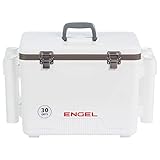
Overview: The Engel UC30 30qt is a versatile, ultra-secure hard-shell cooler designed as both a high-performance ice chest and an airtight dry box. Its robust construction targets anglers, outdoor workers, and adventurers needing guaranteed leak-proof storage for food, gear, or sensitive electronics in harsh conditions.
What Makes It Stand Out: The defining feature is its absolute leak-proof and air-tight seal via a recessed EVA gasket, making it ideal for protecting electronics or keeping contents perfectly dry—unlike many coolers that only claim “water-resistant.” Stainless steel latches, 4 built-in rod holders, and exceptional durability (almost indestructible shell) further distinguish it as a premium multi-role container.
Value for Money: While priced higher than basic coolers, its dual functionality as a rugged cooler and certified dry box offers unique value. Competing dry boxes often lack insulation, while comparable coolers aren’t truly airtight. For professionals needing gear protection or serious anglers wanting rod storage, the UC30’s versatility and longevity justify the investment over single-purpose alternatives.
Strengths and Weaknesses: Strengths include the guaranteed air-tight/leak-proof seal, industrial-strength stainless hardware, excellent ice retention (up to 2 days), included rod holders and accessory tray, easy cleaning, and 14 color options. Weaknesses are its higher weight compared to soft-sided coolers, premium price tag, and potential over-engineering for simple picnic use.
Bottom Line: Highly recommended for users demanding absolute waterproof security alongside cooling performance; its ruggedness, seal integrity, and thoughtful features make it indispensable for marine, professional, or high-stakes outdoor applications.
9. RTIC Ultra-Light 52 Quart Hard Cooler Insulated Portable Ice Chest Box for Beach, Drink, Camping, Picnic, Fishing, Boat, Barbecue, 30% Lighter Than Rotomolded Coolers, Marine/Canvas

Overview: The RTIC Ultra-Light 52 Qt cooler offers substantial capacity with a focus on reduced weight, targeting users who prioritize portability without sacrificing core cooling performance for camping, beach days, or boating adventures.
What Makes It Stand Out: Its primary innovation is being 30% lighter than standard rotomolded coolers of equivalent size (21 lbs empty), achieved through optimized design while retaining 3 inches of closed-cell foam insulation. This exceptional weight-to-performance ratio, combined with multi-use flexibility (bench, stool, tabletop), sets it apart for frequent movers.
Value for Money: RTIC delivers compelling value by undercutting premium brands (Yeti, Pelican) significantly while offering near-par ice retention and the standout ultra-light feature. For budget-conscious adventurers who carry coolers often, the weight savings and true-to-size 52-qt capacity provide excellent ROI compared to heavier, pricier rotomolded alternatives.
Strengths and Weaknesses: Strengths are the dramatic weight reduction, robust insulation for longevity, versatile secondary uses, portability for one-person carry, and competitive pricing. Weaknesses include potentially less extreme ice retention than top-tier rotomolded coolers in scorching heat, and the marine/canvas exterior, while stylish, may be less abrasion-resistant than pure polyethylene.
Bottom Line: An outstanding choice for portability-focused users needing serious capacity; the weight savings and solid performance make it a highly recommended value leader for active lifestyles where lugging heavy coolers is a pain point.
10. Seachoice 72-Qt. Cooler Cushion w/UV-Resistant Marine Grade Vinyl and Snap Straps

Overview: The Seachoice 72-Qt. Cooler Cushion is a practical marine accessory designed to transform the hard lid of a standard 72-quart cooler into comfortable, weather-resistant seating space on boats or docks, enhancing onboard usability.
What Makes It Stand Out: Its key feature is the combination of UV-resistant, marine-grade white vinyl over a supportive foam core, specifically engineered to withstand sun, saltwater, and frequent use without rapid deterioration. The secure snap-straps ensure it stays firmly attached during boat movement, a critical safety and convenience upgrade over generic cushions.
Value for Money: At a modest price point, it offers exceptional value by instantly adding comfort and functionality to an existing cooler—effectively creating free extra seating. Compared to dedicated marine seats or DIY solutions, its perfect sizing, durability, and ease of installation provide a highly cost-effective way to improve on-water comfort.
Strengths and Weaknesses: Strengths include durable UV/marine-resistant materials, reliable snap-strap attachment, significant comfort improvement, easy storage when not in use, and precise sizing for 72-qt lids. Weaknesses are its single-purpose design (only fits specific cooler sizes), limited thickness (3 inches) for very long sits, and potential for mildew if stored damp without cleaning.
Bottom Line: A simple yet indispensable accessory for boat owners with compatible coolers; its durability, perfect fit, and instant seating upgrade deliver outstanding value, making it a highly recommended add-on for enhancing marine outings.
Understanding the Offshore Cooler Imperative
Why Standard Coolers Fail at Sea
Generic coolers lack the structural integrity and specialized sealing required for open water. Thin walls offer minimal insulation against intense sun, while flimsy latches and gaskets buckle under deck movement or pressure from stacked gear. Water intrusion isn’t just about melted ice; it creates slippery hazards on a moving boat and accelerates corrosion. The constant vibration and impact from waves can crack plastic shells or dislodge components, rendering them useless long before the trip ends. Offshore conditions demand a fundamentally different build philosophy.
The True Cost of Compromising on Coolers
Opting for a cheaper, non-marine option often leads to hidden expenses. Repeated ice replacement eats into your budget and time. Spoiled bait forces premature end to fishing, costing potential catches. Worst case, structural failure mid-trip creates a messy, hazardous situation requiring immediate cleanup while navigating rough water. The initial savings vanish when weighed against lost opportunities, replacement costs, and the frustration of unreliable gear undermining a hard-earned outing. Reliability is non-negotiable.
Defining “Marine Grade” Beyond the Buzzword
True marine-grade coolers aren’t just marketing jargon. They incorporate specific engineering solutions proven for saltwater environments. This means UV-stabilized polymers that resist degradation for years, not months. It requires robust, corrosion-proof latching systems that function flawlessly even when caked in salt. Crucially, it involves specialized gasket materials and sealing geometries designed to maintain a watertight barrier despite constant flexing and pressure changes inherent in a moving vessel. Verify these features, not just the label.
Core Performance Pillars for Saltwater Success
Insulation: Thickness, Material, and Real-World Retention
Insulation isn’t just about thickness; it’s about quality and integration. Rotomolded construction allows for consistently thick walls (often 2+ inches) filled with high-density polyurethane foam, injected under pressure to eliminate voids. This creates a thermal barrier far superior to cheaper injection-molded coolers with thin, inconsistent foam. Look for independent ice retention test data simulating offshore conditions (high ambient temps, direct sun exposure), not just idealized lab numbers. Real-world performance matters more than theoretical specs.
Lid Seal Technology: Your First Line of Defense
The seal is where most coolers fail offshore. Marine-specific models use thick, marine-grade rubber or EPDM gaskets, significantly wider and more resilient than standard versions. These gaskets feature complex profiles designed to compress fully and maintain contact even if the lid isn’t perfectly seated due to deck movement. Some incorporate secondary sealing lips or magnetic assist to enhance the barrier against splashes and spray. A compromised seal means rapid ice melt and water ingress – non-negotiable for serious offshore work.
Drainage Systems: Efficient and Leak-Proof
Draining warm meltwater is essential for maintaining cold temps, but standard plugs are prone to leaks or getting stripped. Marine coolers feature robust, integrated drain systems. Look for large-diameter, self-sealing push-button drains or threaded plugs made from corrosion-resistant materials like stainless steel or reinforced polymer. The drain mechanism must be positioned optimally for complete emptying, even when the cooler is tilted during boat motion, and absolutely must not leak when closed under pressure.
Lid Design and Hinge Integrity
Offshore coolers endure constant slamming and pressure. Flimsy hinges crack; weak lids warp. Marine-grade units utilize heavy-duty, stainless-steel hinge pins embedded deep into reinforced lid and body structures. The lid itself must be thick and rigid, often featuring integrated structural ribs, to resist flexing that breaks the seal. Smooth, positive-opening mechanisms are crucial – you don’t want to struggle with a stiff lid when balancing on a rolling deck. Hinge durability directly impacts long-term seal integrity.
Durability Demands for the Open Ocean
Rotomolded Construction: The Unbeatable Standard
For true offshore durability, roto-molding is essential. This process creates a single, seamless shell with uniform wall thickness, eliminating weak points like seams or welds found in cheaper coolers. The resulting structure is incredibly impact-resistant, able to withstand being dropped on a concrete dock or shifting violently in a rough sea. It also provides the perfect foundation for embedding robust hardware like tie-down points and hinge systems securely within the plastic matrix.
Impact Resistance and Structural Rigidity
Beyond just surviving a drop, the cooler must maintain its shape under load. When stacked with gear or subjected to the crushing force of a moving boat, cheaper coolers can warp, compromising the lid seal. Marine-grade roto-molded coolers feature reinforced corners, integrated structural ribs on the body and lid, and sufficient wall thickness to resist deformation. This rigidity ensures the lid seats perfectly every time, maintaining that critical cold seal trip after trip.
UV and Saltwater Corrosion Resistance
Sunlight is a silent killer of plastics. Marine coolers use polymers specifically formulated with high levels of UV inhibitors, preventing the plastic from becoming brittle, discolored, and prone to cracking after seasons of exposure. All hardware – latches, hinges, handles, drain components – must be non-corrosive. Stainless steel (marine-grade 316 is best), high-quality anodized aluminum, or advanced polymers are mandatory. Avoid any cooler relying on plated steel parts; saltwater will destroy them quickly.
Ergonomic Essentials for Deck Practicality
Secure Latching Mechanisms for Rough Water
Standard latches pop open under pressure or vibration. Offshore coolers require robust, positive-action latching systems. Look for designs with multiple latching points (front and sides), often featuring over-center cam action or heavy-duty clasps that require deliberate force to open. These must function smoothly even when gritty with salt and sand, and absolutely must not accidentally release during transit over choppy water. Safety and security are paramount.
Optimized Handle Design for Wet, Slippery Conditions
Handles need to be substantial, ergonomically shaped for gloved hands, and strategically placed for balanced lifting – especially when full. Marine coolers often feature recessed handles to prevent snagging on lines, or integrated rope handles for extra grip. The material should be non-slip, even when wet, and securely molded or bolted to withstand the torque of lifting heavy, shifting loads on an unstable deck. Comfort during carry prevents strain and dropped coolers.
Strategic Tie-Down Points and Stability Features
A sliding cooler on a moving boat is dangerous. Integrated, reinforced tie-down points (often molded-in D-rings or slots) are essential for securing the cooler firmly to the deck or gunwale. Additionally, non-slip feet made from durable rubber prevent shifting during transit. Some models feature low centers of gravity or wider bases specifically engineered for stability on rolling vessels, preventing dangerous tipping even in rough conditions.
Future-Proof Features and Smart Considerations
Integrated Power and Tech Compatibility
As boat electronics advance, so do cooler capabilities. Consider models designed with future tech in mind. This might include pre-molded compartments for mounting battery-powered temperature monitors, or integrated wiring channels for potential future add-ons like USB ports for charging devices. While not essential today, this forward-thinking design extends the cooler’s useful life as your boat’s tech evolves, avoiding obsolescence.
Modularity and Customization Potential
Offshore needs vary. Look for coolers offering modularity – compatibility with accessory trays for bait organization, removable dividers for separating fish and food, or even mounting systems for rod holders or cutting boards on the lid. This adaptability allows you to configure the cooler precisely for different trips (tuna canyon vs. coastal trolling), maximizing utility and protecting your investment across diverse fishing scenarios.
Frequently Asked Questions
How long should a quality marine cooler actually hold ice offshore?
Expect 5-7 days of solid ice retention under typical offshore conditions (high ambient temps, full sun exposure, not opened frequently) for top-tier models. This depends heavily on pre-chilling, ice type (block vs. cube), and how often it’s opened. Avoid claims exceeding 10 days without verified real-world testing data.
Can I use dry ice in a marine cooler?
Yes, but with extreme caution. Ensure the cooler has a functional pressure relief valve (many marine models do) to prevent dangerous pressure buildup. Never store dry ice in an airtight cooler without this feature. Always use thick gloves when handling, and never consume anything frozen with dry ice. Ventilate the area well when opening.
What’s the best way to clean a marine cooler after a trip?
Rinse thoroughly with fresh water immediately. For deep cleaning, use a mild solution of baking soda and water or a dedicated cooler cleaner. Avoid harsh chemicals or bleach which can degrade seals and plastic. Never use a pressure washer directly on seals or latches. Ensure it’s completely dry before storage to prevent odors.
How important is pre-chilling the cooler before adding ice?
Critically important. A room-temperature cooler absorbs significant cold energy from your ice just to cool down its own mass. Pre-chill by filling it with ice or cold water 24 hours before your trip. This dramatically extends the effective ice retention time once you add fresh ice and your catch.
Are bear-proof coolers necessary for offshore fishing?
Generally no. Bear-proof certification (like YETI’s) focuses on land-based animal resistance, adding unnecessary weight and cost for marine use. Prioritize marine-specific features like watertightness, UV resistance, and impact strength over bear ratings for offshore applications.
How do I prevent mold and mildew inside my cooler?
Complete drying is essential. After cleaning and rinsing, leave the lid fully open in a well-ventilated area, ideally in the sun, for several days until all traces of moisture are gone, especially around the gasket channel. Never store it closed and damp. Baking soda boxes inside during storage can help absorb residual moisture.
What type of ice lasts longest in a marine cooler?
Block ice melts significantly slower than cube ice due to its lower surface-area-to-volume ratio. Consider freezing water in clean milk jugs or专用 ice molds. Crushed ice is useful for quickly chilling bait but melts fastest. A combination (blocks for longevity, some cubes for initial rapid cooling) is often effective.
Can I stand on a marine cooler for stability while fishing?
Only if the manufacturer explicitly states it’s rated for that use. While roto-molded coolers are strong, standing concentrates immense force on small areas. Check weight capacity ratings – many are designed for stacking gear, not human weight. Using it as a step risks structural failure and injury.
How often should I replace the gasket?
Inspect the gasket before every major trip. Replace it if it’s cracked, brittle, permanently deformed, or no longer creates a tight seal when the lid is latched. With proper care (cleaning, avoiding kinks, storing un-latched), a quality marine gasket can last 3-5 seasons. Don’t wait for leaks to appear.
What’s the single most overlooked feature for offshore coolers?
Proper drainage. A clogged or leaking drain renders a cooler useless. Ensure the drain is large enough to handle meltwater quickly, easy to operate with gloves on, and absolutely leak-proof when closed. Regularly flush the drain channel with fresh water to prevent salt buildup and blockages.
Related Buying Guides
- 10 Best Marine Coolers for Kayak Fishing Enthusiasts in 2026
- 10 Must-Have Marine Coolers for Offshore Fishing Adventures in 2026
- 10 Top-Rated Marine Coolers According to Fishing Experts in 2026
- The 10 Ultimate Best Marine Grade Coolers for Saltwater Expeditions in 2026
- How to Choose the 10 Best Coolers for Ice Fishing in 2026