Table of Contents
Hitting a target beyond 1,000 yards isn’t just about pulling the trigger; it’s a complex dance of physics, optics, and human skill where the slightest variable can turn a potential success into a frustrating miss. For serious shooters pushing the boundaries of distance, the scope isn’t merely an accessory—it’s the critical interface between shooter intent and bullet impact. In 2026, with advancements in glass, coatings, and mechanical precision accelerating, selecting the right long-range optic demands more than just high magnification; it requires understanding how specific features translate to real-world clarity, repeatability, and confidence when every shot counts. The margin for error vanishes quickly at extended ranges, making an informed choice non-negotiable.
Imagine dialing elevation for a 1,500-yard shot only to find your windage adjustments inconsistent, or struggling to discern a subtle target against a complex background because your scope’s light transmission falls short at dawn. These aren’t hypotheticals; they’re daily frustrations for precision shooters. The evolution of long-range shooting has pushed scope technology far beyond simple magnification, demanding features that address atmospheric distortion, mechanical fidelity, and shooter ergonomics under pressure. This guide cuts through the marketing noise, focusing squarely on the fundamental characteristics that define a truly capable long-range scope in the current landscape. We’ll explore the non-negotiables for optical performance, the mechanical traits ensuring reliable adjustments, and the often-overlooked elements that bridge the gap between theoretical capability and field success—so you can invest wisely in the tool that makes extreme precision possible.
Top 10 Long Range Scopes
Detailed Product Reviews
1. SIG SAUER Tango-SPR 6-24x52mm 30mm Tube Second Focal Plane/SFP/F2 Shockproof Waterproof Fogproof Tactical Riflescope | MOA BDC-1 Reticle, Flip-Back Caps & Throw Lever Included, SOTS46000

Overview: The SIG SAUER Tango-SPR is a premium, rugged 30mm tactical riflescope engineered for precision shooters and hunters requiring reliability in demanding conditions. Featuring a 6-24x magnification range and 52mm objective lens, it combines advanced optics with battlefield-ready construction. What Makes It Stand Out: Its standout features include the locking zero-stop elevation turret for repeatable long-range adjustments, a removable magnification throw lever for speed, and the specialized MOA BDC-1 reticle optimized for SFP clarity. Superior low-dispersion glass and a 4:1 optical system deliver exceptional edge-to-edge brightness. Factory-mounted SPR scope rings and included flip-back caps add immediate usability. Value for Money: Positioned at a high price point, it justifies the cost through SIG’s renowned build quality, shockproof/fogproof/waterproof sealing, and precise mechanical adjustments. It outperforms similarly priced competitors with its refined turrets and optical clarity, offering long-term value for serious users. Strengths and Weaknesses: Strengths: Unmatched optical clarity, robust zero-stop mechanism, intuitive controls, included mounting hardware, and dependable all-weather performance. Weaknesses: Second focal plane limits holdover accuracy at lower magnifications; premium cost may deter casual shooters. Bottom Line: An elite riflescope for dedicated precision shooters and hunters who prioritize optical excellence and mechanical reliability over budget constraints; highly recommended for critical long-range applications.
2. CVLIFE Hunting Rifle Scope 6-24x50 AOE Red and Green Illuminated Gun Scope with Free Mount
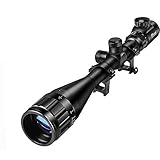
Overview: The CVLIFE 6-24x50 is a budget-oriented illuminated riflescope targeting entry-level hunters and plinkers. It offers basic variable magnification and dual-color reticle illumination, bundled with mounting rings to lower the entry barrier. What Makes It Stand Out: Its primary differentiator is the affordable red/green illuminated reticle, aiding target acquisition in low light. The included mounting rings add immediate value, while the 50mm objective promises decent light gathering for the price. Value for Money: Exceptional affordability makes it accessible for beginners or as a backup scope. However, the low cost reflects compromises in optical quality and mechanical precision compared to mid-tier options, limiting its suitability for serious hunting. Strengths and Weaknesses: Strengths: Very low price point, functional illumination, included mounts, and adequate magnification for short-to-mid ranges. Weaknesses: Mediocre glass clarity (especially at high magnification), inconsistent turret adjustments, limited eye relief, and fragile construction prone to losing zero. Bottom Line: A functional budget option for casual shooters or close-range use where optical perfection isn’t critical; recommended only for those with strict financial constraints.
3. SNIPER Rifle Scope MT 6-24x50 with Red/Green/Blue Illuminated Reticle Riflescope, Adjustable Objective
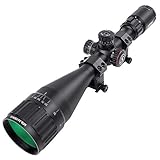
Overview: This SNIPER scope delivers a unique triple-color illuminated reticle within an affordable 6-24x50 package, targeting hunters needing versatility in varying light conditions without a high-end budget. What Makes It Stand Out: The rare red/green/blue illumination system allows customization for different environments, while the adjustable objective (AO) corrects parallax—a notable feature at this price. Aircraft-grade aluminum construction ensures basic durability. Value for Money: Priced competitively, it offers features like AO and multi-color illumination typically found in costlier models. However, optical performance and turret precision lag behind premium brands, making it a mid-tier value play rather than a bargain. Strengths and Weaknesses: Strengths: Versatile tri-color reticle, parallax adjustment, nitrogen-filled waterproofing, and solid 1/4 MOA turrets. Weaknesses: Multi-coated (not fully multi-coated) optics reduce clarity, illumination can cause glare, and build quality feels less refined than top brands. Bottom Line: A practical choice for hunters seeking AO and color options on a budget; recommended for mid-range shooting where illumination flexibility outweighs optical perfection.
4. Monstrum G3 6-36x56 First Focal Plane FFP Rifle Scope | with Zero Stop | Flat Dark Earth

Overview: The Monstrum G3 is a high-magnification FFP scope designed for precision long-range shooters, offering 6-36x power and a 56mm objective for targets beyond 500 yards. Its FFP reticle scales with magnification for consistent holdovers. What Makes It Stand Out: The extended 36x magnification and true FFP design are rare in this segment, enabling precise ranging at distance. Key features include a zero-stop elevation turret, multiple brightness illumination, and a comprehensive accessory kit (rings, sunshade, lens covers). Value for Money: Delivers premium FFP functionality and high magnification at a mid-range price. While optics aren’t class-leading, the package—including essential accessories—offers excellent utility for serious target shooters on a budget. Strengths and Weaknesses: Strengths: Exceptional magnification range, functional zero-stop, versatile illumination, and comprehensive included accessories. Weaknesses: Heavy weight at 36x, edge distortion at max zoom, and turrets lack the crispness of top competitors. Bottom Line: A compelling FFP option for budget-conscious long-range enthusiasts; recommended for target shooting where high magnification and reticle scaling justify minor optical trade-offs.
5. Vortex Optics Venom 5-25x56 First Focal Plane Riflescope - EBR-7C (MOA) Reticle
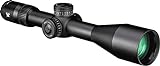
Overview: Vortex’s Venom 5-25x56 FFP is a competition-focused riflescope built for extreme long-range precision, featuring a 34mm tube, EBR-7C reticle, and extensive elevation travel within a rugged, user-friendly platform. What Makes It Stand Out: The RevStop Zero System allows instant return to zero without counting clicks—a game-changer for rapid adjustments. Combined with the FFP EBR-7C reticle, XD optics for clarity, and 85 MOA travel, it excels in dynamic shooting scenarios. Value for Money: Commands a premium price but justifies it with Vortex’s lifetime warranty, exceptional optical performance, and competition-proven features like the side-focus parallax knob. Outperforms many rivals in durability and usability. Strengths and Weaknesses: Strengths: Industry-leading RevStop system, outstanding clarity and light transmission, precise 1/4 MOA turrets, and robust Armortek coating. Weaknesses: Higher cost than entry-level FFP scopes; weight may concern ultralight hunters. Bottom Line: A top-tier choice for competitive shooters and hunters demanding FFP accuracy and rapid zeroing; highly recommended for serious long-range applications where performance is non-negotiable.
6. Monstrum Hornet 6-24x50 FFP Rifle Scope | Includes Zero Stop, Bubble Level Scope Rings, and Detachable Sunshade | MIL Reticle

Overview: The Monstrum Hornet is a versatile, budget-conscious FFP riflescope targeting precision shooters seeking essential long-range features without breaking the bank. Its 6-24x magnification covers mid-to-long distances effectively, backed by a comprehensive package including valuable accessories. What Makes It Stand Out: The inclusion of high-profile scope rings with an integrated bubble level is a significant differentiator, promoting proper cant-free mounting—a common oversight for beginners. The zero-stop elevation turret and detachable sunshade add serious functionality rarely bundled at this price point. The FFP X-Tree reticle scales accurately for holds at any magnification. Value for Money: Priced competitively under $500, it delivers exceptional value. The bundled accessories (rings, sunshade, covers) save $50-$100 compared to buying separately. While glass clarity lags slightly behind premium brands, the lifetime warranty and core features make it a compelling entry into FFP optics. Strengths and Weaknesses: Strengths: Comprehensive accessory package; reliable zero-stop; user-friendly throw lever; lifetime warranty. Weaknesses: Turret手感 lacks the crispness of high-end scopes; edge-of-field clarity diminishes at maximum magnification; illumination can be uneven at lower levels. Bottom Line: An outstanding value proposition for budget-focused precision shooters. The included bubble-level rings solve a critical mounting issue, and the solid FFP performance makes it ideal for hunters and target shooters starting their long-range journey.
7. Arken Optics EP5 Gen 2 7-35x56 FFP Long Range Precision Rifle Scope with Illuminated VPR MOA Reticle, Zero Stop and 34mm Tube
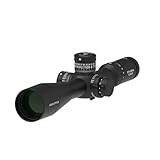
Overview: Arken’s EP5 Gen 2 is a premium, high-magnification FFP scope engineered for serious long-range precision. Leveraging Japanese ED glass and a robust 34mm tube, it targets competitive shooters and hunters demanding top-tier optical clarity and tracking reliability in extreme conditions. What Makes It Stand Out: The Multi-Coated ED Japanese glass delivers exceptional color fidelity and brightness, outperforming many competitors in low light. The finely tuned turrets offer satisfying tactile feedback and repeatable tracking, critical for dialing holds. The ARKEN Zero Stop system is notably intuitive and secure. Value for Money: Positioned in the $1,200-$1,500 range, it competes directly with established premium brands. The optical quality justifies the cost for serious users, though the price premium over mid-tier scopes is significant. The 34mm tube provides ample adjustment range for extreme long-range work. Strengths and Weaknesses: Strengths: Outstanding optical clarity and color reproduction; exceptionally precise and reliable tracking; robust, weatherproof construction; intuitive zero stop. Weaknesses: Heavy due to 56mm objective; complex reticle may overwhelm beginners; higher price than some comparable specs. Bottom Line: A top-tier choice for dedicated long-range shooters prioritizing optical excellence and dialing precision. The superior glass and reliable tracking make the investment worthwhile for those operating at the edge of ballistic capability.
8. Monstrum Beast 5-30x56 FFP Rifle Scope | Featuring Extra Low Dispersion Glass, Precision Turrets with Zero Stop, and Anti-Cant Scope Rings | MIL Reticle
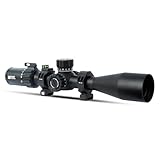
Overview: Monstrum’s Beast aims squarely at the performance end of the value spectrum, offering high magnification (5-30x) and ED glass in a feature-packed FFP scope. It’s designed for shooters needing detailed ranging and holdovers at extended distances without a premium price tag. What Makes It Stand Out: The inclusion of genuine ED glass significantly reduces chromatic aberration, yielding noticeably sharper and clearer images than standard glass in Monstrum’s price bracket. The precision 1/4 MOA or 0.1 MIL turrets with configurable zero stop provide excellent adjustment granularity. Anti-cant rings are a thoughtful addition. Value for Money: Delivering ED glass and a robust 5-30x FFP package under $600 represents strong value. It bridges the gap between budget and premium scopes, offering features typically found $200-$300 higher. The lifetime warranty adds significant peace of mind. Strengths and Weaknesses: Strengths: Excellent image clarity for the price due to ED glass; high magnification range; precise turret adjustments; comprehensive accessory inclusion (rings, covers); lifetime warranty. Weaknesses: Turret手感 is functional but not as refined as top brands; eye box can be tight at 30x; illumination may wash out in bright conditions. Bottom Line: Highly recommended for budget-conscious precision shooters needing ED glass clarity and serious magnification. It offers premium features at a mid-tier price, making it a standout value in the competitive long-range scope market.
9. Bushnell Match Pro ED 5-30x56 Riflescope - ED Prime Glass, Illuminated Deploy MIL 2 Reticle for Precision Shooting

Overview: Bushnell’s Match Pro ED elevates their proven Match Pro line with premium ED Prime glass and an advanced Deploy MIL 2 reticle. Targeting competitive precision shooters, it combines Bushnell’s reputation for reliability with enhanced optical performance for demanding long-range applications. What Makes It Stand Out: The Deploy MIL 2 reticle is exceptional—featuring 11 illumination levels, auto shut-off, bisected hashes, and a terminated hold-under for unobstructed target views. The locking turrets with raised flared crowns offer superb grip and secure settings. IPX7 waterproofing and EXO Barrier coating provide outstanding environmental resilience. Value for Money: Priced around $1,000, it sits firmly in the premium segment. While not the absolute cheapest ED scope, Bushnell’s renowned reliability, the innovative reticle, and the robust locking turrets justify the cost for serious competitors who value consistent field performance. Strengths and Weaknesses: Strengths: Industry-leading Deploy MIL 2 reticle design; exceptional turret grip and locking mechanism; excellent ED glass clarity; superior weatherproofing; intuitive Rev-Indicator. Weaknesses: Slightly heavier than some competitors; auto shut-off might be inconvenient during prolonged sessions; premium price. Bottom Line: A top recommendation for competitive precision rifle shooters. The combination of the best-in-class reticle, secure locking turrets, and Bushnell’s reliability makes it a worthy investment for those prioritizing dialing accuracy and reticle functionality under pressure.
10. KT12-60X60SAL Long Range Rifle Scope 35mm Tube Side Parallax Adjustment with Scope Rings (MIL Reticle)

Overview: The KT12-60X60SAL is an ultra-high-magnification specialist scope targeting extreme long-range observation and shooting. Its staggering 12-60x range and 60mm objective lens cater to users needing maximum detail at very long distances, often for surveillance or specialized shooting disciplines. What Makes It Stand Out: The defining feature is the extreme 60x magnification, rare even in premium scopes, enabling detailed target identification at extreme ranges. The 35mm tube provides exceptional internal adjustment travel. Dual-color (red/green) illuminated glass-etched reticle and side parallax adjustment add crucial functionality for precision work at max power. Value for Money: Positioned as a budget extreme-mag option ($400-$600), it offers capabilities otherwise costing $1,000+. However, optical quality, especially at highest magnifications, doesn’t match pricier alternatives. The included scope rings are a basic but useful inclusion. Strengths and Weaknesses: Strengths: Unmatched 60x magnification for the price; large 60mm objective for light gathering; side parallax focus; versatile dual-color illumination; waterproof/fogproof construction. Weaknesses: Image clarity and brightness suffer significantly above 40x; eye box is very tight at max power; turret precision and repeatability are average; bulk and weight are substantial. Bottom Line: A niche tool for specific extreme-range needs where ultimate magnification trumps optical perfection. Best suited for stationary observation or shooters willing to trade some optical quality for the ability to reach 60x on a budget; not ideal for dynamic or low-light shooting.
Understanding Core Optical Performance
Magnification Range: Balancing Power and Field of View
High magnification is essential for identifying distant targets and precise aiming points, but excessive power without a usable field of view creates a tunnel-vision effect, making target acquisition slow and tracking moving objects nearly impossible. Modern long-range scopes often feature variable magnification starting around 5x and extending to 25x, 30x, or higher. The optimal range depends heavily on your primary use case; extremely high max magnification (e.g., 35x+) often sacrifices optical clarity and light transmission at lower settings. Prioritize a range offering sufficient top-end power for your typical distances while maintaining a wide enough field of view at lower powers for practical setup and scanning.
Objective Lens Size and Light Transmission
The objective lens diameter directly influences the amount of light gathered, crucial for low-light performance at dawn, dusk, or in shaded environments. While larger objectives (50mm, 56mm) gather more light, they also increase weight and may require higher mounts, affecting the rifle’s balance and cheek weld. However, light transmission isn’t solely about size; premium multi-coatings on every air-to-glass surface are paramount. Look for scopes specifying high light transmission percentages (90%+ per lens surface) achieved through advanced anti-reflective coatings. This ensures a bright, clear image even when the objective size is moderately sized, preventing a dim, contrast-poor picture that hinders target differentiation.
Optical Clarity and Color Fidelity
True optical clarity goes beyond brightness. It encompasses edge-to-edge sharpness, minimal chromatic aberration (color fringing), and accurate color representation. High-quality, low-dispersion (ED, HD, Apo) glass elements are critical for minimizing color fringing, especially at high magnifications and against high-contrast backgrounds. This translates to crisper target definition and reduced eye strain during extended observation. Test scopes whenever possible by viewing detailed objects against varied backgrounds; look for consistent sharpness from center to edge and the absence of noticeable color halos around dark objects on bright skies.
Critical Mechanical and Adjustment Systems
Turret Precision and Repeatability
The heart of long-range accuracy lies in the scope’s ability to translate dial inputs into precise, repeatable point-of-impact shifts. True mechanical precision means the adjustment mechanism moves the erector tube smoothly and consistently, shot after shot, without backlash, slop, or requiring excessive force. Repeatability—returning to zero accurately after dialing significant elevation or windage—is non-negotiable. Look for scopes with positive, tactile clicks (audible and felt), consistent adjustment values (e.g., true 0.1 MIL or 1/4 MOA per click), and robust construction tested for thousands of cycles. Avoid turrets that feel mushy, inconsistent, or prone to drifting.
Zero-Stop Functionality and Elevation Travel
A reliable, easily adjustable zero-stop is essential for long-range work. It allows you to dial past your mechanical zero to engage targets at extended ranges and then positively stop at your base zero for closer shots, eliminating guesswork and ensuring rapid return to zero. Adequate elevation travel (often 30+ MILs or 100+ MOA) is equally critical; insufficient travel means you’ll run out of adjustment before reaching your maximum intended range, forcing you to hold over—an imprecise method at extreme distances. Verify the total usable elevation adjustment meets or exceeds your ballistic solution’s requirements for your cartridge and distance goals.
Windage and Tracking Consistency
While elevation gets the most attention, consistent windage tracking is equally vital for compensating for crosswinds. The scope must track true left and right without canting or introducing elevation error (known as “runout”). This requires precise machining of the adjustment mechanism and erector assembly. Independent verification of tracking accuracy using a reliable testing method (like a mirrored box test or known-distance target testing) is highly recommended before relying on a scope for critical long-range shots. Consistent windage adjustments are as important as elevation for wind calls.
Environmental and Usability Factors
Parallax Adjustment and Focus
Parallax error occurs when the target image and reticle are not on the same optical plane, causing the reticle to appear to move relative to the target as your eye shifts behind the scope. At long ranges, even small parallax errors can cause significant point-of-impact shifts. A side-focus or adjustable objective parallax correction system, properly calibrated for the target distance, is essential for eliminating this error. Additionally, a crisp, smooth target focus (often integrated with parallax adjustment) ensures the reticle itself is sharp, reducing eye fatigue and improving aiming precision during critical shots.
Reticle Type and Placement (FFP vs SFP)
The reticle choice significantly impacts ranging, holdovers, and wind holds. First Focal Plane (FFP) reticles scale with magnification, meaning subtensions (like MIL dots) remain accurate at any power setting—crucial for rapid ranging and holds without adjusting magnification. Second Focal Plane (SFP) reticles stay the same size relative to the target, so subtensions are only accurate at one specific magnification (usually max power), which can be limiting for complex holds. FFP is generally preferred for serious long-range work due to its flexibility. Consider the complexity of the reticle; overly busy designs can obscure the target, while too-simple designs lack necessary reference points.
Durability and Environmental Sealing
Long-range shooting often happens in harsh conditions—extreme temperatures, rain, dust, and significant recoil. The scope must withstand these elements without losing zero or clarity. Look for scopes with robust, one-piece main tubes (typically 34mm or 35mm diameter for increased internal adjustment range and strength), constructed from aircraft-grade aluminum. O-ring sealing for fog-proofing (filled with dry nitrogen or argon) and waterproofing is mandatory. Rigorous shockproofing testing (e.g., 1000G) ensures the scope maintains zero under heavy recoil and rough handling in the field.
Eye Relief and Eye Box
Eye relief—the distance from the ocular lens to your eye where you get a full field of view—is critical for safety (preventing scope bite from recoil) and consistent sight picture. Long-range scopes often feature longer eye relief (3.5-4+ inches) suitable for powerful cartridges. The “eye box” refers to the three-dimensional space behind the scope where you can maintain a full, clear image. A large, forgiving eye box is highly desirable, especially for positional shooting or when rapid target acquisition is needed, as it allows slight head movement without vignetting (black edges) or losing the sight picture.
Matching the Scope to Your Specific Needs
Defining Your Primary Long-Range Application
Not all long-range shooting is identical. Are you primarily engaging static targets at known distances on a range? Hunting elusive game at varying unknown distances in mountainous terrain? Or participating in competitive precision rifle matches with moving targets and time constraints? Your primary use case dictates critical features. Range shooting might prioritize maximum elevation travel and precise turrets, while hunting demands lighter weight, faster target acquisition (wider field of view), and better low-light performance. Competition scopes often blend high adjustment speed with robust construction.
Considering Weight and Balance
Long-range scopes, especially those with large objectives and extended tubes, can be heavy. This weight impacts the overall balance of your rifle, affecting handling, stability off bipods or rests, and shooter fatigue during extended sessions. Consider how the scope’s weight and length interact with your rifle platform and intended shooting positions. A scope perfectly suited for a heavy benchrest rifle might make a hunting rifle cumbersome and difficult to hold steady. Strive for a balance that enhances, rather than hinders, your ability to get a stable shot.
Budget Realities and Value Assessment
High-performance long-range optics represent a significant investment. While top-tier models offer the pinnacle of optical and mechanical refinement, capable mid-tier options exist. Define your budget realistically but understand the trade-offs. Sacrificing core elements like adjustment repeatability, optical clarity, or durability for a lower price often leads to frustration and ultimately costs more when you need to replace the scope. Focus on the features essential for your specific long-range goals rather than chasing every bell and whistle. Value is found in features that directly contribute to hitting your target consistently at distance.
Mounting System Compatibility and Height
The scope is only as good as its foundation. Ensure compatibility with your rifle’s receiver (Picatinny, Weaver, or proprietary rail) and select rings of the appropriate height to achieve proper eye alignment and sufficient clearance for the objective lens, especially with large objectives or barrel contours. Low rings improve stability but may not provide enough clearance; high rings offer clearance but can slightly reduce stability. Consider the material (steel for maximum strength, aluminum for weight savings) and construction quality (one-piece vs two-piece) of the rings and base. Poor mounting is a common cause of lost zero.
Ergonomic Design and User Interface
Long sessions at the rifle demand scopes that are intuitive and comfortable to use. Evaluate the ease of operating the magnification ring, parallax adjustment, and turrets—especially with gloves on. Turret caps should be secure but removable quickly. The ocular focus should be easily adjustable and hold its setting. The overall shape and texture of the adjustment knobs and zoom ring should provide positive grip without snagging. Small ergonomic details significantly impact user experience and efficiency during critical moments.
Frequently Asked Questions
What magnification range is ideal for shooting beyond 1000 yards?
A variable magnification range starting between 4x-6x and extending to 25x-30x is generally considered the sweet spot for most shooters engaging targets beyond 1000 yards, balancing target identification power with a usable field of view for setup and scanning.
First Focal Plane (FFP) vs Second Focal Plane (SFP): which is better for long range?
FFP is generally preferred for serious long-range shooting because the reticle subtensions remain accurate at all magnification levels, enabling consistent ranging and holdovers without needing to set the scope to a specific power.
How important is a true mechanical zero-stop for long-range scopes?
Extremely important. A reliable zero-stop allows you to dial significant elevation for long shots and then positively return to your base zero for closer targets, eliminating guesswork and ensuring rapid, confident transitions between different engagement distances.
What optical coatings make the biggest difference in long-range clarity?
Fully multi-coated optics (multiple anti-reflective coatings on all air-to-glass surfaces) are essential. Premium scopes often feature specialized low-reflective or phase-corrective coatings that significantly boost light transmission, contrast, and color fidelity, especially critical in low-light conditions at distance.
How do I verify a scope’s adjustment repeatability before purchasing?
While manufacturer specs are a start, independent verification via methods like the “mirrored box test” or meticulously tracking point-of-impact shifts on a known-distance target over multiple full adjustment cycles is the most reliable way to confirm true mechanical repeatability.
Why is parallax adjustment critical for long-range accuracy?
Uncorrected parallax causes the reticle to shift relative to the target as your eye moves, leading to significant point-of-impact errors at long range. Proper parallax adjustment, calibrated for the specific target distance, eliminates this error source for precise aiming.
What objective lens size offers the best balance for long-range use?
A 50mm objective is widely considered the optimal balance for long-range scopes, providing excellent light gathering for low-light performance without excessive weight or the need for extremely high mounts that can compromise cheek weld and rifle balance.
How much elevation adjustment travel do I realistically need?
Aim for a minimum of 30 MILs (or approximately 100 MOA) of usable elevation travel. This ensures sufficient adjustment to handle the ballistic drop of common long-range cartridges out to 1500+ yards without resorting to imprecise holdovers.
Are large 34mm or 35mm scope tubes worth the extra size and weight?
Yes, for dedicated long-range applications. Larger main tubes provide significantly more internal elevation and windage adjustment travel within the mechanical limits of the erector system, which is crucial for extreme distances, and often contribute to increased structural rigidity.
What environmental specs should I prioritize for a reliable long-range scope?
Prioritize scopes with robust one-piece tube construction (34mm+), O-ring sealed for waterproof and fogproof performance (nitrogen or argon purged), and independently verified shockproofing to withstand heavy recoil and harsh field conditions without losing zero.
Related Buying Guides
- Top 10 Best Rifle Scopes for Long-Range Precision in 2026
- 10 Must-Have Long Range Scopes for Accurate Shots in 2026
- 10 Must-Have Long Range Scopes for Competitive Shooting in 2026
- The 10 Ultimate Best Long Range Scopes for Competitive Shooters in 2026
- Top 10 Best Binoculars for Long-Range Wildlife Observation in 2026