Table of Contents
Gone are the days when backpackers had to choose between heavy pump filters that weighed down their packs or questionable chemical treatments that left water tasting like a swimming pool. The landscape of backcountry water purification has undergone a radical transformation, and 2026 represents perhaps the most exciting leap forward we’ve seen in decades. Today’s technologies blend nanoscale engineering with smart connectivity, delivering purification systems that are lighter, faster, and more reliable than ever before—some so compact they slip into your pocket yet powerful enough to handle the most challenging water sources from glacial melt to stagnant jungle pools.
As trails become more crowded and remote water sources face increasing contamination from both human activity and environmental changes, having a dependable water treatment system isn’t just a convenience—it’s a critical safety tool. But navigating the sea of specifications, certifications, and marketing claims can feel overwhelming. Whether you’re a weekend warrior or a thru-hiker logging twenty-mile days, understanding what makes a water filter truly revolutionary will help you make an informed decision that matches your specific needs, budget, and adventure style.
Top 10 Backpacker Water Filters
Detailed Product Reviews
1. Sawyer Squeeze Water Filtration System, Cnoc Premium 2 Liter Bladder

Overview: The Sawyer Squeeze paired with the Cnoc Premium 2L bladder represents a marriage of two backpacking favorites, creating an ultralight water system that prioritizes convenience and reliability. Weighing under six ounces complete, this combo delivers the proven 0.1-micron filtration of the Sawyer Squeeze through a superior delivery vessel.
What Makes It Stand Out: The Cnoc bladder’s wide-mouth opening revolutionizes the filling process at sketchy water sources, eliminating the frustration of narrow pouch openings. Made from extra-durable TPU that’s both BPA and PVC-free, it withstands rugged use while rolling compactly when empty. The system’s 100,000-gallon filter lifespan and triple-tested performance assurance mean you’ll replace the bladder long before the filter.
Value for Money: While pricier than standard Sawyer kits, the premium Cnoc bladder justifies the cost by solving the most common complaint: pouch failure. Comparable setups require separate purchases, making this bundle cost-effective for serious users who value field-tested durability over budget constraints.
Strengths and Weaknesses: Pros include exceptional filter longevity, the game-changing wide-mouth bladder, and true ultralight credentials. Cons involve the standard squeeze pouches still being somewhat fragile if over-pressurized, and the flow rate diminishing as the filter loads with sediment, requiring frequent backwashing in silty conditions.
Bottom Line: This combination is the gold standard for dedicated backpackers and thru-hikers who demand reliability. The Cnoc bladder transforms the Sawyer experience from functional to exceptional, making it worth every gram and dollar for those counting miles, not just days.
2. Sawyer Products SP128 Mini Water Filtration System, Single, Blue

Overview: The Sawyer Mini packs full-size filtration credentials into a palm-sized package that weighs a mere two ounces. Designed for minimalist adventurers, this inline filter delivers the same 0.1-micron absolute filtration as its larger siblings, removing 99.99999% of bacteria and 99.9999% of protozoa while maintaining impressive versatility across multiple configurations.
What Makes It Stand Out: The Mini’s adaptability is its superpower. It threads onto standard 28mm bottles, attaches to the included 16-ounce pouch, integrates with hydration packs, or functions as a straw for direct-source drinking. This flexibility makes it equally valuable as a primary filter for ultralight trips or a backup emergency filter stashed in a first-aid kit.
Value for Money: At a budget-friendly price point, the Mini offers exceptional protection per dollar. The 100,000-gallon lifespan means years of service for occasional users, though frequent backpackers may find the smaller capacity and slower flow rate less efficient than the full-size Squeeze.
Strengths and Weaknesses: Strengths include incredible portability, proven Sawyer reliability, and multi-use functionality. Weaknesses involve the diminutive 16-ounce pouch requiring frequent refills, notably slower flow rates compared to larger filters, and increased clogging tendency in turbid water demanding diligent backwashing.
Bottom Line: The Mini excels as a lightweight emergency filter or for solo day hikes where water sources are plentiful. While not ideal for high-volume needs, its versatility and reliability make it an essential piece of gear for any outdoor enthusiast’s quiver.
3. Waterdrop Gravity Water Filter Straw, Camping Water Filtration System, Water Purifier Survival for Travel, Backpacking and Emergency Preparedness, 1.5 gal Bag, 5 Stage Filtration, Pack of 1
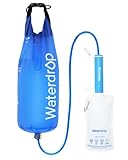
Overview: Waterdrop’s gravity-fed system redefines group hydration with a 1.5-gallon bag and five-stage filtration that combines coconut shell activated carbon with 0.1-micron ultrafiltration. This hands-free approach eliminates the manual squeezing of traditional systems, making it ideal for basecamps, group outings, and emergency preparedness where volume matters more than ultralight concerns.
What Makes It Stand Out: The massive capacity sets it apart, processing nearly 11 bottles of water simultaneously while you attend to camp chores. The innovative backwash purifier function maintains performance without tools, and the five-stage process tackles chlorine, taste, and odor issues that hollow fiber alone misses, delivering a more polished drinking experience.
Value for Money: Priced competitively, the system offers excellent capacity per dollar. However, the 1,400-gallon filter lifespan pales beside Sawyer’s 100,000-gallon rating, meaning more frequent replacements for regular users. For occasional campers or emergency kits, this trade-off is negligible.
Strengths and Weaknesses: Pros include effortless gravity operation, superior taste improvement, and generous volume. Cons involve bulkier packed size, shorter filter life, and the bag’s durability being unproven compared to established brands. The 700ml/min flow rate also lags behind premium squeeze filters.
Bottom Line: This system shines for car camping, family trips, or emergency storage where capacity trumps portability. While not the choice for ounce-counting backpackers, its convenience and multi-stage filtration make it a smart investment for preparedness-minded users.
4. Katadyn BeFree 1.0L Water Filter, Fast Flow, 0.1 Micron EZ Clean Membrane for Endurance Sports, Camping and Backpacking, One Size, 8018006

Overview: The Katadyn BeFree targets the performance crowd with a blistering 2-liter-per-minute flow rate and a collapsible Hydrapak flask that compresses as you drink. Weighing just 2.3 ounces, this system prioritizes speed and convenience for trail runners, fast-packers, and anyone who resists stopping to fiddle with gear. The Swiss-engineered 0.1-micron filter delivers reliable protection against bacteria and protozoa.
What Makes It Stand Out: The EZ-Clean membrane technology requires no backflushing—simply shake or swish in water to clear debris. The Stay-Clean nozzle prevents contamination between sips, and the free-flow channels maintain that impressive output rate even as the filter ages. This is filtration for athletes, not just hikers.
Value for Money: Priced at a premium, the BeFree commands respect through Swiss quality and a 2-year guarantee. The 1,000-liter lifespan means regular replacement, increasing long-term costs, but the time saved and frustration avoided justify the expense for serious endurance athletes.
Strengths and Weaknesses: Strengths include unmatched flow rate, simplest maintenance, and athlete-focused design. Weaknesses involve shorter filter life, proprietary bottle compatibility limiting versatility, and higher replacement costs. The soft-flask is also more puncture-prone than rigid bottles.
Bottom Line: For trail runners and fast-packers who prioritize speed and simplicity, the BeFree is unmatched. While not the most economical for casual use, its performance-oriented design makes it the clear winner when every second and every ounce counts.
5. Sawyer Products SP129 Squeeze Water Filtration System w/Two 32-Oz Squeeze Pouches, Straw, and Hydration Pack Adapter

Overview: The SP129 represents Sawyer’s standard-bearer configuration, pairing the legendary Squeeze filter with two 32-ounce pouches and a hydration pack adapter. This comprehensive kit delivers the same 100,000-gallon, 0.1-micron filtration in a versatile package that adapts to bottles, pouches, or inline reservoir use, making it the Swiss Army knife of water treatment.
What Makes It Stand Out: The inclusion of hydration pack adapters transforms your existing reservoir into a gravity-fed system, while dual pouches allow continuous processing—fill one while squeezing the other. The removable cap enables direct drinking or bottle filling, and triple-tested performance ensures reliability when sources are questionable.
Value for Money: This kit strikes an excellent balance, offering more versatility than the basic Mini at a modest price increase. The two pouches provide redundancy, and the adapters add gravity-fed convenience without separate purchases. For regular backpackers, this represents the best features-per-dollar ratio in Sawyer’s lineup.
Strengths and Weaknesses: Pros include proven filter longevity, multiple configuration options, and reliable brand reputation. Cons mirror standard Squeeze complaints: pouches eventually fail at stress points, flow rate decreases with dirty water, and the system requires active squeezing unlike gravity alternatives.
Bottom Line: This is the go-to choice for versatile, reliable filtration. It handles weekend trips and thru-hikes equally well, offering the flexibility to adapt to any situation. For most outdoor enthusiasts, this kit provides everything needed without the premium cost of specialized systems.
6. LifeStraw Personal Water Filter for Hiking, Camping, Travel, and Emergency Preparedness, 2 Pack, Blue
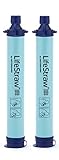
Overview: The LifeStraw 2-Pack delivers proven personal water filtration in an ultralight package. Weighing under 2 ounces each, these compact devices remove virtually all bacteria, parasites, and microplastics from natural water sources. With a 1,000-gallon lifespan per filter, this duo provides over five years of safe drinking water for an individual, making it ideal for hiking, camping, travel, and emergency kits.
What Makes It Stand Out: LifeStraw’s exceptional 99.999999% bacteria removal rate sets the industry standard. The unlimited shelf life means you can store them indefinitely without degradation. The company’s social mission is compelling: each purchase provides one child with safe water for a year. The minimalist design requires no pumping, chemicals, or batteries—just sip directly from any water source.
Value for Money: At under $20 per filter, the cost breaks down to less than two cents per gallon. Compare that to $1+ for bottled water, and the value becomes clear. The 2-pack offers savings over individual purchases and ensures you have a backup or can equip a partner.
Strengths and Weaknesses: Strengths include extreme portability, proven effectiveness, zero maintenance, and social impact. The primary weakness is the lack of virus protection, limiting use in areas with viral contamination. The strong suction required can be tiring during extended use, and the design isn’t suitable for filtering water for cooking or groups.
Bottom Line: Perfect for personal emergency preparedness and backcountry travel where bacteria and protozoa are the main concerns. Pack one in your go-bag and another in your hiking pack for peace of mind.
7. Straw Water Filter 5 Pack – Outdoor Camping & Hiking Survival Gear Kit for Family Use, Ultra-Light Personal Filter Straws for Backpacking, Travel, Bug-Out Bags and Emergency Preparedness

Overview: This 5-pack of straw filters addresses group hydration needs with individual units for each person. Designed for families and teams, each straw provides independent filtration without sharing or waiting. The food-grade, BPA-free construction ensures safe drinking for all users, while the compact design stashes easily in pockets or packs.
What Makes It Stand Out: The multi-unit packaging is the key differentiator—everyone gets their own dedicated filter, improving hygiene and convenience on group adventures. The low-effort sipping mechanism works well when you’re exhausted on the trail. The 5-stage filtration system removes 99.99999% of harmful substances while improving taste and odor.
Value for Money: Bulk purchasing power makes this significantly cheaper per unit than buying five individual name-brand filters. For families of four or five, it’s an economical way to equip everyone simultaneously. The cost per gallon is competitive, though exact lifespan isn’t as clearly specified as premium brands.
Strengths and Weaknesses: Strengths include excellent group value, individual hygiene, simple operation, and versatile accessories. The main weakness is less established brand credibility compared to industry leaders. Lifespan specifications are vague, and flow rates may decrease faster than premium options. The lack of independent certifications may concern discerning users.
Bottom Line: An excellent choice for budget-conscious families and groups who want individual filters without breaking the bank. Ideal for casual camping and emergency preparedness where convenience trumps ultimate durability.
8. Membrane Solutions Personal Water Filter, Survival Filtration Straw Portable Gear, Emergency Preparedness, Supply for Drinking Hiking Camping Travel Hunting Fishing Team Family Outing (Blue, 4 Pack)
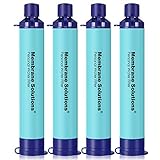
Overview: The Membrane Solutions 4-Pack combines scientific certification with practical design for small groups. Each straw meets NSF/ANSI standards 42, 372, and 401, delivering verified protection against coliforms, lead, microplastics, and chlorine while maintaining beneficial minerals. The compact 7.1-inch design fits standard 28mm bottles for versatile use anywhere.
What Makes It Stand Out: Triple NSF certification provides laboratory-verified assurance that few competitors match. The 5-stage filtration system includes activated carbon for superior taste improvement. With a 1,320-gallon lifespan, these filters outlast many alternatives. The design explicitly preserves mineral content, addressing a key concern with filtration systems.
Value for Money: Certified performance at a mid-range price point offers strong value. The 4-pack costs less per unit than buying certified filters individually, making it accessible for couples or small families. The extended lifespan further improves long-term value, though initial cost exceeds basic uncertified options.
Strengths and Weaknesses: Strengths include rigorous certifications, excellent taste improvement, longer lifespan, mineral retention, and good flow rate. Weaknesses include NSF 401’s focus on microplastics rather than viruses, brand recognition lagging behind category leaders, and the 4-pack size may not suit solo users or large groups. The TDS disclaimer might confuse some buyers.
Bottom Line: Ideal for travelers and adventurers who prioritize verified water quality and taste. The certifications justify the modest price premium for those seeking proven performance over brand name alone.
9. Sawyer Products SP2101 MINI Water Filtration System, 2-Pack, Blue and Green

Overview: The Sawyer MINI 2-Pack redefines versatility in personal water filtration. Weighing just 2 ounces, this system functions as a straw, inline filter for hydration packs, or squeeze filter using the included pouch. Each unit is individually tested three times to ensure 0.1-micron absolute filtration, removing bacteria, protozoa, and microplastics with extreme reliability.
What Makes It Stand Out: The remarkable 100,000-gallon lifespan dwarfs competitors, potentially lasting decades for most users. The multiple connectivity options—including standard 28mm bottles and hydration pack integration—make it infinitely more versatile than simple straw designs. Sawyer’s rigorous individual testing protocol ensures every unit meets performance claims.
Value for Money: While pricier upfront, the cost per gallon is virtually unmatched. A single filter could replace hundreds of LifeStraws over its lifetime. The included accessories—squeeze pouches, straws, and cleaning plungers—add significant value and enable various use cases from personal drinking to filling bottles.
Strengths and Weaknesses: Strengths include extraordinary lifespan, versatile connectivity, proven reliability, lightweight design, and comprehensive accessories. The main weakness is the maintenance requirement—regular backflushing is essential to maintain flow. The initial learning curve is steeper than basic straws, and the system is overkill for casual users who need occasional emergency backup.
Bottom Line: The ultimate choice for serious adventurers, frequent travelers, and survivalists who demand maximum longevity and versatility. The investment pays dividends over years of reliable service.
10. Camco Tastepure RV Water Filter - Advanced 6-Step Patent-Protected Filtration - Camping Essentials for Fresh Drinking Water - 2-Pack of RV Inline Water Filters, Made in USA (40045)
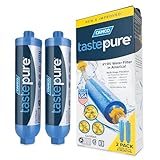
Overview: The Camco Tastepure RV Filter 2-Pack provides base-level water purification for campsites, RVs, and outdoor setups. Unlike personal straws, these inline filters attach to standard hoses, delivering clean water for drinking, cooking, and cleaning. The 6-step Hex-Flow Technology reduces chlorine, sediment, bad tastes, and odors while controlling bacteria growth effectively.
What Makes It Stand Out: The patented Hex-Flow Technology and dual NSF/ANSI 42 & 53 certification ensure comprehensive contaminant reduction. KDF media prevents bacterial and mold growth during storage—a common issue with carbon filters. Proudly made in the USA, these filters meet all federal lead-free standards and serve multiple purposes beyond drinking water.
Value for Money: For RV owners and base campers, this eliminates the need for expensive bottled water or pitcher filters. The dual-pack provides seasonal rotation or simultaneous use at multiple connection points. While costlier than personal straws, the capacity and versatility for group use justify the price for the target audience.
Strengths and Weaknesses: Strengths include excellent taste improvement, high flow rate for group needs, versatile hose attachments, USA manufacturing, and KDF bacteria control. Weaknesses include bulk and weight unsuitable for backpacking, no virus protection, requires hose connection, and is overkill for solo hikers. The 6-step marketing is somewhat vague compared to micron ratings.
Bottom Line: Essential for RV enthusiasts, car campers, and base camp operations where clean water is needed for multiple purposes. Not designed for ultralight backpacking but unbeatable for stationary outdoor living.
The Evolution of Backcountry Water Treatment
From Basic Purification to Smart Filtration
The journey from simple ceramic filters to today’s intelligent systems mirrors the broader technological revolution in outdoor gear. Early backpackers relied on basic mechanical filtration that could remove bacteria and protozoa but struggled with viruses and chemical contaminants. Modern systems now incorporate multiple barrier technologies that work in concert, often monitored by microprocessors that track performance metrics in real-time. This shift represents more than just incremental improvement—it’s a fundamental rethinking of how we ensure water safety in the wilderness.
Why 2026 Represents a Tipping Point
This year marks the convergence of several breakthrough technologies that were previously theoretical or prohibitively expensive. Manufacturing advances have made nanofiber membranes cost-effective for consumer products, while miniaturized UV-C LEDs now deliver laboratory-grade sterilization without the bulk of traditional ultraviolet systems. Battery efficiency has improved dramatically, allowing multi-week trips without recharging. Perhaps most importantly, third-party testing protocols have become more rigorous, giving consumers reliable data rather than marketing promises.
Understanding Modern Filter Technologies
Nanofiber Membrane Advancements
The heart of any filter is its membrane, and nanofiber technology has revolutionized this critical component. These ultra-fine fibers create a dense mesh that traps contaminants through both size exclusion and electrostatic attraction. The result is a filter that can remove 99.9999% of bacteria and 99.9% of viruses while maintaining flow rates that would have been impossible with older technologies. Look for membranes with gradient density structures that prevent premature clogging and extend field life significantly.
UV-C LED Integration
Unlike traditional mercury-based UV systems, modern UV-C LEDs deliver instant-on sterilization without warm-up time and consume a fraction of the power. These solid-state devices can last for thousands of hours and work effectively in cold temperatures where older systems struggled. The key specification to examine is the dose delivery—measured in millijoules per square centimeter—with 16 mJ/cm² being the minimum for virus inactivation. Premium systems often deliver 30 mJ/cm² or more for added safety margin.
Chemical-Free Electrochemical Systems
Electrochemical purification uses a small electric current to generate reactive species that destroy pathogens without adding taste or chemicals to your water. These systems excel in situations where you need to treat large volumes quickly and don’t want to wait for chemicals to work or deal with filter clogging from silty water. The trade-off is power consumption and the inability to remove particulates, which is why they’re often paired with a simple pre-filter.
Gravity-Fed Versus Pump Systems Reimagined
The age-old debate between gravity and pump systems has been transformed by new materials and designs. Modern gravity systems can process liters per minute while you set up camp, using innovative hang systems that work with any container. Meanwhile, pump systems have shed weight through carbon fiber components and improved mechanical advantage, making them viable again for ultralight backpackers who need guaranteed water access in dry camps.
Key Features That Define Revolutionary Filters
Flow Rate and Pressure Dynamics
Flow rate isn’t just about convenience—it affects how much water you can process during brief stops and influences filter lifespan. Revolutionary filters balance high flow rates with minimal pressure requirements. Look for systems that maintain consistent performance even as the filter loads with contaminants. Specifications should list both initial flow rate and rated flow at end-of-life, giving you a realistic picture of performance across the filter’s usable span.
Filter Longevity and Capacity Ratings
A filter’s rated capacity in liters tells only part of the story. More important is how that capacity varies with water quality. The best modern filters provide transparent data on lifespan expectations for different water types—clear mountain streams versus muddy desert potholes. Some incorporate turbidity sensors that adjust lifespan estimates based on actual usage conditions, preventing premature replacement or dangerous overuse.
Smart Connectivity and Monitoring
Bluetooth-enabled filters with companion apps represent the cutting edge of user experience. These systems track gallons processed, monitor flow rate degradation, and alert you when replacement is needed. More advanced models can even log GPS coordinates of water sources and provide crowd-sourced water quality data. While some purists scoff at electronics in the backcountry, the safety and maintenance benefits are undeniable for many users.
Multi-Stage Filtration Architectures
Single-technology solutions are increasingly rare in top-tier systems. Revolutionary filters combine mechanical filtration, activated carbon, and either UV or chemical treatment in sequential stages. This redundancy ensures that if one barrier is compromised, others provide backup protection. The sequence matters—carbon after the main filter prevents bacterial growth in the carbon itself, while carbon before UV removes particles that could shadow pathogens from UV exposure.
Size and Weight Considerations for Ultralight Backpackers
Compact Form Factor Innovations
The quest for lighter packs has driven remarkable miniaturization. Some 2026 systems pack full virus protection into units smaller than a soda can, using clever folding designs and collapsible collection bags. When evaluating compact systems, consider not just the filter unit but the complete system weight including bags, hoses, and accessories. The lightest filter can become the heaviest system if it requires proprietary components.
Material Science Breakthroughs
Titanium alloys and advanced polymers have replaced stainless steel and standard plastics in premium filters, cutting weight by half while improving durability. These materials resist freeze-thaw damage and withstand drops that would shatter older designs. Look for housings rated for multiple freeze cycles and impact resistance specifications if you venture into extreme environments.
Power Sources and Energy Efficiency
Solar-Assisted Systems
Integrated solar panels have become efficient enough to meaningfully extend battery life, though they’re not yet a primary power source. The best implementations use solar trickle charging to maintain standby power, ensuring your filter is ready even after weeks in storage. Panel efficiency ratings and battery capacity should be considered together—a large battery with inefficient panels may be heavier than a smaller battery with premium panels.
Kinetic Energy Harvesting
Innovative systems now capture energy from the pumping motion itself, storing it in capacitors for UV treatment or self-cleaning cycles. This technology eliminates batteries entirely for manual pump systems, though it adds mechanical complexity. The efficiency of energy conversion varies significantly between designs, affecting how many pumps are needed per liter.
Battery Life Optimization
For electronic systems, battery technology improvements mean some filters can now process over 200 liters on a single charge. Look for systems with replaceable batteries or power banks rather than integrated cells that can’t be swapped in the field. USB-C charging has become standard, allowing you to use the same power source as your other electronics.
Contaminant Removal Capabilities
Virus Protection Standards
True virus removal requires either sub-0.02 micron filtration, UV treatment, or chemical disinfection. Mechanical-only filters claiming virus protection should be scrutinized carefully—many rely on electrostatic attraction rather than size exclusion, which can be compromised by water chemistry. The gold standard is EPA Guide Standard testing against MS2 bacteriophage, with log reduction values of 4 or higher.
Heavy Metal and Chemical Reduction
Backcountry water increasingly contains agricultural runoff and mining contaminants. Activated carbon blocks with enhanced surface area can reduce lead, mercury, and chemicals like pesticides and herbicides. Check for NSF/ANSI 53 certification for specific contaminant claims, as performance varies dramatically between carbon formulations. Some systems now include ion exchange resins for heavy metal removal.
Microplastic Filtration
As microplastics permeate even remote water sources, filters with sub-5 micron ratings provide meaningful reduction. Nanofiber membranes excel here, capturing particles as small as 0.1 microns. While no portable filter can remove all microplastics, the best systems can reduce them by over 99%, giving peace of mind beyond just biological protection.
Field Maintenance and Servicing
Self-Cleaning Mechanisms
Backflushing has evolved from a manual chore to an automated process in some systems. Pressure-activated cleaning cycles or magnetic agitation systems can restore flow rates without disassembly. The effectiveness of these systems varies—look for data on flow rate recovery percentage after cleaning cycles, and consider whether the cleaning mechanism adds weight or complexity.
Tool-Free Cartridge Replacement
Field serviceability can make or break a long expedition. Modern tool-free designs use quarter-turn bayonet mounts or magnetic connections that can be operated with cold fingers. Consider whether replacement cartridges are widely available and whether the system includes backup seals and O-rings. Some manufacturers offer expedition kits with spare parts for extended trips.
Environmental Impact and Sustainability
Recyclable Filter Components
Sustainability has become a key differentiator as awareness of outdoor gear’s environmental impact grows. Revolutionary filters now feature cartridges with recyclable filter media and housings. Some manufacturers offer take-back programs where used cartridges are returned for proper recycling. Check whether the claimed recyclability requires special facilities or if components can be processed through standard municipal programs.
Biodegradable Housing Materials
Experimental filters are emerging with housings made from biodegradable polymers derived from plant sources. While not yet mainstream, these represent the future of sustainable design. Current trade-offs include reduced durability and higher cost, but for environmentally conscious backpackers, the benefits may outweigh the limitations.
Price Versus Performance Analysis
Understanding Total Cost of Ownership
The sticker price rarely reflects the true cost of a water filter. Calculate cost per liter by dividing the filter price plus replacement cartridges over the system’s rated lifespan. A $200 filter that processes 4000 liters costs $0.05 per liter, while a $50 filter that processes 500 liters costs $0.10 per liter. Factor in battery replacement costs for electronic systems and proprietary bag replacements for gravity systems.
Warranty and Support Considerations
Leading manufacturers now offer multi-year warranties that cover not just manufacturing defects but also performance degradation. Some provide pro-rated replacement costs if filters fail before their rated capacity. Consider the company’s reputation for customer service and whether they have a track record of honoring warranty claims. A lifetime warranty means little if the company disappears after two years.
Real-World Testing Methodologies
Laboratory Certifications Explained
Understanding test protocols is crucial for making informed comparisons. NSF P231 and EPA Guide Standard are the most rigorous protocols for microbiological removal. Be wary of vague claims like “removes 99.9% of bacteria” without specifying the test method. Reputable manufacturers publish detailed test reports from independent labs.
User Field Reports
While laboratory tests provide baseline performance data, long-term field reports reveal real-world reliability. Look for consistent feedback about durability, ease of use, and performance in specific conditions like freezing temperatures or high-sediment water. Pay attention to reports from users with similar trip styles—thru-hikers have different needs than weekend campers.
Frequently Asked Questions
How do I know if I need virus protection in my water filter?
Virus protection becomes critical when traveling internationally, in areas with poor sanitation, or when using water sources heavily impacted by human or animal waste. In remote North American wilderness, bacteria and protozoa are the primary concerns, making a quality 0.2-micron filter sufficient. When in doubt, opt for a system with virus capability—the weight penalty is minimal with modern technology.
What’s the difference between a water filter and a water purifier?
Filters remove bacteria and protozoa through physical size exclusion, typically down to 0.2 microns. Purifiers must also remove or inactivate viruses, which are smaller than 0.02 microns. This requires UV treatment, chemical disinfection, or advanced membrane technology. The term “purifier” is regulated and should only be used for systems meeting EPA Guide Standard for virus removal.
How often should I backflush my filter in the field?
Backflush when you notice a 25% reduction in flow rate or at the end of each day in silty conditions. More frequent gentle backflushing is better than infrequent aggressive cleaning. Some modern filters with pressure gauges indicate when backflushing is needed. Always use clean water for backflushing to avoid introducing contaminants into the clean side of the membrane.
Can I filter freezing temperatures or let my filter freeze?
Most modern filters can withstand a few freeze-thaw cycles if emptied of water first, but freezing while wet damages most membrane types. Some premium filters use freeze-resistant membranes and housings rated for multiple freeze cycles. Check manufacturer specifications—freeze damage is typically not covered under warranty. Store filters in your sleeping bag on cold nights.
How do I treat water with high sediment or turbidity?
Pre-filter through a bandana or coffee filter to extend filter life. Some systems include dedicated pre-filters that trap larger particles. Let water settle in a container for 30 minutes before filtering. Avoid stirring up sediment when collecting water. In extremely turbid water, chemical treatment or boiling may be more practical than filtration.
Are UV purifiers effective in cloudy water?
UV systems require relatively clear water because particles can shield pathogens from UV exposure. Turbidity should be below 4 NTU for effective treatment. Pre-filter cloudy water before UV treatment. Some advanced UV systems include sensors that warn when water is too turbid for reliable treatment, preventing false confidence.
What’s the shelf life of unused filter cartridges?
Most unused cartridges last 5-10 years if stored unopened in a cool, dry place. Check manufacturer dates when purchasing. Once opened and wet, cartridges should be used within the rated capacity or within 12 months, whichever comes first. Some modern filters include preservatives that extend wet storage life if properly sealed.
How do I choose between pump, gravity, and squeeze systems?
Pump systems excel for small water quantities and dry camps where you must reach water sources. Gravity systems are ideal for basecamps and group use, processing large volumes with minimal effort. Squeeze systems offer the best weight-to-convenience ratio for solo hikers. Many modern filters are modular, converting between modes with accessory kits.
Do I still need to carry backup treatment methods?
Even with a primary filter, carrying chemical tablets or a small backup filter is wise for long trips. Primary filters can clog, break, or be lost. A backup weighing less than an ounce provides peace of mind. Some ultralight hikers rely solely on chemical treatment, but this requires waiting time and doesn’t improve water taste.
How do I properly dispose of used filter cartridges?
Check if the manufacturer offers a recycling program. If not, remove plastic housings for recycling and dispose of filter media in household trash—it’s essentially inert plastic and activated carbon. Never incinerate filters, as this can release harmful compounds. Some eco-conscious brands now use biodegradable materials that can be composted after removing non-compostable components.
Related Buying Guides
- 10 Backpacker Water Filters That Solve Weight and Space Issues in 2026
- Stop Worrying About Giardia with the 10 Best Backpacker Water Filters This Year
- The 10 Best Gravity Water Filters for Camping Families in 2026
- Top 10 Best Portable Water Filters for Backpackers in 2026
- 10 Best Value Gravity Water Filters for Family Camping in 2026