Table of Contents
Imagine trudging through dense woods long after sunset, your mission depending on every subtle detail revealed in the green-hued world of night vision. Suddenly, a critical component fails—a lens fogs, the housing cracks under unexpected pressure, or the image intensifier tube flickers out entirely. That sinking feeling isn’t just inconvenient; in low-light scenarios, equipment failure can mean the difference between success and a dangerous setback. Durability isn’t a luxury feature for night vision scopes—it’s the non-negotiable foundation that separates reliable partners from expensive paperweights when you need them most. Real-world conditions are brutal: freezing temperatures, torrential rain, accidental drops against rocky terrain, and relentless humidity test every seam and circuit.
Forget glossy marketing claims promising “military-grade toughness.” True durability emerges from countless hours in the field, where users push gear beyond spec sheets and share hard-won lessons online. By analyzing recurring themes in genuine user experiences—not isolated star ratings or paid testimonials—we uncover what actually withstands the grind. This guide cuts through the noise, focusing solely on the engineering and design elements proven to deliver longevity. We’ll translate complex technical specs into practical insights you can use, helping you identify scopes built to endure your specific adventures, whether navigating wilderness trails, securing property perimeters, or conducting professional surveillance. It’s time to invest in resilience, not just resolution.
Top 10 Night Vision Scopes
Detailed Product Reviews
1. DNT Optics Zulus HD V2 5-20x Digital Day/Night Vision Scope with Infrared and Laser Rangefinder & Ballistic Calculator

Overview:
The DNT Optics Zulus HD V2 5-20x is a high-end digital day/night vision scope designed for precision shooting in all lighting conditions. Leveraging Sony’s STARVIS 2 sensor, ED glass lenses, and advanced AI processing, it delivers crisp 1080p imaging through its bright Micro-OLED display, eliminating the need for separate day and night optics.
What Makes It Stand Out:
Its standout feature is the integrated laser rangefinder (5–1,100 yards) paired with a ballistic calculator, providing instant drop compensation. The 1,800-nit display—6x brighter than its predecessor—ensures visibility in harsh glare or pitch darkness, while the STARVIS 2 sensor maintains exceptional clarity from midday to midnight without image degradation.
Value for Money:
Priced premium, it justifies cost by consolidating rangefinding, ballistic solutions, and dual-day/night capability into one rugged unit. It outperforms cheaper alternatives lacking integrated rangefinders and superior low-light processing, offering long-term savings versus buying separate accessories.
Strengths and Weaknesses:
Strengths: Unmatched brightness and clarity; seamless daylight-to-night transition; precise ballistic integration; durable for varied shooting scenarios. Weaknesses: High price may deter casual users; 1,100-yard rangefinder max could limit extreme long-range applications; battery life not specified.
Bottom Line:
Ideal for serious hunters and tactical users needing all-in-one precision, the Zulus HD V2 5-20x is a top-tier investment for reliable performance across environments, though budget-conscious buyers may seek alternatives.
2. Triton StarStrike Gen 2 5-20x50 Night Vision Scope with Extended Eyecup

Overview:
The Triton StarStrike Gen 2 is a versatile digital night vision scope featuring 5-20x magnification and a unique extendable eyecup. Designed for 24/7 operation, it combines day/night functionality with infrared illumination, targeting users seeking adaptable, stealth-focused optics for hunting or surveillance.
What Makes It Stand Out:
The patented extendable eyecup eliminates light leakage for covert operations while optimizing eye relief, a rarity in competitors. Its Picatinny rail mounting system simplifies installation across firearms, and the built-in 1080p recording offers mission-critical documentation without extra gear.
Value for Money:
Competitively priced for its feature set, it delivers excellent value with no need for scope rings or separate recording devices. While lacking integrated rangefinding, its robust day/night performance and ease of use outshine similarly priced scopes focused solely on night vision.
Strengths and Weaknesses:
Strengths: Stealth-enhancing eyecup design; tool-free Picatinny mounting; reliable 200-yard IR range; 1080p media capture. Weaknesses: No ballistic calculator or rangefinder; daytime color rendition may lag behind premium models; fixed magnification limits flexibility.
Bottom Line:
A solid choice for hunters prioritizing stealth and simplicity, the StarStrike Gen 2 excels as an affordable, user-friendly night vision solution but falls short for long-range precision shooters needing integrated ballistics.
3. Triton StarStrike Gen II 5-20x HD Night Vision Rifle Scope | IR Infrared Scope

Overview:
Triton’s StarStrike Gen II is a ruggedized 5-20x night vision scope engineered for extreme durability and performance. It upgrades its predecessor with a wider field of view, military-grade sensors, and 50-caliber shockproofing, targeting professionals in demanding environments.
What Makes It Stand Out:
Its reinforced housing withstands 50-caliber recoil—uncommon in digital scopes—while the expanded field of view enhances situational awareness. The 120-minute battery life with USB-C fast charging and included 32GB SD card (upgradable to 64GB) ensures uninterrupted operation and easy media management.
Value for Money:
Priced mid-to-high range, it offers exceptional durability and field-ready features like 1080p recording and extended runtime. The inclusion of an SD card and USB-C charging provides better out-of-box value than rivals requiring add-ons.
Strengths and Weaknesses:
Strengths: Unrivaled 50-caliber shockproofing; wide FOV for target acquisition; robust battery and charging; comprehensive media capture. Weaknesses: Shorter 120-minute runtime vs. thermal competitors; no rangefinder; limited to 200-yard IR range.
Bottom Line:
For users facing harsh recoil or rugged terrain, the Gen II is a dependable workhorse. Its durability and usability justify the cost, though thermal alternatives may suit extended-duration hunts better.
4. AGM Global Vision Rattler V2 19-256 Thermal Imaging Rifle Scope |Thermal Scope with 950 Yards Detection Range and 2.5X Base Magnification, Thermal Vision riflescope Ideal for Hunting

Overview:
The AGM Rattler V2 is a thermal imaging scope built for hunters tracking heat signatures. With 19–256x magnification and a 2.5x base optic, it excels in detecting targets up to 950 yards away, offering rapid acquisition in dense cover or total darkness.
What Makes It Stand Out:
Its standout feature is 11.5-hour dual-battery life—critical for extended hunts—paired with shot-activated recording that captures thermal footage and audio automatically. The wide FOV and stadiametric rangefinder enable quick, accurate close-to-mid-range engagements.
Value for Money:
Thermal tech typically commands high prices, but the Rattler V2’s dual batteries, rugged IP67 build, and hands-free recording deliver strong value. It outperforms cheaper thermals with limited runtime or no audio, though digital night vision scopes are more affordable.
Strengths and Weaknesses:
Strengths: Industry-leading 11.5-hour battery life; automatic shot recording with audio; wide FOV for fast targeting; extreme-weather resilience. Weaknesses: Thermal detection range (950 yards) trails high-end competitors; no integrated laser rangefinder; higher cost than digital night vision.
Bottom Line:
A top thermal pick for hog hunters needing endurance and effortless documentation, the Rattler V2 is worth the investment for serious night hunters, despite its premium price.
5. DNT Optics Zulus HD V2 3-12x Digital Day/Night Vision Scope with Infrared and Rangefinder & Ballistic Calculator

Overview:
This variant of DNT’s Zulus HD V2 features a 3-12x magnification range, optimizing it for closer-range engagements while retaining the core day/night capabilities. It shares the same STARVIS 2 sensor and ballistic tech as the 5-20x model but targets users prioritizing versatility in tight spaces.
What Makes It Stand Out:
The lower magnification range (3-12x) provides a wider field of view for close-quarters hunting or tactical scenarios, complementing the integrated 1,100-yard rangefinder and ballistic calculator. The 1,800-nit display ensures clarity in rapid-lighting transitions, like dawn forest stalking.
Value for Money:
Slightly more affordable than the 5-20x model, it offers identical core tech at a better value for hunters focused on 0–600-yard ranges. The absence of ultra-high magnification reduces cost without sacrificing the scope’s hallmark rangefinding and AI-enhanced imaging.
Strengths and Weaknesses:
Strengths: Wider FOV for close-range agility; identical rangefinder/ballistic performance as 5-20x; superb low-light clarity; durable for varied use. Weaknesses: Max 12x magnification limits long-range precision; same premium price tier as higher-mag models; battery life not highlighted.
Bottom Line:
For hunters needing rapid target acquisition in brush or urban settings, the 3-12x Zulus HD V2 is a smarter buy than its higher-mag sibling, delivering DNT’s elite tech in a more practical package.
6. DNT Optics TNC225R ThermNight Thermal & Night Vision Multispectral Scope with Laser Rangefinder and Ballistic Calculator

Overview: The DNT Optics TNC225R is a cutting-edge multispectral riflescope merging thermal imaging, digital night vision, and advanced targeting tech. Designed for hunters and tactical users, it delivers reliable target detection and identification in total darkness or challenging conditions, leveraging high-sensitivity sensors and integrated calculation tools.
What Makes It Stand Out: Its standout feature is the seamless toggle between thermal, night vision, and hybrid Picture-in-Picture modes via Multispectral Display, enhancing target ID accuracy. The “one shot zeroing” function calibrates both channels simultaneously, while the compact 7-inch/22oz design, Sony STARVIS 2 sensor, and sub-25mK NETD thermal detector ensure exceptional low-light clarity and portability.
Value for Money: Priced premium, it justifies cost through unparalleled versatility—replacing separate thermal/night vision units—and time-saving ballistic tools. While cheaper alternatives lack multispectral fusion or rangefinders, the TNC225R’s all-in-one capability offers long-term savings for serious users.
Strengths and Weaknesses: Strengths: Exceptional detection range; intuitive mode switching; lightweight build; effortless zeroing. Weaknesses: 940nm IR illuminator sold separately; high price may deter casual users; thermal resolution (256x196) lags behind top-tier competitors.
Bottom Line: A top-tier multispectral solution for professionals prioritizing speed and accuracy in darkness. Despite its cost, the integrated features and rugged design make it a worthy investment for dedicated hunters or tactical operators.
7. GOYOJO Night Vision Scope for Rifle Optics, 1920x1080 OLED HD Support Photos & Videos Clip on Night Vision Monocular, Day & Night Observation Range up to 300M

Overview: The GOYOJO Night Vision Scope is a versatile clip-on monocular offering day/night functionality with high-resolution OLED imaging. Aimed at hunters and wildlife observers, it provides clear target acquisition up to 300m at night while supporting photo/video capture for documentation.
What Makes It Stand Out: Its 1920x1080 OLED display delivers superior color fidelity and contrast in daylight and crisp monochrome/green imaging at night. The 40mm eye relief accommodates glasses wearers comfortably, and the 4x magnification with 22.4° field of view balances detail and situational awareness—rare in this price bracket.
Value for Money: Competitively priced for its OLED clarity and recording features, it outperforms entry-level analog scopes. While not matching thermal’s detection range, its 300m night vision capability and daytime usability offer robust utility for recreational users seeking affordability without sacrificing core performance.
Strengths and Weaknesses: Strengths: Excellent OLED resolution; comfortable eye relief; daytime color mode; compact recording feature. Weaknesses: Limited to 300m night range; no thermal option; IR illuminator fixed at 850nm (visible glow).
Bottom Line: An ideal choice for budget-conscious hunters needing reliable night vision with daytime versatility. Its sharp imaging and user-friendly design make it a strong value for short-to-mid-range nocturnal observation.
8. Triton StarStrike Switch Series 5-20x Night Vision Scope with Extendable Eyecup & Detachable Magnifier

Overview: Triton’s StarStrike Switch Series is a Gen II digital night vision scope engineered for 24/7 adaptability. Its modular design supports rapid transitions between daylight optics and night operations, catering to hunters requiring stealth and flexibility across varying light conditions.
What Makes It Stand Out: The patented extendable eyecup hood eliminates light leakage while adjusting eye relief—a unique stealth feature. The detachable magnifier (with three adapters) converts existing daytime scopes into night systems, and the Picatinny rail mount ensures universal firearm compatibility without scope rings.
Value for Money: Its modular approach maximizes utility: use it standalone or as an add-on, avoiding duplicate optics purchases. Priced fairly for Gen II performance, it undercuts multispectral systems while offering 200-yard identification range and 5-20x zoom—ideal for users already owning quality daytime scopes.
Strengths and Weaknesses: Strengths: Modular magnifier; exceptional eyecup design; seamless day/night transition; versatile mounting. Weaknesses: Digital zoom reduces image quality; 200-yard range trails premium models; no thermal fusion.
Bottom Line: A smart, adaptable solution for hunters leveraging existing optics. Its innovative eyecup and converter system deliver solid night performance at a pragmatic price, though not for extreme-range scenarios.
9. DNT Optics Zulus HD V2 5-20x Digital Day Night Vision Rifle Scope with Built-in Infrared for Hunting

Overview: The Zulus HD V2 is a high-performance digital day/night scope built for all-light hunting. Combining Sony STARVIS 2 sensor technology with a 1800-nit OLED display, it promises daylight clarity and night-vision detail without switching optics, targeting serious hunters demanding reliability.
What Makes It Stand Out: Its 60Hz 1920x1080 Micro-OLED screen (6x brighter than V1) maintains fluid imaging in motion, while ED glass lenses and AI algorithms optimize edge-to-edge sharpness. The scope excels in transitional light (dawn/dusk) and delivers crisp night vision to 200+ yards—unusual for non-thermal digital units.
Value for Money: Positioned as a thermal alternative, it offers near-daylight imaging at night for less than half the cost of thermal scopes. The brightness boost and consistent performance across lighting conditions justify its premium price for hunters avoiding thermal’s limitations.
Strengths and Weaknesses: Strengths: Outstanding daylight-to-dark transition; vivid 1800-nit display; AI-enhanced clarity; rugged versatility. Weaknesses: No thermal capability; limited range in pitch black vs. dedicated night vision; higher cost than basic NV scopes.
Bottom Line: The best digital day/night scope for hunters needing thermal-like usability without thermal pricing. Its brilliance in low light and durability make it a top recommendation for versatile field performance.
10. BESTSIGHT DIY Night Vision Scope,Quick Installation Barrle,5" Display Screen with 5w 850nm IR(Infrared Illuminator),View 218YARD/200m in Night,for 38-44mm Eyepiece Scope (Rifle Scope)
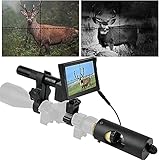
Overview: BESTSIGHT’s DIY kit converts standard rifle scopes into night vision systems via a clip-on camera and screen. Targeting budget hunters, it offers a no-frills solution for adding night capability to existing optics without complex modifications.
What Makes It Stand Out: Its universal fit (38-44mm eyepieces) and tool-free installation—simply attach the housing, screen, and IR illuminator—make it exceptionally accessible. The 5" 720p screen provides a large, adjustable viewing area, while the 5W 850nm IR illuminator achieves 200m range, surpassing many entry-level units.
Value for Money: As the most affordable option here, it democratizes night vision for casual users. For under $200, it outperforms similarly priced monoculars in screen size and ease of integration with daytime scopes, though image quality can’t match dedicated systems.
Strengths and Weaknesses: Strengths: Ultra-low cost; simple setup; large 5" display; broad scope compatibility. Weaknesses: Bulky setup; 720p resolution lags behind OLED competitors; IR glow visible to others; manual focus adjustments needed.
Bottom Line: A pragmatic, budget-friendly entry into night vision for hobbyists with existing scopes. While not rugged or high-fidelity, its plug-and-play design delivers functional night capability where cost is paramount.
Understanding Night Vision Durability: Beyond the Hype
Why Durability Trumps Raw Performance in Low-Light Gear
While high-resolution imagery is tempting, a scope that fails after six months renders even the clearest picture useless. Real user feedback consistently shows that environmental resilience and mechanical robustness are prioritized over marginal gains in light amplification. A slightly lower-spec tube in a bombproof housing outperforms a fragile “premium” model every time when exposed to mud, vibration, or temperature extremes. Durability ensures consistent functionality across seasons and scenarios, making it the ultimate performance multiplier.
The Critical Role of User Reviews in Assessing Longevity
Manufacturer specifications often omit real-world stress factors. Genuine user reviews, especially those detailing multi-year usage across diverse climates, reveal hidden weaknesses. Look for patterns: frequent mentions of fogged lenses after rain exposure, housing integrity after accidental impacts, or consistent performance in freezing conditions signal true durability. Pay special attention to reviews from professionals (hunters, security personnel) who subject gear to daily abuse— their experiences are invaluable indicators of long-term reliability.
Core Construction Elements That Define Resilience
Housing Material Science: Magnesium vs. Polymer vs. Aluminum
The outer shell is your first defense. Magnesium alloy offers the best strength-to-weight ratio and excellent thermal stability, minimizing internal fogging during rapid temperature shifts. High-grade polymers provide surprising impact resistance and corrosion immunity, especially in salt-heavy environments, but can warp under sustained heat. Aluminum housings, while common, often transmit more vibration to internal components unless heavily reinforced. User reports consistently highlight magnesium’s superiority for extreme conditions despite the higher cost.
Sealing Technologies: IP Ratings Decoded for Night Vision
An “IP67” or “IP68” rating isn’t just jargon—it’s a promise of survival. IP67 guarantees submersion up to 1 meter for 30 minutes, crucial for river crossings or monsoons. IP68 offers extended submersion resistance, vital for marine applications. Crucially, verify if the rating covers the entire assembly, including battery compartments and mounting points. Many users report failures at O-ring seals after repeated use; look for reviews mentioning “no fogging after months of rain” as a key indicator of effective sealing.
Lens Coating Durability and Scratch Resistance
Multi-layer anti-reflective coatings boost light transmission but can wear thin. Diamond-like carbon (DLC) coatings or sapphire-infused glass significantly improve scratch resistance—essential when brushing through foliage or operating in sandy environments. User feedback often notes “maintained clarity after rough handling” as a sign of robust coating adhesion. Avoid scopes with easily removable lens caps; integrated sunshades or ruggedized lens covers add critical protection.
Environmental Endurance: Surviving the Elements
Thermal Shock Resistance: From Desert Heat to Arctic Cold
Rapid temperature swings cause internal condensation or component warping. Scopes using matched thermal expansion coefficients in internal components (glass, metal, adhesives) resist this stress. Look for user testimonials describing flawless function when moving from heated vehicles into sub-zero nights or vice versa. Nitrogen or argon purging prevents internal fogging far more effectively than basic vacuum sealing, a detail often praised in long-term reviews.
Waterproofing Beyond the Basics: Submersion and Pressure Testing
True waterproofing withstands dynamic pressure, not just static depth. Gear subjected to fast-moving water (e.g., kayaking) or high-velocity rain requires housings tested beyond standard IP ratings. User reports citing “zero issues during torrential downpours” or “survived accidental drops in deep water” are gold standards. Pay attention to comments about long-term seal integrity—some scopes pass factory tests but degrade after repeated wet/dry cycles.
Corrosion Defense in Harsh Climates
Salt spray, chemical exposure, and high humidity accelerate corrosion. Anodized aluminum or marine-grade polymers resist salt corrosion far better than standard finishes. Stainless steel mounting hardware prevents seizing. Reviews from coastal users or those operating in industrial areas frequently highlight which models resist pitting and rust after years of exposure—a critical longevity indicator often overlooked in specs.
Internal Component Reliability: The Hidden Backbone
Image Intensifier Tube (IIT) Mounting and Vibration Dampening
The IIT is the heart of your scope, but it’s fragile. Rubber or silicone grommets isolate the tube from housing vibrations during vehicle travel or heavy recoil. Users consistently report scopes with poor dampening suffer “halo expansion” or premature tube failure. Look for mentions of “stable image during ATV use” or “no tube damage after repeated shots” as evidence of effective shock absorption.
Circuit Board Protection: Conformal Coating Essentials
Moisture and dust can short internal electronics. Military-spec conformal coating (a thin polymer layer) on circuit boards prevents this. User reviews noting “continued function after heavy rain exposure” or “no corrosion in humid climates” often correlate with this feature. Scopes lacking this coating frequently fail in high-moisture environments, a common complaint in long-term feedback.
Power System Robustness: Battery Contacts and Circuitry
Corroded or loose battery contacts cause intermittent failure. Gold-plated contacts resist corrosion better than nickel. Circuitry designed to handle voltage spikes from cheap batteries prevents premature shutdowns. Reviews mentioning “reliable ignition with various battery brands” or “no contact issues after years of use” signal a well-engineered power system—a frequent pain point in lower-tier models.
User-Driven Wear and Tear Factors
Ergonomic Design and Physical Stress Points
Buttons, dials, and focus mechanisms endure constant manipulation. Metal knobs and recessed controls resist accidental bumps better than plastic protrusions. User feedback often cites “sturdy focus wheel even with gloves” or “no stripped adjustment rings after heavy use” as durability markers. Scopes with minimal external moving parts generally outlast complex designs in gritty environments.
Mounting System Integrity and Recoil Management
The mount interface is a critical failure point under recoil. Picatinny or MIL-STD-1913 rails with dual locking screws distribute stress better than single-screw systems. Users firing high-caliber rifles frequently praise scopes that “maintain zero after 200+ rounds” without scope ring slippage. Look for mentions of reinforced mounting bases that resist cracking during heavy recoil cycles.
Lens Cap and Accessory Attachment Security
Easily lost lens caps doom night vision in dusty conditions. Tethered caps or magnetic designs prevent this. Similarly, secure mounting for IR illuminators or laser attachments matters—loose accessories shift zero or cause damage. Reviews noting “never lost a lens cap” or “IR light stayed perfectly aligned” highlight thoughtful, durable accessory integration.
Maintenance and Longevity Practices
User-Serviceable vs. Sealed Designs: Pros and Cons
Fully sealed units prevent user error but often become e-waste when minor components fail. Designs allowing user replacement of O-rings, batteries, or lenses extend lifespan significantly. Experienced users praise scopes with “easy disassembly for O-ring replacement” as cost-effective long-term investments. However, verify if user serviceability voids warranties—a crucial consideration.
Realistic Cleaning and Storage Protocols for Maximum Life
Improper cleaning scratches coatings; storing scopes while damp invites mold. User reviews frequently emphasize scopes with “easy-to-clean housings” or “no internal fogging when stored properly.” Follow manufacturer guidance strictly—many failures stem from using compressed air (forcing moisture inside) or alcohol-based cleaners on coated lenses. Always store in a dry, temperature-stable environment with silica gel.
Investing in Future-Proof Reliability
Warranty Depth as a Durability Indicator
A comprehensive warranty signals manufacturer confidence. Look beyond duration—examine coverage specifics. Does it cover accidental damage? Environmental failures? User reviews often contrast brands: “Honored warranty after submersion” versus “voided for ‘user error’ on a cracked housing.” Extended warranties sometimes reflect weaker inherent durability; prioritize robust standard coverage.
Upgrade Pathways and Component Longevity
Consider if critical parts (IITs, lenses) remain available years later. Brands with modular designs allow tube upgrades without replacing the entire housing. User forums frequently discuss “still finding replacement parts after 5 years,” indicating sustainable engineering. Avoid scopes built with proprietary, non-replaceable components—a common short-term cost-saving tactic that kills long-term viability.
Frequently Asked Questions
Frequently Asked Questions
How do I verify a scope’s waterproof claims beyond the IP rating?
Check user reviews for real-world submersion tests, especially mentions of functionality after deep-water exposure or high-pressure washing. Manufacturer hydrostatic tests are ideal but rare; user experiences are the next best indicator.
Does magnesium housing really last longer than aluminum in harsh conditions?
Yes, magnesium’s superior strength-to-weight ratio and thermal stability reduce internal stress during temperature swings. User reviews consistently note less fogging and better impact resistance with magnesium, though it comes at a higher initial cost.
What’s the most common cause of premature night vision scope failure?
Moisture ingress via compromised seals is the top culprit. Look for reviews specifically mentioning long-term fog-free performance in humid or rainy environments, as this reveals seal quality better than factory specs.
Can I improve my scope’s durability through aftermarket modifications?
Generally not recommended. Adding non-factory mounts or coatings often voids warranties and may introduce weak points. Focus on proper handling and maintenance—user reports show most failures stem from misuse, not inherent design flaws.
How important is the IIT’s mounting system for durability?
Critically important. Tubes secured with vibration-dampening grommets last significantly longer under recoil or rough terrain. User reviews citing “no tube damage after heavy use” often correlate with robust internal mounting solutions.
Do higher-generation tubes (Gen 3+) inherently last longer?
Not necessarily. Tube longevity depends more on manufacturing quality and operating conditions than generation. User feedback shows many Gen 2+ tubes outlast poorly made Gen 3 units when subjected to similar field stress.
What maintenance habit extends a scope’s life the most?
Proper storage in a dry, temperature-stable environment with desiccant. User reviews frequently link premature failures to scopes stored in damp gun safes or vehicles, leading to internal corrosion or mold.
Are there durability differences between analog and digital night vision?
Digital systems often handle impacts better due to fewer fragile optical components, but their sensors can degrade faster in extreme heat. Analog tubes are more vulnerable to physical shock but handle sustained high temperatures better. User experiences vary significantly by specific model quality.
How can I test durability before buying if I can’t field-test it?**
Examine warranty terms, construction materials, and IP ratings closely. Then, scrutinize user reviews for phrases like “survived accidental drop” or “no issues after months in [specific harsh environment]"—these indicate real-world resilience better than lab specs.
Does recoil from certain calibers disproportionately affect durability?
Yes, high-recoil calibers (e.g., .300 Win Mag) demand reinforced mounting systems. User reports consistently show scopes failing faster on heavy-recoil platforms unless specifically rated for it—always check reviews from users with similar firearms.
Related Buying Guides
- 10 Most Durable Thermal Scopes Based on Real User Reviews in 2026
- We Tested 50 Night Vision Scopes - Here are the 10 Best for Wildlife Observation
- We Tested 50 Night Vision Scopes - Here are the 10 Best for Dark Environments
- We Tested 50 Night Vision Scopes - Here are the 10 Best for Nocturnal Hunting
- 10 Most Durable Binoculars Based on Real User Reviews from Hunters and Guides in 2026