Table of Contents
Imagine trudging through waist-deep snow, the only sound the crunch beneath your boots and the distant call of a bull elk. Your pack is heavy, but your core feels exposed, and the extra layers you stuffed into every pocket are creating bulk where you need agility. Suddenly, a shot opportunity presents itself – but the cumbersome vest you’re wearing snags on a branch, delaying that critical draw. For backcountry hunters, every ounce and every design detail isn’t just convenient; it’s the difference between a successful harvest deep in the wilderness and a long, cold retreat empty-handed. The right vest becomes an unobtrusive extension of your body, holding essentials without hindering movement, protecting you from the elements, and staying silent when absolute stillness is paramount.
Backcountry hunting demands gear that transcends mere storage; it requires intelligent integration with your body and environment. Unlike stationary tree stands or short walks from a truck, venturing miles into rugged terrain means your vest must perform flawlessly under extreme physical exertion while minimizing fatigue. It needs to manage sweat during the climb, provide instant access to critical tools during the hunt, and shed rain or wind without adding stifling bulk. Choosing the wrong vest can lead to overheating, restricted movement, noisy fabric betraying your position, or the dreaded “where did I put that?” panic when seconds count. This guide cuts through the marketing noise to focus on the essential features that truly matter when you’re relying on your vest to support you far from the trailhead, ensuring your gear works for you, not against you, in the heart of the wild.
Top 10 Hunting Vests for Backcountry Hunters
Detailed Product Reviews
1. MYDAYS Upland Bird Game Vest, Hunting Tactical Vest with Game Pouch and Pockets for Outdoor Bird Hunting

Overview:
The MYDAYS Upland Bird Game Vest is a practical, no-frills solution for hunters seeking durability and essential storage. Crafted for rugged outdoor use, it prioritizes visibility and accessibility during bird hunts, featuring a high-contrast orange/brown design and multiple front pockets.
What Makes It Stand Out:
Its standout features include tear-resistant construction with reinforced stitching, a high-visibility color scheme for safety, and a comfortable padded harness with water-repellent lining. The dual large front pockets offer quick access to phones, shells, and optics, while adjustable chest/waist buckles ensure a customizable fit for various body types.
Value for Money:
Priced affordably, it delivers solid value for entry-to-mid-level hunters. While lacking premium extras like hydration compatibility or advanced recoil padding, it outperforms basic vests in durability and storage versatility, making it a sensible choice over cheaper alternatives prone to wear.
Strengths and Weaknesses:
Strengths: Excellent durability for the price, intuitive pocket layout, superior visibility, and comfort during extended wear. Weaknesses: Game pouch lacks specialized access points, and shoulder padding, while adequate, isn’t optimized for heavy recoil absorption compared to quilted alternatives.
Bottom Line:
Ideal for budget-conscious hunters needing reliable, visible storage for essentials. It excels in core functionality but skips advanced features—recommended for casual or new upland hunters prioritizing practicality over specialization.
2. UIIHUNT Upland Hunting Vest, Bird Game Vest with Front Pockets & Back Game Pouch, Lightweight Field Bag for Men and Women, Blaze Orange and Brown (Large)

Overview:
The UIIHUNT Upland Hunting Vest merges lightweight agility with robust field readiness. Designed for dynamic movement in dense terrain, it features a roomy cut, reinforced storage, and specialized elements like recoil-supporting shoulders, catering to serious bird hunters.
What Makes It Stand Out:
Its standout attributes include 600D polyester Oxford fabric with PU coating for exceptional brush/moisture resistance, quilted shoulder padding for recoil mitigation, and a versatile triple-access blood-proof game pouch. Ventilation panels and water bottle holders further enhance field functionality.
Value for Money:
Positioned at a mid-premium price, it justifies cost through durable materials and hunter-specific innovations. Compared to basic vests, the tear-resistant fabric and recoil-ready shoulders offer tangible longevity and comfort benefits, making it a worthwhile investment for frequent hunters.
Strengths and Weaknesses:
Strengths: Outstanding fabric durability, effective recoil reduction, thoughtful ventilation, and secure multi-entry game storage. Weaknesses: Oversized fit may feel bulky for smaller frames, and flap closures on front pockets could snag in thick cover.
Bottom Line:
A top-tier choice for hunters facing rough terrain and long days. Its blend of protection, comfort, and organized storage delivers excellent value—highly recommended for those seeking a balance of performance and resilience without extreme weight.
3. TKLoop Upland Hunting Vest with Multi Pockets Brown/Orange Upland Game Field Bird Hunting Vest for Men Woman

Overview:
The TKLoop Upland Hunting Vest emphasizes modular storage and safety, targeting hunters who prioritize organization and visibility. Its expandable game bag and ammunition-specific pockets cater to methodical hunters needing rapid access to gear.
What Makes It Stand Out:
Key innovations include an expandable rear game pouch, front pockets with six elastic shell loops and side-access compartments, SBS zippers for reliability, and dual D-rings for accessory attachment. The high-visibility orange/brown scheme and quilted shoulder padding enhance safety and comfort.
Value for Money:
Offering competitive pricing, it provides exceptional organizational value. The shell-loop integration and dual-access pockets outshine similarly priced vests, while durable stitching ensures longevity—ideal for hunters wanting pro-level storage without a pro-level budget.
Strengths and Weaknesses:
Strengths: Unmatched pocket versatility, secure shell retention, breathable mesh backing, and robust visibility. Weaknesses: Game pouch expansion may compromise structure when overloaded, and the chest D-ring placement limits utility for larger accessories.
Bottom Line:
A standout for hunters valuing meticulous gear organization and quick-shell access. Its thoughtful design and durability justify the price—highly recommended for upland enthusiasts who reload frequently and demand efficiency in the field.
4. Gamehide Switchgrass Upland Field Bird Vest (Marsh Brown/Orange, X-Large)
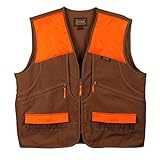
Overview:
The Gamehide Switchgrass Vest champions traditional craftsmanship with modern utility, built for hunters who prefer timeless durability over high-tech features. Its cotton canvas construction and generous cut prioritize comfort in variable conditions.
What Makes It Stand Out:
It distinguishes itself with tough cotton canvas fabric, an oversized fit for layering, and a gun-protection flap over front shell holders. Quilted shooting shoulders absorb recoil, while the blood-proof rear game bag ensures clean transport of game birds.
Value for Money:
Priced moderately, it offers heirloom-quality potential with proper care. Though heavier than synthetic vests, the breathable canvas outlasts many alternatives and molds to the wearer over time—a smart buy for hunters seeking a long-term, low-maintenance investment.
Strengths and Weaknesses:
Strengths: Exceptional fabric longevity, superior layering capacity, effective recoil padding, and intuitive shell access. Weaknesses: Canvas absorbs moisture (slower drying), and the vest lacks modern conveniences like water bottle holders or hydration compatibility.
Bottom Line:
Perfect for traditionalists and cold-weather hunters valuing rugged simplicity. Its enduring build and functional design provide enduring value—recommended for those prioritizing reliability and classic aesthetics over ultralight tech.
5. TENZING TZ BV16 Upland Bird Vest Hydration Compatible Durable Rip-Stop Blaze Orange Hunting Vest-Pack with 14 Shot Shell Loops, 13 Pockets & Compartments, XL/XXL

Overview:
The TENZING TZ BV16 redefines versatility as a hybrid vest-backpack, merging expansive storage with vest mobility. With 2,000 cubic inches of capacity and hydration compatibility, it targets hunters needing serious load-carrying for multi-day excursions.
What Makes It Stand Out:
Its award-winning design features Robic rip-stop reinforcement, 14 shell loops, 13 pockets/compartments, and a wrap-around bird compartment. Load-lifter straps stabilize heavy loads, while H2O compatibility and radio pockets cater to tech-savvy hunters.
Value for Money:
At a premium price, it delivers exceptional utility for its niche. The backpack-vest fusion justifies cost by eliminating the need for separate gear, outperforming dedicated vests in storage and rivaling packs in comfort—ideal for hunters covering vast terrain.
Strengths and Weaknesses:
Strengths: Unrivaled storage capacity, adaptable vest-pack functionality, superior weight distribution, and rip-stop durability. Weaknesses: Bulkier than minimalist vests, and the complex pocket system has a learning curve for quick access.
Bottom Line:
The ultimate choice for hunters requiring expedition-level capacity without sacrificing vest agility. Its innovative design and robust build warrant the investment—highly recommended for serious upland hunters tackling extended, gear-intensive trips.
6. TIDEWE Turkey Vest with Seat, Hunting Vest with Game Pouch and Kickstand, Strut Camo Turkey Hunting Clothes for Men Women (Truetimber Strata)

Overview:
This versatile turkey vest combines a supportive frame, cushioned seat, and multi-compartment storage tailored for turkey hunters. Designed for comfort during extended sits in the field, it features Truetimber Strata camo for effective concealment and integrates essential hunting accessories into one streamlined system.
What Makes It Stand Out:
The removable adjustable frame paired with a 3-inch cushioned seat and kickstand legs ensures stable, comfortable seating on varied terrain. Its large central pouch, accessory pockets, and compatibility with 2L hydration systems keep gear organized and accessible. Soundless fabric and non-slip shoulder clips prevent noise and shotgun slippage, critical for stealthy turkey hunting.
Value for Money:
Priced competitively for its feature set, it outperforms basic vests by eliminating the need for separate seat pads or gear organizers. While premium alternatives exist, TIDEWE delivers robust durability, thoughtful storage, and ergonomic comfort at a mid-range price, making it ideal for hunters prioritizing functionality without overspending.
Strengths and Weaknesses:
Strengths: Excellent storage capacity; breathable padded back; adjustable for all body types; wear-resistant seat base; quiet operation.
Weaknesses: Frame isn’t fully detachable for minimalist use; hydration system sold separately; limited color options beyond camo patterns.
Bottom Line:
A top choice for hunters seeking an all-in-one turkey vest that balances comfort, storage, and stealth. Highly recommended for those valuing seated stability and organized gear access during long hunts, though minimalist hunters might prefer simpler alternatives.
7. TIDEWE Turkey Vest with Seat, Hunting Vest with Game Pouch and Kickstand, Strut Camo Turkey Hunting Clothes for Men Women (Truetimber HTC Green)

Overview:
Identical in construction to its Strata counterpart but featuring Truetimber HTC Green camo, this vest targets hunters in lush, dense environments. It retains the same frame-supported seat, multi-pocket layout, and ergonomic design optimized for turkey hunting comfort and efficiency.
What Makes It Stand Out:
The HTC Green pattern excels in blending with spring foliage and thickets, offering superior concealment where Strata might stand out. All core features—3-inch cushioned seat, kickstand legs, soundless fabric, and non-slip shoulder clips—remain intact, ensuring quiet movement and stable seating. Hydration compatibility and ample storage further enhance field readiness.
Value for Money:
Offers identical value to Product #6, with the sole differentiator being camo suitability. Hunters in green-heavy terrain get specialized concealment without paying extra for features. It’s a cost-effective upgrade for environment-specific needs compared to generic camo vests.
Strengths and Weaknesses:
Strengths: Environment-optimized camo; robust storage; comfortable seated stability; moisture-resistant seat base; universal adjustability.
Weaknesses: Same hydration system omission as #6; frame adds bulk for ultra-light hunters; minimal differentiation beyond camo pattern.
Bottom Line:
Essential for hunters in green-dominated landscapes seeking reliable, feature-rich seating and storage. Choose this over Product #6 if hunting in dense foliage; otherwise, both deliver equal performance at a fair price point.
8. TENZING TZ BV16 Upland Bird Vest | Hydration Compatible Durable Rip-Stop Blaze Orange Hunting Vest-Pack with 14 Shot Shell Loops, 13 Pockets & Compartments, M/LG
Overview:
This hybrid vest-pack merges backpack utility with traditional bird vest functionality, targeting upland hunters who prioritize mobility and storage. Its blaze orange design enhances safety, while rip-stop construction ensures durability in rugged terrain.
What Makes It Stand Out:
The 2,000-cubic-inch capacity with 14 shell loops, 13 pockets, and a wrap-around bird compartment outshines standard vests. Load-lifter straps stabilize heavy loads, and Robic rip-stop fabric reinforces stress points. Unlike turkey-specific vests, it emphasizes quick shell access and bird storage for fast-paced upland hunts.
Value for Money:
Priced higher than basic vests, it justifies cost through versatility—replacing separate packs and vests. Serious upland hunters gain unmatched organization and comfort for long hikes, though turkey hunters may find shell loops excessive versus call storage.
Strengths and Weaknesses:
Strengths: Exceptional storage; safety-focused blaze orange; rugged Robic fabric; comfortable load distribution; hydration compatible.
Weaknesses: Overkill for turkey hunting (lacks seat/frame); bulky for tight cover; limited camo options (only blaze orange).
Bottom Line:
A standout for upland bird hunters needing high-capacity, mobile storage. Not ideal for turkey hunters due to missing seating features, but invaluable for pheasant or grouse hunters prioritizing shell access and pack-like comfort.
9. Extremus By KastKing BearHauler Turkey Hunting Vest with Thick Seat, Convertible Daypack, Hide-Away Shotgun Sling, Call & Shell Pockets, Hydration Pocket, Quiet Fabric

Overview:
Engineered for dynamic turkey hunting, this vest features a 2-inch thick seat, convertible design, and specialized call storage. Its focus on silent operation and rapid gear access caters to hunters who switch between setups frequently.
What Makes It Stand Out:
The silent magnetic seat catch eliminates noisy Velcro, while the vest-to-daypack conversion (by removing waistband/seat) enables “run-and-gun” flexibility. Hide-away shotgun sling and dedicated call pockets streamline critical actions. Thick foam cushioning outperforms thinner competitors for all-day sits.
Value for Money:
Mid-to-high priced but excels in innovation. The convertible system reduces need for multiple gear sets, and magnetic closures justify premium cost for noise-sensitive hunters. Cheaper vests lack this adaptability, though budget hunters may skip non-essential features.
Strengths and Weaknesses:
Strengths: Superior seat comfort; silent magnetic closures; versatile vest/daypack hybrid; ergonomic shotgun sling; excellent call organization.
Weaknesses: Heavier than minimalist vests; conversion requires reassembly; hydration bladder not included.
Bottom Line:
Best for adaptable hunters who value seating comfort and silent operation. Highly recommended for those practicing mobile tactics, though stationary hunters might prefer simpler seat-integrated vests.
10. TIDEWE Turkey Vest with Seat, Lightweight Turkey Hunting Vest with Multi-Compartment Storage, Form-fitting Portable Turkey Backpack with 11 Adjustable Straps for Hunters (Truetimber Strata)

Overview:
This ultra-lightweight vest (2.98 lbs) prioritizes mobility without sacrificing storage, featuring 11 adjustment points and magnetic closures. Designed for hunters needing speed and quiet movement in demanding terrain.
What Makes It Stand Out:
The 11-point adjustability ensures a snug, bounce-free fit during hikes, while magnetic (non-zippered) compartments enable silent access. Quick-rebound foam seat and 12 storage zones—including dedicated call/shell slots—optimize organization. 600D/75D fabric balances durability and whisper-quiet operation.
Value for Money:
Exceptional for weight-conscious hunters. At a moderate price, it outperforms heavier competitors in agility-focused scenarios. The included safety flag and Truetimber camo add value, though the seat thickness slightly lags behind Product #9.
Strengths and Weaknesses:
Strengths: Unmatched lightweight design; silent magnetic closures; 11-point customization; breathable mesh panels; ample storage.
Weaknesses: Seat cushion thinner than Extremus (#9); no kickstand legs; hydration bladder sold separately.
Bottom Line:
Ideal for hunters covering vast ground who prioritize speed and silence. A top pick for spring turkey seasons in open terrain, though those needing ultra-thick seating should consider alternatives.
Understanding the Backcountry Hunter’s Unique Vest Needs
Backcountry hunting presents a distinct set of challenges that demand a specialized approach to vest selection. It’s not merely about carrying more; it’s about carrying smarter for extended periods under demanding conditions. Understanding these core requirements is the foundation for making an informed choice.
The Critical Role of Weight Distribution and Balance
Carrying weight poorly leads to rapid fatigue, altered gait, and increased strain on your lower back – a disaster when navigating steep slopes miles from base camp. A well-designed backcountry vest distributes essential items close to your center of gravity, significantly reducing swing weight and torso fatigue compared to traditional packs where weight sits lower and further back. Look for vests engineered with strategic pocket placement and internal structure that hugs your torso, keeping the load stable during dynamic movements like climbing or quick shots.
Prioritizing Mobility Over Maximum Capacity
While it’s tempting to seek the vest with the most pockets, backcountry hunters often find that excessive bulk hinders the very mobility they need. The ideal vest offers sufficient organized storage for critical items (ammunition, optics, knives, emergency gear, snacks) without creating a rigid, boxy profile. Seek adjustable side straps, articulated patterning, and flexible materials that move with you, allowing full shoulder rotation for drawing a bow or shouldering a rifle, and unrestricted arm movement for clearing brush or scrambling over rocks. Sometimes, less capacity strategically placed is vastly superior to overwhelming bulk.
The Non-Negotiable Need for Silence
In the backcountry, sound travels. A vest made from noisy, crinkly fabric or one where contents rattle against rigid structures can instantly spook game long before you see it. Silence is paramount. Prioritize vests constructed from inherently quiet, soft-shell materials or treated fabrics specifically designed to minimize noise. Pay close attention to pocket flap designs (magnetic closures are often quieter than Velcro), internal pocket linings, and how securely items are held to prevent internal movement and sound. Test the fabric’s sound by rubbing it together before purchasing if possible.
Key Material and Construction Considerations
The fabrics and how a vest is built determine its durability, weather resistance, breathability, and overall feel against your skin during long days. Choosing the right materials is critical for performance and comfort.
Evaluating Weather-Resistant Fabrics
Backcountry conditions are unpredictable. While a full rain jacket is essential, your vest should offer baseline protection against light precipitation, wind chill, and brush. Look for fabrics with a durable water repellent (DWR) finish that causes moisture to bead up and roll off. Soft-shell materials often provide an excellent balance, offering wind resistance, light water resistance, and superior breathability compared to hard-shell alternatives. Consider the trade-off: highly waterproof fabrics often sacrifice breathability, leading to internal sweat buildup during exertion.
The Importance of Breathability and Moisture Management
Sweating excessively during the ascent to your hunting spot leaves you cold and damp during the crucial waiting period. High-performance backcountry vests utilize highly breathable fabrics, strategic mesh paneling (often on the back or underarms), and moisture-wicking linings to move sweat away from your body quickly. This evaporative cooling is vital for maintaining core temperature stability and preventing chilling, especially during stop-and-go activity typical of hunting. Avoid vests lined with non-breathable materials like solid nylon taffeta if you hunt in variable or warmer conditions.
Assessing Durability Against Abrasion
Backcountry travel means constant contact with sharp branches, rocky outcrops, and rough terrain. Your vest needs to withstand this abuse without tearing or excessive pilling. Look for fabrics with higher denier counts (indicating thicker, stronger threads) in high-wear areas like shoulders, elbows, and the lower back. Ripstop nylon or polyester weaves add significant tear resistance. Reinforced stitching, particularly at stress points like pocket corners and strap attachments, is non-negotiable for longevity. Don’t sacrifice essential durability for marginal weight savings.
Optimizing Storage and Accessibility
How you access your gear when it matters most is crucial. A vest can have all the pockets in the world, but if you can’t reach your knife or extra mag quickly and quietly, it fails its primary purpose in the field.
Strategic Pocket Placement Philosophy
Pocket location is everything. Ammunition should be readily accessible for quick reloads, often on the chest or lower front. Optics (like a rangefinder) need a secure, padded, and easily reachable spot, frequently on the chest strap or upper front. Critical tools (knife, fire starter) should be within immediate grasp, potentially on a harness strap or dedicated lower pocket. Avoid placing bulky items high on the chest where they restrict movement or breathing. Consider how your body naturally angles when drawing a weapon – pockets shouldn’t interfere with that motion path.
Closure Mechanisms: Security vs. Speed
Pockets need secure closures to prevent loss during movement, but fumbling with complex fasteners during a hunt is dangerous. Evaluate the trade-offs: magnetic closures offer near-silent, one-handed access and secure hold but can be weaker for very heavy items. Quiet-zippered pockets provide excellent security and weather resistance but can be noisy if not well-designed. Low-profile, quiet-touch Velcro is common but can wear out and generate noise. Some vests use a combination: zippers for ammo pockets, magnets for rangefinder pockets, and quiet-touch for smaller tool pockets. Prioritize closures that match the item’s criticality and frequency of access.
Internal Organization and Expansion Potential
Preventing a chaotic “black hole” interior is vital. Look for vests with defined internal compartments, elasticated loops for pens or small tools, and dedicated slots for specific items like a hydration bladder hose or GPS. Some vests offer modular expansion via MOLLE/PALS webbing or compatible accessory panels, allowing you to add specialized pouches (like a dedicated game call pocket or extra mag holder) only when needed for a specific hunt, maintaining a streamlined profile otherwise. However, avoid excessive webbing that adds unnecessary weight and snag points if you won’t utilize it.
Essential Fit and Ergonomic Features
A vest that doesn’t fit your body perfectly, regardless of its features, will become a liability. Proper fit ensures comfort, safety, and optimal performance during long hours on the move.
Achieving the Right Torso Fit
This is paramount. The vest should fit snugly around your torso without constricting your breathing or restricting arm movement. It shouldn’t ride up significantly when you raise your arms to draw a bow or rifle. Adjustable side straps are essential for dialing in the perfect fit over varying layers (base layers, mid-layers, shell). Measure your chest accurately and consult the manufacturer’s specific sizing chart – vest sizing often differs significantly from standard clothing. A vest that’s too loose will bounce and shift, while one that’s too tight restricts movement and circulation.
Shoulder Strap Design and Comfort
Shoulder straps bear significant load and need careful consideration. Padded, contoured straps distribute weight more comfortably than flat webbing. Look for straps that angle slightly forward to follow the natural slope of your shoulders, preventing them from slipping off. Adjustable sternum straps help stabilize the load and prevent straps from migrating, but they should be easily adjustable with gloves on. Ensure the straps don’t create pressure points, especially when wearing a pack frame over the vest.
Compatibility with Layering Systems
Backcountry hunters constantly adjust layers. Your vest must integrate seamlessly. It should be cut to fit comfortably over your insulated mid-layer (like a fleece or puffy jacket) but under your outer shell (rain jacket or windbreaker). Pay attention to the neck opening – it shouldn’t bind or create excessive bulk when worn over thicker layers. Consider the length; a vest that’s too long can ride up under a shell jacket, while one that’s too short leaves your core exposed when reaching or bending.
Safety and Visibility Integration
While stealth is key during the hunt, safety is non-negotiable, especially when traveling to and from your hunting location through potentially shared terrain.
Incorporating Blaze Elements Without Compromising Stealth
Many regions require blaze orange during certain seasons. Look for vests with integrated, removable, or foldable blaze panels. These should be easily deployable only when traveling to/from the hunt (e.g., on trails or roads) and stowable securely during active hunting. Panels should be large enough to meet legal requirements but designed to fold or tuck away completely without adding bulk or noise when not in use. Avoid vests where blaze is permanently sewn in a way that creates visual noise during the hunt.
Reflective Accents for Low-Light Safety
Subtle reflective elements on the vest (e.g., on closure flaps, shoulder straps, or lower back) significantly increase your visibility to other hunters or vehicles during dawn, dusk, or low-light conditions on the way in or out, without creating a visual signature during active hunting. Ensure these accents are minimal and positioned where they won’t catch light during your hunt.
Non-Interference with Safety Gear
Your vest must accommodate and not hinder essential safety items. Ensure there’s a safe, accessible, and unobstructed way to carry and deploy items like a personal locator beacon (PLB) or satellite messenger. Pockets designed for these devices should allow for quick activation without removing the vest. Also, verify that essential pockets (like a knife sheath) don’t interfere with the proper placement or quick deployment of a hunting harness if you use one in treestand situations (though less common in deep backcountry).
Seasonal Adaptability and Long-Term Value
The backcountry vest you rely on in October should potentially serve you in December or even early spring. Considering adaptability and construction quality ensures your investment pays off for many seasons.
Versatility Across Temperature Ranges
Look for features that enhance adaptability: full or partial front zippers for venting during exertion, removable insulation liners (less common but valuable), or strategic mesh panels that can be covered with included flaps in cold weather. A vest that functions well as a standalone piece in mild conditions but layers effectively under a shell in harsh weather offers immense value. Consider the fabric weight – a mid-weight soft-shell often provides the best year-round versatility for most climates.
Assessing Longevity and Repair Potential
Backcountry gear takes a beating. Invest in a vest built with high-quality components: durable zippers (like YKK), robust stitching (bar-tacking at stress points), and reputable fabric mills. Check if the manufacturer offers repair services or sells replacement parts (like buckles or straps). Some vests are designed with field-repairable features, such as replaceable pocket flaps or modular components. While initial cost might be higher, a vest that lasts 5+ seasons through rigorous use is far more economical and sustainable than replacing cheaper vests annually.
The Role of Modularity in Future-Proofing
Modular systems (using standardized attachment points like PALS webbing or proprietary clip systems) allow you to customize your vest for specific hunts. Need extra ammo storage for a multi-day elk hunt? Add a compatible mag pouch. Heading for a quick predator hunt? Strip it down to the bare essentials. This adaptability means one core vest platform can serve diverse hunting scenarios, reducing the need for multiple specialized vests and offering long-term flexibility as your needs evolve.
Frequently Asked Questions
Frequently Asked Questions
What’s the ideal weight range for a dedicated backcountry hunting vest? Focus on vests under 2 pounds (preferably 12-18 ounces) when empty. Every ounce counts over miles, but don’t sacrifice essential durability and features for minimal weight savings. Prioritize weight distribution over absolute lightness.
How do I determine the correct size when I’ll be wearing multiple layers? Measure your chest over your thickest intended mid-layer (e.g., a heavy fleece or insulated jacket). Choose a size that fits snugly but allows full arm movement and deep breathing over that layer. Adjustable side straps are crucial for fine-tuning the fit across different layering scenarios.
Can I effectively wear a hunting vest under my backpack’s hip belt? Yes, but the vest must be cut shorter in the back and sit high on your waist. The bottom hem should end well above your hip bones to prevent the pack’s hip belt from riding up the vest and causing discomfort or restricting movement. Look for vests specifically designed for pack compatibility.
Is waterproofing more important than breathability for a backcountry vest? Breathability is generally more critical for the vest itself. You should rely on your outer shell jacket for serious rain protection. A vest that traps sweat will leave you colder and wetter from the inside than light rain ever would. Prioritize highly breathable fabrics with light DWR treatment.
How can I prevent my vest from making noise when moving through brush? Choose vests made from soft-shell materials or quiet-treated fabrics. Avoid stiff coatings or laminates. Ensure all pockets are securely closed with quiet closures (magnets preferred over Velcro). Pack the vest so contents don’t rattle internally; use padded organizers for hard items.
Are chest rig style vests suitable for multi-day backcountry trips? Chest rigs excel for minimal, high-accessibility gear but generally lack the capacity and load distribution needed for multi-day trips carrying significant food, shelter, and extra clothing. They are better suited for day hunts or as an outer layer over a lightweight backpacking pack for very short excursions.
What’s the best way to organize ammunition for quick, quiet access? Position ammo pockets (magazine or shell) on the lower front of the vest, slightly angled for easy reach with your support hand. Use pockets with secure, quiet closures (magnets or quiet-zippered flaps). Avoid overloading pockets – keep only the immediate magazine or shells needed readily accessible.
How important is a built-in game call pocket? Extremely important for hunters targeting species like deer or turkey. Look for a dedicated, padded, and easily accessible pocket, often on the chest strap or upper front, designed specifically for calls. It should allow for quick deployment and secure stowage without noise.
Should I choose a vest with or without integrated insulation? For true backcountry versatility across seasons, a non-insulated vest is usually preferable. It allows for better layering control. You can add removable insulation liners if needed, but built-in insulation often makes the vest too warm for active hiking in cool conditions and limits adaptability. A well-constructed soft-shell provides sufficient wind/light weather protection.
How do I maintain the DWR (water repellency) on my vest over time? Reapply a technical fabric DWR treatment (like those from Nikwax or Granger’s) after several cleanings or when water stops beading. Wash the vest according to the manufacturer’s instructions using a tech-wash detergent (never regular detergent or fabric softener). Tumble dry on low heat after washing and after reapplying DWR to reactivate the treatment.
Related Buying Guides
- Best Hunting Vests for Turkey Hunters: 10 Expert Picks for 2026
- 10 Hunting Vests for Turkey Hunters: Expert Picks for 2026
- 10 Premium Hunting Vests for Serious Hunters (Worth the Investment)
- 10 Best Budget Hunting Boots Under $80 for New Hunters in 2026
- 10 Best Budget Hunting Vests Under $60 for Lightweight Carry