Table of Contents
Picture this: You’ve just made a clean shot on a mature buck deep in the backcountry, miles from your truck. The adrenaline is fading, replaced by the urgent need to process your harvest before the meat spoils. You pull your knife, but as you position it for the critical first cut, your hand slips on the damp hide. That small hesitation, that moment of resistance against the tough abdominal wall, risks puncturing the gut sack – turning a hard-earned trophy into a tainted mess. Field dressing isn’t just a chore; it’s a high-stakes operation where the right tool can mean the difference between preserving prime venison and a costly, frustrating loss. The pressure is real, and the consequences of using an ill-suited knife are immediate and messy.
This universal challenge for hunters – performing precise, controlled field dressing efficiently and cleanly in demanding conditions – is why specialized tools exist. Among them, the gut hook design stands out as a dedicated solution engineered specifically for that initial, crucial incision. It’s not a gimmick; it’s a functional evolution born from generations of hunters learning the hard way that a standard blade often isn’t optimized for the unique demands of opening an animal safely. Understanding why this feature matters, and how to choose and use a knife that incorporates it effectively, transforms a potentially stressful task into a confident, routine part of the harvest process. Let’s cut through the noise and explore what truly makes a gut hook knife indispensable gear.
Top 10 Hunting Gut Hook Knives
Detailed Product Reviews
1. Mossy Oak Fixed Blade Hunting Knife Set - 2 Piece, Full Tang Handle Straight Edge and Gut Hook Blades Game Processing Knife, Sheath Included - Green Camo

Overview: This two-piece Mossy Oak set offers dedicated fixed-blade tools for hunters, featuring a 5.125" straight-edge skinner and a 4.25" gut hook blade. Both knives boast full-tang construction, green camo handles, and a shared nylon sheath designed for outdoor concealment and utility during game processing.
What Makes It Stand Out: The dual-knife configuration provides specialized tools in one package, eliminating the need to switch blades. The aggressive camo handle pattern enhances grip security and blends with hunting environments, while the lanyard holes and dual-carry sheath prioritize accessibility and safety in the field.
Value for Money: Priced competitively for a two-knife set, it delivers exceptional utility over single-knife alternatives. The included versatile sheath and durable steel construction justify the cost for hunters needing both skinner and gut hook functions without investing in separate premium units.
Strengths and Weaknesses: Strengths: Excellent grip texture, secure sheath design, specialized blades for efficient field dressing, robust full-tang build. Weaknesses: Sheath quality may not match premium leather alternatives, camo finish could wear over time, limited blade steel specification details.
Bottom Line: Ideal for hunters seeking an affordable, ready-to-use pair for processing; the thoughtful design and dual functionality make it a practical, high-value starter or backup kit despite minor material limitations.
2. Buck Knives 685 Large BuckLite Max II Hunting Knife, 4" Fixed Blade, Dynaflex Rubber Handle, 420HC Stainless Steel Guthook Blade, Sheath Included, Knife Made in the USA, 4.7 oz

Overview: Buck’s 685 BuckLite Max II is a USA-crafted, 8.875" fixed-blade hunting knife featuring a 4" 420HC stainless steel gut hook blade, Dynaflex rubber handle, and a polyester sheath. It targets hunters needing a reliable, comfortable tool for field dressing and outdoor tasks.
What Makes It Stand Out: The ergonomic Dynaflex handle with textured grooves and top jimping ensures a secure, non-slip grip even when wet—a critical advantage in messy field conditions. Buck’s rigorous heat treatment and lifetime warranty underscore its commitment to durability and performance.
Value for Money: While positioned at a mid-to-upper price point, its American craftsmanship, proven 420HC steel, and legendary Buck warranty provide long-term reliability that justifies the investment over cheaper, short-lived alternatives.
Strengths and Weaknesses: Strengths: Outstanding wet-condition grip, superb balance, excellent corrosion resistance, lifetime warranty, ideal size for precision work. Weaknesses: Polyester sheath feels less premium than leather, 420HC steel requires more frequent sharpening than high-end alloys, limited blade thickness for heavy batoning.
Bottom Line: A top recommendation for serious hunters prioritizing grip security and warranty-backed quality; it excels as a primary field-dressing tool where reliability in adverse conditions is non-negotiable.
3. Gerber Gear Freeman Guide Folding Knife, Fine Edge, Gut Hook [31-000592]
![Gerber Gear Freeman Guide Folding Knife, Fine Edge, Gut Hook [31-000592]](https://m.media-amazon.com/images/I/310yqIFVv-L._SL160_.jpg)
Overview: The Gerber Freeman Guide is a 8.1" overall folding knife with a 3.6" stainless steel gut hook blade, designed for hunters needing portability without sacrificing field-processing capability. Its liner lock and ballistic nylon sheath support everyday carry and quick deployment.
What Makes It Stand Out: As a rare folding gut hook knife, it uniquely combines compact carry (4.5" closed) with essential game-processing functionality. Dual thumb studs enable swift one-handed opening for left or right users, while TacHide handle inserts ensure grip security in all weather.
Value for Money: Offers exceptional versatility for its price, serving as both a daily carry and hunting tool. The folding mechanism reduces bulk compared to fixed blades, providing solid value for hunters seeking a discreet, multi-role knife.
Strengths and Weaknesses: Strengths: Space-saving foldable design, ambidextrous opening, reliable liner lock, low-reflectivity blade finish, comfortable grip. Weaknesses: Folding mechanism less robust than fixed blades for heavy-duty tasks, gut hook accessibility slightly hindered when folded, sheath lacks retention security of kydex.
Bottom Line: Highly recommended for hunters prioritizing portability and versatility; it’s a capable secondary or backpacking knife, though fixed blades remain superior for intensive field dressing.
4. Mossy Oak Fixed Blade Gut Hook Knife, 9.5-inch Full Tang Field Processing Knife - Wooden Handle, Leather Sheath Included, for Skinning, Hunting, Outdoors
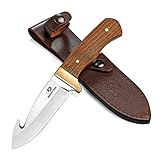
Overview: This Mossy Oak 9.5" fixed-blade knife features a 4.5" 3CR13 stainless steel gut hook blade, full-tang walnut handle with brass accents, and a genuine leather sheath. It targets traditionalists seeking a durable, aesthetically pleasing tool for hunting and survival.
What Makes It Stand Out: The classic walnut handle with brass guard/pommel offers timeless appeal and a naturally non-slip grip that molds to the user over time. Paired with a high-quality leather sheath featuring snap retention, it emphasizes heritage craftsmanship and secure carry.
Value for Money: Positioned as an affordable heritage-style knife, the premium wood handle and real leather sheath deliver surprising refinement for the price, outperforming many budget knives with synthetic materials.
Strengths and Weaknesses: Strengths: Beautiful, ergonomic wooden handle, sturdy brass fittings, effective gut hook, durable leather sheath, excellent balance. Weaknesses: 3CR13 steel requires diligent maintenance to prevent corrosion, leather sheath may degrade in prolonged wet conditions, no lanyard hole.
Bottom Line: A standout choice for hunters valuing classic aesthetics and solid performance; the wood handle and leather sheath provide charm and function, though steel quality necessitates careful upkeep.
5. BLAYDZ Damascus Steel Deer Hunting Knife with Gut Hook Stag Horn Handle - 8" Overall Length Hunting Knife with Guk Hook blade with Leather Sheath (Gut Hook)
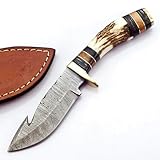
Overview: The BLAYDZ knife showcases a hand-forged 4" Damascus steel gut hook blade and genuine stag horn handle in an 8" overall package, housed in a leather sheath. It merges artistry with utility for hunters seeking a distinctive, high-performance tool.
What Makes It Stand Out: The stunning Damascus blade pattern—indicative of layered steel strength—and unique, textured stag horn handle offer unparalleled visual appeal and a supremely comfortable, non-slip grip. This combination of artistry and function is rare at its price point.
Value for Money: While pricier than basic models, the authentic Damascus steel and genuine stag horn justify the cost for hunters desiring a conversation-starting heirloom-quality piece that performs exceptionally in field dressing.
Strengths and Weaknesses: Strengths: Exceptional blade sharpness and edge retention (with care), beautiful and ergonomic stag grip, compact yet capable size, included quality sheath. Weaknesses: Damascus steel requires meticulous cleaning to prevent staining, stag horn may crack if dried improperly, gut hook size less versatile than larger models.
Bottom Line: Best suited for collectors and hunters wanting a functional work of art; its beauty and precision cut justify the premium, but demands careful maintenance to preserve its splendor and performance.
6. OUTDOOR EDGE WildSkin - 4.0" Fixed Blade Gut-Hook Skinning Knife for Big Game Hunting with Camo Nylon Belt Sheath

Overview:
The OUTDOOR EDGE WildSkin is a dedicated single-knife solution for hunters prioritizing speed during field dressing. Its 4.0-inch fixed blade features a gut hook for efficient organ removal, paired with a non-slip handle and included camo nylon sheath. Weighing 4.5 ounces with an 8.5-inch overall length, it’s designed for portability and one-handed use in rugged conditions.
What Makes It Stand Out:
The gut hook is expertly integrated for swift, controlled evisceration without puncturing organs. The non-slip handle ensures reliability with wet or bloody hands, while the lightweight profile and camo sheath enhance concealment and ease of carry. Its focused design eliminates unnecessary features, prioritizing core dressing functionality.
Value for Money:
Priced competitively for a specialized tool, it outperforms budget multi-tools in durability and task-specific efficiency. While pricier than basic pocket knives, its purpose-built construction justifies the cost for serious hunters who value speed and safety over versatility.
Strengths and Weaknesses:
Strengths: Exceptional gut-hook performance; secure non-slip grip; lightweight and maneuverable; discreet camo sheath.
Weaknesses: Limited blade length for larger game; lacks secondary blade for precision tasks; sheath durability may not match premium alternatives.
Bottom Line:
An excellent standalone choice for hunters seeking a fast, reliable skinning knife for medium to large game—ideal if you prefer minimalism over multi-knife sets.
7. Mossy Oak Fixed Blade Hunting Knife Set - 2 Piece, Full Tang Handle Straight Edge and Gut Hook Blades Game Processing Knife, Sheath Included - Yellow Camo

Overview:
This Mossy Oak 2-piece set delivers versatile game processing with a 5.125-inch straight-edge knife and a 4.25-inch gut hook blade, both featuring full-tang construction. The yellow camo pattern, ergonomic handles with lanyard holes, and dual-carry nylon sheath cater to hunters needing specialized tools for dressing and skinning in varied terrain.
What Makes It Stand Out:
The premium steel ensures razor-sharp edges with strong corrosion resistance, while the full-tang camo handles offer superior balance and a non-slip grip. The dual-knife system covers all critical tasks—from gutting to caping—and the heavy-duty sheath with snap closure provides secure, accessible storage.
Value for Money:
The set’s comprehensive utility justifies its mid-range price, offering significant savings versus buying two high-quality knives separately. Superior materials and thoughtful design (like lanyard holes) enhance longevity, making it a smart investment for frequent hunters.
Strengths and Weaknesses:
Strengths: Versatile dual-knife system; exceptional edge retention; comfortable, secure camo grip; robust sheath with dual carry options.
Weaknesses: Yellow camo may lack universal concealment; straight-edge blade slightly long for delicate caping; set heavier than single-knife alternatives.
Bottom Line:
Highly recommended for hunters wanting an all-in-one, durable set that excels in both field dressing and precision skinning without breaking the bank.
8. Old Timer 2143OT Gut Hook Copperhead 8.1in S.S. Full Tang Fixed Blade Knife with 3.7in Drop Point and Rubber Handle for Outdoor, Hunting and Camping
Overview:
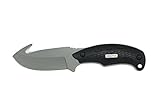
The Old Timer 2143OT Gut Hook Copperhead combines a 3.7-inch drop-point blade with a gut hook in a substantial 8.1-inch full-tang package. Built with Ti-Nitride coated 7Cr17MoV stainless steel and a rubber overmold handle, it targets hunters needing a rugged, no-frills knife for heavy-duty field work, weighing 6.5 ounces with included sheath.
What Makes It Stand Out:
The Ti-Nitride coating boosts corrosion resistance and edge life, while the aggressive rubber handle with finger choil and jimping ensures an ultra-secure grip during strenuous tasks. The gut hook is seamlessly integrated for efficient dressing, and the full-tang construction guarantees exceptional strength for batoning or prying.
Value for Money:
An affordable workhorse with premium materials typically found in costlier knives. The durable build minimizes replacement needs, offering strong long-term value for hunters prioritizing resilience over aesthetics.
Strengths and Weaknesses:
Strengths: Outstanding grip security; corrosion-resistant coated blade; robust full-tang durability; effective gut-hook design.
Weaknesses: Heavier than competitors; rubber handle may retain odors; blade steel lacks high-end sharpness retention.
Bottom Line:
A dependable, budget-friendly choice for hunters tackling tough jobs—best suited for those valuing grip and durability over lightweight agility.
9. Elk Ridge ER-300 Series, 2-Piece Fixed Blade Hunting Knife Set with Gut Hook and Caping Knife, 3Cr13MoV Steel, Wood Handle, Nylon Sheath, 7 Inch and 6.4 Inch (Camo)

Overview:
The Elk Ridge ER-300 Series offers a classic 2-knife set: a 7-inch gut-hook knife (4-inch blade) and 6.4-inch caping knife (3.3-inch blade), both with full-tang 3Cr13MoV steel blades and ergonomic wood handles. Housed in a reinforced nylon sheath, it targets traditionalists seeking precision for detailed skinning and efficient dressing.
What Makes It Stand Out:
Authentic wood handles provide a timeless aesthetic and comfortable, non-slip grip during prolonged use. The specialized gut hook enables quick field dressing, while the shorter caping knife delivers exceptional control for delicate hide work—ideal for hunters prioritizing craftsmanship.
Value for Money:
Competitively priced for a dual-knife set with full-tang construction, though the 3Cr13MoV steel is mid-tier. The wood handles elevate its appeal over plastic alternatives, offering good value for hunters who appreciate traditional materials and dual-purpose utility.
Strengths and Weaknesses:
Strengths: Beautiful, comfortable wood handles; specialized gut hook and caping blades; full-tang strength; included secure sheath.
Weaknesses: Wood may absorb moisture/blood without maintenance; steel requires frequent sharpening; sheath lacks advanced retention features.
Bottom Line:
A solid pick for traditional hunters wanting reliable, aesthetically pleasing tools for precise skinning—just maintain the wood handles diligently.
10. OUTDOOR EDGE WildPair, Fixed Blade Hunting Knife Set, Field Dressing & Game Processing Knives - Gut-Hook Skinning & Caping Knives, Nylon Sheath - Deer & Elk

Overview:
The OUTDOOR EDGE WildPair is a lightweight 2-knife combo: a 4-inch gut-hook skinner and 2.5-inch caping knife, both with full-tang 420J2 steel blades and blaze orange TPR handles. At just 8.3 ounces total, it’s engineered for speed in deer and elk processing, featuring camo nylon sheath storage.
What Makes It Stand Out:
The high-visibility orange handles enhance safety and retrieval in low light, while the compact caping knife excels at precision tasks. 420J2 steel offers solid corrosion resistance, and the minimalist design prioritizes agility—perfect for hunters covering long distances.
Value for Money:
An economical entry into dual-knife sets, delivering essential functionality without premium pricing. While 420J2 isn’t top-tier steel, the focus on weight savings and task-specific blades provides excellent utility for casual to moderate hunters.
Strengths and Weaknesses:
Strengths: Extremely lightweight and portable; vibrant handles for safety; intuitive gut-hook design; affordable dual-knife solution.
Weaknesses: Short caping blade limits versatility; 420J2 steel needs frequent sharpening; sheath lacks retention upgrades.
Bottom Line:
Ideal for hunters seeking a no-fuss, portable set for efficient dressing and caping—prioritize it for value and ease of carry over heavy-duty performance.
Why the Gut Hook Feature Solves Critical Field Dressing Problems
Taming the Initial Incision Challenge
The very first cut across the abdomen is arguably the most critical and nerve-wracking part of field dressing. A standard straight blade requires significant downward pressure to pierce the tough hide and underlying muscle/fascia, increasing the risk of the knife slipping uncontrollably forward into the gut sack. The gut hook’s distinctive curved notch acts as a controlled anchor point. By placing the hook just below the sternum and applying gentle, consistent rearward pressure, the hook catches the tissue and guides the blade backwards in a smooth, predictable motion. This eliminates the dangerous forward slip risk, giving the hunter precise control over the cut’s depth and direction from the very start.
Preventing Gut Puncture and Contamination
A punctured gut sack releases acidic fluids and bacteria onto the meat, causing spoilage and an off-flavor that’s impossible to fully remove. The gut hook’s design is fundamentally about damage control – specifically, preventing this exact scenario. Its rearward cutting action inherently moves the blade away from the delicate organs nestled just behind the diaphragm. Unlike a straight blade that can easily plunge forward if pressure isn’t perfectly modulated, the hook’s geometry creates a natural barrier and directional guide. This built-in safety feature significantly reduces the margin for error, especially for novice hunters or in awkward field positions where fine motor control is compromised.
Enhancing Efficiency and Reducing Physical Strain
Field dressing is physically taxing, often performed in uncomfortable positions on uneven ground, possibly in cold or wet conditions. Using excessive force with a standard knife to initiate the cut leads to quicker hand fatigue and shaky movements. The gut hook leverages mechanical advantage. The curved notch concentrates force at the precise point of contact, allowing the hunter to use less overall pressure to achieve the necessary penetration. This smoother, more efficient cutting action conserves energy, reduces hand strain during repetitive tasks (like skinning later), and allows for greater focus on the overall process rather than wrestling with the initial incision.
Key Features to Evaluate in a Gut Hook Knife
Blade Steel Selection for Edge Retention and Toughness
The steel core dictates long-term performance. Look for high-carbon stainless steels (like popular 8Cr13MoV or AUS-8 variants) offering a balance of edge retention, corrosion resistance, and ease of sharpening in the field. Premium options might feature higher-end stainless alloys (think mid-range 9Cr or similar) for superior edge-holding in gritty conditions, crucial when processing multiple animals or working in dusty/dirty environments. Avoid extremely hard, brittle steels that chip easily on bone or frozen tissue – toughness is paramount for a tool subjected to varied field stresses.
Optimal Blade Geometry and Thickness
Beyond the hook itself, the primary blade profile matters immensely. A drop point or modified clip point offers versatile control for both the initial gut hook cut and subsequent skinning/salvage tasks. Blade thickness (typically 0.10" to 0.14") is critical: too thin, and the blade can flex or snap under pressure during the gut hook motion; too thick, and it becomes difficult to make precise, clean cuts through hide and muscle. A sturdy, full-flat or saber grind ensures smooth slicing through tissue without excessive drag, while still providing the backbone needed for the hook’s function.
The Gut Hook Design Itself: Size and Shape
Not all gut hooks are created equal. The ideal hook is pronounced enough to securely catch the hide and underlying tissue without being so large that it creates an unnecessarily wide initial gap or hinders subsequent cutting. A smooth, polished interior curve within the hook prevents snagging on tissue. The hook should be integrated seamlessly into the belly of the blade, positioned correctly relative to the point for optimal leverage during the rearward pull. Avoid overly aggressive or sharp-edged hooks that can tear tissue rather than guide the cut cleanly.
Handle Ergonomics for Wet, Gloved Use
This is non-negotiable. Handles must provide secure purchase when wet with blood, water, or snow, and while wearing thick gloves. Textured materials like Grivory, glass-filled nylon, or deeply checkered rubber (like Hytrel) excel here. The shape should fill the hand comfortably, offering a secure forward and reverse grip. A prominent guard (front and rear) prevents the hand from sliding onto the blade during forceful gut hooking or when pushing the knife through tough sections. Comfort during prolonged use directly impacts control and safety.
Overall Size and Balance for Field Practicality
A gut hook knife needs to be substantial enough to handle the task but not cumbersome in the pack. Total lengths between 7" and 9" (blade 3.5" to 4.5") are often the sweet spot – long enough for efficient cutting, short enough for precise control and easy carry. Balance is key; the knife should feel stable in the hand, neither blade-heavy (causing fatigue and loss of tip control) nor handle-heavy (reducing cutting power). A knife that feels like an extension of your hand inspires confidence during critical moments.
Mastering the Gut Hook Technique
Correct Placement and Initial Contact
Success starts with positioning. Locate the point just below the sternum (breastbone), where the abdominal muscles meet the lower edge of the ribcage. This spot offers the thinnest layer of tissue to penetrate before reaching the body cavity. Place the tip of the gut hook notch firmly against the hide at this point. Apply gentle downward pressure only to seat the hook, not to cut. The hook should engage the hide and the underlying fascia without piercing through. Rushing this step is the most common cause of failure.
Executing the Controlled Rearward Cut
With the hook securely engaged, the motion is crucial. Keep the blade angled slightly upwards (bevel facing towards the head of the animal). Apply steady, smooth rearward pressure along the curve of the hook, pulling the knife handle towards the tail. Do not saw or use a chopping motion. Let the hook guide the blade backwards in a single, confident stroke. Maintain consistent pressure; easing off mid-cut can cause the hook to disengage and slip. The cut should smoothly open the abdominal cavity from sternum to pelvis without excessive force.
Navigating the Pelvic Bone Safely
Reaching the pelvic bone presents another potential snag point. As the cut approaches the pelvis, slightly rotate the knife so the spine (top edge) of the blade is angled upwards towards the tail. This lifts the cutting edge away from the pelvic bone, allowing the blade to slide over the top of the bone rather than jamming into it. Continue the rearward motion with controlled pressure until the cut is complete. Forcing the blade against the bone risks slipping or damaging the edge.
Transitioning Seamlessly to Full Field Dressing
Once the abdominal cavity is open, the gut hook’s primary job is done, but the knife’s versatility shines. Immediately switch to a standard grip for the next steps: carefully cutting around the anus and connecting pelvic tissue (using the sharp tip), then making the necessary cuts to free the windpipe/esophagus at the sternum. A well-designed gut hook knife transitions effortlessly into a capable skinning and boning tool. Ensure the primary blade edge remains sharp and accessible for these follow-up tasks.
Essential Care and Maintenance for Longevity
Immediate Post-Use Cleaning Protocol
Blood and tissue residue are the enemies of edge retention and corrosion. Clean the knife immediately after field use. Rinse thoroughly under warm running water, using a soft brush (an old toothbrush works well) to dislodge any particles trapped in the gut hook notch or handle grooves. Avoid harsh soaps or prolonged soaking, especially for carbon steel blades. Dry the knife completely with a soft cloth, paying special attention to the hinge area (if folding) and inside the gut hook curve where moisture hides.
Proper Sharpening Techniques for the Gut Hook
Sharpening the gut hook requires specific attention. Standard flat sharpeners won’t reach the curved interior. Use a small, fine diamond or ceramic rod hone designed for gut hooks. Insert the rod into the hook and move it in small, controlled circles, maintaining the existing bevel angle. Sharpen the primary blade edge using your preferred system (rod, stone, guided sharpener), but ensure you also hone the short secondary edge within the gut hook notch itself – this is the critical cutting surface for the initial engagement. Regular honing maintains the hook’s effectiveness.
Safe Storage to Protect the Critical Edge
Never toss a gut hook knife loosely into a pack or toolbox. The delicate tip and the precision-ground gut hook notch are easily nicked or dulled. Always use a dedicated sheath that fully covers the blade and securely retains the knife. Leather or Kydex sheaths with a positive retention click are ideal. Store the knife in a cool, dry place. For long-term storage, apply a light coat of mineral oil (especially on carbon steel blades) to prevent corrosion, but wipe it off thoroughly before next use.
Integrating the Gut Hook Knife into Your Hunting System
Complementary Tools for Complete Field Processing
While a dedicated gut hook knife excels at the initial opening, a complete field processing kit is essential. Pair it with a sturdy, curved skinning knife for hide removal, a robust bone saw for quartering, and potentially a smaller, precise caping knife for delicate head work. Keep quality zip-top bags for organ removal and meat storage, latex gloves for hygiene, and ample paper towels or专用 field dressing wipes. The gut hook knife is the critical first step, but it functions best within a well-planned system.
Situational Awareness: When the Gut Hook Shines (and When It Doesn’t)
Understand the gut hook’s optimal use case: opening the abdominal cavity of medium to large game (deer, elk, moose, bear) where the hide and abdominal wall present significant resistance. It’s less critical for small game (rabbits, birds) or when processing animals on a gambrel where positioning is easier. Crucially, it is only for the initial belly cut. Never use the gut hook for skinning, prying, or general chopping – this will damage the notch and compromise its function. Reserve its unique geometry for its intended purpose.
Building Confidence Through Practice
Theoretical knowledge isn’t enough. Confidence with a gut hook comes from deliberate practice before the hunt. Use practice kits with synthetic hides or work on harvested game during the off-season (ethically sourced from farms or processors). Practice the placement, the feel of the hook engaging, and the smooth rearward motion repeatedly. Familiarity eliminates hesitation in the field. Understand how your specific knife feels in your hand during the motion – this muscle memory is invaluable when conditions are less than ideal.
Frequently Asked Questions
Frequently Asked Questions
Why can’t I just use my regular hunting knife for field dressing? While possible, a standard straight blade lacks the controlled rearward cutting action of a gut hook, significantly increasing the risk of slipping forward and puncturing the gut sack during the critical initial incision, especially on larger game or in challenging conditions.
Is a gut hook knife only for the belly cut? Yes, its specialized design is optimized specifically for the initial abdominal incision. Using it for general skinning, chopping, or prying will damage the hook and compromise its primary function. It should be part of a set including other specialized knives.
Does the gut hook make the knife harder to sharpen? Sharpening the primary blade edge is standard. The gut hook notch itself requires a small rod hone, but the technique is simple and quick once learned. Maintaining the hook’s sharpness is crucial for its effectiveness and is a minor addition to regular sharpening.
Are gut hook knives legal for hunting everywhere? Gut hooks are generally legal as they are standard fixed-blade knife features. However, always verify your specific state or province’s hunting regulations regarding knife types and minimum/maximum blade lengths, as laws can vary.
Can I gut hook with a folding knife? While some folders include gut hooks, a fixed blade is overwhelmingly recommended. Folding knives lack the necessary strength, stability, and full tang construction required for the controlled force of gut hooking, posing a safety risk and potential for failure.
How do I know if the gut hook is seated correctly before pulling? You should feel the hook firmly catch the hide and underlying tissue without piercing through. There should be slight resistance when trying to gently wiggle the knife side-to-side. If it slips easily or pierces through immediately, reposition and use less downward pressure.
Will the gut hook tear the hide more than a straight blade? A properly designed and used gut hook creates a cleaner initial opening than a straight blade that might slip or require sawing. The rearward motion guided by the hook minimizes ragged edges compared to a forward-slipping straight blade.
Is a gut hook necessary for smaller game like deer? While technically possible to field dress deer without one, the risk of gut puncture is still significant, especially for less experienced hunters or in awkward field positions. The added safety margin a gut hook provides is highly valuable even for deer.
What’s the biggest mistake people make using a gut hook? The most common error is applying too much downward pressure when placing the hook, causing it to pierce through the hide and tissue instead of just engaging the surface. Gentle seating followed by smooth rearward pressure is key.
Can I effectively gut hook with a very small knife? A knife needs sufficient blade length (typically 3.5"+) and structural strength to generate the necessary leverage for the rearward cut on game larger than small varmints. Micro-knives lack the mass and blade real estate required for safe and effective gut hooking on deer-sized or larger animals.
Related Buying Guides
- How to Solve Field Dressing Challenges with the 10 Best Hunting Gut Hook Knives in 2026
- 10 Best Hunting Gut Hook Knives for Efficient Field Processing in 2026
- 10 Essential Hunting Gut Hook Knives Every Big Game Hunter Needs in 2026
- The 10 Best Hunting Skinning Knives for Clean Field Dressing in 2026
- Solving Common Field Dressing Challenges with Deer Hunting Knives That Deliver