Table of Contents
For competitive archers, where fractions of an inch separate podium finishes from also-rans, the equipment choices you make aren’t just about gear—they’re about unlocking consistent, repeatable precision. While limbs, cams, and strings often dominate conversations, the unsung hero silently influencing every single shot is the arrow rest. Specifically, cable-driven arrow rests have evolved from niche curiosities into essential tools for serious target archers seeking that elusive mechanical advantage. Forget the flashy marketing; the true magic lies in how these rests synchronize perfectly with your bow’s timing, cradling the arrow with unwavering stability until the precise millisecond of release, then vanishing cleanly from the arrow’s flight path. It’s this seamless dance between cable movement and arrow departure that minimizes fishtailing, reduces torque, and delivers the clean, predictable flight essential for punching through the X-ring under pressure.
Diving into the world of cable-driven rests reveals a landscape defined by engineering ingenuity rather than brand names. These rests operate on a fundamental principle: harnessing the bow’s own cable slide or yoke movement to trigger the rest arm’s drop. This intrinsic connection to the bow’s energy transfer offers a level of timing consistency passive rests struggle to match, especially as string stretch or environmental factors come into play. For the archer meticulously tuning their setup, understanding the why and how behind these rests—beyond just slapping one on the riser—is paramount. It’s the difference between hoping for consistency and engineering it. This guide cuts through the noise, focusing squarely on the critical features, setup nuances, and performance considerations that truly matter when selecting and optimizing a cable-driven rest for the demanding world of competitive target archery, where your next breakthrough might hinge on millimeters of rest travel or a fraction of a second in timing.
Top 10 Cable-Driven Arrow Rests
Detailed Product Reviews
1. Ripcord Rest Ratchet Compact Durable Cable Driven Archery Arrow Rest - Right Handed/Standard Non Micro (RC11635X04-R)

Overview:
The Ripcord Ratchet Arrow Rest (Standard Non-Micro) is a precision cable-driven rest designed for right-handed compound bows. It prioritizes reliability and consistent arrow containment through its innovative ratcheting mechanism, eliminating traditional bungee cords or springs. Tailored for archers seeking accuracy without complex micro-adjustments, it’s ideal for hunters and target shooters valuing straightforward setup.
What Makes It Stand Out:
Its cable-driven ratchet system ensures zero bounce-back and silent operation via padded components. Speed Set Technology allows rapid cable-tension tuning with a dial click, while the anti-bounce launcher locks securely upward for transport. The compact, durable build supports all skill levels without requiring bow presses for installation.
Value for Money:
Priced competitively against mid-tier rests, it outperforms spring-driven alternatives in consistency. Though lacking micro-adjustment (unlike its premium sibling), it delivers exceptional accuracy for the cost, making it a smart upgrade for archers not needing ultra-fine tuning.
Strengths and Weaknesses:
Strengths: Effortless Speed Set adjustments; near-silent operation; robust cable system; no bow press needed; secure locked position.
Weaknesses: Lacks micro-adjustment for fine horizontal/vertical tweaks; standard mounting may limit compatibility with some dovetail systems.
Bottom Line:
A reliable, user-friendly rest that elevates accuracy without complexity. Highly recommended for archers prioritizing durability and ease of use over microscopic tuning—excellent value for intermediate to advanced shooters.
2. Ripcord Rest Ratchet Compact Durable Cable Driven Archery Arrow Rest - Right Handed/Standard Micro (RC11635X03-R)
Overview:
This Ripcord Ratchet Arrow Rest (Micro-Adjust) enhances the standard model with precision micro-adjustment capabilities for right-handed compound bows. It retains the core cable-driven ratchet system but adds fine-tuning controls, catering to competitive archers or hunters demanding pixel-perfect arrow alignment.
What Makes It Stand Out:
Beyond the signature cable-driven ratchet and Speed Set Technology, its micro-adjustment dials enable exact horizontal and vertical positioning—critical for maximizing arrow flight consistency. The anti-bounce launcher and noise-dampening features remain, but the micro-tuning sets it apart for elite accuracy.
Value for Money:
Slightly pricier than the non-micro version, it justifies the cost with tournament-level adjustability. Compared to other micro-adjust rests, it offers superior ease of use via Speed Set and avoids finicky spring mechanisms, providing long-term reliability that offsets the initial investment.
Strengths and Weaknesses:
Strengths: Pinpoint micro-adjustment; rapid Speed Set cable tuning; whisper-quiet operation; secure lock position; durable construction.
Weaknesses: Higher cost than non-micro variant; micro-dials may require occasional recalibration after heavy use.
Bottom Line:
The definitive choice for archers needing surgical precision. If micro-adjustment is essential, this rest’s blend of innovation and reliability makes it worth every penny—strongly recommended for serious competitors and perfectionists.
3. Trophy Ridge Propel Limb Driven Archery Arrow Rest, Right Hand

Overview:
The Trophy Ridge Propel is a limb-driven arrow rest engineered for simplicity and stealth, designed exclusively for right-handed compound bows. It emphasizes tool-free installation and reliability, targeting hunters who prioritize quiet operation and quick setup in the field.
What Makes It Stand Out:
Its limb-driven mechanism eliminates cables, reducing noise and installation complexity. Full arrow containment prevents contact during release, while the configurable upper/lower limb activation adapts to any bow setup. Most notably, it installs without a bow press—ideal for on-the-go adjustments.
Value for Money:
Offering robust performance at a mid-range price, it outshines cable-driven rivals in ease of installation. Though lacking micro-adjustment, its limb-driven reliability and quiet operation provide exceptional value for hunters focused on simplicity and field readiness.
Strengths and Weaknesses:
Strengths: Zero bow press needed; silent limb-driven operation; versatile limb configuration; full arrow containment; rugged build.
Weaknesses: No micro-adjustment; limited fine-tuning options; limb-driven design may wear faster than cable systems over time.
Bottom Line:
A hunter’s dream for stealth and simplicity. If quick, quiet setup is your priority, the Propel delivers outstanding value—highly recommended for hunters who avoid mechanical fuss but demand dependable accuracy.
4. NIKA ARCHERY Arrow Rest Down Draft Cable Driven Full Containment Drop Away High Speed Landing Equipment for Compound Bow Left Hand

Overview:
The NIKA Archery Down Draft is a left-handed, cable-driven drop-away rest built for high-speed compound bows. It emphasizes rapid drop timing and noise reduction, targeting left-handed hunters seeking reliable full containment without sacrificing arrow velocity.
What Makes It Stand Out:
Sealed bushings accelerate downward movement at launch for minimal arrow interference, while technical rubber dampeners ensure near-silent loading and release. Its versatile mounting (lower/upper limb or cable) and lightweight design cater to mobile hunters, with no bow press required for installation.
Value for Money:
Competitively priced against entry-level drop-aways, it delivers premium features like high-speed landing and noise suppression. Though less refined than top-tier brands, its ease of installation and solid performance offer compelling value for budget-conscious left-handed archers.
Strengths and Weaknesses:
Strengths: Silent rubber dampeners; quick installation; multi-mount flexibility; lightweight; supports high arrow speeds.
Weaknesses: Build quality less durable than premium options; limited adjustability; cable management can be finicky.
Bottom Line:
A capable, affordable drop-away for left-handed shooters. While not competition-grade, it excels in hunting scenarios where quiet operation and speed matter—recommended for beginners or hunters needing a reliable, no-fuss rest.
5. NIKA ARCHERY Arrow Rest Down Draft Cable Driven Full Containment Drop Away High Speed Landing Equipment for Compound Bow Right Hand
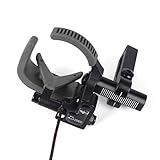
Overview:
This right-handed counterpart to NIKA’s Down Draft rest delivers identical high-speed drop-away performance for right-handed compound bow users. It focuses on silent operation and full arrow containment, designed for hunters prioritizing stealth and ease of use.
What Makes It Stand Out:
Like its left-handed twin, it features sealed bushings for rapid drop timing and rubber dampeners for near-silent draws. The cable-driven system supports versatile mounting (limb or cable), and its lightweight build ensures comfort during extended hunts—all without requiring a bow press.
Value for Money:
Priced accessibly, it matches feature-rich competitors in noise reduction and installation ease. For right-handed archers avoiding high-end costs, it provides exceptional bang-for-buck with reliable drop timing and containment.
Strengths and Weaknesses:
Strengths: Ultra-quiet dampening; tool-free installation; adaptable mounting; lightweight; high-speed drop performance.
Weaknesses: Plastic components feel less durable; micro-adjustment is rudimentary; cable routing may need frequent tweaking.
Bottom Line:
A solid, budget-friendly drop-away rest that punches above its weight in stealth and speed. Ideal for right-handed hunters wanting dependable performance without overspending—highly recommended for recreational and hunting applications.
6. Ripcord Rest Ratchet Compact Durable Cable Driven Archery Arrow Rest - Right Handed/IMS Micro (RC11635X01-R)
Overview:
The Ripcord Ratchet Arrow Rest is a precision-engineered cable-driven solution for competitive and recreational archers seeking consistent accuracy. Its compact design integrates seamlessly with modern compound bows, particularly those using IMS dovetail systems, while catering to right-handed shooters. Built for reliability, it replaces traditional spring or bungee mechanisms with an innovative ratcheting system.
What Makes It Stand Out:
Speed Set Technology is the crown jewel, enabling micro-adjustments to cable tension via a simple dial click for instant tuning. The anti-bounce back launcher eliminates post-release arrow contact, and the padded containment arm ensures near-silent operation. Its micro-adjustable horizontal/vertical positioning offers surgical-level calibration unmatched in entry-level rests, while the lockable up-position enhances security during transport.
Value for Money:
Priced mid-to-high range, it justifies cost through IMS compatibility and competition-grade precision. While pricier than basic rests, its durability, elimination of replacement springs/bungees, and time-saving tuning offset long-term expenses. It outperforms budget alternatives in consistency but faces stiff competition from similarly priced premium models.
Strengths and Weaknesses:
Strengths: Exceptional micro-adjustability; silent operation; robust IMS integration; reliable cable-driven mechanism; easy tension tuning. Weaknesses: Premium price may deter casual archers; IMS compatibility limits bow versatility; right-handed only (no ambidextrous option).
Bottom Line:
A top-tier choice for serious right-handed archers using IMS systems who prioritize tournament-level accuracy and silent performance. Its precision tuning and reliability make it worth the investment despite the niche compatibility.
7. TRUGLO Hyper Strike Click-Up Drop-Away Cable-Driven Archery Black Arrow Rest - Quiet Full-Arrow Containment - Left-Handed

Overview:
The TRUGLO Hyper Strike is a left-handed, cable-driven drop-away rest engineered for maximum arrow clearance and accuracy. It secures arrows fully during draw and release before dropping away cleanly, leveraging TRUGLO’s decades of archery innovation. Ideal for hunters and target shooters demanding precision in a quiet, left-handed configuration.
What Makes It Stand Out:
Its click-up drop-away mechanism ensures the rest only moves downward after release, eliminating premature drop issues. Full-arrow containment guarantees no contact during flight, while the wear-resistant launcher insert (with spare included) enhances longevity. Independent windage/elevation adjustments and tool-free cable clamp simplify setup significantly.
Value for Money:
Competitively priced for a drop-away rest, it delivers pro-level accuracy without premium costs. The included spare parts and straightforward installation (no bow press needed) add practical value. It outperforms cheaper fixed rests in speed-sensitive scenarios but lacks the micro-tuning of ultra-high-end models.
Strengths and Weaknesses:
Strengths: True left-handed design; silent full containment; easy cable clamp setup; durable launcher insert; reliable drop timing. Weaknesses: Limited to left-handed users; no micro-adjust dials; buss cable dependency may complicate some bow setups.
Bottom Line:
An excellent, affordable drop-away solution for left-handed archers prioritizing accuracy and quiet operation. Its ease of installation and robust build make it a standout value for hunters and 3D shooters.
8. Ripcord Rest RAK Cable-Driven Accurate Archery Arrow Rest - IMS Non Micro/Right Handed (RC12220X01-R)

Overview:
The Ripcord RAK Arrow Rest offers cable-driven precision at an accessible price point, targeting beginners and intermediate archers. This right-handed model forgoes micro-adjustments but retains core Ripcord innovations like Speed Set Technology, delivering reliable performance without requiring a bow press for setup or tuning.
What Makes It Stand Out:
Speed Set Technology allows rapid cable-tension calibration via dial clicks, ensuring consistent arrow flight. The anti-bounce back launcher locks upward for transport security, while the padded arm minimizes noise. Laser-etched adjustment marks enable precise windage/elevation tweaks, and its rugged construction withstands harsh field conditions effortlessly.
Value for Money:
Exceptional value as a budget-friendly cable-driven rest. It costs significantly less than micro-adjust models while eliminating unreliable bungees/springs common in cheaper alternatives. The no-bow-press tuning saves professional setup fees, making it ideal for DIY archers seeking reliable accuracy without overspending.
Strengths and Weaknesses:
Strengths: Affordable yet durable; quick no-bow-press tuning; quiet operation; easy laser-guided adjustments; robust all-weather reliability. Weaknesses: Lacks micro-adjust precision; right-handed only; fewer fine-tuning options than premium siblings.
Bottom Line:
The best budget-conscious cable-driven rest for right-handed archers wanting Ripcord’s reliability without micro-adjust complexity. Perfect for beginners and casual shooters seeking hassle-free accuracy.
9. Trophy Ridge HX Arrow Left Hand Rest, Black

Overview:
The Trophy Ridge HX is a no-frills, left-handed drop-away rest focused on essential performance. Built with machined aluminum for durability, it employs exclusive Vertical Drop Technology to ensure clean arrow release. Designed for hunters and target archers needing dependable, full-containment support in a compact left-handed package.
What Makes It Stand Out:
Vertical Drop Technology provides a straight-down rest movement, minimizing timing errors common in angled drop systems. The quick-cocking button simplifies arrow loading, while 100% containment (as marketed) promises zero contact during flight. Its rugged aluminum construction ensures resilience in rugged hunting environments without excessive weight.
Value for Money:
Priced affordably for a drop-away rest, it offers solid durability and core functionality. While lacking advanced tuning features, its straightforward design reduces failure points. It’s a cost-effective upgrade from basic plunger rests but may require more frequent adjustments than higher-end cable-driven models.
Strengths and Weaknesses:
Strengths: Robust aluminum build; simple quick-cocking mechanism; clean vertical drop motion; lightweight; reliable left-handed design. Weaknesses: Minimal adjustment granularity; no included spare parts; limited noise-dampening details; basic setup instructions.
Bottom Line:
A dependable, economical choice for left-handed hunters prioritizing durability and simplicity over micro-adjustments. Ideal for those seeking a “set-and-forget” drop-away rest for field use.
10. TRUGLO Carbon Hybrid Drop-Away Cable-Driven Archery Black Arrow Rest - Fits Left & Right-Handed Bows - Great for Target Shooting, 3D & Hunting

Overview:
The TRUGLO Carbon Hybrid is a versatile, ambidextrous drop-away rest engineered for all disciplines—hunting, 3D, and target shooting. Its cable-driven design ensures total arrow clearance, while compatibility with both left and right-handed bows broadens its appeal. Includes comprehensive setup hardware and spares for immediate use.
What Makes It Stand Out:
The high-strength torsion spring delivers faster, smoother launcher movement than coil springs, reducing bounce-back. Stainless steel launcher arms and a machined aluminum bracket enhance durability, while full windage/elevation adjustments cater to precise tuning. Ambidextrous design and no-bow-press installation maximize convenience across diverse archery styles.
Value for Money:
Excellent value given its universal handedness and included accessories (spare felt, cable clamp). It bridges the gap between budget and premium rests, offering torsion-spring reliability typically found in costlier models. Outperforms single-handed competitors in flexibility but costs slightly more than niche-specific alternatives.
Strengths and Weaknesses:
Strengths: Ambidextrous compatibility; torsion-spring speed; quiet no-bounce performance; comprehensive included hardware; multi-discipline suitability. Weaknesses: Slightly higher price than single-handed rests; carbon components may wear faster than all-metal builds; minor learning curve for first-time drop-away users.
Bottom Line:
The most versatile drop-away rest here, ideal for households with multiple archers or those switching between left/right bows. Its robust performance for hunting and target shooting justifies the modest premium over specialized models.
Why Cable-Driven Rests Dominate Competitive Target Archery
The Physics of Perfect Arrow Launch
Understanding the core physics reveals why cable-driven designs excel. When the string is released, energy transfers through the limbs and cables. A cable-driven rest leverages this specific movement, ensuring the rest arm retracts in direct proportion to the string’s forward motion. This synchronization minimizes any lateral force or “push” on the arrow fletching during the critical launch phase. Passive rests, reliant solely on arrow inertia, can sometimes allow slight fletching contact if timing isn’t perfect, introducing unpredictable drag. Cable-driven systems, by tying directly into the bow’s mechanical sequence, provide a more deterministic launch environment, crucial for eliminating variables in high-stakes shooting.
Eliminating String Contact Variability
One of the biggest frustrations with some rest types is inconsistent string contact, especially as string stretch occurs over time or with temperature changes. Cable-driven rests inherently compensate for this. Because the rest arm movement is directly linked to the cable slide’s position—which moves predictably with the string’s path—the rest arm clears the arrow’s flight path at the exact same point relative to the string’s position on every single shot. This eliminates the need for constant micro-adjustments to the rest’s position solely due to string stretch, a significant advantage during long tournaments or changing conditions where minute timing shifts can wreck groups.
Achieving Unmatched Timing Consistency
The hallmark of a superior cable-driven rest is its ability to maintain precise timing shot after shot, season after season. Timing refers to the exact moment the rest arm fully drops clear of the arrow’s path relative to the string’s position. Cable-driven systems achieve this through direct mechanical linkage. Unlike rests relying on springs or magnets, which can be affected by temperature, wear, or debris, the cable-driven mechanism offers a rock-solid, repeatable timing point. This consistency translates directly to tighter groups downrange, as the arrow experiences identical launch dynamics each time, a non-negotiable requirement for elite competition.
Critical Features Defining High-Performance Cable-Driven Rests
Precision Rest Arm Design and Material Science
The rest arm itself is the arrow’s final point of contact. High-end cable-driven rests utilize advanced composite materials or precisely engineered alloys that offer the perfect balance: sufficient rigidity to hold the arrow perfectly still under draw weight, yet with carefully calculated flex points to allow smooth, snag-free drop. The shape is equally critical; a low-profile, tapered design minimizes surface area for potential fletching contact, while specialized contours cradle the arrow shaft securely without inducing torque. The quality of the bearing or pivot point where the arm attaches dictates smoothness of movement—micro-bearings or hardened steel bushings are essential for eliminating any hesitation or binding during drop.
Sophisticated Cable Attachment Mechanisms
How the rest connects to the bow’s cables is paramount for reliable performance. Top-tier designs feature infinitely adjustable attachment points, allowing fine-tuning of the rest arm’s travel distance and drop speed. Look for systems using durable, low-friction materials like Dyneema or specialized coated cables at the connection point to prevent fraying and ensure smooth operation. The attachment hardware itself must be robust—stainless steel or high-grade aluminum clamps—that locks securely onto the cable without slipping, yet allows for quick, tool-free micro-adjustments when fine-tuning timing. A poorly designed attachment point is the Achilles’ heel of any cable-driven system.
Micro-Adjustment Systems for Pinpoint Timing
The ability to make minute, precise timing adjustments is what separates competition-grade rests from basic models. This isn’t just about coarse forward/backward movement of the entire rest. The best systems incorporate dedicated micro-adjusters—often fine-threaded set screws or calibrated dials—that allow incremental changes to the rest arm’s drop speed and endpoint. This level of control is vital for dialing in perfect clearance with specific arrow spine, fletching type, and bow setup. The adjustment mechanism must be secure enough to hold its setting through vibration and recoil but intuitive enough to tweak quickly at the range. Repeatability in adjustment is non-negotiable.
Durability and Environmental Resilience
Competition archery happens in every condition—scorching heat, driving rain, biting cold. A rest worthy of the podium must perform flawlessly regardless. This demands exceptional durability: corrosion-resistant materials (anodized aluminum, stainless steel components), seals to keep out moisture and grit, and construction that withstands the constant vibration and shock of repeated shots. Pay attention to how pivot points and moving parts are protected. Rests prone to binding from dust or moisture will lose timing consistency rapidly, turning a potential asset into a liability when conditions get tough.
Optimizing Setup for Peak Performance
Understanding Cable Slide Interaction
The cable slide is the engine driving your rest. Its position on the cable, travel distance, and smoothness of movement directly impact rest performance. Competitive archers often fine-tune the cable slide’s position relative to the rest’s attachment point. A slide positioned closer to the rest typically results in faster rest arm drop, while moving it further away slows the drop. Ensuring the cable slide itself moves freely with minimal friction is critical; a sticky slide will cause inconsistent rest timing. Lubrication (using bow-specific products) and checking for cable wear are essential maintenance steps tied directly to rest function.
Fine-Tuning Drop Speed vs. Arrow Clearance
Finding the optimal drop speed is a delicate balancing act. Too fast, and the rest arm might drop before the arrow has fully cleared the rest, potentially causing the nock to clip the arm. Too slow, and the arm lingers, risking fletching contact. The ideal speed ensures the arm begins dropping as the arrow nock moves forward but clears the fletching path just as the vanes pass. This requires careful observation during paper tuning or high-speed video analysis. Adjustments are made via the rest’s micro-adjusters and sometimes the cable slide position. Arrow weight and spine influence this timing, making it a highly individualized setup parameter.
Critical Alignment: Rest Height and Center Shot
Even the most advanced cable-driven rest is useless if basic alignment is off. Rest height must position the arrow shaft precisely level with the pivot point of the arrow rest (or as specified by the rest manufacturer), ensuring a straight launch path. Center shot—the left/right alignment of the rest relative to the bow’s center plane—is equally vital. Misalignment here induces torque, causing left/right fletching contact or inconsistent arrow flight. Precision alignment tools and meticulous measurement are required. Remember, cable-driven rests often have specific center shot recommendations differing from drop-away or containment rests due to their unique timing.
The Role of High-Speed Video Analysis
Gone are the days of guessing rest timing. High-speed video (even smartphone slow-motion at 240fps+) is an indispensable tool for optimizing cable-driven rests. It allows you to visually confirm the exact moment the rest arm clears the arrow’s path relative to the string position and fletching passage. You can see if there’s any fletching contact, if the drop is hesitant, or if the arm drops too early/late. This visual feedback is crucial for making informed micro-adjustments, transforming setup from guesswork into a precise science. Investing time in learning to analyze these videos pays massive dividends in group size.
Long-Term Reliability and Maintenance
Proactive Cable and String Monitoring
The cables driving your rest are under immense tension and wear. Fraying, stretching, or broken strands in the main cables or the specific strand the rest attaches to will directly affect rest timing and consistency. Competitive archers implement rigorous cable/string inspection routines, checking for wear points, especially where the rest attaches. Replacing cables before they fail is critical; waiting for visible damage often means timing has already drifted significantly. Using high-quality, pre-stretched cables minimizes initial stretch-related timing shifts.
Lubrication Strategies for Smooth Operation
While over-lubrication attracts dirt, strategic lubrication is essential for cable-driven rests. The pivot points of the rest arm and the cable attachment point benefit from a tiny amount of specialized bow lubricant (dry lubes like Teflon-based sprays are often preferred). The cable slide itself needs lubrication to move freely. The key is moderation and using the right product—never standard oil or grease, which attracts grit and can cause slippage. Apply lubricant sparingly, wipe away excess, and follow the rest manufacturer’s specific recommendations. Consistent, clean operation prevents timing drift.
Diagnosing and Correcting Timing Drift
Even the best systems can experience subtle timing shifts over time due to cable stretch, component wear, or environmental factors. Recognizing the symptoms is key: sudden changes in group size, increased fletching contact marks, or paper tears indicating rest interference. Diagnosing drift starts with high-speed video to confirm the issue. Corrections usually involve micro-adjustments to the rest’s timing mechanism or, if significant cable stretch has occurred, minor cable slide repositioning. Keeping a detailed tuning log helps identify patterns and address drift before it significantly impacts performance.
Component Wear and Replacement Cycles
Treat key components of your cable-driven system as consumables. Rest arms, especially the contact points, can wear down over thousands of shots, affecting arrow hold and drop characteristics. Cable slides can develop flat spots or grooves. Attachment cables or loops can fray. Establish a regular replacement schedule based on shot count and manufacturer guidelines, rather than waiting for catastrophic failure. Having spare rest arms and critical small parts readily available prevents downtime during crucial practice periods or tournaments.
Making the Right Choice for Your Competitive Journey
Matching Rest Characteristics to Your Bow Setup
Not all cable-driven rests play well with every bow design. Consider your bow’s cable guard configuration, limb alignment, and available mounting space. Some rests require significant clearance between the cable guard and riser; others are designed for more compact setups. The type of cable slide your bow uses (roller, bushing, etc.) can also influence compatibility and ease of tuning. Research rest specifications thoroughly to ensure physical fit and functional compatibility with your specific target bow platform before committing.
Considering Your Shooting Style and Arrow Specifications
Your arrow’s spine, weight, and fletching profile interact with rest timing. Aggressive shooters generating high arrow speed might benefit from a slightly faster drop, while those with lighter draw weights or stiffer arrows might need a marginally slower drop for optimal clearance. Large, stiff vanes require more clearance time than small, flexible feathers or low-profile vanes. Be prepared to adjust the rest’s timing to harmonize with your specific arrow package and release technique, not the other way around. The rest must adapt to your system.
Evaluating Ease of Installation and Tuning
Time is precious on the range. A rest that requires complex tools or arcane knowledge to install and tune can become a frustrating distraction. Look for systems with intuitive mounting systems, clear adjustment markings, and logical tuning procedures. While high precision is needed, the process shouldn’t feel like rocket science. Rests offering clear visual indicators for timing adjustments or tool-free micro-tuners significantly streamline the setup process, allowing you to focus more on shooting and less on wrenching.
The Long-Term Value Proposition
Viewing a cable-driven rest as a long-term investment is wise. While initial cost is a factor, prioritize the rest’s build quality, adjustability range, and the manufacturer’s reputation for support and parts availability. A rest that holds its settings impeccably, withstands seasons of use, and allows for precise tuning adjustments delivers far greater value than a cheaper model that requires constant fiddling or fails prematurely. Consider the cost per shot and the impact on your competitive results—reliability is priceless when every point counts.
Frequently Asked Questions
How do cable-driven rests differ fundamentally from drop-away rests?
Cable-driven rests are directly powered by the bow’s cable movement via a mechanical linkage, ensuring timing is intrinsically tied to the bow’s shot cycle. Drop-aways often use a secondary spring or magnet system triggered by the string, which can be more susceptible to external influences like temperature or minor wear affecting timing consistency.
Can I install a cable-driven rest on any modern compound bow?
Most modern target compound bows are compatible, but physical fit and cable slide accessibility are crucial. Bows with extreme cable guards or limited riser space might pose challenges. Always verify clearance requirements and cable attachment feasibility with your specific bow model before purchasing.
Is high-speed video absolutely necessary for tuning a cable-driven rest?
While experienced archers can tune successfully using paper tears and group analysis, high-speed video provides definitive, objective confirmation of rest timing and clearance. It significantly reduces guesswork and is highly recommended for achieving peak competitive performance, especially when dialing in minute adjustments.
How often should I check and adjust the timing on my cable-driven rest?
Perform a basic timing check (via high-speed video or paper test) after any major bow maintenance (string/cable changes, limb bolt adjustments) or if you notice a change in grouping consistency. A thorough timing verification is wise every few hundred shots or before major competitions, even if performance seems stable.
Do cable-driven rests require more maintenance than other rest types?
They require specific maintenance focused on the cable attachment point and pivot mechanisms (lubrication, wear checks), but not necessarily more maintenance overall. Their direct linkage can actually be less prone to certain issues (like spring fatigue) than some drop-aways, but cable health is paramount.
Can cable-driven rests be used effectively with traditional-style arrows or feathers?
Yes, but timing adjustments are critical. Feathers are more forgiving of minor contact than stiff vanes, but the rest still needs to clear the flight path cleanly. You may need to slightly adjust the drop speed (often slowing it marginally) compared to setups using stiff vanes to ensure the feathers pass without disruption.
What are the most common signs of incorrect timing on a cable-driven rest?
Signs include consistent fletching contact marks on the rest arm or riser, erratic arrow flight (especially left/right fishtailing), poor paper tears showing rest interference (e.g., “fishtailing” tear pattern), or sudden, unexplained increases in group size without other setup changes.
How does cable stretch specifically impact cable-driven rest timing?
As cables stretch, the position of the cable slide relative to the rest changes slightly. This alters the point at which the rest arm begins its drop and how far it travels, potentially causing the arm to drop too early or too late relative to the arrow’s flight path, leading to clearance issues.
Are cable-driven rests more sensitive to changes in draw length or weight?
The rest timing itself is primarily tied to cable movement, which is less directly affected by minor draw length changes than passive rests. However, significant changes to draw length (requiring cable changes) or weight (affecting arrow speed) will necessitate re-checking and potentially re-tuning the rest timing for optimal clearance.
Can I use a cable-driven rest for bowhunting, or are they strictly for target archery?
While primarily designed and optimized for the precision demands of target archery, cable-driven rests can function for hunting. However, their complexity and potential need for fine-tuning make simpler, robust drop-aways or whisker biscuits often preferred for hunting where reliability in harsh conditions and minimal maintenance are top priorities.
Related Buying Guides
- 10 Premium Cable-Driven Arrow Rests for Elite Archers (Worth the Investment)
- 10 Affordable Hunting Arrow Rests That Don’t Sacrifice Quality in 2026
- Top 10 Best Arrow Rests for Hunting Accuracy in 2026
- Top 10 Best Arrow Rests for Hunting Precision in 2026
- Best Arrow Rests for Youth Hunters: 10 Expert Picks for 2026