Table of Contents
Choosing the right shelter can make or break a family camping trip. Imagine the scene: you’ve hauled coolers, gear, and excited (but tired) kids to a beautiful campsite as dusk falls. Then, wrestling with a complicated tent setup in fading light, you realize the “4-person” model barely fits two adults and two sleeping bags, let alone restless children. Suddenly, the promise of stargazing and s’mores is overshadowed by damp socks, condensation dripping on sleeping pads, and the frantic search for a missing pole clip. This frustration is all too common, turning what should be a cherished memory into a test of endurance before the real adventure even begins.
The foundation of a successful family outing isn’t just the destination—it’s reliable, comfortable shelter designed for real-world use with multiple people. A well-chosen 4-person tent bridges the gap between cramped discomfort and impractical bulk, offering crucial space for gear, movement, and those inevitable midnight snack raids. Understanding the true features that matter—beyond just the advertised capacity—empowers families to invest in gear that withstands wind, rain, and the enthusiastic energy of young campers, transforming potential chaos into cozy nights under the stars. Let’s unpack exactly what transforms a basic shelter into a family-friendly haven.
Top 10 4-Person Tents for Families
Detailed Product Reviews
1. LOYEAHCAMP 4 Person Blackout Camping Tent, Easy Setup Waterproof Family Dome Tent for Camping with Rainfly, Portable Double Layer Large Family Tent for Outdoor Camping&Hiking

Overview:
This dome tent targets families seeking comfort and privacy during outdoor adventures. Its blackout technology and spacious 92.5x84.6x59-inch footprint comfortably sleep four adults, featuring vertical walls for 20% extra headroom. Designed for quick setup and weather resistance, it includes a rainfly and double-layer construction.
What Makes It Stand Out:
The 99% UV-blocking blackout fabric significantly reduces interior heat while enabling daytime naps and stargazing through mesh windows. The “chimney effect” ventilation system—combining roof vents, side vents, and zippered mesh panels—ensures exceptional airflow without compromising privacy. Fiberglass poles and 3,000mm waterproof coating add durability.
Value for Money:
Priced competitively for a family tent, it outperforms budget alternatives with its thoughtful ventilation and blackout features. The included carry bag (17.1x7.09x7.8 inches) and tool-free 5-minute setup save time and effort, making it ideal for frequent campers who prioritize comfort over ultralight backpacking.
Strengths and Weaknesses:
Strengths: Superior heat/UV reduction; intuitive ventilation controls; stable fiberglass poles; seamless rain protection.
Weaknesses: Limited standing height for taller users; mesh windows lack privacy covers; bulkier than backpacking-specific tents.
Bottom Line:
A top choice for car campers prioritizing restful sleep and weather protection. Its ventilation innovation and privacy-focused design justify the price for family trips, though minimalists may prefer lighter options.
2. UNP 4-Person Tent, Portable Cabin Tent, Camping Tent 4-Person Easy Set Up, Waterproof with Top Rainfly for Outdoor Camping/Hiking (Gray)

Overview:
This cabin-style tent offers straightforward shelter for four campers with near-vertical walls and a 72-inch center height (8’x7’x72"). Weighing 13 lbs, it emphasizes rapid setup and stability for car-based adventures, backed by a responsive 1-year warranty.
What Makes It Stand Out:
The 3-minute setup—requiring no expertise—uses color-coded poles and intuitive clips. Steel leg poles and a rectangular roof create exceptional wind resistance, while mesh windows and a tent-top panel enable panoramic views and cross-ventilation without condensation issues.
Value for Money:
Its budget-friendly price undercuts premium cabin tents while delivering cabin-like space and steel-pole durability. The warranty and 12-hour customer support add peace of mind, though the lack of blackout features limits versatility for midday rest.
Strengths and Weaknesses:
Strengths: Unbeatable setup speed; sturdy steel-frame stability; excellent mesh ventilation; strong warranty.
Weaknesses: Heavier than fiberglass alternatives; no UV protection; minimal ground seam sealing details.
Bottom Line:
Perfect for beginners and fair-weather campers needing hassle-free shelter. The speed and stability make it a smart buy for festivals or casual trips, but avoid in extreme sun due to limited heat management.
3. CAMPROS CP Tent 8 Person Camping Tents, Weather Resistant Family Tent, 5 Large Mesh Windows, Double Layer, Divided Curtain for Separated Room, Portable with Carry Bag - Blue

Overview:
A spacious 8-person tent with a straight-wall design and 72-inch center height, this model focuses on versatility for large groups. Its standout feature is a room-dividing curtain, transforming it into dual sleeping zones while maintaining weather resistance.
What Makes It Stand Out:
The dual-room functionality suits families or groups needing privacy, doubling as a projector screen. Five mesh windows and a double-layer roof ensure airflow without leaks, and color-coded poles simplify assembly. The PU-coated seams provide reliable rain protection.
Value for Money:
Competitively priced for an 8-person tent, it delivers exceptional space efficiency. The room divider adds unique utility for extended stays, though the lack of blackout tech may disappoint sun-sensitive campers—a fair trade for the capacity.
Strengths and Weaknesses:
Strengths: Clever room-divider innovation; robust weather sealing; easy 5-minute setup; ample ventilation.
Weaknesses: Bulky for backpacking; minimal UV protection; curtain reduces usable floor space.
Bottom Line:
An excellent value for group campers prioritizing space and privacy. The room divider and ventilation make it ideal for base camps, just ensure your vehicle can handle its packed size.
4. LOYEAHCAMP 4 Person Blackout Camping Tent, Easy Setup Waterproof Family Dome Tent for Camping with Rainfly, Portable Double Layer Large Family Tent for Outdoor Camping&Hiking

Overview:
Identical to Product 1, this blackout dome tent accommodates four with 92.5x84.6x59-inch dimensions and vertical walls. It emphasizes heat reduction, privacy, and weatherproofing through double-layer construction and a full-coverage rainfly.
What Makes It Stand Out:
Its proprietary “Dark Space Technology” blocks 99% UV rays, keeping interiors cooler—a rarity in this price tier. The chimney-effect ventilation system (3 roof vents + side vents) outperforms competitors by preventing condensation while allowing internal vent adjustments.
Value for Money:
Offers premium blackout features at mid-range pricing, justifying cost for frequent campers. The included compact carry bag and 5-minute setup enhance convenience, though the fiberglass poles slightly reduce durability compared to steel alternatives.
Strengths and Weaknesses:
Strengths: Industry-leading heat/UV suppression; seamless rain protection; intuitive ventilation; portable design.
Weaknesses: Fiberglass poles less sturdy than steel; limited standing room for tall users; mesh lacks privacy liners.
Bottom Line:
The best choice for campers battling intense sun, offering unmatched rest quality. Despite minor stability trade-offs, its comfort innovations make it worth prioritizing for hot-weather trips.
5. CAMEL CROWN Tents for Camping 2/3/4/5 Person Camping Dome Tent, Waterproof,Spacious, Lightweight Portable Backpacking Tent for Outdoor Camping/Hiking

Overview:
This versatile dome tent scales from 2 to 5 persons with lightweight (unspecified weight) backpacking-friendly design. It combines PU2000 waterproofing, aluminum poles, and dual-layer mesh for multi-scenario use from hiking to family outings.
What Makes It Stand Out:
The dual-purpose top layer—acting as both rainfly and mesh screen—enables instant ventilation adaptation. Aluminum poles and iron stakes deliver surprising wind stability for its weight class, while the minimalist footprint suits backpackers needing weather flexibility.
Value for Money:
Its scalable sizing (2-5 person) offers unusual versatility at an entry-level price. Though lacking blackout features, the PU2000 coating and windproof ropes provide reliable storm protection unmatched in budget tents.
Strengths and Weaknesses:
Strengths: Adaptable dual-layer roof; ultralight backpacking suitability; robust wind resistance; compact pack size.
Weaknesses: No UV/heat management; mesh-heavy design reduces privacy; limited headroom in larger configurations.
Bottom Line:
A savvy pick for hikers and minimalist campers needing lightweight, weather-ready shelter. Skip if prioritizing sun protection, but ideal for adaptable, on-the-go adventures.
6. 4 Person Easy Pop Up Tent, Automatic Setup, Waterproof, 2 Doors-Instant Family Tents for Camping, Hiking & Traveling, 9.5’X6.6’X52’’

Overview:
This pop-up tent delivers instant shelter for small families or groups, featuring automatic setup and weather-resistant construction. Its 9.5’x6.6’ footprint comfortably fits four sleepers, while the 52" height allows seated movement. Designed for casual campers prioritizing convenience over backpacking weight.
What Makes It Stand Out:
The romantic skylight enables stargazing without removing the rainfly—a rare feature in budget tents. Dual doors and four mesh windows optimize cross-ventilation, reducing condensation. The PU 3000mm waterproof coating and tearproof 190T polyester outperform entry-level competitors, handling moderate rain effortlessly. Removable rainfly adds versatility for fair-weather use.
Value for Money:
Priced accessibly for its category, it justifies cost through time-saving auto-setup (under 2 minutes) and durable materials that avoid frequent replacements. While larger cabin tents cost more, this balances space and portability better than basic dome alternatives, especially for festival or backyard use.
Strengths and Weaknesses:
Strengths: Lightning-fast deployment; excellent airflow; practical storage pockets; sturdy enough for 3-season use.
Weaknesses: Limited headroom for standing; rainfly attachment could be more intuitive; not ideal for high-wind scenarios despite claimed stability.
Bottom Line:
An outstanding choice for casual campers seeking hassle-free shelter. Its unique skylight and reliable weather protection make it a top contender in the sub-$100 instant-tent market—highly recommended for family outings where setup speed matters most.
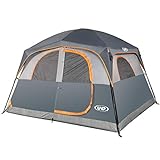
7. UNP Tents 6 Person Waterproof Windproof Easy Setup,Double Layer Family Camping Tent with 1 Mesh Door & 5 Large Mesh Windows -10’X9’X78in(H) Gray
Overview:
This roomy 6-person tent combines rapid setup with robust all-weather readiness. Measuring 10’x9’ with 78" center height, it accommodates standing room and two air mattresses. Targeted at car campers needing a balance of space, ventilation, and storm resistance for family trips.
What Makes It Stand Out:
Five mesh windows plus a full-mesh ceiling create exceptional airflow—uncommon in windproof designs. The PU-coated waterproofing and steel-leg poles deliver superior stability in breezy conditions. Standout service includes a 12-hour response guarantee and 1-year unconditional warranty, rare at this price point.
Value for Money:
Competitively priced for its capacity, it outperforms cheaper 6-person tents with genuine windproofing and breathable materials. Though heavier (18 lbs) than ultralight options, the 5-minute setup saves time versus traditional tents costing $30+ more. Ideal for frequent campers prioritizing longevity.
Strengths and Weaknesses:
Strengths: Outstanding ventilation; sturdy wind resistance; generous standing height; responsive customer support.
Weaknesses: Carry bag dimensions slightly tight for packing; single door limits traffic flow; floor seam sealing could be improved for heavy downpours.
Bottom Line:
A reliable, well-ventilated shelter for family car camping. Its weather resilience and warranty justify the investment—recommended for groups needing durable, breathable space without premium pricing.
8. HINSTANT 4/6/8 Person Instant Tent, Waterproof Pop Up Tents for Camping with Rainfly, 60 Seconds Easy Setup, Automatic Cabin Tent for Family Camping with Expandable Carry Bag & Upgraded Ventilation

Overview:
This versatile instant cabin tent sets up in 60 seconds via pre-attached spring-loaded poles. The 6-person model (10’x9’, 73" height) fits a king air mattress, targeting families wanting rapid deployment without sacrificing space or weather protection.
What Makes It Stand Out:
The red-button spring mechanism withstands repeated use—a durability upgrade over flimsy competitors. PU 3500mm floor waterproofing exceeds industry standards, while the mesh ceiling and four windows enable superior heat dissipation. Unique electrical ports and expandable carry bags add thoughtful convenience.
Value for Money:
Priced mid-range, it delivers premium features like military-grade zippers and B3 mosquito mesh typically found in costlier tents. The 17.4-lb weight and compact folded size (43.3"x7.9") offer better portability than bulkier cabin tents, making it a smart long-term investment for regular campers.
Strengths and Weaknesses:
Strengths: Unbeatable setup speed; exceptional waterproofing; excellent ventilation; practical electrical port; sturdy guylines for wind.
Weaknesses: Rainfly adjustments fiddly in rain; mesh ceiling requires rainfly for full weatherproofing; higher price than basic pop-ups.
Bottom Line:
A class-leading instant tent that excels in weather resistance and user-friendly design. Worth the premium for frequent campers seeking reliable, spacious shelter with minimal setup hassle—highly recommended.
9. CAMPROS CP 4 Person Tent, Dome Tents for Camping with Rainfly, Waterproof Camping Tent Easy Set Up, Portable Family Tent with Large Mesh Window & Carry Bag for Outdoor Hiking

Overview:
A compact 4-person dome tent optimized for lightweight adventures, weighing just 8.2 lbs. Its 8’x7’ footprint suits 2 campers with gear, featuring easy setup and strategic ventilation. Ideal for hikers and backpackers needing a portable, weather-ready shelter.
What Makes It Stand Out:
The removable rainfly transforms it into a stargazing canopy—perfect for clear nights. Dual-way zippers and an electrical port (for charging devices) are rare in this weight class. PU 1500mm coating and PE floor provide reliable light-rain protection while keeping weight minimal.
Value for Money:
Exceptional for budget-conscious backpackers. At under $80, it outperforms heavier department-store tents with thoughtful touches like storage pockets and a breathable mesh ceiling. Lighter than most 4-person rivals, it’s a steal for weekend trips where every ounce counts.
Strengths and Weaknesses:
Strengths: Ultra-portable; excellent ventilation; stargazing capability; includes electrical port; simple 5-minute setup.
Weaknesses: Limited to 2 adults comfortably; waterproofing suited only for moderate rain; no dedicated vestibule for gear storage.
Bottom Line:
The best value for minimalist campers prioritizing weight savings and airflow. Its electrical port and stargazing feature add surprising versatility—highly recommended for couples or solo travelers on a budget.
10. CAMPROS CP 4 Person Tent, Dome Tents for Camping with Rainfly, Waterproof Camping Tent Easy Set Up, Portable Family Tent with Large Mesh Window & Carry Bag for Outdoor Hiking

Overview:
Nearly identical to Product 9 but omitting the electrical port, this dome tent focuses on core camping essentials. Maintaining the same 8.2-lb weight and 8’x7’ dimensions, it targets campers wanting straightforward, portable shelter without extra features.
What Makes It Stand Out:
Large mesh windows and ceiling enable superior airflow—critical for humid conditions. The PU 1500mm waterproofing and PE floor deliver dependable protection against light storms, while the 50" height accommodates seated comfort. Standout simplicity in setup appeals to beginners.
Value for Money:
Slightly more affordable than Product 9 due to the missing electrical port, it remains a strong value. For campers not needing device charging, the $5–$10 savings make it the smarter buy. Outperforms similarly priced tents with better ventilation and lighter weight.
Strengths and Weaknesses:
Strengths: Lightweight and packable; intuitive setup; excellent bug-free ventilation; reliable rain protection; budget-friendly.
Weaknesses: Tight space for 4 adults; no electrical port limits tech integration; rainfly removal required for stargazing reduces convenience.
Bottom Line:
A no-frills, highly portable tent ideal for traditional camping purists. Skip Product 9 if you don’t need the electrical port—this delivers identical performance at a better price for most casual campers.
Understanding True Capacity and Real-World Space
The number on the box rarely tells the whole story, especially with growing kids and essential gear.
Decoding the “4-Person” Myth
Manufacturers often calculate capacity based on tightly packed sleeping pads with minimal wiggle room. For a family, this usually means two adults and two children will feel cramped, especially if storing packs or boots inside. Always factor in extra space for movement, shared gear, and comfort—aim for a tent marketed as “spacious 4” or even consider stepping up to a 5-person model if budget and pack size allow for genuine elbow room.
Floor Dimensions vs. Usable Area
Focus on the actual floor measurements in feet or meters, not just the person count. Look for a rectangular or trapezoidal floor plan over a dome shape for better side-to-side space. Pay attention to the width at the head and foot areas; a tent that tapers sharply at the ends will feel much smaller for full-length sleeping. Measure your sleeping pads and add at least 6-12 inches per side for realistic comfort.
Gear Storage Considerations
Family trips mean more stuff: extra layers, headlamps, books, maybe even a stuffed animal. A tent with minimal vestibule space forces you to sleep on top of your gear or leave it exposed outside. Prioritize models with substantial covered vestibules (measured in sq. ft.) that can hold packs, muddy shoes, and cooking gear, keeping the main sleeping area organized and dry.
Weather Resistance: Beyond the Basic Rainfly
Reliable weather protection is non-negotiable when you’re responsible for keeping multiple people dry and safe.
Rainfly Coverage and Design Matters
A full-coverage rainfly that extends nearly to the ground offers significantly better protection from wind-driven rain and splash-back than a partial fly. Look for designs with long, overlapping seams and taped seams throughout the fly and tent body. The quality of the waterproof coating (measured in mm hydrostatic head) is crucial—aim for at least 1500mm for the fly and 2000mm+ for the floor for serious storm readiness.
Ventilation is Your Condensation Defense
Trapped breath and body heat create moisture inside, especially with multiple sleepers. Poor ventilation leads to a damp, clammy interior that feels colder and ruins sleep. Seek out tents with multiple, adjustable vents—ideally near the top (for heat/moisture escape) and bottom (for fresh air intake). Mesh panels under the rainfly, even in cool weather, dramatically reduce condensation without sacrificing warmth.
Wind Stability Features
A tent that flaps violently in moderate wind is noisy, stressful, and risks damage. Look for structural elements that enhance stability: sturdy pole architecture (often proprietary designs), multiple robust guylout points, and a lower-profile shape. Tents with vestibules acting as windbreaks and those designed for easy guylines setup offer much greater peace of mind in exposed sites.
Ease of Setup: Crucial for Tired Families
Complex assembly after a long drive is a recipe for frustration; simplicity saves sanity.
Color-Coded Poles and Clips
This seemingly small feature makes a huge difference when daylight is fading or hands are cold. Poles that match specific clips or sleeves by color eliminate guesswork and speed up the process significantly. Avoid tents relying solely on numbered or unmarked poles/sleeves for family use.
Freestanding vs. Non-Freestanding: The Practical Truth
Freestanding tents (which hold shape without stakes) are generally easier to position and adjust before staking, a major plus when dealing with uneven terrain or impatient kids. While non-freestanding models can be lighter, the convenience of freestanding often outweighs the slight weight penalty for car campers focused on comfort and ease.
Practice Makes Perfect (Before You Go)
Never rely on setting up your new tent for the first time at the campsite. Pitch it in your backyard at least once. This familiarizes everyone with the process, ensures all parts are present, and reveals any potential stumbling blocks before you’re under time pressure in the elements.
Durability and Long-Term Value
Family gear takes a beating; investing in resilience pays off for years of adventures.
Fabric Weight and Denier Explained
Denier (D) measures thread thickness. Higher denier fabrics (e.g., 70D vs. 40D) on the floor and lower tent body resist abrasion from rocks and roots far better. While lighter fabrics save pack weight, prioritize durability for the floor and high-wear areas—this is where family tents often fail prematurely. Ripstop nylon is a common, reliable standard.
Pole Material and Strength
Aluminum poles (typically 7000-series) are the standard for family tents, offering the best balance of strength, weight, and flexibility. Avoid older steel poles (too heavy) or very thin, low-grade aluminum that bends easily. Check reviews for reports of bent poles in moderate wind—this indicates poor engineering.
Zippers and Seams: The Weak Points
Heavy-use components like zippers and seams need reinforcement. Look for double-stitched seams with bonded or welded seams on critical stress points. Quality zippers (like #8 size or larger) with robust pulls and garage protectors resist snags and last longer, crucial when little hands are constantly opening and closing doors.
Family-Specific Comfort Features
Small design touches elevate the experience from functional to fantastic for parents and kids.
Interior Organization Solutions
Pockets, gear lofts, and hanging loops keep essentials like headlamps, glasses, and phones off the floor and within easy reach at night. Mesh pockets that stretch across the ceiling or walls are particularly useful for storing small items without taking up floor space. Avoid tents with minimal or flimsy storage.
Door Configuration and Accessibility
Multiple doors are almost essential for family tents. They prevent midnight crawl-overs, allow easier access for kids needing a bathroom break, and improve cross-ventilation. Consider the door size and ease of operation—large D-shaped doors are generally more accessible than narrow vertical ones, especially with sleepy users.
Light and Bright Interiors
A predominantly mesh upper canopy does wonders for reducing the “cave” feeling, especially during the day or with interior lights. It enhances the sense of space, improves ventilation, and makes the interior feel less claustrophobic for children. Balance this with enough solid fabric for privacy and weather protection.
Seasonality: Matching Tent to Your Trips
Not all tents handle all conditions equally; align your choice with your typical camping climate.
Understanding Season Ratings
Three-season tents (spring, summer, fall) prioritize ventilation and weight savings but lack the structure for heavy snow or extreme winter winds. True four-season tents are overkill (and too hot/stuffy) for most family trips unless you specifically camp in alpine winter conditions. Focus on robust three-season designs with excellent weather resistance for versatility.
Cold Weather Considerations
If camping in shoulder seasons (early spring or late fall), look for features that help retain heat: smaller vestibules to reduce cold air volume, the ability to close most vents while maintaining some airflow to prevent condensation, and potentially a footprint to insulate from cold ground. Avoid excessive mesh in these conditions.
Hot Weather Priorities
For summer trips, maximize ventilation: large mesh panels, multiple adjustable vents, and lighter-colored fabrics that reflect heat. A vestibule large enough for a small camp chair can create a shaded “porch” area. Consider if the rainfly can be partially or fully removed in dry conditions for maximum airflow.
Weight vs. Pack Size: The Car Camping Reality
For families driving to established campgrounds, weight is often secondary to comfort and ease.
Prioritizing Comfort Over Ultralight
Unless you’re backpacking, don’t obsess over ounces. The extra pounds from a more durable floor, larger vestibule, or sturdier poles translate directly to better long-term performance and comfort. A tent that packs slightly larger but sets up faster and lasts years is far more valuable than an ultra-light model that feels cramped and flimsy.
Managing Pack Size for Storage
While you won’t carry it miles, a tent that packs down very large can be awkward to store in a crowded garage or trunk. Check the packed dimensions. Some spacious family tents cleverly use compact stuff sacks or compression straps without sacrificing interior volume.
The Footprint Factor
A dedicated footprint (ground cloth) significantly extends your tent’s life by protecting the floor from abrasion and moisture. While it adds a small amount of extra weight and bulk, it’s a critical accessory for car camping. Ensure the footprint matches the tent’s exact shape for maximum protection.
Setting Up for Success: Site Selection and Staking
Even the best tent fails with poor placement; technique matters as much as gear.
Reading the Terrain
Always inspect your chosen spot before pitching. Look for level ground, avoid low spots where water pools, and check for hidden rocks or roots. Position the tent door away from the prevailing wind if possible, and utilize natural windbreaks like trees or bushes (but stay clear of dead branches!).
Staking Techniques That Hold
Using the correct stakes for the soil type (sand stakes, snow stakes, general-purpose) is vital. Angle stakes outward at 45 degrees away from the tent for maximum holding power. Don’t skip guylines in exposed areas—they dramatically increase stability in wind. Tighten lines progressively as the tent takes shape.
The Importance of a Ground Cloth
Always use a footprint or ground tarp slightly smaller than the tent floor. This prevents water from wicking up from the ground if puddles form. A tarp larger than the floor can channel rainwater under the tent during heavy storms—a common but avoidable mistake.
Longevity Through Proper Care
Treating your tent well ensures it shelters many more adventures.
Cleaning and Drying Rituals
Never pack a wet or damp tent away for storage—it will mildew and degrade the waterproof coatings. Always dry it thoroughly, inside and out, in the shade (sun degrades fabrics). Brush off sand and dirt gently before storage. Spot clean with mild soap and water if needed; avoid harsh detergents.
Storage Best Practices
Store your tent loosely in a cool, dry place—never compressed in its stuff sack for long periods. Use a large cotton or mesh storage sack instead. Rolling the fabric loosely prevents permanent creases that can weaken the waterproof layer over time.
Repair Kit Essentials
Carry a simple repair kit: seam sealer for small leaks, Tenacious Tape or similar for punctures, and spare pole segments or shock cord. Knowing how to fix minor issues on-site prevents a small problem from ruining your trip and extends the tent’s usable life significantly.
Frequently Asked Questions
How do I know if a “4-person” tent is truly spacious enough for my family?
Look beyond the person count. Check the actual floor dimensions (length and width), especially at the head and foot areas. A rectangular floor around 9ft x 7ft typically offers more usable space for two adults and two kids than a smaller dome shape. Factor in space needed for sleeping pads, gear storage inside, and movement.
Why does my tent leak when it rains, even though it’s supposed to be waterproof?
Touching the wet tent wall with your hand or gear can break the surface tension, forcing water through the fabric. Ensure the rainfly is taut and doesn’t touch the inner tent walls. Condensation dripping inside is often mistaken for leaks; improve ventilation to combat this common issue.
Are vestibules really necessary for a family tent?
Yes, vestibules are crucial. They provide covered, dry storage space for muddy boots, packs, and gear outside the main sleeping area. This keeps the interior clean, organized, and less cluttered, significantly improving comfort and practicality for families with extra equipment.
How tight should I stake my tent in normal conditions?
Stake the tent securely so the fabric is taut but not drum-tight. Over-tightening can stress seams and poles, especially as temperatures change. The fabric should have some give. Adjust tension as needed if wind picks up, using guylines for added stability without distorting the structure.
What’s the single most important feature for preventing condensation?
Strategic ventilation is key. Use multiple adjustable vents—open top vents to let warm, moist air escape and lower vents to draw in fresh, cooler air. Positioning the tent to catch breezes and avoiding pitching in low, damp areas also helps significantly reduce interior moisture buildup.
Should I buy a footprint for my new tent?
Absolutely. A dedicated footprint (slightly smaller than the tent floor) protects the tent’s waterproof coating from abrasion by rocks and dirt, drastically extending its lifespan. It also provides an extra barrier against ground moisture, keeping the interior drier.
How often should I reapply waterproofing treatment?
Reapplication depends on usage. If water stops beading on the rainfly and soaks in instead, it’s time. Typically, this might be every 1-3 years for regular campers. Always clean the fabric thoroughly before applying seam sealer or spray-on waterproofers according to the product instructions.
Can I leave my tent set up for several days at a campground?
Yes, but take precautions. Ensure it’s pitched correctly with good tension and all guylines secure. Clear debris from around it. After rain, open doors/vents to air it out and prevent mildew. Never pack it away wet—dry it completely at home before storage.
What’s the biggest mistake families make when choosing a tent?
Prioritizing the advertised person count over actual floor space and vestibule size. A cramped tent leads to discomfort and frustration. Also, overlooking ease of setup and weather resistance in favor of low price often results in poor performance when it matters most during a family trip.
How do I handle a bent tent pole while camping?
Most modern poles are designed to bend rather than break. Carefully straighten it if possible. If it’s snapped, use the repair sleeve (often included) over the break, secured tightly with tape or a small hose clamp if available. Carry a dedicated repair kit with spare parts for peace of mind.