Table of Contents
There’s something primal about the darkness that transforms predator hunting into an entirely different experience. When the sun dips below the horizon, the wild wakes up—coyotes begin their territorial patrols, foxes emerge from their dens, and bobcats slink through the shadows on silent paws. Night hunting demands a unique set of skills, but above all, it requires mastery of the call. The right sound cutting through the crisp night air can trigger an instinctive response that overrides even the wariest predator’s caution, pulling them from hundreds of yards away straight into your setup.
But not all predator calls are created equal, especially when it comes to after-dark pursuits. The calls that work beautifully at dawn might fall flat under a moonless sky. Nighttime conditions—cooler temperatures, different acoustics, and heightened predator senses—demand specific features and techniques. Whether you’re a seasoned hunter looking to refine your night setup or a newcomer drawn to the challenge of darkness, understanding what makes a predator call effective after sunset is the difference between a successful stand and a long, quiet wait.
Top 10 Predator Calls
Detailed Product Reviews
1. Icotec Model 300 Predator Caller (300+ Predator Call)

Overview: The Icotec Model 300 delivers essential predator calling capabilities with an impressive 300-yard remote range that exceeds many entry-level competitors. This compact unit features high-fidelity sound technology and the ability to layer multiple calls simultaneously, creating realistic soundscapes that can fool wary coyotes, foxes, and bobcats. With 15 professionally recorded sounds pre-loaded and backlit buttons for low-light operation, it’s designed for hunters who want reliable performance without unnecessary complexity.
What Makes It Stand Out: The standout feature is undoubtedly the 300-yard remote capability—typically found on premium models—giving hunters exceptional positioning flexibility. The simultaneous sound playback function allows you to create dynamic scenarios, like combining rabbit distress with coyote pup calls. The backlit remote proves invaluable during dawn and dusk hunts when predators are most active, eliminating fumbling in critical moments.
Value for Money: Positioned as an entry-level unit, the Model 300 punches above its weight class. While 15 sounds is modest compared to programmable models, the included calls cover the most effective scenarios. You’re getting premium-range remote capability at a budget-friendly price point, making it ideal for beginners or as a backup unit for seasoned hunters.
Strengths and Weaknesses: Strengths include exceptional remote range, intuitive operation, solid sound quality, and night-hunting readiness. Weaknesses are the limited 15-sound library, lack of programmability, and absence of a decoy feature. The unit focuses on core functionality rather than bells and whistles.
Bottom Line: The Icotec Model 300 is an excellent entry point into electronic calling, offering professional-grade remote range and sound layering that outperforms its price bracket. Perfect for hunters wanting reliable, straightforward performance without breaking the bank.
2. Icotec Furnado Predator Game Caller Decoy Combo - Designed for Coyote, Fox, Bobcat, Raccoon Hunting - 15 Sounds Included, 150 Yard Remote Range.
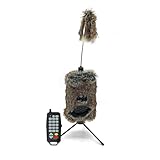
Overview: The Furnado combo unit integrates a predator caller with a realistic fur-wrapped decoy, creating an all-in-one solution for coyote, fox, and bobcat hunting. With a 150-yard remote range and 15 professional sounds, this unit prioritizes field practicality over extreme distance. The durable construction and impressive 40-hour battery life ensure it withstands rigorous hunting conditions while the furry decoy topper adds visual attraction to complement the audio calls.
What Makes It Stand Out: The realistic fur covering sets the Furnado apart from plastic competitors, providing visual authenticity that predators respond to from a distance. The exceptional 40-hour battery life outlasts most units in its class, reducing mid-season battery changes. Its rugged plastic housing survives transport abuse, while the integrated decoy eliminates the need for separate equipment.
Value for Money: As a complete calling system, the Furnado offers solid value. The combination of caller and decoy saves hunters approximately $50-75 compared to purchasing components separately. While the 150-yard range is shorter than premium models, it’s sufficient for most hunting scenarios and contributes to the attractive price point.
Strengths and Weaknesses: Strengths include the realistic decoy integration, marathon battery life, durable construction, and straightforward operation. Weaknesses are the shorter remote range, non-expandable 15-sound library, and lack of advanced features like Bluetooth or simultaneous playback.
Bottom Line: The Furnado excels as a reliable, no-fuss field unit that combines audio and visual attraction in one durable package. Ideal for hunters who prioritize equipment longevity and simplicity over cutting-edge technology.
3. Icotec Nomad+ Programmable Predator Call/Decoy Combo with Bluetooth - 165 Professional Sounds Included - Plays 2 Sounds simultaneously - Holds up to 2,000 Sounds - Pristine Sound Quality

Overview: The Nomad+ represents Icotec’s flagship programmable calling system, packing 165 professional sounds—including contributions from Tony Tebbe of Predator University—into a versatile unit with Bluetooth connectivity. The 300-yard remote range and 100-yard Bluetooth capability provide multiple control options, while simultaneous dual-sound playback creates layered, realistic scenarios. With capacity for 2,000 sounds on the included 32GB SD card, this unit grows with your hunting experience.
What Makes It Stand Out: The massive expandable library and Bluetooth integration distinguish the Nomad+. Hunters can customize their sound collection extensively, while Bluetooth allows smartphone control and easy sound transfers. The dual-playback feature lets you combine calls strategically, and the included decoy adds visual appeal. Having 165 sounds out-of-the-box means immediate access to virtually every effective call scenario.
Value for Money: Though priced at the premium end, the Nomad+ justifies its cost through unmatched versatility. Comparable units with similar storage and Bluetooth capabilities typically cost 20-30% more. The inclusion of a decoy and extensive professional sound library eliminates significant additional purchases.
Strengths and Weaknesses: Strengths include enormous sound capacity, Bluetooth connectivity, premium remote range, dual playback, and professional sound curation. Weaknesses involve steeper learning curve, higher price point, and Bluetooth range limited to 100 yards versus the remote’s 300 yards.
Bottom Line: For serious predator hunters wanting maximum flexibility and future-proofing, the Nomad+ is a top-tier investment. Its programmable nature and massive sound library ensure it remains effective season after season.
4. Icotec 320+ Predator Call/Decoy Combo - Perfect for Coyote, Fox, and Raccoon Hunting - 300 Yard Remote Range

Overview: The Icotec 320+ bridges the gap between basic and premium callers, offering a 300-yard remote range and Bluetooth connectivity in a combo package. With crystal-clear audio technology and the ability to play two sounds simultaneously, this unit targets hunters wanting advanced features without programming complexity. The 30 professional calls provide more variety than entry models, while the integrated decoy adds visual attraction for coyotes, foxes, and raccoons.
What Makes It Stand Out: The 320+ delivers premium remote range and Bluetooth at a mid-tier price point. Crystal audio clarity ensures calls cut through wind and distance, while simultaneous playback lets you create convincing sound combinations. Backlit buttons support night hunting, and the combo design eliminates separate decoy purchases.
Value for Money: This unit offers excellent mid-range value, positioning itself between basic 15-sound models and expensive programmable units. You get flagship remote range, Bluetooth convenience, and a decoy for roughly 30% less than premium programmable alternatives. The 30 included sounds cover most scenarios adequately.
Strengths and Weaknesses: Strengths include 300-yard range, Bluetooth connectivity, crystal-clear audio, dual playback, and integrated decoy. Weaknesses are the non-expandable 30-sound library, limited Bluetooth range (100 yards), and fewer included sounds than the Nomad+ despite similar remote capability.
Bottom Line: The 320+ is a sweet-spot choice for hunters wanting premium remote performance and Bluetooth convenience without diving into full programmability. It delivers near-flagship features at a reasonable price point.
5. FOXPRO Hellcat American Made Electronic Predator Call Remote Operated and Programmable Coyote, Fox, Crow, Hog Call for Hunting

Overview: The FOXPRO Hellcat stands out as a proudly American-made electronic caller that balances portability with serious capability. Designed for coyote, fox, crow, and hog hunting, this compact unit includes 75 premium sounds plus access to FOXPRO’s free sound library, totaling 175 calls with capacity for 300. The TX433XL transmitter features an enlarged LCD screen and user-friendly elastomeric keypad for intuitive navigation through sound categories.
What Makes It Stand Out: American manufacturing ensures quality control and supports domestic industry. The Hellcat’s portability makes it ideal for mobile hunters covering large territories. The extensive free sound library access provides ongoing value, while the built-in decoy with bluebird topper adds visual realism without extra equipment. FOXPRO’s reputation for durability shines through in the robust construction.
Value for Money: While priced competitively with mid-range imports, the Hellcat offers American build quality and FOXPRO’s extensive sound library access. The included decoy and 175 sounds provide immediate value, and the 300-sound capacity offers room for growth. You’re paying slightly more than Asian imports but receiving domestic support and proven reliability.
Strengths and Weaknesses: Strengths include USA manufacturing, excellent portability, large sound library access, quality remote, and integrated decoy. Weaknesses are the standard remote range (unspecified but typical 150-200 yards), lack of Bluetooth, and absence of simultaneous playback capability.
Bottom Line: The Hellcat appeals to hunters prioritizing American-made quality and brand reliability. It’s a portable, capable unit that delivers FOXPRO’s proven performance in a package perfect for hunters who value domestic manufacturing.
6. FOXPRO Hellcat PRO American Made Electronic Predator Call Remote Operated and Programmable Coyote, Fox, Hog Call for Hunting

Overview: The FOXPRO Hellcat PRO represents the pinnacle of American-made electronic predator calling technology. This all-in-one digital game call combines portability with professional-grade features, delivering exceptional volume and versatility across multiple species including coyotes, foxes, hogs, and even larger predators like bears and mountain lions. The unit comes pre-loaded with 100 premium FOXPRO sounds and offers expansion capacity for up to 1,000 additional sounds via USB-C connectivity.
What Makes It Stand Out: The standout feature is the TX-1000 remote control with its full-color graphic backlit LCD screen and durable raised buttons, offering unprecedented field control. Exclusive FoxBang technology automatically switches to your designated “kill” sound after detecting a shot, while FoxCast enables complex, pre-programmed sequences. The included lithium battery pack and wall charger provide reliable power, and the 10 professional calling sequences let you hunt like the pros with zero manual intervention during critical moments.
Value for Money: At a premium price point, the Hellcat PRO justifies its cost through American craftsmanship, advanced automation features, and included lithium power system. While significantly more expensive than entry-level models, serious hunters gain professional-grade tools that can mean the difference between success and failure. The expandable sound library and programmable sequences offer long-term value that cheaper alternatives cannot match.
Strengths and Weaknesses: Pros: Made in USA; TX-1000 remote with color display; FoxBang/FoxCast/Auto-Volume features; Lithium battery included; 1,000-sound capacity; Professional pre-programmed sequences; Multi-species versatility. Cons: Premium pricing may deter casual hunters; Remote batteries not included; Steeper learning curve for beginners; Overkill for occasional users.
Bottom Line: The FOXPRO Hellcat PRO is an exceptional investment for dedicated predator hunters seeking cutting-edge technology and reliable American-made quality. Its advanced features and automation capabilities make it worth every penny for those who demand peak performance in the field.
7. WESTERN RIVERS Mantis Pro 100 Compact Easy-to-Use Electronic Game Call - 4" Reflex Loudspeaker for Hunting with Removable Remote Control

Overview: The Western Rivers Mantis Pro 100 positions itself as a practical, entry-level electronic game call for hunters seeking simplicity without sacrificing core functionality. This compact unit comes pre-loaded with 100 permanently downloaded sounds stored in its 32MB internal memory, covering essential predator vocalizations. The 4-inch reflex loudspeaker delivers up to 110 dB of volume, sufficient for most hunting scenarios, while the removable remote control operates effectively up to 300 yards.
What Makes It Stand Out: Its lightweight, portable design with swiveling legs makes field deployment remarkably easy, fitting neatly into any carry bag. The external power jack and mounting bracket allow for decoy attachment, adding visual attraction to your setup. The weatherproof construction (though not submersible) handles typical field conditions adequately. The backlit remote screen with 4-6 lines of text provides clear visibility during dawn and dusk operations.
Value for Money: This is where the Mantis Pro 100 shines brightest. It delivers essential electronic calling capabilities at a fraction of premium brands’ cost. While lacking advanced features and expandable memory, it provides reliable performance for weekend warriors and those new to electronic calling. The AA battery power system keeps operating costs low, though rechargeable options would be preferable.
Strengths and Weaknesses: Pros: Affordable price point; Compact and portable; 300-yard remote range; 110 dB output; Swiveling legs for positioning; Decoy attachment capability; Simple operation. Cons: Limited 32MB memory (non-expandable); Weatherproof but not waterproof; Requires 8 AA batteries (no recharge option); No advanced sequencing features; Basic remote display.
Bottom Line: The Mantis Pro 100 is an excellent starter unit for casual hunters or those transitioning from mouth calls. It covers the basics reliably without breaking the bank, making it a smart choice for budget-conscious sportsmen.
8. Hunters Specialties Johnny Stewart Executioner Electronic Game Caller

Overview: The Johnny Stewart Executioner from Hunters Specialties brings decades of wildlife sound expertise into a robust electronic calling platform. This unit comes pre-loaded with 100 premium Johnny Stewart calls, renowned among serious predator hunters for their authenticity and effectiveness. The system is built around a powerful 3.5-inch horn speaker capable of projecting up to 120 dB, ensuring your calls cut through wind and reach distant predators.
What Makes It Stand Out: The Executioner excels with its user-friendly QSET function, allowing hunters to quickly program favorite calls for instant access in the field. The sequential call feature enables customizable playlists that run automatically, keeping your hands free for your weapon. The horn speaker design provides superior directionality and volume compared to standard speakers at this price point, making it particularly effective in open terrain.
Value for Money: Positioned in the mid-range market, the Executioner offers solid value for hunters wanting premium sounds without flagship prices. The inclusion of Johnny Stewart’s renowned sound library adds significant worth, as these recordings have proven effective across North America. While it lacks some high-tech features of premium units, it delivers where it matters most: sound quality and volume.
Strengths and Weaknesses: Pros: 120 dB horn speaker; Premium Johnny Stewart sounds; QSET favorites programming; Sequential calling feature; Loud, clear audio projection; Simple interface. Cons: No motion/decoy integration; AA battery only (no recharge option); No weather resistance rating mentioned; Limited to 100 sounds (non-expandable); Basic remote functionality.
Bottom Line: The Johnny Stewart Executioner is a dependable workhorse that prioritizes sound quality and volume over fancy features. It’s ideal for hunters who trust proven calls and want reliable performance without complexity.
9. FOXPRO X24 American Made Electronic Predator Call Remote Operated and Programmable Coyote, Fox, Crow, Hog Call for Hunting

Overview: The FOXPRO X24 stands as a technological powerhouse in electronic predator calling, offering American-made quality packed with innovative features that extend beyond simple sound playback. This unit comes with 100 high-quality FOXPRO sounds plus access to over 100 additional free sounds, providing a comprehensive sonic arsenal for coyotes, foxes, crows, and hogs. The system integrates multiple proprietary technologies to create a dynamic, data-driven hunting experience.
What Makes It Stand Out: FOXMOTION technology mimics moving prey by fading sound between left and right speakers, creating realistic spatial audio that predators can’t resist. FOXDATA takes hunting science to the next level by recording real-time environmental data—temperature, barometer, moon phase, stand duration, and shot timing—to help predict animal activity patterns. Combined with FOXCAST hands-free sequences and Auto Volume modulation, the X24 becomes an intelligent hunting partner rather than just a caller.
Value for Money: As a premium-priced unit, the X24 justifies its cost through genuine innovation and data collection capabilities that competitors lack. For serious hunters who treat predator control as a year-round pursuit, these features translate to more effective stands and pattern recognition. The investment pays dividends through improved success rates and hunting intelligence.
Strengths and Weaknesses: Pros: FOXMOTION spatial audio; FOXDATA environmental tracking; FOXCAST automation; Auto Volume modulation; Expandable sound library; American craftsmanship; Multi-species capable. Cons: High price point; Complex features require learning curve; May be excessive for casual hunters; No mention of included rechargeable battery.
Bottom Line: The FOXPRO X24 is a game-changer for tech-savvy hunters who value data-driven decisions and realistic audio dynamics. Its advanced features make it worth the premium for those seeking every possible advantage.
10. Primos Hunting Primos 372 The Third Degree Xtra Loud Cottontail Predator Call by Randy Anderson

Overview: The Primos 372 “The Third Degree” represents the art of traditional mouth-blown predator calling, eschewing electronics for pure, skill-based performance. Designed by legendary caller Randy Anderson, this compact call specializes in producing super-high-pitched, raspy cottontail distress sounds that prove irresistible to coyotes and other predators. Its simplicity is its strength—no batteries, no electronics to fail, just reliable performance in any weather.
What Makes It Stand Out: Unlike electronic callers, the Third Degree offers infinite variability through user control. The raspy, high-frequency distress tones cut through wind and travel remarkable distances, making it ideal for open-country calling. Its lightweight design fits in a pocket, and the immediate response capability allows hunters to react instantly to changing situations without fumbling with remotes. The call’s durability is absolute—no moisture or cold can disable it.
Value for Money: At an entry-level price, this call delivers exceptional value as either a primary tool for traditionalists or a critical backup for electronic users. Every serious predator hunter should own one, regardless of their electronic arsenal. The cost-to-effectiveness ratio is unmatched, and the skill developed through practice enhances overall hunting ability.
Strengths and Weaknesses: Pros: Inexpensive; No batteries required; Ultra-portable; Weatherproof; Randy Anderson design; High-pitched raspy tones travel far; Develops calling skill. Cons: Requires practice to master; Single sound type (cottontail); Manual operation only; Wind can affect performance; No remote capability for distance.
Bottom Line: The Primos 372 is an essential tool for every predator hunter’s kit. Whether as backup or primary call, its reliability and effectiveness make it a must-have, especially given its minimal cost and maximum durability.
Understanding the Night Hunting Advantage
The Psychology of Nocturnal Predators
Predators operate under different psychological pressures at night. Darkness emboldens them, making mature alpha coyotes more likely to investigate sounds they’d ignore during daylight hours. The cover of night reduces their perceived risk, but it also heightens their reliance on auditory cues. Understanding this mental shift is crucial—your calls aren’t just sounds; they’re triggers for deeply wired predatory instincts. Night hunters who grasp this can exploit the confidence that darkness gives to predators, using strategic calling sequences that appeal to their territorial, social, and hunger drives simultaneously.
How Sound Travels After Dark
Acoustics change dramatically once the sun sets. Cooler, denser night air carries sound farther with less distortion, especially lower frequency sounds like howls and deeper distress cries. This means your calls can effectively reach predators at greater distances, but it also means any unnatural metallic or electronic artifacts in your sounds become more obvious. The stillness of night amplifies everything—both the authenticity of a quality call and the artificial nature of a poor one. Smart hunters position themselves with these acoustic advantages in mind, using terrain features like valleys and ridgelines to channel their calls like a natural megaphone.
Types of Predator Calls for Night Hunting
Electronic Calls vs. Hand Calls: The Core Debate
The electronic versus hand call debate intensifies after dark. Electronic systems offer hands-free operation and pre-recorded sequences that maintain perfect consistency—crucial when you can’t see your hands to manipulate a call. Their remote controls let you vary sound location, a massive advantage when predators circle downwind looking for the source. However, hand calls provide unmatched authenticity and immediate adaptability. You can adjust pitch, volume, and cadence in real-time based on what you hear in response. Many accomplished night hunters run both systems simultaneously, using electronics for primary sequences while keeping a hand call ready for close-range finesse work.
Distress Calls: The Foundation of Night Success
Distress sounds form the backbone of night calling strategies. Rabbit distress remains the gold standard—its high-pitched, frantic screams cut through darkness and trigger a universal predatory response. But savvy hunters expand their repertoire. Bird distress (woodpecker, flicker, crow) offers a different audio signature that can appeal to predators that have heard every rabbit tape in existence. Rodent squeaks work exceptionally well for close-range finishing, especially on calm nights when subtlety matters. The key is mastering the cadence—real distress isn’t constant; it’s bursts of panic followed by weakening struggles and periods of near-silence as the prey catches its breath.
Coyote Vocalizations for Territorial Response
After dark is when coyotes are most vocal themselves, making howls and challenge calls incredibly effective. Long, mournful locator howls can pull responses from packs miles away, giving you intelligence on where to focus your efforts. Challenge howls—short, aggressive, and barky—can trigger territorial invasions from dominant breeders protecting their nighttime hunting grounds. Pup distress calls tap into parental instincts, especially during spring and early summer. The hierarchy of social calls matters; start with locator howls to find them, transition to prey distress to draw them in, and finish with challenge or pup sounds if they hang up out of range.
Fox and Bobcat Specific Approaches
Red foxes respond brilliantly to mouse squeaks and bird distress at night, but they approach with feline caution, often sitting down at 100 yards to assess the situation. Gray foxes, more aggressive and less wary, will bolt in hard to rabbit distress. Bobcats require patience and subtlety—their approach is silent and methodical. Fawn bleats and turkey distress can turn a cat’s head, but you must commit to 30-45 minute stands and resist the urge to over-call. A few soft cries every 5-7 minutes often outperduces constant racket when targeting these stealthy felines.
Critical Features for Night Hunting Calls
Sound Authenticity and Quality Standards
Night predators rely heavily on their ears, making sound quality non-negotiable. High-fidelity recordings captured in studio conditions using professional microphones reproduce the subtle harmonics and overtones that convince predators they’re hearing real prey. Cheap, compressed audio files sound thin and artificial in the dense night air. Look for calls that offer stereo recordings with natural background textures—the rustle of leaves, the snap of twigs, the subtle echo off trees. These details subconsciously convince predators the sound is occurring in their environment, not blasting from a speaker.
Volume Control and Dynamic Range
The ability to modulate volume precisely separates effective night calls from frustrating ones. You need whisper-quiet sounds for finishing wary predators at close range, but also enough power to reach across open fields when setting up. Digital volume control with fine increments lets you start loud to get attention, then taper down as you sense approach. Some advanced units allow you to program volume curves that automatically fade sequences, mimicking a dying animal’s weakening struggles. This dynamic range creates a convincing narrative that static-volume calls simply can’t match.
Durability for Harsh Night Conditions
Night hunting punishes equipment. Dew settles on everything, temperatures drop rapidly, and unexpected weather moves in fast. Your call must withstand moisture intrusion from fog, frost, and light rain. Internal components should be rated for sub-freezing operation—LCD screens can slow or freeze, battery contacts corrode, and speaker cones stiffen in cold. Look for rubberized, sealed housings with gasketed battery compartments. The best night calls continue performing when ice forms on the exterior because their internal electronics stay dry and warm through intelligent design.
Portability and Silent Operation
Weight matters when you’re hiking to remote stands in the dark, but silence matters more. Every click, beep, and rustle gets amplified at night. Premium calls feature silent-touch buttons, muted volume controls, and padded cases that prevent accidental noise. Remote controls should have backlit displays that turn off completely to avoid spooking approaching predators with a glowing screen. Consider how quietly you can change sounds or adjust volume—fumbling with a noisy interface mid-stand can destroy an hour of careful work when a coyote is silently slipping in from your flank.
Advanced Calling Sequences and Techniques
The 15-Minute Rule and Stand Structure
Successful night stands follow a psychological arc. Start with 2-3 minutes of silence to let the woods settle after your arrival. Begin with a locator howl to announce your presence and trigger territorial responses. Follow with 3-4 minutes of loud distress to cast a wide net, then taper volume and intensity. The middle 5 minutes should feature varied distress sounds—maybe switch from rabbit to bird, or intersperse coyote vocalizations. The final phase uses softer, more subtle calls as you would for close-range finishing. Never exceed 15-20 minutes at one location; night predators either commit quickly or they’re not coming, and over-calling educates them for next time.
Reading Predator Responses in Darkness
You can’t see their approach, but you can hear their reactions. A distant howl in response to your locator is an invitation—immediately switch to distress sounds from that direction. The bark-and-howl pattern means they’re coming but wary; reduce volume and increase realism. Silence after your sequence doesn’t mean failure—predators often stalk in silently, and the first sign they’re there might be a twig snap at 40 yards. Train your ears to detect subtle sounds: the scuff of leaves, a pause in cricket chirping, the shift in wind pattern as something moves through it. Your call’s remote lets you throw sound away from you, forcing circling predators to reveal their location.
The “Fade and Wait” Finishing Technique
When you sense a predator is close but hung up, the fade-out technique often breaks their hesitation. Instead of stopping abruptly, gradually reduce your call’s volume over 2-3 minutes while simultaneously moving the sound source slightly with your remote. This simulates a prey animal succumbing to its injuries and trying to crawl away. The apparent weakness triggers a predator’s kill instinct, pushing them to commit before the “meal” escapes. After the fade, remain absolutely silent and still for 5 full minutes. Many night hunters blow stands by calling too much when the predator is already in range, watching and listening.
Essential Night Hunting Accessories
Remote Control Strategies
A quality remote transforms your effectiveness after dark. Place the call 20-30 yards upwind of your position, forcing approaching predators to cross your shooting lane as they circle to scent-check the source. Use the remote to create movement—start a sequence, let it run 30 seconds, pause, then restart from a slightly different location if your unit supports multiple speakers. This simulates an animal shifting position and makes it harder for predators to pinpoint the source. Backlit remotes with red or green screens preserve your night vision while allowing sound changes without fumbling.
Decoy Integration for Visual Confirmation
In darkness, decoys must work differently. Avoid flashy, whirring motion decoys that create unnatural patterns. Instead, use subtle, intermittent movement—a tail twitcher that activates every 30 seconds, or a feather decoy that sways in the breeze. Place your decoy close to the call (within 5 yards) so predators investigating the sound immediately see visual confirmation. Some hunters use thermal-visible decoys or even simple white rags that show up in predator’s superior night vision. The goal is giving them something to focus on that isn’t you, buying precious seconds for shot setup.
Lighting Systems for Setup and Safety
While red-light headlamps preserve night vision, they can spook approaching predators if used carelessly. Develop a light discipline protocol: use white light only while setting up, then switch to red and cover it with your hand when turning it on. Some advanced callers use remote-controlled ground lights that illuminate the shooting area without casting unnatural shadows. These can be activated moments before the shot, giving you target identification while maintaining darkness during the approach. Never shine lights toward your call or decoy—predators approaching from that direction will see the beam and spook.
Troubleshooting Common Night Hunting Challenges
When Predators Respond But Don’t Commit
You’ve heard them howl back, maybe even seen eye shine, but they won’t close the distance. This is classic night hunting frustration. First, check the wind—they’re likely smelling something. Next, assess your sound quality; they may have detected artificial tones. Try switching to pure coyote vocalizations—sometimes prey distress makes them cautious, but a social challenge triggers territorial anger. If they’re vocal but distant, they might be calling their pack together before approaching. Wait them out, stay silent, and let their social dynamics work in your favor.
Dealing with Call-Shy Predators
In heavily hunted areas, predators learn to associate certain sounds with danger. Rotate your distress library—if everyone uses cottontail, switch to jackrabbit, woodpecker, or even domestic cat distress. Vary your cadence; instead of the standard 30-second distress burst, try shorter, more frantic 10-second bursts with longer silences. Consider going completely silent for several minutes mid-stand, then hitting them with an unexpected challenge howl. Call-shy predators often respond to the unfamiliar more than the typical. Your call’s ability to play uncommon sounds becomes invaluable in these scenarios.
Managing Power in Cold Conditions
Batteries die faster in cold, and nothing ruins a night hunt like a dead call. Lithium batteries outperform alkaline in freezing temperatures, maintaining voltage when others fail. Keep spare batteries in an interior pocket, using your body heat to keep them warm until needed. Some hunters run external battery packs tucked inside their coats, with a cord running to the call. Turn off your unit completely between stands rather than letting it idle—cold weather standby drain is significant. Check battery levels before each stand; many quality calls have battery indicators that work in low temperatures.
Safety and Ethical Considerations
Night Hunting Safety Protocols
Darkness amplifies every risk. Always hunt with a partner when possible, establishing clear fields of fire and communication signals. GPS-mark your stand location and vehicle position. Carry multiple light sources—primary headlamp, backup flashlight, and chemical light sticks for emergencies. Know your target and beyond; night vision and thermal optics can create tunnel vision, so consciously scan your surroundings. Establish a safe zone of fire and stick to it, even when excitement peaks. The best call in the world can’t compensate for a safety mistake.
Ethical Shot Placement and Range Limitations
Night shooting demands stricter range discipline. Without full daylight visibility, judging distance and animal posture becomes harder. Limit shots to distances where you can clearly identify the predator and see its body language. Wait for broadside or slightly quartering-away presentations—avoid frontal shots in darkness where slight misplacement means wounding. Understand that predators often approach with hyper-alertness; they’re more likely to jump the string or flinch at muzzle flash. Practice low-light shooting extensively before hunting, knowing your equipment’s limitations.
Respecting Landowner and Neighbor Relations
Night calling carries acoustic responsibility. Sound travels farther after dark, potentially disturbing landowners or neighbors who don’t understand hunting. Get explicit permission, explain your activities, and consider calling positions that use terrain to buffer sound toward occupied buildings. End your stands at reasonable hours—while legal shooting hours might extend late, calling at 2 AM strains relationships. Some hunters provide neighbors with their phone numbers, offering to notify them of planned hunts. Ethical night hunting ensures access for future generations.
Frequently Asked Questions
What’s the most effective distress sound for night coyote hunting?
While cottontail rabbit distress is the universal standard, effectiveness depends on your local coyote population’s experience level. In heavily hunted areas, switch to less common sounds like woodpecker distress, fawn bleats, or even domestic cat cries. The key is matching the sound to local prey species and rotating your repertoire to avoid educating predators.
How far can predators hear calls at night?
Under ideal conditions—calm, cool air, open terrain—coyotes can hear distress sounds over a mile away. However, effective calling range is typically 800 yards or less, with most responses coming from 300-600 yards. Quality electronic calls with good speakers maximize this range, but terrain, wind, and vegetation significantly impact actual reach.
Should I use a decoy when calling at night?
Yes, but choose decoys designed for darkness. Avoid constant-motion decoys that create unnatural patterns. Instead, use subtle, intermittent movement like tail twitchers or feather decoys that sway naturally. Place them within 5 yards of your call to give approaching predators immediate visual confirmation, focusing their attention away from your position.
How long should I stay at a night calling stand?
15-20 minutes maximum. Night predators either commit quickly or they’re not interested. Over-calling educates them and reduces future effectiveness. Structure your stand with an opening locator howl, 5-7 minutes of varied distress, then taper to subtle finishing sounds. If nothing responds within 15 minutes, move to a new location.
Can I use the same calls for fox and coyote?
Yes, but with different strategies. Both respond to rabbit distress, but foxes—especially reds—approach more cautiously and often sit down at 100+ yards to observe. Use softer, higher-pitched sounds for foxes and be prepared for longer waits. Gray foxes are more aggressive and will respond to standard coyote sequences.
What’s better for night hunting: electronic or hand calls?
Electronic calls offer hands-free operation and remote control advantages crucial for darkness. However, hand calls provide unmatched authenticity and immediate adaptability. Most serious night hunters use both: electronics for primary sequences and hand calls for close-range finesse. Your choice depends on your skill level, budget, and hunting style.
How do I prevent my call from spooking approaching predators?
Position your call 20-30 yards upwind, forcing predators to cross your shooting lane as they circle to scent-check. Use a remote to vary sound location slightly during sequences. Ensure your call has silent-touch controls and avoid any lights on the unit. Cover any LED indicators with tape if they can’t be disabled.
What causes predators to hang up out of range?
Wind direction is the primary culprit—they’re smelling you and stopping to assess. Poor sound quality can also tip them off to artificial sources. Try switching to coyote vocalizations like challenge howls or pup distress. Sometimes predators are simply being cautious and need more time; remain silent and still for 5-7 minutes before giving up.
How do I maintain my call for cold weather night hunts?
Use lithium batteries for better cold-weather performance. Store spares in interior pockets using body heat. Keep the unit dry with sealed battery compartments. Turn off between stands to conserve power. After hunting, remove batteries and dry the unit thoroughly to prevent corrosion from condensation.
Is night calling effective during full moon versus new moon?
Both phases work, but require different tactics. Full moon provides visibility but makes predators more cautious—they can see decoys and your setup better. New moon offers maximum concealment but challenges your ability to identify approaching animals. Many hunters prefer the week leading into a full moon, when nighttime visibility is increasing but predators haven’t adjusted to maximum caution yet.
Related Buying Guides
- 10 Essential Tips for Using Turkey Diaphragm Calls Like a Pro Hunter
- 10 Game Calls Mistakes to Avoid This Hunting Season for Better Success
- 10 Premium Elk Calls for Professional Guides (Worth the Investment)
- The Ultimate Guide to Game Calls: Mastering Every Type for 2026 Hunting Seasons
- We Tested 50 Predator Calls - Here are the 10 Best for Night Hunting