Table of Contents
Competitive long-range shooting demands absolute precision, where the difference between a winning shot and a disappointing miss can be measured in thousandths of an inch. Your optic isn’t just a tool; it’s the critical interface between your skill and the target, translating minute adjustments into tangible results downrange. In the high-stakes environment of matches, where wind calls are razor-thin and time limits are unforgiving, relying on subpar glass or inconsistent mechanics isn’t an option—it’s a guaranteed path to frustration and lost points. Choosing the right long-range scope transcends mere magnification; it’s about building unwavering confidence in every component, knowing it will perform flawlessly when the pressure mounts and the clock is ticking.
Forget the casual plinking setup gathering dust in your closet. Competitive long-range optics operate in a different league, engineered for extreme repeatability, exceptional clarity under challenging light, and the ability to withstand the relentless recoil and environmental punishment of serious match shooting. This guide cuts through the marketing noise and technical jargon to focus squarely on what truly matters for the competitor. We’ll dissect the essential features, explain the why behind critical specifications, and equip you with the knowledge to make an informed decision that aligns with your specific discipline, budget, and performance goals. It’s time to understand exactly what separates a scope that merely functions from one that actively elevates your competitive game.
Top 10 Long Range Scopes
Detailed Product Reviews
1. SIG SAUER Tango-SPR 6-24x52mm 30mm Tube Second Focal Plane/SFP/F2 Shockproof Waterproof Fogproof Tactical Riflescope | MOA BDC-1 Reticle, Flip-Back Caps & Throw Lever Included, SOTS46000

Overview: The SIG SAUER Tango-SPR is a high-end tactical riflescope engineered for precision shooters and hunters demanding rugged reliability. Featuring a 30mm tube, 6-24x magnification, and a 52mm objective lens, it leverages low-dispersion glass for superior optical clarity. Designed for serious long-range applications, it includes essential accessories like a throw lever and flip-back caps right out of the box.
What Makes It Stand Out: Its standout features include the intuitive locking zero-stop elevation turret, precise 4:1 optical system with the MOA BDC-1 reticle, and robust waterproof/fogproof construction. The included SPR Scope Mount ensures immediate usability, while the side focus and capped turrets deliver consistent accuracy in varied conditions.
Value for Money: Positioned at a premium price point, it justifies cost through SIG’s legendary durability, optical quality, and comprehensive accessory bundle. While pricier than budget options, it competes favorably with mid-to-high-tier scopes by offering mil-spec reliability without hidden upgrade costs.
Strengths and Weaknesses:
Strengths: Exceptional clarity, rugged shockproof build, intuitive zero-stop, included mount/throw lever, and reliable weather sealing.
Weaknesses: Second focal plane limits holdover accuracy at lower magnifications; heavier than some alternatives.
Bottom Line: Ideal for hunters and tactical users prioritizing proven durability and out-of-the-box readiness; a worthwhile investment for those needing dependable performance in critical scenarios.
2. CVLIFE Hunting Rifle Scope 6-24x50 AOE Red and Green Illuminated Gun Scope with Free Mount
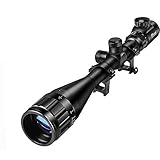
Overview: This budget-friendly CVLIFE riflescope targets entry-level shooters with 6-24x magnification, a 50mm objective lens, and dual-color (red/green) illuminated reticle. It includes a basic mount and focuses on simplicity for casual hunting or plinking, though it lacks extensive durability claims.
What Makes It Stand Out: The dual-color illumination offers versatility in low-light conditions, a rarity at this price. Its straightforward 1/8 MOA click adjustments and included mount provide immediate usability for new shooters seeking an affordable starting point.
Value for Money: Exceptional value under $200, making it accessible for beginners. While it won’t match premium optics, the free mount and illumination justify the cost for recreational use, though long-term reliability may lag behind higher-end models.
Strengths and Weaknesses:
Strengths: Very affordable, simple dual-color illumination, includes mounting hardware, adequate for short-to-mid range.
Weaknesses: Limited weatherproofing claims, plasticky construction, inconsistent click precision, and basic optics prone to glare.
Bottom Line: A solid choice for first-time buyers or casual shooters on a tight budget, but not recommended for demanding hunting or precision applications where durability and clarity are critical.
3. Monstrum G3 6-36x56 First Focal Plane FFP Rifle Scope | with Zero Stop | Flat Dark Earth

Overview: Monstrum’s G3 FFP scope delivers long-range capability with 6-36x magnification and a 56mm objective, targeting mid-to-long-distance shooters up to 500+ yards. Its first focal plane (FFP) MOA reticle scales with magnification, ensuring accurate holdovers at any zoom level.
What Makes It Stand Out: The high 36x magnification and true FFP design enable precise ranging and holdovers without recalibration. The zero-stop elevation turret, multiple illumination intensities, and included accessories (sunshade, rings, battery) enhance its tactical utility and ease of use.
Value for Money: Priced competitively in the mid-tier market, it offers FFP functionality and robust features typically found in costlier scopes. The bundled accessories add tangible value, making it a smart upgrade from entry-level SFP models.
Strengths and Weaknesses:
Strengths: True FFP reticle, excellent magnification range, reliable zero-stop, versatile illumination, generous accessory kit.
Weaknesses: Bulkier/heavier design; eye relief can be tight at high magnification; coating quality slightly lags behind top brands.
Bottom Line: Highly recommended for budget-conscious long-range enthusiasts needing FFP accuracy; balances performance and affordability better than most rivals in its class.
4. Monstrum Hornet 6-24x50 FFP Rifle Scope | Includes Zero Stop, Bubble Level Scope Rings, and Detachable Sunshade | MIL Reticle

Overview: The Monstrum Hornet is a versatile FFP riflescope with 6-24x magnification, targeting hunters and tactical shooters. It features a MIL-based X-Tree reticle, integrated throw lever, and a unique bubble-level ring system for alignment accuracy, all backed by a lifetime guarantee.
What Makes It Stand Out: Its standout elements include the bubble-level scope rings (rare at this price), 6-level illuminated FFP reticle, and user-friendly zero-stop turret. The MIL reticle version offers precise ranging, while the included sunshade and bikini covers enhance field readiness.
Value for Money: Exceptional value with premium inclusions like the bubble-level rings and sunshade. It undercuts comparable FFP scopes from major brands while delivering reliable performance for mid-range shooting, making it a cost-efficient upgrade.
Strengths and Weaknesses:
Strengths: Integrated bubble level, robust zero-stop, lifetime warranty, excellent reticle illumination, practical accessories.
Weaknesses: MIL reticle may confuse MOA users; throw lever requires occasional adjustment; slight parallax at low magnification.
Bottom Line: A top pick for shooters seeking FFP accuracy and innovative features without breaking the bank; the bubble-level rings alone justify its value for precision-focused users.
5. SNIPER Rifle Scope MT 6-24x50 with Red/Green/Blue Illuminated Reticle Riflescope, Adjustable Objective
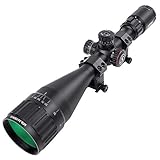
Overview: This SNIPER scope offers versatile 6-24x50 magnification with a unique triple-color (red/green/blue) illuminated Mil-Dot reticle. Built with aircraft-grade aluminum and nitrogen-filled sealing, it promises shockproof, waterproof performance for hunters and recreational shooters.
What Makes It Stand Out: The triple-color illumination (including rare blue) and auto-off battery saving are distinctive. The adjustable objective lens provides parallax correction, while QTA turrets deliver crisp 1/4 MOA adjustments—uncommon in its price bracket.
Value for Money: Priced affordably, it delivers solid value with premium touches like multi-coated lenses and durable construction. It competes well against basic illuminated scopes, though optical clarity doesn’t match top-tier models. Ideal for budget hunters needing reliable low-light functionality.
Strengths and Weaknesses:
Strengths: Triple-color illumination, parallax adjustment, sturdy build, precise turrets, weather-resistant.
Weaknesses: Blue illumination offers little practical advantage; eye relief inconsistent; coatings prone to glare in bright light.
Bottom Line: A capable, feature-rich scope for casual to intermediate users; choose it for the illumination flexibility and parallax control, but look elsewhere for elite optical performance.
6. Monstrum Beast 5-30x56 FFP Rifle Scope | Featuring Extra Low Dispersion Glass, Precision Turrets with Zero Stop, and Anti-Cant Scope Rings | MIL Reticle
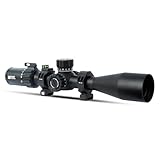
Overview: The Monstrum Beast 5-30x56 FFP is a precision long-range rifle scope targeting serious shooters, featuring adjustable magnification, ED glass, and robust construction backed by a lifetime guarantee.
What Makes It Stand Out: Its Extra Low Dispersion glass minimizes chromatic aberration for exceptional clarity, while the first focal plane MIL reticle (with six illumination levels) enables fast close-range acquisition and precise long-range ranging. The precision 0.1 MIL turrets with a configurable zero stop ensure reliable elevation resets.
Value for Money: Competitively priced against premium brands, it delivers high-end features like ED glass and FFP optics typically found in costlier models. The included anti-cant rings and lifetime warranty further enhance its affordability for dedicated long-range practitioners.
Strengths and Weaknesses: Strengths: Outstanding optical clarity from ED glass; versatile, illuminated FFP reticle; robust zero-stop turrets; exceptional warranty. Weaknesses: Bulky 56mm objective may require higher mounts; illumination could drain batteries faster at max brightness; limited windage travel compared to some rivals.
Bottom Line: An excellent budget-conscious choice for precision shooters needing reliable FFP performance, though its size may challenge certain rifle setups; highly recommended for value-focused long-range enthusiasts.
7. Arken Optics EP5 Gen 2 7-35x56 FFP Long Range Precision Rifle Scope with Illuminated VPR MOA Reticle, Zero Stop and 34mm Tube
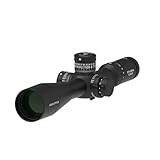
Overview: Arken’s EP5 Gen 2 is a high-magnification FFP scope engineered for extreme long-range shooting, boasting Japanese ED glass, a unique VPR reticle, and ruggedized construction.
What Makes It Stand Out: Multi-coated Japanese ED glass provides exceptional color fidelity and brightness, while the FFP VPR MOA reticle scales consistently across all magnifications for accurate holds. The ARKEN Zero Stop system ensures rapid return to zero, and the 35x max magnification exceeds many competitors.
Value for Money: Priced below top-tier brands like Nightforce, it offers comparable optical quality and tracking precision. The inclusion of a zero-stop system and 34mm tube (for greater adjustment range) solidifies its position as a cost-effective premium alternative.
Strengths and Weaknesses: Strengths: Superb clarity and low dispersion; precise, repeatable tracking; versatile VPR reticle; durable nitrogen-purged housing. Weaknesses: Higher magnification range may amplify mirage in heat; slightly heavier than 30mm-tube equivalents; limited dealer network for servicing.
Bottom Line: Ideal for competitive shooters prioritizing optical excellence and max magnification without breaking the bank; a top-tier recommendation for those needing 35x reach and reliable tracking.
8. Vortex Optics Venom 5-25x56 First Focal Plane Riflescope - EBR-7C (MOA) Reticle
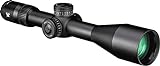
Overview: Vortex’s Venom 5-25x56 FFP is a competition-oriented scope blending expansive magnification, robust tracking, and Vortex’s renowned durability in a 34mm tube.
What Makes It Stand Out: The XD optical system minimizes chromatic aberration for edge-to-edge sharpness, while the EBR-7C MOA reticle ensures accurate subtensions at any magnification. The RevStop Zero System enables instant return to zero, and side-focus parallax adjustment enhances target clarity.
Value for Money: While pricier than entry-level models, its 85 MOA adjustment range, lifetime warranty, and competitive tracking accuracy justify the cost against peers like Primary Arms. The included throw lever adds practical value.
Strengths and Weaknesses: Strengths: Excellent low-light performance; reliable RevStop mechanism; durable Armortek coating; wide field of view at low power. Weaknesses: Max 25x magnification lags behind 30x+ rivals; EBR-7C reticle may appear cluttered to some; heavier than compact alternatives.
Bottom Line: A dependable, user-friendly scope for PRS competitors and hunters, though extreme-range shooters may prefer higher max magnification; highly recommended for its balance of performance and Vortex’s customer service.
9. Monstrum Beast 6-24x50 Rifle Scope with Side Focus and Offset Scope Mount | Black | FIB04-MOA Daylight Bright Reticle
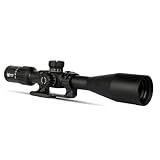
Overview: This Monstrum Beast model offers a versatile 6-24x magnification range with fiber optic illumination and included mounting hardware, targeting hunters and mid-range shooters.
What Makes It Stand Out: The fiber optic FIB04-MOA reticle delivers a daylight-bright center dot without batteries, while side-focus parallax adjustment aids target clarity. Its second focal plane design keeps the reticle size constant, and the included cantilever mount simplifies setup.
Value for Money: At a budget-friendly price, it includes valuable extras like the mount and bikini covers. While not matching FFP precision for long range, it’s a compelling option for hunters needing reliable performance under $500.
Strengths and Weaknesses: Strengths: Battery-free fiber optic illumination; easy parallax adjustment; lightweight 30mm tube; cost-effective package with mount. Weaknesses: SFP design limits ranging accuracy at variable magnifications; lower max magnification (24x) for true long range; illumination intensity dependent on ambient light.
Bottom Line: Best suited for hunters and casual shooters prioritizing simplicity and value; avoid for precision long-range work but recommended for affordable, no-fuss performance in field conditions.
10. Bushnell Match Pro ED 5-30x56 Riflescope - ED Prime Glass, Illuminated Deploy MIL 2 Reticle for Precision Shooting

Overview: Bushnell’s Match Pro ED 5-30x56 is a weather-ready precision scope featuring ED glass, an advanced illuminated reticle, and refined turrets for demanding shooting environments.
What Makes It Stand Out: The Deploy MIL 2 reticle offers 11 illumination levels and auto-shutoff, while ED Prime glass ensures color accuracy. Unique locking turrets with a Rev-Indicator prevent over-rotation, and IPX7 waterproofing with EXO Barrier repels elements aggressively.
Value for Money: Positioned mid-premium, it competes with Vortex and Monstrum on features. The IPX7 rating and EXO Barrier provide tangible advantages in harsh conditions, justifying a slight price premium over non-weatherproofed equivalents.
Strengths and Weaknesses: Strengths: Excellent weather resistance; intuitive Rev-Indicator for turret tracking; bright, customizable reticle; robust tracking accuracy. Weaknesses: Slightly narrower field of view than rivals; illumination may wash out subtle reticle details; heavier than 42mm objective scopes.
Bottom Line: A top pick for hunters and precision shooters facing extreme weather; its durability and user-friendly turrets make it a worthy investment, though pure competition shooters might prefer higher adjustment ranges.
Understanding the Competitive Long-Range Shooting Landscape
Defining the Demands of Match Environments
Competitive long-range shooting isn’t target practice; it’s a dynamic, high-pressure sport. Matches often involve rapidly changing wind conditions, varying light throughout the day, strict time constraints, and positions that test both shooter and equipment stability. Your scope must deliver consistent performance under these stressful conditions, not just in the controlled environment of a bench rest session. Reliability and speed become as crucial as raw optical quality.
Key Disciplines and Their Unique Scope Requirements
Different competitive disciplines place distinct demands on optics. Precision Rifle Series (PRS) matches emphasize speed, positional shooting, and rapid target acquisition at varying distances, often requiring quick magnification changes and highly visible reticles. F-Class shooting, often shot from prone with rests, prioritizes ultimate optical clarity, precise wind holds, and fine-tuned elevation adjustments for extreme distances. Benchrest competitions demand absolute mechanical precision and repeatability above all else. Understanding your primary discipline is the first step in narrowing scope requirements.
Core Optical Performance Metrics for Competition
Glass Quality and Light Transmission Essentials
When seconds count and targets blur in low-light conditions, superior light transmission is non-negotiable. High-quality, multi-coated optics minimize light loss, providing a brighter, clearer image crucial for spotting mirage, reading wind, and identifying targets at distance, especially during dawn, dusk, or overcast conditions common in matches. Don’t just look for “fully multi-coated”; understand how premium glass elements and advanced coatings directly impact usable sight picture brightness.
Resolution and Clarity: Seeing the Critical Detail
Resolution determines how much fine detail you can discern. For competitive shooters, this means clearly seeing bullet holes in targets at 1000+ yards, accurately judging mirage intensity and direction, and precisely placing holdovers. Superior resolution stems from high-quality lens grinding, precise alignment (collimation), and advanced optical designs. A scope with excellent resolution reduces shooter fatigue and increases confidence in wind calls and target identification.
Parallax Adjustment: Eliminating Critical Error
Parallax error occurs when the reticle and target image aren’t on the same optical plane, causing the reticle to appear to move relative to the target as your eye shifts. At long ranges, even minor parallax can lead to significant point-of-impact shifts. A precise, accessible, and reliable parallax adjustment (often a side focus knob) is essential for competitive accuracy. Understanding how to quickly and accurately set parallax for varying distances is a fundamental skill.
Critical Mechanical Features for Precision and Speed
Turret Systems: Tracking Accuracy and Tactical Functionality
This is arguably the most scrutinized feature in competitive scopes. Turrets must track with absolute mechanical precision—what you dial must equal what you get, shot after shot, match after match. Look for turrets with crisp, positive clicks, minimal rotational torque, and reliable zero stops. Tactical turrets (exposed, easy to manipulate without tools) are standard for PRS, while F-Class shooters often prefer capped turrets for protection. Consistent tracking under recoil is paramount; inconsistent tracking ruins ballistic solutions.
Elevation and Windage Travel: Range and Usability
Ensure the scope offers sufficient elevation travel to reach your intended maximum competitive distance with your specific cartridge and load, including compensation for atmospheric conditions. Similarly, adequate windage travel is necessary for extreme crosswinds. However, excessive travel can lead to cumbersome dialing; the key is having enough travel optimized for your typical competition ranges. Consider the ease of resetting turrets to zero or a known reference point mid-match.
Zero Stop Reliability and Implementation
A positive, repeatable zero stop is essential for competitive shooters who frequently dial significant elevation. It allows you to quickly and confidently return to your 100-yard zero (or base reference) after engaging distant targets, without counting clicks or risking error. The zero stop mechanism must be robust, easy to set, and hold its position securely through recoil and handling. Test this feature rigorously before committing to a scope for competition.
Reticle Selection: Your Wind-Reading and Holdover Partner
First Focal Plane vs. Second Focal Plane: The Competitive Trade-Off
The focal plane location fundamentally impacts how the reticle interacts with magnification. First Focal Plane (FFP) reticles scale with magnification, meaning holdover and windage marks remain accurate at any power setting. This is highly advantageous for rapidly changing distances and magnification use in dynamic matches. Second Focal Plane (SFP) reticles only provide accurate subtensions at one specific magnification (usually max power), which can be limiting but often offers finer reticle lines at lower powers. The choice heavily depends on your discipline and shooting style.
Reticle Complexity: Finding the Optimal Balance
Competitive reticles range from simple dots to complex grids with ranging marks and wind holds. While intricate mil-based or MOA-based grids offer immense utility for precise holds and wind corrections, they can also clutter the sight picture, especially in low light or high-pressure situations. Consider the complexity you can effectively utilize under match stress. A clean, uncluttered reticle you can read instantly might outperform a complex one you fumble with when the clock starts.
Illumination: When and How Much is Beneficial
Illuminated reticles can be a significant asset in low-light conditions, enhancing reticle visibility against dark backgrounds. However, for competitive use, the illumination must be extremely precise, offering fine adjustments to avoid washing out the reticle or creating glare that obscures the target. Overly bright or poorly controlled illumination can be detrimental. Assess whether the illumination system provides the subtle, controllable brightness you need for dawn/dusk matches without compromising daytime clarity.
Magnification and Objective Lens Considerations
Optimal Magnification Range for Competitive Distances
While high magnification is desirable for seeing distant targets clearly, excessive power often sacrifices field of view, eye relief consistency, and can amplify mirage and shooter movement. Competitive shooters typically find a magnification range between 5-25x or 6-28x offers the best balance for engagements from 300 to 1200+ yards. Consider the practical usability—can you effectively scan for targets and manage recoil at the highest settings during a timed stage?
Objective Lens Size: Gathering Light vs. Practicality
A larger objective lens (e.g., 50mm vs. 44mm) gathers more light, theoretically improving low-light performance. However, the marginal gain must be weighed against increased weight, larger size (potentially interfering with mounts or bags), and the need for higher mounts (reducing stability). For many competitors, especially in PRS, a 44mm objective offers the best compromise, providing excellent light transmission without excessive bulk. Evaluate the real-world optical benefit versus the physical trade-offs for your shooting style.
Field of View: Critical for Target Acquisition and Tracking
A wider field of view (FOV) at lower magnifications is crucial for quickly locating targets, especially during timed stages with multiple targets or moving targets. It also helps maintain situational awareness. While FOV narrows as magnification increases (a physical limitation), scopes with inherently wider FOVs at their base power provide a significant advantage in dynamic competition scenarios. Don’t overlook this spec when comparing potential optics.
Durability, Ergonomics, and Environmental Resilience
Construction Materials: Weight vs. Strength
Competitive scopes must withstand repeated heavy recoil without losing zero. Aircraft-grade aluminum housings are standard, but the quality of the alloy and manufacturing process matter greatly. Titanium offers significant weight savings but at a premium cost. Consider the weight trade-off: a lighter scope aids maneuverability in positional stages, while a slightly heavier one might offer marginally better stability on rests. Ensure the construction feels robust without unnecessary bulk.
Waterproofing, Fogproofing, and Sealing Standards
Scopes must perform flawlessly in rain, snow, humidity, and rapid temperature changes. Look for rigorous nitrogen or argon purging and O-ring sealing to guarantee waterproof integrity and prevent internal fogging. Inconsistent sealing can lead to moisture ingress, ruining the optic. Reputable manufacturers subject scopes to stringent pressure and temperature testing; understanding these standards provides confidence in field reliability.
Ergonomic Design: Knobs, Focus, and Handling Under Pressure
In the heat of a match, small ergonomic details make a huge difference. Turret knobs need sufficient grip texture even with gloves, clear tactile feedback, and easy rotation without excessive force. The parallax knob should be positioned for quick access without shifting your head position. The overall handling—how it feels in your hands during rapid position changes—contributes significantly to shooter speed and confidence. Prioritize intuitive, glove-friendly operation.
Budgeting and Value Assessment for Serious Competitors
Understanding the Price Spectrum: What You’re Actually Paying For
Long-range competition scopes span a wide price range. Higher cost generally correlates with superior optical glass, more precise manufacturing tolerances (especially for tracking), better coatings, refined ergonomics, and rigorous quality control. It’s not just about brand prestige; it’s the cost of engineering and materials required for absolute mechanical and optical precision under stress. Be wary of scopes significantly underperforming their price point.
Investment vs. Cost: Longevity and Performance Payoff
Viewing a competition scope as an investment, rather than just a cost, is crucial. A scope that maintains perfect tracking and optical clarity for years, match after match, delivers far greater value than a cheaper option that degrades or fails, forcing replacement and potentially costing you match results. Factor in the expected lifespan and the cost per match of a reliable optic versus the risk of downtime with a budget model.
When to Prioritize Performance Over Price
For dedicated competitive shooters, especially those aiming for top finishes, compromising on critical features like tracking accuracy or optical clarity for a lower price is often a false economy. The performance gap between a mid-tier and high-end scope can directly impact your score. Allocate your budget towards the features most critical to your specific competitive needs—don’t get seduced by unnecessary bells and whistles if core precision is lacking.
Integration and Setup for Peak Competitive Performance
Mounting Systems: The Foundation of Consistency
Even the finest scope is compromised by a poor mount. Precision-machined mounts with consistent torque specifications, proper recoil lugs, and a secure fit to both the rifle and scope tube are non-negotiable. Consider the height needed for proper eye relief and cheek weld with your rifle and shooting position. A stable, repeatable mounting platform is the bedrock upon which all scope performance rests.
Proper Zeroing and Validation Procedures
Establishing a reliable zero is just the start. Competitive shooters must validate tracking through “tall target tests” to ensure the scope moves exactly as dialed across its entire range. Consistent zeroing technique, using a stable rest and consistent ammunition, is vital. Document your zero meticulously and understand how environmental factors might influence it between matches. Never assume a scope holds zero perfectly without verification.
Environmental Factor Consideration in Setup
Your scope setup isn’t static. Understand how temperature extremes can slightly affect point of impact (POI) and how atmospheric pressure changes impact your ballistic solution. While the scope itself doesn’t change, your zero relative to the target might require minor adjustments based on significant environmental shifts from your zeroing conditions. Factor this into your pre-match preparation routine.
Frequently Asked Questions
Frequently Asked Questions
What is the single most critical feature for a competitive long-range scope?
Tracking accuracy is universally paramount. If the scope doesn’t move the point of impact precisely as dialed, consistently and repeatably, no other feature matters as much for competitive success.
Is First Focal Plane (FFP) absolutely necessary for competitive shooting?
While FFP offers significant advantages for dialing and holding at varying magnifications, especially in dynamic disciplines like PRS, it’s not an absolute requirement. Many top shooters successfully compete with well-understood SFP scopes, particularly in F-Class where magnification is often kept constant.
How important is maximum magnification for 1000-yard competition?
Sufficient magnification (typically 20-25x) is important for target clarity, but exceeding practical usability can be detrimental. A stable image at 22x is far more valuable than a shaky, narrow-FOV image at 30x. Prioritize usable magnification over sheer maximum power.
Can I use a hunting scope for serious long-range competition?
Generally, no. Hunting scopes often lack the precise, repeatable tracking, robust turret systems, sufficient elevation travel, and refined reticle options needed for the exacting demands and rapid adjustments of competitive long-range shooting.
How often should I verify my scope’s tracking accuracy?
Validate tracking before the start of a new season, after any significant impact (like a hard recoil event), and periodically throughout heavy use (e.g., every 3-5 matches). Consistent tracking validation is a non-negotiable part of competitive prep.
What magnification range is ideal for Precision Rifle Series (PRS) competition?
A range of 5-25x or 6-28x is widely considered the sweet spot for PRS, balancing wide field of view for target acquisition at low power with sufficient magnification for precise holds at distance, while maintaining manageable size and weight.
Why do competitive scopes often have large objective lenses (50mm+)?
Primarily for increased light gathering, improving image brightness and clarity in low-light match conditions (dawn/dusk). However, the marginal optical gain must be weighed against increased weight and size; 44mm objectives are often preferred for PRS for practicality.
How crucial is a zero stop for competitive long-range shooting?
Extremely crucial for disciplines involving significant elevation dialing (like PRS or ELR). A reliable zero stop allows instant, confident return to a known zero without counting clicks, saving critical seconds during timed stages.
Should I prioritize optical clarity or mechanical tracking for competition?
Both are essential, but if forced to choose, impeccable mechanical tracking is slightly more critical. Brilliant optics are useless if the adjustments don’t move the bullet to where the reticle indicates. However, top competitors demand excellence in both areas.
How does eye relief impact competitive shooting performance?
Consistent, forgiving eye relief is vital, especially in positional shooting where maintaining a perfect cheek weld is challenging. Scopes with longer eye relief (e.g., 3.5-4 inches) or generous eye boxes provide more flexibility and reduce the risk of scope bite during recoil in dynamic positions.
Related Buying Guides
- 10 Essential Tips for Maximizing Long Range Binoculars Performance in the Field
- 10 Must-Have Long Range Scopes for Competitive Shooting in 2026
- 10 Premium Long Range Scopes for Competitive Shooters (Worth the Investment)
- The 10 Ultimate Best Long Range Scopes for Competitive Shooters in 2026
- The Complete Guide to the 10 Best Scopes for AR-15 for Urban Defense