Table of Contents
There’s something uniquely challenging about pursuing elk in the vertical world of mountainous terrain. Unlike the rolling hills or flat agricultural lands where many hunting strategies were born, the high country demands a completely different approach to decoy deployment. The thin air, unpredictable weather, and extreme visibility create a hunting environment where every decision about your decoy setup can mean the difference between a punched tag and a long hike back to camp empty-handed.
Mountain elk are different animals altogether—wary, conditioned to spotting danger across vast distances, and masters of using thermals and topography to their advantage. Your decoy strategy must account for these factors while remaining light enough to pack into remote basins and durable enough to withstand sudden squalls. This guide breaks down the essential configurations, positioning tactics, and gear considerations that will transform your mountain elk hunts, helping you understand not just what works, but why it works in these demanding environments.
Top 10 Elk Decoys
Detailed Product Reviews
1. Montana Decoy Eichler Elk

Overview: The Montana Decoy Eichler Elk represents a collaboration with renowned elk hunter Corey Eichler, delivering a photorealistic bull elk decoy designed for serious archery hunters. This two-dimensional decoy employs an actual elk photograph printed on durable polyester fabric, creating convincing visual deception. Its innovative design collapses to a compact 19" x 12" package, making it exceptionally portable for backcountry hunts where every ounce matters.
What Makes It Stand Out: The included instructional DVD sets this decoy apart from competitors, offering proven tactics and real hunt footage that helps hunters maximize effectiveness. The dual-setup system provides unmatched versatility—use traditional leg poles for stability or Eichler’s signature string hanging system for rapid deployment in timbered terrain. Built from a genuine elk image rather than artistic rendering, the decoy achieves superior realism that consistently fools mature bulls in challenging conditions.
Value for Money: Priced around $150-170, this decoy sits in the premium tier for 2D options but justifies the cost through educational content and proven field performance. Comparable decoys without the DVD and dual-mount system typically run $120-140, making the modest upcharge worthwhile for hunters seeking every advantage. The durability ensures multiple seasons of use, spreading the investment over years of successful hunts.
Strengths and Weaknesses:
- Pros: Photographic realism; extremely packable; versatile mounting options; educational DVD adds significant value; proven effectiveness on pressured elk
- Cons: 2D design limits viewing angles; requires careful placement for optimal light conditions; leg poles sold separately in some configurations; string system needs practice to master
Bottom Line: The Eichler Elk decoy is an excellent choice for bowhunters who prioritize mobility and realism. While the 2D format has inherent limitations, the photographic quality, setup versatility, and included instructional content make it a worthwhile investment for hunters willing to learn proper deployment techniques.
2. RMEF Cow Elk by Montana Decoy
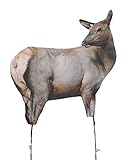
Overview: This partnership decoy between Montana Decoy and the Rocky Mountain Elk Foundation delivers a highly effective cow elk silhouette that supports conservation with every purchase. The decoy folds to a remarkably compact size while maintaining enough surface area for excellent visibility at distance. Weighing under two pounds, it’s light enough to carry on every hunt without compromising pack space, making it ideal for spot-and-stalk archery hunters.
What Makes It Stand Out: A portion of proceeds directly funds RMEF’s habitat conservation efforts, allowing hunters to contribute to elk populations while pursuing them. Its size strikes an optimal balance between portability and visibility—large enough to attract attention from rutting bulls yet compact enough for dense timber navigation. The decoy performs consistently across all season phases, from early season social curiosity to late-season herd integration.
Value for Money: Typically retailing for $130-150, this decoy offers solid mid-range value. While slightly pricier than generic cow decoys, the RMEF contribution and proven Montana Decoy durability justify the $20-30 premium. Hunters essentially make a tax-deductible donation while acquiring gear that should last 5+ seasons with proper care, making the effective cost quite reasonable.
Strengths and Weaknesses:
- Pros: Supports RMEF conservation; ultra-lightweight; folds extremely small; effective year-round; quick setup; durable fabric construction
- Cons: 2D design requires strategic positioning; lacks the feeding pose some hunters prefer; no included instructional content; limited mounting options compared to premium models
Bottom Line: The RMEF Cow Elk decoy excels for hunters seeking a lightweight, ethical purchase that gives back to conservation. It’s a reliable, no-frills option that performs consistently in the field. While it lacks advanced features, its conservation impact and proven effectiveness make it a smart choice for hunters who prioritize simplicity and wildlife management.
3. Montana Decoy Miss September Feeding Elk

Overview: Miss September Feeding Elk brings a natural, non-threatening pose to the cow decoy category, specifically designed to trigger confidence in wary bull elk. The feeding posture signals safety and contentment, encouraging approach from call-shy animals that might otherwise hang up. Constructed from weather-resistant polyester with a three-dimensional photographic appearance, this decoy creates depth and realism that flat silhouettes cannot match.
What Makes It Stand Out: The feeding pose is the primary differentiator, offering behavioral authenticity that aggressive or alert poses lack. This subtlety proves invaluable when hunting pressured public land bulls that have learned to associate erect postures with danger. The 3D visual effect, achieved through advanced printing techniques, creates parallax movement that enhances realism as bulls circle and approach from various angles.
Value for Money: At approximately $110-130, Miss September represents excellent value in the specialized decoy market. It undercuts premium bull decoys by $40-60 while offering superior realism to generic cow decoys in the $80-100 range. The feeding pose’s effectiveness on educated elk provides a higher return on investment through increased encounter rates and shot opportunities.
Strengths and Weaknesses:
- Pros: Natural feeding pose calms wary elk; photo-realistic 3D effect; rapid setup/takedown; highly packable; durable in harsh weather; versatile for multiple hunting styles
- Cons: 2D limitations still apply at extreme angles; feeding pose less effective during peak rut aggression phases; requires clear ground for proper placement; slightly heavier than basic silhouettes
Bottom Line: Miss September is a specialized tool for hunters targeting pressured or mature elk. The feeding pose’s psychological advantage justifies its place in any serious archer’s arsenal. While not a universal solution for all rut phases, its ability to calm call-shy bulls makes it particularly valuable for late-season and public land hunting scenarios where subtlety triumphs over aggression.
4. Montana Decoy 0078: Back Country Elk Decoy

Overview: Specifically engineered for deep wilderness archery hunts, the Back Country Elk Decoy prioritizes minimalism and versatility above all else. This ultralight decoy integrates seamlessly with standard trekking poles, eliminating the need to carry dedicated support poles. Designed for hunters who measure hikes in miles and vertical gain, it folds to an incredibly small footprint that disappears in a pack, ensuring it never gets left behind due to weight concerns.
What Makes It Stand Out: The trekking pole compatibility is a game-changer for backcountry hunters already carrying these supports. Multiple mounting options—trekking pole, included leg pole, tree top, or direct pinning—provide unmatched adaptability in rugged terrain where ideal setup conditions rarely exist. The decoy’s design acknowledges that remote hunts demand gear serving multiple purposes, reducing overall pack weight while maintaining effectiveness.
Value for Money: Priced at $100-120, this decoy offers exceptional value for mountain hunters. Competitors’ ultralight options typically cost $140+ and lack the versatile mounting system. By leveraging gear hunters already carry, it eliminates $30-50 in additional pole purchases. For backcountry specialists, the weight savings alone justify the price premium over heavier alternatives.
Strengths and Weaknesses:
- Pros: Trekking pole integration saves weight; incredibly compact when folded; versatile mounting for any terrain; photorealistic printing; designed specifically for remote hunting; eliminates dedicated pole weight
- Cons: Smaller size reduces long-range visibility; 2D limitations require careful positioning; minimalist design lacks advanced features; thinner material more susceptible to wind damage; setup height limited by trekking pole length
Bottom Line: The 0078 Back Country decoy is purpose-built for mountain hunters who count every ounce. Its innovative trekking pole integration and extreme packability make it the ideal choice for remote elk pursuits. While compromises in size and durability exist, the design’s focus on weight savings and versatility makes it indispensable for hunters venturing far from trailheads where mobility determines success.
5. Delta McKenzie 22540 Pinnacle Elk 3D Hunting Archery Target Decoy
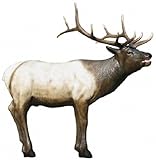
Overview: The Delta McKenzie Pinnacle Elk blurs the line between practice target and hunting decoy, offering a full-size 3D solution that serves double duty. With an impressive 80-inch body length and 54-inch shoulder height, this decoy presents a life-sized profile that dominates visual space. Engineered to withstand broadhead impacts up to 350+ fps, it transitions seamlessly from backyard practice sessions to field deployment, providing unmatched continuity between training and hunting scenarios.
What Makes It Stand Out: True three-dimensional construction eliminates the viewing angle limitations inherent to 2D silhouettes, creating convincing realism from any perspective. The broadhead-rated durability means hunters can practice with exact hunting arrows, building confidence in shot placement and arrow performance. Its dual-purpose design reduces gear duplication, offering a practice target that moonlights as a field decoy during hunting season.
Value for Money: At $350-400, the Pinnacle Elk demands serious investment but delivers unique dual-functionality. Purchasing separate 3D target ($200-250) and premium decoy ($150-200) would cost $350-450, making this competitively priced. The ability to practice on the exact decoy used in hunts provides intangible value in shot confidence and equipment familiarity that justifies the premium over single-purpose options.
Strengths and Weaknesses:
- Pros: True 3D realism from all angles; doubles as practice target; broadhead-durable construction; life-sized proportions; eliminates 2D angle limitations; builds shot confidence through practice continuity
- Cons: Heavy at 25+ pounds; bulky transport requires vehicle access; overkill for backcountry hunts; higher cost than specialized decoys; foam material vulnerable to UV degradation; setup time significantly longer than foldable options
Bottom Line: The Pinnacle Elk is ideal for property owners and road-accessible hunts where transport isn’t limiting. Its dual-target functionality and true 3D realism create unmatched preparation and effectiveness. While impractical for remote wilderness, hunters with vehicle access gain exceptional value through integrated practice and hunting applications, making it a wise investment for those prioritizing realism and shot confidence over portability.
6. MONTANA DECOY Teaser Tail

Overview: The MONTANA DECOY Teaser Tail is a specialized hunting accessory designed to add lifelike movement to existing decoy setups. This simple yet effective component mimics the natural swishing motion of a deer’s tail, creating an irresistible visual cue for approaching game. Engineered to be ultra-lightweight, it responds to even the gentlest breeze, providing continuous motion without requiring batteries or mechanical parts.
What Makes It Stand Out: Its universal compatibility sets this teaser tail apart. Unlike fixed decoys, this accessory can be attached to multiple decoy styles, instantly upgrading static models into dynamic, believable presentations. The realistic detailing captures the subtle coloration and texture of an actual deer tail, while its featherweight construction ensures it sways authentically in winds that would leave heavier components motionless.
Value for Money: Priced significantly lower than full-body electronic decoys, this tail offers exceptional ROI for hunters who already own decoys. It’s a cost-effective way to enhance effectiveness without reinvesting in complete systems. Compared to DIY solutions that often look unnatural, this purpose-built accessory delivers professional results at a fraction of the cost of motorized alternatives.
Strengths and Weaknesses: Strengths include portability (weighs mere ounces), versatility across decoy types, and wind-activated realism. It folds flat for transport and sets up in seconds. Weaknesses: effectiveness depends entirely on wind conditions, and it provides only rear-view motion. It also requires an existing decoy and may tangle in heavy vegetation.
Bottom Line: For hunters seeking to boost decoy realism without breaking the bank, the Teaser Tail is a smart addition to your kit. It shines in open-country hunts where wind is reliable and game is visual-oriented.
7. Montana Decoy 0069: Deer Rump

Overview: The Montana Decoy 0069 Deer Rump offers a unique approach to deer attraction by presenting the rear view of a whitetail. This compact decoy capitalizes on the natural curiosity of deer, who often investigate other animals from behind. The rump perspective suggests a relaxed, feeding animal, making it particularly effective for drawing in cautious bucks during the rut or late-season hunts when deer seek company.
What Makes It Stand Out: Its minimalist design is genius for mobile hunters. The decoy focuses on the most recognizable and reassuring portion of a deer—the hindquarters and tail—eliminating the need for full-body detail. This strategic simplicity reduces weight and bulk while maintaining psychological effectiveness. The high-resolution printing captures the subtle musculature and hair patterns that convince approaching deer they’re seeing the real thing.
Value for Money: As an entry-level decoy, it provides excellent value for hunters testing decoy strategies without committing to expensive, bulky models. It costs significantly less than full-body decoys while delivering targeted effectiveness. The compact size also saves on storage and transport costs, making it ideal for public land hunters who hike to their spots.
Strengths and Weaknesses: Strengths include ultra-portability, quick deployment, and effectiveness on call-shy deer. It sets up in under a minute and weighs almost nothing. Weaknesses: limited visibility compared to full-profile decoys, restricted to rear-view presentation, and may be less effective in open fields where deer expect to see full bodies. The small size could be overlooked at long distances.
Bottom Line: This is a specialized tool for hunters who understand deer psychology and value mobility. It won’t replace full-body decoys but excels as a confidence-builder near stands or when paired with calling sequences.
8. Elk Vintage Crossing Sign Zone Xing | Indoor/Outdoor Plastic | 12" Tall Rustic Animals Hunting Hunter Deer Shotgun Decoy Calls

Overview: This 12" x 12" plastic sign is a decorative novelty item celebrating elk hunting culture, not a functional decoy. Featuring a vintage-inspired “Elk Crossing” design, it serves as rustic décor for hunting camps, cabins, garages, or offices. The sign taps into nostalgic outdoor aesthetics, making it a conversation piece rather than field equipment.
What Makes It Stand Out: The sign’s versatility distinguishes it from pure novelty items. Engineered for both indoor and outdoor use, it withstands weather exposure while maintaining its retro charm. The pre-cut mounting holes enable hassle-free installation on various surfaces, from interior drywall to exterior siding. The ultra-durable inks resist fading and scratching, preserving the vintage look for years.
Value for Money: Positioned as a gift item, it offers solid value for its price point. While it won’t help harvest game, it provides lasting decorative appeal that cheaper paper signs can’t match. The durability justifies the cost over disposable alternatives, and its dual-purpose nature (indoor/outdoor) essentially delivers two products in one.
Strengths and Weaknesses: Strengths include weather-resistant construction, authentic vintage aesthetics, and ready-to-hang convenience. The 12" size is substantial enough to be noticed without overwhelming space. Weaknesses: it’s purely decorative with zero hunting utility, the design may not suit modern tastes, and the plastic construction, while durable, lacks the authenticity of metal signs. It’s also mislabeled with “decoy calls” in the title, which could confuse buyers.
Bottom Line: Perfect as a gift for the elk hunter who has everything, this sign excels as camp décor or man-cave embellishment. Just don’t expect it to attract actual elk.
9. Montana Decoy 0083: Antelope Decoy Combo

Overview: The Antelope Decoy Combo is a two-in-one system designed for serious pronghorn hunters. This set includes both a buck and doe decoy that can be deployed together for maximum realism or separately depending on hunting conditions. Built to withstand the harsh, windy environments typical of antelope country, these decoys feature upgraded printing technology for season-long performance.
What Makes It Stand Out: The modular design offers unmatched tactical flexibility. Use the buck decoy to challenge territorial bucks during the rut, deploy the doe to attract curious animals, or position both to create a realistic social scene. The enhanced detail and resolution represent a significant leap forward in photo-realistic decoys, with print quality so high that individual hair strands are visible, delivering confidence-inspiring realism at distance.
Value for Money: While priced higher than single decoys, the combo effectively provides two premium units for about 30% less than buying separately. The durability means multi-season use, spreading the investment over years. Compared to traditional foam decoys that fade and crack, these maintain their effectiveness, offering better long-term value.
Strengths and Weaknesses: Strengths include exceptional realism, versatile deployment options, rugged construction, and compact storage. They withstand high winds and pack down flat for easy transport. Weaknesses: the premium price may deter casual hunters, setup requires more stakes and lines than simpler decoys, and the realistic detail demands careful handling to avoid tears. The combo is also overkill for hunters who only hunt specific phases of the season.
Bottom Line: For dedicated antelope hunters, this combo is worth every penny. The dual-decoy strategy significantly increases success rates, making it a professional-grade investment for those serious about pronghorn.
10. 1080 Graphics Elk Crossing Sign Novelty Gift Animals Hunting Hunter Deer Shotgun Decoy Calls Sticker 8"x8"

Overview: This 8"x8" vinyl sticker from 1080 Graphics is a novelty item for personalizing hunting gear, vehicles, or workspace. Made in the USA from high-performance outdoor vinyl, it features an elk crossing design that lets hunters display their passion. Unlike the plastic sign version, this adhesive decal offers flexibility for application on curved surfaces like gun cases, trucks, or water bottles.
What Makes It Stand Out: The premium material quality elevates it above typical bargain stickers. Engineered to be water-resistant, UV-proof, and scratch-resistant, it maintains its appearance through harsh field conditions. The self-adhesive backing adheres aggressively to most surfaces while remaining removable without residue. Its compact 8" size makes it versatile for various applications without dominating the object’s aesthetics.
Value for Money: As a made-in-USA product using professional-grade vinyl, it commands a slightly higher price than imported alternatives but delivers superior longevity. The durability means replacement isn’t needed annually, justifying the modest premium. For hunters wanting to subtly brand their gear, it costs less than custom engraving while offering similar personalization.
Strengths and Weaknesses: Strengths include exceptional durability, versatile application, proud American manufacturing, and clean removal. The high-performance vinyl withstands weather, washing, and abrasion. Weaknesses: the 8" size may be too small for some preferences, it’s purely decorative with no functional hunting value, and the “decoy calls” keyword in the title is misleading. Application requires careful alignment to avoid bubbles.
Bottom Line: Ideal for hunters wanting to customize gear with a quality, lasting decal. Choose this over cheaper imports if durability matters more than initial cost.
Understanding Mountainous Terrain Challenges
Elevation and Visibility Factors
At 9,000 feet and above, visibility becomes both your greatest ally and your worst enemy. Elk can spot anomalies from miles away, and your decoy setup must appear completely natural within the landscape. The key is understanding how light interacts with high-altitude environments—harsh midday sun creates stark shadows, while dawn and dusk paint everything in soft amber tones that can reveal unnatural colors and materials. Your decoy’s silhouette must match the angular, broken patterns of timber and rock that dominate these vistas.
Wind Patterns in High Country
Mountain thermals create swirling, unpredictable wind currents that can betray your position in seconds. Unlike flatland hunting where wind direction remains relatively constant, mountainous terrain generates updrafts in the morning as the sun warms slopes and downdrafts in the evening as temperatures drop. Your decoy placement must account for these patterns, positioning you in locations where you can predict, to some degree, how your scent will travel relative to the decoy’s position and expected elk approach routes.
Vegetation and Cover Considerations
The sparse, patchy nature of high-altitude vegetation means you’ll rarely have the luxury of hiding in dense timber. Instead, you’ll work with scattered pockets of cover, rock outcroppings, and the occasional isolated spruce or aspen grove. Your decoy setup needs to complement these limited cover options, creating believable scenarios that elk would naturally encounter in these open environments. The goal is to make your decoy visible enough to draw attention while keeping yourself concealed in the minimal cover available.
Core Decoy Configuration Strategies
The Solo Bull Setup
A single bull decoy represents the simplest and often most effective configuration for mountainous terrain. This approach mimics a satellite bull moving through high country, either searching for cows or establishing territory. The solo configuration excels in areas where elk density is lower and a single animal appears more realistic than an entire herd. Position the decoy in slight depressions or against natural backdrops that break up its outline, making it appear as a lone traveler rather than an obvious setup.
Cow-Calf Pair Configurations
During early season and post-rut periods, a cow with calf setup can trigger protective instincts or social curiosity from both bulls and other cows. This configuration suggests a family group that has become separated from the main herd—a common occurrence in broken, mountainous terrain where groups get scattered across drainages. The calf component adds movement and life to your setup, as real calves are constantly shifting position and nursing, creating a dynamic scene that draws investigating elk closer.
Full Herd Simulation Tactics
For the hunter willing to invest the weight and setup time, multiple decoys creating the illusion of a small herd can be devastatingly effective during peak rut. In mountain parks and basins where real herds congregate, a group of three to five decoys mimicking cows, calves, and perhaps a subordinate bull creates a visual confirmation of the sounds you’re producing. This setup works best in areas with established elk activity where you’re trying to convince a herd bull that competitors have moved in on his territory.
Positioning and Placement Techniques
Ridge Line Deployment Methods
Ridge lines serve as natural elk highways in mountainous terrain, but placing a decoy on an exposed spine requires careful consideration of the skyline. Never position your decoy on the absolute top where it creates an unnatural silhouette. Instead, set it 10-15 yards down the leeward side, visible from the opposing ridge but not sky-lined. This placement mimics how real elk use topography to stay concealed while traveling, and it positions the decoy to catch thermals that carry scent and sound to approaching bulls.
Basin and Meadow Strategies
High mountain basins are elk magnets during feeding periods, but they’re also fishbowls where every movement is visible. Place your decoy near the transition zone between timber and open meadow, angled slightly toward the center of the basin. This positioning suggests an animal that’s just emerged to feed but remains ready to retreat to cover. The key is creating a realistic entry scenario—elk approaching from above or across the basin should see the decoy in a location where they would expect to encounter another elk.
Timberline Transition Zones
The edge where dense timber gives way to alpine vegetation represents a critical staging area for mountain elk. Here, your decoy should be positioned just inside the timber, visible from the open country but appearing as though it’s using the treeline for concealment. This setup is particularly effective during midday when elk seek shade and security before moving into open feeding areas. The contrast between dark timber and bright meadow creates visibility challenges, so ensure your decoy’s coloring matches the dappled light conditions of this transitional habitat.
Mobility and Packability Essentials
Weight Distribution Principles
Every ounce matters when you’re gaining 2,000 vertical feet before daylight. Modern mountain decoys have evolved to prioritize packability without sacrificing realism. Look for designs that distribute weight evenly across your pack frame, with components that nest together or attach to exterior straps without creating awkward protrusions. The goal is maintaining your balance and stamina on steep approaches while carrying enough decoy to be effective when you reach your hunting location.
Compact Folding Designs
The most effective mountain decoys collapse into flat panels or roll into compact cylinders that slide easily against a pack’s back panel. These designs typically use flexible poles or inflatable components that deploy quickly in the field. When evaluating folding designs, consider not just packed size but also deployment speed—mountain hunting opportunities often materialize in seconds, and fumbling with complicated assembly can cost you a bull. Practice your setup sequence at home until it becomes muscle memory.
Attachment and Carrying Systems
How your decoy attaches to your pack affects both comfort and accessibility. Systems that allow one-handed removal while wearing gloves are essential for cold-weather mountain hunts. Look for quick-detach buckles or magnetic closures that secure the decoy during rigorous climbing but release instantly when you spot elk. Some hunters prefer decoys that strap to the pack’s face panel for easy access, while others opt for designs that slide into a designated side pocket—choose based on your typical approach style and pack design.
Realism and Visual Appeal Factors
Coloration and Markings Accuracy
Mountain elk often appear darker and more richly colored than their lowland cousins due to different forage and longer winter coats. Your decoy’s coloration should reflect these regional variations, with deeper chocolate browns, richer tans, and more pronounced black markings on legs and chest. High-altitude sunlight is intensely bright and can wash out poorly colored decoys, making them appear fake at distance. Subtle variations in shading across the body help break up the artificial uniformity that alerts wary bulls.
Body Posture and Positioning
Static, alert postures rarely fool mature mountain elk that have been pressured by predators and hunters. Effective decoys incorporate relaxed, feeding, or bedded positions that suggest calm, natural behavior. A feeding cow with head down and one leg forward appears far more realistic than an animal staring intently in one direction. For bull decoys, a slightly turned head or quartering-away angle suggests an animal that’s aware of its surroundings but not alarmed, inviting approach rather than suspicion.
Antler Configuration Options
If your setup includes a bull decoy, antler size and configuration must match the scenario you’re creating. In high-pressure mountain areas where trophy bulls are targeted, giant antlers can intimidate satellite bulls and alert herd bulls to a potentially dangerous competitor. Medium-sized, symmetrical antlers often prove more effective for drawing in multiple age classes. Some hunters carry interchangeable antler sets, switching between smaller raghorn configurations for early season and more mature racks during peak rut when competition is expected.
Weather and Durability Considerations
UV Resistance for High Altitude Sun
The intense ultraviolet radiation at high elevations degrades materials rapidly, causing colors to fade and fabrics to become brittle. Quality mountain decoys incorporate UV-resistant coatings and pigments that maintain their appearance throughout multiple seasons. This isn’t just about longevity—faded, washed-out decoys lose their realism and become less effective. Check that your decoy’s materials are rated for extended high-altitude exposure, particularly if you hunt above timberline where sun exposure is constant.
Wind Stability Mechanisms
Mountain winds can gust from calm to 40 mph in minutes, turning an unsecured decoy into a sail that spooks every animal in the valley. Effective designs incorporate low centers of gravity, ground stakes that anchor in rocky soil, and flexible components that bend rather than break in strong gusts. Some hunters carry lightweight sandbags or fillable anchors that can be packed empty and filled with dirt or rocks at the setup site. The key is creating a stable platform without adding significant weight to your pack.
Waterproofing and Moisture Management
Mountain weather changes instantly, and your decoy must perform equally well in snow, rain, and bright sun. Waterproof materials prevent the decoy from becoming waterlogged and heavy during storms, while quick-drying fabrics ensure you can pack up and move without carrying extra weight. Breathable components prevent internal condensation from temperature changes, which can cause inflatable decoys to sag or rigid designs to develop moisture-related issues that affect their appearance and durability.
Calling Integration Strategies
Synchronizing Decoy Position with Vocalizations
Your decoy must tell the same story as your calls. A bull decoy positioned as if bugling should be accompanied by aggressive bugles and chuckles, while a cow setup with location calls should appear relaxed and feeding. The visual and auditory components must align perfectly—nothing alerts a wise bull faster than hearing a cow call but seeing a bull decoy, or vice versa. Practice your calling sequences with your decoy deployed to ensure the scenario appears authentic from every angle an elk might approach.
Timing and Sequence Coordination
Mountain elk often approach decoy setups cautiously, stopping frequently to assess the situation. Your calling rhythm should match this tentative approach, with pauses that allow the bull to close distance between sequences. Overcalling can make elk hung up beyond bow range, while too little vocalization fails to maintain their interest. The decoy gives you visual credibility between calls, allowing longer pauses that would seem unnatural in a calling-only scenario. Watch the elk’s body language and adjust your calling frequency based on their response.
Distance and Spacing Dynamics
In open mountain terrain, sound travels differently than in dense timber. Your decoy should typically be positioned 30-50 yards from your calling location, creating a realistic separation that mimics natural elk behavior. This distance also keeps you out of the immediate line of sight as bulls circle downwind to scent-check the situation. For archery hunters, this spacing allows you to draw as the bull focuses on the decoy, while rifle hunters can use the extra distance to their advantage for clearer shot angles.
Safety and Ethical Considerations
Hunter Visibility and Identification
In mountain areas shared with other hunters, decoy placement must prioritize safety. Never set up in locations where another hunter might approach from above or across a valley without seeing you. Blaze orange flagging on nearby trees (where legal) and positioning yourself against distinctive backdrops helps prevent tragic mistakes. Some hunters attach small, discreet orange markers to their decoy stakes that are visible only from certain angles, alerting other hunters to human presence without spooking elk.
Non-Target Species Avoidance
Mountainous terrain hosts bears, mountain lions, and other predators that may investigate your decoy setup. Position yourself with clear escape routes and maintain situational awareness beyond just elk. Avoid setting decoys near bear food sources or in areas showing recent predator sign. Some hunters incorporate predator deterrents like bells or spray within reach, though these must be used judiciously to avoid alerting elk. The key is recognizing that your decoy creates a focal point that attracts all curious animals, not just your target species.
Legal Compliance in Mountainous Regions
Many mountain hunting areas have specific regulations regarding decoy use, particularly during rifle seasons or in areas with high hunter density. Some jurisdictions restrict electronic decoy components, while others limit the number of decoys you can deploy simultaneously. National forest and wilderness area regulations may affect where and how you can anchor decoys, particularly regarding ground disturbance or tree damage. Always verify current regulations for your specific hunt area before investing in or deploying any decoy system.
Setup Timing and Seasonal Adjustments
Early Season Bugling Phase Tactics
During early season, bulls are still in bachelor groups and relatively predictable in their movements. A single bull decoy positioned near known feeding areas can draw in curious bulls investigating potential competition. Keep setups minimal and natural-looking, as elk haven’t yet entered the frantic rut phase where they tolerate unusual situations. Morning and evening setups near transition zones between bedding and feeding areas prove most effective when bulls are moving in predictable patterns.
Rut Peak Configurations
When the rut peaks, elk behavior becomes chaotic and aggressive. This is when multiple decoy setups shine, creating the impression of a competitive breeding scenario. Position a cow group with a subordinate bull decoy to challenge a dominant herd bull’s territory. The visual of a competitor with cows can trigger violent responses from herd bulls that would otherwise hang up beyond range. Be prepared for aggressive approaches and ensure your shooting lanes cover multiple angles, as rutting bulls rarely follow predictable paths.
Post-Rut Adaptations
After the rut, elk become focused on rebuilding fat reserves for winter, making feeding areas prime locations. Cow and calf configurations work best during this period, as bulls are exhausted and less aggressive. Setups near prime food sources in lower-elevation mountain benches can draw elk into range as they feed heavily during daylight hours. Decoys should appear relaxed and feeding, matching the behavior of post-rut elk that have shifted from breeding to survival mode.
Troubleshooting Common Mountain Setup Issues
Dealing with Thermals and Swirling Winds
When thermals become unpredictable, position your decoy as a scent buffer rather than a visual attractant. Place it between you and the expected elk approach, allowing your scent to drift away from the animal’s path. In extreme cases, hunt the decoy like a waterfowl blind—set up where you know elk will travel and let the decoy provide the close-range shot opportunity rather than trying to draw animals from a distance. Understanding micro-thermal patterns within specific drainages comes from experience and careful observation of vegetation movement and air temperature changes.
Managing Spooky Elk in High-Pressure Areas
Mountain elk that have survived multiple seasons become incredibly wary of anything unnatural. In these situations, simplify your setup to a single, ultra-realistic decoy placed in absolutely natural positions. Avoid open meadows where decoys are obvious; instead, tuck them into slight depressions or against natural cover that partially obscures them. The “less is more” philosophy applies strongly—sometimes just the suggestion of an elk is more effective than a full, exposed display that gives pressured animals too much time to analyze and detect flaws.
Adapting to Rapid Weather Changes
Mountain storms arrive in minutes, and your decoy setup must adapt just as quickly. Carry a lightweight rain cover that can protect your decoy during downpours without requiring full teardown. In snow, brush accumulated flakes off your decoy regularly to maintain its silhouette and coloration. High winds may require you to reposition or even retrieve your decoy entirely—have a plan for rapid teardown that doesn’t spook elk that may be approaching from a distance. The hunter who can deploy and retrieve decoys efficiently gains a significant advantage in mountain environments where conditions change by the hour.
Frequently Asked Questions
How far should I place my decoy from my position in mountainous terrain?
In open mountain country, position your decoy 30-50 yards away to create realistic spacing and keep you out of the immediate detection zone. This distance allows bulls to circle downwind of the decoy without crossing your scent stream, while keeping archery shots within ethical range. For rifle hunters, extending to 60-80 yards provides better visibility across broken terrain while maintaining the illusion of separate animals.
What’s the best decoy configuration for high-pressure public land?
On heavily hunted public land, simplify to a single cow decoy in a relaxed, feeding position. Pressured elk become suspicious of large setups and aggressive bull postures. A lone cow appears natural and non-threatening, drawing curiosity without triggering alarm. Position it in partial cover rather than open areas where pressured bulls expect to find danger.
How do I keep my decoy stable in strong mountain winds?
Use a combination of ground stakes designed for rocky soil and supplemental weights like fillable sandbags or rocks placed in the decoy’s base. Position the decoy in slight depressions that provide natural windbreaks, and orient it at a slight angle to prevailing winds rather than broadside. Flexible decoy materials that bend in gusts are less likely to become sails than rigid designs.
Are full-body decoys worth the weight penalty in steep country?
For most mountain hunters, the weight of full-body decoys outweighs their benefits. Modern silhouette and stake decoys provide 90% of the realism at a fraction of the weight and pack size. Reserve full-body decoys for short-distance hunts or situations where you can base camp near prime areas. The mobility gained from lightweight designs typically results in more hunting opportunities overall.
How do I prevent spooking elk with decoys in open alpine basins?
Place decoys near the transition zone between timber and open feeding areas, angled slightly away from approaching elk. This positioning suggests an animal that has just emerged from cover and hasn’t fully committed to the open basin. Use natural terrain features like small rises or rock outcroppings to break up the decoy’s outline, and avoid sky-lining at all costs.
What’s the ideal decoy setup for solo hunters in the mountains?
A single cow decoy with a compact, quick-deploy design works best for solo mountain hunters. You need to manage calling, shooting, and decoy deployment simultaneously, so simplicity is crucial. Practice your setup until you can deploy silently in under two minutes, and position the decoy to create a shooting lane between you and the expected approach path while keeping your shooting hand free.
How do I incorporate decoys into a spot-and-stalk strategy?
Carry a lightweight decoy in your pack and deploy it when you’ve closed within 200-300 yards of bedded or feeding elk. The decoy provides visual confirmation of your calls and can draw elk that have stopped responding to vocalizations alone. This approach works exceptionally well when you’ve patterned elk movement but need that final visual trigger to bring a bull into range.
Do decoys work during post-rut periods in mountainous terrain?
Yes, but configurations must shift from aggressive breeding scenarios to social feeding groups. Cow-calf setups positioned near prime late-season food sources can draw in bulls that are rebuilding body condition. Focus on areas with concentrated food sources like south-facing slopes with residual forbs or late-producing berry patches where elk gather in feeding groups.
How many decoys should I carry for a multi-day backpack hunt?
For backpack hunts where every ounce matters, limit yourself to one or two decoys maximum. A single cow decoy provides versatility across all phases of the season, while adding a bull decoy gives you options during peak rut. The weight and space required for additional decoys rarely justify the marginal benefit when you’re carrying camp on your back for days.
What safety considerations are unique to using decoys in bear country?
In bear country, never set up a decoy near obvious bear food sources like berry patches or carcass sites. Position yourself with clear escape routes and maintain 360-degree awareness, as bears may approach silently from any direction. Consider attaching a small bear bell to your decoy stake that jingles with movement—enough to alert bears to human presence without spooking elk at typical approach distances. Always have bear spray immediately accessible, not buried in your pack.
Related Buying Guides
- The Complete Guide to the 10 Best Rain Gear Options for Deer Hunters
- The 10 Best Elk Calls for Mountain Terrain in 2026
- How to Choose the 10 Best Elk Calls for Mountain Terrain in 2026
- 2026’s Top 10 Elk Decoys for Mountain Terrain Visibility
- The Complete Guide to the 10 Best Elk Decoys for Backcountry Hunters