Table of Contents
Choosing your first rifle scope can feel like navigating a dense forest with no compass. You know you need something reliable to bridge the gap between your skill and the target, but the sheer number of options, technical jargon, and conflicting advice online is overwhelming. For many first-time buyers, the $200 price point is a crucial sweet spot – it’s enough to get past the absolute cheapest, potentially unreliable options, but still requires careful consideration to avoid wasting hard-earned cash on gear that might not deliver when it counts. The good news? The optics market has evolved significantly, and finding genuinely capable glass under this budget is absolutely possible in 2026; you just need to know what truly matters for your specific needs and where it’s safe to make compromises.
Let’s be real: investing in a scope you’ve never heard of from an unknown brand can be nerve-wracking. You’re not just buying magnification; you’re buying confidence in the field, whether that’s on a hunting trip, at the range, or for home defense preparation. The fear of poor low-light performance, inconsistent tracking, or fogged lenses ruining a critical moment is valid. But dismissing the entire sub-$200 category as “junk” is a mistake. Modern manufacturing, even at this price, can yield surprisingly robust and optically sound instruments – if you focus on the right features and understand the inherent limitations. This guide cuts through the marketing fluff to give you the practical, actionable knowledge you need to make a smart, confident choice without breaking the bank or sacrificing essential performance.
Top 10 Rifle Scopes Under $200
Detailed Product Reviews
1. CVLIFE 3-9x40 Optics R4 Reticle Crosshair Scope with 20mm Scope Mounts, Black

Overview: This entry-level riflescope from CVLIFE offers a versatile 3-9x magnification range and a 40mm objective lens, targeting budget-conscious hunters and recreational shooters. It includes 20mm scope mounts for straightforward installation on compatible firearms platforms.
What Makes It Stand Out: The inclusion of free 20mm mounts is a significant value-add, reducing initial setup costs. The R4 crosshair reticle provides a clean aiming point, and the scope’s compact 12.2-inch length enhances maneuverability in dense cover. Its simple, no-frills design appeals to users prioritizing reliability over advanced features.
Value for Money: Positioned as an ultra-affordable option, it undercuts many competitors with similar magnification. While lacking illumination or premium coatings, the bundled mounts justify its low price for shooters needing a functional, basic scope for medium-range engagements where optical perfection isn’t critical.
Strengths and Weaknesses: Strengths: Budget-friendly; includes essential 20mm mounts; lightweight and compact. Weaknesses: Basic optics with limited light transmission; no illumination for low-light use; exit pupil (0.2") is narrow at high magnification, reducing image brightness; potential durability concerns with heavy recoil.
Bottom Line: A competent starter scope for plinking or modest hunting needs where cost is paramount, but its optical limitations make it unsuitable for low-light or precision scenarios. Ideal for new shooters on a tight budget.
2. CVLIFE Hunting Rifle Scope 6-24x50 AOE Red and Green Illuminated Gun Scope with Free Mount
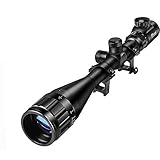
Overview: This CVLIFE scope delivers high magnification (6-24x) and a large 50mm objective lens, catering to varmint hunters and target shooters needing extended-range precision. It includes a free mount and features dual-color illuminated reticles for enhanced target acquisition.
What Makes It Stand Out: The exceptional 24x max magnification is rare in this price bracket, enabling distant shots. Dual red/green illumination with adjustable brightness ensures visibility in varied lighting, while the 50mm objective gathers ample light. The precise 1/8 MOA click value supports fine-tuned adjustments for accuracy.
Value for Money: Despite its specialized high-magnification niche, the price remains accessible. The free mount adds practical value, though optical clarity at 24x may lag behind premium brands. It’s a strong choice for daylight varmint hunting, but low-light performance could disappoint due to potential coating limitations.
Strengths and Weaknesses: Strengths: High magnification range; large objective lens; useful illumination; precise click adjustments. Weaknesses: Narrow field of view (28 ft @ 100yds) hinders target tracking; heavy at max zoom; eye relief unspecified, risking scope bite; coatings may not maximize light transmission in dusk conditions.
Bottom Line: An impressive budget option for high-magnification daytime shooting, but optical constraints and handling issues at max power limit its versatility. Best for dedicated varmint hunters needing reach without breaking the bank.
3. UUQ 3-9×40 Rifle Scope with Red/Green Illumination and Rangefinder Reticle-Fits 20mm Free Mounts,Waterproof and Fog-Proof
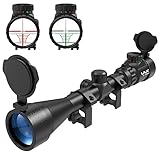
Overview: The UUQ 3-9x40 scope combines dual-color illumination, a rangefinder reticle, and robust construction for hunters facing diverse conditions. It includes 20mm mounts and emphasizes durability with nitrogen purging and aircraft-grade aluminum.
What Makes It Stand Out: Full multi-coated lenses promise superior light transmission (95% claimed), while the 5-level illuminated rangefinder reticle aids rapid distance estimation. The lockable diopter accommodates vision differences, and O-ring sealing ensures true waterproofing—uncommon in this segment. The flip-up lens covers add practical protection.
Value for Money: Priced competitively, it outperforms many rivals with its coating quality and feature set. The included mounts and rangefinder reticle deliver tangible utility, justifying a slight premium over basic models. It bridges the gap between entry-level and mid-tier scopes for hunters needing reliability and functionality.
Strengths and Weaknesses: Strengths: Excellent multi-coated optics; versatile illumination; durable waterproof/fog-proof build; useful rangefinder reticle; diopter adjustment. Weaknesses: Slightly heavier due to robust construction; max field of view (40.38 ft) narrower than some peers; illumination may drain batteries faster at high settings.
Bottom Line: A standout mid-tier scope offering exceptional optical clarity and hunting-ready features. Highly recommended for serious hunters seeking dependable all-weather performance without premium pricing.
4. CVLIFE 3-9x40 Optics R4 Reticle Crosshair Scope with 11mm Dovetail Scope Mounts, Black

Overview: This CVLIFE model mirrors Product 1’s core specs but swaps 20mm mounts for 11mm dovetail rails, targeting airgun or rimfire rifle users with specific mounting needs. It retains the 3-9x40 configuration and R4 reticle for versatile mid-range shooting.
What Makes It Stand Out: The 11mm dovetail mounts cater directly to air rifles and older European firearms, a niche often overlooked. A 3.5" eye relief accommodates harder-kicking airguns, while the 25’-14’ field of view balances target acquisition and detail. Its simplicity ensures ease of use for beginners.
Value for Money: Nearly identical in price to its 20mm-mount sibling, it offers tailored value for dovetail-platform owners. The scope itself is basic, but the included mounts eliminate adapter costs. However, it lacks illumination and advanced coatings, limiting utility in low light compared to similarly priced competitors.
Strengths and Weaknesses: Strengths: Essential 11mm mounts included; adequate eye relief for airguns; affordable; compact design. Weaknesses: Very narrow exit pupil (0.2"-0.67") reduces brightness; no illumination; single-coated optics; dovetail mounts may require lapping for perfect fit.
Bottom Line: A practical, no-frills solution for airgunners or rimfire enthusiasts with dovetail rails. Avoid if you need illumination or shoot in variable light; otherwise, a functional budget pick for its specific platform.
5. CVLIFE 3-9x40 Rifle Scope, Red & Green Illuminated Optical Riflescope, Mil-dot Reticle Scope for Hunting with Mounts

Overview: CVLIFE’s illuminated riflescope features red/green reticle options, mil-dot ranging, and capped turrets, aimed at hunters needing adaptability across lighting conditions. It includes 20mm mounts and emphasizes waterproof construction for all-weather reliability.
What Makes It Stand Out: The 5-level adjustable illumination ensures reticle visibility from dawn to dusk. Multi-coated lenses (95% light transmission claimed) enhance clarity, while 1/4 MOA capped turrets allow precise zeroing. The diopter adjustment accommodates vision correction, a rare perk at this price.
Value for Money: Competitive pricing with bundled mounts makes it a smart upgrade from non-illuminated scopes. The mil-dot reticle adds ranging capability, and nitrogen purging ensures weather resistance. It outshines basic models in versatility but can’t match high-end optical refinement.
Strengths and Weaknesses: Strengths: Bright, adjustable illumination; useful mil-dot reticle; capped/resettable turrets; waterproof/fog-proof; diopter adjustment. Weaknesses: Eye relief (2.95"-3.94") is tight for heavy-recoil firearms; coatings may not sustain brightness in deep twilight; plastic mounts included feel less robust.
Bottom Line: An excellent value for hunters needing illumination and ranging without overspending. Its minor ergonomic flaws are outweighed by versatility—highly recommended for deer or hog hunters in mixed-light environments.
6. UUQ 4-16X44 AO Rifle Scope for Hunting with Locking Turret Sunshade,SFP,R/G/B Illumination,Crosshairs Reticle,Front Parallax Adjustment,Fits 20mm Free Mount-Long Range Optics for Airgun,Airsoft,Pellet

Overview: The UUQ 4-16X44 AO rifle scope targets hunters and airgun enthusiasts seeking versatile magnification (4x-16x) for short-to-medium ranges. Built with an aircraft-grade aluminum chassis, it emphasizes durability and optical clarity for demanding outdoor use.
What Makes It Stand Out: Its tri-mode RGB illuminated etched glass reticle (three brightness levels per color) ensures target visibility in any light, while front parallax adjustment and a rapid-focus eyepiece enhance precision. The included sunshade reduces glare, and exposed locking turrets with zero-reset provide tactile, audible windage/elevation adjustments.
Value for Money: Priced competitively against mid-tier scopes, it delivers premium features like multi-coated HD lenses, waterproof/fog-proof construction, and mounting rings—typically found in costlier models. This makes it ideal for budget-conscious shooters needing reliability without sacrificing critical optics.
Strengths and Weaknesses: Strengths: Excellent RGB illumination versatility; robust locking turrets; included sunshade and mounts; superior light transmission. Weaknesses: Exit pupil range (85–96mm) is oversized for daytime use; 1/4 MOA adjustments less precise than 1/10 MIL competitors; bulkier than comparable 4-12x scopes.
Bottom Line: A feature-rich, durable scope offering exceptional value for hunters and airgunners prioritizing illumination flexibility and parallax control. Recommended for medium-range shooting, though long-range precision seekers may prefer higher magnification ranges.
7. Rifle Scope, 3-9X32, 3-9X40, 3-9X50, Green Lens, Fast Focus Eyepiece, Free Ring Mounts, Air Rifle Scope, Optics Reticle Crosshair Scope (3-9X32)

Overview: The SVITVU 3-9X32 scope is a budget-friendly optic designed for hunters and airgunners, offering standard 3-9x magnification with a focus on simplicity and reliability. Its green-lens variant promises enhanced light transmission for varied lighting conditions.
What Makes It Stand Out: The full multi-coated green lenses improve light transmission over standard coatings, while the fast-focus eyepiece ensures quick reticle clarity. Inclusion of both 20mm and 11mm mounts (for 3-9X32/40 models) provides exceptional mounting flexibility across Picatinny/Weaver rails—a rarity in this price bracket.
Value for Money: Positioned as an entry-level scope, it justifies its cost with solid aircraft-grade aluminum construction, waterproof/fog-proof sealing, and versatile mounting options. It outperforms similarly priced scopes lacking multi-coated lenses or adaptable mounts, though optical clarity lags behind premium brands.
Strengths and Weaknesses: Strengths: Affordable with useful mount compatibility; durable nitrogen-purged housing; responsive fast-focus eyepiece; effective green lens coating. Weaknesses: Narrower field of view than competitors; no illuminated reticle; 3-9X50 model lacks 20mm mounts; basic windage/elevation adjustments.
Bottom Line: A practical, no-frills scope ideal for beginners or casual hunters needing reliability and mounting versatility. While not suited for low-light or precision shooting, its value and responsive service make it a sensible entry-level choice.
8. Monstrum Beast 6-24x50 Rifle Scope with Side Focus and Offset Scope Mount | Black | FIB04-MOA Daylight Bright Reticle
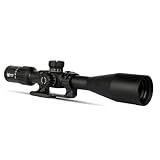
Overview: The Monstrum Beast 6-24x50 is a high-magnification scope engineered for long-range shooting, featuring a large 50mm objective lens and specialized fiber optic reticle for enhanced target acquisition in daylight conditions.
What Makes It Stand Out: Its unique fiber optic reticle channels ambient light to create a “daylight bright” center dot—eliminating battery dependency while outperforming standard illuminated reticles in brightness. Side focus parallax adjustment and second focal plane (SFP) reticle options (MOA/MIL) ensure precise ranging and consistent aiming point visibility across all magnifications.
Value for Money: Competitively priced for its magnification range, it includes a premium cantilever mount and bikini covers—features often sold separately. While optics clarity trails top-tier brands, the innovative fiber optic system and robust 30mm tube deliver exceptional long-range performance for the cost.
Strengths and Weaknesses: Strengths: Revolutionary battery-free illuminated reticle; wide 6-24x range ideal for distance; side focus for precise parallax control; durable 30mm construction. Weaknesses: Fiber optic ineffective in low light; heavier than 44mm scopes; SFP reticle scaling requires magnification adjustments for holdovers.
Bottom Line: A standout choice for daylight long-range shooters prioritizing a bright, maintenance-free reticle. Highly recommended for target practice or varmint hunting, but less versatile for dawn/dusk scenarios.
9. CVLIFE 2-10x32 MPVO AO Rifle Scope with Locking Turret, 5 Levels Red & Green Illuminated Reticle, Parallax Adjustment, Second Focal Plane, 30mm Offset Scope Mount

Overview: The CVLIFE 2-10x32 is a compact low-power variable optic (LPVO) tailored for close-to-medium-range engagements, featuring illuminated reticles and ruggedized construction for tactical or hunting applications.
What Makes It Stand Out: Dual-color (red/green) illuminated reticle with five brightness levels ensures rapid target acquisition in low light, while exposed 1/2 MOA locking turrets enable swift, precise adjustments. The adjustable objective (AO) eliminates parallax, and its 1000G shockproof rating exceeds many competitors in this segment.
Value for Money: Offers LPVO functionality at an entry-level price, including a 30mm offset mount and robust waterproof/fog-proof sealing. Though optical clarity isn’t flagship-tier, the illuminated reticle versatility and turret precision provide significant bang for buck over non-illuminated alternatives.
Strengths and Weaknesses: Strengths: Bright dual-color illumination; responsive locking turrets; exceptional shock resistance; compact 32mm objective for low-profile mounting. Weaknesses: Limited magnification for true long-range use; green lens coating slightly distorts color fidelity; eye relief can be tight at 2x.
Bottom Line: An excellent budget LPVO for home defense or woodland hunting where speed and low-light performance matter. Ideal for beginners, though serious precision shooters may desire higher magnification.
10. UUQ 4-12&16X50 AO Rifle Scope Red/Green Illuminated Range Finder Reticle W/Green Laser - Holographic Reflex Red Dot Sight - 5 Brightness Modes Flashlight (4-16X50AO W/R&G Laser)

Overview: This UUQ hybrid system combines a 4-16x50 AO rifle scope with an integrated red/green laser sight and tactical flashlight—a multifunctional setup targeting hunters needing illumination aids in low-light environments.
What Makes It Stand Out: The unique triad of components (main scope, dual-beam laser, and 5-mode flashlight) offers unparalleled versatility. The scope features a rangefinder reticle with dual-color illumination, while the separate laser/flashlight units mount directly to Picatinny rails, providing hands-free targeting and area lighting.
Value for Money: Priced higher than standalone scopes, it justifies cost by bundling three critical tools. However, laser/flashlight quality is utilitarian, and the scope’s optical performance (despite multi-coated lenses) lags behind dedicated high-end optics. Best for users prioritizing convenience over pure optical excellence.
Strengths and Weaknesses: Strengths: All-in-one low-light solution; dual laser beams effective to 300+ yards; scope’s AO adjustment and 1000G durability; flashlight adds emergency utility. Weaknesses: Laser legality varies by region; combined weight disrupts balance; scope clarity suffers at 16x; complex setup.
Bottom Line: A niche product for hunters in dense forests or night-stalking scenarios needing integrated illumination. Recommended only if laser use is permissible; otherwise, opt for a dedicated scope.
Understanding Your Core Needs Before You Buy
Before diving into specs, take a honest look at how you’ll actually use the scope. This foundational step prevents buyer’s remorse and ensures your money is spent wisely on features you’ll actually utilize.
Defining Your Primary Purpose
Is your main goal hunting deer in dense timber, plinking at the range, or preparing for potential home defense scenarios? A scope ideal for close-range brush hunting with a wide field of view at low magnification will differ drastically from one needed for precise 300-yard target shooting. Be brutally honest about your most frequent use case; trying to force one scope to excel at everything often leads to mediocrity across the board, especially on a budget.
Realistic Magnification Expectations
Magnification power is often the first number buyers fixate on, but more isn’t always better, especially under $200. High magnification ranges (like 6-24x) in this price bracket often sacrifice optical clarity, field of view, and mechanical robustness. For most first-time hunters or recreational shooters, a versatile 3-9x scope offers the best balance. It provides enough zoom for medium-range shots while maintaining a usable field of view for closer encounters. Fixed-power scopes (e.g., 4x) are also incredibly reliable and affordable options worth considering for specific applications.
The Critical Role of Reticle Choice
Your reticle is your aiming point, and the wrong choice can hinder rather than help. For beginners, a simple duplex or basic BDC (Bullet Drop Compensator) reticle in the first focal plane (FFP) or second focal plane (SFP) is often sufficient. Avoid overly complex illuminated or mil-dot reticles initially; they add cost and complexity you might not yet need. Ensure the reticle style matches your intended use – a heavy crosshair might obscure small game, while a fine crosshair could be hard to see in low light on big game. Illumination can be a valuable feature in low-light conditions but adds expense and potential failure points.
Essential Construction and Build Quality Factors
How a scope is built fundamentally impacts its longevity, reliability, and ability to withstand recoil and the elements. Don’t underestimate the importance of solid construction, even at this price point.
Tube Diameter: 1 Inch vs. 30mm - What’s Right?
The two most common tube sizes are 1 inch (25.4mm) and 30mm. While 30mm tubes can offer slightly more internal adjustment travel (important for long-range shooting), the difference is often negligible for typical hunting or recreational shooting within 300 yards. More crucially for budget buyers, 1-inch scopes are generally more abundant in the sub-$200 market and have a wider selection of affordable, standard-height mounts. Don’t get hung up on 30mm as “better”; focus on the scope’s overall adjustment range and mounting compatibility for your rifle.
Lens Quality and Coatings: Seeing Clearly on a Budget
This is where budget scopes often make their biggest compromises. Prioritize scopes advertising “Fully Multi-Coated” (FMC) lenses. This means all air-to-glass surfaces have multiple layers of anti-reflective coating, significantly improving light transmission, contrast, and reducing glare compared to scopes with only single coatings or coatings on only some lenses. Avoid scopes that only mention “coated” or “multi-coated” without specifying “fully” – the savings there usually mean noticeably dimmer, lower-contrast images, especially in dawn/dusk conditions. Don’t expect the crystal clarity of a $1000 scope, but FMC is the baseline for acceptable performance under $200.
Waterproofing and Fogproofing: Non-Negotiables
A scope that floods with water or fogs internally is useless. Ensure the scope is explicitly described as “nitrogen-purged” or “argon-purged” and “O-ring sealed.” This process removes moisture and replaces it with dry gas, preventing internal fogging due to temperature changes or humidity. Waterproofing (meaning it can be submerged without leaking) is equally critical for reliability in any weather. Never compromise on these two features; they are fundamental to a scope’s durability and are standard even in decent budget offerings.
Mounting System Compatibility and Strength
Your scope is only as good as its mount. Verify the scope’s tube diameter (1" or 30mm) matches the rings you plan to buy. Invest in solid, one-piece or two-piece steel or aluminum rings from a reputable budget brand – cheap, flimsy rings are a common failure point that can ruin zero and damage your scope. Ensure the rings provide adequate eye relief for your rifle’s recoil and your shooting position. Buying slightly better rings than the absolute cheapest is often a wise allocation of your budget.
Performance Characteristics That Matter Most for Beginners
Beyond build, specific optical and mechanical performance aspects directly impact your shooting experience and success rate. Knowing what’s achievable under $200 sets realistic expectations.
Light Gathering Capability in Low Light
Dawn and dusk are prime hunting times, so how well a scope performs in low light is vital. While aperture size (objective lens diameter) matters, lens coatings (FMC, as discussed) are even more critical at this price. A 40mm objective lens with FMC will often outperform a larger 50mm lens with inferior coatings under low light. Manage expectations: scopes under $200 won’t match premium glass in extreme low-light, but a well-chosen FMC scope with a 40mm objective provides usable brightness for ethical hunting light conditions.
Eye Relief: Safety and Comfort
Eye relief is the distance your eye must be from the rear lens to see the full image. Too short, and recoil can cause “scope bite” (a painful bruise on your eyebrow). Too long, and the image might appear dim or have blackouts. For rifles with moderate to heavy recoil (like most centerfire hunting rifles), a minimum of 3.5 inches of eye relief is strongly recommended. Many budget scopes list eye relief; prioritize models offering 3.5"+, especially if using a semi-auto or magnum caliber. Always check the specific eye relief for the magnification setting you’ll use most.
Parallax Adjustment: Necessary or Not?
Parallax error occurs when the reticle and target aren’t on the same optical plane, causing the reticle to appear to move off target as your eye shifts. Many budget scopes under $200 are fixed-parallax, typically set at 100 yards. For most hunting and general shooting within 200-250 yards, this is perfectly adequate and simplifies the scope. Adjustable parallax (AO) is beneficial for precision target shooting at varying distances but adds cost and complexity. As a first-time buyer focused on hunting or plinking, a fixed-parallax scope is usually the smarter, more cost-effective choice.
Tracking and Turret Reliability
When you dial for windage or elevation, the scope must move the point of impact precisely where the turrets indicate (“tracking”). Poor tracking is a major flaw in some budget optics. Look for scopes that mention “repeatable” or “reliable” tracking in reviews (focusing on verified user experiences, not just marketing claims). Target-style turrets (with audible/ tactile clicks) are generally more precise but can be overkill for hunting; capped turrets are common and sufficient for most beginners. Avoid scopes where users consistently report inconsistent tracking.
Field of View: Seeing Your Target and Surroundings
Field of View (FOV) is how much area you can see through the scope at a given distance (e.g., 30 feet at 100 yards). A wider FOV makes it easier to acquire moving targets, track game, and maintain situational awareness, especially at lower magnifications. Higher magnification inherently narrows the FOV. For versatile use, prioritize scopes offering a decent FOV at their lowest magnification setting (e.g., 40+ ft at 100 yds on 3x). This is particularly important for hunting in woods or brush.
Making the Smart Purchase Decision
Armed with knowledge of your needs and key features, it’s time to navigate the buying process strategically to maximize value and minimize risk.
Reading and Interpreting Real User Reviews
Don’t just look at star ratings; dig into detailed user reviews, especially the 3-star and 4-star ones. Look for consistent themes: Do multiple users mention good low-light performance? Are there recurring complaints about fogging, loose turrets, or poor tracking? Pay attention to reviews from users with similar rifles and intended uses as you. Be wary of reviews that seem overly generic or only mention price – they might not be genuine. Focus on reviews discussing long-term reliability (6+ months of use).
Where to Buy: Reputation Matters
Purchase from reputable outdoor retailers, established gun shops (brick-and-mortar or well-known online), or the manufacturer’s official website. Avoid obscure online marketplaces or third-party sellers with questionable ratings, even if the price seems slightly better. Reputable sellers often provide better customer service, clearer return policies, and genuine products (counterfeits are a risk with optics on some platforms). A slightly higher price from a trusted source is worth the peace of mind.
Understanding Warranty and Return Policies
A solid warranty is a strong indicator of manufacturer confidence. Look for scopes offering at least a limited lifetime warranty covering defects in materials and workmanship. Understand what the warranty doesn’t cover (usually impact damage or user error). Crucially, check the retailer’s return policy before buying. A generous return window (30-60 days) allows you to test the scope on your rifle and ensure it meets your expectations in real-world conditions. This is invaluable for a first-time buyer.
The Importance of Trying Before You Buy (If Possible)
If you have access to a local gun shop with a selection, try looking through different scopes. Pay attention to the clarity, ease of adjusting turrets, and overall ergonomics. While you can’t test performance on the range in the shop, getting a feel for the eye box (how forgiving the scope is to eye placement) and the reticle’s visibility can be very helpful. It’s not always possible, but it’s a great way to narrow down choices.
Setting Realistic Expectations for Budget Optics
This cannot be overstated. A $200 scope won’t perform like a $1000 scope. Expect some trade-offs: the image might not be quite as bright in the last minutes of light, the turrets might not be as crisp, or the overall weight might be slightly higher for the same features. Focus on what the scope does well within its design parameters for your intended use. Judge it against other scopes in its price class, not against premium models. A reliable, functional scope that gets you on target consistently is infinitely better than an overpriced scope you can’t afford that sits unused.
Frequently Asked Questions
Frequently Asked Questions
Is a $200 scope good enough for hunting?
Yes, absolutely. Many modern scopes in this price range offer sufficient optical quality, durability, and reliability for ethical hunting of deer, hogs, and other game within typical ranges (under 300 yards), provided you choose based on the right features for your specific hunt.
Will a budget scope hold zero after recoil?
A well-made scope from a reputable brand within this price bracket, properly mounted in quality rings, should hold zero through normal recoil. Look for user reviews specifically mentioning zero retention with rifles similar to yours (e.g., .308, 6.5 Creedmoor). Avoid scopes with consistent negative reports on this.
Do I need an illuminated reticle under $200?
It’s a nice-to-have for low-light conditions but not essential. Illumination adds cost and complexity. Prioritize core features like fully multi-coated lenses and reliable tracking first. If the budget allows after securing those fundamentals, illumination can be a valuable bonus, but don’t sacrifice core performance for it.
What’s the biggest mistake first-time buyers make with budget scopes?
Focusing too much on maximum magnification (e.g., grabbing a cheap 6-24x) instead of prioritizing optical quality (FMC lenses), adequate eye relief, and a realistic magnification range (like 3-9x) that suits their actual shooting needs. High mag often means poorer low-light performance and a narrower field of view on a budget.
Are fixed-power scopes a good budget option?
Yes, often an excellent one. Fixed-power scopes (like 4x) are typically simpler, more robust, have fewer potential failure points, offer wider fields of view, and can provide better optical clarity per dollar than variable scopes at the same price point. They are ideal if you know your primary engagement distance.
How important is the objective lens size (e.g., 40mm vs 50mm)?
On a budget, lens coatings (FMC) matter far more than objective size for light transmission. A 40mm scope with FMC will usually outperform a 50mm scope with poor coatings in low light. A larger objective can offer a slightly wider field of view at low power but also adds weight and may require higher rings. 40mm is a versatile standard.
Can I use a budget scope for long-range shooting?
“Long-range” is relative. For precise shooting beyond 300-400 yards, even with a capable rifle, the limitations of budget optics (tracking precision, fine-tuned adjustments, extreme low-light clarity) become more apparent. They are generally better suited for medium ranges. Manage expectations based on the scope’s actual adjustment range and user-reported tracking accuracy.
Why do some cheap scopes fog up inside?
This indicates a failure of the waterproofing and fogproofing seals. Always choose a scope explicitly stated to be nitrogen or argon-purged and O-ring sealed. Skipping this feature to save a few dollars is a false economy; internal fogging renders the scope unusable.
Should I buy the absolute cheapest scope I can find under $200?
No. While staying under budget is important, the very bottom of the price range often cuts critical corners on coatings, sealing, or internal mechanisms. Allocate your $200 wisely towards models emphasizing fully multi-coated lenses, proper sealing, and solid construction. Spending $180 on a better-coated scope is smarter than $120 on the cheapest option.
How long should a good budget scope last?
With proper care (avoiding severe impacts, storing correctly), a decent scope under $200 from a reputable brand should last many years of regular use. Look for scopes with strong warranties as a sign of expected longevity. Treat it well, and it should be a reliable companion for a long time.
Related Buying Guides
- 10 Affordable Air Rifle Scopes That Don’t Sacrifice Clarity in 2026
- 10 Affordable Rifle Scopes That Don’t Sacrifice Quality in 2026
- 10 Best Budget Rifle Scopes Under $200 for Beginner Hunters
- 10 Affordable Hunting Scopes That Don’t Sacrifice Quality in 2026
- 10 Best Budget Rifle Scope Rings Under $75 for Secure Mounting in 2026