Table of Contents
Capturing nature’s most candid moments has never been more accessible than it is today. Wireless trail cameras have revolutionized wildlife monitoring, allowing enthusiasts, researchers, and property owners to observe animal behavior remotely without disturbing natural habitats. Whether you’re tracking migration patterns, monitoring local wildlife populations, or simply curious about what visits your backyard after dark, these sophisticated devices serve as your eyes in the wilderness 24/7.
The technology has evolved dramatically in recent years, transforming from simple motion-activated cameras into complex data-gathering systems that beam high-resolution images and videos directly to your smartphone. But with so many options flooding the market, understanding which features truly matter for your specific needs can feel overwhelming. This comprehensive guide cuts through the marketing noise to focus on the essential elements that separate reliable workhorses from disappointing gadgets, ensuring you make an informed decision for your remote monitoring projects.
Top 10 Wireless Trail Cameras
Detailed Product Reviews
1. MAXDONE Solar WiFi Trail Camera Bluetooth Game Camera, 4K 64MP Wildlife Cameras 2000mAh Built-in Battery Rechargeable Power Hunting Cameras with Night Vision Trail Cam Bluetooth Wi-Fi Deer Cams
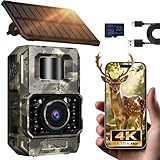
Overview: The MAXDONE Solar WiFi Trail Camera delivers premium surveillance capabilities for wildlife enthusiasts seeking high-resolution captures without monthly fees. This feature-rich game camera combines 4K video with 64MP still images, powered by an innovative solar-assisted rechargeable system. Designed for remote monitoring, it creates its own WiFi network for local data access, ensuring complete privacy without cloud dependency.
What Makes It Stand Out: The ultra-low power WiFi and Bluetooth design maximizes battery efficiency while enabling seamless smartphone connectivity via the TrailCam GO app. Its detachable solar panel provides eco-friendly extended operation, while the 850nm low-glow night vision reaches 65 feet without spooking animals. The 100° wide-angle lens and advanced H.264 compression deliver comprehensive coverage and efficient storage management.
Value for Money: At its price point, this camera offers impressive 4K resolution and solar charging typically found in more expensive models. The included accessories—mounting straps, bracket, and SD card—add immediate utility. However, the 2000mAh battery capacity feels modest compared to newer alternatives, potentially limiting solar-only operation during cloudy periods.
Strengths and Weaknesses: Pros: High-resolution 4K/64MP capture; solar and rechargeable power options; privacy-focused local WiFi; comprehensive app with mapping features; 2-year support. Cons: 2000mAh battery may require supplemental charging; 55ft WiFi range limits placement flexibility; solar version update creates potential confusion for early buyers; no cellular backup option.
Bottom Line: A solid choice for tech-savvy users prioritizing image quality and privacy, though the battery capacity suggests considering newer MAXDONE models for extended off-grid deployment.
2. SPYPOINT Flex-M Twin Pack Cellular Trail Cameras - Best Hunting Accessories, No WiFi Needed, GPS, Night Vision, Dual-Sim LTE, IP65 Water-Resistant Game Camera, 28MP Photos, 720p Videos + Sound (2)

Overview: The SPYPOINT Flex-M Twin Pack revolutionizes remote wildlife monitoring by offering dual cellular cameras at an accessible price point. These IP65 water-resistant game cameras transmit images directly to your phone without requiring WiFi, making them ideal for properties lacking wireless infrastructure. With GPS functionality and dual-SIM LTE, they automatically connect to the strongest available network.
What Makes It Stand Out: The standout feature is the free photo transmission plan—100 images monthly with no commitment. The proprietary SPYPOINT app includes BUCK TRACKER AI for intelligent species filtering, while Constant Capture technology enables simultaneous sending and shooting. Cross-carrier coverage eliminates manual network selection, ensuring reliable connectivity in challenging terrain.
Value for Money: This twin pack delivers exceptional value, essentially providing two premium cellular cameras for the price often charged for one. The free transmission tier covers casual monitoring needs, while affordable paid plans scale for heavy users. However, the 28MP photo and 720p video resolution trails WiFi competitors, and the lack of included microSD cards adds hidden cost.
Strengths and Weaknesses: Pros: Free cellular plan; automatic dual-SIM network switching; GPS tracking; twin pack affordability; AI-powered species identification; no WiFi required. Cons: Lower resolution imaging; microSD cards not included; solar panel sold separately; ongoing subscription costs for unlimited use; 720p video feels dated.
Bottom Line: Perfect for hunters needing reliable remote access across vast properties, offering unmatched cellular value despite modest imaging specs.
3. GardePro E6 WiFi Trail Camera (Non-Cellular), 48MP Photos, 1296P HD Video, App Control with Live View, 110° Wide-Angle, No-Glow Night Vision, Motion Activated

Overview: The GardePro E6 WiFi Trail Camera carves a niche for users wanting real-time observation without cellular complexity. This non-cellular model connects directly to smartphones via Bluetooth and built-in WiFi, delivering 48MP photos and 1296P HD video within a 45-foot range. Its streamlined design eliminates monthly fees while providing modern app-based controls for wildlife research and property monitoring.
What Makes It Stand Out: The Live View feature sets the E6 apart, allowing real-time framing and wildlife observation without disturbing habitats. Enhanced 940nm no-glow infrared LEDs provide completely invisible nighttime illumination up to 75 feet—superior to typical low-glow designs. The 110° wide-angle lens captures broader scenes, while H.264 encoding enables quick previewing without full downloads.
Value for Money: Positioned as a mid-range WiFi camera, the E6 offers professional-grade features like Live View and true no-glow night vision at a competitive price. The absence of recurring fees enhances long-term value. However, requiring eight AA batteries (not included) increases initial investment, and the narrower 45ft WiFi range demands closer placement than some competitors.
Strengths and Weaknesses: Pros: Real-time Live View; invisible no-glow night vision; wide 110° lens; no monthly fees; H.264 compression; supports solar panel accessory. Cons: No cellular fallback; AA batteries not included; limited 45ft WiFi range; no PC/laptop connectivity; 8AA battery requirement is cumbersome.
Bottom Line: An excellent choice for researchers and birdwatchers prioritizing stealth observation and live monitoring over long-distance connectivity.
4. MAXDONE Solar Trail Camera WiFi Bluetooth - 48MP 30fps Game Camera with 5200mAh Rechargeable Battery, 0.1s Trigger Speed Motion Activated Trail Cam IP66 with 32GB TF Card for Wildlife Monitoring

Overview: The MAXDONE Solar Trail Camera balances speed, power, and connectivity for dedicated wildlife trackers. Featuring a 5200mAh rechargeable battery with integrated solar charging, this 48MP camera captures 1296P video at 30fps while maintaining an ultra-responsive 0.1-second trigger. The WiFi and Bluetooth-enabled design works with the TrailCam Go app for convenient local file management without subscription costs.
What Makes It Stand Out: The blistering 0.1-second trigger speed with 1-5 shot burst mode ensures you never miss fleeting wildlife moments. Customizable detection zones minimize false triggers from swaying vegetation. The 5200mAh battery provides substantial standby time, while the integrated solar panel offers sustainable field operation. MP4 video format and H.264 compression streamline sharing across social platforms.
Value for Money: This model hits a sweet spot between entry-level and premium MAXDONE offerings, delivering fast trigger speeds and robust battery capacity at a moderate price. While limited to 48MP resolution—lower than its 64MP siblings—the enhanced 30fps video smoothness and larger battery justify the cost. The included 32GB TF card adds immediate value.
Strengths and Weaknesses: Pros: Ultra-fast 0.1s trigger; large 5200mAh battery; customizable detection zones; 30fps video; integrated solar; no monthly fees. Cons: Lower 48MP resolution; no cellular option; 65ft night vision shorter than some rivals; WiFi range limitations; solar panel non-detachable.
Bottom Line: Ideal for action-focused wildlife photographers needing rapid capture capabilities and reliable solar power in remote locations.
5. MAXDONE Solar Trail Camera WiFi Bluetooth - 4K 64MP Game Camera with 6000mAh Battery, Rechargeable Trail Cam with Night Vision Motion Activated IP66, Wildlife Cameras Deer Cams for Outdoor Backyard

Overview: The MAXDONE Solar Trail Camera represents the brand’s flagship WiFi model, combining 4K 64MP imaging with innovative power management. The upgraded split solar panel design allows independent angle adjustment for maximum charging efficiency, while the 6000mAh rechargeable lithium battery supports triple charging modes. This camera creates its own WiFi hotspot for local access, recording continuously even without active connection.
What Makes It Stand Out: The adjustable split solar panel is a genuine innovation, solving seasonal shading issues that plague fixed-panel designs. The massive 6000mAh battery offers the longest runtime in the MAXDONE lineup. Triple charging flexibility—solar, Type-C, or battery power—ensures uninterrupted operation. Superior low-light performance reduces noise in challenging conditions, while the TrailCamGO app enables instant social sharing.
Value for Money: As the premium WiFi option, this camera commands a higher price but delivers proportional value through its flexible solar design and substantial battery capacity. The 4K 64MP resolution matches the highest industry standards for non-cellular cameras. While the 33-49ft WiFi range is modest, the autonomous recording capability means you only need connection for retrieval, not monitoring.
Strengths and Weaknesses: Pros: Innovative split solar panel; massive 6000mAh battery; triple charging options; top-tier 4K 64MP imaging; excellent low-light performance; no subscriptions. Cons: Premium pricing; limited WiFi range; no cellular connectivity; may be over-specified for casual users; solar panel adds setup complexity.
Bottom Line: The ultimate choice for serious wildlife enthusiasts demanding maximum image quality, power autonomy, and innovative solar charging in a WiFi trail camera.
6. SEHMUA 4G LTE Cellular Trail Cameras 3rd Gen with Live Streaming, Game Camera Built-in SIM Card with Motion Activated 0.2s Trigger Time Solar Trail Camera IP66 Waterproof

Overview: The SEHMUA 3rd Gen cellular trail camera revolutionizes remote wildlife monitoring with real-time 2K live streaming capabilities. This solar-powered unit eliminates battery anxiety while delivering instant notifications through 4G LTE connectivity. Designed for serious hunters and researchers, it combines rapid 0.2-second triggering with comprehensive network compatibility across major US carriers.
What Makes It Stand Out: True live streaming via cellular networks sets this apart from standard trail cameras. The integrated 4W solar panel with 7800mAh battery promises uninterrupted year-round operation. Its built-in SIM card offers a 7-day unlimited trial, transitioning to flexible data plans. The 120° wide-angle lens and 82-foot low-glow night vision ensure maximum coverage in darkness.
Value for Money: While the $169.9 annual data plan adds ongoing costs, the solar functionality offsets battery replacement expenses. Comparable cellular cameras often require separate data contracts and battery purchases. The included SIM and trial period provide immediate out-of-box functionality, making it cost-effective for users needing genuine remote access.
Strengths and Weaknesses: Pros: True cellular live streaming; solar-powered autonomy; fast 0.2s trigger; IP66 durability; multi-carrier support. Cons: Mandatory data subscription; locked SIM card cannot be swapped; no WiFi fallback; cloud storage requires separate subscription; limited to US networks only.
Bottom Line: Ideal for professionals requiring real-time wildlife intelligence without site visits. The solar power and cellular connectivity justify the subscription cost for serious users, though hobbyists may find cheaper WiFi alternatives sufficient for their needs.
7. KJK Trail Camera 36MP 2.7K, Mini Game Camera with Night Vision 0.1s Trigger Time Motion Activated 130°Wide-Angle, Waterproof Trail Cam with 2.0” HD TFT Screen, Hunting Camera for Wildlife Monitoring

Overview: The KJK trail camera delivers exceptional performance in a compact, standalone package. With 36MP still images and 2.7K video resolution, it captures crisp wildlife footage without requiring WiFi or cellular connectivity. The 0.1-second trigger speed and 130° wide-angle lens ensure you never miss critical moments, making it perfect for remote locations.
What Makes It Stand Out: This camera’s ultra-fast 0.1-second trigger is among the fastest available, while the 22 low-glow IR LEDs provide stealthy 75-foot night vision. The integrated 2.0" TFT screen allows immediate field review without removing the SD card. Its mini size enhances concealment and portability, while the remarkable 17,000-image battery life minimizes maintenance visits.
Value for Money: As a non-connected camera, it eliminates monthly fees entirely. The sub-$100 price point offers professional-grade features—36MP resolution, sub-0.1s triggering, and robust IP66 waterproofing—at a fraction of cellular model costs. For users who can physically retrieve cards, it provides superior image quality per dollar spent.
Strengths and Weaknesses: Pros: Blazing 0.1s trigger; excellent 36MP/2.7K quality; extended battery life; user-friendly screen; compact stealth design; extreme temperature tolerance. Cons: No remote access; requires physical retrieval; no audio mention; lower resolution than some competitors; IR flash may still spook some game.
Bottom Line: Perfect for budget-conscious hunters and researchers who prioritize image quality and speed over connectivity. If you don’t need real-time alerts, this standalone workhorse outperforms many pricier alternatives in core functionality.
8. Assark Solar Trail Camera 48MP 30FPS, WiFi Bluetooth Game Camera with Motion Activated 0.2s Trigger, Night Vision Motion Activated IP66 Waterproof for Wildlife Scouting with 32GB Micro SD Card

Overview: The Assark solar trail camera bridges the gap between cellular and standalone models with its WiFi Bluetooth connectivity. Delivering 48MP photos and 1080P video at 30fps, this eco-friendly unit harnesses solar power for continuous operation. The included 32GB card and support for up to 256GB storage make it ready for extended deployment.
What Makes It Stand Out: The integrated solar panel eliminates battery maintenance while the WiFi hotspot allows smartphone connectivity up to 45 feet. This hybrid approach provides convenient field access without monthly fees. The “TrialCam Go” app enables real-time preview and download, combining the benefits of remote viewing with the affordability of non-cellular cameras.
Value for Money: With solar charging, WiFi capability, and a 32GB card included, it offers exceptional value around the $120-150 range. Users avoid subscription costs while gaining wireless convenience for close-range monitoring. The 48MP sensor outperforms many competitors in its price class, making it economical for property owners and casual researchers.
Strengths and Weaknesses: Pros: Solar-powered autonomy; WiFi connectivity without fees; 48MP resolution; included 32GB card; 0.2s trigger; IP66 durability. Cons: Limited 45ft WiFi range; no cellular remote access; 1080P video lags behind 4K competitors; requires proximity for downloads; app reliability may vary.
Bottom Line: An excellent middle-ground solution for those wanting wireless convenience without subscription fees. Ideal for property monitoring where you can periodically visit within WiFi range, though serious hunters may need cellular range.
9. DEATTI Trail Camera 48MP 4K Game Camera with 8 Batteries 32GB SD Card,WiFi Bluetooth Connection,Trail Cameras with Night Vision Motion Activated Waterproof for Wildlife Deer Outdoor 0.1s Trigger Time

Overview: The DEATTI trail camera packs premium features into a ready-to-deploy package, including 48MP resolution, 4K video, and WiFi Bluetooth connectivity. Pre-loaded with eight batteries and a 32GB SD card, it offers immediate setup. The 0.1-second trigger and 120° wide-angle lens with three PIR sensors ensure comprehensive wildlife detection.
What Makes It Stand Out: This camera’s 4K video capability combined with 48MP stills delivers exceptional detail, while the WiFi hotspot function enables smartphone access without cellular fees. The triple PIR sensor array enhances detection accuracy across its 98-foot range. Including batteries and SD card eliminates hidden costs and makes it genuinely ready for field installation.
Value for Money: Positioned in the $130-160 range with batteries and card included, it undercuts many 4K competitors. The WiFi approach avoids monthly subscriptions, making it cost-effective for users who can check cameras regularly. The complete kit nature provides immediate value, though the 5-8 meter connection range limits remote convenience.
Strengths and Weaknesses: Pros: 4K video and 48MP photos; blazing 0.1s trigger; batteries and card included; triple PIR sensors; 98ft detection range; no subscription fees. Cons: WiFi hotspot only—no home network connection; short 5-8m range; no solar option; battery replacement costs long-term; may drain batteries faster with WiFi use.
Bottom Line: A feature-rich, all-in-one package perfect for wildlife enthusiasts wanting high resolution without recurring costs. Best for properties where you can visit frequently, as the limited WiFi range prevents true remote monitoring.
10. GardePro E8 2.0 Pro WiFi Trail Camera (Non-Cellular), 4K Video & 64MP Photo, 7800mAh Battery, 64GB SD Card Included, Dual Antennas, 165ft Long-Range, Live View, No-Glow, Motion Detection

Overview: The GardePro E8 2.0 Pro represents the pinnacle of non-cellular trail camera technology, offering professional-grade 64MP photos and 4K video via powerful dual-antenna WiFi. The massive 7800mAh rechargeable battery and included 64GB card support year-round deployment. With 165-foot connection range and no-glow night vision, it excels in discreet, long-range property monitoring.
What Makes It Stand Out: Dual antennas provide exceptional 165-foot WiFi stability—far exceeding competitors’ ranges. The no-glow infrared technology ensures complete stealth at night. Live View capability allows real-time positioning verification without disturbing wildlife. The rechargeable battery eliminates disposable battery costs and integrates seamlessly with GardePro solar panels for indefinite operation.
Value for Money: Though priced higher than basic WiFi models, the premium features justify the cost: 64MP resolution surpasses most alternatives, the included 64GB card adds value, and the rechargeable battery saves long-term expense. With zero monthly fees and professional-grade components, it delivers cellular-like performance without subscription costs.
Strengths and Weaknesses: Pros: Industry-leading 165ft WiFi range; 64MP/4K quality; no-glow stealth; rechargeable battery; 64GB card included; dual-antenna stability; live view capability. Cons: No cellular remote access; premium price point; solar panel sold separately; requires periodic visits; PC/laptop connection not supported.
Bottom Line: The ultimate choice for users needing maximum wireless range without subscriptions. Perfect for large properties where 165-foot access suffices. If you can get within range periodically, this outperforms cellular cameras in image quality while eliminating monthly fees.
Understanding Wireless Trail Camera Technology
Before diving into specific features, it’s crucial to grasp how wireless trail cameras actually work. These devices combine traditional trail camera functionality with modern connectivity options, creating a seamless bridge between the field and your digital devices.
Cellular vs. Wi-Fi vs. Bluetooth Connectivity
The term “wireless” encompasses three distinct technologies, each serving different monitoring scenarios. Cellular cameras operate similarly to smartphones, transmitting data through mobile networks and enabling true remote access from anywhere with cell service. Wi-Fi models connect to local wireless networks, making them ideal for properties with reliable internet access near camera locations. Bluetooth cameras offer short-range connectivity, typically requiring you to be within 30-50 feet to download footage, perfect for minimizing disturbance in sensitive areas.
How Data Transmission Works in the Field
Understanding data flow helps set realistic expectations. When a camera detects motion, it captures media based on your settings, then compresses and transmits files through your chosen connectivity method. Cellular models use SIM cards and data plans, while Wi-Fi cameras upload to cloud servers or local storage. This process consumes power and data, so efficiency becomes paramount in remote locations where battery changes are inconvenient.
Key Features to Consider When Choosing a Wireless Trail Camera
Selecting the right camera requires balancing multiple factors against your specific use case and budget. Prioritizing features that align with your monitoring goals prevents overspending on unnecessary capabilities.
Detection Range and Field of View
The detection zone determines how far and wide the camera senses movement, typically spanning 50-100 feet. A wider detection angle increases the chances of capturing fast-moving wildlife but may also trigger more false alarms from swaying vegetation. Consider the terrain and animal size you’re monitoring—open fields benefit from longer range, while dense forests need wider angles to catch animals approaching from the sides.
Infrared Flash Types and Night Vision Quality
Nocturnal wildlife activity makes night vision capabilities critical. Low-glow infrared LEDs produce a faint red light visible to some animals but deliver clearer images. No-glow (black flash) LEDs remain completely invisible but may sacrifice some image quality. Your choice depends on whether you’re studying sensitive species that might avoid visible light sources or prioritizing image clarity for identification purposes.
Image and Video Quality Essentials
While megapixel counts dominate marketing materials, true image quality depends on several interconnected factors that affect your ability to identify species and observe behaviors.
Resolution vs. Real-World Performance
Manufacturers often advertise interpolated megapixels—digitally enhanced resolutions that don’t reflect actual sensor quality. A 12MP native sensor typically outperforms a 20MP interpolated camera in sharpness and low-light performance. Focus on sample image quality from independent reviewers rather than spec sheet numbers alone.
Video Capabilities and Audio Recording
Modern cameras offer video resolutions from 720p to 4K, with frame rates affecting motion smoothness. Consider whether you need audio recording, which adds valuable context to behavioral observations but increases file sizes and transmission costs. Loop recording features that automatically delete old footage when storage fills can be invaluable for long-term deployments.
Power Management and Battery Life
Remote locations demand reliable power solutions. Nothing is more frustrating than missing critical data because batteries died prematurely.
Battery Types and Longevity Expectations
Lithium batteries outperform alkaline in extreme temperatures and last 3-5 times longer, making them cost-effective for extended deployments despite higher upfront costs. Solar panel accessories can provide indefinite power in sunny locations, while external battery packs extend intervals between visits. Calculate expected battery life based on your planned activity frequency and transmission settings.
Power-Saving Features That Matter
Look for cameras with adjustable trigger intervals to prevent rapid-fire battery drain from active feeding stations. Sleep mode power consumption varies significantly between models—some draw nearly as much power idling as others do actively transmitting. GPS location features help track multiple cameras but consume additional power, so toggle them off when not needed.
Connectivity Options and Data Transmission
Your camera’s ability to communicate determines how quickly you receive footage and how much ongoing expense you’ll incur.
Cellular Network Compatibility
Cellular cameras support specific network bands (3G, 4G LTE, 5G) and carriers. Verify coverage maps for your monitoring location and choose unlocked cameras that work with multiple carriers for flexibility. Some models automatically switch between networks to find the strongest signal, crucial in mountainous terrain where coverage varies.
Data Plan Structures and Costs
Subscription models range from pay-per-photo to unlimited plans. Estimate your monthly usage based on trigger frequency and image resolution settings. Many cameras offer thumbnail previews with optional full-resolution downloads, saving data costs when reviewing routine animal traffic. Seasonal plans that allow you to pause service during inactive periods can significantly reduce annual expenses.
Storage Solutions for Your Wildlife Footage
Even with wireless transmission, local storage serves as a crucial backup and enables higher-quality captures than cellular networks can efficiently handle.
SD Card Specifications and Capacity
Choose SD cards with Class 10 or UHS-1 ratings for reliable 4K video recording. Waterproof and temperature-resistant cards prevent corruption in harsh conditions. While 32GB cards suffice for most applications, 128GB or larger cards become necessary for extended deployments or high-resolution video captures. Always format cards in-camera before first use to ensure compatibility.
Cloud Storage Integration
Many manufacturers offer complimentary cloud storage tiers with subscription plans, automatically backing up transmitted images. Evaluate retention policies—some delete footage after 30 days unless you manually save it. Third-party cloud services can provide redundancy, ensuring you never lose critical data even if a camera is stolen or damaged.
Detection Systems and Trigger Speed
The difference between capturing a full-body shot of a mountain lion and just its tail often comes down to detection system performance.
Passive Infrared (PIR) Sensor Sensitivity
PIR sensors detect heat and motion differences between animals and background vegetation. Adjustable sensitivity settings help fine-tune performance for different seasons—winter settings need to be more sensitive as temperature differences diminish. Some advanced cameras feature multiple PIR sensors for wider detection zones without increasing false triggers.
Trigger Speed and Recovery Time
Trigger speed (typically 0.1-0.5 seconds) measures how quickly the camera captures after detection. Faster speeds catch fast-moving animals but may increase blank shots if the animal hasn’t fully entered the frame. Recovery time—the interval before the camera can trigger again—affects how many unique captures you get from group activities like deer herds feeding. Sub-one-second recovery times provide the most comprehensive coverage.
Durability and Weather Resistance
Trail cameras face extreme conditions from scorching summers to sub-zero winters, requiring robust construction to ensure longevity.
IP Ratings and What They Mean
Ingress Protection (IP) codes like IP66 or IP68 indicate dust and water resistance levels. The first digit (6) means complete dust protection; the second digit shows water resistance—6 handles powerful jets, 7 allows temporary submersion. For most wildlife applications, IP66 suffices, but flood-prone areas may warrant IP67 or higher.
Camouflage and Anti-Theft Features
Effective camouflage patterns blend into specific environments—tree bark textures for forests, desert tan for arid regions. Security boxes and Python cable locks deter theft, while GPS tracking helps recover stolen cameras. Some models feature password protection that bricks the camera if stolen, making them worthless to thieves.
Mounting and Placement Strategies
Optimal placement dramatically affects capture success rates, often more than camera specifications themselves.
Height and Angle Optimization
Mount cameras 8-10 feet high, angled slightly downward to maximize detection zone coverage while minimizing sun glare. Positioning cameras facing north prevents direct sunlight from triggering false exposures and reduces lens flare. For game trails, aim cameras at 45-degree angles to trail direction rather than perpendicular—this extends the time animals remain in frame.
Natural Attractants and Corridor Identification
Rather than randomly placing cameras, identify natural funnels where terrain forces animal movement: creek crossings, fence gaps, ridge lines. Mineral licks, water sources, and food plots create consistent activity patterns. Place cameras 15-20 feet from these attractants for optimal framing and identification detail.
Data Plans and Subscription Costs
The ongoing expense of connectivity often exceeds the camera’s purchase price over its lifetime, making cost analysis essential.
Pay-As-You-Go vs. Unlimited Plans
Pay-per-photo plans suit low-activity monitoring or seasonal use, costing $5-15 monthly plus per-image fees. Unlimited plans ($15-50 monthly) provide peace of mind for high-activity locations or research requiring comprehensive data. Calculate your break-even point based on expected monthly triggers to choose the most economical option.
Multi-Camera Discounts and Family Plans
Many carriers offer discounts for activating multiple cameras on a single account, reducing per-camera costs by 20-40%. Business plans designed for security monitoring sometimes accept trail cameras, offering better rates than consumer wildlife plans. Always inquire about annual payment discounts, which can save 10-15% compared to monthly billing.
Mobile App Integration and User Experience
The smartphone app serves as your primary interface, and its quality significantly impacts daily usability.
Real-Time Notifications and Remote Configuration
Quality apps deliver instant push notifications with thumbnail previews, allowing you to identify important captures without downloading full-resolution files. Remote settings adjustment lets you adapt to changing conditions—reducing sensitivity during windy weather or increasing image quality when targeting specific species—saving trips to physically access the camera.
Gallery Management and Data Export
Robust apps organize footage by date, location, and species tags, with search filters that help you quickly find specific events. Look for batch download capabilities, time-lapse creation tools, and easy sharing to social media or research databases. Some apps integrate with AI identification services that automatically suggest species names, accelerating data analysis for large projects.
Legal and Ethical Considerations
Responsible wildlife monitoring requires awareness of regulations and ethical guidelines that protect both animals and privacy rights.
Public Land and Permit Requirements
Most public lands require permits for camera placement, with specific rules about distance from trails, water sources, and sensitive habitats. Research projects often need scientific collecting permits. Private landowners generally need permission to place cameras on adjacent public lands, even for monitoring wildlife that crosses property boundaries.
Ethical Wildlife Monitoring Practices
Minimize disturbance by checking cameras infrequently—every 4-6 weeks rather than weekly. Avoid baiting with unnatural foods that could harm animal health or create dependency. Position cameras to avoid capturing images of private property or people without consent, respecting both wildlife and human privacy. Always disclose camera presence when sharing images taken on shared or public lands.
Troubleshooting Common Issues
Even premium cameras encounter problems in the field. Understanding common issues and solutions prevents unnecessary trips and data loss.
False Trigger Reduction Techniques
Swaying grass and moving shadows are primary false trigger culprits. Clear vegetation within the detection zone, reduce sensitivity settings, and use time-lapse modes during windy periods. Some cameras offer “smart detection” that analyzes movement patterns to distinguish animals from vegetation, though these features consume more power.
Connectivity Failures and Signal Boosting
Weak cellular signals cause transmission failures. External high-gain antennas can improve reception by 2-3 bars. Some cameras store failed transmissions for retry when signal improves. Regularly update firmware, as manufacturers optimize transmission protocols. For critical research, consider cameras that fall back to local storage when connectivity fails, ensuring no data loss.
Maximizing Your Remote Monitoring Success
Strategic planning transforms casual camera placement into effective wildlife observation systems that yield valuable insights.
Seasonal Adjustment Strategies
Wildlife behavior changes dramatically with seasons. Increase sensitivity during winter when animals move less predictably. Adjust trigger intervals during breeding seasons to capture multiple individuals. Position cameras near food sources in fall, water sources in summer, and thermal cover in winter. Reviewing historical data helps predict peak activity periods for target species.
Multi-Camera Grid Deployment
Single cameras provide snapshots; camera grids reveal patterns. Deploy 3-5 cameras in a grid pattern across 40-80 acres to map movement corridors, identify territory boundaries, and estimate population densities. Overlapping detection zones between cameras help identify individuals and track movements. This approach provides research-grade data for serious wildlife management or conservation projects.
Future Trends in Wireless Trail Camera Technology
Innovation continues pushing boundaries, with emerging features that will redefine remote wildlife monitoring capabilities.
AI Integration and Species Recognition
Next-generation cameras will incorporate on-board AI processors that identify species in real-time, only transmitting images of target animals to save data costs. Some prototypes can even estimate age and sex of deer or recognize individual big cats by their unique markings. This technology will revolutionize population studies by automatically filtering thousands of images to relevant data.
Solar Efficiency and Energy Harvesting
Advances in solar panel efficiency and low-power processors promise cameras that run indefinitely without battery changes. Emerging energy-harvesting technologies capture power from ambient radio frequencies or temperature differences, potentially eliminating batteries entirely. These developments will enable permanent monitoring stations in the most remote locations, opening new frontiers in wildlife research.
Frequently Asked Questions
How long do batteries typically last in wireless trail cameras?
Battery life varies dramatically based on activity levels, transmission frequency, and settings. In moderate activity areas (10-15 triggers daily), lithium batteries typically last 3-6 months. High-traffic locations with frequent transmissions may require changes every 4-8 weeks. Solar panels can extend this indefinitely in sunny locations. Reducing image resolution, using longer trigger intervals, and enabling sleep modes significantly extends battery life.
Can wireless trail cameras work in areas with poor cell service?
Yes, but with limitations. Cameras require at least 2-3 bars of signal for reliable transmission. In marginal areas, external high-gain antennas can improve reception. However, cameras will still capture and store images locally on SD cards even without connectivity, allowing you to retrieve footage during physical visits. For truly remote locations, consider Wi-Fi models connected to satellite internet or traditional non-wireless cameras with extended storage capacity.
What’s the difference between low-glow and no-glow infrared flash?
Low-glow infrared produces a faint red glow visible to some animals and humans, offering better illumination range and image clarity—typically up to 100 feet. No-glow (black flash) uses 940nm LEDs invisible to most wildlife, preventing detection but reducing effective range to 50-65 feet and potentially decreasing image sharpness. Choose low-glow for research requiring maximum identification detail, and no-glow for sensitive species or security applications where stealth is paramount.
How much data do wireless trail cameras use monthly?
Data consumption depends on image resolution, video length, and trigger frequency. A typical 2MP image uses 200-400KB, while 4K video can consume 100-300MB per minute. A moderately active camera (15 images daily) uses roughly 200-300MB monthly. Video transmissions dramatically increase usage—just 2-3 daily 30-second clips can push consumption over 2GB. Most users find 1GB monthly plans sufficient for image-only monitoring, while video requires 5GB or unlimited plans.
Are wireless trail cameras legal to use on public lands?
Regulations vary by jurisdiction. Most federal lands require permits for research or commercial use, while personal monitoring may be restricted or prohibited. State lands often have similar requirements. Always check with the managing agency before deployment. Even where legal, ethical considerations suggest placing cameras away from heavily trafficked areas to avoid capturing images of other visitors without consent.
What resolution is actually needed for wildlife identification?
For most species identification purposes, 4-8MP native resolution suffices, providing enough detail for field marks and individual recognition. Higher resolutions (12-20MP) help with small animals at distance or fine details like antler points on deer. Video at 1080p offers excellent behavioral documentation. Avoid interpolated resolutions that bloat file sizes without adding real detail. Remember that higher resolutions consume more battery and data, so match resolution to your actual identification needs.
How do I prevent my trail camera from being stolen?
Use security boxes specifically designed for your camera model, secured with Python cable locks threaded through both box and tree. Mount cameras 10+ feet high with climbing sticks, pointing downward—thieves rarely look up. Use camouflage patterns that blend with surroundings. Enable GPS tracking if available. Most importantly, avoid placing cameras near roads or trails where they’re easily spotted. Some hunters use decoy cameras in obvious locations while hiding their primary camera nearby.
Can extreme weather affect wireless transmission?
Yes, temperature and weather impact performance. Cold weather (-20°F and below) can temporarily reduce battery voltage, causing transmission failures even when batteries retain charge. Heavy rain and dense foliage absorb cellular signals, reducing range and reliability. Snow accumulation on antennas blocks transmissions. Choose cameras rated for your climate’s temperature extremes, and consider external antenna placement that remains above snow levels in winter environments.
What’s the typical lifespan of a wireless trail camera?
Quality trail cameras last 3-5 years with proper maintenance. Premium models with metal cases and weather-sealed ports often exceed 5 years. The weakest components are typically rubber seals and battery compartment doors that degrade with exposure. Regular cleaning, silicone sealant on seams, and storage in climate-controlled areas during off-season extends lifespan. Firmware updates also prolong functionality by maintaining compatibility with evolving network technologies.
Do wireless trail cameras spook wildlife?
Properly placed cameras minimally impact animal behavior. No-glow infrared models remain undetectable to most species. Human scent during placement causes more disturbance than the camera itself—wear gloves and rubber boots, and minimize visits. Place cameras at least 2 weeks before critical observation periods to allow animals to acclimate. Studies show most wildlife resumes normal activity within days. However, sensitive species like wolves or mountain lions may avoid areas with cameras for longer periods, requiring more strategic placement and longer acclimation times.
Related Buying Guides
- How to Choose the 10 Best Wireless Trail Cameras for Remote Monitoring in 2026
- 10 Best Wireless Trail Cameras for Remote Property Surveillance in 2026
- The 10 Best Cellular Trail Cameras for Real-Time Wildlife Alerts in 2026
- 10 Essential 4K Trail Cameras Every Wildlife Photographer Needs in 2026
- How to Set Up Cellular Trail Cameras for Real-Time Wildlife Monitoring