Table of Contents
Keeping an eye on remote property has never been more critical, whether you’re monitoring a hunting cabin, farmland, or a vacation home tucked away in the wilderness. Wireless trail cameras have revolutionized how we approach property surveillance, offering real-time visibility without the need for physical visits or complicated wiring systems. As we look toward 2026, these devices have become more sophisticated, blending cellular technology with advanced imaging capabilities that rival professional security systems.
The landscape of remote monitoring has shifted dramatically, with modern wireless trail cameras now serving as the first line of defense for properties miles away from the nearest neighbor. Understanding what makes these devices effective for surveillance purposes—beyond their original hunting applications—requires a deeper dive into connectivity options, power management, and strategic deployment. This guide breaks down everything you need to know to make an informed decision for your specific property needs.
Top 10 Wireless Trail Cameras
Detailed Product Reviews
1. MAXDONE Solar WiFi Trail Camera Bluetooth Game Camera, 4K 64MP Wildlife Cameras 2000mAh Built-in Battery Rechargeable Power Hunting Cameras with Night Vision Trail Cam Bluetooth Wi-Fi Deer Cams
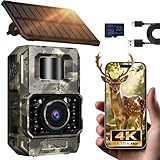
Overview: The MAXDONE Solar WiFi Trail Camera delivers premium wildlife monitoring with 4K 64MP imaging and innovative power solutions. This camera combines a built-in 2000mAh rechargeable battery with a detachable solar panel, creating a sustainable energy system for extended field deployment. Its ultra-low-power WiFi and Bluetooth connectivity enable local data access via the TrailCam GO app without monthly fees, though range is limited to 55 feet in open areas.
What Makes It Stand Out: The privacy-first local connectivity approach ensures your wildlife data remains on-device rather than in the cloud. The adaptive 850nm low-glow night vision automatically balances brightness up to 65 feet, preventing overexposed or dark images. The camera creates its own WiFi hotspot, eliminating home network dependency while offering convenient smartphone access for previewing and downloading media without SD card removal.
Value for Money: Positioned in the premium tier, this camera justifies its cost through high-resolution capture, solar charging capability, and zero subscription fees. Compared to cellular alternatives requiring monthly plans, the long-term savings are substantial. The included accessories—mounting straps, bracket, and SD card—add immediate value for hunters and researchers.
Strengths and Weaknesses: Pros include exceptional 4K video quality, eco-friendly solar power, local data privacy, and comprehensive accessory kit. Cons are the limited 55-foot WiFi range requiring open spaces, the relatively small 2000mAh battery capacity compared to competitors, and potential confusion from the December 2025 solar version transition.
Bottom Line: Ideal for serious wildlife enthusiasts prioritizing image quality and privacy. The solar integration and subscription-free operation make it a smart long-term investment, provided you can work within its connectivity range limitations.
2. SPYPOINT Flex-M Twin Pack Cellular Trail Cameras - Best Hunting Accessories, No WiFi Needed, GPS, Night Vision, Dual-Sim LTE, IP65 Water-Resistant Game Camera, 28MP Photos, 720p Videos + Sound (2)

Overview: The SPYPOINT Flex-M Twin Pack delivers cellular trail camera technology at an accessible price point, making remote wildlife monitoring hassle-free. These cameras transmit images directly to your phone via LTE networks without requiring WiFi, making them perfect for distant locations. With 28MP photos and 720p video, they prioritize connectivity over raw resolution, offering GPS positioning and dual-SIM auto-selection for reliable performance.
What Makes It Stand Out: The standout feature is SPYPOINT’s free photo transmission plan—100 images monthly with no fees or commitment. The Constant Capture technology allows simultaneous sending and shooting, ensuring no action is missed. Cross-carrier coverage automatically selects the strongest network without manual intervention, crucial for remote hunting grounds where signal strength varies.
Value for Money: This twin pack offers exceptional value for cellular cameras, effectively halving the per-unit cost. The free tier suits casual users, while affordable paid plans ($5-$15/month) scale with needs. Unlike WiFi models, there’s no range limitation once deployed, making it cost-effective for monitoring multiple distant locations simultaneously.
Strengths and Weaknesses: Pros include true remote access, free basic plan, automatic carrier switching, and user-friendly app with AI species filtering. Cons are lower 28MP resolution and basic 720p video, no included SD cards, and ongoing costs for unlimited usage. Battery life depends on frequency of transmissions.
Bottom Line: Perfect for hunters needing remote property monitoring without visiting sites. The twin pack doubles coverage area, and the free plan makes cellular technology accessible. Accept the resolution trade-off for unparalleled convenience and connectivity.
3. GardePro E6 WiFi Trail Camera (Non-Cellular), 48MP Photos, 1296P HD Video, App Control with Live View, 110° Wide-Angle, No-Glow Night Vision, Motion Activated

Overview: The GardePro E6 WiFi Trail Camera strikes a balance between image quality and stealth for close-range wildlife observation. This non-cellular camera captures crisp 48MP photos and 1296P HD video, controlled entirely through the GardePro Mobile App. Its ultra-low-power WiFi and Bluetooth connect directly to smartphones within 45 feet, eliminating subscription costs while providing convenient field access.
What Makes It Stand Out: The Live View feature sets the E6 apart, allowing real-time scene monitoring during setup and passive observation without disturbing wildlife. The no-glow 940nm infrared LEDs remain completely invisible, delivering stealth night vision up to 75 feet—superior to low-glow alternatives for sensitive species. The 110° wide-angle lens captures more of the environment than standard cameras.
Value for Money: Positioned as a mid-range WiFi camera, the E6 offers excellent value for wildlife researchers and backyard observers. The absence of monthly fees means long-term savings over cellular models. While it requires 8 AA batteries (not included), compatibility with the GardePro SP350 solar panel provides affordable extended power for serious users.
Strengths and Weaknesses: Pros include invisible no-glow night vision, Live View capability, wide-angle lens, and zero operating costs. Cons are the limited 45-foot connection range, lack of cellular remote access, and incompatibility with PCs or web browsers. Battery costs add up without solar investment.
Bottom Line: An excellent choice for property owners and researchers prioritizing stealth and image quality over remote access. The Live View feature simplifies positioning, while no-glow IR ensures natural animal behavior documentation.
4. MAXDONE Solar Trail Camera WiFi Bluetooth - 48MP 30fps Game Camera with 5200mAh Rechargeable Battery, 0.1s Trigger Speed Motion Activated Trail Cam IP66 with 32GB TF Card for Wildlife Monitoring

Overview: The MAXDONE Solar Trail Camera offers a compelling blend of speed, power, and connectivity for dedicated wildlife monitors. Featuring a 5200mAh built-in battery paired with an integrated solar panel, this camera achieves exceptional field endurance. It captures 48MP images and 1296P video at 30fps, with a class-leading 0.1-second trigger speed ensuring fast-moving animals are captured clearly.
What Makes It Stand Out: The ultra-responsive trigger combines with a 100° detection range and 65-foot infrared night vision to create a comprehensive monitoring system. The customizable detection zones minimize false triggers from swaying vegetation. H.264 compression efficiently reduces file sizes while maintaining quality, maximizing storage on the included 32GB TF card.
Value for Money: This model hits the sweet spot between entry-level and premium MAXDONE offerings. The 5200mAh battery outlasts many competitors, and integrated solar charging eliminates ongoing power costs. WiFi connectivity remains subscription-free, making it more economical long-term than cellular alternatives. The included TF card adds immediate usability.
Strengths and Weaknesses: Pros include lightning-fast 0.1s trigger, large battery capacity, solar integration, and customizable detection zones. Cons are moderate 48MP resolution (versus 64MP alternatives), limited 55-foot WiFi range requiring proximity, and no cellular option for remote properties. The solar panel is fixed, not adjustable.
Bottom Line: Ideal for users needing rapid capture and extended battery life. The 0.1s trigger excels at documenting fleeting wildlife moments, while solar power ensures continuous operation. Perfect for active trails where speed matters more than maximum resolution.
5. MAXDONE Solar Trail Camera WiFi Bluetooth - 4K 64MP Game Camera with 6000mAh Battery, Rechargeable Trail Cam with Night Vision Motion Activated IP66, Wildlife Cameras Deer Cams for Outdoor Backyard

Overview: The MAXDONE Solar Trail Camera represents the pinnacle of the brand’s wildlife camera lineup, combining top-tier imaging with superior power management. Boasting 4K 64MP resolution and a massive 6000mAh rechargeable battery, this flagship model delivers uncompromising performance. The innovative split solar panel design allows optimal sun angle adjustment, maximizing charging efficiency across seasons and terrain.
What Makes It Stand Out: The adjustable solar panel distinguishes this model from fixed-panel competitors, ensuring consistent power generation. Three charging modes—solar, Type-C, and battery backup—provide ultimate flexibility. The camera maintains MAXDONE’s signature ultra-low-power WiFi connectivity via the TrailCamGO app, enabling local downloads without subscription fees while automatically recording even when disconnected.
Value for Money: As a premium offering, this camera commands a higher price but delivers proportional value. The 6000mAh battery and adjustable solar panel reduce maintenance visits to near zero. Combined with 4K resolution and no ongoing fees, the total cost of ownership over several years undercuts cellular alternatives requiring monthly payments.
Strengths and Weaknesses: Pros include best-in-class battery capacity, adjustable solar panel, triple charging versatility, and premium 4K 64MP imaging. Cons are the relatively short 33-49 foot practical WiFi range, lack of cellular connectivity, and premium pricing. Like all MAXDONE WiFi models, it requires proximity for data access.
Bottom Line: The ultimate choice for serious naturalists demanding maximum image quality and field longevity. The adjustable solar panel and enormous battery make it virtually maintenance-free. Invest in this flagship if you prioritize resolution and autonomy over remote cellular access.
6. SEHMUA 4G LTE Cellular Trail Cameras 3rd Gen with Live Streaming, Game Camera Built-in SIM Card with Motion Activated 0.2s Trigger Time Solar Trail Camera IP66 Waterproof

Overview: The SEHMUA 3rd Gen Cellular Trail Camera revolutionizes remote wildlife monitoring with true 4G LTE connectivity and live streaming capabilities. This advanced game camera transmits 2K HD footage in real-time to your smartphone via the Ucon app, eliminating the need for physical retrieval. With a 0.2-second trigger speed, 120° detection angle, and integrated solar panel, it’s engineered for year-round deployment in remote locations. The IP66 waterproof rating ensures reliable performance in harsh weather conditions.
What Makes It Stand Out: The built-in 4G LTE SIM card with a 7-day unlimited data trial offers immediate connectivity across major US networks (Verizon, T-Mobile, AT&T). The integrated 4W solar panel with 7800mAh rechargeable battery delivers continuous power, potentially eliminating battery changes for 365 days. Its 850nm low-glow infrared system provides 82-foot night vision range while remaining discreet to wildlife.
Value for Money: While data plans ($19.9/month to $169.9/year per camera) create ongoing costs, the unlimited solar power and remote access justify the premium for serious users. Compared to traditional cameras requiring frequent site visits, the time and fuel savings offset subscription fees. Each camera requires a separate plan, which adds up for multi-camera setups.
Strengths and Weaknesses: Pros: True remote live streaming, solar-powered reliability, fast 0.2s trigger speed, wide 120° field of view, and robust waterproofing. Cons: Mandatory data subscriptions, SIM locked to US networks only, no Wi-Fi fallback option, and cloud storage requires payment after 30-day trial. The non-detachable SIM limits flexibility.
Bottom Line: Ideal for wildlife researchers, remote property owners, and dedicated hunters who prioritize instant notifications and live streaming over cost. The SEHMUA excels where immediate remote access outweighs subscription expenses, though budget-conscious buyers should consider total ownership costs.
7. KJK Trail Camera 36MP 2.7K, Mini Game Camera with Night Vision 0.1s Trigger Time Motion Activated 130°Wide-Angle, Waterproof Trail Cam with 2.0” HD TFT Screen, Hunting Camera for Wildlife Monitoring

Overview: The KJK Trail Camera delivers professional-grade performance in a compact, user-friendly package designed for straightforward wildlife monitoring. This mini game camera captures 36MP still images and 2.7K video with sound, featuring an exceptional 0.1-second trigger speed and expansive 130° wide-angle detection. The built-in 2.0" HD TFT screen and TV remote-style controls make on-site setup and playback intuitive for users of all experience levels.
What Makes It Stand Out: The remarkable 17,000-image battery life sets a new standard for longevity, while the upgraded 850nm low-glow infrared LEDs provide stealthy 75-foot night vision without disturbing wildlife. Its smaller footprint enhances concealment and portability, making it less vulnerable to theft. The adaptive illumination technology prevents overexposure in varying light conditions.
Value for Money: Outstanding value with zero monthly fees, subscriptions, or connectivity costs. This one-time investment rivals cellular cameras costing hundreds more annually in data charges, making it perfect for budget-conscious buyers or those with easy camera access. No additional purchases required for basic operation.
Strengths and Weaknesses: Pros: Ultra-fast 0.1s trigger, widest 130° detection angle, exceptional battery longevity, user-friendly interface, and IP66 waterproof rating. Cons: No remote access features, 2.7K video resolution lags behind 4K models, and absence of solar charging capability requires manual battery management.
Bottom Line: An excellent choice for beginners, casual wildlife enthusiasts, and property owners who can periodically check their cameras. The KJK prioritizes reliability and simplicity over connectivity, delivering professional results without complexity. Perfect for multi-camera deployments where cost and battery life are critical factors.
8. Assark Solar Trail Camera 48MP 30FPS, WiFi Bluetooth Game Camera with Motion Activated 0.2s Trigger, Night Vision Motion Activated IP66 Waterproof for Wildlife Scouting with 32GB Micro SD Card

Overview: The Assark Solar Trail Camera offers an eco-friendly wireless solution for modern wildlife monitoring. This feature-rich game camera combines a high-efficiency solar panel with rechargeable battery, delivering 48MP photos and 1080P video at 30fps. The built-in WiFi and Bluetooth connectivity, controlled via the “TrialCam Go” app, enables real-time preview and download within a 45-foot range, making it perfect for property surveillance and scouting without cellular fees.
What Makes It Stand Out: The included 32GB microSD card and support for up to 256GB storage provide exceptional out-of-box value. The integrated solar panel ensures continuous operation while reducing environmental impact. Its 0.2-second trigger speed and advanced 850nm low-glow LEDs deliver detailed nighttime captures with minimal wildlife disturbance. The camera also features time-lapse, password protection, and loop recording.
Value for Money: Excellent value proposition with solar panel included and no recurring fees. While the 45-foot WiFi range is limited compared to cellular alternatives, the absence of subscription costs makes it highly economical for users who can access their cameras regularly. The pre-installed SD card saves additional expense.
Strengths and Weaknesses: Pros: Solar power integration, high-resolution 48MP photos, WiFi connectivity, generous storage options, and robust IP66 waterproofing. Cons: Limited 45-foot WiFi range restricts remote access, 1080P video rather than true 4K resolution, and reliance on proximity for smartphone connectivity.
Bottom Line: Ideal for landowners, hunters with accessible properties, and eco-conscious users wanting wireless convenience without monthly costs. The Assark balances modern connectivity with sustainable power effectively, though those needing true remote monitoring should consider cellular alternatives.
9. DEATTI Trail Camera 48MP 4K Game Camera with 8 Batteries 32GB SD Card,WiFi Bluetooth Connection,Trail Cameras with Night Vision Motion Activated Waterproof for Wildlife Deer Outdoor 0.1s Trigger Time

Overview: The DEATTI Trail Camera delivers impressive 4K performance in a WiFi-enabled package designed for serious wildlife documentation. This game camera captures 48MP images and 4K video with a blistering 0.1-second trigger speed, ensuring you never miss critical moments. The built-in WiFi and Bluetooth create a direct hotspot, allowing smartphone connectivity within 5-8 meters via a dedicated mobile app for real-time footage viewing without home network dependency.
What Makes It Stand Out: The camera includes eight batteries and a 32GB SD card, providing immediate deployment capability. Three PIR sensors enhance detection sensitivity across its 120° wide-angle field of view, while 850nm infrared LEDs deliver clear night vision up to 98 feet. The 4K video resolution at this price point rivals premium cellular models.
Value for Money: Strong value with essential accessories included and no mandatory subscriptions. The 4K video capability competes favorably with higher-priced alternatives, though the short WiFi range requires proximity for access. The complete kit eliminates additional purchases.
Strengths and Weaknesses: Pros: 4K video resolution, ultra-fast 0.1s trigger, comprehensive accessory bundle, wide detection angle, and impressive 98-foot night vision range. Cons: Extremely limited 5-8 meter WiFi range, confusing product description regarding connectivity, and battery dependency without solar option. The camera cannot connect to home WiFi networks.
Bottom Line: Perfect for wildlife enthusiasts wanting premium video quality and wireless access without recurring fees. The DEATTI suits properties where cameras can be checked regularly within close range, offering high-end features at a mid-range price. Best for users who prioritize resolution over remote connectivity.
10. GardePro E8 2.0 Pro WiFi Trail Camera (Non-Cellular), 4K Video & 64MP Photo, 7800mAh Battery, 64GB SD Card Included, Dual Antennas, 165ft Long-Range, Live View, No-Glow, Motion Detection

Overview: The GardePro E8 2.0 Pro represents the pinnacle of non-cellular trail camera technology for serious surveillance and wildlife observation. This premium device captures stunning 64MP photos and 4K video while offering advanced WiFi connectivity without monthly fees. The dual-antenna design extends connection range to an impressive 165 feet under open conditions, allowing real-time Live View and camera management via the GardePro Mobile app with Bluetooth pairing.
What Makes It Stand Out: The high-capacity 7800mAh rechargeable battery provides up to one year of operation, while the no-glow infrared LEDs ensure completely stealthy night operation. The included 64GB SD card and solar panel compatibility (sold separately) create a comprehensive surveillance solution ready for extended deployment in harsh conditions. The dual antennas significantly improve connection stability over competitors.
Value for Money: Premium pricing is justified by exceptional image quality, industry-leading WiFi range, and zero subscription costs. The included accessories and robust build quality make it a worthwhile investment over budget alternatives that require additional purchases. No hidden fees enhance long-term value.
Strengths and Weaknesses: Pros: Outstanding 64MP resolution, dual antennas for 165ft range, year-long battery life, no-glow night vision, and Live View capability. Cons: Higher upfront cost, solar panel sold separately, and lack of cellular backup for true remote monitoring. Not compatible with PCs or web browsers.
Bottom Line: The ultimate choice for property surveillance, wildlife research, and security applications where WiFi range is sufficient. The GardePro E8 2.0 Pro delivers professional-grade performance without ongoing costs, making it ideal for users who demand the best image quality and wireless convenience within a few hundred feet of their camera locations.
Understanding Wireless Trail Camera Technology
How Cellular Connectivity Works in Modern Trail Cameras
Modern wireless trail cameras utilize cellular networks to transmit images and videos directly to your smartphone or computer. Most models operate on 4G LTE networks, with emerging 5G compatibility becoming standard for 2026 models. These devices contain a built-in cellular modem that connects to major carrier networks, sending data packets when triggered by motion detection. Unlike Wi-Fi cameras, they don’t require a local internet connection, making them ideal for truly remote locations where traditional broadband is unavailable.
The Evolution from Traditional to Wireless Models
The transition from traditional SD-card-only trail cameras to wireless models represents a fundamental shift in functionality. Early wireless models simply sent low-resolution thumbnails, but current technology delivers full HD images and video clips directly to your device within seconds. This evolution includes improved compression algorithms that reduce data usage while maintaining image quality, plus sophisticated power management systems that preserve battery life despite constant cellular connectivity.
Key Features for Property Surveillance Applications
Image Quality and Resolution Standards
For property surveillance, resolution matters more than it does for wildlife scouting. Look for cameras offering at least 20-megapixel still images and 1080p video recording capabilities. Higher resolution ensures you can capture license plates, facial features, and other identifying details from a distance. Some advanced models now feature 4K video options, though this significantly increases data consumption and power usage. Consider cameras with adjustable resolution settings to balance detail capture with data plan limitations.
Night Vision and Infrared Technology
Effective property monitoring requires reliable 24/7 performance. Modern trail cameras employ either no-glow or low-glow infrared LEDs for nighttime illumination. No-glow LEDs are completely invisible to the human eye, making them ideal for covert surveillance, while low-glow versions produce a faint red light that extends illumination range. For 2026, look for models with adaptive infrared technology that automatically adjusts illumination based on distance, preventing overexposure of close subjects while maintaining visibility at range.
Detection Range and Trigger Speed Optimization
Trigger speed—the time between motion detection and image capture—should be under 0.5 seconds for surveillance purposes. Detection range typically spans 80 to 100 feet, but quality varies significantly. Wide detection zones can trigger false alarms from distant movement, while narrow zones might miss critical activity. Advanced cameras offer adjustable sensitivity and multi-zone detection patterns, allowing you to fine-tune the monitoring area to match your property’s layout and minimize false alerts from small animals or swaying vegetation.
Power Management Solutions for Remote Operation
Battery Life Expectations and Real-World Performance
Battery life remains the Achilles’ heel of wireless trail cameras. Standard alkaline batteries might last 2-3 months with moderate activity, while lithium batteries can extend this to 6-8 months. However, high-traffic areas or frequent video recording can reduce battery life to weeks. For surveillance, calculate battery needs based on expected trigger events—properties near roads or public access points will drain batteries much faster than secluded locations. Always choose cameras with external power port options for solar panel integration.
Solar Panel Integration and External Power Sources
Solar panel kits designed specifically for trail cameras have become essential accessories for remote surveillance. A quality 6-watt solar panel with a built-in battery bank can maintain camera operation indefinitely in moderate sunlight conditions. When selecting solar accessories, ensure voltage compatibility and weather-resistant connections. For extreme northern latitudes with limited winter sunlight, consider dual-power systems that combine solar with high-capacity external battery packs rated for sub-zero temperatures.
Data Plans and Connectivity Economics
Cellular Network Compatibility Considerations
Not all wireless trail cameras work with all carriers. Most manufacturers partner with specific networks, typically AT&T or Verizon in the United States. Before purchasing, verify cellular coverage at your property location using carrier coverage maps. Some newer models feature multi-carrier capability, automatically switching between networks for optimal signal strength. For international properties or border regions, ensure the camera supports the appropriate frequency bands and roaming capabilities.
Data Plan Structures and Cost Management
Data plans for trail cameras typically operate on a tiered structure, ranging from $5 to $50 monthly depending on usage. Basic plans include 1,000-2,000 thumbnail images, while premium plans offer unlimited HD video. For surveillance, consider cameras with smart data compression and scheduled transmission windows that batch uploads during off-peak hours. Some providers offer annual plans with significant discounts, and multi-camera discounts can reduce costs when monitoring large properties with several devices.
Storage Solutions and Data Security
Cloud Storage vs. Local SD Card Backup
While wireless transmission provides immediate access, local SD card backup serves as crucial redundancy. Most cameras transmit thumbnails or compressed images while storing full-resolution versions locally. Cloud storage plans vary from 30-day rolling storage to unlimited archives. For security purposes, ensure your camera encrypts data both in transit and at rest. Some enterprise-grade models offer private cloud options where you maintain full data ownership rather than relying on manufacturer servers.
Data Security and Privacy Protection
Remote surveillance cameras can be vulnerable to hacking if not properly secured. Look for models with end-to-end encryption, two-factor authentication, and regular firmware security updates. Avoid cameras with default passwords and ensure the manufacturer has a documented security patch policy. For sensitive properties, consider cameras that allow you to disable remote access during certain hours or restrict IP addresses that can connect to the device.
Installation Strategies for Maximum Coverage
Optimal Mounting Locations and Angles
Proper placement determines surveillance effectiveness more than camera specifications. Mount cameras 8-10 feet high, angled slightly downward to capture faces rather than the tops of heads. Position devices to monitor natural chokepoints like driveway entrances, gate access, or building approaches. Avoid pointing cameras directly into sunrise or sunset paths, which can cause glare and trigger false alerts from shadows. For perimeter monitoring, place cameras at property corners to maximize field of view.
Concealment and Anti-Theft Measures
Wireless trail cameras are valuable and vulnerable to theft. Use security boxes made of heavy-gauge steel that bolt directly to trees or posts. These boxes protect against theft and vandalism while allowing camera operation. For additional security, mount cameras in elevated positions requiring a ladder for access. Some models include GPS tracking capabilities that activate if the camera is moved, sending location updates to help recover stolen equipment.
Advanced Surveillance Features
Real-Time Alerts and Smart Notifications
Modern cameras distinguish between human, vehicle, and animal movement through AI-powered detection. This reduces false alerts from wildlife while ensuring you’re immediately notified of human activity. Look for customizable alert schedules that can differentiate between daytime monitoring and overnight security. Advanced systems allow you to set geofenced alerts, notifying you only when movement occurs in specific zones of the camera’s field of view.
Multi-Camera Network Coordination
Large properties require coordinated camera networks. Some systems allow cameras to communicate with each other, creating a mesh network that extends coverage without additional cellular plans. Master cameras can relay data from satellite cameras, reducing overall data costs. For surveillance, position cameras in overlapping fields of view so activity tracked by one device can be confirmed by another, creating a comprehensive monitoring system that eliminates blind spots.
Environmental and Weather Considerations
Weatherproofing and Operating Temperature Ranges
Remote property surveillance demands cameras rated IP66 or higher for dust and water resistance. For 2026 models, look for operating temperature ranges from -20°F to 140°F. Cold weather performance is particularly critical—batteries lose capacity in freezing conditions, and LCD screens can become unresponsive. Cameras designed for extreme conditions often include internal heaters and battery insulation systems that activate automatically in low temperatures.
Seasonal Deployment Adjustments
Property surveillance needs change with seasons. Summer foliage may require camera repositioning to maintain clear sightlines, while winter snow loads necessitate sturdy mounting hardware. Cameras monitoring frozen lakes or snowy terrain benefit from increased infrared illumination settings, as snow reflects IR light and can cause overexposure. Spring and fall migrations of wildlife may increase false triggers, requiring sensitivity adjustments to maintain security focus.
Legal Compliance and Ethical Use
Understanding Local Surveillance Laws
Before deploying wireless trail cameras, research local regulations regarding video surveillance and recording. Many jurisdictions prohibit recording audio without consent, and some require visible signage indicating surveillance is active. Laws differ significantly for monitoring private property versus public access areas. Consult with local law enforcement about placement near public roads, as some areas restrict cameras that might capture license plates or identify passing vehicles.
Privacy Zones and Responsible Monitoring
Ethical surveillance respects neighbor privacy and public spaces. Most modern cameras allow you to mask specific areas within the field of view, creating privacy zones that won’t trigger recordings. This feature is essential if your camera might capture neighboring properties, public trails, or roads. Configure cameras to monitor only your property boundaries, and consider discussing surveillance plans with adjacent landowners to maintain good relationships and avoid legal disputes.
Maintenance and Long-Term Reliability
Firmware Updates and Security Patches
Manufacturers regularly release firmware updates that improve performance and patch security vulnerabilities. For remote cameras, ensure the device supports over-the-air updates without requiring physical retrieval. Set up automatic update schedules during low-activity periods, and verify that updates don’t reset your custom configurations. Subscribe to manufacturer security bulletins to stay informed about potential vulnerabilities affecting your surveillance system.
Troubleshooting Common Connectivity Issues
Cellular signal strength fluctuates with weather, vegetation, and network congestion. Cameras with external antenna ports allow you to install high-gain antennas that dramatically improve signal reliability. Keep a log of transmission success rates to identify patterns of connectivity loss. Many connectivity issues stem from SIM card problems—using carrier-approved SIM cards and keeping account balances current prevents unexpected service interruptions during critical surveillance periods.
Integration with Smart Property Management
Compatibility with Home Automation Systems
Advanced wireless trail cameras now integrate with broader smart home platforms, allowing you to create automated responses to security events. When a camera detects human activity, it can trigger smart lights, sound alarms, or alert professional monitoring services. Look for cameras supporting standard protocols like MQTT or offering API access for custom integrations. This connectivity transforms standalone cameras into components of a comprehensive property security ecosystem.
Centralized Monitoring Dashboards
Managing multiple cameras across large properties requires centralized control. Enterprise-grade surveillance platforms aggregate feeds from numerous cameras into a single interface accessible via web browser or mobile app. These dashboards allow you to view live streams, review historical footage, adjust camera settings remotely, and generate activity reports. For property managers or owners monitoring multiple locations, this centralized approach is essential for effective security management.
Cost Analysis and Budget Planning
Initial Investment vs. Long-Term Operational Costs
A quality wireless trail camera system represents significant upfront investment, typically ranging from $200 to $500 per camera unit. However, the true cost includes cellular plans, cloud storage fees, solar panel accessories, and security mounting hardware. Calculate a three-year total cost of ownership when comparing options. Cheaper cameras often consume more data and require more frequent battery changes, making them more expensive over time than premium models with efficient power and data management.
Hidden Costs and Value Optimization
Beyond obvious expenses, budget for extended warranties, replacement batteries, and potential data overage charges. Some carriers throttle speeds after reaching monthly limits, affecting camera performance. Consider cameras with data usage dashboards that help you monitor consumption patterns. Investing in higher-resolution cameras with better motion detection can reduce false alerts and unnecessary data usage, ultimately saving money compared to basic models that transmit excessive irrelevant images.
Frequently Asked Questions
How long do batteries actually last in wireless trail cameras used for property surveillance?
Battery life varies dramatically based on activity levels, settings, and environmental conditions. In low-activity areas with optimized settings, lithium batteries can last 8-12 months. High-traffic locations may require battery replacement every 4-6 weeks. Using solar panels with external battery packs typically provides continuous operation year-round, though extreme cold can reduce efficiency by 30-40%.
Can wireless trail cameras work in areas with weak cellular signals?
Yes, but success depends on camera placement and antenna quality. Cameras with external antenna ports can connect to high-gain or directional antennas that boost signal strength by 2-3 bars. Positioning cameras near windows, on elevated terrain, or clearing vegetation between the camera and cell tower can significantly improve connectivity. Some models store images locally when signal is unavailable and transmit them once connectivity resumes.
What’s the difference between no-glow and low-glow infrared for surveillance purposes?
No-glow infrared LEDs operate at a wavelength completely invisible to humans, making them ideal for covert surveillance where you don’t want subjects to know they’re being recorded. Low-glow LEDs emit a faint red light visible at close range but provide 30-40% more illumination distance. For property security, no-glow is generally preferred for monitoring buildings and equipment, while low-glow may be better for perimeter monitoring where maximum range is critical.
Are there data plans that don’t require long-term contracts?
Many trail camera providers offer month-to-month plans that can be activated seasonally or during specific monitoring periods. Pay-as-you-go options allow you to purchase data in 1GB increments without monthly fees. Some cameras work with standard prepaid SIM cards from major carriers, though you’ll need to manage data settings carefully to avoid rapid balance depletion. Annual plans typically offer 20-30% savings but lock you into a contract.
How many cameras do I need to effectively monitor a 50-acre property?
For a 50-acre parcel, most security experts recommend 4-6 strategically placed cameras focusing on access points, building perimeters, and high-value equipment locations. Rather than attempting blanket coverage, concentrate on chokepoints where intruders must pass. Cameras with 100-foot detection ranges can monitor long driveways or fence lines, while overlapping coverage at critical junctions ensures no blind spots in the most vulnerable areas.
Can wireless trail cameras record continuously like security cameras?
Most trail cameras are motion-triggered to conserve battery and data, but some 2026 models offer time-lapse modes that capture images at set intervals (every 30 seconds to every hour) regardless of motion. True continuous recording would drain batteries within days and consume massive amounts of data. For surveillance, motion detection with a 5-10 second video clip is generally more practical and efficient than continuous recording.
What happens to my cameras if the cellular network gets shut down or congested?
During network outages, quality cameras continue functioning as traditional trail cameras, storing all images and videos locally on SD cards. Once connectivity resumes, they can transmit the backlog of images. Some advanced models can switch between multiple carrier networks if one becomes unavailable. However, real-time alerts won’t function during outages, which is why local storage redundancy is crucial for security applications.
How do I prevent my cameras from sending hundreds of false alerts from wildlife?
Utilize cameras with AI-based subject detection that can differentiate between humans, vehicles, and animals. Adjust detection sensitivity settings and create custom detection zones that exclude areas where animals frequently travel. Set up scheduled monitoring periods that align with human activity patterns rather than 24/7 wildlife movement. Some cameras allow you to set minimum object size requirements, ignoring small animals while still capturing people.
Are wireless trail cameras legal to use for monitoring tenants or employees on my property?
Laws vary significantly by jurisdiction, but generally, you cannot record areas where people have a reasonable expectation of privacy, such as inside rental units or employee break rooms. For common areas like driveways, parking lots, and building exteriors, visible signage is often required. Audio recording has stricter regulations than video in most areas. Always consult local laws and consider legal counsel before deploying surveillance on properties with tenants or employees.
What’s the realistic lifespan of a wireless trail camera in harsh outdoor conditions?
Quality wireless trail cameras typically last 3-5 years with proper maintenance. Harsh conditions—extreme temperatures, coastal salt air, or high humidity—can reduce lifespan to 2-3 years. Cameras with replaceable batteries and modular components last longer than sealed units. Investing in protective security boxes extends physical longevity, while choosing models from manufacturers with 5-year warranties indicates build quality designed for long-term remote deployment.
Related Buying Guides
- 10 Best Wireless Trail Cameras for Remote Wildlife Monitoring This Year
- How to Choose the 10 Best Wireless Trail Cameras for Remote Monitoring in 2026
- 2026’s Top 10 Infrared Trail Cameras for Nighttime Surveillance
- 10 Best 4K Trail Cameras for Ultra-High-Definition Wildlife Footage in 2026
- The 10 Best Cellular Trail Cameras for Real-Time Alerts in 2026