Table of Contents
There’s something uniquely challenging about hunting shallow water ponds that makes decoy selection absolutely critical. Unlike large, open water where you can hide mistakes in volume, these intimate settings demand precision, realism, and strategic thinking. The birds approaching a shallow pond have time to scrutinize every detail, from how your decoys sit in the water to whether their paint schemes match the local population. Getting it right means the difference between a full strap and a long, quiet morning watching empty skies.
The beauty of shallow water hunting lies in its accessibility and the predictable patterns waterfowl follow when using these areas. Whether you’re targeting early-season teal on a prairie pothole or late-season mallards on a flooded field, understanding how to choose and deploy decoys specifically for these environments will transform your success rate. This comprehensive guide walks you through everything you need to consider when building your shallow water decoy spread, from material selection to placement strategies that account for the unique characteristics of pond hunting.
Top 10 Waterfowl Decoys for Shallow Water
Detailed Product Reviews
1. Higdon Outdoors Standard Coot Duck Decoys | Lightweight & Realistic UV Painted Floating Decoy for Waterfowl Hunting| Short-String Design for Easy Setup | Foam Filled | 6pk
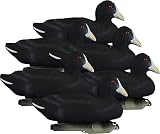
Overview: These Higdon Outdoors coot decoys offer a strategic advantage for waterfowl hunters looking to add diversity to their spread. This six-pack of foam-filled, standard-sized decoys mimics the natural behavior of coots, which mallards and other ducks find comforting. The lightweight design makes them ideal for mobile hunters who need to pack in and out quickly without sacrificing realism.
What Makes It Stand Out: The proprietary UV paint process is a game-changer, reducing glare while highlighting intricate feather details that remain vivid season after season. The self-righting weighted keel ensures stability in various water depths, while the innovative short-stringing keel clip design simplifies shallow water setups—a feature that saves precious time during pre-dawn rigging. Being foam-filled, these decoys won’t sink if punctured, providing reliability that hollow alternatives can’t match.
Value for Money: Priced competitively for a specialty species decoy pack, these offer excellent durability versus cheaper hollow-body options that crack and fade. The foam filling adds longevity, making them a smarter long-term investment for serious hunters who understand that coots act as confidence builders in a spread, often justifying their cost through increased harvest success.
Strengths and Weaknesses: Strengths include exceptional portability, realistic UV paint detailing, self-righting stability, and the confidence-building presence of coots in your spread. The foam filling provides peace of mind against punctures. Weaknesses are the slightly smaller-than-life size, which may concern purists, and limited species-specific utility—coot decoys won’t attract all duck varieties on their own.
Bottom Line: For hunters seeking to create a more natural, diverse decoy spread that puts wary mallards at ease, these Higdon coot decoys are a worthwhile addition. Their durability and thoughtful design features make them particularly valuable for shallow water and mobile hunting scenarios.
2. Higdon Outdoors Ringer AA | Mallard Drake Duck Butt Motion Decoy for Waterfowl Hunting | Ultra-Realistic Quiver for Shallow to Deep Water | 10hr Run Time | Batteries Not Included

Overview: The Ringer AA brings dynamic motion to static decoy spreads with its innovative duck butt design. Powered by four AA batteries, this motion decoy creates realistic feeding ripples that travel across your entire spread, attracting ducks from greater distances without the unnatural spinning motion of traditional rotaries.
What Makes It Stand Out: The virtually silent operation is its most impressive feature—ducks won’t spook from mechanical noise. The 10-hour runtime ensures it lasts through the longest hunts, while the quivering motion accurately mimics a feeding mallard’s subtle movements. Its versatility across shallow to deep water makes it more adaptable than depth-restricted alternatives.
Value for Money: While requiring a separate battery purchase, the Ringer AA delivers premium motion decoy performance at a mid-range price point. Compared to full-body motion decoys costing twice as much, this butt decoy provides comparable ripple effects with less setup complexity and greater portability, offering solid return on investment.
Strengths and Weaknesses: Strengths include whisper-quiet operation, extended battery life, realistic feeding motion, and universal depth compatibility. The simple setup requires minimal adjustment. Weaknesses are the battery cost and need for periodic replacement, plus the limited visual presence—being just a butt, it lacks the full-body profile some hunters prefer for close-range decoying.
Bottom Line: The Ringer AA is an excellent choice for hunters wanting to add subtle, natural motion to their spread without breaking the bank or spooking birds with noise. Its reliability and effectiveness make it a valuable tool, especially when paired with traditional static decoys.
3. Higdon Outdoors Standard Ringneck Floater Duck Decoys | Ultra Realistic Drake & Hen Decoys for Waterfowl Hunting | 4 Upright Drakes & 2 Resting Hens | Foam-Filled | 6pk

Overview: This six-pack of ringneck decoys provides species-specific attraction with four upright drakes and two resting hens. The foam-filled construction ensures they stay afloat even after taking damage, while the bold black-and-white patterning creates high visibility for distant ducks. These standard-sized decoys balance portability with presence.
What Makes It Stand Out: The XHD carving depth combined with UV paint technology creates exceptional feather detail that eliminates glare, even when wet. The wide body profile increases surface area for better visibility, while the mixed postures add natural variety. The short-stringing keel clip system allows for rapid deployment in shallow water scenarios where ringnecks typically feed.
Value for Money: Ringneck decoys are less common than mallards, making this specialized pack valuable for targeting this species specifically. The foam filling and UV-resistant paint provide durability that justifies the price over budget hollow decoys that need frequent replacement. For ringneck hunters, this is a targeted investment.
Strengths and Weaknesses: Strengths include posture variety, superior paint durability, self-righting stability, and foam-filled reliability. The wide body design enhances visibility. Weaknesses are the 4:2 drake-to-hen ratio which may not suit all hunting situations, and the standard sizing that’s slightly smaller than live birds, potentially reducing close-range realism.
Bottom Line: For waterfowlers specifically targeting ringnecks or wanting to add species diversity, this pack delivers excellent realism and durability. The thoughtful design features make it particularly effective for open water hunts where visibility and natural movement patterns matter most.
4. Heerweiyi Realistic Canadian Goose Decoys - Durable and Detailed Hunting Decoy Set with Lifelike Feather Patterns - 6-Pack Floating Water for Outdoor Sports and Waterfowl Hunting

Overview: Heerweiyi’s six-pack of Canada goose decoys offers versatility beyond hunting, serving equally well for wildlife photography, education, or pond decoration. Made from EVA foam, these decoys provide a lightweight yet durable option for hunters seeking realistic goose presentations without the premium price of traditional hollow bodies.
What Makes It Stand Out: The multi-purpose design distinguishes this set from hunting-only decoys. The EVA construction offers superior impact resistance compared to rigid plastics, while detailed feather texturing creates convincing realism. Their floating stability and natural poses work effectively for both hunting spreads and decorative water features, maximizing utility across seasons.
Value for Money: These represent exceptional value for casual hunters or those wanting dual-purpose decoys. While lacking some premium features like foam filling or weighted keels found in specialized hunting decoys, the price point makes them accessible for beginners or as supplemental decoys, offering good durability for the investment.
Strengths and Weaknesses: Strengths include versatile application, lightweight portability, EVA durability, and realistic feather patterns. They work well for multiple scenarios. Weaknesses are the absence of specified weighted keels (potential stability issues), lack of foam filling for puncture resistance, and a less established brand reputation compared to waterfowl specialists like Higdon.
Bottom Line: These decoys excel for hunters needing affordable, realistic goose representations or multi-use waterfowl props. While not as feature-rich as premium hunting-specific models, they provide solid performance for the price, particularly for supplemental spreads or decorative purposes.
5. Higdon Outdoors Standard Shoveler Duck Decoys | Floating Decoys with Weighted Keel for Waterfowl Hunting| Realistic Feather Detailing | Lightweight & Packable | Foam Filled | 6pk

Overview: Higdon’s shoveler decoys target shallow water scenarios where this species naturally feeds. This six-pack features the distinctive shoveler coloration—dark blacks, bright orange bills, and white highlights that create high contrast for aerial visibility. The foam-filled construction ensures reliability during transport and in the field.
What Makes It Stand Out: The species-specific bill shaping and coloration accurately replicate shovelers, attracting both shovelers and other ducks to similar habitat. The bright white body panels enhance long-distance visibility, while the UV paint process maintains color integrity. The short-stringing keel clip design excels in the shallow marshes shovelers prefer.
Value for Money: Shoveler decoys are a strategic addition for hunters targeting shallow wetlands. The specialized species design commands a slight premium over generic decoys, but the foam filling and durable UV paint ensure multiple seasons of use, making them more economical than replacing cheaper decoys annually.
Strengths and Weaknesses: Strengths include high-visibility coloration, accurate species morphology, self-righting weighted keel, foam-filled durability, and shallow-water optimization. The lightweight design aids mobility. Weaknesses are the niche species application—less versatile than mallard decoys—and the standard sizing that’s slightly undersized, which may affect close-range authenticity.
Bottom Line: For hunters focusing on shallow water habitats, these shoveler decoys provide targeted attraction with excellent durability. The species-specific details and high-visibility design make them a smart addition to any serious waterfowler’s spread, particularly when authenticity in specific habitats is absolutely paramount.
6. Higdon Outdoors Standard Pintail Floater Duck Decoys | Ultra Realistic Drake & Hen Decoys for Waterfowl Hunting | 3 Upright & 1 Resting Drake & 2 Resting Hens | Foam-Filled | 6pk

Overview: The Higdon Outdoors Standard Pintail Floater pack delivers six ultra-realistic decoys designed for serious waterfowl hunters. This set includes three upright drakes, one skimmer drake, and two resting hens, providing posture variety that mimics natural pintail behavior. The foam-filled construction ensures durability and prevents sinking, while the standard sizing—slightly smaller than live birds—maximizes portability for hunters covering large areas.
What Makes It Stand Out: Higdon’s XHD Hyper-Feathering technology combined with UV-resistant paint creates exceptional feather detail that remains vivid even when wet, reducing glare that can spook wary birds. The forward-weighted keel design enables self-righting functionality and natural floating motion in any water depth. The integrated short-stringing keel clip is a standout feature, allowing rapid deployment in shallow flooded fields without additional knots or hardware.
Value for Money: Priced competitively against premium brands like Avian-X and Dakota Decoy, these Higdon decoys offer comparable realism at a moderate price point. The foam-filled durability means fewer replacements over seasons, and the six-pack configuration provides immediate spread diversity. For hunters building a collection, this represents solid mid-range value.
Strengths and Weaknesses: Strengths include outstanding paint detail, multiple natural postures, lightweight packability, and robust foam-filled construction. The self-righting keel performs reliably in varied conditions. Weaknesses: the slightly smaller profile may not suit hunters preferring true-to-size decoys for all situations, and heavy use may eventually cause paint chipping on high-contact areas.
Bottom Line: These Higdon pintail decoys excel for hunters needing portable, realistic spreads in open water or flooded fields. The posture variety and UV paint technology justify the investment for both novice and experienced waterfowlers.
7. Cupped Waterfowl 30" Texas Rigs, 6-Pack of Heavy-Duty 4 Oz Ball Weighted Duck Decoy Rigs,Black

Overview: This six-pack of 30-inch Texas rigs from Cupped Waterfowl provides a ready-to-deploy solution for shallow water decoy placement. Each rig features a 4-ounce ball weight and swivel clip system designed to eliminate tangles and streamline setup. The included carabiner enables compact, organized storage and transport between hunting locations.
What Makes It Stand Out: Designed by professional guides, these rigs prioritize field-tested functionality. The swivel clips allow decoys to slide freely up and down the line, preventing knots during deployment and retrieval—a major time-saver in pre-dawn darkness. The 30-inch length is optimized for flooded timber and shallow marshes where traditional long-lines are impractical.
Value for Money: At approximately $5-6 per rig, these are priced slightly above DIY components but deliver significant labor savings. The heavy-duty construction and pre-assembled convenience justify the premium over budget alternatives that often tangle or corrode mid-season. For hunters who value time and reliability, the cost is easily justified.
Strengths and Weaknesses: Strengths include tangle-free swivel design, durable hardware, integrated storage carabiner, and guide-approved engineering. The 4-ounce weight provides adequate anchoring in calm to moderate conditions. Weaknesses: the fixed 30-inch length limits versatility in deeper water scenarios, and the weight may be insufficient for rough open water or strong currents.
Bottom Line: Cupped Waterfowl’s Texas rigs are ideal for shallow-water hunters seeking hassle-free deployment. The guide-designed features and tangle-resistant system make them worth the modest premium for anyone hunting flooded timber, rice fields, or marshes under 2.5 feet deep.
8. Higdon Outdoors Standard Wood Duck Floater Decoys | Ultra Realistic Drake & Hen Decoys for Waterfowl Hunting | 3 Upright & 1 Resting Drake & 2 Resting Hens | Foam-Filled | 6pk

Overview: Note: Product details contain conflicting information—the title specifies Wood Duck in a 6-pack configuration, while features describe Bluebill decoys with 12 pieces. This review addresses the listed 6-pack Wood Duck model, which features Higdon’s standard-size foam-filled construction. These decoys offer high-contrast plumage designed for attracting ducks in open water with realistic posture variety.
What Makes It Stand Out: Higdon’s XHD Hyper-Feathering detailing delivers sharp individual feather definition through advanced carving and paint techniques. The forward-weighted keel with short-string clip enables rapid shallow-water deployment and maintains natural floating motion. Foam-filled construction provides bulletproof durability against shot damage and rough handling.
Value for Money: If purchasing the 6-pack as titled, these represent solid mid-range value comparable to other Higdon standard series. The foam-filled design prevents costly sinkers and replacements. However, the description inconsistency warrants verification before purchase to ensure you receive the expected species and quantity.
Strengths and Weaknesses: Strengths include excellent feather detailing, lightweight portability, self-righting keel performance, and damage-resistant foam filling. The slightly smaller profile aids transport and spread expansion. Weaknesses: conflicting product information creates confusion, and the reduced size may not command attention in all hunting scenarios compared to oversized decoys.
Bottom Line: These Higdon decoys deliver proven performance and durability, but buyers should confirm exact contents with the seller due to description discrepancies. The quality construction and realistic detailing make them worthwhile for hunters building a versatile spread, provided you receive the advertised Wood Duck 6-pack.
9. Rig’Em Right Waterfowl Spring Loaded Decoy Line Depth Adjusters for Shortening Decoy Line in Shallow and Deep Waters (12 Adjusters)

Overview: Rig’Em Right’s spring-loaded depth adjusters provide a practical solution for hunters needing quick line length modifications across varying water depths. This 12-pack allows adaptation of existing decoy rigs without re-tying knots, enabling seamless transitions between shallow marshes and deeper open water setups.
What Makes It Stand Out: The spring-loaded mechanism securely grips decoy line while allowing instant adjustment by simply squeezing and sliding. This innovation eliminates the need for multiple pre-rigged lines or time-consuming re-rigging on the water. The compact design adds minimal bulk and works with standard decoy cord and most rigging systems.
Value for Money: These adjusters offer exceptional value at roughly $1 per unit, transforming rigid rigging into a versatile system. Compared to purchasing separate shallow and deep-water rigs, the cost savings are substantial. For hunters who frequently encounter varying conditions, this is a high-return, low-cost upgrade.
Strengths and Weaknesses: Strengths include rapid adjustability, compatibility with existing gear, durable spring mechanism, and compact storage. They excel in adaptive hunting scenarios. Weaknesses: plastic components may fatigue after repeated seasonal use, and improper installation can cause slippage. They also require existing rigging to function.
Bottom Line: These depth adjusters are a must-have accessory for versatile waterfowlers hunting multiple environments. The convenience of tool-free adjustments and minimal investment make them an easy recommendation for anyone looking to maximize rigging flexibility without carrying extra gear.
10. VicBre Duck Butt Decoys Mallard Hen Floater Decoy for Waterfowl Hunting

Overview: The VicBre Duck Butt Decoy offers a specialized feeding posture presentation that mimics mallard hens tipping forward to feed. This single hen floater adds subtle realism to any spread by simulating natural feeding behavior that attracts passing waterfowl. Constructed from durable plastic, it’s designed for season-after-season use in various water conditions.
What Makes It Stand Out: The feeding “duck butt” posture creates a unique visual cue that complements traditional upright decoys, suggesting active feeding activity rather than static loafing. The meticulous paint scheme replicates mallard hen plumage with lifelike accuracy. Its lightweight design enables effortless deployment and repositioning throughout the hunt.
Value for Money: As a specialized addition rather than a primary decoy, this represents modest value. Priced lower than full-flocked premium decoys, it provides targeted realism for minimal investment. However, single-posture utility limits its standalone value—best purchased as part of a diversified spread strategy.
Strengths and Weaknesses: Strengths include convincing feeding posture, durable construction, easy handling, and realistic coloration. The hen-specific design fills a common gap in many spreads. Weaknesses: single posture limits versatility, no accompanying drake version reduces pairing options, and the lightweight build may drift in strong winds without proper anchoring.
Bottom Line: The VicBre Duck Butt is a smart supplemental decoy for hunters seeking to add feeding realism to their spread. While not a standalone solution, its specialized posture and affordable price make it a worthwhile addition for puddle duck hunters targeting pressured birds.
Understanding Shallow Water Pond Environments
Shallow water ponds present a distinct set of variables that directly impact decoy performance. Unlike deeper water where waves and current dominate, these settings feature subtle water movement, increased visibility, and closer shooting distances that all factor into your gear choices.
Water Depth Variability
Most shallow ponds range from six inches to three feet deep, creating unique challenges for decoy stability. Decoys that work perfectly in deeper water may list awkwardly or even tip over in skinny water. You’ll need to consider how different keel designs interact with soft mud bottoms versus hardpan or gravel. The variability also affects how much of the decoy’s body remains visible above the waterline, which influences profile selection and placement strategy.
Vegetation and Structure
Emergent vegetation like cattails, bulrushes, and smartweed defines many shallow ponds and directly impacts where you can effectively place decoys. Heavy cover requires decoys that can be positioned in tight clusters without tangling lines, while more open water allows for traditional spreads. Consider how your decoys will look nestled against natural cover and whether they’ll maintain realistic positioning when surrounded by vegetation that might push them around.
Weather Exposure
Shallow ponds respond dramatically to wind, creating surface chop that can swamp poorly designed decoys or make them bob unnaturally. Conversely, calm mornings on these waters put every detail under a microscope. Your decoy selection needs to account for both extremes—stable enough to handle light chop but realistic enough to convince birds during glassy conditions.
Key Features to Look for in Shallow Water Decoys
When evaluating decoys for pond hunting, certain characteristics become more important than they might be in other environments. The close-range scrutiny and physical constraints of shallow water demand specific performance attributes.
Realism and Detail Level
At 20-30 yards, birds can see every paint chip and awkward seam. Look for decoys with high-definition carving details, realistic head positions, and natural body postures. The paint scheme should include subtle color variations and feather texturing that holds up under close inspection. Avoid overly glossy finishes that create unnatural shine, especially on calm mornings when reflections become obvious.
Keel Design and Stability
The keel serves as the foundation of performance in shallow water. A well-designed keel should provide enough weight to keep the decoy upright in light wind while allowing it to sit naturally without appearing top-heavy. Some designs feature adjustable ballast systems that let you fine-tune how the decoy rides based on water depth and bottom composition. Look for keels with line attachments positioned to prevent tipping in very shallow conditions.
Weight and Portability
Shallow water hunting often requires walking into spots, making decoy weight a serious consideration. Foam-filled decoys offer excellent durability but can be heavier than their hollow counterparts. Consider how far you’ll need to carry your spread and whether the weight savings of lighter decoys justify any potential durability trade-offs. Many hunters opt for a mix, using heavier decoys for anchor positions and lighter ones for filler.
Types of Decoys Suited for Shallow Water
Different decoy styles excel in pond environments, each offering distinct advantages depending on your hunting style and target species. Understanding these categories helps you build a versatile spread.
Full-body vs. Shell Decoys
Full-body decoys provide unmatched realism, especially on water where portions of the body remain visible above the surface. Their three-dimensional profiles create convincing shadows and depth that flat decoys can’t match. Shell decoys, however, offer significant weight savings and store more compactly. In very shallow water, shell decoys can be placed directly on mudflats or sandbars, creating natural-looking resting areas that full-bodies might sit too high on.
Floating vs. Field Decoys
Traditional floating decoys work well in ponds with consistent water depths of 12 inches or more, but field decoys truly shine in the shallowest conditions. Designed for dry ground, field decoys can be placed on exposed mudflats, along pond edges, and in water so shallow that floaters would list or tip. Their stakes allow precise height adjustment, creating natural-looking feeding postures that match how real birds use these areas.
Motion Decoy Options
Shallow water limits some motion decoy styles but opens opportunities for others. Jerk rigs become highly effective when you can stand in the water and manipulate them. Spinning wing decoys work well if positioned where they won’t create excessive splash, while water motion systems that create ripple effects can be particularly convincing in calm, shallow ponds where natural movement is minimal.
Decoy Materials and Durability Considerations
The material composition of your decoys directly impacts their longevity, performance, and maintenance requirements in the challenging shallow water environment.
Plastic vs. Foam Construction
High-density polyethylene plastic dominates the market for good reason—it withstands impacts, resists UV degradation, and cleans easily. However, in shallow water where decoys frequently contact bottom, foam-filled options provide insurance against punctures. The foam prevents sinking if the outer shell cracks and adds weight that improves stability. Consider your hunting terrain; rocky or stump-filled ponds favor foam-filled durability, while clean-bottomed waters work fine with hollow plastic.
Paint Durability
Shallow water hunting destroys paint faster than open water due to constant contact with abrasive bottoms and increased exposure to mud and debris. Look for decoys with fusion-bonded or heat-transfer finishes that resist chipping and fading. Some manufacturers offer textured surfaces that hide minor wear and maintain realistic appearance even as the paint ages. Matte or flat finishes generally outperform gloss in both realism and durability.
Size and Profile Selection Strategies
The scale of your decoys plays a crucial role in how convincing your spread appears, especially in the intimate setting of a shallow pond where birds approach at low altitudes.
Standard-sized decoys work well for most pond applications, but consider mixing in some oversized models for visibility at distance. Oversized decoys create stronger silhouettes that catch the eye of high-flying birds, while standard sizes maintain realism as birds commit. Some hunters use magnum decoys exclusively in shallow water to maximize visibility across flat terrain, though this can backfire if birds circle extensively and notice the size discrepancy.
Profile variety matters tremendously. Include active head positions like feeders, resters, and sentries to create a natural-looking group. Avoid spreads where every decoy faces the same direction—real birds on ponds constantly shift and adjust. Mixing species appropriately for your area adds authenticity; just ensure the proportions match what birds naturally expect to see.
Rigging and Anchoring Systems for Shallow Water
Proper rigging transforms a collection of decoys into a functional, manageable spread that sets up quickly and stays put in variable conditions.
Gang Rigging Techniques
Gang rigs allow you to deploy and retrieve multiple decoys on a single line, saving enormous time in shallow water where walking between decoys is easy. This system works exceptionally well for shell decoys placed along shorelines or in shallow zones. Use lightweight anchor cords that don’t tangle easily, and consider using looped gang lines that let you adjust decoy spacing without retying knots in the field.
Individual Rigging Options
For full-body floaters or situations requiring precise placement, individual rigging gives maximum control. In shallow water, shorten your anchor lines significantly—excess line creates tangles and allows decoys to drift unnaturally. Use anchors sized for the bottom type: mushroom anchors hold well in mud, while pyramid styles work better on harder bottoms. Some hunters use simple rebar stakes through the keel for ultra-shallow setups that keep decoys perfectly positioned.
Placement Strategies for Shallow Ponds
How you arrange your spread matters as much as the decoys themselves. Shallow water allows for creative setups that deeper water prohibits.
Wind Direction Considerations
Wind patterns across shallow ponds can be unpredictable, swirling around vegetation and terrain features. Set your spread with multiple landing zones rather than a single focal point. Create pockets and openings that give birds options regardless of wind shifts. Place rester and sleeper decoys on the downwind edge of these openings, as real birds naturally drift to leeward areas when relaxing.
Spacing and Spread Patterns
In shallow water, birds often group more tightly than in open water, especially when feeding. Reduce spacing between decoys to 3-4 feet instead of the 6-8 feet common in big water. This creates a more natural appearance and makes your spread look larger than it is. For puddlers, concentrate decoys in feeding zones near aquatic vegetation while leaving open landing lanes that funnel birds into shooting range.
Color and Paint Durability Factors
The visual presentation of your decoys under varying light conditions can make or break a hunt, particularly in the clear, shallow water environment.
Shallow ponds often feature tannin-stained water or muddy bottoms that alter how decoy colors appear. Choose paint schemes that match your specific hunting location rather than generic patterns. In clear water, subtlety wins—avoid overly bright whites and harsh contrasts. For muddy ponds, slightly darker, more saturated colors show up better. Pay special attention to speculum color on duck decoys; this iridescent patch catches light and needs to be accurate to convince circling birds.
Consider how your decoys will look during different times of day. Morning sun creates long shadows and highlights that can expose poor paint jobs. Decoys with built-in shadowing and feather detail maintain realism across lighting changes. Touch-up paint should always be in your kit—shallow water hunting inevitably leads to scrapes that you’ll want to fix before they become glaringly obvious.
Portability and Storage Considerations
The logistics of getting your decoys to and from shallow water spots often involves walking through mud, vegetation, and uneven terrain, making transport systems crucial.
Decoy bags designed for shallow water hunting typically feature backpack straps and drainage holes to shed water and mud. Look for bags that hold 12-18 decoys and allow you to pack them without tangling lines. Some systems use individual decoy sleeves that protect paint and prevent line snarls during transport. For long walks, consider using a decoy sled that slides across mud and vegetation, allowing you to haul larger spreads without exhausting yourself before the hunt begins.
Storage at home matters too. Shallow water decoys accumulate mud and debris faster than open water gear. Store them in a way that allows air circulation to prevent mildew and paint degradation. Hanging systems or open shelving work better than sealing them in airtight containers where moisture gets trapped.
Budget Planning and Value Assessment
Building an effective shallow water spread doesn’t require breaking the bank, but strategic investment in key areas pays dividends.
Prioritize quality for your “confidence decoys”—the ones placed closest to your blind where birds will scrutinize them most. These should be your highest realism models. For filler decoys in the outer portions of your spread, more economical options work fine since birds see them from distance. This tiered approach lets you build a large spread gradually without sacrificing the critical realism where it matters most.
Consider versatility when budgeting. Decoys that work in both shallow water and field situations give you more hunting opportunities throughout the season. Field decoys with removable stakes, for instance, can be used on mudflats, flooded fields, and even in water up to their bellies, making them a smart investment for hunters who face varying conditions.
Maintenance Tips for Shallow Water Use
The abrasive nature of shallow water hunting demands regular maintenance to keep your decoys looking fresh and functioning properly.
After each hunt, rinse decoys with fresh water to remove mud and debris that can scratch paint. Inspect anchor lines for fraying and replace them before they break in the field. Check keel attachment points—constant contact with bottom can loosen screws or bolts. Tighten them regularly and apply a dab of thread locker to prevent loss.
Touch up paint chips immediately using decoy-specific paint that flexes with the plastic and resists water intrusion. For foam-filled decoys, seal any cracks with marine-grade sealant to prevent waterlogging. Store decoys out of direct sunlight when possible, as UV exposure fades paint and embrittles plastic over time, especially problematic for gear that sits in sunny, shallow ponds.
Common Mistakes to Avoid
Even experienced hunters make errors when adapting deep-water tactics to shallow ponds. Recognizing these pitfalls saves you frustration and missed opportunities.
Avoid over-spreading your decoys. In shallow water, birds feel more vulnerable and seek the security of a tight group. A spread that’s too open looks unnatural and can make birds hesitant to commit. Similarly, don’t use too many motion decoys—one or two well-placed motion units create realistic movement; a pond full of spinning wings looks like a carnival, not a resting flock.
Never neglect the landing zone. Shallow water allows birds to land virtually anywhere, so you must create obvious, inviting openings. A common mistake is packing decoys too tightly, leaving no clear place for birds to set down. Always leave multiple pockets 10-15 yards from your position that give birds easy approach paths.
Seasonal Adaptations and Strategies
Waterfowl behavior shifts throughout the season, and your shallow water approach should evolve accordingly.
Early season birds are often less wary and respond well to larger spreads with plenty of motion. Use aggressive calling and active decoy postures to attract young, naive ducks. As the season progresses and birds become educated, scale down your spread and focus on realism over numbers. Replace bright, early-season paint schemes with more muted, natural tones that match the worn plumage of late-season birds.
Late season often means freezing conditions. Choose decoys that won’t crack in cold temperatures and avoid designs that trap water where it can freeze and damage the decoy. In freezing weather, place decoys where slight water movement prevents ice formation, or be prepared to break ice around your spread regularly to keep it looking natural and accessible to birds.
Legal Considerations and Best Practices
Responsible hunting ensures access and opportunity for future generations while keeping you compliant with regulations.
Always check local laws regarding decoy numbers, electronic motion decoys, and hunting hours. Some areas restrict the use of spinning wing decoys during certain periods or prohibit them entirely. Know the rules about leaving decoys unattended—many jurisdictions require you to be physically present with your spread during legal shooting hours.
Practice ethical placement by avoiding areas where decoys might entangle wildlife or interfere with other hunters. Retrieve any broken decoys or lost anchors to prevent littering and potential hazards to waterfowl. When hunting public land, respect established spreads and avoid setting up too close to other hunters—a courtesy that goes both ways and prevents conflicts.
Frequently Asked Questions
How many decoys do I need for a shallow water pond?
For most shallow water situations, 2-4 dozen decoys create an effective spread. The intimacy of ponds means birds see your entire setup easily, so quality trumps quantity. Start with 18-24 highly realistic decoys and add more as needed based on bird response and pond size.
What’s the ideal decoy weight for shallow water hunting?
Look for decoys weighing 1.5-2.5 pounds each. This provides enough mass to stay stable in light wind without making transport miserable. Foam-filled models trend heavier but offer durability benefits that many hunters find worth the extra weight.
Should I use floating or field decoys in very shallow water?
In water less than 8 inches deep, field decoys often outperform floaters. They sit naturally on mudflats and can be precisely positioned with adjustable stakes. For water 12 inches or deeper, floating decoys work well and handle wind chop better.
How do I keep decoys from tangling in vegetation?
Use shorter anchor lines—often just 12-18 inches in shallow water. Rig decoys individually rather than on gang lines when hunting heavy cover. Consider using Texas-style rigging with sliding weights that don’t catch on every stem.
What’s the best way to clean mud from decoys?
A pressure washer on low setting works wonders, but a simple garden hose and stiff brush do the job. Clean them soon after hunting before mud dries and hardens. Avoid harsh chemicals that might damage paint; warm water and mild dish soap suffice.
Can I use the same decoys for shallow water and field hunting?
Field decoys with removable stakes work beautifully in both environments. Many shallow water hunters use field decoys exclusively, placing them on mudflats and in very shallow water. Traditional floating decoys don’t transition well to dry fields.
How often should I replace my decoy line?
Inspect lines before each hunt and replace them at the first sign of fraying or weakness. In shallow water, lines degrade faster due to abrasion from vegetation and bottom contact. Most hunters replace lines every 1-2 seasons with heavy use.
What’s the most important feature for shallow water decoys?
Stability in skinny water trumps all other features. A decoy that tips, lists, or swamps looks unnatural and can spook birds. Test how decoys sit in very shallow water before buying—some designs that look great in the store perform poorly in the field.
Should I mix species in my shallow water spread?
Yes, but maintain realistic proportions. If mallards dominate your area, use them as your primary species with a few pintails or teal mixed in. Avoid equal numbers of multiple species, which rarely occurs naturally. Research what birds actually use your specific ponds.
How do I prevent decoys from freezing in place during late season?
Place decoys where slight current or spring activity keeps water moving. Bring a small boat or waders to break ice around your spread periodically. Some hunters add a little rock salt to the keel cavity (in hollow decoys) to lower the freezing point slightly, though this adds minimal benefit. The best solution is strategic placement and regular ice management.