Table of Contents
Nothing quite compares to the magic of watching your kids discover the wilderness on a multi-day backpacking adventure—until someone complains about the water tasting “funny” or, worse, ends up with stomach issues miles from the trailhead. When you’re responsible for keeping multiple people hydrated in the backcountry, water stops being a simple convenience and becomes a critical piece of your family’s safety puzzle. The right purification system can mean the difference between unforgettable memories and a trip cut short by waterborne illness.
Choosing a water purifier for family backpacking in 2026 requires a completely different mindset than picking one for solo adventures. You’re balancing weight against capacity, speed against thoroughness, and simplicity against effectiveness—often while a tired, hungry child is asking “how much longer?” This comprehensive guide cuts through the marketing noise to focus on what actually matters for families hitting the trail for multiple days. We’ll explore the technologies, features, and practical considerations that will keep your crew safely hydrated without turning water collection into a full-time job.
Top 10 Water Purifiers for Families
Detailed Product Reviews
1. LifeStraw Family 1.0 Portable Gravity Powered Water Purifier for Emergency Preparedness and Camping
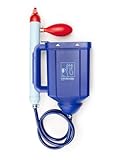
Overview: The LifeStraw Family 1.0 is a gravity-fed water purifier engineered for emergency preparedness and remote camping applications. This portable system processes water without electricity, chemicals, or complex installation, delivering 18,000 liters of purified water—sufficient for a family of four for three years. Its sealed bag packaging ensures readiness for long-term storage in disaster kits, while the simple pour-and-collect operation makes it accessible during crises when infrastructure fails.
What Makes It Stand Out: This system surpasses EPA purifier standards by removing 99.99% of viruses, 99.9999% of bacteria, and 99.9% of protozoan cysts down to 0.02 microns—a capability rare in portable filters. The gravity-powered design eliminates dependency on power sources, making it functional anywhere. Its 9-12 liters per hour flow rate provides practical quantities for family needs, while the chemical-free purification preserves natural taste without iodine or chlorine residuals.
Value for Money: Amortized over its 18,000-liter lifespan, the cost per gallon is negligible compared to bottled water or chemical treatments. While the initial investment exceeds basic filters, its virus-removal capability and massive capacity justify the premium for true emergency-grade protection. For disaster preparedness, the three-year service life eliminates recurring expenses during critical periods when replacements may be unavailable.
Strengths and Weaknesses: Strengths include unparalleled pathogen removal, extreme durability, true portability, and zero operating costs. The gravity system works in any environment without electricity. Weaknesses involve manual cleaning requirements, slower flow rates compared to pump systems, and inability to remove dissolved heavy metals or chemicals. The system also lacks mineral retention, producing neutral-tasting water.
Bottom Line: For genuine emergency preparedness or remote camping, the LifeStraw Family 1.0 is indispensable. It provides peace of mind through certified pathogen removal that standard filters cannot match. While not ideal for daily home use, it’s the gold standard for survival situations where water safety is non-negotiable.
2. Waterdrop Water Filter Pitcher, 200-Gallon Long-Life, Countertop NSF Certified Water Purifier, Replaces 6,400 Plastic Water Bottles a Year, Reduces Chlorine, PFOA/PFOS, 7-Cup, Blue

Overview: The Waterdrop Water Filter Pitcher is a budget-conscious countertop solution designed to transform municipal tap water into cleaner, better-tasting drinking water. This 7-cup pitcher uses NSF-certified activated carbon fiber filtration to target chlorine, PFOA/PFOS, and taste issues. Its extended 200-gallon lifespan makes it a practical alternative to bottled water for everyday household use, particularly in small households or apartments.
What Makes It Stand Out: The mechanical life recorder automatically tracks filter usage, eliminating guesswork about replacement timing—a feature rarely seen in budget pitchers. Its NSF/ANSI 372 and 42 certifications validate the high-quality activated carbon fiber construction. The 3-month lifespan significantly reduces maintenance frequency compared to competitors requiring monthly changes, while the ergonomic BPA-free design ensures safe, comfortable handling.
Value for Money: This pitcher delivers remarkable economy, theoretically replacing 6,400 plastic bottles annually at a fraction of the cost. The extended filter life minimizes replacement expenses, making it one of the most cost-effective certified filtration options. While it doesn’t reduce TDS, its targeted contaminant removal at this price point offers excellent value for municipal water users seeking taste improvement rather than complete demineralization.
Strengths and Weaknesses: Strengths include certified chemical reduction, innovative mechanical life indicator, food-grade materials, and minimal maintenance. The extended filter life reduces hassle and long-term costs. Weaknesses include limited 7-cup capacity for larger households, lack of TDS reduction for those wanting mineral removal, and slower filtration typical of gravity systems. It’s also less effective for well water with heavy sediment.
Bottom Line: Perfect for apartment dwellers and small families seeking affordable, certified water improvement without installation. The Waterdrop pitcher excels at taste enhancement and chemical reduction, though it’s not a comprehensive purification system. For municipal water users prioritizing convenience and value, it’s a smart, sustainable choice.
3. Bluevua RO100ROPOT-UV Reverse Osmosis System Countertop Water Filter - 6 Stage Purification with UV and Remineralization, Counter RO Filtration, Portable Water Purifier

Overview: The Bluevua RO100ROPOT-UV is a premium countertop reverse osmosis system combining advanced filtration with plug-and-play portability. This unit requires no plumbing installation, making it ideal for renters seeking bottled-quality water without permanent fixtures. The system processes water through six stages, including a 0.0001μm RO membrane, UV sterilization, and remineralization filter, delivering comprehensive purification in a compact, portable format.
What Makes It Stand Out: The high borosilicate glass carafe eliminates plastic contamination risks—a rarity in countertop systems. Its 6-stage filtration with UV light and remineralization creates a complete solution that both purifies and enhances water with essential minerals. The 2:1 pure-to-drain ratio is notably efficient for RO technology, while power-saving standby mode reduces energy consumption when idle. The WQA certification against NSF/ANSI/CAN 372 ensures lead-free construction.
Value for Money: Though premium-priced, the system justifies cost through 12-24 month filter longevity and elimination of bottled water expenses. The ClimatePartner Certification and warranty support long-term value. Compared to under-sink RO systems requiring installation costs, this portable unit saves money for renters. However, the substantial initial investment remains a barrier for budget-conscious buyers despite low operating costs.
Strengths and Weaknesses: Strengths include superior contaminant reduction (TDS, heavy metals, fluoride), UV protection, mineral rebalancing, elegant glass carafe, and true portability. The filter monitor displays real-time water quality. Weaknesses include higher price point, significant counter space requirements, and moderate 2:1 efficiency ratio compared to some competitors. The system requires electrical power, limiting off-grid use.
Bottom Line: For those seeking near-distilled water quality with mineral enhancement in a portable format, the Bluevua excels. It’s ideal for health-conscious users willing to invest in comprehensive purification. While overkill for simple taste improvement, it delivers exceptional results for problematic water sources where thorough contaminant removal is essential.
4. SimPure Y7P-BW UV Countertop Reverse Osmosis Water Filter, NSF/ANSI 58 Certified, 5 Stage RO Water Filtration System, Water Purifier for Home, No Installation, 4: 1 Pure to Drain, Classic Pure Taste

Overview: The SimPure Y7P-BW UV is a high-efficiency countertop reverse osmosis system engineered for maximum water conservation and rapid purification. This NSF/ANSI 58 certified unit transforms tap or well water (TDS<500 ppm) into purified drinking water through a 5-stage RO process enhanced by UV sterilization, all without requiring installation or plumbing modifications. The system combines certification with innovative efficiency technology.
What Makes It Stand Out: The revolutionary 4:1 pure-to-drain ratio achieves market-leading efficiency, saving up to 1500% more water than traditional under-sink RO systems. This recycling multi-filtration technology addresses RO’s primary environmental criticism. The rapid 418 GPD flow rate delivers a cup of purified water in approximately 15 seconds—dramatically faster than typical countertop units. Its ability to handle well water expands utility beyond municipal sources.
Value for Money: With 528-gallon filter capacity (equivalent to 6,000 bottles) and exceptional efficiency, operating costs are minimized over time. The premium price is offset by massive water savings and elimination of bottled water expenses. For households prioritizing sustainability, the conservation technology provides unique long-term value that competitors can’t match, though initial investment remains significant.
Strengths and Weaknesses: Strengths include industry-leading water efficiency, SGS-tested certification, UV purification without chemical byproducts, versatile placement, and fast dispensing. The system effectively tackles PFAS, heavy metals, and TDS. Weaknesses include larger countertop footprint, operational noise, and premium pricing. Like all RO systems, it removes beneficial minerals requiring remineralization for optimal taste.
Bottom Line: The SimPure Y7P-BW UV is the eco-conscious choice for serious water purification. Its unmatched efficiency and speed make it ideal for families and well-water users. While priced higher than basic filters, the water savings and performance justify the cost for those prioritizing both purity and environmental responsibility.
5. Pure Life Purified Water Bottles, 24 Pack - Still Bottled Water Enhanced with Minerals for a Crisp Taste, Plastic Bottles - 8 Fl Oz

Overview: Pure Life Purified Water offers a convenient 24-pack of 8-ounce plastic bottles enhanced with minerals for improved taste. Designed for families, lunchboxes, and on-the-go hydration, this product provides pre-purified water that undergoes rigorous quality testing from collection to bottling. The miniature size specifically targets children’s needs and portability scenarios where standard bottles prove cumbersome.
What Makes It Stand Out: The 8-ounce size is purpose-built for portion control and small hands, fitting easily into backpacks and lunch containers. The mineral enhancement creates a distinct taste profile many find more palatable than distilled water. Nestlé’s rigorous multi-step quality process ensures consistent product reliability, while widespread retail availability makes emergency procurement simple. The “designed to be recycled” messaging addresses environmental concerns.
Value for Money: As single-serve bottled water, it commands a premium over filtration systems. However, the convenience factor—no filling, cleaning, or maintenance—justifies cost for specific scenarios like school lunches, travel, or events. Bulk purchasing reduces per-unit price, but it’s still significantly more expensive than filtered tap water over time. The value proposition centers on convenience and portion control, not economic efficiency.
Strengths and Weaknesses: Strengths include ultimate convenience, child-friendly portion size, consistent taste, trusted brand quality, and recyclability. The small format reduces waste from partially consumed large bottles. Weaknesses include high environmental impact despite recycling claims, substantial long-term cost versus filtration, plastic exposure concerns, and lack of mineral content control. Not suitable for large volume hydration needs.
Bottom Line: Pure Life serves a specific niche: convenient, portion-controlled hydration for children and travel. While environmentally and economically inferior to filtration systems for daily use, it excels where convenience trumps cost. For families seeking reliable, portable water without equipment, it’s a practical choice, though reusable bottles with filters offer better long-term value.
6. SimPure Gravity Water Filter, Portable Gravity-Fed Water Purifier with 3L Bag, Tree Strap, BPA Free Survival Gear and Equipment for Camping Hiking Emergency Preparedness

Overview: The SimPure Gravity Water Filter is a versatile, lightweight purification system designed for outdoor enthusiasts and emergency preparedness. This gravity-fed solution includes a 3L bag and tree strap, allowing hands-free filtration without pumping or squeezing. Weighing just 2.8 ounces, it rolls up compactly for backpack storage while delivering clean water through a sophisticated three-stage filtration process.
What Makes It Stand Out: Its remarkable versatility sets it apart—the filter adapts to multiple configurations, including personal straw use, extended tube drinking, or bottle attachment. The 5,000-liter lifespan serves a family of four for over three years, while the 27 liters per hour flow rate outpaces many competitors. The 0.1-micron ultrafiltration membrane effectively eliminates 99.99999% of harmful contaminants, chlorine, and odors.
Value for Money: With a lifespan equivalent to 13,200 single-use water bottles, this system pays for itself quickly. Compared to pump filters requiring replacement cartridges every 500 liters, the SimPure offers exceptional longevity. The multi-use design eliminates need for separate personal filters, delivering outstanding value for regular backpackers and preparedness-minded families.
Strengths and Weaknesses: Strengths include versatile configurations, impressive lifespan, rapid filtration, and true ultralight portability. The hands-free operation is ideal after long hiking days. Weaknesses involve reliance on gravity (requires hanging location), limited 3L bag capacity for larger groups, and reduced flow in freezing temperatures. The bag’s durability may concern heavy users.
Bottom Line: The SimPure Gravity Filter excels for solo trekkers and small groups prioritizing weight savings and convenience. Its versatility and longevity make it a smart investment for both wilderness adventures and emergency kits, though large groups should consider supplemental capacity.
7. Portable Hand Pump Water Filter,100000Gallons Camping Water Filter Survival,3-Grade Backpacking Water Filter System 0.01μm Camping Water Purifier for Family-Outdoor,Emergency
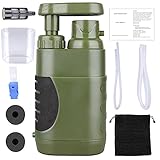
Overview: This Portable Hand Pump Water Filter delivers serious capacity for family camping and group expeditions. Engineered to process 100,000 gallons, it features a rapid 1400ml/min flow rate and transparent food-grade collection cup. The manual pump design provides reliable water access without depending on gravity or electricity, making it ideal for diverse outdoor scenarios.
What Makes It Stand Out: The extraordinary filtration capacity dwarfs most competitors, while the 0.01-micron medical-grade ultrafiltration offers superior protection. The thoughtful design includes a heavy-duty pre-filter to prevent clogging, dual buoys to eliminate hose kinking, and an ergonomic handle with non-slip rubber coating. Two hose lengths (15.7 and 31.5 inches) provide flexible water sourcing.
Value for Money: While pricier than basic straw filters, the 100,000-gallon lifespan translates to pennies per gallon over years of family use. Pump systems typically cost more but offer faster output and easier group water collection. For frequent campers or emergency preppers, this durability justifies the investment compared to replacing lesser filters annually.
Strengths and Weaknesses: Major strengths include massive capacity, blazing flow rate, robust construction, and family-friendly design. The pre-filter and buoy system solve common pumping frustrations. Weaknesses include manual effort required, heavier weight than gravity systems, and more moving parts to maintain. The pump action may tire users during extended sessions.
Bottom Line: This hand pump filter suits families and groups who need high-volume water quickly. Its durability and speed make it worth the extra weight and cost for basecamp scenarios or emergency preparedness where multiple people depend on reliable water access.
8. Straw Water Filter 5 Pack – Outdoor Camping & Hiking Survival Gear Kit for Family Use, Ultra-Light Personal Filter Straws for Backpacking, Travel, Bug-Out Bags and Emergency Preparedness

Overview: The Straw Water Filter 5 Pack provides personal filtration for every group member, eliminating the sharing concerns common with single-unit systems. These ultra-light personal filters integrate sediment pre-filters and 0.1-micron hollow fiber membranes, removing 99.99999% of harmful substances while improving taste and odor.
What Makes It Stand Out: The five-unit packaging ensures each person has dedicated equipment, promoting hygiene and convenience on group adventures. The food-grade, BPA-free construction meets rigorous safety standards, while the intuitive design requires zero setup or learning curve. Each straw’s pocket-ready size fits seamlessly into daypacks, bug-out bags, or vehicle emergency kits.
Value for Money: Purchasing as a five-pack typically offers 20-30% savings versus individual straws. For families or outdoor clubs, this bulk approach distributes cost while ensuring everyone carries their own protection. Compared to pump systems, the lower initial investment makes it accessible for casual users.
Strengths and Weaknesses: Strengths include individual allocation preventing cross-contamination, true ultralight portability, foolproof operation, and immediate deployment. The low-effort sipping works well when exhausted. Weaknesses include no water storage capability, limited to personal hydration only, and reduced practicality for cooking or filling bottles. Flow rate decreases as filters clog.
Bottom Line: This 5-pack excels for organized groups wanting simple, personal water solutions. It’s perfect for day hikes, travel, and emergency kits where individual preparedness matters. However, for basecamps or cooking needs, supplement with a gravity or pump system.
9. Pure Life Purified Water Bottles, 12 Pack - Still Bottled Water Enhanced with Minerals for a Crisp Taste, Plastic Bottles - 16.9 Fl oz

Overview: Pure Life Purified Water offers 12 ready-to-drink bottles enhanced with minerals for crisp taste. This isn’t a filtration device but rather pre-purified, mineral-balanced water in recyclable 16.9-ounce bottles. The product addresses immediate hydration needs without equipment, setup, or waiting—ideal for situations where convenience outweighs cost considerations.
What Makes It Stand Out: The rigorous multi-stage purification process ensures consistent quality and safety in every bottle. Mineral enhancement creates a pleasant taste profile that encourages hydration, particularly important for children and those sensitive to tap water flavors. The widespread retail availability and trusted brand reputation provide peace of mind for families and organizations.
Value for Money: At approximately $0.10-0.15 per bottle in multi-packs, it competes favorably with individual bottle purchases but costs significantly more than filtered tap water. The value lies in convenience, portability, and reliability rather than economy. For emergency reserves or event planning, bulk packaging offers predictable per-unit pricing.
Strengths and Weaknesses: Strengths include zero preparation time, consistent taste, trusted quality control, and universal acceptance. The recyclable bottles support environmental responsibility. Weaknesses involve single-use plastic waste, higher long-term cost versus filtration systems, and lack of utility once consumed. Storage space requirements and weight limit portability for extended outdoor use.
Bottom Line: Pure Life bottled water serves scenarios demanding immediate, reliable hydration without equipment—think emergency reserves, youth sports, or office use. For regular outdoor activities, reusable filtration systems prove more economical and environmentally sustainable.
10. Yuclet 4 Pack Water Filter Straw, Portable Personal Water Filtration System, Water Purifier Survival, Emergency Preparedness for Camping Hiking Drinking Travel Hunting and Family Outing

Overview: The Yuclet 4 Pack Water Filter Straw provides SGS-certified personal filtration in a compact package. Each straw delivers 1,300 gallons of clean water, removing 99.9999% of harmful substances and microplastics down to 0.1 micron. The 3.5-ounce weight and 8.2-inch length make it compatible with standard 28mm bottles and gravity systems.
What Makes It Stand Out: SGS certification with test report NBF23-0012700-03 provides verified performance claims rare in this price category. The 600ml/min flow rate exceeds many competitors, while the five-year individual supply duration offers exceptional longevity. The four-unit packaging balances group needs with personal ownership.
Value for Money: With 5,200 total gallons capacity across four units, cost-per-gallon rivals premium pump systems at a fraction of the price. The SGS certification justifies a slight premium over uncertified alternatives. For small families or partners who adventure together, sharing a multi-pack reduces individual investment while maintaining equipment ownership.
Strengths and Weaknesses: Strengths include certified filtration performance, impressive lifespan, strong flow rate, versatile compatibility, and lightweight design. The SGS report adds credibility. Weaknesses include straw-format limitations (personal use only), no included storage bag, and potential durability concerns with the plastic housing under heavy field use. Flow resistance increases near end-of-life.
Bottom Line: The Yuclet 4 Pack offers certified reliability for budget-conscious adventurers. It’s ideal for couples, small families, or individuals wanting backup units. The performance documentation provides confidence, though users needing group water storage should pair it with a gravity bag system.
Why Water Purification is Critical for Family Backpacking Adventures
When you’re backpacking with children, your margin for error shrinks dramatically. Kids are more susceptible to dehydration and more vulnerable to the effects of waterborne pathogens like Giardia, Cryptosporidium, and E. coli. A single contaminated water source can take down your entire group, turning a scenic expedition into a medical emergency. Unlike day hikes where you might carry all your water from home, multi-day trips force you to source water from streams, lakes, and springs that might look pristine but harbor invisible threats.
The stakes are higher with families because you’re managing multiple hydration needs simultaneously. An adult might push through mild symptoms, but children dehydrate faster and recover slower. Your purification system becomes your family’s health insurance policy—one that needs to work flawlessly every single time, often in challenging conditions like silty water, cold temperatures, or when everyone is too tired to fuss with complicated equipment.
Understanding Waterborne Threats in the Backcountry
Microorganisms That Can Ruin Your Trip
The backcountry hosts a cocktail of microscopic dangers that vary by region, season, and elevation. Bacteria like Salmonella and Campylobacter can cause severe gastrointestinal distress within 12-72 hours. Protozoa such as Giardia and Cryptosporidium form hardy cysts that resist many treatment methods and can survive for months in cold water. Viruses, while less common in remote North American wilderness, become a concern when hiking near agricultural runoff or in developing countries.
Regional and Seasonal Considerations
Water quality isn’t static. Spring snowmelt can flush high concentrations of pathogens into waterways. Popular camping areas often suffer from contamination due to improper waste disposal. High-traffic trails near livestock or wildlife corridors present different risks than remote alpine lakes. Understanding these variables helps you select a purification method robust enough for your specific destination rather than relying on a one-size-fits-all approach.
Purification vs. Filtration: What’s the Difference?
Many people use these terms interchangeably, but the distinction matters enormously for family safety. Filtration physically removes contaminants by passing water through pores measured in microns. Most filters can reliably remove bacteria and protozoa, but viruses often slip through because they’re simply too small. Purification, on the other hand, either kills or renders inactive all microbial life, including viruses, typically through chemical, UV, or boiling methods.
For families, the smart approach often involves a two-stage process: filter first to remove sediment and larger organisms, then purify to eliminate anything that slipped through. This redundancy might seem like overkill until you’re dealing with murky water and a child’s sensitive immune system. The extra few minutes provides peace of mind that’s invaluable when you’re three days from the trailhead.
Main Types of Water Purification Technologies
Pump Systems
Pump-style purifiers give you maximum control over water sources, allowing you to draw from shallow seeps and trickling streams that gravity systems can’t handle. They work by forcing water through a filter element and then often treating it with a secondary purification step. For families, the main advantage is versatility—you’re not dependent on finding a deep pool to submerge a bag. The trade-off is physical effort; pumping several liters for a family of four requires elbow grease, which can be challenging for younger children to help with.
Gravity-Fed Systems
Gravity systems excel at handling large volumes with minimal effort. You fill a dirty water reservoir, hang it from a tree branch, and let physics do the work while you set up camp or prepare meals. For families, this “set it and forget it” approach is a game-changer during busy camp evenings. However, they require a decent water source depth and can be frustratingly slow if the filter clogs. They’re also less practical for quick trail-side stops when you just need to top off bottles.
Squeeze and Bottle Systems
These compact options are perfect for on-the-go hydration, allowing you to fill a bottle and squeeze water directly through a filter. They’re lightweight and simple but limited in capacity—fine for a single person but tedious for filling multiple family water bottles and cooking pots. Some families use these as personal backups while relying on a larger group system at camp, creating a layered approach to water safety.
UV Light Purifiers
UV pens and devices neutralize all microorganisms by scrambling their DNA, making them a true purification method. They’re fast and don’t alter water taste, but they require clear water to be effective and depend on batteries. For families, the battery dependency is a major consideration—forgetting spare batteries or dealing with cold-weather battery drain could leave you without protection. They also don’t work in murky water unless you pre-filter.
Chemical Treatments
Tablets and drops using chlorine dioxide or iodine provide lightweight backup purification that works against all pathogens. Modern formulations are much better tasting than old-school iodine, but they still require wait times of 30 minutes to 4 hours depending on the contaminant and water temperature. For families with impatient kids, this waiting game can be challenging, though they’re invaluable as an ultralight emergency option.
Boiling
The oldest and most reliable method—bringing water to a rolling boil for one minute (three minutes above 6,500 feet) kills everything. It requires no special equipment beyond a pot and stove, but the fuel penalty adds up on multi-day trips. For a family, you might burn through a canister daily just on water purification, making it impractical as your primary method but essential as an ultimate backup.
Essential Features for Family-Sized Systems
Group Size Adaptability
Your system should scale efficiently from two to six people without requiring a completely different setup. Look for modular designs where you can add capacity through larger reservoirs or multiple filter elements. Some systems allow you to connect multiple clean water bags simultaneously, letting you fill bottles while collecting cooking water. This flexibility prevents bottlenecks during busy morning departures or evening meal prep when everyone needs water at once.
Pre-filter Mechanisms
Murky water is the enemy of most purification systems. A good pre-filter—whether a simple coffee-filter attachment or a dedicated sediment filter—extends the life of your main filter and maintains flow rates. For families, this is crucial because you’re processing more water, giving particulates more opportunities to clog your system. Some integrated pre-filters are cleanable in the field, which means you can maintain performance without carrying replacement parts.
Cleanable vs. Replaceable Components
Consider how you’ll maintain the system after day three when flow rates inevitably slow. Cleanable ceramic or hollow-fiber filters can be scrubbed in the field, restoring performance without extra gear. Replaceable cartridges require you to pack spares and know how to swap them with cold fingers in fading light. For extended trips, a cleanable primary filter with a replaceable backup provides the best of both worlds.
Capacity Planning for Multi-Day Expeditions
Daily Water Needs Calculation
A realistic family water budget goes beyond the standard “half gallon per person” rule. Factor in hydration (3-4 liters per active person), cooking (1-2 liters per meal), cleaning, and a safety margin. A family of four might process 6-8 gallons daily. Your purification system needs to handle this volume without becoming a full-time occupation. Calculate your worst-case scenario—hottest day, longest water carry, most cooking—and size accordingly.
Group Size Multipliers
Every additional family member doesn’t just add linear water needs; it multiplies logistical complexity. A system that works for two people might create frustrating queues for four. Consider parallel processing—can you run two filters simultaneously? Can you collect water while purifying another batch? Smart capacity planning means thinking in terms of “liters per hour per person” rather than total system capacity.
Backup Supply Strategies
Never rely on a single method. Carry chemical tablets as emergency backup, even with a primary filter. For multi-day trips, consider a two-filter strategy: a fast-flow system for clear water and a robust purifier for questionable sources. This redundancy weighs ounces but prevents pounds of misery. Some families split responsibilities—parents carry the main system, older kids carry personal backups—distributing both weight and risk.
Weight and Packability Considerations
Ultralight Options for Weight-Conscious Families
Every ounce matters when little legs are carrying their own gear, but water systems are one area where skimping can backfire spectacularly. Ultralight gravity systems can weigh under a pound but sacrifice durability. Squeeze systems are featherlight but limited in capacity. The sweet spot for families is often a sub-two-pound gravity system that processes enough water for evening camp while you’re setting up tents, effectively earning its weight in time saved.
Modular Systems and Weight Distribution
Smart design allows you to separate components among family members. The dirty water bag lives in one pack, the filter in another, clean reservoirs in a third. This distribution means no single person carries the entire system’s weight. Some systems break down into components that double as individual water bottles, eliminating redundant gear. Look for systems where the filter element can screw onto standard disposable water bottles, giving you flexibility without extra weight.
Durability and Field Maintenance
Materials That Withstand Family Use
Let’s be honest: kids aren’t gentle. That ultralight reservoir might survive careful adult handling but could spring a leak when dragged to the water source by an enthusiastic eight-year-old. Look for reinforced attachment points, thick-walled reservoirs, and filters that can survive being dropped. Transparent dirty water bags help you see sediment levels and prevent accidental overfilling that stresses seams.
Field Maintenance Requirements
Your system will clog, guaranteed. How easily can you restore it? Tool-free disassembly is essential when you’re tired and it’s dark. Backflushing capability—reversing water flow to clear debris—should be simple enough that a teenager can do it unsupervised. Carry a small brush for scrubbing filter elements and know exactly how many strokes it takes to restore flow. Practice at home in your sink before trusting it in the wilderness.
Flow Rate and Convenience Factors
Time Management for Families
A system that processes one liter per minute sounds fast until you’re filling six bottles, two hydration bladders, and a cooking pot. That “quick” process becomes a 20-minute chore while hungry kids wait. For families, target systems that deliver at least two liters per minute for gravity setups or have high-capacity pump strokes. Some gravity systems now include squeeze bulbs that let you manually boost pressure and speed when you’re in a hurry.
Ease of Use for All Ages
The best family system is one where kids can participate safely. Look for wide-mouth dirty water bags that are easy to fill from shallow sources, intuitive connections that snap together reliably, and clear visual indicators of clean vs. dirty components. Color-coding helps prevent cross-contamination accidents. If your ten-year-old can’t operate it independently after a quick lesson, it’s probably too complicated for tired family use.
Cost-Effectiveness and Long-Term Value
Initial Investment vs. Lifetime Cost
A $200 system might seem expensive compared to a $50 option, but factor in replacement cartridge costs and lifespan. A filter good for 1,500 liters sounds adequate until you realize your family processes 50 liters per weekend trip. That “expensive” system with a 10,000-liter lifespan and cleanable element becomes cheaper per use within the first year. Calculate cost per liter, not just sticker price.
Warranty and Manufacturer Support
When you’re dependent on a device for family safety, robust warranty coverage matters. Look for brands offering multi-year warranties and responsive customer service. Some companies provide detailed field repair guides and sell individual O-rings and gaskets rather than forcing you to buy entire replacement assemblies. This support network becomes invaluable when you’re troubleshooting issues from a remote trailhead parking lot.
Environmental and Sustainability Factors
Cartridge Replacement Impact
Every filter cartridge eventually ends up in a landfill. Some manufacturers offer recycling programs for spent elements, while others use biodegradable packaging. Hollow-fiber filters can sometimes be recycled as plastic, whereas ceramic elements are more environmentally stable. For eco-conscious families, the purification method with the lowest long-term waste might be a cleanable ceramic filter that lasts for a decade rather than disposable cartridges replaced annually.
Chemical Byproducts and Waste
Chemical treatments leave behind packaging waste and introduce substances into waterways. While modern chlorine dioxide breaks down into harmless salts, the plastic bottles and foil packaging accumulate. UV devices require batteries, which present their own disposal challenges. Boiling consumes fuel, contributing to carbon emissions. There’s no perfect environmental solution, but gravity-fed filtration with long-life elements typically has the smallest footprint for family use.
Safety Protocols and Best Practices
Source Selection Guidelines
Teach your family that purification doesn’t make bad water good. Avoid sources downstream from campgrounds, animal pastures, or obvious deadfall. Look for flowing water over stagnant, and clear over cloudy. Collect from the main current rather than eddies where debris collects. Even with purification, starting with the cleanest available source reduces strain on your system and improves taste. Make this a teachable moment—kids as young as six can learn to identify good water sources.
Cross-Contamination Prevention
Your purification system is only as good as your hygiene practices. Designate “dirty” hands for operating the collection side and “clean” hands for handling purified water. Use separate water bags clearly marked with colored tape. Never let the outlet hose touch untreated water or the ground. Some families use a dedicated “water officer” each day to maintain consistency. These protocols feel excessive until you see a child accidentally dip their clean water bottle into the dirty reservoir.
Pre-Trip Testing and Familiarization
Never unbox a new system and take it straight to the backcountry. Run several gallons through it at home, practice disassembly, and teach every family member the process. Time yourselves—can you produce enough water for dinner before the kids get cranky? This rehearsal reveals flaws in your plan and builds confidence. It’s also the time to discover that your chosen system doesn’t thread onto your specific water bottles or that the flow rate drops dramatically after the first liter.
Troubleshooting Common Issues in the Field
Murky water will clog any system faster than expected. When flow rates drop, check your pre-filter first—cleaning or replacing it often restores performance. Airlocks in gravity systems can stop flow entirely; gently squeeze the clean water bag or raise the dirty bag higher to burp out air bubbles. If your UV device fails, you have minutes, not hours, to implement backup chemical treatment before the crew gets dehydrated.
Cold weather presents unique challenges: filter elements can freeze and crack if not kept in your sleeping bag at night. Chemical treatments work slower in cold water—double the wait time. Batteries in UV devices drain rapidly below freezing. Always sleep with your purification method, whatever it is, and insulate it during the day. A frozen, cracked filter is a worthless filter, and finding that out at breakfast when you need coffee water is a crisis.
Frequently Asked Questions
How much water capacity do we need for a family of four on a three-day trip?
Plan for 3-4 liters per person per day for drinking, plus 2-3 liters daily for cooking and cleaning. For a three-day trip, that’s roughly 48-60 liters total. However, you don’t need to carry this all at once—your purification system should process 6-8 liters per day efficiently. Choose a system that can handle this daily volume in under 30 minutes of active time.
What’s the difference between a filter and a purifier, and which do families need?
Filters remove bacteria and protozoa but typically not viruses. Purifiers eliminate all microorganisms, including viruses. For most remote North American backpacking, a quality filter suffices. However, families with young children or those traveling internationally should consider purification methods for maximum protection. Many families use a filter as primary treatment with chemical purification tablets as backup.
How do we handle water for infants and toddlers on multi-day trips?
For children under one year, purification alone isn’t enough—water should be boiled and then cooled. Their immune systems can’t handle the trace amounts of chemicals or the remote chance of filter failure. For toddlers, use the most reliable purification method you have, and consider double-treatment: filter then chemically purify. Always pack shelf-stable, pre-mixed formula to avoid water mixing entirely for the youngest family members.
Can our kids operate the purification system independently?
This depends on the child’s age and the system’s design. Most ten-year-olds can manage a simple gravity system or squeeze filter after proper training. Pump systems require more strength and coordination. UV devices are simple but require responsibility with batteries and electronics. Regardless of age, always have an adult verify the process until you’re certain they won’t cross-contaminate or skip steps when tired.
What do we do if our primary system fails mid-trip?
First, never rely on a single method. Always carry chemical backup tablets—a small bottle weighs ounces but provides days of emergency treatment. If your filter fails, you can often rig a pre-filter with a bandana and use chemicals. Boiling is your ultimate fallback, though fuel-intensive. Before your trip, know the location of all possible water sources and identify exit routes if you cannot safely treat water.
How do we prevent our filter from freezing at night?
Sleep with it. Seriously. Keep your filter in a waterproof bag inside your sleeping bag. During the day, carry it in an interior pack pocket, not strapped to the outside. If temperatures are well below freezing, consider switching to chemical treatment as your primary method since batteries and filter elements both suffer in extreme cold. Never use a frozen filter—it may be cracked and allow pathogens through.
Are natural water sources really that dangerous, or is this overblown?
Waterborne illness statistics from backcountry areas show infection rates of 5-10% among hikers who don’t treat water. That risk compounds with families—more people means more opportunities for exposure. While many backcountry streams are probably safe, “probably” isn’t good enough when you’re days from medical help. The consequences outweigh the minor inconvenience of treatment.
How do we deal with extremely muddy or silty water sources?
Pre-filter aggressively. Let water settle in a pot for 30 minutes, then decant the clearer water from the top. Use a coffee filter, bandana, or dedicated pre-filter to remove sediment before it reaches your main filter. Some systems include sediment filters that can be cleaned and reused. Processing muddy water without pre-treatment will clog most filters within minutes, rendering them useless.
What’s the most cost-effective purification method for frequent family trips?
A cleanable hollow-fiber or ceramic filter with a long lifespan (10,000+ liters) offers the lowest cost per liter over time. While the initial investment is higher, avoiding $40 replacement cartridges every few trips quickly pays off. For maximum value, choose a system that can be backflushed and cleaned in the field without tools, extending its useful life indefinitely with proper care.
How do we know when it’s time to replace our filter element?
Most filters show dramatically reduced flow rates even after cleaning. If backflushing or scrubbing doesn’t restore at least 75% of the original flow, it’s time for replacement. Some systems include pressure gauges or marked indicators. Keep a log of liters processed—when you approach the rated capacity, carry a spare on your next trip. Don’t wait for complete failure; reduced flow means the filter is compromised and may allow pathogens through.
Related Buying Guides
- The 10 Best Gravity Water Filters for Camping Families in 2026
- Top 10 Best Water Filters for Backpacking Adventures in 2026
- 10 Must-Have Rugged Watches for Long-Duration Backpacking Trips in 2026
- 10 Best Camping Tents for Family Weekend Trips in 2026
- 10 Backpacker Water Filters That Solve Weight and Space Issues in 2026