Table of Contents
Sipping straight from a mountain stream might look idyllic on social media, but as any seasoned solo traveler knows, that crystal-clear water can harbor invisible threats that turn your adventure into a nightmare. Waterborne illnesses are the fastest way to derail a carefully planned journey, and when you’re traveling alone, there’s no backup plan or travel buddy to help you navigate a bout of severe dehydration in a remote location. This is where the humble water filter straw transforms from a simple piece of gear into your most reliable companion.
These pocket-sized purification devices have revolutionized how independent explorers approach hydration, eliminating the need to carry days’ worth of water or bulky purification systems. Whether you’re backpacking through Southeast Asia, trekking the Appalachian Trail, or preparing for emergency scenarios, understanding what makes a water filter straw truly effective could be the difference between a triumphant solo expedition and a medical evacuation. Let’s dive deep into the features, technologies, and considerations that matter most when choosing this critical piece of travel safety equipment.
Top 10 Water Filter Straws for Travel
Detailed Product Reviews
1. LifeStraw Sip – Reusable Stainless Steel Water Filter Drinking Straw with Carry Case, Removes Microplastics, Bacteria and Parasites for Travel and Everyday Use, Laguna Teal

Overview: The LifeStraw Sip in Laguna Teal elevates the personal water filter category with premium stainless steel construction while maintaining the brand’s legendary filtration credentials. This reusable straw eliminates 99.999% of microplastics, 99.999999% of bacteria, and 99.999% of parasites—protection that serves travelers and daily commuters alike. The 1,000-liter filter lifespan provides over a year of clean drinking water, replacing countless single-use bottles. Its striking teal finish and included leak-proof carry case combine style with practical portability.
What Makes It Stand Out: The stainless steel body distinguishes this from plastic competitors, offering superior durability, odor resistance, and a substantial feel that justifies its premium positioning. The silicone mouthpiece ensures comfortable drinking, while the passive filtration requires zero batteries, chemicals, or pumping. The Laguna Teal colorway is both eye-catching and sophisticated, and the protective case—a feature many rivals omit—keeps the mouthpiece sanitary between uses, a crucial detail for international travel.
Value for Money: With a cost-per-liter of approximately $0.02 over its lifetime, the Sip delivers substantial savings versus bottled water. The stainless steel housing is built to last indefinitely, with replacement filters available to extend its service life. While the upfront investment exceeds plastic models, the durability and sustainability benefits make it economical for frequent users who prioritize quality and environmental responsibility.
Strengths and Weaknesses: Pros include robust stainless steel construction, certified filtration performance, attractive design, and premium carry case. Cons are its heavier weight compared to ultralight plastic versions and a higher price point that may not suit occasional users.
Bottom Line: The LifeStraw Sip is an excellent choice for eco-conscious travelers seeking durable, stylish filtration. Its premium build and reliable performance justify the investment for regular use.
2. LifeStraw Sip – Reusable Stainless Steel Water Filter Drinking Straw with Carry Case, Removes Microplastics, Bacteria and Parasites for Travel and Everyday Use, Apricot

Overview: The LifeStraw Sip in Apricot delivers identical performance to its teal counterpart in a warm, minimalist aesthetic. This stainless steel water filter provides the same exceptional protection against 99.999% of microplastics, 99.999999% of bacteria, and 99.999% of parasites. The 1,000-liter filter capacity supports sustainable daily hydration for over a year, while the apricot finish appeals to those preferring understated elegance. The package includes the same premium leak-proof carry case for portability and protection.
What Makes It Stand Out: Beyond the signature stainless steel durability and silicone mouthpiece, the apricot colorway offers subtle sophistication that blends seamlessly with professional and casual settings alike. The passive filtration system maintains its brilliantly simple operation—just sip and drink—requiring no setup or maintenance beyond eventual filter replacement. The included carry case matches the straw’s quality, providing robust protection that prevents contamination during travel.
Value for Money: Sharing the same price structure as other Sip models, this version delivers identical economic value: roughly $0.02 per liter over its lifespan. The sustainable stainless steel construction eliminates plastic waste while providing a permanent housing for replacement filters. No premium is charged for color preference, making the apricot option a purely aesthetic choice without financial penalty.
Strengths and Weaknesses: Advantages include durable, odor-resistant stainless steel build, certified filtration, attractive apricot finish, and protective case. Drawbacks mirror other Sip models: heavier than plastic alternatives and higher cost than basic filters.
Bottom Line: Choose the Apricot LifeStraw Sip for premium filtration in a subtle, sophisticated package. It combines reliability, sustainability, and style for discerning travelers and daily users.
3. Sursip Water Filter Straw Reusable Stainless Steel Portable Outdoor Emergency Survival Gear for Camping & Hiking Travel Personal Water Purifier Filter Straw(1 Pack)

Overview: The Sursip Water Filter Straw positions itself as a rugged, budget-conscious alternative to premium brands, combining stainless steel internals with an aluminum protective casing. It matches competitor specifications by removing 99.999999% of microplastics, bacteria, and parasites for safe drinking water. The 1,000-liter filter capacity suits extended outdoor adventures and emergency preparedness. Weighing mere ounces and featuring an integrated stainless steel carabiner, it’s optimized for clipping onto backpacks and survival kits without bulk.
What Makes It Stand Out: The dual-material construction—internal stainless steel straw with external aluminum armor—provides exceptional impact resistance for harsh outdoor conditions. The included carabiner is a practical addition many competitors omit, enabling immediate access during hikes or camping. Its straightforward design requires no pumping, batteries, or chemicals, delivering instant filtration from taps, streams, or lakes with minimal effort.
Value for Money: This straw typically undercuts premium stainless steel models by 30-40% while delivering comparable filtration performance. The 1,000-liter lifespan ensures cost-per-liter remains extremely low, and the durable construction promises years of reliable service. For budget-minded outdoor enthusiasts, it represents exceptional value without sacrificing core safety features.
Strengths and Weaknesses: Pros include affordable pricing, robust dual-material construction, integrated carabiner, and certified filtration performance. Cons involve a lesser-known brand with fewer independent test verifications, no mention of a protective carry case, and potentially less refined mouthpiece ergonomics compared to premium options.
Bottom Line: The Sursip straw is ideal for outdoor adventurers seeking durable, effective filtration at a competitive price. While lacking some refinements, its rugged build and reliable performance make it a smart choice for camping and emergency kits.
4. LifeStraw Personal Water Filter for Hiking, Camping, Travel, and Emergency Preparedness, 2 Pack, Blue
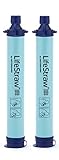
Overview: The original LifeStraw in this convenient two-pack remains the benchmark for ultralight water filtration. Each unit weighs under two ounces yet removes 99.999999% of bacteria, 99.999% of parasites, and 99.999% of microplastics. With an extraordinary 1,000-gallon (4,000-liter) capacity per straw—over five years of individual drinking water—they’re purpose-built for hiking, camping, travel, and emergency preparedness. The unlimited shelf life ensures they’re always ready for survival kits.
What Makes It Stand Out: LifeStraw’s revolutionary simplicity and global field-testing pedigree distinguish it from imitators. Proven in the harshest conditions worldwide, its reliability is unquestioned. The “One Purchase, One Child, One Year of Safe Water” program adds meaningful social impact. At under two ounces, it’s among the lightest filtration options available, a critical advantage for ultralight backpackers and minimalist travelers.
Value for Money: The two-pack effectively halves the per-unit cost compared to individual purchases, delivering exceptional bulk value. With each straw processing 1,000 gallons, the cost-per-gallon is negligible. The unlimited shelf life means zero degradation during storage, making them practical for emergency preparedness without replacement concerns.
Strengths and Weaknesses: Strengths include proven filtration technology, ultralight weight, incredible longevity, unlimited shelf life, and tangible social impact. Weaknesses are the basic plastic construction that feels less premium than metal alternatives, lack of an included carry case, and the necessity of sipping directly from water sources without integrated bottle compatibility.
Bottom Line: For ultralight enthusiasts and emergency preppers, the LifeStraw two-pack is unbeatable. Its proven performance, minimal weight, and social impact make it essential for any outdoor or survival kit.
5. Membrane Solutions Personal Water Filter, Survival Filtration Straw Portable Gear, Emergency Preparedness, Supply for Drinking Hiking Camping Travel Hunting Fishing Team Family Outing (Blue, 4 Pack)
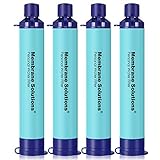
Overview: The Membrane Solutions four-pack delivers scientifically certified water filtration for groups and families, meeting stringent NSF/ANSI 42, 372, and 401 standards. Each straw removes 99.9999% of bacteria through a comprehensive 5-stage filtration system incorporating activated carbon and hollow fiber ultrafiltration membranes. With an impressive 1,320-gallon (5,000-liter) capacity per unit, these straws outlast many competitors. The 0.1-micron pore size balances filtration precision with a practical 500ml/min flow rate.
What Makes It Stand Out: Triple NSF certification provides scientific validation few competitors can match, ensuring reliable chlorine reduction, lead-free construction, and microplastic removal. The 5-stage system improves taste through activated carbon, while removable ends extend lifespan and enable cleaning. The 28mm threading allows attachment to standard bottles, adding versatility that direct-sip-only models lack.
Value for Money: Bulk four-pack pricing offers exceptional group value, significantly reducing per-unit cost. With 1,320-gallon capacity per straw, the cost-per-gallon is among the lowest available. NSF certification justifies a modest premium over uncertified alternatives, providing critical peace of mind for international travel and emergency scenarios where water quality is unknown.
Strengths and Weaknesses: Advantages include triple NSF certification, extended 5,000-liter capacity, comprehensive 5-stage filtration, bottle compatibility, and excellent bulk pricing. Disadvantages are plastic construction that may feel less rugged than metal options, and the four-pack quantity may be excessive for solo users or minimalists.
Bottom Line: Perfect for families, groups, or serious preppers wanting certified performance. The Membrane Solutions four-pack combines scientific validation, high capacity, and outstanding value for those prioritizing proven reliability and group preparedness.
6. Personal Water Filter Straw, Reusable Stainless Steel Water Filter Drinking Straw Portable Outdoor Emergency Survival Gear for Hiking, Camping, Travel, Hunting & Fishing (Small)

Overview: This stainless steel water filter straw offers a durable alternative to plastic purifiers for outdoor enthusiasts. Measuring 10.4 inches and weighing just 1.06 ounces, it removes 99.999999% of microplastics while providing 1,000 liters of clean water—enough for over a year of daily use.
What Makes It Stand Out: The food-grade stainless steel construction eliminates chemical leaching concerns common with plastic straws. Its microfilter tackles particles, dirt, and cloudiness while maintaining a compact profile that fits easily in pockets or backpacks. The included carrying case adds protection during transport.
Value for Money: At its price point, this straw competes directly with basic plastic models while offering superior material durability. The 1,000-liter lifespan translates to roughly $0.01 per liter, making it economical for occasional hikers and campers who prioritize metal construction over maximum filtration capacity.
Strengths and Weaknesses: Strengths include excellent corrosion resistance, no plastic taste, and true portability. The stainless steel build withstands rough handling better than fragile alternatives. Weaknesses center on the narrow 0.31-inch diameter requiring stronger suction, unknown brand testing verification, and lower capacity compared to premium competitors. The straw design also limits use with water bottles.
Bottom Line: Ideal for environmentally-conscious users wanting a metal alternative to plastic straws. While it lacks the rigorous certifications of top brands, its durable construction and adequate filtration make it a reliable choice for casual outdoor activities and emergency kits.
7. LifeStraw Personal Water Purifier for Hiking, Camping, Travel, and Emergency Preparedness
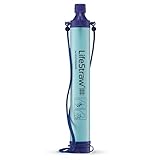
Overview: The LifeStraw is the gold standard in personal water purification, trusted by millions globally. This BPA-free plastic purifier delivers 4,000 liters of safe drinking water while removing 99.999999% of bacteria and 99.999% of parasites through advanced microfiltration membrane technology.
What Makes It Stand Out: Rigorous independent testing verifies all claims using US EPA, NSF, and ASTM protocols—something few competitors can match. The social impact program provides safe water to a school child for each purchase. It removes microplastics down to 1 micron and reduces turbidity to 0.2 microns, exceeding most portable filters.
Value for Money: Though priced at a premium, the 4,000-liter lifespan reduces cost to under $0.005 per liter—exceptional value for verified protection. You’re paying for proven performance, brand reliability, and humanitarian impact, not just hardware.
Strengths and Weaknesses: Strengths include unparalleled certification, extensive lifespan, lightweight design, and proven parasite removal. The one-for-one impact program adds ethical value. Weaknesses include the plastic construction’s potential for cracking, lack of a cleaning mechanism, and inability to attach to bottles. The 0.2-micron rating is slightly less fine than some competitors.
Bottom Line: The most reliable choice for serious adventurers and emergency preparedness. Its verified performance and extraordinary lifespan justify the premium. For those prioritizing proven safety over material preferences, LifeStraw remains the benchmark.
8. Personal Survival Straw.316L Stainless Steel Reusable Water Filter Straw Portable Water Purifier Straw for Camping Hiking Backpacking Travel, Emergency Survival Gear (Navy Blue, 1 Pcs)

Overview: This 316L stainless steel survival straw emphasizes maximum durability and safety for emergency scenarios. At 11 inches and 50 grams, it filters 99.999% of bacteria and microplastics through a 0.1-micron filter, offering six months of reliable use up to 1,000 liters.
What Makes It Stand Out: The premium 316L stainless steel construction provides superior hardness (HB 150-200) and corrosion resistance compared to standard metals or plastics. Its detachable design enables thorough cleaning—critical for preventing bacterial buildup during extended use. This addresses a major limitation of one-piece filters.
Value for Money: Positioned in the mid-to-premium range, the price reflects its superior materials and cleanable design. While lifespan matches basic models, the reusable nature and robust construction offer better long-term value for those prioritizing durability over maximum capacity.
Strengths and Weaknesses: Strengths include exceptional material quality, cleanable components, and rigid structure that won’t crack under impact. The 316L steel eliminates chemical leaching concerns entirely. Weaknesses include the shorter advertised six-month lifespan (versus years for some), slightly heavier weight than plastic alternatives, and limited brand recognition. The narrow diameter may challenge users with limited lung capacity.
Bottom Line: Perfect for preppers and adventurers demanding maximum durability. The cleanable, premium steel construction justifies its cost for emergency kits where reliability under harsh conditions matters more than ultimate filtration volume.
9. 5 High-Capacity Emergency Water Straws – Lightweight, Reusable, 1800-gallon Filters for Camping, Hiking, Travel, Biking, Survival, and Emergencies. No Expiration Date, Perfect for preparedness

Overview: This five-pack of emergency water straws delivers bulk preparedness value. Each 8-inch, 2-ounce filter provides up to 1,800 gallons (approximately 10 years of personal use) removing 99.99% of bacteria, parasites, and microplastics down to 0.1 micron—making it ideal for family emergency planning.
What Makes It Stand Out: The extraordinary capacity claim and included backflushing plunger for each unit set this apart. The plunger extends filter life by clearing sediment buildup—a maintenance feature rarely included in budget options. Individually sealed packaging enables strategic distribution across vehicles, bags, and kits.
Value for Money: Exceptional bulk pricing makes each straw highly affordable, particularly for families or groups. At 1,800 gallons per filter, the cost per liter is among the lowest available, though the ambitious capacity claim lacks independent verification compared to premium brands.
Strengths and Weaknesses: Strengths include unbeatable quantity value, maintenance tools, lightweight design, and no expiration date for long-term storage. The multi-unit packaging supports comprehensive emergency planning. Weaknesses include unknown brand testing standards, plastic construction durability concerns, and potentially optimistic lifespan claims. The 99.99% removal rate is slightly lower than top competitors’ 99.999999% claims.
Bottom Line: The best value for families and preppers wanting multiple backup filters. While certification details are unclear, the included maintenance tools and bulk quantity make it a practical choice for widespread emergency preparation.
10. 2 Pack Timain 4-Stage Filtration,High Flow Rate Water Filter Straw,Water Purifier Survival for Emergency Kits,Travel,Camping, Hiking,Fishing,Hunting (2)

Overview: The Timain two-pack features advanced 4-stage filtration in a versatile, accessory-rich package. Each straw uses ultrafiltration membrane technology at 0.1-micron accuracy to remove 99.9999% of harmful substances, processing up to 1,000 gallons while connecting to standard 28mm bottles and hydration bladders.
What Makes It Stand Out: The four-stage filtration system exceeds typical single-membrane designs, while universal connectivity transforms it from a straw into a comprehensive water system. Included accessories—a silicone extension hose and 7-core paracord—enhance field utility beyond basic purification.
Value for Money: Competitively priced for a two-pack with accessories, it offers strong value for users wanting versatility. The 1,000-gallon capacity per unit provides years of use, while the attachment options eliminate the need for separate bottle-top filters.
Strengths and Weaknesses: Strengths include advanced filtration stages, versatile connectivity, useful accessories, and food-grade material construction. The ability to integrate with existing hydration systems is a major advantage. Weaknesses include more complex design introducing potential failure points, limited brand recognition, and lack of independent testing verification mentioned. The multi-stage system may clog faster in highly turbid water.
Bottom Line: Excellent for adventurers needing adaptable water solutions. The connectivity options and bonus accessories make it more than just a straw—it’s a modular purification system ideal for hikers wanting integration with their existing gear.
Why Water Filter Straws Are Essential for Solo Travel
When you’re navigating foreign territories alone, self-sufficiency isn’t just convenient—it’s survival. Water filter straws provide immediate access to safe drinking water without relying on bottled water availability, electricity, or complex chemical treatments. Unlike pump filters that require two hands or UV pens that need batteries, these devices let you drink directly from virtually any water source while keeping your other hand free for maps, trekking poles, or maintaining balance on tricky terrain.
The psychological benefit is equally valuable. Knowing you can safely hydrate from a roadside stream, hotel tap of questionable quality, or emergency water source reduces anxiety and allows you to venture further off the beaten path. For solo travelers, this confidence translates into more authentic experiences and the ability to adapt when plans inevitably change.
Key Features to Look for in Water Filter Straws
Filtration Technology Types
Most personal water filter straws employ one of three core technologies: hollow fiber membranes, activated carbon, or ion exchange. Hollow fiber membranes work like microscopic sieves, physically blocking pathogens larger than their pore size. These ultrafine tubes cluster together, creating enormous surface area in a tiny package. Activated carbon tackles chemical contaminants and unpleasant tastes through adsorption, while ion exchange resins target specific dissolved metals and minerals. Premium models often combine multiple technologies for comprehensive protection.
Micron Ratings Explained
The micron rating determines what size particles get blocked—critical knowledge for any serious traveler. A 0.1-micron filter will stop bacteria like E. coli and protozoa such as Giardia, which typically measure 0.2 microns or larger. However, viruses can be as small as 0.02 microns, requiring specialized purification technology beyond standard filtration. For backcountry travel in North America and Western Europe, 0.1-micron mechanical filtration usually suffices. For international travel in developing regions, you need additional viral protection through chemical treatment, UV light, or advanced filter media.
Flow Rate and Drinking Ease
Nothing’s more frustrating than working hard to get a tiny sip of water when you’re parched. Flow rate varies dramatically between designs, influenced by filter media density, surface area, and clogging resistance. Some models require strong suction comparable to drinking a thick milkshake, while others offer effortless sipping. Consider your typical hydration needs—if you’re a heavy sweater or traveling in hot climates, prioritize higher flow rates. Many designs include pre-filters or backflushing capabilities to maintain performance in silty water conditions.
Filter Lifespan and Capacity
Filter longevity ranges from a few hundred liters to several thousand, significantly impacting cost-effectiveness and trip planning. Mechanical filters clog over time as they trap contaminants, eventually requiring replacement. Some models feature cleanable filters that extend lifespan through backwashing. Consider your trip duration and water source quality—murky water with high sediment loads will exhaust filters faster than clear mountain springs. Always check the rated capacity and understand that real-world performance often varies based on water quality.
Weight and Portability Factors
For solo travelers counting every ounce, weight becomes a critical decision factor. Most quality filter straws weigh between 2-5 ounces, but accessories like carrying cases, backflush syringes, and replacement filters add bulk. Ultralight models sacrifice some durability or capacity for minimal weight. Consider whether you’ll carry the straw in a pocket, pack lid, or emergency kit when evaluating packed size. Some designs collapse or telescope, offering space savings when not in use.
Durability and Build Quality
Your water filter straw must withstand being dropped, stepped on, and jostled in luggage. Look for robust housing materials like BPA-free ABS plastic or medical-grade polymers. The mouthpiece should feel comfortable and secure, not flimsy. Consider freeze protection—water expands when frozen, potentially rupturing hollow fiber membranes. Some models include protective caps for both ends to prevent contamination and damage. Remember, this device might be your only water source in an emergency, so reliability trumps minor weight savings.
Maintenance and Cleaning Requirements
Solo travelers need gear that works with minimal fuss, but all filter straws require some maintenance. Backflushing—forcing clean water backward through the filter—clears trapped particles and restores flow rate. Some models include specialized syringes or gravity bags for this purpose. Others require simple blowing through the straw after use. Understand the cleaning protocol before purchase, as neglecting maintenance drastically reduces filter life. Consider how easily you can perform these tasks in the field with limited water and privacy.
Certification Standards to Trust
Third-party testing provides objective validation of manufacturer claims. NSF/ANSI standards are the gold standard—look for certifications to Standard 42 (aesthetic effects), 53 (health effects), P231 (microbiological water purifiers), or P248 (emergency military operations). EPA Guide Standard testing verifies microbiological reduction claims. Be wary of vague claims like “removes 99.9% of bacteria” without specifying testing protocols. Legitimate manufacturers provide detailed test results and certification numbers you can verify independently.
Understanding Contaminant Removal
Bacteria and Protozoa Protection
These microscopic organisms represent the most common waterborne threats in wilderness settings. Salmonella, Campylobacter, and E. coli can cause severe gastrointestinal distress lasting weeks. Protozoa like Giardia and Cryptosporidium form protective cysts resistant to chemical treatments. Mechanical filtration at 0.1-0.2 microns physically blocks these pathogens. Understand that “log reduction” ratings indicate effectiveness—a 6-log reduction removes 99.9999% of bacteria, while 3-log removes only 99.9%. For solo travel, aim for the highest log ratings possible.
Virus Removal Capabilities
Viruses are the smallest waterborne pathogens and slip through most mechanical filters. Hepatitis A, norovirus, and rotavirus pose serious risks in areas with poor sanitation. Standard filter straws don’t remove viruses, requiring additional treatment methods. Some advanced models incorporate chemical disinfectants like iodine resin or chlorine within the filter matrix. Others rely on electrostatic attraction to capture smaller particles. For travel in developing nations or after natural disasters, ensure your system specifically addresses viral contamination through certification to EPA Purifier standards.
Chemical and Heavy Metal Filtration
Agricultural runoff, industrial pollution, and natural mineral deposits introduce chemicals and heavy metals into water sources. Activated carbon effectively reduces chlorine, pesticides, and volatile organic compounds. Ion exchange targets lead, mercury, and arsenic. However, no portable filter removes all chemical contaminants. If you’re traveling in areas with known pollution, research specific regional threats. For example, mining regions may have elevated heavy metals, while agricultural areas risk nitrate contamination. Some filter straws include indicator systems that alert when filter capacity is exhausted.
Taste and Odor Improvement
Even biologically safe water can taste terrible due to sulfur, algae, or chlorine. Activated carbon dramatically improves palatability, which matters when you need to drink large volumes to stay hydrated. Bad-tasting water leads to voluntary dehydration, a dangerous state for solo travelers. Consider that improved taste also encourages proper hydration. Some filters add minerals back into purified water for better flavor, though this is less common in straw designs. Test the filtered water taste if possible before committing to a long trip.
Practical Considerations for Solo Travel
Packability and Space Constraints
Solo travelers often carry smaller packs, making efficient use of space crucial. Consider whether the straw integrates with your existing gear—some designs thread onto standard water bottles, while others work with hydration reservoirs. Collapsible models pack flat when empty, fitting into laptop sleeves or organizer pockets. Think about accessibility—you’ll want the straw within easy reach, not buried at the bottom of your pack. Some travelers prefer models that clip to pack straps or fit in hip belt pockets for instant access.
Emergency Preparedness Features
Beyond daily hydration, your filter straw serves as emergency insurance. Look for models that function as straws but also adapt to gravity-fed systems, allowing hands-free filtering while you set up camp or treat injuries. Some include built-in compasses, whistles, or fire starters—useful multi-tools for survival situations. Consider redundancy: carrying chemical treatment tablets as backup weighs mere grams but provides peace of mind. Solo travelers should practice using their filter before departure, simulating emergency scenarios like filtering from a puddle or muddy seep.
Multi-Use Versatility
The best travel gear performs multiple functions. Many filter straws thread onto disposable water bottles, converting questionable bottled water into safe hydration. Some connect to hydration reservoirs, inline filters for camp use, or squeeze pouches for filtering larger quantities. Gravity adapter kits turn your straw into a camp water treatment system. Consider your typical travel style—if you frequently stay in hotels with sketchy taps, bottle-threading capability is valuable. For wilderness backpacking, inline reservoir compatibility matters more.
Cost-Effectiveness Over Time
Initial purchase price tells only part of the story. Calculate cost per liter by dividing the price by rated filter capacity. A $20 straw filtering 1,000 liters costs $0.02 per liter, while a $60 straw filtering 4,000 liters costs $0.015 per liter. Factor in replacement filter costs and availability—can you order replacements internationally? Some models have proprietary cartridges only available from specific retailers. Others use standard sizes found worldwide. Consider the total cost of ownership across your expected travel lifespan, not just the upfront investment.
How to Choose the Right Straw for Your Destination
Backcountry and Wilderness Use
For remote hiking and camping in North America, New Zealand, or similar regions, prioritize mechanical filtration of bacteria and protozoa. Weight and flow rate become primary concerns, as you’ll filter frequently from natural sources. Look for models with pre-filters to handle sediment and backflushing capability for extended trips. Durability matters when you’re days from replacement options. Consider freeze protection if traveling in shoulder seasons where temperatures drop overnight. A slightly heavier, more robust model often proves more reliable than ultralight options in harsh conditions.
International Travel and Developing Regions
Urban and rural travel in developing nations demands comprehensive protection including viruses. Prioritize EPA Purifier-certified models or plan to combine filtration with chemical disinfection. Hotel tap water, street vendor ice, and restaurant beverages all pose risks. Choose a model that threads onto disposable bottles for versatile use. Consider capacity—you’ll filter more water daily than wilderness backpacking. Look for filters that handle chlorine and other disinfectants found in municipal water systems. Always have a backup method, as filter clogging from poor water quality is common.
Ultralight and Minimalist Adventures
Thru-hikers and fastpackers obsess over every gram. In this category, accept trade-offs in durability and capacity for weight savings. Look for minimalist designs without unnecessary features. Consider whether you can share components with other gear—some filters fit standard hydration tubing, eliminating extra parts. Evaluate if you truly need viral protection for your specific route. Many ultralight travelers accept the risk of viruses in exchange for minimal weight, planning to treat only when absolutely necessary. Always test your ultralight choice on shorter trips before committing to a month-long expedition.
Group vs Solo Use Considerations
While you’re traveling solo now, consider future versatility. Some straws work poorly for sharing due to mouthpiece design, while others adapt to gravity systems for group use. If you occasionally travel with partners, a model that converts to a squeeze or gravity filter provides flexibility. Solo-specific designs prioritize individual use efficiency—smaller capacity, lighter weight, simpler operation. Group-capable models might be slightly heavier but filter faster and handle larger volumes. Think about your long-term travel patterns when deciding between specialized and versatile designs.
Proper Usage and Best Practices
Pre-Use Preparation Steps
Always prime your filter before first use by flushing it with clean water. This removes manufacturing residues and activates the filter media. Read the specific instructions—some require soaking, others need vigorous shaking. Test the flow rate with clean water to establish a baseline for future performance monitoring. Inspect all seals and connections for damage. Practice assembling any adapters or accessories before you’re thirsty in the wilderness. Many travelers damage filters by forcing water through improperly prepared units.
During Use Techniques
Drink slowly and steadily rather than gulping—this allows adequate contact time with filter media and reduces clogging. If flow slows, pause and let water redistribute within the filter. For heavily sedimented water, pre-filter through a bandana or coffee filter to extend filter life. Keep the outlet end clean and capped when not in use. Never share mouthpieces between users without sanitizing. When drinking directly from a source, avoid stirring up sediment. Position yourself downstream from obvious contamination like animal crossings or campsites.
Post-Use Care and Storage
Backflush or blow out remaining water immediately after use to prevent bacterial growth inside the filter. Allow the straw to air dry completely before long-term storage—trapped moisture leads to mold and degradation. Store in a breathable bag, not sealed plastic. Protect from freezing temperatures, which can rupture hollow fibers. If freezing is unavoidable, keep the filter in your sleeping bag overnight. For extended storage, some manufacturers recommend storing in a refrigerator to inhibit microbial growth. Always follow manufacturer-specific storage guidelines.
When to Replace Your Filter
Monitor flow rate decline—a significant slowdown indicates clogging and potential breakthrough risk. Most mechanical filters cannot be cleaned indefinitely; trapped particles eventually create channels that allow pathogens through. Follow the manufacturer’s capacity rating as a maximum, not a target. Replace immediately after filtering particularly foul water, even if under capacity. Some models include end-of-life indicators that change color or taste. For solo travelers, replace filters proactively before major trips rather than pushing limits. The small cost savings aren’t worth the health risk.
Common Mistakes to Avoid
Don’t assume all filter straws remove viruses—this misconception has serious consequences. Never use a frozen filter; assume it’s compromised and replace it. Avoid dropping the straw directly into contaminated water without a pre-filter in silty conditions. Don’t share your straw without sanitizing, creating cross-contamination risk. Never filter saltwater or chemically contaminated water unless specifically designed for it. Don’t ignore the expiration date—filter media degrades over time even unused. Avoid storing wet filters in hot vehicles, which accelerates bacterial growth. Don’t forget to practice before your trip; fumbling with unfamiliar gear while dehydrated is dangerous. Never rely solely on taste to judge water safety—many contaminants are tasteless. Finally, don’t forget backup purification methods; mechanical filters can fail catastrophically without warning.
Frequently Asked Questions
How long do water filter straws typically last?
Filter lifespan varies from 1,000 to 4,000 liters depending on the model and water quality. Clear mountain streams extend life, while muddy or sediment-heavy water shortens it. Always follow manufacturer ratings and replace when flow rate drops significantly. For solo travelers, a 2,000-liter filter typically lasts several months of continuous use.
Can I use a water filter straw on salty or ocean water?
No, standard filter straws cannot desalinate water. They remove biological contaminants but leave dissolved salts. Drinking seawater through a filter will still cause dehydration. Specialized desalination systems exist but are much larger and more complex than filter straws. Always seek fresh water sources for filtration.
Do water filter straws remove chemicals like pesticides and heavy metals?
Activated carbon filters reduce many chemicals, pesticides, and some heavy metals, but not all. Check specific certifications for contaminant reduction claims. No portable filter removes 100% of chemical pollutants. For areas with known industrial pollution, research specific threats and consider additional treatment methods.
How do I know if my filter straw is still working properly?
Monitor flow rate and taste. A sudden flow increase may indicate filter breakthrough. Some models include integrity tests—forcing air through to check for leaks. If the filter freezes, has been dropped hard, or filtered extremely dirty water, assume it needs replacement. When in doubt, replace it—your health isn’t worth the gamble.
Are water filter straws better than purification tablets?
They serve different purposes. Straws provide immediate, unlimited hydration without waiting. Tablets kill viruses that filters miss but require 30+ minutes wait time and can taste bad. Many solo travelers carry both—using the straw for daily hydration and tablets as backup or for viral protection in developing regions.
Can I filter hot water through my straw?
Most manufacturers specify cold or room-temperature water only. Hot water can damage filter media, especially hollow fiber membranes and adhesives. Always let hot water cool before filtering. Some advanced models tolerate warm water, but check specifications. Filtering hot water typically voids warranties.
How should I clean my water filter straw in the field?
Backflush with clean water using the provided syringe or by blowing through the filter in reverse. For squeeze models, force clean water backward through the filter. Wipe the mouthpiece with an alcohol wipe. Never use soap, which can contaminate the filter. Allow to air dry when possible.
What happens if my filter freezes?
Assume the filter is compromised and replace it. Water expands when frozen, potentially cracking the microscopic hollow fibers and creating channels for pathogens. Some manufacturers offer freeze-resistant models, but these are rare. In cold weather, keep the filter in your sleeping bag or close to your body to prevent freezing.
Can I share my water filter straw with other travelers?
It’s not recommended due to hygiene concerns. If you must share, sanitize the mouthpiece thoroughly with alcohol wipes between users. Better options include using the straw to fill a clean bottle that others can drink from, or choosing a model that adapts to a gravity system for group use.
How do water filter straws compare to gravity filters or pump filters?
Straws excel for personal, on-demand drinking while moving. Gravity and pump filters treat larger volumes for cooking and group use but require setup time and two hands. Many solo travelers use a straw as their primary drinking source and carry a small gravity system for camp water. Straws are lighter and simpler but less versatile for treating water in bulk.
Related Buying Guides
- Best Sleeping Bags for Solo Adventurers: 10 Expert Picks for 2026
- 10 Best Water Filtration Systems for Tiny Homes and Cabins in 2026
- 10 Best Water Purifiers for Removing Viruses and Bacteria in 2026
- 10 Best Waterfowl Decoys for Shallow Water Ponds This Year
- 10 Essential Countertop Water Filters Every Prepper Needs in 2026