Table of Contents
Precision shooting at extended distances demands more than just a steady hand and quality optics—it requires targets engineered specifically for the unique challenges of long-range ballistics. As we look toward 2026, the evolution of target technology continues to transform how marksmen train, offering unprecedented feedback mechanisms and durability that previous generations could only dream about. Whether you’re stretching your rifle’s legs to 1,000 yards or pushing the boundaries beyond a mile, understanding what makes a target effective at distance is crucial for meaningful practice.
The modern long-range shooter faces a complex landscape of options, from traditional paper and steel to cutting-edge electronic systems that provide instant data analysis. Your target selection directly impacts your ability to diagnose shooting errors, track improvements, and maintain engagement during long training sessions. This comprehensive guide explores the essential characteristics, emerging technologies, and practical considerations that will help you build an effective target system tailored to your specific long-range discipline, budget, and training objectives.
Top 10 Shooting Targets for Long-Range Practice
Detailed Product Reviews
1. 10 Pack - 12” x18” Sight in Splatterburst Target - Instantly See Your Shots Burst Bright Florescent Yellow Upon Impact!

Overview: These Splatterburst targets revolutionize range sessions by providing instant visual feedback. Measuring 12"x18", this 10-pack features heavy-duty tagboard that bursts fluorescent yellow upon impact, eliminating the need to walk downrange after each shot. Designed for all firearms and calibers, these USA-made targets excel at both indoor and outdoor ranges.
What Makes It Stand Out: The patented splatter technology is the star feature—each hit creates a bright yellow halo visible from distance, dramatically improving practice efficiency. The non-adhesive heavy-duty tagboard construction withstands multiple shots without tearing, maintaining integrity through extended sessions. Unlike standard paper, you get immediate confirmation of shot placement without binoculars or wasted range time.
Value for Money: While pricier per target than basic paper (roughly 2-3x), the time saved and enhanced feedback justify the premium. For serious shooters running limited range time, eliminating downrange walks pays for itself quickly. The durability means one target lasts longer than conventional options, partially offsetting the higher unit cost.
Strengths and Weaknesses: Strengths include exceptional visibility, robust construction, and universal firearm compatibility. The instant feedback accelerates skill development. Weaknesses are the smaller 12"x18" size limiting long-range precision work, and the 10-pack quantity may insufficient for high-volume shooters. The non-adhesive design requires separate mounting solutions.
Bottom Line: Perfect for shooters prioritizing efficiency and immediate feedback over bulk quantity. The Splatterburst targets deliver on their promise, making them ideal for pistol training and short-to-medium range rifle practice where instant visibility matters most.
2. Silhouette Paper Shooting Target for The Range, Aiming Target Practice Paper for Indoor and Outdoor Shooting, Gun Accessories, for Handguns, Pistols, Rifles, Airguns, Pellet Gun, BB Guns -14X22 inches

Overview: This 50-pack of professional-grade paper targets offers a traditional approach to marksmanship training. At 14"x22", these high-contrast bullseye targets provide a realistic silhouette layout suitable for all firearms from pistols to rifles. Designed for versatility across indoor and outdoor ranges, they mount easily on standard backers for immediate use.
What Makes It Stand Out: The bold, high-visibility bullseye design excels in varied lighting conditions, improving sight alignment without specialized technology. The realistic silhouette proportions help develop practical shooting skills and muscle memory for defensive scenarios. The durable paper construction resists tearing better than economy options, while the generous 50-pack ensures extended practice sessions without frequent resupply.
Value for Money: Exceptional bulk value positions these among the most economical training options. Cost per target is significantly lower than reactive alternatives, making them perfect for high-volume shooters, classes, or range days. The durability extends target life, further enhancing the already attractive price point for budget-conscious marksmen.
Strengths and Weaknesses: Strengths include the large 14"x22" size for detailed shot analysis, high-contrast design, and unbeatable bulk pricing. The quantity supports consistent practice schedules. Weaknesses are the lack of instant feedback requiring downrange trips, paper vulnerability to weather, and no specialized features for advanced diagnostics. Standard paper means no shot-spotting advantage.
Bottom Line: An excellent workhorse target for shooters needing quantity and quality without frills. Ideal for structured practice, training courses, and anyone firing hundreds of rounds monthly. Choose these when fundamentals and volume matter more than instant visual feedback.
3. Splatterburst Targets - 12 x18 inch - Silhouette Splatter Target - Easily See Your Shots Burst Bright Fluorescent Yellow Upon Impact - Made in USA (10 Pack)

Overview: Combining reactive splatter technology with tactical silhouette design, this 10-pack delivers immediate feedback in a practical format. The 12"x18" targets burst fluorescent yellow upon impact, making shot placement visible from distance. Proudly made in USA with heavy-duty tagboard, these patented targets suit all firearms from airsoft to shotguns for both indoor and outdoor applications.
What Makes It Stand Out: The fusion of silhouette training value with Splatterburst visibility creates a superior tactical training tool. The bright yellow impact rings work in all light conditions, benefiting shooters with vision challenges. The heavy-duty non-adhesive construction survives repeated hits while maintaining structural integrity. Being patented and USA-made ensures quality control and supports domestic manufacturing.
Value for Money: Premium pricing reflects advanced technology and domestic production. While cost per target exceeds standard paper, the efficiency gains—eliminating constant downrange walks and providing instant correction—justify the expense for serious practitioners. Targets last longer due to durability, partially offsetting the higher initial investment.
Strengths and Weaknesses: Strengths include unparalleled visibility, realistic silhouette proportions, exceptional durability, and universal caliber compatibility. The instant feedback accelerates improvement. Weaknesses are the compact 12"x18" size limiting long-range precision, the modest 10-count package, and premium pricing that may deter casual shooters. Non-adhesive format requires separate mounting.
Bottom Line: The ultimate choice for tactical shooters wanting instant feedback in a realistic training format. Perfect for pistol drills and defensive rifle practice. Invest in these when training quality and time efficiency outweigh bulk quantity considerations.
4. Juvale Paper Shooting Targets for Shooting Range - 50 Pack, 14 x 22 in, Silhouette & Red Bullseye - Pistol Targets

Overview: Juvale offers a straightforward, bulk-packaged solution for consistent marksmanship training. This 50-pack of 14"x22" paper targets features bold red bullseye markers overlaid on a silhouette layout, accommodating rifles and pistols alike. Designed for easy mounting on walls or stands, these targets support various drills and practice routines without complicated setup.
What Makes It Stand Out: The vibrant red bullseye provides excellent contrast against the silhouette, enhancing sight picture acquisition. The generous 50-pack quantity ensures uninterrupted practice sessions, ideal for maintaining regular training schedules. The balanced 14"x22" dimensions offer realistic proportions for developing practical shooting skills while remaining manageable for standard target frames.
Value for Money: Outstanding affordability makes these among the best values for high-volume shooters. The low per-target cost enables frequent practice without financial strain, perfect for beginners, training classes, or recreational shooters. While lacking advanced features, the fundamental design and bulk quantity deliver exceptional utility for the price point.
Strengths and Weaknesses: Strengths include unbeatable bulk pricing, large format size, versatile firearm compatibility, and straightforward design. The quantity supports extended practice. Weaknesses are standard paper limitations—no instant feedback, weather susceptibility, and requiring downrange verification. The red bullseye, while visible, doesn’t offer the high-tech advantages of reactive targets. Durability is adequate but not exceptional.
Bottom Line: A no-nonsense, economical choice for shooters prioritizing quantity and fundamentals. Excellent for range bags, training courses, and anyone burning through targets regularly. Choose Juvale when budget and bulk matter most, and you don’t mind walking downrange to check groupings.
5. Atflbox 17X25 Inch Battle Target, Highly Visible and Bright Game Targets, Rifle Boats Paper Shooting Targets for Shooting Range or Outdoor Shooting Practice (50 Pack)

Overview: Atflbox delivers an innovative training system with these oversized 17"x25" battle targets. The 50-pack features a unique “sink the boats” design with two distinct shooting zones, 33 target points, 1-inch grid lines, and integrated record sheets. This comprehensive approach suits beginners to experts for accuracy practice, competition training, and shooting games across multiple firearms and calibers.
What Makes It Stand Out: The gamified naval design transforms routine practice into engaging challenges, promoting skill development through structured scoring. Grid lines enable precise shot measurement and zeroing without additional tools. Dual-color partitions create natural competition zones, while the record sheet tracks performance over time. The oversized format provides expansive target area for varied drills.
Value for Money: Competitive pricing for a feature-rich target system. While slightly more expensive than basic paper, the added training utilities—grid system, multiple aim points, and record-keeping—deliver professional-level value. The 50-pack quantity supports extensive use, making it cost-effective for serious training regimens.
Strengths and Weaknesses: Strengths include the large 17"x25" size, innovative design, grid measurement system, and comprehensive training features. High-quality printing ensures visibility at distance. Weaknesses are the oversized format may not fit standard indoor range backers, the busy design could overwhelm novices, and it’s still paper-based requiring downrange trips. Complexity might distract from fundamental practice.
Bottom Line: An excellent advanced training tool for shooters seeking structured improvement. Perfect for rifle zeroing, competition prep, and making practice sessions more engaging. Highly recommended for instructors and dedicated marksmen who value diagnostic features over pure simplicity.
6. LAKINGO 23x35 Inch Shooting Targets - High-Visibility Silhouette Paper for Range Training - Compatible with Pistol Rifle Shotgun Airgun BB Gun - Reusable with Adhesive Patches for Indoor/Outdoor

Overview: The LAKINGO shooting targets deliver professional-grade training tools in a convenient five-pack. These full-size 23x35-inch human silhouette targets feature clear head and torso zones printed on heavy-weight paper, designed for serious marksmanship development across all firearm platforms.
What Makes It Stand Out: The included 48 adhesive patches set this apart from competitors, allowing you to repair and reuse targets rather than discarding them after one session. The high-contrast, vibrant printing provides exceptional visibility at various distances and lighting conditions. This durability extends target life significantly, making it ideal for defensive drills, tactical training, and law enforcement exercises.
Value for Money: While five targets might seem limited, the repair patches effectively triple the usable lifespan, offering excellent long-term value. Comparable professional targets cost $3-4 each without patches. At this price point, you’re getting premium heavy-weight paper construction that withstands multiple calibers, making it more economical than cheaper alternatives that tear easily.
Strengths and Weaknesses: Strengths: Full-size realistic silhouette; heavy-duty paper resists tearing; adhesive patches enable reuse; universal firearm compatibility; excellent for structured training. Weaknesses: Only five targets per pack; large size requires ample hanging space; patches may not adhere after heavy saturation; limited color options.
Bottom Line: Perfect for serious shooters and professionals seeking durable, realistic training aids. The repair system makes this a smart investment for regular range sessions focused on defensive scenarios and accuracy drills.
7. Highwild Shooting Range Silhouette Paper Target - 23X35 Inches - Suitable for Handguns, Rifles, Airguns, BB Guns (20 Pack, White & Black)
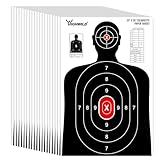
Overview: Highwild’s 20-pack of silhouette targets provides high-volume shooters with professional-quality training materials. Each 23x35-inch target features detailed human silhouettes with distinct head and torso zones, designed to improve accuracy across all skill levels and firearm types.
What Makes It Stand Out: The superior printing quality delivers crisp, sharp edges with excellent color vibrancy that remains visible at both short and long ranges. The generous 20-count pack ensures you won’t run out during intensive training weekends. The standardized design supports consistent skill assessment and works seamlessly for competitive preparation and self-defense courses.
Value for Money: This bulk pack offers one of the lowest per-target costs in the professional category, making it ideal for clubs, instructors, or dedicated enthusiasts. While slightly more expensive than budget options, the print clarity and paper weight justify the premium. You’re paying for consistency and durability that cheaper alternatives lack.
Strengths and Weaknesses: Strengths: Excellent quantity for frequent shooters; superior printing quality; universal caliber compatibility; large target area; versatile for competition and training. Weaknesses: No adhesive patches included; white and black color scheme less visible than high-contrast alternatives; thinner paper than some premium brands; no grid lines for precision adjustment.
Bottom Line: An excellent choice for high-volume shooters who prioritize quantity and print quality. Perfect for training facilities and serious enthusiasts needing reliable, consistent targets for regular practice sessions.
8. Paper Shooting Targets for Hunting & Gun Range - 50 Pack 14x22 Inch Silhouette Red Bullseye - Pistol, BB/Airsoft Gun Targets

Overview: These hybrid targets combine practical silhouette training with precision bullseye practice in a single sheet. The 50-pack offers exceptional quantity for extended sessions, featuring a lifelike human silhouette with a high-contrast red bullseye center that accommodates both tactical drills and accuracy work.
What Makes It Stand Out: The innovative hybrid design eliminates the need to switch between target types during training, maximizing range time efficiency. The roll-packing method minimizes creases during shipping, while the tear-resistant heavy-duty paper clearly shows shot placement. This versatility supports everything from rapid-fire scenarios to tight grouping exercises.
Value for Money: With 50 targets at a competitive price point, this represents outstanding value per sheet. The dual-purpose design effectively provides twice the training utility, reducing both supply costs and setup time. For recreational shooters and training facilities, this bulk pack delivers professional features at budget-friendly pricing.
Strengths and Weaknesses: Strengths: Hybrid silhouette/bullseye design; excellent quantity; tear-resistant paper; roll-packed to reduce damage; versatile for multiple skill levels. Weaknesses: Smaller 14x22 size less realistic for defensive training; requires flattening for optimal use; red bullseye may fade in bright sunlight; not ideal for high-power rifle long-range practice.
Bottom Line: Ideal for shooters wanting versatility without breaking the bank. The hybrid design makes these perfect for mixed training sessions where you need both practical and precision elements in one convenient target.
9. 25 Pack - 12 x 18 inch Sight in - Splatterburst Shooting Targets for Rifle, Pistol, Airsoft, BB Gun, Pellet Gun, Air Rifle
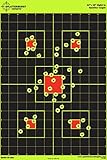
Overview: Splatterburst targets revolutionize range feedback with fluorescent yellow burst technology that makes every shot instantly visible from distance. These 12x18-inch targets feature heavy-duty non-adhesive tagboard construction designed for all firearms and calibers, eliminating the need to walk downrange for shot verification.
What Makes It Stand Out: The patent-pending splatter technology provides immediate visual confirmation in all lighting conditions, particularly beneficial for shooters with vision challenges. Each impact creates a bright yellow halo around the hole, saving time and maintaining training momentum. The USA-made construction uses robust tagboard that withstands repeated shots without excessive tearing.
Value for Money: While priced higher than standard paper targets, the time-saving visibility feature justifies the premium. You gain more actual shooting time per session, making each dollar spent more productive. For instructors and students, the instant feedback accelerates skill development significantly compared to traditional targets.
Strengths and Weaknesses: Strengths: Instant high-visibility shot feedback; works in all lighting; durable tagboard construction; versatile for all firearms; made in USA. Weaknesses: Smaller dimensions limit training scenarios; higher cost per target; non-adhesive backing requires separate mounting; splatter effect less visible with very small calibers.
Bottom Line: Essential for shooters who value immediate feedback and efficiency. The visibility innovation makes these worth the premium, especially for indoor ranges or long-distance outdoor shooting where spotting scopes are impractical.
10. Atflbox Sight in Shooting Range Paper Target, 17X25 Inch Paper Red Bullseye Shooting Targets Suitable for Handgun, Rifle, Pellet Gun, Airgun, BB Guns, Airsoft (25 Pack)

Overview: Atflbox targets provide precision shooters with feature-rich training tools combining multiple bullseye zones with grid-based adjustment tracking. Each 17x25-inch sheet includes eight 5-inch bullseyes, one-inch grid lines, and a record sheet for documenting performance data, supporting structured skill development.
What Makes It Stand Out: The integrated grid system allows precise scope adjustments and grouping analysis without additional tools. Multiple bullseye zones maximize target utilization, letting you shoot several sessions on one sheet. The record sheet enables tracking progress over time, making this a complete training system rather than just a target.
Value for Money: The multi-zone design effectively provides eight targets per sheet, dramatically improving cost efficiency. While mid-range priced, the additional features—grid lines and record sheets—add professional value typically found in more expensive specialized targets. For precision shooters, these extras justify every penny.
Strengths and Weaknesses: Strengths: Grid lines for precision adjustments; eight bullseyes per sheet; record sheet for progress tracking; high-quality printing; versatile firearm compatibility. Weaknesses: No silhouette for tactical training; smaller individual zones limit long-range rifle use; no adhesive patches; grid may distract from instinctive shooting practice.
Bottom Line: Perfect for precision shooters and competitors who need data-driven training. The analytical features make this an excellent choice for those serious about measuring and improving their accuracy systematically.
Understanding Long-Range Shooting Target Fundamentals
What Makes a Target Suitable for Long-Range Practice
Long-range targets differ dramatically from their short-range counterparts in several critical aspects. First, they must remain visible and identifiable at extreme distances, often requiring larger dimensions or enhanced contrast features. The target’s surface must provide clear feedback upon impact, whether through movement, sound, or visual confirmation. Additionally, the construction must withstand repeated hits from high-velocity projectiles without rapid deterioration that could compromise safety or training value.
The best long-range targets also account for bullet behavior at distance. Projectiles arrive at the target with reduced velocity but often at steeper angles due to trajectory arc. This impacts how targets should be angled, what materials work best, and how they should be mounted to prevent dangerous ricochets or splashback. Understanding these fundamentals helps you avoid investing in equipment that works great at 100 yards but becomes ineffective or hazardous at 800 yards.
Key Ballistic Considerations at Extended Distances
When bullets travel beyond 500 yards, their energy profile changes significantly. A projectile that arrives at 1,000 yards may have less than half its muzzle energy, but it’s also dropping steeply, sometimes approaching the target at 20-30 degree angles. This angled impact requires targets with appropriate deflection properties to guide bullet fragments downward safely.
Velocity decay also affects target material selection. Ultra-high-velocity impacts at close range can destroy certain targets, while the same target might be perfect for catching slower, long-range projectiles. The key is matching target hardness and thickness to your expected impact velocities. For example, AR500 steel performs excellently for most rifle calibers at distance, but thinner AR400 might suffice for lower-velocity impacts while being lighter and more portable.
Material Science Behind Modern Target Design
Modern target materials represent sophisticated engineering solutions. Steel targets utilize specific hardness ratings measured on the Brinell scale, with AR500 and AR550 being standard for rifle applications. These hardened steels resist pitting and cratering when used appropriately, maintaining a smooth surface that provides consistent feedback and predictable fragment deflection.
Polymer and self-healing targets have advanced considerably, using proprietary blends of urethane and rubber compounds that close after bullet passage. These materials excel for certain applications but have velocity limitations. Understanding the temperature sensitivity of these compounds is vital—cold weather can make them brittle, while extreme heat may cause excessive deformation. Paper and cardboard remain relevant due to their ability to show precise shot placement, though weatherproofing treatments now extend their outdoor lifespan significantly.
Essential Target Types for Distance Shooting
Steel Plate Targets: Durability and Feedback
Steel plates remain the gold standard for long-range practice due to their immediate audible feedback and exceptional durability. The distinctive “ping” confirms hits without requiring a spotting scope, allowing faster shot cadence and more efficient training sessions. For long-range work, steel targets should be mounted with a slight forward angle (10-15 degrees) to direct splatter downward into the ground.
Size selection follows a practical formula: targets should be challenging but not frustrating. Many shooters follow the “minute of angle” guideline, where target size in inches roughly equals the distance in hundreds of yards. For example, a 10-inch target presents a 1 MOA challenge at 1,000 yards. Multiple target sizes in an array allow progressive skill development, starting larger to build confidence and gradually reducing size as precision improves.
Paper Target Systems: Precision and Data Collection
While lacking the immediate feedback of steel, paper targets provide irreplaceable data for precision shooters. They reveal exact point of impact, group size, and shot distribution patterns impossible to discern from steel alone. Modern long-range paper systems include weather-resistant synthetic papers that withstand moisture and wind better than traditional cardstock.
Grid patterns with precise measurement markings enable detailed analysis of vertical and horizontal dispersion. Some designs incorporate multiple aiming points and diagnostic features like wind drift scales or elevation hold references. For maximum utility, paper targets should be paired with a robust backing system that prevents tearing and maintains a flat surface, even in breezy conditions that are common on open long-range ranges.
Reactive and Self-Healing Polymer Options
Reactive polymer targets offer a middle ground between steel and paper, providing visual movement without the safety concerns of steel at closer distances. These targets often rotate, swing, or bounce when hit, giving clear visual confirmation through binoculars or spotting scopes. The self-healing property means they can absorb hundreds or thousands of hits before requiring replacement.
However, these targets have specific velocity windows—typically between 800 and 3,000 feet per second. Below this range, bullets may not create visible reactions; above it, excessive damage occurs. Temperature affects performance significantly, with cold weather reducing elasticity. For long-range shooters, these work best as intermediate targets placed at mid-range distances where velocities have moderated but remain within the optimal performance envelope.
Electronic Hit-Detection Systems
The cutting edge of target technology integrates electronic sensors that detect bullet impacts and transmit data wirelessly to smartphones or tablets. These systems use acoustic sensors, vibration detectors, or even Doppler radar to pinpoint impact locations with millimeter-level precision. The immediate digital feedback eliminates the need to check targets physically, saving valuable range time.
Battery life, wireless range, and weatherproofing are primary considerations for these systems. The best implementations use solar charging panels and ruggedized enclosures rated for extended outdoor exposure. While initially expensive, they prove cost-effective for serious shooters by eliminating paper and transport costs while providing unprecedented data analytics capabilities for load development and technique refinement.
3D and Tactical Scenario Targets
For shooters training for practical applications, three-dimensional targets present realistic engagement scenarios. These range from simple silhouette shapes to detailed anatomical models that respond differently based on hit location. At long range, these targets help develop field shooting skills, range estimation, and wind reading in context rather than just punching holes in flat plates.
The complexity of 3D targets introduces new variables—shadows, angles, and perspective—that flat targets don’t address. This realism proves invaluable for hunters and tactical shooters but requires careful consideration of bullet trap design. The best implementations use replaceable vital zone inserts that can be swapped without replacing the entire target, making long-term ownership more economical.
Critical Features to Evaluate in 2026
Size and Visibility at Distance
Target visibility extends beyond mere dimensions. High-contrast color schemes using fluorescent orange, white, and black maximize visibility against varied backgrounds. Some advanced targets incorporate retroreflective materials that appear to glow when illuminated by a spotting scope’s reticle light, making them visible even in low-light conditions or against confusing terrain.
The “visibility factor” also includes how well bullet impacts show up. Dark surfaces with light-colored impact marks provide better contrast than light surfaces with dark marks. For steel targets, painted surfaces that flake off upon impact create instant visual feedback. The paint selection matters—specialty target paints resist heat and adhesion better than standard spray paints, lasting longer between touch-ups.
Acoustic Signature and Audible Feedback
The satisfying ring of steel carries differently at 1,200 yards versus 300 yards. Target thickness, mounting method, and surrounding terrain all affect acoustic feedback. Thicker steel produces lower-frequency sounds that travel farther but may be harder to hear. Proper mounting that allows free vibration is essential—targets mounted too rigidly absorb sound energy.
Some shooters enhance acoustic feedback by mounting steel over empty containers that act as resonators. The target’s shape also matters—round plates tend to ring more clearly than irregular shapes. For extreme long-range work where sound may not reach the firing line, electronic systems with remote speakers or radio transmission provide artificial but reliable feedback.
Weather Resistance and Outdoor Durability
Long-range ranges are typically outdoors, exposing targets to sun, rain, snow, and temperature extremes. Powder-coated steel resists rust better than painted surfaces, though even powder coat eventually chips. Stainless steel hardware prevents rust seizing in mounting systems. For paper targets, UV-resistant synthetic papers prevent yellowing and brittleness that cause premature tearing.
Wind presents a unique challenge—targets must remain stable yet not so rigid that they can’t react to hits. Spring-mounted systems that return to position while allowing movement work better than chains in high-wind environments. Some designs incorporate wind-cutters or aerodynamic shapes that reduce sail effect without compromising the target’s functional area.
Portability and Setup Complexity
Many long-range shooters practice on public land or remote private property, making portability crucial. Modular steel target systems that break down into manageable components save vehicle space and reduce setup time. Weight versus durability presents a constant tradeoff—thicker steel lasts longer but becomes impractical to transport frequently.
Quick-attach mounting systems using standardized brackets allow rapid target changes without tools. Some innovative designs use nesting target sizes that store compactly but deploy into varied challenge arrays. For the mobile shooter, targets weighing under 50 pounds per component with integrated handles prove most practical, while permanent installations can use heavier, more durable constructions.
Score-Keeping and Performance Tracking Integration
Modern training emphasizes data-driven improvement. Targets designed with integrated measurement systems—whether physical grid patterns, QR codes linking to digital scorecards, or built-in electronic sensors—facilitate detailed performance tracking. This integration allows shooters to build comprehensive databases showing progress over time, ammo performance comparisons, and environmental condition effects.
The most effective systems make data collection effortless. Targets with clearly numbered zones, photographed before and after sessions, provide visual records. Some steel targets now have writable surfaces using chalk markers or wax pencils, allowing temporary scoring notations that survive multiple hits but erase easily for the next session.
Advanced Target Technologies Emerging in 2026
Smart Target Systems with IoT Connectivity
The Internet of Things has reached the shooting range. Smart targets now connect to home networks, uploading shot data to cloud-based analysis platforms automatically. These systems track not just hit location but also shot timing, group evolution during sessions, and even correlate performance with weather data pulled from online APIs. The integration allows shooters to identify patterns invisible to casual observation.
Machine learning algorithms analyze your shooting data, suggesting specific drills to address weaknesses. For example, consistent vertical stringing might trigger recommendations for breathing technique exercises or load development adjustments. While privacy concerns exist around cloud-connected shooting data, local network options keep information secure while still providing advanced analytics capabilities.
Augmented Reality Training Integration
Augmented reality (AR) overlays transform how shooters visualize target data. Using AR glasses or smartphone cameras, shooters see virtual impact markers, wind drift corrections, and holdover references superimposed on the actual target view. This technology proves especially valuable for spotters, who can call corrections based on real-time trajectory predictions displayed alongside the target.
The AR systems integrate with ballistic calculators, showing expected impact points based on current conditions and allowing shooters to compare actual results with predictions instantly. This immediate feedback loop accelerates the learning curve for wind reading and elevation holds, compressing years of experience into months of structured practice.
Multi-Distance Configurable Arrays
Rather than buying separate targets for each distance, 2026’s modular systems allow single setups that reconfigure for multiple ranges. Targets mounted on adjustable stands can be raised, lowered, or repositioned along a track system, creating new challenge configurations without physical target changes. This versatility proves invaluable for shooters with limited range access who need maximum training variety.
Some advanced arrays use motorized systems controlled via remote, allowing dynamic target presentation. A single practice session might start with large targets at 500 yards, transition to smaller targets at 800 yards, and finish with reactive targets at intermediate distances—all adjusted from the firing line without walking downrange. This capability transforms static range sessions into dynamic training scenarios.
Environmental Impact and Sustainable Materials
Sustainability concerns drive innovation in biodegradable target materials and lead capture systems. New paper targets use seed-embedded substrates that decompose naturally while promoting vegetation growth on berms. Steel targets increasingly use recycled materials and powder coatings free from volatile organic compounds.
Lead recovery becomes easier with target designs that capture bullets in removable containers or direct fragments into collection zones. Some ranges now partner with reclamation companies, turning spent lead into new targets—a circular economy approach that reduces environmental impact while lowering long-term costs. These eco-conscious options appeal to shooters wanting to minimize their environmental footprint without sacrificing training quality.
Setup and Safety Considerations
Proper Target Placement and Angle
Target angle critically affects safety and longevity. A forward tilt of 10-15 degrees directs bullet fragments into the ground in front of the target, reducing splashback risk significantly. This angle must balance with visibility—excessive tilt makes targets harder to see and can cause bullets to glance off rather than penetrate, creating unpredictable ricochets.
Height placement should position targets approximately 4-6 feet above ground level at the target line. This height aligns with typical shooting positions while ensuring bullets that miss impact the berm, not the ground where they could skip. For uneven terrain, adjustable-height stands accommodate slope differences, maintaining consistent target presentation.
Backstop and Berms Requirements
No target system is complete without adequate backstop. Natural berms should be composed of loose, non-compacted soil at least 6 feet higher than the target and extending 10 feet wider on each side. The berm face should be vertical or slightly overhanging to capture bullets rather than deflect them upward.
For ranges without natural topography, engineered backstops using AR steel plates angled steeply downward into a bullet trap provide safe alternatives. These systems require professional design to handle expected bullet volumes and calibers. Regular berm maintenance includes inspecting for erosion, removing rocks that could cause ricochets, and ensuring the face remains vertical.
Distance Marking and Range Verification
Accurate distance knowledge is non-negotiable for long-range shooting. Physical range markers should be placed at 100-yard intervals minimum, with additional markers at critical distances like 300, 600, and 1,000 yards. These markers need high visibility and weather resistance—reflective signs on metal posts work better than painted rocks or wooden stakes.
Laser rangefinders provide verification, but they require reflective targets or steady hands for reliable readings. Some ranges install permanent reflective targets at known distances, allowing shooters to verify rangefinder accuracy regularly. GPS coordinates for each target position also help shooters confirm distances with smartphone apps, providing redundancy in measurement methods.
Maintenance and Longevity Best Practices
Steel targets require periodic inspection for cracks, especially around mounting holes where stress concentrates. Magnetic particle inspection kits allow field checking for subsurface cracks invisible to the naked eye. Repainting should occur when impact marks become difficult to see, using high-temperature paint formulated for steel targets.
Paper target backers need replacement when they become too shot-up to hold targets flat. Rotating backers 180 degrees between sessions doubles their lifespan. For electronic systems, firmware updates and battery health checks should be part of regular maintenance routines. Storing targets indoors or under cover during extended non-use periods prevents unnecessary weathering and extends service life dramatically.
Building Your Progressive Training Program
Starting Distances for Beginners
New long-range shooters should begin at distances where fundamentals can be reinforced without wind and trajectory complications overwhelming the learning process. Starting at 200-300 yards allows focus on stable positions, trigger control, and basic scope manipulation. Targets at this stage should be generous—12-18 inches—to build confidence while developing skills.
The initial goal is achieving consistent hits, not tight groups. Steel targets prove ideal here, providing immediate feedback that reinforces positive technique. Once shooters can consistently hit large targets from stable positions, they’re ready to progress. This foundation-building phase typically requires 5-10 sessions before advancing.
Intermediate Challenge Progressions
After mastering fundamentals, shooters should introduce smaller targets and longer distances incrementally. A logical progression moves from 1 MOA targets at moderate ranges to the same angular size at extended distances. For example, transitioning from 6-inch targets at 600 yards to 10-inch targets at 1,000 yards maintains similar difficulty while introducing new ballistic factors.
Intermediate training should incorporate multiple target sizes and shapes in single sessions. This variety prevents pattern shooting and forces continuous adjustment. Introducing time pressure—engaging multiple targets within a time limit—develops practical shooting skills while maintaining precision standards. Wind reading becomes the primary focus at this stage, with targets positioned to maximize wind effect observation.
Advanced Drill Configurations
Expert long-range shooters use complex drills that test multiple skills simultaneously. The “ladder drill” involves engaging targets at 100-yard increments from 400 to 1,000 yards, requiring constant ballistic solution changes. The “unknown distance” drill places targets at unmarked ranges, forcing range estimation and DOPE application under pressure.
“Kyl” style arrays with progressively smaller targets test precision under stress. Moving targets, while challenging to implement safely at long range, provide the ultimate test of predictive shooting ability. Advanced shooters also practice “cold bore” shots—first shot accuracy from a clean barrel—using fresh targets to simulate hunting or tactical scenarios where follow-up shots may not be possible.
Data-Driven Improvement Strategies
Systematic data collection separates casual shooters from dedicated marksmen. Every shot should be logged with distance, environmental conditions, hold used, and result. This data reveals trends invisible in casual observation—perhaps you consistently shoot low-left in certain wind conditions, or your rifle’s zero shifts with temperature changes.
Modern ballistic apps simplify record-keeping, but the principle remains: measure everything. Photographing targets with reference scales allows precise measurement of group sizes and centers. Over time, this data builds a personal performance database that guides training focus. If data shows wind calls are your weakness, dedicated wind-reading practice becomes priority. If vertical dispersion is the issue, load development or position consistency needs attention.
Frequently Asked Questions
What size target should I use for 1,000-yard practice?
A 10-inch diameter target represents approximately 1 MOA at 1,000 yards, making it a challenging but achievable goal for skilled shooters. Beginners should start with 15-20 inch targets at this distance to build confidence while developing fundamental skills. The key is choosing a size that provides frequent enough hits to maintain motivation while still demanding precision.
How thick should steel targets be for long-range rifle practice?
AR500 steel at 3/8-inch thickness handles most rifle calibers effectively at distances beyond 300 yards where impact velocities have moderated. For magnum calibers or distances inside 500 yards, 1/2-inch AR500 or AR550 provides additional safety margin and longevity. Thinner steel may be acceptable for smaller calibers like .223 Remington at appropriate distances.
Can I leave steel targets outside year-round?
While steel targets are weather-resistant, prolonged exposure to moisture causes surface rust that eventually impacts performance. Occasional surface rust won’t affect function but makes impact marks harder to see. For permanent outdoor installations, stainless steel or powder-coated targets last significantly longer. Covering targets with tarps during wet seasons or storing them indoors extends lifespan dramatically.
What’s the safest way to mount long-range steel targets?
Use chain or strap mounting that allows free movement and sound resonance. Mounting points should be on the upper third of the target, allowing it to swing upon impact. Never weld brackets directly to the target face, as this creates stress points and dangerous ricochet surfaces. Replace mounting hardware regularly, as it experiences fatigue from repeated impacts.
How do I see bullet impacts on paper targets at 800+ yards?
High-magnification spotting scopes (60x or higher) are essential. Place targets in shade or use them with the sun behind you to maximize contrast. Some shooters attach brightly colored adhesive dots around the aiming point; bullet holes create dark rings against the bright background. Electronic hit-detection systems eliminate visibility issues entirely by transmitting impact locations directly to your device.
Are electronic targets worth the investment for casual shooters?
Electronic targets represent significant investment, typically justifiable for serious competitors, long-range hunters preparing for critical shots, or shooters conducting extensive load development. Casual shooters can achieve excellent results with quality steel and paper systems. However, falling prices and improved durability make electronic systems increasingly accessible for dedicated enthusiasts who value time efficiency and detailed data.
How often should I replace paper target backers?
Replace backers when they become so perforated that they can’t hold targets flat or when bullet holes create confusing visual clutter. For most shooters, this means every 2-4 range sessions. Rotating backers 180 degrees between sessions and using both sides maximizes lifespan. Synthetic backers last longer than cardboard but cost more initially.
What’s the minimum safe distance for shooting steel targets?
For rifle calibers, minimum safe distance is typically 100 yards for standard velocity rounds. High-velocity magnums should stay beyond 200 yards to prevent target damage and reduce splashback risk. These distances assume proper steel hardness and angle. Always wear eye protection, as fragment splash can travel surprising distances even with correct target setup.
Can I use the same targets for both rifle and pistol practice?
Generally, no. Pistols at close range damage steel targets designed for rifle use at distance, and rifle fire at pistol-rated steel creates dangerous conditions. If you must share, use dedicated pistol targets for close work and move rifle-rated targets to appropriate distances. Some modular systems allow swapping target plates on the same stand, providing versatility while maintaining safety standards.
How do I prevent target theft at remote shooting locations?
Use targets that can be quickly removed and taken with you. Chain and lock permanent installations to heavy anchors or trees. Some shooters bury concrete anchors with embedded eye bolts, leaving only low-profile attachment points visible when targets are removed. GPS trackers hidden inside target frames provide recovery options for expensive electronic systems. Painting targets in camouflage patterns makes them less conspicuous from roads and trails.
Related Buying Guides
- Top 10 Best Steel Shooting Targets for Long-Range Practice in 2026
- Top 10 Best Shooting Targets for Long-Range Accuracy in 2026
- The 10 Best Shooting Targets Every Home Range Owner Needs This Year
- 10 Essential Hanging Shooting Targets Every Home Range Needs in 2026
- Stop Chasing Bullets with the 10 Best Long Range Targets This Year