Table of Contents
Stepping into the woods for your first hunt is a blend of exhilarating anticipation and quiet reverence. The crisp morning air, the rustle of leaves underfoot, the focused silence as you settle into position – it’s a moment many dream of for years. But that dream can quickly turn frustrating if your view of the target is blurry, distorted, or simply non-existent through the wrong optic. For the new hunter, the rifle scope isn’t just an accessory; it’s the critical link between preparation and precision, transforming a vague shape in the distance into a clear, confident sight picture when it matters most. Choosing wisely sets the foundation for ethical shots and lasting success.
Navigating the world of rifle scopes as a beginner can feel overwhelming. Shelves (physical and digital) are crowded with options boasting complex specifications, unfamiliar jargon, and a wide range of prices. It’s easy to get lost in the technical weeds or swayed by flashy marketing promising unrealistic performance. The truth is, the “best” scope isn’t about the highest magnification or the shiniest coating; it’s the one that perfectly aligns with your specific hunting style, rifle, budget, and skill level. This guide cuts through the confusion, focusing on the essential features and considerations every new hunter needs to understand to make a confident, informed choice that enhances their experience without breaking the bank.
Top 10 Rifle Scopes for New Hunters
Detailed Product Reviews
1. Bushnell Legend 3-9x40mm Illuminated Riflescope, Hunting Rifle Scope with Illuminated Multi-X Reticle

Overview:
This mid-range riflescope delivers reliable performance for hunters seeking clarity and durability in variable conditions. Its 3-9x magnification and 40mm objective lens balance versatility with low-light capability, targeting serious hunters who prioritize precision during dawn or dusk.
What Makes It Stand Out:
Bushnell’s exclusive RainGuard HD coating ensures exceptional weather resistance, preventing fogging and repelling moisture without smearing. The etched-glass illuminated Multi-X reticle offers six brightness settings with intuitive off-switches between levels, while the aircraft-grade aluminum tube provides rugged, lightweight construction. Nitrogen-purged waterproofing (IPX7) guarantees reliability in extreme environments.
Value for Money:
Priced competitively against entry-mid tier scopes, it justifies cost through premium coatings and robust build quality. While cheaper alternatives lack comparable weather sealing, Bushnell’s reputation for longevity offers better long-term value than budget models prone to fogging or reticle failure.
Strengths and Weaknesses:
Strengths: Superior RainGuard HD coating; intuitive illuminated reticle controls; exceptional fog/water resistance; lightweight yet durable tube.
Weaknesses: Limited to 9x max magnification (less ideal for long-range); capped turrets slow mid-hunt adjustments; illumination lacks color options.
Bottom Line:
An outstanding all-weather hunting scope for ethical shots at moderate ranges. Recommended for hunters prioritizing reliability in harsh conditions over high magnification, offering trusted Bushnell engineering at a fair price.
2. CVLIFE Hunting Rifle Scope 6-24x50 AOE Red and Green Illuminated Gun Scope with Free Mount
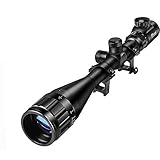
Overview:
This high-magnification scope targets precision shooters needing extended range capability. With 6-24x zoom and a 50mm objective lens, it emphasizes long-distance clarity but sacrifices some low-light performance due to narrower exit pupil at max zoom.
What Makes It Stand Out:
The dual-color (red/green) illuminated reticle with adjustable brightness stands out for versatile lighting adaptation. Generous 50mm objective lens gathers ample light for twilight shooting, while the included free mount adds immediate setup convenience uncommon in this price bracket.
Value for Money:
Exceptional value for long-range enthusiasts, offering high magnification and illumination at a budget-friendly price. Though build quality lags behind premium brands, the inclusion of mounts and 24x capability makes it a compelling entry for cost-conscious varmint hunters.
Strengths and Weaknesses:
Strengths: High 24x magnification for distant targets; affordable with included mounts; dual-color illumination; decent field of view (28 ft @ 100yds).
Weaknesses: Susceptible to glare without sunshade; less durable aluminum construction; fogging reports in humid conditions; narrow exit pupil at 24x limits eyebox.
Bottom Line:
A solid budget choice for long-range shooting where maximum magnification outweighs ruggedness concerns. Ideal for stationary varmint hunting but not recommended for heavy brush or extreme weather.
3. UUQ 4-16X44 AO Rifle Scope for Hunting with Locking Turret Sunshade,SFP,R/G/B Illumination,Crosshairs Reticle,Front Parallax Adjustment,Fits 20mm Free Mount-Long Range Optics for Airgun,Airsoft,Pellet

Overview:
A versatile mid-range scope blending hunting practicality with tactical features. Its 4-16x magnification suits short-to-medium ranges, enhanced by RGB illumination and parallax adjustment for airgun or deer hunting.
What Makes It Stand Out:
Tri-color (red/green/blue) illumination with three brightness levels per color provides unmatched adaptability across lighting scenarios. Exposed locking turrets with zero-reset enable rapid, secure adjustments, while the included sunshade combats glare. Aircraft-grade aluminum ensures shockproof durability without excessive weight.
Value for Money:
Offers premium features (RGB illumination, locking turrets, AO adjustment) at a mid-tier price. The bundled sunshade and mounts deliver more value than competitors like CVLIFE, making it ideal for hunters seeking tactical flexibility without premium costs.
Strengths and Weaknesses:
Strengths: Unique RGB illumination; precise 1/4 MOA locking turrets; included sunshade/mounts; adjustable objective for parallax; robust waterproof construction.
Weaknesses: Shorter eye relief (2.95"-3.94") risks scope bite; blue illumination less practical than red/green; minor coating quality inconsistencies reported.
Bottom Line:
Highly recommended for hunters needing customizable illumination and tactical turret control. Its feature-rich design justifies the price, though recoil-sensitive shooters should verify eye relief compatibility.
4. MidTen 4-16x50 AO Hunting Rifle Scope Dual Illuminated Optics & Illuminated Sight 4 Holographic Reticle Red/Green Dot Sight & Laser Sight & Flashlight

Overview:
This “4-in-1” combo prioritizes versatility over optical purity, bundling a riflescope with laser sight, red/green dot sight, and flashlight. Targeted at casual hunters wanting multi-functional gear for low-light scenarios.
What Makes It Stand Out:
The integrated laser sight (Class IIIA, <2mW) and holographic dot sight with four reticle patterns enable rapid close-range targeting. Dual-color scope illumination plus a 5-mode flashlight creates a comprehensive low-light solution, while the 22mm rail simplifies mounting.
Value for Money:
High perceived value due to included accessories, but optical quality lags behind dedicated scopes. Budget hunters gain multiple tools for one price, though serious shooters may find the riflescope itself underwhelming compared to standalone units.
Strengths and Weaknesses:
Strengths: Comprehensive low-light kit (laser, flashlight, dual sights); wide scope field of view; easy mounting; 5 brightness levels per illumination mode.
Weaknesses: Scope optics lack premium coatings (hazy image); laser/dot sights feel gimmicky; bulky setup; inconsistent reticle sharpness beyond 200m.
Bottom Line:
Best for beginners or casual users needing an all-in-one low-light solution. Not recommended for ethical long-range hunting due to optical limitations, but the bundled accessories justify cost for close-range versatility.
5. CVLIFE 3-9x40 Rifle Scope, Red & Green Illuminated Optical Riflescope, Mil-dot Reticle Scope for Hunting with Mounts

Overview:
A no-frills, entry-level scope designed for hunters needing reliable basic performance. Its 3-9x magnification and mil-dot reticle cater to traditional deer hunters prioritizing simplicity and affordability.
What Makes It Stand Out:
The mil-dot reticle aids range estimation—a rarity in budget scopes—while 95% light transmittance from multi-coated lenses ensures decent clarity. Capped reset turrets and dioptric adjustment accommodate vision differences, appealing to first-time scope buyers.
Value for Money:
Outstanding value for beginners, offering mil-dot functionality and dual-color illumination below $100. Though less durable than Bushnell, its included mounts and fogproofing provide more features than competitors at this price point.
Strengths and Weaknesses:
Strengths: Mil-dot reticle for range-finding; high light transmittance; clear dioptric adjustment; affordable with mounts; red/green illumination.
Weaknesses: Plastic components reduce durability; capped turrets hinder quick adjustments; limited eye relief; illumination prone to battery drain.
Bottom Line:
The top budget pick for new hunters needing mil-dot capability. Compromises on build quality are acceptable for the price, making it ideal for moderate-recoil rifles and occasional use.
6. Monstrum Beast 6-24x50 Rifle Scope with Side Focus and Offset Scope Mount | Black | FIB04-MOA Daylight Bright Reticle
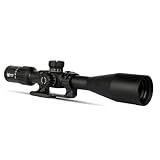
Overview: The Monstrum Beast 6-24x50 is a versatile long-range riflescope designed for precision shooting. Featuring a 50mm objective lens and 6-24x magnification, it prioritizes light transmission and target clarity for extended engagements, suitable for hunting or target shooting in varied lighting.
What Makes It Stand Out: Its standout feature is the daylight-bright fiber optic reticle, channeling ambient light for exceptional center-dot visibility without batteries—unlike traditional illuminated reticles. The side-focus parallax adjustment ensures precise targeting at multiple distances and aids in range estimation, while the second focal plane (SFP) reticle maintains consistent size across magnifications for high visibility.
Value for Money: Priced competitively in the mid-tier market, it offers premium features like the fiber optic reticle and side focus typically found in costlier models. The included cantilever mount and bikini covers add significant value, making it a compelling choice over basic scopes lacking these extras.
Strengths and Weaknesses: Strengths: Superior daylight reticle visibility; robust side-focus parallax correction; includes quality mount and covers; wide field of view at lower magnifications. Weaknesses: Fiber optic relies solely on ambient light (no manual illumination); SFP reticle requires magnification-specific holdovers; bulkier than smaller objective scopes.
Bottom Line: An excellent mid-range option for daylight shooters seeking reliable long-range performance without battery-dependent illumination. Its unique reticle and included accessories justify the price for hunters and recreational marksmen.
7. UUQ 3-9×40 Rifle Scope with Gun Laser, Red/Green Illumination, and Rangefinder Reticle - for Hunting, Airsoft, and Pellet Guns,Waterproof and Fog-Proof,Fits 20mm Free Mounts,Includes Batteries

Overview: The UUQ 3-9x40 combines a traditional riflescope with an integrated red laser sight, targeting hunters and airsoft enthusiasts needing rapid target acquisition. Its 3-9x magnification, illuminated reticle, and weatherproof construction cater to versatile mid-range shooting scenarios.
What Makes It Stand Out: The 2-in-1 design with a Class IIIA laser (50-300 ft daytime range) is its defining feature, enabling faster aiming in close quarters. Dual-color (red/green) illumination with 5 brightness levels ensures reticle visibility in diverse lighting, while the rangefinder reticle aids quick distance estimation.
Value for Money: The bundled laser sight significantly enhances value, eliminating the need for a separate purchase. At its price point, the fully multi-coated optics, waterproof/fog-proof build, and included mounting rings offer solid bang-for-buck compared to scopes lacking integrated lasers.
Strengths and Weaknesses: Strengths: Laser enables ultra-fast close-range targeting; bright dual-color illumination; rugged nitrogen-purged housing; includes mounting hardware and batteries. Weaknesses: Laser range is limited (max 300 ft); lower magnification cap (9x) restricts long-range utility; laser alignment may drift under heavy recoil.
Bottom Line: Highly recommended for hunters or airsoft players prioritizing quick close-to-mid-range shots, thanks to the innovative laser integration. Avoid for dedicated long-range shooting due to magnification limits.
8. UUQ 3-9×40 Rifle Scope with Red/Green Illumination and Rangefinder Reticle-Fits 20mm Free Mounts,Waterproof and Fog-Proof
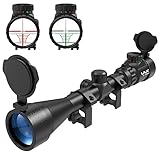
Overview: This UUQ 3-9x40 riflescope delivers reliable mid-range performance for hunting and airsoft, featuring dual-color illumination and weatherproofing. It focuses on core optical functionality without extras like lasers, emphasizing durability and target acquisition in changing light.
What Makes It Stand Out: Flip-up lens covers provide instant protection against debris—a practical upgrade over standard bikini covers. The dual-color (red/green) illuminated reticle with 5 brightness levels ensures clear aiming in dawn/dusk conditions, while the rangefinder reticle simplifies holdover calculations.
Value for Money: Positioned as a budget-friendly option, it matches pricier scopes with fully multi-coated optics, aircraft-grade aluminum construction, and waterproofing. The inclusion of quality mounting rings and flip-up covers offers strong value against competitors with fewer accessories.
Strengths and Weaknesses: Strengths: Practical flip-up lens covers; versatile dual-color illumination; excellent light transmission; shockproof and fog-proof; easy 20mm rail mounting. Weaknesses: Limited to 9x magnification; no parallax adjustment for precision long-range use; illumination dial lacks fine-tuning.
Bottom Line: A dependable, no-frills choice for hunters needing a durable, mid-magnification scope with reliable illumination. Ideal for budget-conscious buyers prioritizing essential features over high-end extras.
9. Monstrum Marauder 6-24x50 Rifle Scope with AO Adjustable Objective | Black | FMR03 Reticle

Overview: The Monstrum Marauder 6-24x50 is a high-magnification riflescope built for long-range precision shooting. With a 50mm objective lens and adjustable objective (AO) for parallax correction, it targets hunters and target shooters needing clarity at extended distances.
What Makes It Stand Out: Its AO lens enables precise parallax elimination and range estimation without side-focus complexity. The fully illuminated reticle (with inline brightness dial) ensures target visibility in low light, while the SFP FMR03 reticle provides consistent aiming points across magnifications.
Value for Money: As a budget-conscious long-range scope, it undercuts premium brands while delivering critical features like illumination and AO adjustment. The included 1-inch rings add convenience, though the tube diameter may limit compatibility with some modern mounts.
Strengths and Weaknesses: Strengths: Effective AO parallax control; bright, adjustable reticle illumination; generous eye relief; wide field of view at 6x; includes mounting rings. Weaknesses: 1-inch tube less robust than 30mm alternatives; illumination dial placement can be awkward; SFP reticle requires magnification-specific holds.
Bottom Line: A capable long-range scope for shooters seeking illumination and parallax adjustment on a budget. Best suited for hunters where extreme durability isn’t critical, but avoid for heavy-recoil firearms.
10. SIG SAUER Tango-MSR LPVO 1-6X24mm Waterproof Fog-Proof Rugged Tactical Hunting Rifle Scope | Second Focal Plane/F2 | Illuminated MSR BDC-6 Reticle, Coyote Tan

Overview: The SIG SAUER Tango-MSR is a premium low-power variable optic (LPVO) designed for tactical and hunting applications. Its 1-6x magnification, illuminated reticle, and rugged construction prioritize speed at close range and precision at distance in demanding environments.
What Makes It Stand Out: Industry-leading light transmission from low-dispersion glass ensures exceptional clarity, while the 11-level illuminated MSR BDC-6 reticle adapts to any lighting. The integrated throw lever enables instant magnification shifts, and the cantilever mount provides optimal eye relief and co-witnessing for AR platforms.
Value for Money: Positioned at a high price point, it justifies cost through SIG’s optical excellence, nitrogen-purged waterproofing, and mil-spec durability. It outperforms budget LPVOs in glass quality and reliability, making it a worthy investment for professionals or serious enthusiasts.
Strengths and Weaknesses: Strengths: Superior optical clarity and light transmission; robust waterproof/fog-proof build; intuitive throw lever; versatile 11-level illumination; includes quality cantilever mount. Weaknesses: Premium cost may deter casual users; SFP reticle requires holdover adjustments; 24mm objective limits low-light performance vs. larger objectives.
Bottom Line: A top-tier LPVO for tactical shooters and hunters demanding uncompromised reliability and optical performance. Highly recommended despite the price for mission-critical applications.
Understanding Core Scope Specifications
Before diving into features, grasping the fundamental specs is crucial. These numbers and terms define a scope’s basic capabilities and how it will perform in the field. Misunderstanding them is a common pitfall for beginners.
Magnification Range Explained Simply
Magnification, often shown as a single number (e.g., 4x) or a range (e.g., 3-9x), indicates how much larger the target appears. Fixed-power scopes offer simplicity and ruggedness, ideal for specific distances like deer hunting in dense woods at 50-150 yards. Variable-power scopes provide flexibility; lower magnification (e.g., 3x) offers a wider field of view for quick target acquisition in close cover, while higher magnification (e.g., 9x) helps with precise aim at longer ranges. For most new hunters starting out, a versatile variable scope like 3-9x or 4-12x covers a broad spectrum of typical hunting scenarios without unnecessary complexity.
Objective Lens Size and Light Gathering
The objective lens is the front lens of the scope. Its diameter, measured in millimeters (e.g., 40mm, 50mm), directly impacts how much light the scope can gather, especially in low-light conditions like dawn or dusk. Larger lenses (40mm, 50mm) gather more light, resulting in a brighter image when light is scarce. However, they also add weight and bulk, and require higher scope mounts, potentially affecting the rifle’s balance and cheek weld. A 40mm objective is often the sweet spot for new hunters, offering excellent low-light performance without excessive size or cost.
Exit Pupil and Eye Relief Essentials
Exit pupil is calculated by dividing the objective lens diameter by the magnification (e.g., 40mm / 10x = 4mm). This represents the diameter of the light beam exiting the scope towards your eye. A larger exit pupil (5mm+) is generally better in low light. Eye relief is the distance your eye must be held behind the eyepiece to see the full image. Adequate eye relief (typically 3.5-4.5 inches for hunting scopes) is vital to prevent “scope bite” from recoil. New hunters should prioritize scopes with generous eye relief, especially when using rifles with significant recoil, to ensure comfort and safety during shooting.
Critical Features for Hunting Performance
Beyond basic specs, several integrated features significantly impact real-world usability and effectiveness in the hunting environment. These are where quality differences often become apparent.
Reticle Types and Their Practical Applications
The reticle (crosshair) is your aiming point. Simple duplex reticles are popular for beginners due to their clean design and minimal obstruction. Mil-Dot or BDC (Bullet Drop Compensator) reticles offer holdover points for elevation, useful at longer ranges, but require understanding ballistic calculations. Illuminated reticles can be a game-changer in very low light, providing a bright aiming point against dark backgrounds, though they add complexity and require battery management. For initial hunting, a non-illuminated duplex reticle offers reliability and simplicity.
Optical Clarity and Coating Quality
This is arguably the most important factor for image quality. Fully multi-coated lenses (all air-to-glass surfaces have multiple anti-reflective coatings) significantly reduce glare, increase light transmission, and provide brighter, higher-contrast images compared to scopes with fewer coatings. Poor coatings result in dim, hazy views, especially in challenging light. Don’t just look at the coating claim; seek out reviews or demonstrations focusing on real-world image brightness and edge-to-edge sharpness at various magnifications.
Tube Diameter Considerations
Scopes commonly come in 1-inch or 30mm main tube diameters. While 30mm tubes can offer slightly more internal adjustment travel (important for long-range shooting), the difference is often negligible for typical hunting distances under 300 yards. The primary impact for new hunters is mounting: 30mm scopes require specific 30mm rings, and the larger tube might necessitate higher mounts, affecting cheek weld. The 1-inch tube remains a highly capable, widely supported, and often more budget-friendly standard perfectly suited for hunting.
Durability and Environmental Factors
Hunting happens in the real world – rain, dust, temperature swings, and hard knocks are part of the experience. A scope must withstand these elements to be reliable.
Construction Materials and Shockproofing
Scopes are typically made from aluminum alloy (lightweight and strong) or magnesium alloy (lighter but often more expensive). Look for scopes marketed as “shockproof” or “recoil tested,” indicating they’ve been engineered to withstand the repeated impacts of rifle recoil without losing zero. Nitrogen or argon purging prevents internal fogging due to temperature and humidity changes, a critical feature for hunters moving between cold mornings and warm stands or through humid environments.
Waterproof and Fogproof Sealing
O-rings create seals at critical points (lens housings, adjustment turrets) to prevent moisture and dust ingress. Combined with the inert gas purge (nitrogen/argon), this makes the scope truly waterproof and fogproof. This isn’t just a luxury; a fogged or waterlogged scope is useless in the field. Ensure the scope explicitly states it is both waterproof and fogproof – these are non-negotiable features for hunting optics.
Weather Resistance Beyond the Basics
Consider how the scope handles temperature extremes. High-quality optics maintain performance from freezing winter mornings to hot summer afternoons. Also, evaluate the finish; matte finishes are standard and minimize glare, while some offer specialized camouflage patterns. While not critical for function, a durable, non-reflective finish contributes to overall stealth and longevity.
Adjustability and User Experience
How easy is it to use the scope in the field? Adjustments for windage, elevation, and parallax (if applicable) need to be intuitive and reliable for a new hunter.
Turret Design and Tracking Reliability
Windage and elevation turrets adjust the point of impact. Target-style turrets with exposed knobs offer precise, tactile adjustments but can be snagged; capped turrets are more protected but slower to adjust. For hunting, capped turrets are often preferred for their durability and snag resistance. Crucially, the internal mechanism must “track” reliably – meaning the point of impact moves exactly where the turrets indicate, shot after shot. Poor tracking leads to missed shots and frustration; look for scopes known for consistent tracking performance.
Parallax Adjustment: Necessary or Not?
Parallax error occurs when the reticle appears to move relative to the target as your eye shifts position behind the scope. Many hunting scopes are factory-set for parallax-free viewing at a specific distance (often 100 yards), which is sufficient for most hunting scenarios under 250 yards. Scopes with adjustable objective lenses (AO) or side focus knobs allow you to eliminate parallax at various distances, beneficial for longer-range precision. For most beginners focusing on typical hunting ranges, a fixed-parallax scope is simpler and perfectly adequate.
Ease of Focus and Ergonomics
The ocular focus (eyepiece) adjustment ensures a sharp reticle, critical for accurate aiming. It should be easy to adjust and lock in place. Magnification rings and parallax knobs (if present) should turn smoothly without excessive force but hold their position securely. Consider the physical size and weight – a scope should balance well with your rifle, allowing a natural head position and quick target acquisition without strain during long sits.
Budgeting and Value Assessment
Setting a realistic budget is key, but understanding where to invest and where to save prevents costly mistakes. Not all expensive scopes are right for beginners, and the cheapest options often compromise on critical features.
Defining Your Realistic Spending Range
Determine what you can comfortably spend without straining your finances. While entry-level scopes exist under $200, they often sacrifice optical quality, durability, and adjustment reliability. Investing in the $300-$600 range typically yields scopes with significantly better optics, robust construction, and reliable performance that will last for years. This represents excellent long-term value compared to replacing a subpar scope after one season.
Identifying Key Value Indicators
Focus your budget on non-negotiables: fully multi-coated lenses for image quality, waterproof/fogproof construction for reliability, and adequate eye relief for safety. Features like illuminated reticles or large objective lenses might be nice-to-haves but aren’t essential for starting out. Prioritize optical performance and durability over flashy extras. Research brands known for consistent quality within your target price bracket, reading independent reviews focused on real-world hunting use.
Avoiding Common Budget Traps
Beware of scopes that seem “too good to be true” on price. Extremely low-cost scopes often use inferior glass, flimsy mechanisms, and poor seals. Similarly, don’t overspend on excessive magnification (e.g., 6-24x) you won’t utilize for typical hunting ranges – it adds unnecessary cost, weight, and complexity. The most valuable scope is the one that performs its core function (providing a clear, reliable sight picture) exceptionally well within your actual hunting needs.
Mounting and Setup Considerations
Even the best scope is useless if not properly mounted and zeroed. Understanding the basics ensures your investment performs as intended.
Choosing the Right Mounting System
Scope rings and bases must be compatible with both your rifle’s receiver (e.g., Weaver, Picatinny, or specific bolt-action patterns) and the scope’s tube diameter (1-inch or 30mm). Quality matters here too; cheap rings can slip or damage the scope tube. Invest in solid, well-reviewed rings and bases made from durable materials. Height is critical – rings should position the scope low enough for a proper cheek weld on your stock but high enough to avoid barrel interference.
Proper Torque and Mounting Technique
Scopes must be mounted with the correct torque (tightness) on the ring screws, as specified by the ring manufacturer. Under-torqued rings can slip; over-torqued rings can crush the scope tube, ruining alignment and accuracy. Using a quality torque wrench designed for scope mounting is highly recommended, not optional. Follow a consistent tightening pattern (usually criss-cross) and avoid rushing this critical step.
The Essential Zeroing Process
“Zeroing” means adjusting the scope so the point of aim matches the point of impact at a specific distance (e.g., 100 yards). This requires a stable shooting rest, consistent ammunition, and patience. Start at a shorter distance (25 yards) to get on paper, then move to your chosen zero distance. Make small, deliberate adjustments based on group centers, not single shots. Zeroing is a fundamental skill; don’t skip it or expect the scope to be perfect out of the box. Recheck zero periodically, especially after significant recoil or rough transport.
Frequently Asked Questions
Frequently Asked Questions
What magnification range is best for a beginner hunter? A versatile variable magnification like 3-9x or 4-12x is generally ideal for new hunters, offering flexibility for both close-quarters shots in thick cover and clearer views at moderate ranges common in most hunting situations.
How important is a large objective lens (e.g., 50mm vs 40mm)? While a 50mm lens gathers slightly more light, a 40mm objective is usually the optimal balance for hunting scopes, providing excellent low-light performance without adding excessive weight, bulk, or requiring very high mounts that disrupt your shooting position.
Do I need an illuminated reticle as a new hunter? Illuminated reticles are helpful in very low-light dawn/dusk conditions but add cost and require battery management. A high-quality non-illuminated duplex reticle is often the simpler, more reliable choice for beginners focusing on core skills.
What does “fully multi-coated” actually mean for my scope? It means all air-to-glass lens surfaces have multiple layers of anti-reflective coatings. This maximizes light transmission, resulting in a brighter, clearer, higher-contrast image, especially crucial in challenging lighting conditions encountered while hunting.
Why is eye relief so critical for new hunters? Adequate eye relief (typically 3.5-4.5 inches) prevents the scope from striking your eyebrow (“scope bite”) when the rifle recoils. Insufficient eye relief is uncomfortable and dangerous; prioritize scopes known for generous, safe eye relief.
Should I choose a 1-inch or 30mm tube diameter scope? Both are excellent. The 1-inch tube is the traditional standard, widely supported, often slightly lighter, and usually more budget-friendly. The 30mm tube offers marginally more internal adjustment but rarely impacts typical hunting ranges. Choose based on mount compatibility and preference; 1-inch is a safe, proven choice.
What’s the absolute minimum I should spend on a reliable hunting scope? While scopes exist under $200, investing at least $300-$400 significantly increases the likelihood of getting essential features like fully multi-coated optics, solid waterproof/fogproof construction, and reliable tracking – providing real value and longevity.
Is parallax adjustment necessary for deer hunting at 200 yards? For most hunting scenarios under 250 yards, a scope factory-set for parallax-free viewing at 100 yards (common on hunting scopes) is perfectly sufficient. Adjustable parallax is primarily beneficial for precision shooting beyond typical hunting distances.
How do I know if a scope is truly waterproof and fogproof? Look for explicit statements that the scope is both “waterproof” (sealed against liquid ingress, usually with O-rings) and “fogproof” (purged with nitrogen or argon gas to prevent internal fogging due to temperature/humidity changes). Reputable brands clearly state this.
What are the most common mistakes new hunters make when buying their first scope? Over-prioritizing maximum magnification, sacrificing optical quality for a lower price, ignoring adequate eye relief, not ensuring proper mounting height for their stock, and skipping the essential zeroing process after installation. Focus on core functionality and fit.
Related Buying Guides
- 10 Best Rifle Scopes for Beginner Hunters: 10 Expert Picks for 2026
- 10 Best Air Rifle Scopes for Pest Control and Small Game Hunting in 2026
- Top 10 Best Rifle Scopes for Long-Range Hunting in 2026
- Best Rifle Scopes for Varmint Hunting: 10 Expert Picks for 2026
- 10 Essential Pistol Scopes Every Handgun Hunter Needs in 2026