Table of Contents
Choosing the right optic transforms your AR-15 from a basic platform into a precision instrument tailored to your specific shooting goals. Whether you’re engaging targets at the range, navigating a tactical scenario, or venturing into the field, the scope sitting atop your rifle fundamentally dictates your capabilities and limitations. It’s not just an accessory; it’s the critical interface between you, the rifle, and the target, directly influencing speed, accuracy, and overall confidence. Many shooters underestimate how deeply the scope choice impacts their entire experience, often defaulting to popular trends without considering their unique needs, leading to frustration and underutilized potential.
The AR-15 platform’s incredible adaptability is both its greatest strength and a potential source of confusion when selecting optics. With configurations spanning close-quarters battle to long-range precision, a “one-size-fits-all” scope simply doesn’t exist. Picking the wrong magnification range, reticle type, or build quality can turn a reliable rifle into a frustrating liability. This guide cuts through the marketing noise to focus on the essential, timeless considerations that matter most—helping you make an informed, future-proof decision based on your actual shooting requirements, not fleeting trends or arbitrary “best of” lists. Understanding these core principles ensures your investment enhances, rather than hinders, your AR-15’s legendary versatility.
Top 10 Scopes for AR-15
Detailed Product Reviews
1. Monstrum Beast 3-15x44 Rifle Scope with Side Focus and Offset Scope Mount | Black | FIB01 Daylight Bright Reticle

Overview: This mid-power variable optic (3-15x) features a 44mm objective lens for enhanced light transmission and field of view, targeting hunters and tactical shooters needing versatility in varying light. Its standout FIB01 reticle uses fiber optics for exceptional daytime visibility. What Makes It Stand Out: The fiber optic reticle system channels LED light to produce a center dot significantly brighter than standard etched or wire-illuminated designs, crucial for low-light or fast-moving targets. Second focal plane placement ensures consistent reticle size across magnifications, while the included side focus dial eliminates parallax and aids range estimation. Value for Money: Priced mid-range, it delivers premium illumination technology typically found in costlier scopes. The bundled offset cantilever mount and lens covers add tangible value, making it competitive against entry-level tactical scopes lacking such features. Strengths and Weaknesses: Strengths: Unmatched daylight reticle brightness; robust 30mm tube; effective side focus; comprehensive accessory bundle. Weaknesses: Fiber optic system requires battery for illumination; SFP reticle limits precise holdovers at lower magnifications; bulkier than some competitors. Bottom Line: An excellent choice for shooters prioritizing extreme reticle visibility in daylight scenarios. While not ideal for all long-range precision needs, its unique illumination and solid build justify the price for hunters and tactical users seeking reliability.
2. Monstrum Hornet II 3-15x50 FFP Rifle Scope | Includes Zero Stop, Bubble Level Scope Rings, and Detachable Sunshade | MOA Reticle
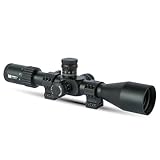
Overview: A versatile 3-15x50 FFP scope designed for precision shooting, featuring a first focal plane MOA reticle, integrated throw lever, and a comprehensive accessory package including specialized scope rings and sunshade, backed by a lifetime guarantee. What Makes It Stand Out: The first focal plane (FFP) reticle scales with magnification, enabling accurate holdovers and ranging at any zoom level. Key differentiators include the user-friendly zero-stop turrets, included bubble-level scope rings for cant prevention, and 6 illumination levels for low-light adaptability. Value for Money: The inclusion of premium accessories (bubble-level rings, sunshade, lens covers) significantly enhances value, effectively lowering the cost-per-feature versus competitors requiring separate purchases. The lifetime warranty further bolsters long-term value. Strengths and Weaknesses: Strengths: True FFP functionality for precision; intuitive zero-stop mechanism; excellent low-light performance; high-quality included accessories; durable construction. Weaknesses: 50mm objective may require higher mounts on some rifles; MOA reticle less intuitive for MIL-based systems users; slight weight increase. Bottom Line: Highly recommended for precision shooters and hunters needing reliable FFP performance with exceptional included extras. The thoughtful accessory bundle and zero-stop feature make it a standout value in the mid-tier tactical scope market.
3. Daisy 4x15 Rifle Scope

Overview: A basic, fixed-magnification (4x) air rifle scope designed for recreational plinking and small-game hunting with air guns, offering fundamental windage and elevation adjustments at an entry-level price point. What Makes It Stand Out: Its primary distinction is simplicity and affordability, specifically engineered to withstand the unique recoil impulse of spring-piston air rifles, which often damages standard firearm scopes. The included rings simplify setup. Value for Money: Exceptional value for airgun-specific use. At its low cost, it provides essential optical functionality where cheaper non-airgun scopes would fail, though it lacks advanced features found in higher-priced optics. Strengths and Weaknesses: Strengths: Airgun recoil-rated; very affordable; simple operation; includes mounting rings. Weaknesses: Limited 4x magnification; no illumination for low light; basic optical clarity; plastic components; not suitable for high-recoil firearms. Bottom Line: The ideal budget choice for air rifle enthusiasts needing a durable, no-frills optic. Avoid for centerfire rifles, but for its intended airgun purpose, it delivers reliable performance unmatched at its price.
4. Wildgeek Red Dot Sights for AR Rifle R15 Green Dot Sight Parallax-Free Scope Gun Optics Red Green Blue 1x30mm 2 Moa Water Resistance Shockproof Adjustable with Compatible Picatinny Rail Mount

Overview: A versatile 1x30mm parallax-free red dot sight offering triple-color (red/green/blue) illumination with 12 brightness levels, designed for rapid target acquisition on ARs and other firearms with Picatinny/Weaver rails, emphasizing durability and environmental resistance. What Makes It Stand Out: The unique triple-color illumination (12 total settings) provides exceptional adaptability across diverse lighting conditions (dawn, forest, desert). Military-grade shockproofing (1000G tested), multi-coated lenses for all colors, and an 800-hour battery life at low settings enhance its tactical utility. Value for Money: Competitively priced for a multi-color dot, the comprehensive rail mounting solution (3/8" & 5/8"), included lens covers, and robust construction deliver strong value against single-color alternatives, especially for budget-conscious tactical users. Strengths and Weaknesses: Strengths: Unmatched color/brightness flexibility; excellent durability (shock/fog/waterproof); clear multi-coated optics; simple zeroing; long battery life. Weaknesses: Blue dot less common and potentially less visible in some scenarios; 2 MOA dot slightly larger than preferred for precision; CR2032 battery common but not longest-lasting. Bottom Line: A highly capable, feature-rich red dot ideal for shooters needing maximum environmental adaptability without breaking the bank. Its triple-color system and ruggedness make it a smart upgrade from basic single-color models.
5. Monstrum Hornet II 3-15x50 FFP Rifle Scope | Includes Zero Stop, Bubble Level Scope Rings, and Detachable Sunshade | MIL Reticle
Overview: Functionally identical to Product 2 but featuring a MIL-based first focal plane reticle, this 3-15x50 scope targets military, law enforcement, and precision shooters who standardize on MIL measurements for ranging and holdovers. What Makes It Stand Out: The MIL reticle (versus MOA in Product 2) caters specifically to users within MIL-centric communities, enabling seamless communication and ballistic calculations. Retains all key Hornet II advantages: FFP scaling, zero-stop turrets, 6-level illumination, and the included bubble-level rings/sunshade bundle. Value for Money: Mirrors Product 2’s value proposition—premium accessories included (rings, sunshade) and lifetime warranty—making the MIL version equally compelling for its target audience. The price difference versus MOA is typically negligible, justifying the choice based on preference. Strengths and Weaknesses: Strengths: MIL FFP reticle for standardized precision; zero-stop reliability; included cant-prevention rings; robust illumination; excellent value-packed bundle. Weaknesses: MIL system less intuitive for MOA-trained shooters; 50mm objective requires higher mounts; FFP reticle appears smaller at low magnification. Bottom Line: The definitive Hornet II choice for MIL-system users. It offers identical performance and value to the MOA version, making it a top recommendation for tactical professionals and precision shooters committed to the MIL standard.
6. Vector Optics Paragon 3x18 Mini Prism BDC Reticle Riflescope CQB Sight Tactical Rifle Scope Fast Shooting Fits for AR15 AR 15 M4 .223 5.56, SCPS-M03

Overview:
The Vector Optics Paragon 3x18 is an ultra-compact prism scope tailored for AR-15 platforms chambered in .223/5.56. Built for close-to-mid-range tactical use, it prioritizes speed and durability with a fixed 3x magnification and integrated BDC reticle, ideal for CQB scenarios where rapid target acquisition is critical.
What Makes It Stand Out:
Its standout feature is the remarkably small footprint (77mm long, 223g) without sacrificing optical performance. The extra-large eye-box eliminates vignetting and allows swift target lock-on, while the illuminated 1MOA center dot with BDC holds for .223 rounds ensures precision. Fully multi-coated lenses deliver clarity in low light, and the IP67/1000g-rated 6061-T6 aluminum construction guarantees ruggedness. The included riser simplifies co-witnessing on ARs.
Value for Money:
Competitively priced for a dedicated prism optic, it offers exceptional value by merging red-dot speed with magnified precision. The inclusion of a riser, tools, and cleaning cloth adds practicality, though the missing battery is a minor oversight. It undercuts premium prism scopes while matching their core functionality for budget-conscious tacticians.
Strengths and Weaknesses:
Strengths: Ultra-lightweight and compact; excellent eye relief/forgiveness; crisp illuminated reticle; robust weather/impact resistance; straightforward setup with riser.
Weaknesses: Fixed 3x limits long-range utility; battery not included; BDC calibrated specifically for .223/5.56 (less versatile for other calibers).
Bottom Line:
A superb entry-level prism scope for AR-15 owners seeking fast, reliable CQB performance without bulk. Its ruggedness, clarity, and thoughtful design make it a top value pick for home defense or 3-gun competition.
7. Vector Optics Paragon 4x24 Mini Prism Sight BDC Reticle Riflescope CQB Sight Tactical Rifle Scope Fast Shooting Fits for AR15 AR 15 M4 .223 5.56 Top Footprint for Red Dot, SCPS-M04

Overview:
This 4x24 prism scope from Vector Optics builds on the Paragon line with enhanced magnification and a unique red dot platform. Designed for AR-15/M4 platforms in .223/5.56, it targets shooters needing quick transitions between magnified precision and ultra-fast red-dot engagement in dynamic CQB environments.
What Makes It Stand Out:
The detachable top plate for mounting a red dot sight is its game-changer, enabling seamless switching between 4x magnification and 1x red-dot speed. Like its sibling, it boasts a large eye-box, IP67/1000g durability, and a 10-level illuminated BDC reticle. The slightly longer tube (81mm) than the 3x model improves mid-range clarity while maintaining compactness (250g).
Value for Money:
The red dot integration justifies a modest premium over similar prism scopes. Including the riser, tools, and top plate adds significant setup value. While the battery exclusion is a drawback, the dual-sight capability offers unmatched versatility for the price, outperforming dedicated prisms or separate red-dot/magnifier combos.
Strengths and Weaknesses:
Strengths: Innovative red dot platform for rapid target acquisition; sharp 4x optics with large eye-box; excellent low-light performance; rugged construction; versatile BDC reticle.
Weaknesses: Top plate adds slight height; battery not included; fixed magnification still limits extended-range use.
Bottom Line:
An exceptional tactical upgrade for AR-15s, the Paragon 4x24’s red dot compatibility makes it indispensable for serious CQB shooters. It delivers outstanding adaptability and build quality, earning strong recommendation for dynamic shooting scenarios.
8. Vortex Optics Viper HD 3-15x44 Second Focal Plane Scope - Dead-Hold BDC MOA Reticle
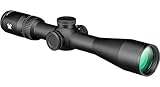
Overview:
Vortex’s Viper HD 3-15x44 is a versatile hunting and tactical scope built on a robust 30mm tube. Featuring a 5x zoom range and illuminated second focal plane (SFP) reticle, it’s engineered for precision shooting from close quarters to extended ranges, with a focus on durability and optical clarity in varied field conditions.
What Makes It Stand Out:
The proprietary Dead-Hold BDC reticle eliminates guesswork for holdovers and windage, using intuitive hashmarks calibrated for common hunting calibers. HD optical elements deliver edge-to-edge sharpness, high color fidelity, and superior low-light performance. Argon purging ensures fogproof/waterproof reliability, while capped turrets prevent accidental adjustments—critical for hunters.
Value for Money:
Positioned as a mid-tier premium scope, it competes fiercely with higher-priced brands. Vortex’s lifetime warranty and exceptional optical quality for the cost make it a standout. Though pricier than entry-level optics, the HD glass, ruggedness, and practical reticle design justify the investment for serious hunters needing reliability.
Strengths and Weaknesses:
Strengths: Outstanding HD optics with minimal chromatic aberration; user-friendly BDC reticle; extremely durable (shockproof/fogproof); fast-focus eyepiece; capped turrets protect zero.
Weaknesses: SFP reticle subtensions only accurate at highest magnification; illumination can wash out in bright light; turret reset requires tools.
Bottom Line:
A superb all-around scope for hunters demanding clarity, durability, and intuitive ranging. The Viper HD 3-15x44’s balance of performance and value makes it an easy recommendation for versatile field use.
9. Monstrum Challenger 3-15x50 FFP MPVO Rifle Scope | Featuring ED Glass, Adjustable Objective, Precision Turrets with Zero Stop, Daylight Bright Reticle, and Anti-Cant Scope Rings | MIL Reticle

Overview:
The Monstrum Challenger 3-15x50 is a first focal plane (FFP) precision optic targeting long-range shooters. Featuring ED glass, a Christmas Tree MIL reticle, and a 50mm objective lens, it’s built for accurate ranging and holdovers across its 5x zoom range, with robust turrets for reliable adjustments.
What Makes It Stand Out:
Its FFP design ensures reticle subtensions remain accurate at all magnifications—a critical advantage for precision shooting. ED glass minimizes color fringing for sharper images, while the daylight-bright illuminated reticle (6 levels) works in any light. Precision 0.1 MIL turrets with zero stop and an adjustable objective for parallax correction cater to advanced marksmen.
Value for Money:
Remarkably affordable for an FFP scope with ED glass and premium features, it challenges optics twice its price. The included anti-cant scope rings and lifetime guarantee enhance its value proposition. While not matching top-tier brands optically, it delivers exceptional capability for budget-conscious precision shooters.
Strengths and Weaknesses:
Strengths: True FFP versatility; excellent ED glass clarity; highly customizable turrets/reticle; adjustable parallax; outstanding value.
Weaknesses: Bulkier/heavier than 44mm scopes; illumination can create glare; build quality slightly less refined than premium brands.
Bottom Line:
A compelling FFP option for precision rifle enthusiasts seeking high-end functionality without breaking the bank. The Challenger’s feature set and Monstrum’s warranty make it a highly recommended mid-budget workhorse.
10. Magnum Enterprises Wooden AR-15 Rifle with Scope and Sling

Overview:
This non-lethal, rubber band-firing AR-15 replica from Magnum Enterprises offers a safe, tactile introduction to rifle handling. Proudly made in the USA, it mimics the iconic AR platform’s ergonomics and includes a functional scope and sling, targeting beginners and recreational users aged 14+.
What Makes It Stand Out:
Its authentic wooden construction and realistic weight provide a genuine shooting experience without projectiles. The included scope (non-magnifying) and adjustable sling enhance immersion, while rubber band “ammo” ensures safe, repeatable fun indoors or in backyards—ideal for teaching firearm safety principles risk-free.
Value for Money:
As a training or recreational toy, it’s reasonably priced for its craftsmanship and U.S. manufacturing. While not a functional firearm, it delivers disproportionate value for educational use, birthday gifts, or stress-relief play. The scope’s limited utility is offset by the overall package completeness.
Strengths and Weaknesses:
Strengths: Authentic AR-15 aesthetic/feel; safe rubber band operation; durable wood build; includes scope/sling; excellent for safety training.
Weaknesses: Scope is purely cosmetic; limited range/accuracy; rubber bands wear out quickly; not suitable for serious marksmanship practice.
Bottom Line:
A fun, educational tool for novices to learn rifle handling safely. While no substitute for real firearms training, its charm and practicality make it a worthwhile novelty for young enthusiasts or casual play.
Understanding Your Shooting Requirements
Before examining technical specs, honestly assess how you genuinely intend to use your rifle. This foundational step prevents costly missteps and ensures the optic serves your purpose, not just your wishlist.
Defining Your Primary Use Case
Pinpointing your dominant shooting scenario—be it home defense, competitive shooting, varmint hunting, or precision target work—is non-negotiable. A scope optimized for rapid target acquisition at 50 yards indoors will feel cumbersome and slow at 600 yards on a steel plate. Conversely, a high-magnification optic built for distance becomes a liability in tight spaces where speed is paramount. Be brutally honest about where 80% of your shooting will occur; this clarity guides every subsequent decision.
Considering Engagement Distances
Distance dictates critical scope characteristics. For sub-100 yard work, low magnification and wide fields of view are king. As distances stretch towards 300+ yards, higher magnification, precise elevation adjustments, and specialized reticles become essential. Map out your typical minimum and maximum expected ranges. This range bracket directly informs the magnification power and adjustment resolution you truly need, preventing you from overpaying for capabilities you’ll never use or lacking crucial features when they matter most.
Evaluating Environmental Factors
Your typical shooting environment heavily influences optimal scope features. Low-light conditions demand larger objective lenses and high-quality coatings for light transmission. Dusty, rainy, or humid environments necessitate exceptional waterproofing and fog-proofing. Harsh recoil or rough handling requires extreme shockproofing. Ignoring these realities can render even the most advanced optic ineffective when you need it most. Consider the worst conditions you’ll likely face, not just ideal range days.
Magnification: Finding the Sweet Spot
Magnification is often the first spec shooters fixate on, but it’s far more nuanced than simply “higher is better.” The right range balances target clarity with situational awareness.
Fixed Power vs. Variable Power Dynamics
Fixed-power scopes offer simplicity, reliability, and often superior optical clarity within their single magnification level. They excel in specific, predictable scenarios like dedicated close-quarters setups. Variable Power Scopes (VPS), however, provide crucial adaptability across diverse ranges. The key is identifying if your shooting demands the flexibility of changing magnification or the streamlined reliability of a fixed setting. Don’t assume variable is always superior; sometimes the simplicity of fixed power is the right tactical choice.
Low Power Zoom (1x-4x) Advantages
Scopes starting at 1x magnification (true 1x) function almost like a red dot at the lowest setting, offering an unobstructed field of view for rapid target acquisition in close quarters. This range is ideal for defensive scenarios, 3-gun competition stages, or hunting in dense brush. The lower magnification enhances peripheral vision and speed, critical when split seconds count. Ensure the optic provides a usable field of view even at its highest setting within this range.
Mid Power Zoom (3x-9x or 4x-12x) Versatility
This range hits a sweet spot for many general-purpose AR-15 builds. It offers sufficient magnification for precise shots out to 300-500 yards while retaining a reasonably wide field of view at the lower end for closer engagements. It’s a popular choice for hunters needing to engage game at varying distances or shooters who frequent ranges with mixed-distance targets. Carefully evaluate the field of view at both ends of the zoom range to ensure it meets your speed and precision needs.
High Power Zoom (5x-25x+) Considerations
Reserved for dedicated precision builds, these scopes enable detailed observation and precise shot placement at extended ranges (600+ yards). However, they come with significant trade-offs: narrower fields of view even at lowest power, increased weight, larger physical size (potentially obstructing iron sight backups), longer eye relief requirements, and often higher cost. Only invest in this range if your shooting consistently demands it; otherwise, the drawbacks outweigh the benefits for most AR-15 applications.
Reticle Selection: Your Aiming Reference
The reticle is your aiming point and potential ranging tool. Choosing the right design and configuration is vital for speed and accuracy under pressure.
First Focal Plane (FFP) vs. Second Focal Plane (SFP)
This fundamental distinction impacts how the reticle interacts with magnification. In FFP scopes, the reticle size scales with the target as you adjust magnification. This means holdover points and ranging marks remain accurate at any magnification setting – crucial for precision shooting at varying distances. SFP scopes keep the reticle size constant; holdovers are only accurate at one specific magnification (usually max power). FFP offers significant ballistic advantages but often comes at a higher cost. SFP can be simpler for shooters who primarily use one magnification setting.
Common Reticle Patterns and Their Uses
Duplex reticles offer clean center aiming points with thicker outer wires for quick target acquisition in low light – great for general use. BDC (Bullet Drop Compensator) reticles feature stadia marks calibrated for specific cartridges, simplifying holdovers but requiring precise zeroing and ammo consistency. Mil-Dot and MOA-based reticles provide precise measurement tools for ranging, wind holds, and bullet drop compensation, favored by precision shooters but requiring training to use effectively. Choose a pattern that matches your skill level and intended use.
Illumination: When and Why It Matters
Illuminated reticles significantly enhance visibility against dark targets or in low-light conditions (dawn, dusk, heavy cover). However, they add complexity, cost, and potential points of failure (battery life). Consider if your typical shooting occurs in challenging light. If so, illumination is highly beneficial. Evaluate the number of brightness settings and whether they include ultra-low settings for night vision compatibility. Poorly implemented illumination can cause glare or distortion; quality varies significantly.
Construction and Durability Essentials
An AR-15 scope must withstand significant recoil impulse, repeated mounting/disassembly, and harsh environmental exposure. Build quality isn’t an area to compromise on.
Tube Diameter: 1 Inch vs. 30mm vs. 34mm+
The main tube diameter influences internal adjustment range and structural rigidity. 1-inch tubes are traditional, lighter, and work with a vast array of mounts, but offer less internal adjustment travel. 30mm tubes are the current standard, providing a good balance of adjustment range, strength, and weight. 34mm+ tubes maximize internal adjustment for extreme long-range shooting but add weight and cost. Ensure your chosen mounts are specifically designed for your tube size.
Aircraft-Grade Aluminum and Build Quality
High-quality scopes utilize aircraft-grade (typically 6061 or 7075) aluminum for the main tube. This provides the optimal strength-to-weight ratio and durability. Avoid scopes made from inferior materials like plastic composites for critical structural parts. Pay attention to machining quality – smooth turrets, crisp clicks, and consistent eye relief indicate better manufacturing standards. A scope should feel solid, not hollow or plasticky.
Waterproofing, Fog Proofing, and Shockproofing
These are not optional extras; they are absolute requirements for any serious optic. Waterproofing (usually via O-rings) prevents moisture ingress during rain or submersion. Fog proofing (typically nitrogen or argon purging) eliminates internal fogging due to temperature swings. Shockproofing ensures the internal mechanisms survive repeated recoil without losing zero. Look for explicit specifications (e.g., “nitrogen-purged,” “submersible to 1 meter”) rather than vague marketing terms.
Optical Performance Fundamentals
Ultimately, a scope’s job is to deliver a clear, bright, and undistorted image. Understanding the optics behind the marketing is key.
Lens Quality and Coatings Matter
Multi-coated lenses significantly reduce glare and reflections, increasing light transmission and image brightness, especially in low light. Fully multi-coated (all air-to-glass surfaces) is the gold standard. Lens glass quality (ED, HD, etc.) minimizes chromatic aberration (color fringing) and improves edge-to-edge clarity. Don’t underestimate how much better high-quality glass performs; it directly impacts target identification and shot placement confidence.
Field of View: Your Situational Awareness Window
Field of View (FOV) is the width of the scene you can see through the scope at 100 yards (e.g., 34 ft @ 100 yds). A wider FOV enhances situational awareness, makes target acquisition faster, and helps track moving targets. FOV generally decreases as magnification increases. Prioritize wider FOV at your lowest magnification setting for close-range speed, but ensure it’s adequate at your highest setting for precision work. Narrow FOV can make shooters feel “tunnel visioned.”
Eye Relief and Eye Box Tolerance
Eye relief is the distance your eye must be from the ocular lens to see the full image. Short eye relief (common on high-mag scopes) can cause “scope bite” with recoil. AR-15s often benefit from scopes offering longer, more forgiving eye relief (3.5+ inches). Eye box refers to the tolerance for slight head movement while maintaining the full image. A larger eye box makes target acquisition faster and shooting off-hand easier. Evaluate both specs carefully for your intended shooting positions.
Adjustment Systems and Zeroing
Precise and reliable adjustments are critical for dialing corrections and maintaining zero. How the scope adjusts impacts your shooting workflow.
Turret Types: Target vs. Hunting/Combat
Target turrets are tall, exposed, and offer highly precise, audible/ tactile clicks (often 0.1 MRAD or 1/4 MOA). They frequently have zero-resettable features. Hunting/Combat turrets are lower profile, capped to prevent snagging, and may have fewer adjustments per revolution. Consider if you need to frequently dial elevation for long shots (favor target turrets) or prioritize a snag-free profile for dynamic shooting (favor capped turrets).
Click Value Precision and Consistency
The adjustment value per click (e.g., 1/10 MRAD, 1/4 MOA) determines how much the point of impact moves. Smaller values allow finer adjustments. More critical than the value itself is the consistency – does the scope track exactly what it clicks? Inconsistent tracking renders ballistic calculations useless. Research or test for reliable tracking performance; it’s a hallmark of quality optics.
Zero Stop and Reset Features
A zero stop allows you to mechanically return to your primary zero (e.g., 100 yards) after dialing for long range, preventing overshoot. A zero reset lets you set the dial to “0” at your current zero. These features are invaluable for precision shooters who frequently engage at varying distances, ensuring rapid return to a known, battle-proven zero without counting rotations.
Mounting and Compatibility
Even the finest scope is useless if it’s not mounted securely and correctly aligned with your rifle’s bore.
Ring Height and Eye Alignment
Ring height must position the scope so your eye naturally aligns with the center of the ocular lens when your head is in a natural, comfortable shooting position. Too low causes cheek weld issues; too high strains your neck. Measure your receiver height and scope objective lens diameter to choose appropriate ring height (low, medium, high). Proper eye alignment prevents parallax errors and ensures a full field of view.
Mounting System Strength and Reliability
The mount (base and rings) is the critical link between scope and rifle. Opt for robust, one-piece mounts or solid two-piece ring sets made from steel or high-strength aluminum. Avoid flimsy, lightweight mounts, especially for larger scopes or high-recoil calibers. Proper torque specifications and threadlocker (like Blue Loctite) are essential for maintaining zero. Never underestimate the importance of a solid foundation.
Budgeting and Value Assessment
Scopes span a vast price range. Understanding where to invest and where to save prevents both buyer’s remorse and critical capability gaps.
Recognizing Quality Tiers
Scopes exist in distinct quality tiers: entry-level (basic functionality, limited durability), mid-tier (good optical quality, reliable adjustments, solid construction), and high-end (premium glass, exceptional tracking, robust features). Your budget should align with the tier that meets your durability and performance needs. Spending mid-tier money on an entry-level scope wastes funds; stretching for high-end without needing its features is often unnecessary.
Long-Term Value vs. Initial Cost
View the scope as a long-term investment. A slightly higher initial cost for a scope that maintains zero, withstands recoil, and delivers clear images for years offers far greater value than a cheaper scope needing frequent replacement or causing missed shots. Factor in the cost of potential re-purchasing, re-zeroing, and lost shooting opportunities when evaluating “deals.” True value lies in reliability and performance over time.
Frequently Asked Questions
Frequently Asked Questions
What’s the most versatile magnification range for a general-purpose AR-15? For most shooters wanting one scope for varied distances (50-500 yards), a 1-6x or 1-8x variable power scope offers the best balance of close-range speed and mid-range precision.
Can I use a scope designed for hunting on my tactical AR-15? Yes, many hunting scopes work well, but prioritize features like generous eye relief, a wide field of view at low power, and a reticle suitable for quick target acquisition if speed is critical.
Why is eye relief so important on an AR-15? AR-15s have significant recoil impulse; insufficient eye relief risks the scope striking your eyebrow (“scope bite”). Longer, more forgiving eye relief (3.5+ inches) enhances safety and comfort.
Do I really need parallax adjustment on an AR-15 scope? For precision shooting beyond 200 yards, parallax adjustment is crucial for eliminating aiming errors. For close-range work (<200yds), fixed parallax set around 100 yards is usually sufficient.
How tight should I torque my scope rings? Always follow the specific manufacturer’s torque specifications. Over-tightening can damage the scope tube; under-tightening risks loss of zero. A quality torque wrench is essential.
What’s the biggest mistake new AR-15 scope buyers make? Choosing magnification based on aspiration (“I might shoot 1000 yards someday”) rather than actual, realistic use, leading to an overly complex or unsuitable optic for their real needs.
Are illuminated reticles worth the extra cost? If you frequently shoot in low-light conditions (dawn, dusk, heavy woods), illumination significantly improves target acquisition speed and accuracy and is usually worth the investment.
How do I know if a scope has good tracking? Research independent testing (reputable review sites often test tracking) or perform a “paper towel tube test” yourself: dial a known amount of elevation/windage and verify the point of impact moves exactly as calculated.
Does tube size affect optical performance? Tube size primarily impacts adjustment range and structural strength, not inherent optical clarity. Optical quality depends on lens coatings, glass quality, and internal design, not tube diameter.
Can a scope affect my AR-15’s accuracy? Absolutely. A poorly mounted scope that loses zero, or one with significant optical distortion, directly impacts your ability to place shots accurately, regardless of the rifle’s inherent mechanical precision.