Table of Contents
Choosing the right optic for your AR-15 isn’t just about magnification; it’s about unlocking the platform’s true potential. Whether you’re building a precision rig for the range, a reliable home defense setup, or a versatile hunting companion, the scope sits at the critical intersection of your skill and the rifle’s capability. Many shooters dive into the vast market of rifle scopes with excitement, only to find themselves overwhelmed by technical jargon, conflicting advice, and features they didn’t know they needed. Selecting poorly can lead to frustration, missed shots, and wasted money, turning what should be an enhancement into a hindrance. The AR-15’s adaptability demands an optic that complements your specific goals, not one that tries to be everything to everyone.
Understanding the unique demands of the AR-15 platform is the first step toward making a confident, informed decision. Unlike optics designed for bolt-action rifles, scopes mounted on semi-automatic platforms like the AR-15 must withstand significant recoil impulse, potential muzzle blast, and the rigors of rapid follow-up shots. Furthermore, the AR-15’s popularity across such diverse shooting disciplines means there’s no single “perfect” scope – the ideal choice hinges entirely on how and where you intend to use your rifle. This guide cuts through the marketing noise, focusing squarely on the essential features, considerations, and trade-offs you need to evaluate to find the scope that seamlessly integrates with your AR-15 and elevates your shooting experience.
Top 10 Scopes for AR-15
Detailed Product Reviews
1. Monstrum Beast 3-15x44 Rifle Scope with Side Focus and Offset Scope Mount | Black | FIB01 Daylight Bright Reticle

Overview:
The Monstrum Beast 3-15x44 is a mid-power variable optic (MPVO) designed for precision shooting at varying distances, featuring a 44mm objective lens for enhanced light transmission and field of view. Its standout innovation is the daylight-bright FIB01 reticle system, ideal for low-light or high-glare scenarios.
What Makes It Stand Out:
The fiber optic reticle channels ambient light via an LED to produce an exceptionally bright center dot—far surpassing traditional etched or wire designs—ensuring visibility in direct sunlight. The side focus parallax adjustment enables precise range estimation and eliminates targeting errors, while the second focal plane (SFP) reticle maintains consistent size across magnifications. The included cantilever mount and bikini covers add immediate usability.
Value for Money:
Priced competitively for its class, it undercuts premium brands while delivering critical features like SFP reticles, robust magnification range, and parallax correction. The bundled mount eliminates an extra $50+ accessory cost, making it a pragmatic choice over bare-scopes requiring separate purchases.
Strengths and Weaknesses:
Strengths: Unmatched reticle brightness; wide field of view; reliable parallax adjustment; includes essential accessories.
Weaknesses: Side focus knob lacks tactile feedback; SFP reticle limits holdover accuracy at lower magnifications; no zero-stop turret.
Bottom Line:
An excellent entry into mid-tier MPVOs for hunters or tactical shooters prioritizing reticle visibility and versatility. Its value-driven package justifies the price, though long-range precision shooters may prefer FFP alternatives.
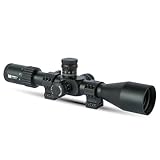
2. Monstrum Hornet II 3-15x50 FFP Rifle Scope | Includes Zero Stop, Bubble Level Scope Rings, and Detachable Sunshade | MOA Reticle
Overview:
The Monstrum Hornet II 3-15x50 FFP is a tactical rifle scope engineered for rapid target engagement and precision, featuring first focal plane (FFP) optics, robust magnification, and a comprehensive accessory bundle. It excels in dynamic shooting environments requiring quick adjustments.
What Makes It Stand Out:
Its FFP MOA reticle scales with magnification for accurate holdovers at any zoom level, complemented by six illumination settings. The zero-stop turret mechanism allows instant return to zero after elevation adjustments—a critical feature for field shooters. Included bubble-level rings and a sunshade enhance stability and usability in variable light.
Value for Money:
The all-inclusive package (rings, sunshade, lens covers) delivers exceptional value, saving $70+ versus buying components separately. At its price point, it rivals scopes lacking zero-stop or FFP functionality, making it a standout for budget-conscious precision shooters.
Strengths and Weaknesses:
Strengths: Reliable zero-stop turrets; FFP reticle for consistent ranging; premium included accessories; lifetime guarantee.
Weaknesses: Illumination steps aren’t numbered; sunshade feels lightweight; 50mm lens slightly increases weight.
Bottom Line:
A top-tier choice for hunters and competitive shooters needing FFP accuracy and zero-reset convenience. The bundled accessories and guarantee solidify its status as a high-value investment.
3. Wildgeek Red Dot Sights for AR Rifle R15 Green Dot Sight Parallax-Free Scope Gun Optics Red Green Blue 1x30mm 2 Moa Water Resistance Shockproof Adjustable with Compatible Picatinny Rail Mount

Overview:
The Wildgeek R15 is a versatile red dot sight offering parallax-free targeting with triple-color illumination (red, green, blue) and 12 adjustable brightness settings. Designed for rapid target acquisition on AR platforms, it prioritizes adaptability across diverse lighting conditions.
What Makes It Stand Out:
The unique triple-color system—especially rare green/blue options—provides superior contrast in forests, deserts, or low light. Military-grade shockproofing (1000G tested) and 800-hour battery life ensure reliability, while multi-coated lenses optimize clarity. Picatinny/Weaver compatibility simplifies mounting.
Value for Money:
At a budget-friendly price, it outperforms single-color dots with its environmental adaptability and rugged construction. The inclusion of dual rail mounts (3/8" and 5/8") adds practical value, though premium brands offer finer dot adjustments.
Strengths and Weaknesses:
Strengths: Triple-color versatility; exceptional shock/water resistance; user-friendly adjustments; long battery life.
Weaknesses: Dot clarity falters at highest brightness; plastic lens covers feel flimsy; no auto-brightness sensor.
Bottom Line:
Ideal for recreational shooters and hunters needing an affordable, durable optic for changing conditions. Its color flexibility makes it a smart buy over basic red dots, despite minor optical limitations.
4. Vector Optics Paragon 3x18 Mini Prism BDC Reticle Riflescope CQB Sight Tactical Rifle Scope Fast Shooting Fits for AR15 AR 15 M4 .223 5.56, SCPS-M03

Overview:
The Vector Optics Paragon is an ultra-compact prism scope tailored for AR platforms chambered in .223/5.56, merging magnification with rapid-targeting capabilities. Its prism design eliminates parallax issues while maintaining a slim profile for close-quarters use.
What Makes It Stand Out:
Measuring just 3 inches long and weighing 7.9 oz, it offers an expansive eye box with no vignetting—critical for fast follow-up shots. The illuminated 1MOA BDC reticle (optimized for 5.56 ballistics) and diopter adjustment combat astigmatism. Fully multi-coated lenses ensure clarity in low light, even without battery power.
Value for Money:
Packs premium features (IP67 rating, 1000G shockproofing, riser mount) into an affordable package. The included riser solves line-of-sight issues on ARs, negating a common $30 accessory need. Competes well against pricier prism scopes.
Strengths and Weaknesses:
Strengths: Remarkably compact; exceptional eye relief; reliable BDC reticle; fog/water resistance.
Weaknesses: Battery not included; limited magnification range (max 18x); no throw lever for zoom adjustments.
Bottom Line:
A stellar choice for AR owners seeking a lightweight, rugged prism scope for mid-range engagements. Its balance of size, durability, and .223-specific reticle makes it a compelling value despite minor omissions.
5. Monstrum Hornet II 3-15x50 FFP Rifle Scope | Includes Zero Stop, Bubble Level Scope Rings, and Detachable Sunshade | MIL Reticle
Overview:
This Hornet II variant swaps MOA for a MIL-based reticle in Monstrum’s proven 3-15x50 FFP platform. It retains all core features—zero-stop turrets, illumination, and premium accessories—tailored for shooters using metric-based ranging systems.
What Makes It Stand Out:
The MIL reticle simplifies range estimation and wind holds for military or precision shooters accustomed to metric units. Like its MOA sibling, it offers six illumination levels, smooth throw-lever magnification, and parallax correction down to 15 yards. The included bubble-level rings prevent canting errors during critical shots.
Value for Money:
Identical in price and content to the MOA version, it provides exceptional value for MIL users who’d otherwise pay more for comparable optics. The zero-stop mechanism and lifetime guarantee further enhance its cost-effectiveness over bare-bones competitors.
Strengths and Weaknesses:
Strengths: MIL-specific reticle for precise metric calculations; zero-stop turrets; comprehensive accessory kit; sturdy construction.
Weaknesses: MIL subtensions less intuitive for novice shooters; sunshade screws feel delicate; illumination lacks click detents.
Bottom Line:
The definitive pick for MIL-system users needing an FFP scope with zero-reset functionality. Its tactical advantages and bundled gear make it a no-compromise investment for serious marksmen.
6. Daisy 4x15 Rifle Scope

Overview: This entry-level air gun scope is designed specifically for recreational air rifle and BB gun users seeking basic optical enhancement for target practice or plinking. Its compact 4x magnification offers a practical field of view for close-range shooting.
What Makes It Stand Out: Its primary advantage is simplicity and affordability. The integrated scope rings eliminate compatibility concerns, providing a complete, ready-to-mount solution out of the box. The straightforward windage and elevation adjustments cater perfectly to beginners learning fundamental scope mechanics without overwhelming complexity.
Value for Money: Positioned as a budget-friendly option, it delivers core functionality expected at its price point. While lacking advanced features like illumination or premium coatings, it surpasses basic open sights significantly for air gun distances. It’s ideal for those unwilling to invest heavily in optics for casual air gun use.
Strengths and Weaknesses:
Strengths: Extremely affordable; includes essential mounting rings; simple adjustments; lightweight and compact.
Weaknesses: Limited 4x magnification; no parallax adjustment; basic optical clarity unsuitable for low light; plastic construction less durable than metal alternatives.
Bottom Line: A no-frills, economical choice for novice air gun enthusiasts needing basic magnification. Avoid for serious precision or variable lighting; excellent value as a starter scope for casual use.
7. Vector Optics Paragon 4x24 Mini Prism Sight BDC Reticle Riflescope CQB Sight Tactical Rifle Scope Fast Shooting Fits for AR15 AR 15 M4 .223 5.56 Top Footprint for Red Dot, SCPS-M04

Overview: This ultra-compact prism sight merges 4x magnification with a top-mounted red dot platform, engineered for rapid target engagement in close-to-mid-range tactical scenarios, particularly on AR platforms chambered in .223/5.56.
What Makes It Stand Out: Its revolutionary top footprint for red dot integration allows instant transition between magnified and unmagnified shooting. Combined with a rugged IP67/1000g-rated aluminum chassis, large eye box, and illuminated BDC reticle optimized for .223 ballistics, it excels in dynamic CQB environments where speed and durability are paramount.
Value for Money: Justifies its mid-range price with dual-optic versatility and battle-worthy construction. While pricier than basic red dots, the integrated red dot mount and specialized .223 reticle offer significant savings versus buying separate optics. Battery not included is a minor drawback.
Strengths and Weaknesses:
Strengths: Seamless red dot integration; exceptional durability and weatherproofing; fast target acquisition; clear illuminated BDC reticle; includes riser and tools.
Weaknesses: Battery not included; limited to 4x magnification; prism sight eye relief less forgiving than LPVOs.
Bottom Line: An outstanding tactical investment for AR owners prioritizing rapid transitions between close and mid-range targets. Highly recommended for home defense or competition shooters needing reliable, versatile optics.
8. Vortex Optics Viper HD 3-15x44 Second Focal Plane Scope - Dead-Hold BDC MOA Reticle
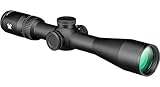
Overview: A versatile hunting scope built on a robust 30mm tube, the Viper HD 3-15x44 offers a 5x zoom range and illuminated second focal plane reticle, targeting hunters requiring adaptability across varying terrain and distances.
What Makes It Stand Out: Vortex’s HD optical system delivers exceptional edge-to-edge clarity, color fidelity, and light transmission, minimizing chromatic aberration. The illuminated Dead-Hold BDC reticle simplifies holdovers for precise shots at unknown ranges, while capped turrets prevent accidental adjustments during rugged use.
Value for Money: Competitively priced against comparable mid-tier hunting scopes, it offers premium glass quality and Vortex’s renowned reliability. The lifetime warranty adds significant long-term value, making it a smarter buy than cheaper scopes with inferior optics or limited coverage.
Strengths and Weaknesses:
Strengths: Outstanding optical clarity and light transmission; durable, waterproof, fogproof construction; intuitive illuminated BDC reticle; reliable capped turrets; lifetime warranty.
Weaknesses: Second focal plane limits holdover accuracy at lower magnifications; illumination can wash out fine reticle details at high settings.
Bottom Line: A top-tier hunting scope offering exceptional optical performance and user-friendly features. Highly recommended for hunters needing a dependable, versatile optic for diverse field conditions.
9. Monstrum Challenger 3-15x50 FFP MPVO Rifle Scope | Featuring ED Glass, Adjustable Objective, Precision Turrets with Zero Stop, Daylight Bright Reticle, and Anti-Cant Scope Rings | MIL Reticle

Overview: This first focal plane (FFP) precision rifle scope targets long-range shooters with its 3-15x magnification, ED glass, and MIL-based Christmas Tree reticle, designed for accurate ranging and holdovers at extended distances.
What Makes It Stand Out: The FFP reticle scales with magnification, ensuring ballistic holds remain accurate at any zoom level. ED glass significantly reduces chromatic aberration for superior clarity, while precision turrets with zero stop and 6-level daylight-bright illumination cater to competitive and tactical shooters demanding repeatability.
Value for Money: Delivers near-premium performance at a mid-tier price. Features like ED glass, FFP, and zero-stop turrets typically found in costlier scopes make it exceptional value. The included anti-cant rings and lifetime guarantee further enhance its cost-effectiveness for serious shooters.
Strengths and Weaknesses:
Strengths: Excellent FFP reticle functionality; high-quality ED glass clarity; precise zero-stop turrets; robust daylight-bright illumination; comprehensive lifetime warranty.
Weaknesses: Heavier than comparable scopes; adjustable objective can be cumbersome during rapid target transitions; build quality slightly below top-tier brands.
Bottom Line: A compelling FFP option for precision shooters seeking advanced features without a premium price tag. Highly recommended for competitive shooting or tactical applications requiring reliable long-range performance.
10. Air Venturi 4x15 Air Rifle Scope and Lasso Mount, BB Gun Scope Attachment
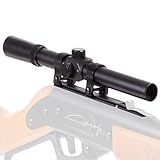
Overview: A dedicated, budget-friendly scope kit designed exclusively for low-recoil air rifles like Red Ryder or Lil Duke models, featuring a simple 4x15 optic and the proprietary Lasso Mount for secure, tool-assisted installation.
What Makes It Stand Out: The integrated Lasso Mount system simplifies installation on specific vintage air rifles by replacing the rear sight, eliminating complex dovetail measurements. Its lightweight aluminum construction and included adjustable rings ensure compatibility without adding significant weight to delicate air guns.
Value for Money: An affordable entry point for air gun enthusiasts. While optics are basic, the complete kit (scope + specialized mount) offers better value than sourcing components separately. Ideal for beginners or those restoring classic air rifles where standard mounts won’t fit.
Strengths and Weaknesses:
Strengths: Purpose-built mount for popular vintage air rifles; very lightweight; simple installation process; cost-effective complete solution.
Weaknesses: Limited to specific air rifle models; basic optical performance with no parallax adjustment; plastic components less durable; minimal magnification.
Bottom Line: The go-to solution for adding optics to compatible vintage air rifles. Perfect for beginners or collectors, but avoid for modern precision air guns needing advanced features or higher magnification.
Understanding Your AR-15’s Purpose and Optic Role
Before diving into technical specifications, honestly assessing your primary shooting application is non-negotiable. The intended use dictates nearly every critical feature you’ll prioritize, from magnification range to reticle complexity. A scope perfect for precision long-range target practice will likely be cumbersome and overkill for a close-quarters home defense carbine. Similarly, a lightweight red dot excels in speed but lacks the reach needed for varmint hunting at extended distances. Defining your core mission prevents buyer’s remorse and ensures your optic investment directly supports your performance goals.
Defining Primary Shooting Scenarios
Clearly identify whether your focus is competitive shooting, recreational plinking, hunting specific game, tactical applications, or home defense. Each scenario imposes different demands. Long-range precision shooting demands high magnification and precise elevation adjustments, while defensive scenarios prioritize speed, wide field of view, and absolute reliability under stress. Hunting might require a balance of magnification for identification and a reticle aiding holdovers. Be brutally honest about your most frequent use case.
The Magnification Spectrum: Fixed vs. Variable Power
The choice between fixed-power and variable-power optics (LPVOs) is fundamental. Fixed-power scopes (e.g., 4x) are often simpler, lighter, and potentially more robust, offering a single, optimized field of view. Variable-power scopes, particularly Low Power Variable Optics (LPVOs) ranging from 1x to 6x, 8x, or 10x, provide immense versatility, allowing shooters to zoom for precision while retaining a 1x “reflex sight” mode for close work. Consider how often you genuinely need zoom capability versus the simplicity and potential weight savings of fixed power.
Considering Platform Weight and Balance
The AR-15’s modular nature means adding a heavy scope significantly alters the rifle’s point of balance and overall handling characteristics. A large, high-magnification scope might overwhelm a lightweight 16-inch carbine, making it muzzle-heavy and tiring to hold steady. Conversely, a tiny red dot might feel underwhelming on a heavy-barreled precision build. Evaluate how the optic’s weight and length impact the rifle’s natural pointability and maneuverability for your intended use.
Critical Scope Features for AR-15 Reliability and Performance
The AR-15 platform generates unique stresses that demand specific construction qualities in an optic. Reliability isn’t just a nice-to-have; it’s paramount. A scope that loses zero under recoil or fails in adverse weather renders the entire system useless when needed most. Understanding the engineering behind durability and clarity is crucial for long-term satisfaction and safety.
Robust Construction and Shock Resistance
Look beyond basic “shockproof” claims. High-quality scopes for AR-15s utilize one-piece aircraft-grade aluminum tubes (typically 30mm or 34mm diameter) filled with nitrogen or argon gas to prevent fogging. Internal components must be securely mounted using advanced shock-absorbing systems designed specifically to handle the sharp recoil impulse of a semi-automatic platform. Avoid scopes with unnecessarily complex internal mechanisms that could be vulnerable.
Optical Clarity and Light Transmission
Bright, clear images are essential for target identification and shot placement, especially in low-light conditions common at dawn, dusk, or in wooded areas. High-quality, multi-coated lenses (fully multi-coated is ideal) minimize glare and maximize light transmission. Don’t be swayed solely by advertised magnification; a lower-magnification scope with superior glass will often provide a brighter, clearer sight picture than a higher-magnification scope with mediocre coatings, particularly in challenging light.
Precise and Repeatable Adjustments
Reliable windage and elevation adjustments are critical for zeroing and making accurate holdovers. Target turrets should offer crisp, distinct clicks with consistent value (e.g., 1/4 MOA or 0.1 MRAD per click). More importantly, the adjustments must be repeatable – returning precisely to zero after tracking multiple adjustments up and down. This repeatability is often a hallmark of higher-quality manufacturing tolerances and is non-negotiable for precision shooting.
Magnification and Reticle Selection: Matching the Mission
Magnification and reticle design work hand-in-hand to provide the information you need to make accurate shots at varying distances. Choosing the wrong combination can create confusion or slow down target acquisition. This selection is deeply personal and directly tied to your defined shooting purpose, requiring careful consideration of pros and cons.
Low Power Variable Optics (LPVOs) Explained
LPVOs (e.g., 1-6x, 1-8x, 1-10x) have become incredibly popular for AR-15s due to their flexibility. The 1x setting provides an intuitive, both-eyes-open shooting experience similar to a red dot, ideal for close range and dynamic shooting. Higher magnifications allow for precise shot placement at extended distances. Consider the maximum magnification you realistically need; a 1-10x offers more reach than a 1-6x but is larger, heavier, and may have a narrower field of view at 1x.
Fixed Power Options: Simplicity and Strength
Fixed-power scopes (commonly 3x, 4x, 6x) offer advantages in simplicity, potential weight savings, and often a wider field of view at their designated magnification compared to the low end of an LPVO. They eliminate parallax adjustment needs at their set magnification (if designed as such) and have fewer moving parts. They shine in specific roles like designated marksman rifles where a single magnification is optimal, or where absolute minimal weight and profile are critical.
Reticle Types and Illumination
Reticles range from simple duplex crosshairs to complex ballistic drop compensators (BDC) or mil/MOA grids. Match the reticle complexity to your skill level and needs; an overly complex reticle can be confusing under pressure. Illumination is vital for low-light use but adds cost and requires battery management. Ensure illumination is adjustable through multiple brightness levels to avoid washing out the reticle in daylight or being too dim at night. Understand whether the reticle is front focal plane (FFP - scales with magnification, essential for holdovers at any power) or rear focal plane (RFP - only accurate for holds at maximum power).
Mounting, Eye Relief, and Ergonomic Integration
Even the finest scope is useless if it’s not mounted securely and positioned correctly for your specific rifle and shooting stance. Proper mounting ensures the scope survives recoil and maintains zero, while correct eye relief prevents injury (“scope eye”) and provides a full, clear sight picture. This stage is where the scope truly becomes part of your AR-15 system.
Mount Selection and Torque Specifications
Mounts are the critical link between scope and rifle. Choose mounts specifically designed for your scope tube diameter (30mm, 34mm) and your rifle’s receiver (Picatinny or M-LOK with appropriate base). Quality rings (typically two or four-piece) made from solid aluminum or steel are essential. Crucially, use a torque wrench to tighten ring screws to the manufacturer’s specifications – over-tightening can crush the tube, under-tightening risks slippage. Consider the height over bore (HOB) needed for proper cheek weld.
Understanding and Setting Proper Eye Relief
Eye relief is the distance from your eye to the scope’s ocular lens where you see a full, clear image. AR-15 scopes typically require longer eye relief (3.5 to 4+ inches) than bolt-action scopes due to the semi-auto action and potential for scope impact during recoil. Setting it too short risks injury; too long makes achieving a consistent cheek weld difficult and can cause a “blackout” effect. Adjust the scope’s position in the rings before final mounting to find the optimal relief for your stock and shooting position.
Co-Witnessing with Backup Iron Sights (BUIS)
Many AR-15 owners utilize backup iron sights. “Co-witnessing” means having both the optic and BUIS visible in the same sight picture. Absolute co-witness positions the BUIS front sight post at the same height as the center of the optic. Lower 1/3 co-witness positions the BUIS slightly lower, allowing the optic to dominate the view with BUIS visible in the lower portion of the objective lens. Determine if co-witnessing is important for your setup and choose mounts (like absolute or low 1/3 height) accordingly.
Environmental Resilience and Long-Term Maintenance
Your AR-15 scope will likely face harsh conditions – rain, dust, extreme temperatures, and impacts. An optic that fogs up, gets dirty internally, or loses zero due to temperature swings is a liability. Understanding how scopes are built to withstand these elements and knowing basic care practices ensures longevity and reliability when it counts.
Waterproofing and Fog Proofing Standards
True waterproofing means the scope can be submerged (often rated to specific depths like 1 meter) without water ingress. Fog proofing is achieved by purging the internal air and filling the tube with inert, dry gas (nitrogen or argon) to prevent internal fogging due to temperature or humidity changes. Look for scopes explicitly rated as waterproof and fog proof; vague terms like “water resistant” are insufficient for serious use.
Durability Against Elements: Dust, Debris, and Impacts
Beyond recoil, scopes encounter dust, sand, mud, and potential bumps. O-rings seal the adjustment turrets and lens housings to keep contaminants out. A durable exterior coating (like anodized aluminum) resists scratches and abrasion. While no scope is indestructible, robust construction minimizes the impact of field conditions. Consider lens covers for protection during transport and storage.
Essential Cleaning and Care Practices
Regular maintenance preserves optical performance. Use proper lens cleaning supplies: a soft brush or air blower to remove loose debris first, followed by lens-specific microfiber cloths and cleaning solution applied to the cloth, not the lens. Avoid paper towels or clothing which can scratch. Store the rifle with lens covers on in a cool, dry place. Periodically check mounting screw torque, especially after significant recoil or impacts.
Balancing Budget with Performance Expectations
Rifle scopes span an enormous price range, and it’s easy to either overspend on features you won’t use or underspend on an optic that fails when needed. Defining your realistic performance requirements and matching them to an appropriate budget tier prevents frustration. Understand where cost translates to tangible benefits like better glass, more precise adjustments, or superior durability.
Identifying Value Beyond the Price Tag
The most expensive scope isn’t automatically the best choice for your AR-15 application. Focus on the features critical to your shooting scenario. Spending top dollar on a 25x precision scope for a 100-yard defensive carbine is poor value. Conversely, a $100 scope might lack the repeatable adjustments or ruggedness needed for serious precision work. Research what core technologies (e.g., glass quality, adjustment mechanisms, sealing) differentiate budget, mid-range, and premium tiers.
Recognizing Potential Pitfalls in Budget Options
Extremely low-cost scopes often cut corners in critical areas: poor light transmission (dim, yellowish image), inconsistent or non-repeatable adjustments, inadequate shock resistance leading to lost zero, or internal fogging. While entry-level optics exist, be wary of prices that seem too good to be true; they often reflect compromised materials or manufacturing. Understand the minimum performance thresholds required for your intended use.
Investing Where It Matters for Your Needs
Allocate your budget towards the features most critical for your primary use case. For a hunting scope, prioritize light transmission and a usable BDC reticle. For competitive shooting, focus on precise, reliable adjustments and a clean reticle. For a defensive carbine, emphasize robustness, fast target acquisition (low magnification or 1x), and illumination. Don’t pay for high magnification you won’t use or complex reticles that will confuse you under stress.
Frequently Asked Questions
What is the most important factor when choosing a scope for an AR-15?
The single most crucial factor is defining your primary shooting purpose. Your intended use (hunting, competition, defense, plinking) dictates the necessary magnification range, reticle type, size, weight, and required durability features. Choosing based on someone else’s needs or generic advice often leads to an unsuitable optic.
How much magnification do I really need on my AR-15?
This depends entirely on typical engagement distances. For home defense or close-quarters work (<100 yards), 1x (like a red dot) or low magnification (1-4x) is ideal for speed. For general use out to 300-500 yards, a 1-6x or 1-8x LPVO offers great versatility. For precision shooting beyond 500 yards, higher magnification (4-16x or similar) becomes necessary, but consider the added weight and reduced field of view at low power.
What does FFP vs RFP mean, and which is better for an AR-15?
FFP (First Focal Plane) means the reticle scales with the target as you adjust magnification. RFP (Second Focal Plane) means the reticle size stays constant while the target image scales. FFP is generally preferred for precision shooting with holdovers or ranging at any magnification, as the reticle subtensions remain accurate. RFP is often simpler and cheaper, with a potentially clearer reticle at low power, but holdover points are only accurate at one specific magnification (usually max power).
Why is eye relief so critical on an AR-15 scope?
AR-15s have semi-automatic recoil and the potential for the scope to travel rearward during cycling. Insufficient eye relief risks the scope striking your eyebrow or orbital bone (“scope eye”), causing serious injury. Proper eye relief (typically 3.5+ inches for AR scopes) ensures safety and provides a full, clear sight picture without requiring an unnatural head position.
Do I need illuminated reticles for my AR-15 scope?
Illumination is highly beneficial for low-light shooting (dawn, dusk, heavy cover) as it makes the reticle stand out against dark backgrounds. However, it’s not strictly necessary for all applications. If you primarily shoot in bright daylight at ranges where target contrast is high, a non-illuminated reticle may suffice. For defensive use, hunting, or versatile applications, illumination is a valuable feature worth considering.
How tight should I torque my scope rings?
Always follow the specific torque specifications provided by the scope and mount/ring manufacturers. Using a calibrated torque wrench is essential. Typical values range from 15-25 inch-pounds for scope rings on aluminum bases, but this varies significantly. Under-torquing risks slippage; over-torquing can crush the scope tube or damage the receiver. Never rely on “hand tight.”
What is the difference between a 30mm and 34mm scope tube?
The primary difference is the internal adjustment travel potential and overall tube strength. A 34mm tube generally allows for more internal adjustment range (useful for long-range shooting requiring significant elevation correction) and is slightly stronger. However, 34mm scopes and mounts are larger, heavier, and often more expensive. 30mm is the most common standard, offering ample adjustment for most AR-15 applications with a good balance of size and weight.
Can I use a scope designed for bolt-action rifles on my AR-15?
While physically possible to mount many bolt-action scopes, they are often not ideal. Bolt-action scopes may have shorter eye relief unsuitable for semi-auto recoil, lack the specific shock resistance needed for AR-15 cycling, or have adjustment turrets not robust enough for repeated recoil impulses. Scopes marketed specifically for AR-15s or tactical platforms are engineered to address these unique demands.
How do I know if my scope has repeatable adjustments?
Testing repeatability requires a stable rest and a target at a known distance (e.g., 100 yards). Zero the scope. Make a large, precise adjustment (e.g., 20 MOA up). Confirm the point of impact moves as expected. Then, adjust back exactly 20 MOA down. The point of impact should return precisely to the original zero. Significant deviation indicates poor repeatability.
How often should I clean my rifle scope lenses?
Clean lenses only when necessary – when dirt, oil, or debris is visibly degrading the image. Over-cleaning increases scratch risk. Always start by blowing off loose particles with air or a soft brush. Use lens-specific microfiber cloths and cleaning solution sparingly. Regularly use flip-up lens covers to minimize the need for frequent cleaning. Clean the exterior objective and ocular lenses as needed; internal fogging indicates a seal failure requiring professional service.