Table of Contents
Imagine this: you’ve just hiked for miles under a blazing sun, your legs are tired, and your stomach is growling louder than the wind in the pines. You finally reach that perfect campsite nestled by a gurgling stream, ready to collapse. But instead of relaxing, you’re wrestling with a tangled mess of stove parts, fumbling with fuel canisters, and muttering curses while trying to get a flame going. That peaceful evening meal? It’s turning into a stressful chore. In the wild, where weather can shift in minutes and daylight fades fast, a stove that fires up instantly isn’t just convenient—it’s essential for safety, comfort, and truly enjoying your hard-earned adventure. The difference between a frustrating campout and a memorable one often boils down to how quickly you can go from unpacking to eating.
Gone are the days when campers accepted slow, finicky stoves as the norm. Modern outdoor enthusiasts demand reliability and speed, especially when conditions are less than ideal. Whether you’re a weekend warrior tackling a sudden downpour, a thru-hiker racing the sunset, or a family camper trying to soothe hungry kids after a long drive, a portable stove that ignites reliably in seconds transforms your experience. This guide cuts through the marketing hype to focus on the real features that deliver that crucial “quick setup” capability you need in 2026 and beyond. We’ll explore the engineering, design choices, and practical considerations that separate stoves that work when you need them most from those that leave you cold and hangry.
Top 10 Portable Camping Stoves
Detailed Product Reviews
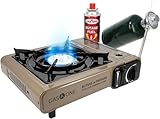
1. Gas One GS-3400P Propane or Butane Stove Dual Fuel Stove Portable Camping Stove - Patented - with Carrying Case Great for Emergency Preparedness Kit
Overview:
The Gas One GS-3400P is a versatile dual-fuel camping stove engineered for reliability in emergencies or outdoor adventures. It uniquely supports both propane (16.4 oz cylinders) and butane (8 oz cartridges), featuring a patent-pending design with included propane regulator. Its automatic ignition and robust safety systems make it ideal for preparedness kits.
What Makes It Stand Out:
Dual-fuel compatibility is its crown jewel, offering unmatched flexibility during fuel shortages. The automatic piezo ignition eliminates matches, while the built-in pressure sensor ejects cartridges during irregular pressure spikes—a critical safety innovation absent in most competitors. The included carrying case enhances portability.
Value for Money:
Priced moderately higher than single-fuel stoves, its dual-fuel capability justifies the cost by ensuring usability regardless of fuel availability. It outperforms cheaper models in emergencies but costs more than basic propane-only alternatives like the Coleman Triton.
Strengths and Weaknesses:
Strengths: Exceptional fuel versatility; reliable auto-ignition; advanced safety ejection; CSA-certified; includes carry case. Weaknesses: Slightly heavier than single-fuel stoves; butane performance dips in cold weather; regulator hose storage isn’t optimized.
Bottom Line:
A top-tier choice for preppers and campers prioritizing fuel flexibility and safety. Its unique dual-system design makes it worth the premium for those needing dependable heat in unpredictable conditions.
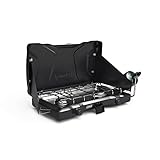
2. Coleman Triton 2-Burner Propane Stove, Portable Camping Cooktop with 2 Adjustable Burners & Wind Guards, 22,000 BTUs of Power for Camping, Tailgating, Grilling, BBQ, & More
Overview:
The Coleman Triton is a rugged 2-burner propane stove built for group camping and tailgating. Delivering 22,000 BTUs across independently adjustable burners, it features wind guards and a heavy-duty latch for stability in outdoor settings. It’s a workhorse for serious camp cooks.
What Makes It Stand Out:
Its 22,000 BTU output and dual wind guards provide superior flame stability in breezy conditions—a rarity at this price. The improved knob rotation allows precise simmer control, while the removable chrome grate simplifies cleanup after heavy use.
Value for Money:
Offering exceptional durability and power for its cost, it outperforms budget stoves in wind resistance and heat control. Though lacking a carry case, its longevity makes it a smarter long-term investment than ultra-cheap foldable models.
Strengths and Weaknesses:
Strengths: Powerful dual burners; effective wind guards; easy-clean chrome grate; precise temperature control; sturdy latch. Weaknesses: No included carry bag; propane-only (no butane option); bulkier than foldable competitors.
Bottom Line:
Highly recommended for campers needing reliable, high-output cooking for groups. Its wind resistance and durability cement it as a dependable staple for frequent outdoor use.
3. FUNYKICH 2-Burner Foldable Camping Stove with Carrying Bag, Portable Propane Camp Stove with Adjustable Burners & Piezo Ignition, for Camping Tailgating Essentials Gear

Overview:
The FUNYKICH 2-burner stove merges portability with power, featuring a space-saving “squircle” foldable design. With 20,000 BTUs, piezo ignition, and a compact 9.8” x 8.4” x 5.9” footprint, it’s engineered for travelers prioritizing lightweight efficiency without sacrificing cooking performance.
What Makes It Stand Out:
Its innovative fold-in-half construction minimizes storage space while maintaining burner stability. The 12.2” burner spacing accommodates large pots, and the high-temp steel/stainless steel build ensures durability. The included carry bag and hose complete an all-in-one package.
Value for Money:
Priced competitively, it delivers premium portability and dual-burner versatility often found in costlier models. The inclusion of a carry bag and hose (unlike the Coleman) adds tangible value for backpackers and RV users.
Strengths and Weaknesses:
Strengths: Ultra-compact folded size; robust materials; precise flame control; 12.2” burner spacing; full accessory kit. Weaknesses: Requires separate windscreen; propane-only; lighter build may feel less stable on uneven terrain.
Bottom Line:
An excellent value for minimalist campers seeking powerful, packable dual-burner cooking. Its clever design makes it a standout for space-constrained adventures.
4. Gas One Portable Butane Camping Stove with Case: Automatic Ignition, Precise Heat Control - Camping & Tailgating and Outdoor Cooking

Overview:
This Gas One model is a streamlined butane stove optimized for efficiency and safety. Boasting 7,650 BTUs and CSA certification, it specializes in quick water boiling for solo or duo trips. Its compact profile and auto-ignition cater to casual campers and emergency kits.
What Makes It Stand Out:
It’s the market’s most fuel-efficient butane stove, rapidly boiling water while conserving fuel. The unique safety ejection system (triggered at 0.7kg force) and silent, clean burn differentiate it from noisier competitors. CSA approval adds trust for North American users.
Value for Money:
Budget-friendly yet premium in safety and efficiency, it outperforms cheaper stoves in reliability. However, butane-only operation limits versatility compared to dual-fuel models like the GS-3400P, though it’s ideal for warm-weather use.
Strengths and Weaknesses:
Strengths: Unmatched fuel efficiency; quiet operation; reliable auto-ignition; critical safety ejection; includes carry case. Weaknesses: Butane-only (ineffective below 32°F); lower BTU output than dual-burner rivals; no wind guard.
Bottom Line:
Perfect for backpackers or emergency kits in temperate climates. Its efficiency and safety features make it a no-brainer for lightweight, low-risk outdoor cooking.
5. ODSD 2 Burner Camping Stove with Windshield, 20000 BTU Propane Camp Stove, Portable Folding Gas Stove, Camping Essentials Gear Includes Frying Pan, Coffee Stand & Carry Bag, Green

Overview:
The ODSD 2-burner stove packs power and convenience into a featherlight 3.98 lb package. Generating 20,000 BTUs, it features a magnetic closure, integrated windshield, and bonus accessories (frying pan, coffee stand), targeting campers who want an all-in-one cooking solution.
What Makes It Stand Out:
The magnetic closure system enables effortless setup and storage—a game-changer for frequent packers. The included windshield boosts wind resistance, while the stainless steel coffee stand and frying pan add exceptional value rarely seen in this category.
Value for Money:
Its standout value lies in the free accessories, effectively bundling a full cookset. At a mid-range price, it undercuts competitors requiring separate pan purchases. The magnetic mechanism also reduces long-term wear versus latch-based stoves.
Strengths and Weaknesses:
Strengths: Innovative magnetic closure; excellent wind protection; generous accessory kit; ultra-portable; rust-resistant burners. Weaknesses: Propane-only; magnetic strength may weaken over time; limited burner spacing for large cookware.
Bottom Line:
A compelling pick for value-focused campers. The included cookware and magnetic design justify its price, making it ideal for beginners or those seeking hassle-free, complete outdoor cooking.
6. Coleman Classic 1-Burner Butane Stove, Portable Camping Cooktop with Carry Case & InstaStart Ignition, Adjustable Burner with 7650 BTUs of Power for Camping, Grilling, Tailgating, & More
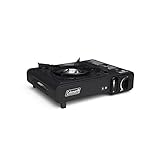
Overview: The Coleman Classic 1-Burner Butane Stove is a compact, dedicated butane stove designed for straightforward outdoor cooking at campsites, picnics, or tailgates. It emphasizes portability with its included carry case and reliable ignition. What Makes It Stand Out: Its standout feature is the reliable InstaStart ignition, eliminating the need for matches. The single adjustable burner offers precise temperature control for simmering or boiling, while the porcelain-coated, removable grate and rust-proof aluminum burner ensure easy cleaning and durability. The large base provides stability during cooking. Value for Money: Positioned as an entry-level option, it offers solid core functionality at a competitive price. While lacking dual-fuel capability, its simplicity, included case, and Coleman’s reputation for reliability make it a cost-effective choice for casual campers prioritizing ease of use over fuel flexibility. Strengths and Weaknesses: Strengths: Reliable matchless ignition, stable base, easy cleanup, very portable with case, consistent 7,650 BTU output. Weaknesses: Butane-only (less cold-weather performance), single burner limits cooking capacity, case adds slight bulk compared to ultra-minimalist stoves. Bottom Line: An excellent, no-fuss starter stove for occasional campers and tailgaters seeking dependable, simple cooking; ideal if you prioritize ease of use and portability over fuel versatility.
7. Grill Boss Dual Fuel Camp Stove - 12,000 BTU Butane & Propane Portable Stoves for Camping, Emergencies, BBQ, Hiking & Backpacking - Double Wind Guard, Instant Piezo Ignition System - 90057

Overview: The Grill Boss Dual Fuel Camp Stove delivers significant versatility and power (12,000 BTUs) for diverse outdoor cooking scenarios, from backpacking to emergency preparedness, by supporting both butane and propane canisters. What Makes It Stand Out: Its dual-fuel capability (using the included adapter) is the major highlight, allowing adaptation to fuel availability and burn time needs. Enhanced safety features like an automatic gas shutoff and double wind guard, combined with reliable piezo ignition and a sturdy build, set it apart for reliable performance in varied conditions. Value for Money: Justifying its mid-range price, the dual-fuel flexibility eliminates dependency on one fuel type, offering long-term savings and preparedness. The robust safety features and included wind guard provide added value over basic single-fuel stoves, making it a smart investment for serious campers and preppers. Strengths and Weaknesses: Strengths: True dual-fuel (butane/propane), high 12,000 BTU output, excellent safety systems (auto shutoff, wind guard), reliable piezo ignition, versatile for many uses. Weaknesses: Slightly heavier than dedicated backpacking stoves, propane operation requires the hose adapter (adds setup step), ignition may require multiple clicks sometimes. Bottom Line: Highly recommended for campers needing fuel flexibility and robust safety; a versatile, powerful workhorse ideal for car camping, emergencies, and situations where propane’s longer burn time is essential.
8. AOTU Portable Camping Stoves Backpacking Stove with Piezo Ignition Stable Support Wind-Resistance Camp Stove for Outdoor Camping Hiking Cooking

Overview: The AOTU stove is an ultra-compact, lightweight backpacking stove focused on minimal weight and wind resistance for solo or duo hikers and campers needing efficient, basic boiling and simmering. What Makes It Stand Out: Its integrated high-bright aluminum alloy construction and honeycomb windproof net provide exceptional wind resistance and durability in a minuscule package (4x5x8cm). The piezo ignition, precise flame control down to a simmer, and compatibility with common butane canisters cater perfectly to minimalist backpackers. Value for Money: Offering exceptional value for ultralight backpackers, its rock-bottom price delivers reliable performance in a featherweight (under 4oz) form. While lacking the power of larger stoves, it excels at its core task—boiling water efficiently for 1-3 people—making it a budget-friendly essential for weight-conscious adventurers. Strengths and Weaknesses: Strengths: Extremely compact and lightweight, excellent wind resistance, precise simmer control, piezo ignition, very affordable, durable aluminum construction. Weaknesses: Butane-only (no propane compatibility), lower 3000W output (slower boil times than higher BTU stoves), small footprint limits pot size/stability, plastic storage case feels basic. Bottom Line: A top choice for backpackers prioritizing minimal weight and wind resistance for basic cooking; excellent value for solo/duo trips where ultra-compact size is paramount, despite limited power and fuel options.
9. Fire-Maple “Fixed Star 1” Backpacking and Camping Stove System | Outdoor Propane Cooking Gear | Portable Pot/Jet Burner Set | Ideal for Hiking, Trekking, Fishing, Hunting Trips and Emergency Use

Overview: The Fire-Maple Fixed Star 1 is an integrated stove-and-pot system designed for ultralight backpackers, combining a powerful burner, a hard-anodized pot, and a handle into a single, efficient unit that nests compactly. What Makes It Stand Out: Its industry-leading heat exchange technology significantly boosts efficiency (30% faster boiling) and wind resistance. The fully integrated design—where the stove, pot, and handle nest together—is a key innovation, maximizing packability (all fits in the 1L pot, 18oz total weight) while including piezo ignition. Value for Money: While the system price is higher than standalone stoves, the included premium pot with insulating cover and integrated stove offers excellent value. The exceptional fuel efficiency translates to long-term savings on canisters, justifying the cost for frequent backpackers seeking top performance and minimal pack weight. Strengths and Weaknesses: Strengths: Outstanding fuel efficiency/wind resistance, incredibly compact integrated design, lightweight (18oz), durable hard-anodized pot with secure handle, piezo ignition. Weaknesses: Requires separate fuel canister (not included), incompatible with Coleman canisters, pot size limits cooking capacity (best for 1-2), needs an external windscreen for optimal performance. Bottom Line: A premium, highly efficient choice for serious backpackers; the integrated system delivers unmatched packability and boil times, making it worth the investment for weight-conscious hikers prioritizing performance.
10. SHINESTAR Dual Fuel Stove with Butane & Propane Compatibility, Portable Camping Stove for Outdoor Cooking, Propane Adapter Hose and Carrying Case Included, 7800 BTUs Output

Overview: The SHINESTAR Dual Fuel Stove is a portable, versatile cooking solution offering butane and propane compatibility out of the box, targeting campers needing flexibility without complex setup, backed by essential safety features. What Makes It Stand Out: It provides true dual-fuel capability with the propane hose adapter included, along with notable safety elements like cartridge ejection, safety lock, and auto shut-off. The high-efficiency porous burner delivers 7800 BTUs quickly (boiling 4 cups in 5 mins), and the removable porcelain grate simplifies cleaning. Value for Money: Excellent value proposition as it includes both the critical propane adapter hose and a carrying case, features often sold separately. The robust safety suite and reliable 7800 BTU output at a competitive price make it a practical, economical choice for families and frequent campers seeking dependable dual-fuel performance. Strengths and Weaknesses: Strengths: Genuine dual-fuel (adapter included), strong safety features (ejection, lock, shut-off), high heat output, easy cleanup, includes sturdy carry case, reliable piezo ignition (>10k clicks). Weaknesses: Aluminum construction feels less premium than some competitors, propane hose storage could be better integrated, case quality is functional but not rugged. Bottom Line: Highly recommended for campers wanting hassle-free dual-fuel capability with strong safety; it delivers exceptional practicality and value for car camping, tailgating, and family outings.
Understanding the Core of Quick Setup
Quick setup isn’t just about speed; it’s about seamless integration into your camp routine. It means minimal steps, intuitive handling, and consistent performance under pressure. True quick setup stoves eliminate guesswork and frustration, turning meal prep from a chore into a simple, almost subconscious part of your campsite routine. This reliability builds confidence, especially for newer adventurers or in challenging environments.
Defining “Quick” in Real-World Conditions
“Quick” means consistently achieving a usable flame within 10-15 seconds of starting the setup process, even with cold hands or in moderate wind. It’s not just about the first ignition; it’s about repeatable speed every single time you use it, regardless of whether it’s your first camp night or your fiftieth. Consider how many steps are involved: unfolding legs, attaching fuel, priming (if needed), and igniting. The fewer steps, the faster and more reliable the process.
Why Speed Matters Beyond Convenience
Speed directly impacts safety and comfort. A stove that lights instantly is crucial when temperatures plummet or rain sets in, allowing you to get warm food or water fast. It minimizes time spent exposed to the elements during setup. Furthermore, quick ignition reduces fuel waste from prolonged priming or failed attempts, making your trips more economical and environmentally conscious. For group trips, it streamlines the cooking process, getting everyone fed efficiently.
Critical Features for Instant Ignition and Stability
The magic of quick setup lies in specific, well-executed features. These aren’t just nice-to-haves; they’re fundamental to achieving that immediate, reliable flame when you need it most. Focusing on these elements ensures you invest in a stove that performs under pressure, not just on the spec sheet.
Ignition System Reliability
The ignition mechanism is the heart of quick setup. Piezo-electric igniters, generating a spark with a simple button press, are the gold standard for speed and consistency. Look for robust, weather-shielded igniters positioned close to the burner head for maximum spark transfer efficiency. Avoid stoves requiring manual lighting with a lighter as the primary method if quick setup is your priority; this adds steps and fails more often in wind or rain.
Fuel Type and Connection Simplicity
How fuel connects to the stove dramatically impacts setup time. Integrated canister systems, where the fuel screws directly onto the burner base, are generally the fastest and most stable. Liquid fuel stoves often require separate priming steps, adding complexity and time—though some modern liquid systems have simplified this significantly. Quick-connect mechanisms for fuel lines (common in some liquid systems) should be evaluated for ease of use with gloves on. Simpler connections mean fewer points of failure and faster assembly.
Burner Design and Wind Resistance
A well-designed burner head ignites faster and maintains the flame in challenging conditions. Look for burners with multiple small flame ports surrounding the edge, creating a stable ring of fire less susceptible to wind gusts. Integrated wind screens that deploy instantly or are built into the stove’s structure are vital. Stoves with the burner recessed slightly below the pot supports also offer inherent wind protection, getting you cooking faster without fumbling for an external screen.
Stability and Pot Support Configuration
A wobbly stove means spilled food and wasted fuel—defeating the purpose of quick setup. Robust, wide-set pot supports that deploy automatically or with minimal unfolding are essential. Consider the footprint: a stable base prevents tipping, especially on uneven ground, allowing you to focus on cooking, not stabilizing. Some designs feature folding legs that lock securely into place with a single motion, significantly speeding up the process compared to multi-step leg adjustments.
Fuel Efficiency at Startup
Quick setup isn’t just about lighting; it’s about getting to a usable cooking temperature rapidly. Stoves with high initial heat output (measured in BTUs) boil water faster, but also consider how efficiently they transfer that heat at the moment of ignition. Designs that concentrate flame directly under the pot base minimize heat loss during the critical first minutes, meaning your water starts warming immediately after ignition, not after a lengthy pre-heat phase.
Fuel Considerations for Hassle-Free Performance
Your fuel choice isn’t just about availability; it directly dictates setup complexity, speed, and reliability, especially in 2026’s evolving outdoor market. Understanding the nuances helps you pick a system perfectly aligned with your quick-setup goals and typical adventure environment.
Canister Fuel Pros and Setup Nuances
Isobutane-propane canisters offer the absolute fastest, simplest setup: screw on, ignite, cook. No priming, no pumps. Their main setup consideration is ensuring the canister valve is fully open immediately upon connection for optimal flow. Newer canister designs often feature ergonomic grips and clear indicators for easy handling with cold hands. However, performance can dip in very cold temperatures (< 20°F / -7°C) unless using inverted canister stoves or specific winter blends, which adds a slight complexity step (inverting the canister).
Liquid Fuel Versatility and Priming Realities
Liquid fuels (white gas, kerosene) shine in extreme cold and high altitudes where canisters struggle. However, traditional liquid stoves often require a priming step—pre-heating the fuel line with a small flame—which adds significant time (30-60 seconds) and complexity to setup. Modern liquid stoves have made strides with simplified priming (e.g., integrated primer cups, pre-heat tunnels), but they rarely match the instant-on speed of a canister system. If quick setup is paramount and you venture into very cold climates, prioritize researching the specific priming speed and ease of any liquid stove.
Alternative Fuels and Emerging Trends
While less common for pure quick-setup focus, alcohol and solid fuel stoves have niche appeal. Alcohol stoves are incredibly simple (pour and light) but suffer from slow boil times and are highly wind-sensitive, negating quick cooking despite quick ignition. Solid fuel tablets are ultra-simple but lack flame control and are slow. Keep an eye on emerging bio-fuel blends or integrated hybrid systems, though for 2026, canister and optimized liquid systems remain the top contenders for true speed and reliability.
Design Elements for Durability and Ease of Use
A stove built for quick setup must also withstand the rigors of travel and repeated use. Durability isn’t separate from speed; a flimsy stove that breaks or jams after a few trips becomes the slowest option of all. Smart design choices ensure your reliable quick setup lasts season after season.
Material Quality and Weight Balance
Stainless steel and robust aluminum alloys are the benchmarks for durability without excessive weight. Avoid overly thin or flimsy-feeling components, especially pot supports and folding legs, as they can bend or jam, slowing down setup. The ideal stove balances minimal weight with structural integrity—look for reinforced stress points and smooth, reliable folding mechanisms that don’t feel like they’ll snap. A slightly heavier, ultra-reliable stove is often faster in practice than a fragile ultralight model that requires careful handling.
Folding Mechanism Efficiency
This is where many stoves succeed or fail at quick setup. The best designs deploy into a stable cooking position with three or fewer simple motions—often a single unfolding action where legs lock automatically. Avoid complex multi-hinge systems or stoves requiring you to manipulate tiny latches with cold fingers. Test the mechanism (if possible): it should feel smooth, positive, and secure, snapping into place without hesitation. A stove that unfolds reliably in one fluid motion is inherently faster.
Ease of Cleaning and Maintenance
A stove clogged with spilled fuel or food residue won’t light quickly. Look for burner heads that are easy to access and clean—removable parts are a plus. Stoves with fewer nooks and crannies where debris collects are easier to maintain in the field. Integrated fuel filters (common in liquid stoves) should be user-serviceable. A stove that stays clean operates reliably, maintaining its quick-start capability trip after trip.
User-Centric Ergonomics
Details matter when your hands are cold or wet. Control valves should be large enough to operate with gloves and offer precise, smooth adjustment from simmer to full blast. Ignition buttons need good tactile feedback and placement away from heat. Fuel connections should have clear threading and sufficient grip surface. These ergonomic touches prevent fumbling, directly contributing to faster, less frustrating setup and operation.
Optimizing Your Technique for Maximum Speed
Even the best stove requires smart handling. Mastering a few simple techniques ensures you leverage the stove’s quick-setup potential to the fullest, shaving crucial seconds off your meal prep time every single use.
Pre-Trip Familiarization and Practice
Never wait until you’re shivering in the dark to figure out your stove. At home, practice the entire setup sequence: unpacking, assembling, igniting, adjusting flame, and packing away. Do it blindfolded (safely!) or with gloves on. This builds muscle memory so the process becomes automatic under stress. Check that all parts move smoothly; address any stiffness before you head out.
Strategic Packing for Instant Access
How you pack your stove dictates your setup speed. Store it ready to use: fuel attached (if safe for transport per canister regulations) or packed immediately next to it in an easily accessible pocket of your pack. Keep the igniter clean and protected. Avoid burying it under sleeping bags or food. A dedicated, top-accessible stash pocket in your pack saves frantic digging when you reach camp.
Weather-Adaptive Setup Strategies
Know how to adapt quickly. In wind, deploy any built-in windscreen immediately after placing the stove, or position yourself as a windbreak while igniting. In rain, have a small tarp or your pack cover ready to create a quick shelter just for the stove ignition moment. For cold weather with canisters, keep the canister warm inside your jacket until ignition, then screw it on quickly. These small pre-planned actions prevent delays when conditions turn.
Looking Ahead: What Quick Setup Means in 2026
The landscape for portable stoves continues to evolve. While core principles of reliability and simplicity remain paramount, subtle advancements are making truly instant, hassle-free cooking increasingly accessible for all types of adventurers in the current year.
Integration and Smart Features (Without Compromise)
Expect to see more seamless integration between stoves, cooksets, and even fuel systems. Cooksets designed as windshields that double as pot lids with stable stove bases streamline setup. While “smart” stoves with Bluetooth are niche, the focus is on functional integration: easier fuel level indicators, self-regulating pressure for consistent cold-weather performance without manual adjustment, and even quieter operation – all contributing to a smoother, faster user experience without adding complexity.
Sustainability Driving Simplicity
The push for eco-friendly gear is influencing design. Stoves optimized for efficient fuel use inherently boil faster and waste less, aligning with quick setup. Refillable canister systems and stoves compatible with renewable bio-propane blends are becoming more user-friendly, reducing the steps and potential mess associated with older refill methods. Simplicity and reduced environmental impact are increasingly intertwined.
Refinement Over Revolution
True breakthroughs are rare, but 2026 sees significant refinement of proven quick-setup principles. Manufacturers are honing ignition reliability, perfecting wind-resistant burner geometries, and creating folding mechanisms that are even more intuitive and durable. The focus is on eliminating the last minor frustrations – smoother valve action, more secure pot grips, foolproof fuel connections – making the ideal of “set up, light, cook” a reality for more stoves across more price points.
Frequently Asked Questions
Frequently Asked Questions
How crucial is wind resistance for a stove claiming quick setup? Extremely crucial. A stove that lights instantly in calm air but blows out with the first breeze isn’t truly quick setup. Look for stoves with integrated wind protection (recessed burners, built-in screens) as this ensures the flame stays lit after that initial fast ignition, preventing repeated, time-consuming relighting attempts.
Can I achieve quick setup with a liquid fuel stove in cold weather? Yes, but it requires specific models. Prioritize liquid stoves designed for cold weather that minimize or eliminate the traditional priming step, often using pre-heat tunnels or inverted fuel bottle designs. These significantly reduce the setup time gap compared to canister stoves in freezing conditions, though they may still not be quite as instantly simple.
Does stove weight significantly impact setup speed? Not directly, but indirectly yes. An ultra-light stove made with flimsy materials might have folding legs that are fiddly, unstable, or slow to deploy reliably. A slightly heavier stove with robust, simple, one-motion legs often sets up faster and more securely, especially with gloves on, making the weight penalty worthwhile for speed and safety.
How do I test ignition reliability before buying? If possible, handle the stove in-store. Press the igniter button repeatedly – does it spark consistently every time with a solid “click”? Is the spark strong and visible near the burner head? Check online user reviews specifically mentioning ignition performance in various conditions (wind, cold, after storage). Avoid stoves with reports of frequent igniter failure.
Is a built-in windscreen essential for quick setup? It’s highly recommended. Attaching an external windscreen adds steps and time. A stove with a stable, integrated windscreen (or a burner design offering inherent wind protection) gets you cooking reliably in breezy conditions immediately after ignition, which is core to the quick setup promise. Don’t overlook this feature.
How does altitude affect quick setup performance? High altitude primarily impacts fuel pressure and boiling points, not necessarily the initial ignition speed. However, stoves that maintain consistent flame stability at altitude (often liquid fuel or specific canister stoves with pressure regulators) prevent the need for constant flame adjustment after lighting, contributing to the overall “quick and reliable” cooking experience you need.
What’s the single biggest mistake people make slowing down stove setup? Packing the stove disassembled with fuel stored separately deep in their pack. Always pre-attach fuel (if safe) or pack fuel immediately next to the stove in the most accessible spot. Wasting minutes digging through your pack negates even the fastest stove’s capabilities. Practice packing for instant access.
Do titanium stoves set up faster than aluminum ones? The material itself doesn’t dictate speed. However, titanium stoves are often designed with minimalist, robust folding mechanisms prized for reliability, which can contribute to faster, more secure setup. Aluminum stoves can be equally fast if well-designed. Focus on the mechanism’s smoothness and simplicity, not the metal.
How important is flame control for “quick setup”? Vital. Quick setup isn’t just lighting fast; it’s about immediately having usable cooking control. A stove that roars to max heat but can’t simmer forces you to wait or fiddle excessively. Precise, instant flame adjustment from the moment it lights ensures you can start cooking properly right away, fulfilling the true purpose of quick setup.
Can I realistically set up and light a stove in under 30 seconds? Absolutely, with the right stove and practice. Integrated canister stoves with reliable piezo igniters, stable one-motion legs, and good wind protection can consistently go from packed to boiling water in well under a minute, often hitting that 10-15 second ignition target. Practice at home is key to achieving this speed reliably in the field.
Related Buying Guides
- 10 Best Portable Camping Stoves for Lightweight Hiking Gear in 2026
- 10 Best Portable Camping Stoves for Off-Grid Adventures in 2026
- We Tested 50 Portable Camping Stoves - Here are the 10 Best for Winter Camping
- We Tested 50 Portable Camping Stoves - Here are the 10 Best for Winter Use
- 10 Expert-Recommended Compact Camping Stoves for Minimalists in 2026