Table of Contents
For decades, the image of a scoped pistol felt almost comical—a solution searching for a problem in a world dominated by iron sights and instinctive point shooting. But the landscape has shifted dramatically. Driven by advancements in optics technology, competitive shooting sports like USPSA and IPSC, and a growing recognition of the precision benefits for hunting and self-defense scenarios, pistol scopes have moved from novelty to necessity for many shooters. Whether you’re engaging targets at extended distances on the range, pursuing small game in the field, or simply seeking a significant edge in accuracy over traditional sights, integrating an optic onto your handgun is no longer fringe; it’s a legitimate path to enhanced performance. The right scope fundamentally changes how you interact with your pistol, transforming it from a close-quarters tool into a surprisingly capable precision instrument.
Gone are the days when “pistol scope” meant a bulky, heavy rifle optic awkwardly mounted to an underlugged frame. Modern optics designed specifically for handguns are marvels of engineering—compact, lightweight, shockproof, and packed with features tailored to the unique recoil impulse and handling characteristics of a handgun. However, this explosion of choice brings its own challenge: navigating the myriad specifications, mounting systems, and feature sets to find the right optic for your specific needs. It’s not about finding the single “best” scope on the market; it’s about understanding the critical factors that align with your shooting discipline, your pistol platform, your budget, and your personal comfort. This guide cuts through the marketing noise, focusing solely on the essential knowledge you need to make an informed, confident decision for your next precision pistol upgrade.
Top 10 Pistol Scopes
Detailed Product Reviews
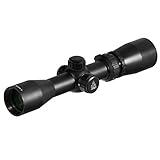
1. UTG 2-7X32 1" Handgun Scope, Long Eye Relief, PDC Reticle
Overview:
The UTG 2-7X32 is a purpose-built handgun scope engineered for shooters needing substantial eye relief. Its nitrogen-purged, shockproof construction ensures reliability in rugged conditions, while the PDC reticle aids in compensating for bullet drop across varying handgun distances.
What Makes It Stand Out:
The standout feature is its exceptional 25-inch eye relief, critical for preventing scope-eye impact during heavy-recoil handgun discharges. The Projectile Drop Compensation (PDC) reticle simplifies holdovers without manual turret adjustments, streamlining rapid follow-up shots. Fully sealed against fog, rain, and shock, it delivers consistent performance in adverse environments.
Value for Money:
Priced competitively for a dedicated handgun optic, it offers specialized features most rifle scopes lack. While alternatives exist, few match its eye relief depth and integrated PDC system, making it a cost-effective solution for serious handgun hunters or competitors prioritizing safety and accuracy.
Strengths and Weaknesses:
Strengths: Unmatched 25" eye relief for safety; rugged, weatherproof build; intuitive PDC reticle. Weaknesses: Limited magnification range (2-7X) restricts long-range utility; smaller 32mm objective lens may reduce low-light clarity compared to larger objectives.
Bottom Line:
An excellent choice for handgun enthusiasts needing maximum eye safety and ballistic compensation. Ideal for medium-range pistol shooting where traditional scopes fall short, though not suited for extreme long-range applications.
2. TACFUN 3-9x42 Long Eye Relief Scope with Weaver/Picatinny Ring

Overview:
The TACFUN 3-9x42 is a versatile riflescope designed for heavy-recoil firearms, featuring aircraft-grade aluminum construction and an 8.5–10.5-inch eye relief. It balances magnification flexibility with durability for tactical and hunting scenarios.
What Makes It Stand Out:
Its monolithic aluminum body withstands brutal recoil, while the green-fused multi-coated lenses enhance light transmission and scratch resistance. The unique pull-to-unlock turrets prevent accidental adjustments, and the 8.5–10.5-inch eye relief ensures safe, rapid target acquisition on hard-kicking platforms like magnum pistols or lever-action rifles.
Value for Money:
Offering premium features like nitrogen charging and recoil-hardened construction at a mid-tier price, it outperforms cheaper optics in durability. Though pricier than basic models, its resilience justifies the cost for users subjecting scopes to intense recoil.
Strengths and Weaknesses:
Strengths: Exceptional recoil resistance; superior lens coatings for clarity; secure, tool-free turret adjustments; ideal eye relief for pistols. Weaknesses: Slightly heavier than comparable scopes; green lens tint may alter color perception for some users.
Bottom Line:
A robust, high-performance scope ideal for recoil-intensive firearms. Recommended for hunters and shooters needing reliability and optical quality without premium-brand pricing.
3. Long Eye Relief 2-7x32 Red Green Illuminated Duplex Reticle Scope Fits Pistol and Mosin Nagant 1891/30 M39 LER Scope with Picatinny 1913 Ring Mounts

Overview:
This dual-purpose scope caters to both handgun shooters and vintage rifle enthusiasts (e.g., Mosin Nagant), featuring 2-7X magnification, 8.5–10.5-inch eye relief, and red/green illuminated duplex reticles for versatile low-light shooting.
What Makes It Stand Out:
The illuminated duplex reticle provides critical visibility in dim conditions, while compatibility with both pistols and Mosin Nagants is rare. Aircraft-grade aluminum housing ensures shock resistance, and the Picatinny mounts simplify installation. Blue-coated lenses enhance contrast, aiding target acquisition.
Value for Money:
Its niche cross-platform utility offers strong value. Budget scopes rarely include illumination or multi-weapon compatibility, making this a pragmatic investment for owners of legacy rifles or recoil-sensitive handguns seeking one scope for multiple roles.
Strengths and Weaknesses:
Strengths: Dual illumination for low light; adaptable to pistols/rifles; rugged construction; lightweight (9 oz). Weaknesses: Illumination may drain batteries faster; 32mm objective limits low-light performance versus larger objectives; blue tint could affect color fidelity.
Bottom Line:
A practical solution for shooters needing one scope for pistols and classic rifles. Best for mid-range hunting where illumination and adaptability outweigh pure optical supremacy.
4. BSA Optics Edge Pistol Scope 2-7x32mm 30/30 Duplex Reticle, Black Matte

Overview:
BSA’s Edge Pistol Scope is a no-frills, 2-7X32mm optic built specifically for handguns, featuring a 30/30 duplex reticle and 1-inch tube. Its waterproof, fog-proof design targets recreational and hunting pistol shooters.
What Makes It Stand Out:
The 25 MOA windage/elevation adjustment range is unusually generous for a pistol scope, allowing significant zeroing flexibility. The 1/4 MOA click value ensures precise adjustments, while the compact 1-inch tube suits minimalist handgun setups. Fully sealed construction guarantees reliability.
Value for Money:
As an entry-level pistol scope, it delivers essential features at an accessible price. While lacking illumination or advanced reticles, its ample adjustment range and durability offer better functionality than ultrabasic models, making it a smart budget buy for new handgun shooters.
Strengths and Weaknesses:
Strengths: Extensive 25 MOA adjustment; solid weatherproofing; simple duplex reticle; affordable. Weaknesses: No illumination for low light; modest magnification/size limits long-range use; fewer premium coatings than competitors.
Bottom Line:
A dependable, straightforward scope for beginners or casual shooters prioritizing adjustability and durability over advanced features. Highly recommended for budget-conscious handgun enthusiasts.
5. Feyachi Reflex Sight - Adjustable Reticle (4 Styles) Both Red and Green in One Red Dot Sight

Overview:
The Feyachi Reflex Sight is a versatile red dot optic offering four reticle styles (dot, circle/dot, crosshair variants) in red or green, designed for rapid target acquisition on pistols, rifles, or shotguns with unlimited eye relief.
What Makes It Stand Out:
Its quad-configurable reticle system—uncommon at this price—adapts to various shooting styles. The 33mm lens provides a wide field of view, while parallax correction ensures accuracy. The ultra-secure mounting system and included battery enhance practicality for dynamic shooting.
Value for Money:
Exceptional value given its multi-reticle flexibility and robust build. Competing dots rarely offer this versatility without premium pricing. The waterproof, shockproof design justifies its cost for users seeking a do-it-all sight without upgrading later.
Strengths and Weaknesses:
Strengths: Four reticle options in one sight; unlimited eye relief; wide lens for situational awareness; rugged mounting. Weaknesses: Smaller battery life with illumination on high settings; no magnifier compatibility noted.
Bottom Line:
A top-tier choice for shooters needing adaptability across disciplines. Highly recommended for home defense, competition, or hunting where quick target engagement and reticle customization matter most.
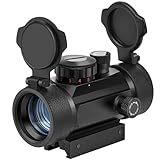
6. EZshoot Red Green Dot Sight Red Dot Scope Reflex Sight with Lens Cap 20mm/11mm Picatinny Rail Mount
Overview:
This compact reflex sight offers versatile aiming for handguns and rifles, featuring dual-color illumination and rugged construction tailored for outdoor use. Its aluminum alloy body and sealed optics prioritize reliability in demanding conditions.
What Makes It Stand Out:
The switchable red/green reticles with five brightness levels provide exceptional adaptability across lighting scenarios—green excels in daylight, red in low light. The 30mm lens delivers a wide, parallax-free field of view for rapid target acquisition, while the quick-adjustment knobs ensure precise windage/elevation tuning. The included flip-up lens caps add practical protection.
Value for Money:
Priced competitively, it outperforms budget alternatives with its dual-illumination flexibility and robust sealing against dust/moisture. Though premium brands offer marginal optical upgrades, this sight delivers 90% of the functionality at half the cost, especially for casual hunters or sport shooters.
Strengths and Weaknesses:
Strengths: Dual-color illumination with multiple reticle options; wide 30mm field of view; shockproof aluminum housing; intuitive adjustment knobs; versatile Picatinny compatibility.
Weaknesses: Battery life isn’t specified; green reticle may wash out in very bright conditions; lens caps feel slightly flimsy compared to the main unit.
Bottom Line:
An outstanding entry-level reflex sight for hunters and recreational shooters seeking reliability and adaptability without breaking the bank. Ideal for those prioritizing quick target acquisition in variable light.
7. BURRIS 2x20 Handgun Scope, Plex Reticle, Matte Black (200218)

Overview:
Engineered specifically for handgun hunters, this fixed-power scope withstands intense recoil while delivering clear targeting. Its long eye relief and compact design cater to powerful pistols used in rugged environments.
What Makes It Stand Out:
Burris leverages high-grade optical glass for exceptional brightness and clarity, even in low light—a rarity in handgun scopes. The extended eye relief (critical for recoil management) and ruggedized construction ensure consistent performance where lesser scopes fail, making it a trusted companion for big-game handgun hunters.
Value for Money:
While pricier than generic scopes, its durability and optical quality justify the investment. Competitors often compromise on glass or recoil resistance; Burris delivers both, preventing costly replacements. For serious handgun hunters, it’s a cost-effective long-term solution.
Strengths and Weaknesses:
Strengths: Superior optical clarity and light transmission; exceptional recoil durability; generous eye relief; matte finish reduces glare; plex reticle simplicity.
Weaknesses: Fixed 2x magnification limits versatility; narrower field of view than variable scopes; higher price point may deter casual users.
Bottom Line:
A top-tier choice for dedicated handgun hunters needing a no-nonsense, recoil-proof scope. Worth every penny for those prioritizing optical performance and reliability in the field.
8. BSA Optics Edge Pistol Scope 2-7x28mm 30/30 Duplex Reticle, Black Matte

Overview:
This variable-power scope combines flexibility and durability for pistol shooters, featuring a solid one-piece tube and long eye relief. It’s designed for precision target shooting or hunting with handguns.
What Makes It Stand Out:
The 2-7x magnification range offers unmatched versatility—from close-range targets to mid-distance shots—while maintaining a stable zero. The one-piece aluminum tube ensures waterproof integrity, and the 30/30 duplex reticle provides intuitive holdovers without cluttering the sight picture.
Value for Money:
It undercuts premium brands like Leupold while matching core features. The variable zoom is a significant upgrade over fixed-power scopes in its class, offering tactical flexibility ideal for competition shooters or hunters facing diverse ranges.
Strengths and Weaknesses:
Strengths: Wide 2-7x magnification range; rugged one-piece tube; long eye relief for recoil safety; clear 30/30 reticle; matte finish minimizes reflections.
Weaknesses: Optical clarity lags slightly behind high-end models in low light; turrets lack crispness; 28mm objective limits light gathering at max zoom.
Bottom Line:
A pragmatic, mid-tier scope delivering excellent versatility for pistol enthusiasts. Best suited for target shooters and hunters needing adjustable magnification without premium pricing.
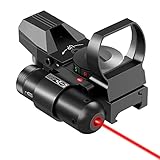
9. CVLIFE 1X22X33 Reflex Sight Red Dot Sight Red Green 4 Reticle Optics with Laser and Pressure Pad Switch for 20mm Rail
Overview:
This multifunctional reflex sight integrates a red dot, laser, and four reticle options into one compact unit, targeting tactical or home-defense applications. Its 33mm lens emphasizes speed and situational awareness.
What Makes It Stand Out:
The built-in Class IIIA laser (with pressure-pad switch) adds instant target designation—a rarity at this price. Combined with dual-color illumination, four reticle styles, and fully adjustable windage/elevation, it offers tactical adaptability unmatched by basic red dots.
Value for Money:
Its all-in-one design eliminates the need for separate laser attachments, saving cost and rail space. While optics aren’t competition-grade, the feature set crushes similarly priced sights, making it ideal for budget-conscious tactical users.
Strengths and Weaknesses:
Strengths: Integrated laser simplifies aiming; wide 33mm field of view; four reticle options; easy rail mounting; pressure-pad laser control.
Weaknesses: Laser alignment can drift; battery drain accelerates with laser use; build quality feels less robust than metal-bodied competitors.
Bottom Line:
A feature-packed budget option for tactical shooters needing laser + red dot synergy. Best for home defense or casual use where extreme durability isn’t critical.
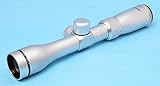
10. Hammers Long Eye Relief Pistol Scout Scope 2-7X32 Silver Chrome with Weaver Rings
Overview:
Designed for “scout rifle” configurations or pistol target shooting, this variable scope emphasizes long eye relief and classic styling. Its included Weaver rings simplify mounting on pistols or forward-scoped rifles.
What Makes It Stand Out:
The 2-7x zoom range paired with generous eye relief accommodates aggressive recoil and unconventional mounting positions. The elegant silver chrome finish and fine 4plex reticle offer vintage aesthetics without sacrificing modern functionality for precision shooting.
Value for Money:
It competes well with mid-range scopes by including Weaver rings—often a separate purchase. While not as optically refined as Burris or Leupold, its balance of style, versatility, and included accessories makes it a smart buy for scout-style builds.
Strengths and Weaknesses:
Strengths: Smooth 2-7x magnification; excellent eye relief for recoil safety; attractive chrome finish; versatile 4plex reticle; rings included.
Weaknesses: Optical coating lags in low light; turrets lack tactile feedback; chrome finish may attract glare in bright sun.
Bottom Line:
A stylish, functional choice for scout rifles or pistol shooters valuing adjustable magnification and classic looks. Recommended for recreational use where premium glass isn’t essential.
Understanding Why Optics Matter for Pistols
The Accuracy Advantage Over Iron Sights
Iron sights work well within typical defensive or close-range hunting distances, but they have inherent limitations. Achieving precise alignment (sight picture) becomes exponentially harder as distance increases, especially under stress or in low light. A pistol scope eliminates the need to focus on front and rear sights, allowing your eye to focus solely on the target through the optic. This provides a clearer, more defined aiming point, significantly improving shot placement consistency at ranges beyond 25 yards where iron sights become challenging. For competitive shooters pushing the limits of handgun accuracy or hunters needing ethical shots on small game at 50+ yards, this clarity is transformative.
Meeting the Demands of Modern Shooting Disciplines
Competitive shooting sports have been the primary catalyst for pistol optic innovation. Divisions like USPSA Open and PCC (Pistol Caliber Carbine) heavily favor shooters using red dot sights or low-power magnified optics. These sports demand rapid target acquisition, precise follow-up shots, and the ability to engage targets at varying distances quickly. Optics provide the speed and precision needed to compete effectively. Similarly, hunters pursuing pests or small game often operate in environments where shots beyond 30 yards are common; a suitable scope bridges the gap between a standard handgun and a dedicated rifle, offering greater reach without sacrificing handgun maneuverability.
Beyond Competition: Practical Applications
While competition drives much of the technology, the benefits extend far beyond the range. For hunters in open terrain, a magnified pistol scope can enable ethical shots that would be impossible with iron sights. In specialized self-defense scenarios involving extreme stress or distance (though rare), the speed and clarity of a red dot can be advantageous. Even for recreational plinking at extended distances, the confidence gained from seeing the target clearly through an optic vastly improves the experience. Understanding your primary use case is the first crucial step in determining the type of optic you actually need.
Key Features to Evaluate for Pistol Optics
Magnification: Finding Your Sweet Spot
Magnification is a critical consideration often misunderstood for pistols. High magnification (4x and above) is generally impractical due to the difficulty of holding a pistol steady enough to utilize it effectively and the narrow field of view. Most pistol-specific optics fall into two categories: unmagnified red dot sights (1x) or low-power variable optics (LPVOs) typically ranging from 1-4x or 1-6x. Red dots excel for speed and close-to-mid range. LPVOs offer flexibility: 1x magnification for rapid target acquisition up close, and the ability to dial up magnification for precise shots at longer distances where the target detail becomes critical. Consider the typical distances you’ll be shooting; if most shots are under 50 yards, a red dot or 1-4x LPVO is ideal.
Reticle Selection: Illumination and Design
The reticle is your aiming point, and its design profoundly impacts usability. Red dot sights offer simple dot reticles (2, 3, 4 MOA are common), with smaller dots enabling finer precision but potentially being harder to acquire quickly. Illuminated reticles are essential for low-light conditions and rapid target acquisition; look for multiple brightness settings, including night-vision compatible modes. For magnified optics, reticle choice expands: BDC (Bullet Drop Compensator) reticles can aid holdovers at distance, but simple crosshairs or duplex reticles are often preferred for clarity and speed on a handgun. Consider whether you need illumination, the reticle’s subtension (size), and how cleanly it presents against various backgrounds.
Objective Lens Size and Light Transmission
The objective lens gathers light. A larger lens (e.g., 24mm vs 18mm) theoretically gathers more light, improving image brightness and clarity, especially in dawn, dusk, or shaded conditions. However, on a pistol, size and weight constraints are paramount. A massive objective bell is impractical. High-quality, multi-coated lenses are far more important than sheer size for maximizing light transmission and image quality. Prioritize optics from reputable manufacturers known for their lens coatings and glass quality; a well-coated 20mm lens will outperform a cheap, uncoated 24mm lens in low light every time. Balance the desire for light gathering with the need for a compact, low-profile package.
Mounting and Physical Considerations
Compatibility with Your Firearm Platform
Not all pistols can accept an optic, and mounting solutions vary wildly. Many modern competition and defensive pistols come with slides pre-milled (RMSc, DPP, etc.) for specific miniature red dot footprints. For optics requiring a Picatinny rail (like many LPVOs), you’ll need a mounting plate compatible with your specific slide cut or an adapter plate that fits under the slide. Older or non-milled pistols require milling the slide, which is irreversible and requires a gunsmith. Crucially, research the exact mounting requirements for your specific pistol model before selecting an optic. An optic that won’t mount securely is useless.
Weight, Size, and Balance Impact
Adding an optic shifts the pistol’s center of gravity forward and upward. Excessive weight or bulk can make the pistol feel muzzle-heavy, slow to get on target, and uncomfortable to shoot for extended periods. Every ounce counts on a handgun. Measure the physical dimensions (length, height, width) of potential optics and consider how they will sit on your slide. Will it obstruct the ejection port? Will it clear your holster? Will the added weight cause hand fatigue during long range sessions? Prioritize the lightest, most compact optic that meets your functional needs. Every gram saved translates to better handling.
Recoil Management and Durability
Pistols generate significant, abrupt recoil forces compared to rifles. An optic must be specifically rated to withstand thousands of rounds of handgun recoil without losing zero (point of impact shift). Look for optics explicitly marketed as “handgun rated” or “pistol rated.” Key durability features include robust internal construction (shockproof specifications like “tested to 1000G”), high-quality sealing (O-rings) for moisture and dust resistance (IPX7 rating is excellent), and nitrogen or argon purging to prevent internal fogging. Don’t assume a rugged rifle scope will survive; the recoil impulse profile of a handgun is uniquely harsh on optics.
Optical Performance and Usability Factors
Eye Relief: The Critical Distance
Eye relief is the distance your eye must be from the rear lens to see the full field of view (a clean “picture”). On a rifle, this is often generous (3-4 inches). On a pistol, it’s typically much shorter (2-3.5 inches) due to the shooting stance. Insufficient eye relief makes it difficult to get a clear sight picture quickly, especially during rapid fire. Too much eye relief can cause “scope shadow” or make the optic harder to co-witness with iron sights. For pistol LPVOs, consistent eye relief is crucial for maintaining accuracy as you transition between magnification levels. Test the optic if possible, or meticulously check manufacturer specifications against your natural shooting position.
Field of View at Different Magnifications
Field of View (FOV) is the width of the area you can see through the optic at 100 yards. Higher magnification drastically narrows the FOV. On a pistol, a narrow FOV at higher magnifications makes it extremely difficult to locate and track moving targets or engage multiple targets quickly. This is why LPVOs are popular – they offer a wide FOV at 1x (similar to a red dot) for speed, and a usable FOV at 4x or 6x for precision. Compare FOV specifications, especially at the highest magnification you intend to use regularly. A very narrow FOV at 6x might render that magnification impractical for dynamic shooting.
Adjustability and Turret Performance
Turrets control windage (left/right) and elevation (up/down) adjustments to zero the optic and compensate for bullet drop. Look for turrets that are tactile (distinct, audible clicks), repeatable (return to zero reliably), and ideally, capped to prevent accidental bumps. For precision handgun work, 1/4 MOA or 0.1 MRAD adjustments offer finer control than 1/2 MOA. Zero-resettable turrets are a valuable feature for easily returning to your base zero after dialing for distance. While rapid turret adjustments are less critical on a pistol than a long-range rifle, reliable, precise adjustments are essential for initial zeroing and any holdover compensation you might do.
Environmental and Operational Factors
Battery Life and Power Management
Illuminated reticles require power. Battery life varies enormously – from 50 hours to 50,000+ hours. Consider your usage: competition shooters might prioritize ultra-long life to avoid mid-match swaps, while hunters might value the brightest possible settings even with shorter battery life. Look for features like automatic brightness adjustment (if available), multiple illumination settings (including a “last setting memorized” feature), and easy battery access (top-loading is generally preferred on pistols). Factor in the cost and availability of the specific battery type (CR1632, CR2032, etc.). A dead battery renders an illuminated optic useless in low light.
Performance in Adverse Conditions
Real-world shooting happens in rain, fog, dust, and extreme temperatures. Sealing (IPX7 is the gold standard for waterproofing) and fog-proofing (nitrogen/argon purging) are non-negotiable for reliability. Consider how the optic handles glare – quality anti-reflective coatings are vital. Some optics feature flip-up lens covers for protection during transport or storage, but these add bulk and can snag. Evaluate how the optic sheds water and resists fogging on the exterior lenses, as internal fogging should be prevented by proper sealing. Don’t overlook how the optic performs in the specific environmental conditions you typically encounter.
Ergonomics and User Interface
Can you easily access the power and brightness controls with your strong hand while maintaining a firing grip? Are the controls intuitive and distinct (e.g., separate buttons for power and brightness)? Is the dialing mechanism smooth and precise? Poor ergonomics can slow you down significantly during critical moments. The position and size of adjustment turrets also matter – can you easily reach them for zeroing without removing the optic from the pistol? A well-designed user interface minimizes distraction and maximizes speed when interacting with the optic.
Making Your Informed Decision
Aligning Features with Your Primary Use Case
Be brutally honest about how you will primarily use the optic. Is it for USPSA Open division competition? Prioritize ultra-fast red dot acquisition, long battery life, and a footprint matching your race gun. Is it for hunting varmints out to 75 yards? A compact 1-4x or 1-6x LPVO with a simple, bright reticle and good low-light performance becomes key. Is it for home defense? A small, rugged red dot with a large window and instant-on illumination might be optimal. Trying to force one optic to perfectly serve vastly different purposes often leads to compromise and frustration. Define your main mission first.
Budget Considerations: Value vs. Price
Pistol optics span a wide price range. While the cheapest option might seem appealing, optics are critical sighting equipment; failure is not an option. Extremely low-cost optics often suffer from poor durability, inconsistent illumination, unreliable adjustments, and subpar optical quality. Invest in the best quality you can reasonably afford from a reputable brand known for handgun optics. Consider the total cost of ownership – a slightly more expensive optic that lasts for years and performs reliably offers far better value than a cheap one that breaks or needs replacing quickly. Factor in potential mounting plate costs and professional milling if required.
The Importance of Hands-On Evaluation
Specifications on paper only tell part of the story. If at all possible, handle the optic. Does it feel solid? Can you easily operate the controls? Does the reticle look bright and clear to your eye? Visit a range that offers optic rentals or has demo models. Many competitive shooters are happy to let you look through their setups. Pay attention to how the optic integrates with your specific pistol – does it sit low enough? Is the balance acceptable? Trust your eyes and hands; what looks good on a spec sheet might feel awkward in practice. This step is invaluable for avoiding buyer’s remorse.
Frequently Asked Questions
Frequently Asked Questions
Can I use a rifle scope on my pistol?
Generally, no. Rifle scopes are designed for rifle recoil profiles, have longer eye relief unsuitable for pistol stances, and are typically too large and heavy, making the pistol unbalanced and difficult to shoot accurately. Always choose an optic specifically rated for handgun use.
How important is co-witnessing with iron sights?
It depends on your needs. For competition or dedicated optic use, absolute co-witness (optic and irons aligned at the same point) or lower 1/3 co-witness is less critical. For defensive or hunting applications where optic failure is a concern, having usable backup iron sights that co-witness is highly recommended for redundancy.
Do I need magnification for practical pistol shooting?
For most defensive or close-range (<25 yards) shooting, magnification offers little benefit and can slow target acquisition. Magnification (typically via LPVOs) becomes valuable for precision shooting at extended handgun distances (50+ yards), common in competition or hunting scenarios.
Why are red dot sights so popular for pistols?
Red dots provide a fast, intuitive aiming point at 1x magnification, excellent for close-to-mid range. They are generally lighter, more compact, and offer a wider field of view than magnified optics, making them ideal for speed-focused disciplines and defensive use.
How do I know if my pistol can accept an optic?
Check if your pistol model has a slide pre-cut for optics (common on newer models). If not, you’ll need professional milling. Research the specific footprint (e.g., RMSc, DPP) required for your pistol and ensure the optic or mounting plate matches it.
What does “MOA” mean in relation to pistol scopes?
MOA (Minute of Angle) is a unit of angular measurement used for reticle subtension and turret adjustments. A 2 MOA dot covers approximately 2 inches at 100 yards. Smaller MOA dots allow finer precision; larger dots are faster to acquire. Turrets often adjust in 1/4 MOA increments per click.
How crucial is waterproofing for a pistol scope?
Extremely crucial. Pistols are exposed to rain, humidity, sweat, and cleaning solvents. Optics should be nitrogen or argon purged and sealed to at least IPX7 standards to prevent internal fogging, water ingress, and corrosion, ensuring reliable performance in all conditions.
Can pistol optics handle the recoil of powerful calibers like .44 Magnum?
Only optics explicitly rated for high-recoil handguns should be used. Standard pistol optics may survive 9mm or .45 ACP, but magnum calibers generate significantly higher forces. Always verify the manufacturer’s stated recoil tolerance before mounting on a powerful revolver or pistol.
How often do I need to re-zero my pistol scope?
A quality, properly mounted handgun-rated optic should maintain zero through normal use and recoil. Significant zero shift usually indicates a mounting issue (loose screws, improper torque) or physical damage. Re-zero after any major impact, dismounting/remounting, or if you notice consistent point-of-impact changes.
What’s the biggest mistake new pistol optic users make?
Rushing the selection process without considering their specific pistol’s mounting requirements, primary use case, and the critical factors like eye relief and balance. Choosing based solely on price or looks, rather than ensuring the optic truly fits the platform and intended application, leads to frustration and poor performance.
Related Buying Guides
- 10 Best Pistol Scopes for Precision Handgun Shooting in 2026
- 10 Must-Have Long Range Scopes for Accuracy and Clarity in 2026
- 10 Best Air Rifle Scopes for Pest Control and Target Practice in 2026
- 10 Best Fixed Power Scopes for Simplicity and Reliability in 2026
- 10 Best Rifle Scopes for AR-15 Platforms in 2026