Table of Contents
Picture this: you’re halfway through a high-altitude winter ascent, fingers numb despite thick gloves, when you glance at your wrist to check the time. Instead of crucial altitude and weather data, you’re met with a frozen screen or worse—a completely unresponsive device. In extreme environments, your timepiece isn’t just a convenience; it’s a lifeline. When conditions push human limits, your gear must push further, resisting not just the elements but the very physics that seek to disable it. The right outdoor watch becomes an indispensable extension of your survival toolkit, silently monitoring threats and guiding decisions when every second counts.
Choosing such a critical piece of equipment demands far more than selecting a stylish accessory. It requires understanding the intricate engineering that allows a small device on your wrist to withstand temperatures that shatter steel, pressures that crush submarines, and impacts that would pulverize lesser electronics. Forget glossy marketing claims—true extreme-weather capability is forged in rigorous testing standards, material science breakthroughs, and thoughtful design choices that prioritize function over form. This guide cuts through the noise, focusing solely on the measurable features and proven technologies that separate genuine expedition-grade timepieces from those that merely look the part. Let’s explore what truly makes a watch worthy of the harshest conditions on Earth.
Top 10 Outdoor Watches
Detailed Product Reviews
1. Timex Men’s Expedition Scout 40mm Watch – Black Case Cream Dial with Green Fabric Strap

Overview:
This field-inspired timepiece blends rugged utility with vintage charm. Designed for outdoor enthusiasts, it features a compact 40mm black case, cream dial with full Arabic numerals, and a breathable green fabric strap. The mineral glass crystal and 30m water resistance provide basic durability for daily adventures.
What Makes It Stand Out:
The dual 12/24-hour time display is a niche standout for military or aviation users, while the INDIGLO backlight ensures instant readability in darkness—a rarity in this price bracket. The cream dial’s retro aesthetic paired with the adjustable fabric strap offers versatile style from trail to town.
Value for Money:
At under $60, it outperforms similarly priced digital watches in aesthetics and functionality. Though lacking advanced water resistance, it’s 30% more affordable than comparable G-Shock models while delivering superior classic styling and reliable quartz accuracy.
Strengths and Weaknesses:
Strengths: Lightweight comfort, distinctive vintage design, practical INDIGLO lighting, easy strap swaps. Weaknesses: Limited 30m water resistance (not swim-proof), fabric strap may fray over time, no stopwatch or alarms.
Bottom Line:
Ideal for style-conscious adventurers needing a durable, readable field watch. Its military-time feature and retro flair justify the price, though serious swimmers should look elsewhere.
2. Casio Casual Watch AE-1500WH-5AVCF

Overview:
A no-nonsense digital workhorse built for reliability. This Casio packs essential functions into a lightweight resin case, featuring a bold amber LED display and 100m water resistance. Its unassuming design suits both office and outdoor settings.
What Makes It Stand Out:
The decade-long battery life is revolutionary—eliminating annual replacements common in competitors. Paired with five multi-alarm functionality and a 1/100-second stopwatch, it’s engineered for users who prioritize longevity over complexity.
Value for Money:
Priced under $30, it’s unmatched for battery efficiency. While lacking smart features, it outlasts $50+ alternatives like Timex Weekenders and rivals G-Shock functionality at half the cost for basic timekeeping needs.
Strengths and Weaknesses:
Strengths: Exceptional 10-year battery, robust water resistance, versatile alarms, bright LED backlight. Weaknesses: Basic resin build feels inexpensive, no solar charging, amber light limits night readability vs. white LEDs.
Bottom Line:
A top pick for budget-focused buyers needing foolproof, long-lasting timekeeping. Its battery life alone makes it a steal for students or shift workers.
3. LN LENQIN Mens Watches Unisex Military Sport Nylon Strap Stylish Luminous Fashion Analog Quartz Watch for Men Waterproof Army Tactical Casual Wristwatch

Overview:
A budget military-style analog watch targeting casual users. It features a 42mm stainless steel case, luminous 12/24-hour dial, and double-layer nylon strap. Marketed as “tactical,” it emphasizes durability for everyday wear.
What Makes It Stand Out:
The dual 12/24-hour display caters to military or international travelers, while the double nylon strap offers enhanced comfort during extended use. Luminous markers ensure basic low-light visibility uncommon under $25.
Value for Money:
At $20, it delivers surprising functionality for its cost. However, its 3ATM water resistance (splash-proof only) lags behind true tactical watches like Casio G-Shocks, making it best suited for dry-land activities.
Strengths and Weaknesses:
Strengths: Affordable price, comfortable strap, clear dual-time display, decent luminosity. Weaknesses: Misleading “military” branding (fails true field tests), 30m water resistance is inadequate for swimming, build quality feels flimsy.
Bottom Line:
A functional fashion watch for casual use, but avoid if you need genuine outdoor resilience. Better suited as a gift than a tactical tool.
4. Casio FT500WC-5BVCF Men’s Forester Sport Watch with Nylon Band
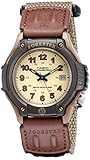
Overview:
Casio’s rugged analog field watch combines military practicality with approachable styling. Its 44mm case houses Arabic markers, a 24-hour inner dial, and date window, all secured by a Velcro nylon strap ideal for active lifestyles.
What Makes It Stand Out:
The integrated 24-hour dial provides instant military-time reference without digital clutter. Paired with 100m water resistance and a tool-free Velcro strap, it’s optimized for hikers or cyclists needing quick adjustments mid-activity.
Value for Money:
Priced around $40, it competes directly with Timex Rangers. Superior water resistance and the practical Velcro closure justify a slight premium over sub-$30 analogs, though it lacks advanced sensors found in pricier Casios.
Strengths and Weaknesses:
Strengths: Highly adjustable strap, true 100m water resistance, clear dual-time display, affordable. Weaknesses: Basic accuracy (±20 sec/month), no backlight, nylon band attracts lint.
Bottom Line:
A reliable, no-frills field companion for outdoor hobbies. Choose this over Product 1 if water exposure is frequent, but note the absence of illumination.
5. Casio SGW100 Series | Digital Watch & Compass | Blue | 200M WR | 100 SEC Stopwatch | Twin Sensor for Direction & Temperature | Low Temp Resistant | World Time | Auto Calendar | Multi Alarm

Overview:
A feature-dense digital adventurer’s tool with twin sensors for direction and temperature. Housed in a 45mm stainless case, it includes world time, alarms, and 200m water resistance—positioned as a budget alternative to premium outdoor watches.
What Makes It Stand Out:
The integrated digital compass and thermometer are rare below $100, while 200m water resistance exceeds most competitors. The colorful bezel and multi-alarm system cater to travelers and divers needing robust environmental data.
Value for Money:
At $85, it undercuts Suunto or Garmin entry models by 50% while matching core functionality. However, the resin band feels less premium than Casio’s own metal-band variants, slightly diminishing perceived value.
Strengths and Weaknesses:
Strengths: Exceptional sensor suite, serious water resistance, versatile world time, low-temperature operation. Weaknesses: Bulky design, complex menu navigation, resin band lacks durability of nylon/metal.
Bottom Line:
Worthwhile for travelers or divers needing advanced tools affordably. Accept the learning curve for features rivaling $150+ watches, but size-conscious users may prefer slimmer alternatives.
6. Casio Men’s F108WH Illuminator Collection Black Resin Strap Digital Watch

Overview:
A quintessential entry-level digital watch, the Casio F108WH delivers reliable timekeeping in a minimalist black resin package. Designed for everyday practicality, it focuses on essential functions without frills, making it ideal for students, casual users, or as a backup timepiece. Its legacy stems from Casio’s reputation for durability in basic digital watches.
What Makes It Stand Out:
Its standout feature is exceptional longevity: a 7-year battery life paired with robust 100M water resistance. The LED backlight ensures readability in darkness, while the 1/100-second stopwatch and auto-calendar (including February’s 28-day adjustment) offer surprising utility for its price. The compact design and lightweight resin strap enhance comfort for all-day wear.
Value for Money:
Priced under $25, it’s arguably the most affordable waterproof digital watch with such battery longevity. While alternatives like the Timex Weekender Digital offer similar features, the Casio’s proven reliability and lower cost make it unbeatable for budget-conscious buyers seeking zero-maintenance timekeeping.
Strengths and Weaknesses:
Strengths: Ultra-affordable; legendary battery life; fully water-resistant; simple, intuitive interface; highly durable resin construction.
Weaknesses: Basic LED light (no persistent backlight); limited functionality (no dual time zones); dated aesthetic; stopwatch lacks lap/split memory.
Bottom Line:
An exceptional value for no-fuss, dependable timekeeping. Perfect as a first watch, emergency backup, or for rugged daily use where simplicity and longevity matter most. Avoid only if advanced features or modern styling are priorities.
7. Timex Men’s Expedition 41mm Watch - Black Strap Digital Dial Green Case

Overview:
The Timex Expedition merges sporty functionality with everyday usability in a vibrant green-cased digital watch. Targeted at active individuals, it balances outdoor-ready features like water resistance with practical tools for daily organization, all wrapped in Timex’s accessible Expedition series design.
What Makes It Stand Out:
The INDIGLO night-light is a game-changer, providing uniform, long-lasting illumination far superior to Casio’s LED. Its 100-hour chronograph with lap/split times and dual alarms (with 5-minute snooze) cater specifically to athletes and travelers. The 24-hour military time mode and dual time zones add serious utility for globetrotters or shift workers.
Value for Money:
Priced moderately ($50-$70), it justifies its cost through the premium INDIGLO system and versatile alarms—features absent in cheaper Casios. While Suunto offers deeper outdoor tools, the Timex delivers the best blend of sport functionality and daily practicality in its price bracket, especially for swimmers (100m water resistance).
Strengths and Weaknesses:
Strengths: Excellent INDIGLO backlight; comprehensive alarms; dual time zones; comfortable adjustable strap; strong water resistance for swimming.
Weaknesses: Green case may not suit formal settings; battery life shorter (~3 years) than Casio; chronograph lacks memory storage.
Bottom Line:
A highly recommended daily driver for active users needing reliable timekeeping, clear night visibility, and practical tracking features without overspending. Ideal for athletes, travelers, and outdoor enthusiasts seeking a versatile, swim-proof digital watch.
8. Suunto Core Classic, Outdoor Watch, All Black

Overview:
Suunto’s Core Classic is a purpose-built outdoor companion, engineered for hikers, campers, and adventurers who need real-time environmental data. Moving beyond basic timekeeping, it integrates critical sensors into a rugged, all-black design rooted in Suunto’s 80+ years of outdoor instrument expertise.
What Makes It Stand Out:
Its standout feature is the integrated barometer, altimeter, and storm alarm—providing early warnings of changing weather. The sunrise/sunset predictor optimizes daylight planning, while the 30-foot depth meter adds aquatic utility. Unlike Timex or Casio, it’s a true outdoor specialist with military-grade durability and Scandinavian minimalist design.
Value for Money:
At $250-$300, it’s pricier than casual digital watches but competitively priced against dedicated outdoor tools (e.g., Garmin Foretrex). The inclusion of altitude/weather tracking at this tier offers immense value for serious hikers who’d otherwise need separate devices, justifying the cost through functional depth.
Strengths and Weaknesses:
Strengths: Essential barometer/altimeter/storm alarm suite; sunrise/sunset tracking; water-resistant to 30m; robust construction; intuitive for outdoor use.
Weaknesses: No GPS or smart features; limited daily utility (e.g., basic alarms); depth meter too shallow for diving; higher price than general-purpose watches.
Bottom Line:
A must-have for outdoor enthusiasts prioritizing environmental awareness over smart features. Its specialized tools provide critical safety and planning advantages on trails, making it a worthy investment for hikers, climbers, and campers.
9. Garmin Instinct 2X Solar - Tactical Edition, Rugged GPS Smartwatch, Built-in Flashlight, Ballistics Calculator, Solar Charging Capability, Coyote Tan

Overview:
Garmin’s Instinct 2X Solar Tactical Edition is a military-spec GPS powerhouse designed for extreme conditions and tactical operations. It transcends typical smartwatches with ballistic tools, a flashlight, and solar charging, targeting professionals like hunters, soldiers, and serious adventurers.
What Makes It Stand Out:
Solar charging is revolutionary—delivering “infinite” battery life in smartwatch mode with daily sun exposure. The built-in LED flashlight (strobe/variable modes) and ballistics calculator are unmatched in mainstream wearables. MIL-STD-810 certification ensures resilience against shock, heat, and 100m water immersion, while 24/7 health tracking adds daily utility.
Value for Money:
Priced at $500+, it’s a premium investment. However, the solar charging eliminates frequent recharging hassles, and ballistic tools replace dedicated rangefinders. Compared to non-solar Garmin counterparts (e.g., Instinct 2), the extended battery and tactical features deliver exceptional value for professionals where reliability is non-negotiable.
Strengths and Weaknesses:
Strengths: Game-changing solar charging; military-grade durability; unique flashlight/ballistics tools; comprehensive health/sleep metrics; indefinite battery in sunlight.
Weaknesses: Bulky 50mm case; limited smart notifications; high cost; ballistics require manual input; Pulse Ox restrictions.
Bottom Line:
The ultimate rugged GPS watch for tactical users and off-grid adventurers. Its solar endurance and specialized tools justify the price for those operating in extreme environments, though casual users may find it over-engineered. A top-tier tool for mission-critical reliability.
Core Environmental Resistance Metrics
Temperature Extremes: Beyond Basic Ratings
When evaluating a watch for polar expeditions or desert crossings, standard “water-resistant” temperature ranges are meaningless. Look for explicit operational limits, typically spanning -30°C to +60°C for serious models, but the real test is performance at the absolute extremes. Crucially, assess how the watch handles rapid temperature shifts—moving from a heated shelter into -40°C blizzards can cause internal condensation or screen fogging if seals and materials aren’t engineered for thermal shock. Liquid crystal displays (LCDs) often freeze solid in deep cold, while some OLED screens become sluggish; opt for high-contrast, low-temperature optimized displays proven in arctic field tests.
Water Immersion and Pressure Dynamics
“Water-resistant to 100m” is just the starting point for serious conditions. True extreme-weather capability demands ISO 6425 dive certification, which tests not just static depth but dynamic pressure from高速 water movement (like whitewater kayaking) and thermal changes during immersion. Pay close attention to the crown and button seals—these are common failure points under sustained pressure. For ice climbing or glacier travel, ensure the watch resists submersion in near-freezing water, as standard seals can harden and leak at low temperatures. Screw-down crowns and recessed pushers are non-negotiable features here.
Shock and Impact Resilience Standards
Falling on ice, rock, or hardpack snow subjects your watch to violent impacts. MIL-STD-810H certification (specifically Method 516.8 for shock) provides a baseline, simulating drops onto concrete from 2.4 meters. However, real-world extremes demand more: look for watches with monocoque titanium or carbon fiber cases that absorb and dissipate energy, combined with internal mounting systems that isolate the movement and electronics. Gorilla Glass or sapphire crystals with anti-reflective coatings that resist scratching and shattering under point impacts are essential—scratches can obscure critical data in low light.
Material Science for Harsh Realities
Case Construction: Titanium vs. Advanced Composites
Titanium offers the gold standard for extreme conditions: exceptional strength-to-weight ratio, inherent corrosion resistance against salt spray and acidic sweat, and minimal thermal conductivity (preventing the case from becoming dangerously cold or hot). However, cutting-edge carbon fiber reinforced polymers now rival titanium in strength while adding vibration damping properties. Avoid stainless steel in severe cold—it becomes brittle and conducts cold intensely, risking skin adhesion. The case back must be securely fastened with multiple screws, not just a snap-on design.
Crystal Clarity Under Duress
A scratched or fogged crystal renders even the most advanced watch useless. Sapphire crystal is nearly scratch-proof but can shatter on sharp impacts. Some manufacturers now use synthetic sapphire laminated with flexible polymer layers for shatter resistance. Crucially, internal anti-reflective (AR) coatings are vital—they prevent the crystal itself from becoming a mirror in bright snow or sun glare, unlike external AR coatings that scratch easily. For sub-zero clarity, ensure the crystal has a hydrophobic coating to repel moisture and prevent frost buildup.
Strap Durability Beyond the Basics
Nylon or rubber straps can stiffen and crack in deep cold, while metal bracelets become painful to wear on frozen skin. Look for straps made from specialized silicone compounds rated for -50°C flexibility, or ultra-tough woven materials like ballistic nylon with anti-microbial treatment. The strap attachment system is critical—spring bars can fail under vibration; opt for proprietary systems with double-locking mechanisms. Quick-release features should be robust enough to operate with gloved hands yet secure enough to resist accidental detachment during a fall.
Power Management in Hostile Climates
Battery Performance in Extreme Cold
Standard lithium-ion batteries lose significant capacity below freezing, potentially failing catastrophically at -20°C. Watches designed for polar use incorporate batteries specifically formulated for low temperatures, often paired with thermal insulation around the battery compartment. Some models use dual-battery systems—one optimized for cold operation as a backup. Solar charging is highly advantageous but verify the solar cells function effectively under low-light, overcast, or snow-reflective conditions typical in mountains or polar regions.
Energy Efficiency and Critical Function Prioritization
When power is scarce, intelligent power management is non-negotiable. The watch should automatically dim non-essential displays or disable connectivity (like Bluetooth) while preserving core functions: timekeeping, altimeter, barometer, and emergency beacon signals. Look for “survival mode” features that extend battery life for weeks by showing only critical data. Always verify real-world battery life claims under temperature stress, not just in lab conditions at 25°C.
Alternative Charging for Extended Expeditions
For multi-week journeys beyond grid access, consider watches with universal charging compatibility (like USB-C) or kinetic charging mechanisms that generate power from arm movement. While solar is common, assess the size and efficiency of the panel—small panels may not generate sufficient power during short daylight hours in winter. Avoid proprietary chargers; standardization ensures you can borrow or replace cables if needed.
Navigation and Environmental Sensing
Barometric Altimeter Accuracy and Calibration
A precise altimeter is vital for route finding and avalanche assessment. Look for sensors with high resolution (≤ 0.5m accuracy) and the ability to auto-calibrate using GPS data to correct for weather-induced pressure changes. In extreme cold, sensor drift becomes a major issue; quality watches use temperature-compensated sensors and algorithms to maintain accuracy. Manual calibration against known waypoints should be straightforward with gloved hands.
Compass Reliability in Magnetic Fields
Standard magnetometers can be thrown off by nearby metal (ice axes, crampons) or natural magnetic anomalies in certain rock formations. Advanced watches feature 3-axis compasses with tilt compensation and robust algorithms to filter interference. Crucially, they should include a declination adjustment that’s easy to access and modify in the field. Test compass stability during movement—jerky navigation data is worse than no data.
GPS Signal Acquisition in Challenging Terrain
Dense forests, deep canyons, and urban canyons challenge GPS. Multi-GNSS support (GPS, GLONASS, Galileo, BeiDou) significantly improves satellite acquisition speed and reliability in obstructed areas. For extreme cold, verify the GPS antenna remains functional at low temperatures—some units experience signal loss as components contract. Assisted GPS (A-GPS) using stored almanac data speeds up cold starts but requires periodic internet updates, which may not be feasible in remote areas.
User Interface Design for Survival
Glove-Compatible Operation Essentials
Buttons must be large enough to press with thick mittens yet recessed enough to prevent accidental activation. Tactile feedback is critical—you need to feel the click without looking. Rotary bezels should have pronounced knurling and require deliberate force to turn, preventing snow or ice from freezing them in place. Touchscreens are generally impractical with gloves; if present, they must support ultra-sensitive “glove mode” that works through multiple fabric layers.
Display Legibility in All Conditions
High-contrast monochrome displays (like transflective LCDs) outperform color screens in direct sunlight and conserve battery. Pixel density should be high enough for crisp text at small sizes, crucial when viewing maps or tiny altitude numbers. Backlight intensity must be adjustable to blinding levels for night use but also dimmable to preserve night vision. Critical data fields (like current altitude) should occupy a fixed, easily locatable position on the screen—don’t make users hunt for vital info in a crisis.
Audible Alerts That Cut Through the Chaos
Standard watch beeps vanish in high winds or whiteout conditions. Look for alarms with piercing, multi-tone frequencies and vibration alerts strong enough to feel through heavy clothing. Volume should be independently adjustable from the main system sound. For emergency situations, a dedicated physical button for immediate distress signaling is invaluable—it must be unmistakable to activate accidentally but instant to trigger.
Specialized Features for Critical Scenarios
Storm Warning Systems That Matter
A basic barometer isn’t enough. Sophisticated watches analyze pressure trends over time (not just snapshots) using algorithms trained on meteorological data to predict rapid weather deterioration. The alert should specify urgency level (e.g., “storm in 2 hours”) and be highly customizable to avoid false alarms in variable terrain. Integration with regional weather services for forecast overlays adds significant value where connectivity exists.
Fall Detection and Emergency Signaling
Advanced accelerometers can distinguish a critical fall from normal activity, automatically triggering an SOS sequence with location sharing after a user-determined countdown. This requires robust cellular or satellite connectivity options. Crucially, the system must allow manual override to prevent accidental alerts during sports like skiing. Verify the battery impact of maintaining this constant monitoring.
UV and Solar Radiation Monitoring
In high-altitude or snow-covered environments, UV exposure multiplies rapidly. Built-in UV sensors provide real-time index readings and cumulative exposure tracking, alerting before sunburn occurs—a serious risk when combined with wind chill or altitude sickness. This is distinct from simple ambient light sensors and requires specific photodiode calibration.
Long-Term Reliability and Maintenance
Seal Integrity and Service Intervals
Gaskets degrade over time, especially when exposed to UV, ozone, or extreme temperature cycling. Quality watches use fluorosilicone or perfluoroelastomer seals resistant to these factors. Understand the manufacturer’s recommended service interval for seal replacement (typically 1-2 years for extreme use) and ensure parts are readily available. A simple “seal check” indicator after submersion adds peace of mind.
Corrosion Defense in Salt and Acid Environments
Coastal expeditions or acidic sweat demand exceptional corrosion resistance. Titanium naturally excels here, but check for compatibility of all materials—screws, springs, and internal components must also be non-corrosive (e.g., using nickel-free alloys). Rinse capability after saltwater exposure is essential; avoid watches with non-removable straps that trap moisture against the case.
Software Updates and Future-Proofing
Firmware updates can enhance sensor accuracy, add safety features, or improve battery algorithms. Ensure the manufacturer provides long-term update support (5+ years) and that updates can be downloaded via satellite or low-bandwidth connections. Open-platform watches allowing third-party safety app integrations offer greater adaptability as technology evolves.
Frequently Asked Questions
What temperature range should a true extreme-weather watch handle?
Look for operational ranges of at least -30°C to +60°C, with critical functions (time, altimeter, compass) remaining reliable at the absolute limits. Avoid watches that only list “storage” temperatures, as electronics behave very differently when powered on in extreme cold.
Can a solar-powered watch be trusted in polar winter conditions?
Yes, but verify the panel’s low-light efficiency rating. Top models generate meaningful power even under heavy cloud cover or weak winter sun. Prioritize watches with large solar surfaces and backup battery capacity sufficient for weeks without light exposure.
How often do seals need replacing for extreme-use watches?
With regular exposure to salt, sand, or extreme temperature swings, seals should be inspected and replaced every 12-18 months by a certified technician, even if no water damage is apparent. Annual checks are wise for critical expeditions.
Why is MIL-STD-810H certification not enough alone?
While MIL-STD-810H provides valuable shock and thermal test data, it’s a pass/fail standard. Real extreme use demands how much margin exists beyond the test limits. Supplement this with user reports from polar guides or high-altitude climbers detailing sustained field performance.
Do I need multi-GNSS support for basic hiking?
For casual trails, standard GPS suffices. However, in deep canyons, dense forests, or high mountains where satellite signals are blocked, multi-GNSS (using GLONASS, Galileo, etc.) dramatically improves location lock speed and accuracy—critical when navigating in whiteouts or storms.
How do I prevent my watch screen from fogging internally?
Internal fogging indicates seal failure. Prevent it by ensuring the watch undergoes proper thermal acclimatization before extreme temperature shifts (e.g., don’t move directly from a warm tent into -40°C air). Choose models with internal desiccant canisters that absorb residual moisture.
Are touchscreen watches viable with gloves in winter?
Only if they explicitly support “glove mode” with ultra-sensitive input. Most standard touchscreens fail completely with fabric gloves. For reliable winter use, physical buttons remain the gold standard—prioritize robust tactile controls over touch interfaces.
What’s the biggest battery drain in cold weather?
The display backlight and GPS are primary culprits, but maintaining wireless connections (Bluetooth, Wi-Fi) constantly searches for signals, draining power rapidly. Disable all non-essential connectivity when deep in the backcountry to conserve energy.
How can I verify a watch’s actual water resistance before buying?
Check for ISO 6425 certification (not just ATM ratings), which involves rigorous dynamic pressure testing. Reputable brands publish detailed test protocols. Avoid watches relying solely on “water-resistant” claims without specific, certified depth ratings.
Is a sapphire crystal always better than mineral glass?
Sapphire is significantly more scratch-resistant but can shatter on sharp impacts. Some manufacturers use reinforced sapphire or synthetic crystals with flexible polymer layers for better impact resistance. In high-impact sports like ice climbing, shatter resistance may outweigh scratch resistance.
Related Buying Guides
- 10 Best Outdoor Watches for Search and Rescue Teams in 2026
- 10 Essential Analog Outdoor Watches Every Traditionalist Needs in 2026
- 10 Top-Rated Altimeter Watches According to Outdoor Experts in 2026
- 10 Best Digital Watches for Accurate Timekeeping in Remote Areas in 2026
- 10 Best Dive Watches for Deep-Water Exploration and Spearfishing in 2026