Table of Contents
There’s something almost magical about scanning the horizon from the deck of a vessel, the salt spray kissing your face as you search for distant landmarks, marine life, or potential hazards. Coastal waters and open oceans demand constant vigilance, where conditions shift rapidly and visibility can mean the difference between a smooth voyage and a critical situation. In this dynamic, often demanding environment, having the right pair of binoculars isn’t just a convenience; it’s an essential piece of safety and navigation equipment, transforming your ability to read the sea and make informed decisions miles from shore.
Yet, grabbing any old pair of binoculars for your boat is a gamble you shouldn’t take. The relentless assault of salt spray, constant vibration, sudden impacts, and extreme humidity can quickly render standard optics useless or unreliable when you need them most. Marine binoculars are engineered specifically to withstand these unique challenges, offering critical features that go far beyond simple magnification. Understanding what truly defines a marine-grade optic – and why certain specifications matter profoundly on the water – is the first step towards ensuring your investment enhances your safety and enjoyment, rather than becoming a source of frustration or failure during your next expedition.
Top 10 Marine Binoculars
Detailed Product Reviews
1. USCAMEL 10X50 Marine Binoculars for Adults with Rangefinder Compass, Waterproof Marine Binoculars for Sailing Boating Fishing
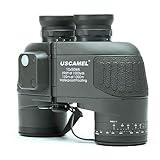
Overview: The USCAMEL 10x50 Marine Binoculars target serious boaters and anglers needing precise navigation tools. Featuring 10x magnification, a large 50mm objective lens, and integrated compass/rangefinder, they promise clarity and functionality in marine environments. Nitrogen-purged and IPX7 waterproof, they’re built for harsh conditions.
What Makes It Stand Out: The standout feature is the dual-function left eyepiece with an illuminated rangefinder and compass, enabling real-time distance calculations and directional awareness. High-refractive BAK4 prisms with FMC coating deliver exceptional 99.99% color accuracy and brightness, even at dusk. The floatable design and ±5 diopter adjustment cater to diverse users, including eyeglass wearers.
Value for Money: Priced competitively against premium brands, these offer advanced optics (BAK4/FMC) and critical marine tools (compass/rangefinder) typically found in costlier models. The inclusion of batteries, harness strap, and IPX7 rating ensures reliability without stretching your budget for essential boating gear.
Strengths and Weaknesses:
Strengths: Superior low-light performance; true floatability; precise rangefinder/compass integration; comfortable foldable eyecups.
Weaknesses: 10x magnification may amplify hand shake on rough water; heavier than 7x alternatives; limited field of view (396ft/1000yds).
Bottom Line: An excellent choice for navigators prioritizing rangefinding accuracy and optical clarity. Ideal for daytime sailing or calm-water use, though stability seekers might prefer lower magnification. Highly recommended for its feature-to-price ratio.
2. Hooway 7x50 Waterproof Fogproof Military Marine Binoculars w/Internal Rangefinder & Compass for Navigation,Boating,Fishing,and More
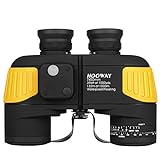
Overview: Hooway’s 7x50 Marine Binoculars emphasize ruggedness and versatility for military-grade marine use. With 7x magnification, BAK4 prisms, and full waterproofing, they balance stability and brightness for extended boating or fishing trips. The integrated compass and rangefinder support navigation in challenging conditions.
What Makes It Stand Out: Military-spec rubber armor provides exceptional shock absorption and a non-slip grip, even when wet. The tripod adapter compatibility is rare at this price point, enabling stable long-term observation. Nitrogen purging ensures complete fogproofing, while the Porro prism system delivers a wide, immersive field of view (396ft/1000yds).
Value for Money: Offers enterprise-level durability at a mid-range price. The tripod mount and military-grade construction justify the cost for professionals, outperforming similarly priced consumer models in longevity. Cheaper alternatives often lack the tripod feature or robust armor.
Strengths and Weaknesses:
Strengths: Tripod-ready; military-grade shock resistance; bright, crisp optics; comfortable 22mm eye relief.
Weaknesses: Slightly narrower field of view than competitors; compass illumination may fade over time; no explicit floatability claim.
Bottom Line: A top pick for serious mariners needing tripod stability and extreme durability. Best for those valuing ruggedness over ultra-compact design. Highly recommended for commercial fishing or offshore navigation.
3. Bushnell 7x50 Marine Binoculars - Fogproof & Waterproof Binoculars with Internal Rangefinder & Illuminated Compass for Boating, Sailing and Fishing

Overview: Bushnell’s 7x50 Marine Binoculars leverage trusted optical engineering for reliable performance on open water. Featuring fully multi-coated optics, a built-in compass, and rangefinder reticle, they focus on core marine functionality with Bushnell’s reputation for quality. The floatable rubber armoring adds critical safety for overboard incidents.
What Makes It Stand Out: The Porro-prism design enhances depth perception—crucial for judging distances between vessels or landmarks. Nitrogen purging guarantees 100% fogproofing, while the thick, floatable rubber armor resists saltwater corrosion. At 37 oz, it’s lighter than many competitors without sacrificing durability.
Value for Money: Bushnell’s legacy justifies a slight premium over generic brands. The combination of fogproofing, floatability, and precise rangefinding offers long-term reliability that cheaper models can’t match, reducing replacement costs over time.
Strengths and Weaknesses:
Strengths: Excellent depth perception; corrosion-resistant floatable armor; crisp 350ft field of view; trusted brand reliability.
Weaknesses: Basic analog compass (no digital features); heavier than some 10x models; limited low-light edge vs. FMC-coated rivals.
Bottom Line: A dependable, no-nonsense tool for sailors who prioritize proven engineering. Ideal for coastal cruising or fishing where fog and splashes are common. Strongly recommended for Bushnell loyalists.
4. BOSTRON 10X50 Marine Binoculars with Rangefinder Compass, IPX7 Floating Waterproof Marine Binoculars for Adults with BAK4 Prism FMC Lens for Sailing Boating Navigation Bird Watching

Overview: The BOSTRON 10x50 Binoculars deliver high-magnification clarity for marine and wildlife use. Equipped with an illuminated compass, rangefinder, and IPX7 waterproofing, they target enthusiasts needing detailed long-range viewing. BAK4 prisms and FMC coatings promise vibrant optics across diverse lighting.
What Makes It Stand Out: IPX7 certification guarantees survival after 30 minutes submerged at 1.5m—exceeding standard marine requirements. The green FMC lens coating specifically boosts contrast in hazy marine environments, while the anti-shake design stabilizes the 10x view better than most competitors. The included harness strap enhances comfort during extended use.
Value for Money: Competitively priced for its feature set, offering IPX7 depth tolerance and BAK4 optics typically seen in higher-end models. The anti-shake tech adds value for users on moving vessels, though stability lags behind 7x alternatives.
Strengths and Weaknesses:
Strengths: Exceptional submersion resistance; anti-shake stabilization; vivid color reproduction (99.5%); versatile for birding/land use.
Weaknesses: 10x magnification demands steady hands; narrower field of view; rangefinder calibration can be tricky.
Bottom Line: Best for stable-platform users (e.g., anchored boats) who need high detail. Not ideal for rough seas, but unmatched for calm-water precision. Recommended with caveats for magnification sensitivity.
5. Bushnell Marine 7x50 Waterproof Binocular
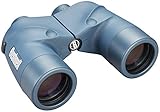
Overview: Bushnell’s streamlined Marine 7x50 Binoculars prioritize essential performance without extras. Focusing on optical clarity and marine resilience, they omit rangefinders/compasses for a lightweight, no-fuss design. Hermetically sealed and corrosion-resistant, they target sailors wanting pure, reliable viewing.
What Makes It Stand Out: The “blued” optics treatment reduces glare in bright conditions—a subtle but effective upgrade for sunny decks. Hermetic sealing ensures absolute waterproof integrity, while extensive marine testing validates durability against salt spray and humidity. The simplicity enhances reliability.
Value for Money: As a stripped-down model, it’s often the most affordable Bushnell marine option. You pay for proven optical quality and legendary build durability rather than navigation tools, making it ideal if you already own a compass or prioritize weight savings.
Strengths and Weaknesses:
Strengths: Ultra-reliable waterproofing; lightweight for 7x50 class; glare-reducing “blued” optics; minimal maintenance.
Weaknesses: Lacks compass/rangefinder; basic rubber armor (less shock absorption); no tripod mount.
Bottom Line: The go-to choice for sailors seeking barebones reliability. Skip if you need navigation aids, but highly recommended for casual use where simplicity and trustworthiness matter most.
6. 20x50 High Powered Binoculars for Adults, Waterproof Compact Binoculars with Low Light Vision for Bird Watching Hunting Camping Travel Cruise Hiking Sports Stargazing, Christmas Birthday Gifts for Men

Overview: These high-magnification binoculars target outdoor enthusiasts seeking detailed long-range viewing for activities like birding, hunting, and stargazing, featuring 20x zoom and low-light optimization.
What Makes It Stand Out: The 20x magnification delivers exceptional detail at 1,000 yards with a 168-yard field of view, while BAK4 prisms and FMC coatings achieve 99.8% light transmission for superior clarity in dim conditions. The ergonomic 26mm eyepiece reduces eye strain during extended use.
Value for Money: Priced moderately for entry-level premium optics, they undercut specialty astronomy binoculars while offering comparable low-light performance—ideal for casual users unwilling to invest in high-end models.
Strengths and Weaknesses: Strengths: Waterproof rubber-armored body ensures durability; comfortable grip and one-finger focusing enhance usability; versatile for multiple outdoor scenarios. Weaknesses: High magnification amplifies hand shake without stabilization; not fully submersible (only splash-proof); narrower field of view than lower-magnification alternatives.
Bottom Line: A capable, feature-rich option for beginners prioritizing magnification and low-light clarity, though stability challenges limit effectiveness for prolonged handheld use at 20x.
7. Steiner Military-Marine Series Binoculars, Lightweight Tactical Precision Optics for Any Situation, Waterproof, Green, 7x50

Overview: Engineered for rugged maritime and tactical use, these 7x50 binoculars emphasize reliability with military-grade construction and maintenance-free auto-focus for dynamic environments.
What Makes It Stand Out: The unique floating prism system absorbs extreme shock (tested to 11 GS), while Sports Auto Focus delivers instant sharpness from 20 yards to infinity—eliminating refocusing during fast-paced activities like boating or wildlife tracking.
Value for Money: Premium pricing is justified by the lifetime Heritage Warranty and Makrolon housing’s legendary durability, making them a cost-effective long-term investment versus mid-range competitors needing frequent replacement.
Strengths and Weaknesses: Strengths: Unmatched shock resistance; wide 387ft field of view stabilizes moving targets; waterproof/fogproof nitrogen-purged design thrives in saltwater conditions. Weaknesses: Limited close-focus range (20+ yards) hinders detailed bird observation; heavier than compact alternatives; minimal low-light advantage over coated 10x models.
Bottom Line: The top choice for sailors, military personnel, or adventurers needing bombproof reliability, though overbuilt for casual terrestrial use where portability matters more.
8. USCAMEL 10x50 Marine Binoculars for Adults, Waterproof Binoculars with Rangefinder Compass BAK4 Prism FMC Lens Fogproof for Navigation Birdwatching Hunting
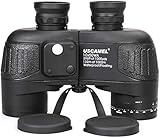
Overview: A feature-packed marine binocular set designed for navigation, integrating a floating rangefinder compass and fogproof optics for boating, birding, and hunting.
What Makes It Stand Out: The illuminated rangefinder and compass—activated by a button—provide critical distance/direction data in low light, while nitrogen-purged IPX7 waterproofing ensures flotation and fog resistance even when submerged.
Value for Money: Offers exceptional utility at a budget price, bundling rangefinder/compass functionality typically found in pricier models, though optical coatings slightly trail premium brands.
Strengths and Weaknesses: Strengths: Floats reliably; ±5 diopter adjustment accommodates glasses wearers; rugged rubber armor withstands drops; comprehensive carry kit included. Weaknesses: Illuminated features drain batteries quickly; rangefinder accuracy is moderate (best for estimation); image sharpness dips at edges.
Bottom Line: A practical, all-in-one solution for boaters needing navigation aids, but prioritize optical purity over tech extras for pure wildlife observation.
9. ESSLNB 10X50 Marine Binoculars with Illuminated Rangefinder, Compass, IPX7 Waterproof, BAK4 Prisms, for Navigation, Hunting, Includes Strap and Carrying Bag

Overview: Engineered as a robust marine navigation tool, these binoculars combine IPX7 waterproofing, metal-bodied durability, and illuminated rangefinder/compass for serious maritime use.
What Makes It Stand Out: The metal chassis (uncommon at this price) and IPX7 certification guarantee survival at 1.5m depth for 30 minutes, while 8-lens-group optics minimize edge distortion—critical for accurate rangefinder measurements.
Value for Money: Justifies its mid-tier cost with superior build quality over plastic competitors and included batteries/accessories, though optical performance matches peers rather than exceeding them.
Strengths and Weaknesses: Strengths: Metal body enhances longevity; loss-proof lens covers; precise ±5 diopter rings; bright illuminated scales. Weaknesses: Heavier than polymer models; compass/rangefinder requires ambient light; limited low-light capability without moonlight.
Bottom Line: A dependable, heavy-duty choice for sailors prioritizing survivability and measurement tools, but heavier weight may deter hikers or casual users.
10. Barska AB12738 Floatmaster 7x50 Waterproof Floating Marine Binoculars for Boating, Hunting, Fishing, Sports, etc, Yellow

Overview: A no-frills floating binocular optimized for accidental water exposure, featuring bright yellow casing for easy retrieval and essential marine observation functionality.
What Makes It Stand Out: Its buoyancy—paired with fogproof nitrogen purging—ensures immediate recovery if dropped overboard, while the 7x50 configuration balances field of view and light gathering for dawn/dusk use.
Value for Money: Extremely affordable as a dedicated floating optic, outperforming non-floating $100+ models in water emergencies but lacking advanced features of pricier marine sets.
Strengths and Weaknesses: Strengths: Reliable flotation; comfortable rubber grip; included carry case; effective fully multi-coated lenses for the price. Weaknesses: Basic optical clarity (no BAK4 prisms); no rangefinder/compass; limited low-light enhancement.
Bottom Line: The smart buy for kayakers or anglers needing a reliable “safety net” optic, but insufficient for navigation or detailed wildlife observation requiring precision tools.
Why Standard Binoculars Fall Short at Sea
The Relentless Marine Environment
Saltwater is incredibly corrosive, fogging lenses and corroding internal mechanisms within standard optics not built for immersion. Constant vibration from engines and waves stresses delicate prisms and housings, while sudden impacts against railings or deck hardware can easily misalign optics in non-ruggedized models. Humidity penetrates seals, causing internal fogging that renders binoculars useless precisely when you need clarity most – during fog banks or rapid temperature changes common over water.
Critical Differences in Build Philosophy
True marine binoculars are conceived from the ground up for survival. They prioritize absolute waterproof integrity, often exceeding basic water resistance to achieve true submersion ratings (like 5 meters or more). Shock resistance isn’t an afterthought; it’s engineered through reinforced housings, specialized internal mounting systems, and rugged exterior armor. Every component, from O-rings to focus mechanisms, is selected and tested for long-term exposure to salt, UV radiation, and constant motion, ensuring reliable operation season after season.
Essential Features for Marine-Grade Performance
Waterproofing and Fogproofing: Non-Negotiable Safeguards
Waterproofing involves more than just a rubber coating; it requires precise machining of housings, multiple high-quality O-rings rated for saltwater exposure, and rigorous pressure testing to certified depths (IPX7 or higher is ideal). Fogproofing is equally vital – optics filled with dry nitrogen or argon gas prevent internal condensation during rapid temperature shifts, a common occurrence when moving from air-conditioned cabins onto sun-baked decks or into coastal fog. Without both features, your binoculars are critically vulnerable.
Optical Quality: Clarity is Safety
Marine conditions demand exceptional light transmission. Look for fully multi-coated lenses across all air-to-glass surfaces – this minimizes light loss and glare, crucial for spotting buoys, navigation marks, or hazards in low-light dawn/dusk conditions or overcast skies. High-quality BaK-4 prisms (not lower-grade BK-7) ensure a bright, sharp, edge-to-edge image with no dimming or distortion, essential for accurately judging distances and identifying objects at sea. Image sharpness directly impacts your ability to make safe navigation decisions.
Magnification and Objective Lens Size: Finding the Sweet Spot
While higher magnification (like 10x or 12x) seems appealing for distant viewing, it significantly amplifies hand shake on a moving vessel, making the image unstable and difficult to use. For most marine applications, 7x or 8x magnification offers the best balance of usable magnification and image stability. Paired with a 50mm objective lens (7x50 or 8x50), this configuration gathers ample light for low-light performance while maintaining a wide enough field of view for easy scanning and object tracking. Smaller objectives (like 42mm) sacrifice too much light gathering in critical marine conditions.
Stability and Usability on a Moving Platform
The Critical Role of Image Stabilization
For magnifications above 8x, or for extended viewing periods, image stabilization (IS) becomes transformative. Gyro-stabilized or electronic IS systems actively counteract the constant roll, pitch, and yaw of a vessel, delivering a remarkably steady image. This isn’t just about comfort; it dramatically improves your ability to identify distant objects, read chart details on buoys, or spot marine life clearly, reducing eye strain and fatigue during long watches. While adding cost and weight, the safety and usability benefits for offshore use are substantial.
Ergonomic Design for Wet Conditions
Gloved hands and wet decks demand thoughtful ergonomics. Large, deeply textured focus wheels that are easy to turn even with cold fingers or sailing gloves are essential. A secure, non-slip rubber armor that provides a confident grip when wet is non-negotiable. The overall weight and balance should feel comfortable during extended use, preventing fatigue, but not so light that they feel insubstantial. Consider how easily you can operate the focus with one hand while bracing against the boat with the other.
Field of View: Seeing the Big Picture
A wider apparent field of view (measured in degrees) makes scanning the horizon significantly easier and faster. It reduces the “tunnel vision” effect common with high-magnification optics, allowing you to track moving objects like other vessels or wildlife more effectively and maintain better situational awareness of your entire surroundings. While magnification gets attention, a generous field of view (e.g., 6.5 degrees or higher for 7x50) is crucial for practical marine navigation and spotting hazards.
Durability and Long-Term Reliability Factors
Construction Materials: Beyond the Armor
The rubber armor is just the outer layer. Underneath, the chassis should be a rigid, lightweight magnesium alloy or high-strength polymer composite. These materials resist corrosion far better than standard plastics or lower-grade metals, maintain structural integrity under impact, and help manage the overall weight. Avoid models with excessive plastic components in critical structural areas; they fatigue and crack under marine stress.
Sealing Integrity: The Lifeline of Longevity
The quality and redundancy of seals determine long-term survival. Look for binoculars with multiple O-rings on critical openings (eyepieces, focus housing, objective lenses) made from durable, saltwater-resistant materials like Viton. Single O-ring designs are a gamble in the long term. Regular maintenance of these seals (cleaning, occasional light lubrication with manufacturer-approved grease) is part of owning marine optics, but robust initial sealing minimizes future headaches.
Shock Absorption Engineering
Internal shock absorption goes beyond a tough exterior. High-end marine binoculars often feature internal mounting systems that suspend the optical path within the housing using specialized elastomers or cushioning. This isolates the delicate prisms and lenses from the worst of the deck vibrations and impacts, preventing misalignment (collimation issues) that destroys image quality. It’s a key differentiator between optics that last years versus those that degrade quickly.
Practical Considerations for Your Vessel and Usage
Size, Weight, and Storage Practicality
Consider where and how you’ll store and carry your binoculars. Bulkier 7x50 models offer the best optical performance but require more storage space. Compact 8x25 or 8x32 models are highly portable but sacrifice significant light gathering and stability. Think about mounting options – many boats have dedicated binocular clips or trays near the helm. Ensure the size/weight feels right for your typical usage patterns, whether stowed below deck or kept handy on the flybridge.
Compatibility with Eyewear
If you wear glasses, verify the eyecup design. Long-eye-relief models (typically 18mm or more) allow you to see the full field of view without removing your glasses, which is essential for safety and convenience while navigating. Twist-up or click-stop eyecups provide the necessary adjustment flexibility. Trying binoculars with your glasses on is the only sure way to confirm compatibility before purchasing.
Night Vision Capabilities (Low-Light Performance)
True “night vision” requires image intensifiers, but marine binoculars can significantly enhance usable vision in low light. The exit pupil (objective lens size divided by magnification – e.g., 50/7=7.1mm) should ideally match or exceed the dilation of your dark-adapted pupil (around 5-7mm for adults). A larger exit pupil (like 7.1mm for 7x50) gathers more light, making images brighter at dusk, dawn, or under moonlight, improving your ability to spot navigation lights or hazards.
Maintenance Rituals for Marine Longevity
Post-Use Saltwater Decontamination
Rinsing with fresh water after every single use is the single most important maintenance step. Salt crystals left to dry are incredibly destructive. Use a gentle stream of lukewarm fresh water, flushing all surfaces, seams, and the strap attachment points. Never use high-pressure hoses. Follow with a soft, lint-free cloth to remove surface water before storing. This simple habit prevents 90% of long-term corrosion and seal degradation.
Proper Drying and Storage Protocols
Never store binoculars while damp. After rinsing, leave them in a well-ventilated area (out of direct sun) with the objective and eyepiece caps off to allow any trapped moisture to evaporate. Store them in a dedicated, padded case in a cool, dry place below deck, away from engine heat or direct cabin humidity sources. Silica gel desiccant packs inside the case help absorb residual moisture during storage.
Seal and Lubrication Checks
Periodically inspect O-rings for nicks, cracks, or flattening. Clean them gently with a soft cloth and fresh water; if hardened or damaged, replace them using manufacturer-specified parts and lubricants (usually a silicone-based grease). Avoid petroleum-based lubes, as they degrade rubber seals. Most manufacturers recommend professional servicing every 2-3 years for critical seal inspection and lubrication, especially after heavy offshore use.
Frequently Asked Questions
What does “waterproof” really mean for marine binoculars?
True marine waterproofing means the binoculars are sealed to withstand submersion to a specific depth (e.g., 5 meters) for a duration, typically certified to IPX7 or higher standards, not just resistant to splashes. This ensures survival if dropped overboard or swamped.
Is fogproofing necessary if I only use them in summer?
Yes. Internal fogging occurs due to rapid temperature changes, not just cold weather. Moving from an air-conditioned cabin onto a hot, humid deck, or encountering coastal fog, can instantly fog non-fogproof optics, rendering them useless when visibility is critical.
Why are 7x50 binoculars often recommended over 10x42 for boats?
7x50 offers a larger exit pupil (7.1mm vs 4.2mm), gathering significantly more light for better low-light performance crucial at sea. The lower 7x magnification also provides a wider field of view and is much more stable on a moving vessel compared to the shakier 10x image.
Can image stabilization work on a violently rolling boat?
Modern gyro-stabilized systems are remarkably effective, even in rough seas, significantly reducing image shake. However, no system eliminates all movement in extreme conditions, but they make viewing usable where unstabilized optics would be nearly impossible to employ effectively.
How often should I professionally service marine binoculars?
For regular coastal use, professional servicing every 2-3 years is advisable. For frequent offshore or heavy-use conditions, annual servicing is recommended to inspect seals, internal components, and ensure optimal performance and waterproof integrity.
Do I need special coatings for saltwater use?
While coatings themselves don’t resist salt, fully multi-coated optics are essential for marine use because they maximize light transmission through the many glass surfaces, providing the brightest, clearest image possible in the often-challenging light conditions over water.
What’s the biggest mistake people make with marine binoculars?
Failing to rinse them thoroughly with fresh water after every single use, even just a quick trip. Salt residue left to dry is the primary cause of long-term seal failure, corrosion, and degraded performance.
Are rubber armor grips really important?
Absolutely. Wet, salt-slicked hands require a secure, non-slip grip for safety and usability. High-quality, deeply textured rubber armor provides essential traction even when gloves are wet, preventing costly drops overboard.
Can I use my marine binoculars for birdwatching or hiking?
Yes, their robust construction and excellent optics make them suitable, though their weight and size might be less convenient for extended land use compared to dedicated lightweight models. The reverse isn’t true – land binoculars won’t survive marine conditions.
How do I know if the internal optics are fogged?
Internal fogging appears as condensation between the lens elements, visible as cloudiness or droplets you cannot wipe off the outer surfaces. This indicates a seal failure, requiring professional servicing to reseal and refill with dry gas.
Related Buying Guides
- 10 Best Marine Binoculars for Offshore Navigation and Safety in 2026
- Marine Binoculars Decoded: Features You Need for Safe Boating and Navigation
- 10 Best Binoculars for Kayaking and Coastal Exploration in 2026
- The 10 Best Binoculars Every Bird Watcher Needs This Year
- Best Binoculars for Bird Watching: 10 Expert Picks for 2026