Table of Contents
The woods have their own language, spoken in tracks, rubs, and the subtle bending of grass. But for the modern hunter or wildlife enthusiast, trail cameras have become the ultimate translator—capturing moments that would otherwise slip by unnoticed in the darkness of dawn or the stillness of midnight. As we look toward 2026, the technology packed into these compact sentinels has evolved far beyond simple motion-activated snapshots, offering unprecedented insights into animal behavior, population dynamics, and movement patterns that can transform your entire approach to game monitoring.
Whether you’re managing a vast parcel of hunting land, conducting research for conservation purposes, or simply fascinated by the secret lives of woodland creatures, understanding what makes a trail camera truly effective is more critical than ever. The market is flooded with options boasting impressive specifications, but the real value lies in knowing which features genuinely matter for your specific needs. This guide will walk you through everything you need to consider when evaluating trail cameras for game monitoring, helping you cut through marketing hype and focus on the technologies and strategies that deliver actionable intelligence season after season.
Top 10 Hunting Trail Cameras
Detailed Product Reviews
1. KJK Trail Camera 36MP 2.7K, Mini Game Camera with Night Vision 0.1s Trigger Time Motion Activated 130°Wide-Angle, Waterproof Trail Cam with 2.0” HD TFT Screen, Hunting Camera for Wildlife Monitoring

Overview: The KJK Trail Camera delivers solid performance for wildlife enthusiasts seeking reliable monitoring without subscription fees. This compact game camera captures 36MP stills and 2.7K videos, offering crisp documentation of animal behavior day or night. Its mini design enhances concealment while the integrated 2-inch TFT screen allows immediate field review.
What Makes It Stand Out: Its lightning-fast 0.1-second trigger speed combined with a wide 130° detection angle ensures you capture more action with fewer missed opportunities. The 22 low-glow infrared LEDs provide stealthy 75-foot night vision without disturbing wildlife. The TV-remote-style controls make setup intuitive for users of any experience level, while the IP66 rating guarantees performance from -22°F to 158°F.
Value for Money: At its price point, this camera competes favorably with entry-level cellular models while eliminating ongoing costs. The 17,000-image battery life minimizes maintenance trips, and the extreme weather tolerance ensures durability. You’re getting premium trigger speed and detection range typically found in more expensive units, making it a smart long-term investment for budget-conscious users.
Strengths and Weaknesses: Strengths include exceptional trigger speed, wide detection angle, robust weatherproofing, user-friendly interface, and remarkable battery efficiency. The compact design deters theft. Weaknesses center on lower resolution compared to 64MP models, lack of cellular connectivity requiring manual SD card retrieval, and low-glow LEDs that are slightly more visible than no-glow alternatives.
Bottom Line: The KJK Trail Camera excels as a dependable, no-frills wildlife monitoring solution. It prioritizes core performance—speed, detection range, and reliability—over connectivity bells and whistles, making it ideal for hunters and researchers who don’t mind occasionally checking their cameras.
2. SPYPOINT Flex-M Twin Pack Cellular Trail Cameras - Best Hunting Accessories, No WiFi Needed, GPS, Night Vision, Dual-Sim LTE, IP65 Water-Resistant Game Camera, 28MP Photos, 720p Videos + Sound (2)

Overview: The SPYPOINT Flex-M Twin Pack revolutionizes remote wildlife monitoring with cellular connectivity that sends images directly to your phone. This dual-camera system eliminates manual SD card checks, making it perfect for monitoring distant properties or multiple locations simultaneously from anywhere.
What Makes It Stand Out: The free 100-photo monthly transmission plan is genuinely unique—no other brand offers completely free cellular service. Cross-carrier coverage automatically selects the strongest network without manual intervention. The SPYPOINT app provides GPS tagging, weather updates, and BUCK TRACKER AI for automatic species identification, delivering unprecedented remote intelligence.
Value for Money: While the upfront cost exceeds non-cellular cameras, the twin pack delivers significant savings compared to buying two separate cellular units. The free tier makes occasional monitoring cost-free, though serious users will need paid plans starting at $5/month. Factor in subscription costs when budgeting—this is a premium convenience feature that justifies itself through time saved and real-time data.
Strengths and Weaknesses: Strengths include unmatched remote access, intelligent app features, flexible transmission plans, and reliable dual-SIM connectivity. The twin pack doubles your coverage area. Weaknesses include lower 28MP resolution and 720p video quality compared to non-cellular competitors, mandatory microSD card purchase, and shorter battery life due to cellular transmission.
Bottom Line: For hunters and property owners needing real-time intelligence without frequent site visits, the SPYPOINT Flex-M Twin Pack is unmatched. The free transmission tier makes cellular monitoring accessible, though serious users should budget for subscriptions. Accept the resolution trade-off for priceless convenience.
3. GardePro E5S 2-Pack Trail Camera (Non-Cellular, Non-WiFi), 64MP Photo & 1296P HD Video, 0.1s Trigger, 100ft No-Glow Night Vision, Motion Activated Wildlife Camera

Overview: The GardePro E5S 2-Pack offers professional-grade image quality without the complexity or cost of cellular connectivity. These non-WiFi cameras prioritize maximum resolution and stealth, capturing wildlife behavior with minimal environmental impact and zero ongoing expenses.
What Makes It Stand Out: The 64MP photo resolution is among the highest in the trail camera market, delivering exceptional detail for research and trophy documentation. The no-glow infrared LEDs provide true stealth operation up to 100 feet—animals remain completely undisturbed. Three PIR sensors achieve 0.1-second trigger speeds with enhanced accuracy, reducing false triggers through multi-angle detection.
Value for Money: This twin pack offers outstanding value for serious wildlife observers. Eliminating cellular hardware reduces upfront cost and eliminates all subscription fees. The low-power design extends battery life significantly, reducing maintenance and battery expenses. Compatible with GardePro’s solar panel for truly autonomous operation, creating a cost-effective long-term monitoring solution.
Strengths and Weaknesses: Strengths include industry-leading photo resolution, superior 100-foot no-glow night vision, triple PIR sensor accuracy, robust IP66 weatherproofing, and exceptional battery efficiency. Weaknesses require manual SD card retrieval, lack of real-time alerts, and no remote setting adjustment. The 1296P video resolution, while adequate, trails behind 2.7K options.
Bottom Line: The GardePro E5S 2-Pack is the definitive choice for researchers, serious hunters, and conservationists prioritizing image quality and stealth over connectivity. The no-glow flash and 64MP resolution provide professional results, while the twin pack maximizes coverage. Accept manual retrieval for superior performance and zero operating costs.
4. GardePro E5S Trail Camera (Non-Cellular, Non-WiFi), 64MP Photo & 1296P HD Video, 0.1s Trigger, 100ft No-Glow Night Vision, Motion Activated Wildlife Camera

Overview: The single-unit GardePro E5S delivers the same professional-grade performance as its twin-pack sibling for users requiring focused monitoring at a single strategic location. This non-cellular camera prioritizes image quality and stealth for discerning wildlife enthusiasts who value simplicity.
What Makes It Stand Out: The 64MP photo resolution captures exceptional detail that rivals professional photography equipment, while no-glow infrared technology provides completely invisible 100-foot night illumination. Three precision PIR sensors enable 0.1-second trigger speeds with enhanced accuracy, reducing false triggers from vegetation movement. The standard 1/4"-20 mounting thread accommodates various professional mounting solutions.
Value for Money: As a single unit, it offers the same performance-per-dollar value as the twin pack without requiring purchase of a second camera. The absence of cellular components reduces cost while eliminating subscription fees entirely. Low-power operation means fewer battery changes, saving money and time over the camera’s lifespan. Solar panel compatibility provides optional unlimited runtime for remote deployments.
Strengths and Weaknesses: Strengths include best-in-class 64MP resolution, superior no-glow night vision, triple-sensor detection accuracy, rugged IP66 construction, and remarkable battery efficiency. The simplified operation ensures reliability. Weaknesses mirror the twin pack: no remote access capabilities, requiring physical SD card retrieval, and lack of instant notifications. The 1296P video resolution is functional but not class-leading.
Bottom Line: For individual property owners or hunters targeting a specific location, the GardePro E5S single unit offers professional results without unnecessary features. The extraordinary photo quality and true stealth operation make it ideal for documenting trophy animals or conducting behavioral research where cellular connectivity isn’t justified. Choose simplicity and performance over convenience.
5. WOSODA 2 Pack Trail Cameras with Night Vision Motion Activated Waterproof,30MP Game Camera,1080P HD Trail Cam with SD Card for Wildlife Monitoring,Outdoor Scouting & Security
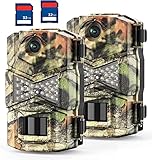
Overview: The WOSODA 2 Pack Trail Cameras provide an accessible entry point into wildlife monitoring, combining essential features with budget-friendly pricing. These cameras deliver reliable performance for casual observers and those needing to blanket large areas without significant investment.
What Makes It Stand Out: The package includes two 32GB SD cards, providing immediate out-of-the-box functionality—a rarity in this price category. The mimetic camouflage pattern enhances concealment better than plain black housing. Versatile recording modes include time-switch and timer functions that minimize false triggers from vegetation, conserving both battery and storage space effectively.
Value for Money: This twin pack represents exceptional value, often costing less than a single premium camera. The included accessories eliminate additional purchases. While specifications are modest compared to high-end models, the cost-per-camera enables monitoring multiple locations simultaneously. Perfect for security applications or casual wildlife observation where cutting-edge performance isn’t critical but coverage area is paramount.
Strengths and Weaknesses: Strengths include unbeatable affordability, included SD cards, effective camouflage, waterproof construction, and versatile recording modes. The twin pack doubles monitoring coverage. Weaknesses include slower 0.3-second trigger speed that may miss fast action, lower 30MP resolution and 1080p video quality, 60-foot night range limiting distant captures, and lack of a viewing screen for immediate image review.
Bottom Line: The WOSODA 2 Pack excels as a cost-effective solution for beginners or those prioritizing coverage over cutting-edge specs. The included memory cards and camouflage design add value, while the slower trigger and modest resolution trade performance for affordability. Ideal for property security, basic wildlife inventory, or users wanting to experiment with camera placement before investing in premium gear.
6. WOSODA Mini Trail Camera 4 Pack 24MP 1080P HD, Game Cam with SD Card, Waterproof Tiny Deer Camera Night Vision Motion Activated with Fast Trigger Time for Outdoor Wildlife Monitoring

Overview:
The WOSODA Mini Trail Camera 4 Pack delivers exceptional value for wildlife enthusiasts seeking multiple monitoring points. This comprehensive bundle includes four compact cameras, each capturing 24MP photos and 1080p video, plus 32GB SD cards and AA batteries for each unit—everything needed for immediate deployment across your property or research site.
What Makes It Stand Out:
The quadruple-camera kit eliminates guesswork by providing a complete multi-location solution. The miniaturized design requires only four AA batteries per unit while maintaining extended standby time, and the 0.3-second trigger ensures critical moments aren’t missed. The camouflage exterior enhances stealth in natural environments, making these nearly invisible to wildlife and potential trespassers.
Value for Money:
Purchasing four individual trail cameras could cost $300-400, making this bundled offering a budget-friendly alternative. The inclusion of memory cards and batteries for each unit saves an additional $60-80 in accessories. For property owners needing comprehensive coverage or researchers requiring multiple observation points, the per-camera cost is difficult to beat.
Strengths and Weaknesses:
Pros include complete out-of-box readiness, compact stealth design, low power consumption, and instant 4x coverage. The 0.3s trigger is respectable for most applications. Cons are modest 24MP resolution compared to premium models, basic 1080p video, and lack of wireless connectivity requiring physical SD card retrieval. The mini size may also limit battery capacity versus full-sized units.
Bottom Line:
Perfect for beginners, researchers needing multiple observation points, or property owners wanting comprehensive coverage without breaking the bank. The WOSODA 4 Pack sacrifices some advanced features for unbeatable quantity and convenience, making it an ideal starter kit for serious wildlife monitoring.
7. SPYPOINT Flex G-36 Twin Pack Cellular Trail Camera, 36MP Photos and 1080p Videos with Sound, GPS Enabled, Dual-Sim LTE Connectivity, 100’ Flash & Detection Range, Responsive Trigger up to .3S

Overview:
The SPYPOINT Flex G-36 Twin Pack revolutionizes remote wildlife monitoring through advanced cellular technology. This premium duo transmits 36MP photos and 1080p videos with sound directly to your device, eliminating tedious field visits while providing GPS-enabled asset tracking for serious hunters and property managers managing expansive terrain.
What Makes It Stand Out:
Dual-SIM LTE connectivity automatically selects the strongest carrier signal without manual intervention, ensuring reliable transmission across remote locations. The 100-foot detection range paired with 0.3-second trigger captures detailed scouting intelligence, while integrated GPS helps track camera positions across vast properties. No more swapping SIM cards or worrying about carrier coverage.
Value for Money:
At approximately $300-350 for two cellular cameras, the G-36 Twin Pack delivers professional-grade remote access that justifies its premium pricing. When factoring in saved travel time, fuel costs, and minimized human scent disturbance from SD card retrieval, the investment typically pays for itself within a single hunting season for serious enthusiasts who value efficiency.
Strengths and Weaknesses:
Pros include seamless cellular transmission, auto-switching dual-SIM reliability, high-resolution 36MP images, and GPS functionality. The 1080p video with audio adds immersive scouting value. Cons involve mandatory data subscription fees ($10-15/month per camera), higher initial cost, and battery demands of cellular transmission requiring more frequent maintenance visits than non-cellular models.
Bottom Line:
Ideal for dedicated hunters managing multiple remote locations or surveillance of distant properties. The SPYPOINT Flex G-36 Twin Pack’s cellular convenience and dual-SIM reliability make it worth every penny for those prioritizing time-saving remote access and real-time intelligence over budget considerations.
8. GardePro E6 WiFi Trail Camera (Non-Cellular), 48MP Photos, 1296P HD Video, App Control with Live View, 110° Wide-Angle, No-Glow Night Vision, Motion Activated

Overview:
The GardePro E6 WiFi Trail Camera bridges the gap between basic SD-card models and expensive cellular units. This smart camera delivers 48MP photos and 1296P HD video with app-based control, offering modern convenience without recurring subscription fees for wildlife enthusiasts who monitor locations within reasonable walking distance.
What Makes It Stand Out:
The ultra-low-power WiFi system enables live view functionality up to 45 feet away, letting you check positioning and observe wildlife in real-time without disturbing habitats. No-glow 940nm infrared illumination provides stealthy 75-foot night vision, while H.264 encoding allows quick media previews before downloading—saving both time and smartphone storage.
Value for Money:
Positioned in the $120-150 range, the E6 avoids costly cellular data plans while providing app connectivity that budget cameras lack. The optional solar panel compatibility further reduces long-term operating costs, making it financially smarter than cellular alternatives for accessible locations like backyard trails, food plots, or research sites within walking distance.
Strengths and Weaknesses:
Pros include subscription-free operation, live view capability, excellent 48MP image quality, and no-glow stealth. The 110° wide-angle lens captures broader scenes than standard cameras. Cons are limited 45-foot WiFi range, inability to connect to home routers, and lack of true remote access when you’re off-site—requiring physical presence for media retrieval.
Bottom Line:
An excellent choice for backyard wildlife watchers, researchers with accessible camera sites, or anyone wanting modern app features without monthly fees. The GardePro E6 excels when cameras are within reasonable walking distance, offering a sweet spot of technology and value.
9. LANTOOCAM Trail Camera, 60MP Hunting Camera with WiFi, 32GB TF Card, Night Vision, Motion Activated, IP66 Waterproof, 120°Wide-Angle for Deer Scouting or Home Security, APP Control, H.264 MP4 Video

Overview:
The LANTOOCAM Trail Camera pushes resolution boundaries with its 60MP sensor and WiFi connectivity, packaged as a complete ready-to-use kit. This feature-rich unit captures 1296P video with audio and includes a 32GB TF card, targeting tech-savvy hunters who demand high-detail documentation without cellular subscription costs.
What Makes It Stand Out:
The 120° wide-angle lens monitors substantially larger areas than standard 80-90° cameras, reducing the number of units needed for property coverage. No-glow infrared LEDs maintain complete stealth for undisturbed nocturnal observation. The intuitive “TrailCam GO” app simplifies settings adjustment and media management via direct WiFi connection, eliminating physical contact with the camera during routine checks.
Value for Money:
Offering 60MP resolution typically found in premium $200+ cameras at a sub-$150 price point, this model delivers exceptional specs-to-cost ratio. The included 32GB card and WiFi functionality add $40-50 in value, making it an aggressive competitor in the mid-range segment for users wanting maximum detail without recurring fees.
Strengths and Weaknesses:
Pros include class-leading 60MP resolution, expansive 120° field of view, complete accessory bundle, and subscription-free WiFi. IP66 waterproofing ensures durability across harsh conditions. Cons involve limited brand recognition, WiFi range constraints inherent to direct-connection models, and potential app stability issues compared to established competitors like SPYPOINT or GardePro.
Bottom Line:
A compelling option for detail-oriented users wanting maximum resolution and wide coverage without recurring fees. The LANTOOCAM Trail Camera is ideal for deer scouting and home security where WiFi access within 30-50 feet is feasible, offering impressive specifications that punch above its price class.
10. GardePro A3S Trail Camera (Non-Cellular, Non-WiFi), 64MP Photo & 1296P HD Video, 0.1s Trigger, 100ft No-Glow Night Vision, Motion Activated Wildlife Camera

Overview:
The GardePro A3S Trail Camera focuses on pure imaging excellence by eliminating connectivity features entirely. This non-cellular, non-WiFi workhorse captures stunning 64MP photos and 1296P video using a Starvis sensor, delivering professional-grade results for purists who prioritize image quality, battery longevity, and reliability over remote access convenience.
What Makes It Stand Out:
The lightning-fast 0.1-second trigger speed—three times quicker than most competitors—ensures you never miss fleeting wildlife moments. Three PIR sensors provide exceptional motion detection coverage, while the Starvis sensor excels in low-light conditions, producing crisp night images at distances up to 100 feet without any visible glow that could spook game.
Value for Money:
At $100-130, the A3S offers premium imaging hardware without the $50-100 premium cellular cameras charge for connectivity features. The extreme power efficiency translates to 6-8 month deployments on lithium batteries, saving additional costs and reducing maintenance trips. You’re paying for superior optics and speed, not wireless radios.
Strengths and Weaknesses:
Pros include fastest-in-class 0.1s trigger, superior Starvis low-light performance, 64MP ultra-high resolution, and incredible battery life. The no-glow night vision maintains complete stealth. The rugged IP66 build withstands harsh conditions. The sole con is lack of wireless connectivity, requiring manual SD card retrieval—an acceptable trade-off for purists who check cameras during regular property visits anyway.
Bottom Line:
The ultimate choice for wildlife photographers, researchers needing maximum image quality, and hunters who check cameras during routine scouting. The GardePro A3S proves that sometimes less connectivity means more capability where it truly matters: capturing crisp, reliable images of elusive wildlife.
Understanding Modern Trail Camera Technology
Image Quality and Resolution Standards
When evaluating image quality, resolution numbers tell only part of the story. While manufacturers love to advertise megapixel counts reaching 30MP or higher, the true quality depends on the image sensor, lens quality, and processing software. A camera with a high-quality 12MP sensor often produces clearer, more detailed images than a budget model with inflated interpolation to reach 24MP. Pay attention to the native resolution—the actual physical capability of the sensor rather than software-enhanced numbers. For game monitoring, you need crisp images that reveal antler points, distinguishing marks, and body condition, especially during low-light conditions when most valuable activity occurs.
Trigger Speed and Detection Zones
Trigger speed—the time between motion detection and image capture—can mean the difference between capturing a buck in full frame and photographing nothing but tail feathers. Sub-second trigger speeds have become standard, with premium models achieving 0.2 seconds or faster. Equally important is the detection zone, which includes both the width and distance of the sensor’s reach. A wide detection angle paired with a fast trigger ensures you capture animals approaching from various angles. Consider cameras with adjustable detection ranges that let you customize the sensitivity based on your location, preventing false triggers from swaying vegetation while ensuring distant animals still activate the shutter.
Flash Types and Night Vision Capabilities
Nighttime monitoring reveals the most candid wildlife behavior, making flash technology crucial. Infrared (IR) flash has become the gold standard, but not all IR is equal. Low-glow IR emits a faint red light visible to animals but provides better illumination and longer range. No-glow or black flash is completely invisible but typically offers shorter range and slightly grainier images. The latest hybrid systems automatically adjust flash intensity based on distance, preventing overexposure of close subjects while still reaching animals further away. For 2026, consider cameras with adaptive flash technology that learns from previous images to optimize illumination patterns.
Power Systems and Battery Life
Battery management can make or break your monitoring strategy. While traditional AA lithium batteries remain reliable, modern cameras offer multiple power options. External battery packs with solar charging capabilities have become increasingly efficient, with some systems providing year-round operation without battery changes. Look for cameras with intelligent power management that shuts down non-essential functions during inactive periods. The ability to run on 12V external power gives you flexibility for permanent installations, while hybrid systems that combine internal batteries with solar supplementation offer the best of both worlds for remote locations.
Connectivity and Data Transmission
Cellular trail cameras have revolutionized real-time monitoring, but coverage and data costs require careful consideration. Most cameras now operate on 4G LTE networks with some early 5G models emerging. The key is finding a camera that works with multiple carriers or offers flexible data plans that don’t throttle your connection after reaching monthly limits. WiFi-enabled models work well for properties with reliable internet access, allowing you to download images without disturbing the site. For 2026, look for cameras offering edge computing capabilities that filter and compress images before transmission, saving data and focusing on images that actually contain animals rather than empty triggers.
Key Features to Evaluate for Game Monitoring
Detection Range and Sensor Angle
The effectiveness of your trail camera hinges on its ability to detect animals at appropriate distances. Detection ranges typically span 60 to 100 feet, but terrain and vegetation significantly impact real-world performance. Wide-angle sensors covering 45-60 degrees work best for open areas like fields or food plots, while narrower angles prevent false triggers in dense cover. Some advanced models feature dual sensors—one wide-angle for close detection and another focused for distance—providing layered coverage. Consider the average size of your target species; smaller animals like bobcats require more sensitive detection than larger elk or moose.
Memory Storage Options
While SD cards remain the primary storage medium, capacity and speed ratings matter more than ever. Cameras capturing high-resolution video or rapid burst sequences demand Class 10 or UHS-I cards minimum. For 2026, consider models offering dual card slots that automatically switch when one fills, or cameras with built-in memory backup that preserves recent images even if the SD card fails. Cloud storage integration provides redundancy, but ensure the camera can buffer images locally during connectivity outages. The ability to overwrite oldest images when storage fills (loop recording) prevents lost data during extended deployments.
Durability and Weather Resistance
Trail cameras face brutal conditions—from scorching summer heat to sub-zero winter temperatures and everything in between. IP66 or IP67 ratings have become baseline standards, ensuring protection against dust and water immersion. However, real durability extends beyond ratings to include build quality. Look for cameras with reinforced mounting points that won’t crack under tension, gaskets that maintain seal integrity after repeated battery changes, and lenses with anti-fog coatings. For extreme environments, models with integrated desiccant chambers prevent internal condensation that can fog lenses during temperature swings.
Camouflage and Concealment Design
A visible camera can alter animal behavior for weeks, creating avoidance patterns that skew your data. Modern camouflage patterns go beyond simple tree bark prints to include micro-textured surfaces that break up the camera’s outline. Size matters too—compact profiles cast smaller shadows and attract less attention. Some cameras feature removable faceplates with different patterns for seasonal changes. Consider the mounting system as part of concealment; cameras that mount flush against trees with minimal gap appear more natural. For 2026, matte finishes that don’t reflect infrared light from other cameras have become increasingly important for multi-camera setups.
Audio Recording Capabilities
Often overlooked, audio capture provides context that images alone cannot. The grunt of a dominant buck, the warning snort of a doe, or the distinctive vocalizations of predators add layers to your understanding of wildlife dynamics. Quality audio recording requires more than a basic microphone; look for cameras with wind noise reduction, adjustable gain settings, and the ability to filter out low-frequency vibrations from trees. Some models now offer directional audio focusing that prioritizes sounds from the detection zone while minimizing background noise from roads or streams.
Advanced Technologies in 2026
Artificial Intelligence and Species Recognition
The integration of AI processors directly into trail cameras represents the biggest leap forward in recent years. These systems analyze images in real-time, tagging species, counting individuals, and even estimating age class based on antler development or body size. This filtering eliminates hours of manually reviewing empty frames or irrelevant species. For game monitoring, AI can be trained to recognize specific target animals, sending immediate alerts when a trophy buck or collared research animal appears. The technology also helps reduce data transmission costs by only sending relevant images via cellular networks.
Cloud Storage and Mobile Integration
Modern wildlife management requires seamless data flow from field to analysis. Cloud platforms now offer more than simple image storage—they provide pattern analysis, movement heatmaps, and collaborative sharing tools for hunting groups or research teams. Mobile apps have evolved from basic viewers to comprehensive management tools, allowing you to adjust camera settings remotely, schedule active hours, and even update firmware. For 2026, look for systems with API access that lets you integrate camera data with mapping software or herd management databases, creating a unified ecosystem of information.
Solar Power Innovations
Solar technology has become more efficient and compact, with flexible panels that conform to tree trunks or camera housings. The latest systems incorporate power management algorithms that predict weather patterns and adjust charging priorities accordingly. Some cameras feature hybrid solar-battery systems that prioritize solar during daylight while conserving battery power for peak activity periods at dawn and dusk. The key advancement is the ability to operate continuously even in partial shade, with panels capturing diffuse light that would have been insufficient just a few years ago.
Video Recording Specifications
Still images capture moments, but video reveals behavior. Modern cameras offer 1080p or 4K video at 30fps or higher, with some models providing slow-motion capabilities for studying gait or interaction sequences. Look for cameras offering adjustable video lengths that adapt to continued motion—recording longer when animals remain active and stopping quickly when they leave. Audio synchronization with video provides complete behavioral records. For 2026, consider cameras with HDR video that handles the contrast between bright sky and shadowed forest floor, ensuring detail throughout the frame.
Time-Lapse and Hybrid Modes
Time-lapse functions capture broader patterns like food plot usage, migration timing, or habitat changes. Hybrid modes that combine time-lapse with motion activation ensure you don’t miss individual animals while documenting overall trends. The most advanced systems use AI to determine when to increase time-lapse frequency based on detected activity patterns, essentially learning when animals are most likely to appear. This adaptive approach conserves power while maximizing data collection during peak periods.
Strategic Placement for Maximum Effectiveness
Understanding Animal Movement Patterns
Effective camera placement starts with reading the landscape like the animals do. Focus on natural funnels created by topography—saddles between ridges, creek crossings, and transitions between habitat types. Look for sign: tracks, scat, rubs, and scrapes indicate active travel corridors. For deer, place cameras along edges where different cover types meet, as they prefer to move with cover nearby. Understanding prevailing winds helps you position cameras to capture animals moving with their noses into the wind, which is their natural tendency when traveling.
Height and Angle Best Practices
The optimal mounting height varies by target species and location. For deer on trails, 3-4 feet high typically captures full bodies without cutting off antlers. At scrapes or bait sites, you might lower cameras to 2 feet for detailed shots. Angle matters as much as height—positioning the camera slightly downward (10-15 degrees) reduces sky exposure and provides better animal identification. For larger species like elk or moose in open areas, higher mounting (6-8 feet) with a steeper angle can capture more animals in a group while maintaining identification quality.
Avoiding False Triggers
Nothing drains batteries and fills storage like false triggers from vegetation. Point cameras north when possible to avoid direct sunlight and the resulting temperature fluctuations that trigger PIR sensors. Clear vegetation within the detection zone, especially tall grass or branches that move in wind. Some cameras allow you to mask out portions of the detection zone—use this to block areas with unavoidable movement like streams or busy trails you’re not monitoring. During seasons with heavy leaf fall, check cameras more frequently to clear debris that might trigger the sensor.
Multiple Camera Setups
A single camera provides a snapshot; multiple cameras reveal patterns. When monitoring a large area, create camera grids with overlapping detection zones to track movement direction and timing. Place cameras at 100-yard intervals along known trails to determine travel speed and directionality. For property monitoring, position cameras at entry/exit points, major intersections, and key resources like water or food. Vary camera types within your network—use cellular cameras at critical locations for real-time updates and standard cameras at secondary sites to maximize coverage within budget.
Seasonal Placement Strategies
Animal behavior shifts dramatically with seasons, and your camera placement should adapt. Pre-season scouting benefits from cameras on food sources and mineral sites where deer congregate. During the rut, shift focus to scrape lines and doe-heavy areas that attract bucks. Post-season, concentrate on late food sources and winter bedding areas to understand survival rates and habitat preferences. For property management, maintain year-round monitoring at perennial resources like water holes or mast-producing trees to establish baseline activity patterns that inform seasonal adjustments.
Data Management and Analysis
Organizing Your Image Library
Raw image volume quickly becomes overwhelming without systematic organization. Develop a filing system that includes location, date range, and camera type in folder names. Rename files to include timestamps and location codes for easy searching. Software solutions now offer automatic tagging based on AI analysis, but manual review remains valuable for noting specific behaviors or individual animal characteristics. Create subfolders for target species, notable events, and reference images showing camera performance. Back up your library in at least two locations—one physical drive and one cloud service—to protect against loss.
Pattern Recognition and Behavior Tracking
Beyond counting animals, effective analysis identifies patterns in activity timing, group composition, and habitat use. Create spreadsheets or use specialized software to log each detection: species, time, direction of travel, weather conditions, and notable behaviors. Over time, this data reveals peak movement periods, preferred travel routes, and how animals respond to hunting pressure or habitat changes. Look for correlations between moon phase, temperature, barometric pressure, and activity levels. These patterns inform not just hunting strategy but also habitat management decisions like food plot placement or timber stand improvements.
Sharing Data with Land Managers
Wildlife management increasingly relies on collaborative data sharing. When working with biologists, neighbors, or hunting partners, establish consistent data formats and sharing protocols. Aggregated data from multiple properties provides landscape-level insights impossible to achieve alone. Cloud platforms facilitate this collaboration, but ensure all parties agree on privacy settings and data ownership. Consider sharing summarized data rather than raw images to protect sensitive locations. For leased land, understand what data belongs to you versus the landowner, and establish these terms before deployment.
Integrating with Other Monitoring Tools
Trail cameras work best as part of a comprehensive monitoring system. Combine camera data with GPS collars (if you’re involved in research), scat surveys, and browse impact assessments for a complete picture. Weather stations at camera sites provide local conditions that explain activity variations. Drone imagery can contextualize camera placement within broader habitat features. The goal is creating a multi-source dataset where cameras provide the temporal detail—when animals are where—while other tools fill in the spatial and ecological context.
Privacy and Security Considerations
Cellular cameras transmitting images wirelessly introduce security considerations. Use strong passwords and change default login credentials immediately. Enable two-factor authentication when available. For sensitive species or locations, disable GPS tagging in image metadata to prevent poaching. Consider cameras with encrypted transmission protocols. On public lands, be aware that cameras can be tampered with or stolen—use lock boxes and security cables, and position cameras to monitor each other when possible. Always respect others’ privacy; avoid pointing cameras toward trails used by hikers or toward private property boundaries.
Maintenance and Troubleshooting
Seasonal Maintenance Routines
Establish a maintenance calendar that aligns with seasons and peak usage. Check cameras at least monthly during active periods, quarterly during off-seasons. Each visit should include: battery voltage check, SD card verification, lens cleaning, detection zone clearance, and housing seal inspection. Replace batteries proactively when they reach 30% capacity—don’t wait for failure. In humid climates, replace desiccant packs seasonally. Update firmware during off-seasons when you can afford downtime. Create a checklist for each camera to ensure consistent maintenance and note any performance degradation over time.
Common Issues and Solutions
Blurry night images often indicate flash component failure or incorrect settings—try adjusting flash power or switching to a different flash mode. Missed animals typically result from detection zone issues; clean the PIR sensor window and verify sensitivity settings. Foggy lenses usually mean seal failure or rapid temperature changes—check gaskets and consider anti-fog inserts. Erratic triggering frequently stems from vegetation or low battery voltage causing sensor instability. Corrupted SD cards can result from removing them while the camera is writing—always power down before card removal. Keep a log of issues and solutions for each camera to identify recurring problems.
Firmware Updates and Optimization
Manufacturers regularly release firmware updates that improve performance, add features, or fix bugs. Check for updates quarterly, but wait a few weeks after release to ensure stability. Read update notes carefully—some may reset custom settings. Before updating, note your current settings or take configuration screenshots. Update during periods of low activity so you can test thoroughly. Some cameras now offer automatic updates, but manual control prevents unexpected changes during critical monitoring periods. Firmware optimization can extend battery life, improve trigger algorithms, and enhance image processing—it’s essentially a free performance upgrade.
Battery Management Strategies
Maximize battery life by using lithium batteries in cold weather—they maintain voltage better than alkalines. Enable time-lapse only during peak activity hours rather than 24/7. Reduce video length and resolution for non-critical cameras. Turn off audio recording if unnecessary. Set cameras to burst mode only during specific seasons. Some cameras learn usage patterns and enter deep sleep modes during historically inactive periods. Keep spare batteries warm in cold weather—cold batteries deliver less current. Track battery performance by camera location; some sites trigger more frequently and drain faster. Consider external battery packs for high-traffic locations.
Lens and Sensor Cleaning
Clean lenses and PIR sensors with microfiber cloths and lens cleaner—never use harsh chemicals that might damage coatings. Check for spider webs that can cause false triggers; a light application of insect repellent around (not on) the camera housing can help. In dusty environments, compressed air can clear sensor windows, but hold the can upright to prevent propellant discharge. Inspect for condensation inside the housing; if present, replace seals and add fresh desiccant. Clean the battery terminals with a pencil eraser to ensure good contact. For cameras with solar panels, clean panels monthly with water and soft cloth to maintain charging efficiency.
Legal and Ethical Considerations
Understanding Local Regulations
Trail camera regulations vary significantly by state and can change annually. Some jurisdictions restrict cellular cameras during hunting season, considering them “unfair advantage.” Others require permits for cameras on public lands or mandate specific labeling with owner contact information. Research regulations for each location you plan to monitor, as rules differ for public versus private land. For interstate travel with cameras, understand that rules in your home state may not apply where you hunt. Join local hunting organizations that track legislative changes; they often provide updates on camera regulations. When in doubt, contact state wildlife agencies directly for clarification.
Respecting Wildlife and Habitat
The mere presence of cameras can impact animal behavior, especially if visited frequently. Minimize disturbance by checking cameras quickly and quietly, using existing trails when possible. Avoid placing cameras directly at critical resources like sole water sources in arid regions, as frequent human presence might discourage use. During sensitive periods like nesting or fawning season, maintain greater distances from known breeding areas. Remove cameras after hunting season if they’re no longer needed for research—year-round presence isn’t always necessary and contributes to habitat disruption. Consider the cumulative impact if multiple people are running cameras in the same area.
Data Usage Ethics
How you use camera data reflects your ethics as a wildlife steward. Using cameras to pinpoint a trophy animal’s location and immediately hunting there can violate fair chase principles, especially if the animal was captured at a sensitive location like a water source in drought conditions. Consider establishing personal waiting periods between camera identification and hunting near that location. Share data responsibly; real-time location information for rare or sensitive species could enable poaching. When sharing images publicly, remove GPS metadata. Think about the story your camera data tells beyond just animal locations—use it to improve habitat, understand population health, and become a better steward, not just a more efficient hunter.
Public vs Private Land Considerations
Camera placement on public land requires additional ethical consideration. Avoid placing cameras in areas with high recreational use where they might capture other people without consent. Public land cameras are more vulnerable to theft or damage—use them as temporary scouting tools rather than permanent fixtures. On private land, respect property boundaries and neighbors’ privacy; position cameras to avoid capturing activity on adjacent properties. For leased land, understand who owns the cameras and data when the lease ends. Written agreements prevent disputes. Some states require landowner permission even for placement on private land you lease or have permission to hunt.
Minimizing Human Impact
Every visit to a camera site leaves scent and creates disturbance. Plan efficient routes that check multiple cameras in one trip. Wear rubber boots and gloves to minimize scent transfer. During hunting season, consider checking cameras only when you’re already in the area for hunting purposes rather than making special trips. Some hunters now practice “hands-off” monitoring using cellular cameras to eliminate disturbance entirely. If you must visit frequently, vary your approach routes to prevent creating a human trail that animals learn to avoid. Remember that mature animals, especially older bucks, may pattern your visits and alter their behavior accordingly.
Frequently Asked Questions
How many trail cameras do I need for effective property monitoring?
The number depends on your property size, terrain complexity, and management goals. A general starting point is one camera per 50-100 acres for basic monitoring, but complex properties with varied habitat may need denser coverage. Focus on quality placements over quantity—a few well-positioned cameras often provide better data than many poorly placed ones. Begin with key locations like main access points, food sources, and travel corridors, then add cameras as needed to fill gaps in your understanding.
What’s the realistic battery life I should expect from a trail camera?
Battery life varies dramatically based on activity level, settings, and temperature. In moderate temperatures with moderate activity (5-10 triggers per day), lithium batteries typically last 6-12 months. High-traffic areas with 50+ daily triggers might drain batteries in 2-3 months. Cold weather can reduce battery life by 50% or more. Cellular cameras transmitting images frequently may need battery replacement every 1-3 months unless solar-assisted. Always carry spare batteries and check voltage regularly rather than relying on manufacturer estimates.
Are cellular trail cameras worth the additional cost and data fees?
Cellular cameras provide tremendous value for remote properties, real-time pattern monitoring, and reducing human disturbance. The ability to receive immediate notifications of activity allows you to hunt smarter, not harder. However, the monthly data costs ($5-20 per camera) add up across multiple units. For properties you can easily access weekly, standard cameras may suffice. Consider a hybrid approach: cellular cameras at critical locations for real-time intelligence, standard cameras at secondary sites for periodic data collection.
How can I prevent theft or damage to my trail cameras on public land?
Use lock boxes and Python cables to secure cameras to trees. Mount cameras higher than normal (8-10 feet) and angle them downward—this makes them less noticeable and harder to reach. Place cameras in less-obvious locations away from trails and access points. Consider using cameras with camouflage patterns that match the specific tree species. Some hunters use decoy cameras in obvious spots while hiding their primary camera nearby. Always label cameras with your contact information, and remember that on public land, you accept the risk of loss as part of the trade-off for free access.
What’s the best height and angle for mounting a trail camera on a deer trail?
For deer trails, mount cameras 3-4 feet high, angled slightly downward (10-15 degrees). This height captures full-body images including antlers while the downward angle reduces sky exposure and provides better facial identification. If you’re specifically monitoring scrapes or licking branches, lower the camera to 2 feet for detailed shots. For larger species like elk, increase height to 5-6 feet to ensure you capture the entire animal. Always test the angle with a few practice shots after mounting to ensure proper framing.
How do I differentiate between individual animals in my camera images?
Focus on unique identifying characteristics: antler configuration, scars, ear notches, coat patterns, and body size. Create a reference catalog of known individuals with side-by-side comparison images. Note the date, time, and location for each sighting to track movement patterns. Some software now offers pattern recognition to help match individuals across images. For deer, the combination of antler points, beam width, and unique tine characteristics creates a “fingerprint” for mature bucks. Does can be harder to differentiate, but coat color variations and facial markings help.
Should I use video or photo mode for game monitoring?
Use photo mode for general monitoring and population surveys—it’s more efficient for reviewing large numbers of animals and consumes less storage. Video excels for studying behavior: interactions between animals, predator-prey dynamics, and breeding activity. Many cameras offer hybrid modes that take a photo then immediately follow with a short video, providing the best of both. For 2026, consider AI-enabled cameras that automatically switch to video when they detect specific behaviors or species of interest, optimizing both data collection and storage efficiency.
How often should I check my trail cameras during hunting season?
Minimize checks to once every 2-3 weeks during hunting season to reduce disturbance. If you’re already in the area hunting, a quick check adds minimal impact. Cellular cameras eliminate the need for physical checks entirely. When you do check cameras, do it quickly: swap SD cards and batteries in under 5 minutes, avoid extra movement, and use scent control. Remember that mature bucks often pattern human activity; frequent checks can make them nocturnal or shift their core area off your property.
What settings should I use for capturing images of nocturnal animals?
Enable the highest sensitivity setting for nocturnal species, as they may move quickly and trigger less reliably. Use low-glow IR flash for better illumination range, unless you’re monitoring extremely wary animals where no-glow is necessary. Set trigger interval to minimum (1-5 seconds) to capture sequences of passing animals. Use burst mode (3-5 images per trigger) to ensure you get at least one clear shot. Consider longer video clips at night (20-30 seconds) since animals may pause or interact in ways still photos miss. Disable timestamp stamping if it interferes with image quality in low light.
How do trail cameras impact wildlife behavior, and how can I minimize negative effects?
Trail cameras can cause short-term avoidance, especially if visited frequently or if the flash startles animals. Minimize impact by using no-glow flash in sensitive areas, mounting cameras securely to prevent noise from loose mounts, and checking them infrequently. Place cameras back from trails rather than directly on them, allowing animals to choose their comfort distance. Studies show animals habituate to cameras within 1-2 weeks if disturbance is minimal. The key is consistency—avoid frequent changes that require animals to constantly readjust. For research purposes, control sites without cameras help quantify behavioral impacts.
Related Buying Guides
- Top 10 Best Hunting Trail Cameras for Deer Monitoring in 2026
- Top 10 Best Hunting Trail Cameras for Monitoring Deer Movement in 2026
- Top 10 Best Hunting Trail Cameras for Monitoring Game Trails in 2026
- 10 Best Budget Hunting Trail Cameras Under $100 for Casual Scouting in 2026
- 10 Best Budget Hunting Trail Cameras Under $80 for New Hunters in 2026