Table of Contents
As we approach the 2026 hunting season, the technology behind trail cameras has evolved dramatically, transforming how sportsmen monitor deer movement and patterns. What was once a simple motion-activated camera has become a sophisticated wildlife observation tool, offering unprecedented insights into herd behavior, travel routes, and timing that can make or break your hunting success. Whether you’re managing a large property or scouting a small woodlot, understanding these advanced systems isn’t just helpful—it’s essential for staying competitive in the field.
The modern deer monitoring landscape demands more than just snapping occasional photos. Today’s trail cameras serve as your 24/7 field reconnaissance team, capturing critical data about buck-to-doe ratios, fawn recruitment, and the specific hours mature deer are moving through your area. But with so many technical specifications and features flooding the market, making sense of what truly matters can feel overwhelming. Let’s cut through the marketing jargon and focus on what separates exceptional deer monitoring equipment from the rest.
Top 10 Hunting Trail Cameras
Detailed Product Reviews
1. KJK Trail Camera 36MP 2.7K, Mini Game Camera with Night Vision 0.1s Trigger Time Motion Activated 130°Wide-Angle, Waterproof Trail Cam with 2.0” HD TFT Screen, Hunting Camera for Wildlife Monitoring

Overview: The KJK Trail Camera is a robust mini game camera designed for wildlife enthusiasts who prioritize reliability over connectivity. It captures 36MP still images and 2.7K videos with sound, enhanced by 22 low-glow infrared LEDs providing clear night vision up to 75 feet. The lightning-fast 0.1-second trigger speed and expansive 130-degree detection angle ensure comprehensive coverage. A built-in 2.0-inch HD TFT screen and intuitive controls eliminate Wi-Fi or app dependencies, making setup accessible for all skill levels. The IP66 waterproof rating and operating range from -22°F to 158°F ensure durability in extreme environments.
What Makes It Stand Out: The exceptional 17,000-image battery life far exceeds industry standards, reducing maintenance trips significantly. Adaptive illumination technology automatically adjusts LED brightness to prevent overexposure, delivering balanced nighttime footage without disturbing wildlife. The ultra-wide detection angle combined with sub-0.1-second trigger speed captures fast-moving subjects across a broader field than typical 90-degree cameras, making it indispensable for monitoring large areas like fields and trails.
Value for Money: This mid-range non-cellular camera avoids subscription fees that make cellular models more expensive over time. While requiring manual SD card retrieval, the savings quickly justify the trade-off for users who can regularly visit their cameras. Compared to budget alternatives, the superior trigger speed, weather sealing, and battery efficiency deliver tangible performance benefits that serious wildlife monitors will appreciate.
Strengths and Weaknesses: Strengths include best-in-class battery life, wide detection angle, rapid trigger speed, user-friendly screen interface, and true IP66 weatherproofing. Weaknesses include lack of wireless connectivity, 850nm low-glow LEDs that are slightly visible versus no-glow options, and 36MP resolution that lags behind newer 64MP models.
Bottom Line: Perfect for dedicated wildlife observers and property owners who value reliability and low operating costs. The KJK Trail Camera excels as a set-and-forget solution for comprehensive local monitoring, making it an excellent investment for long-term fieldwork where battery longevity and detection range matter most.
2. SPYPOINT Flex-M Twin Pack Cellular Trail Cameras - Best Hunting Accessories, No WiFi Needed, GPS, Night Vision, Dual-Sim LTE, IP65 Water-Resistant Game Camera, 28MP Photos, 720p Videos + Sound (2)

Overview: The SPYPOINT Flex-M Twin Pack revolutionizes remote wildlife monitoring by delivering cellular connectivity at an accessible price point. This dual-camera bundle transmits 28MP photos and 720p videos directly to your phone via LTE networks without requiring Wi-Fi. The integrated GPS functionality and dual-SIM technology automatically select the strongest carrier signal, ensuring reliable performance in challenging locations. Setup is streamlined through mobile activation and on-camera buttons, while the free tier allows transmission of up to 100 photos monthly without commitment. The IP65-rated housing provides adequate weather resistance for most outdoor applications.
What Makes It Stand Out: The free photo transmission plan is genuinely unique—no competitor offers 100 monthly images at zero cost. Cross-carrier coverage eliminates manual SIM swapping and reduces connectivity headaches in remote areas. The SPYPOINT app integrates BUCK TRACKER AI for automatic species filtering, personalized mapping, and real-time weather updates, transforming raw data into actionable scouting intelligence. Constant Capture technology enables simultaneous sending and shooting, preventing transmission delays from missing critical moments.
Value for Money: The twin pack delivers exceptional value for cellular cameras, effectively halving the per-unit cost. While paid plans start at $5/month, the free tier suffices for casual monitoring. Factor in ongoing subscription costs against time saved from manual SD card retrieval—gasoline and time expenses often exceed cellular fees. Compared to premium cellular models costing $200+ each, the Flex-M makes remote access financially viable for average consumers.
Strengths and Weaknesses: Strengths include unmatched free data tier, automatic carrier selection, intuitive app interface, GPS tagging, and twin-pack savings. Weaknesses include limited 720p video resolution versus 1080p+ competitors, IP65 rating (less robust than IP66), night vision range unspecified, and potential signal issues in deep wilderness areas where cellular coverage remains unreliable regardless of carrier switching.
Bottom Line: An outstanding choice for hunters and property owners needing real-time intelligence without premium pricing. The Flex-M Twin Pack democratizes cellular trail camera technology, making it ideal for users who prioritize convenience and can tolerate modest video quality in exchange for remote accessibility and zero-cost entry-level operation.
3. GardePro E5S Trail Camera (Non-Cellular, Non-WiFi), 64MP Photo & 1296P HD Video, 0.1s Trigger, 100ft No-Glow Night Vision, Motion Activated Wildlife Camera

Overview: The GardePro E5S sets a new standard for non-cellular trail camera image quality, delivering stunning 64MP photographs and 1296P HD video. This camera employs three PIR sensors to achieve a blistering 0.1-second trigger speed, ensuring no fast-moving wildlife escapes detection. The no-glow infrared LEDs provide stealthy nighttime illumination up to 100 feet without alerting animals. Built for extended field deployment, the IP66-rated waterproof body operates reliably in harsh conditions. The low-power design maximizes battery life, while optional solar panel compatibility supports continuous operation in remote locations. Manual SD card retrieval keeps operation simple and subscription-free.
What Makes It Stand Out: The 64MP image resolution is among the highest available in trail cameras, capturing exceptional detail for study or display. True no-glow 940nm infrared LEDs render the camera completely invisible at night, critical for sensitive species or security applications. The triple PIR sensor array not only enables rapid triggering but also improves detection accuracy, reducing false alarms from vegetation movement. The dedicated 1/4"-20 mounting thread provides more secure installation than strap-only systems, preventing camera shake and ensuring consistent framing.
Value for Money: While priced higher than entry-level models, the E5S justifies its cost through superior image quality and stealth technology. For researchers documenting animal behavior or hunters analyzing trophy potential, the resolution difference is substantial. The absence of subscription fees makes it economical long-term. Compared to cellular cameras, the savings become significant within the first year, particularly for users deploying multiple units across large properties.
Strengths and Weaknesses: Strengths include class-leading 64MP resolution, true no-glow night vision, triple PIR sensors for accurate detection, robust IP66 weatherproofing, and solar compatibility. Weaknesses include lack of wireless connectivity requiring physical visits, no included accessories (batteries, SD card, solar panel sold separately), and higher upfront cost than basic models.
Bottom Line: The ultimate choice for image quality purists and serious wildlife researchers. The GardePro E5S excels when detail and stealth are paramount, making it ideal for scientific documentation, security applications, and discerning hunters who analyze every pixel. Accept the manual retrieval requirement in exchange for superior imagery and zero operating costs.
4. GardePro E5S 2-Pack Trail Camera (Non-Cellular, Non-WiFi), 64MP Photo & 1296P HD Video, 0.1s Trigger, 100ft No-Glow Night Vision, Motion Activated Wildlife Camera

Overview: The GardePro E5S 2-Pack bundles two premium non-cellular trail cameras for comprehensive wildlife monitoring across multiple locations. Each unit captures 64MP photos and 1296P HD video with true no-glow infrared illumination reaching 100 feet. The triple PIR sensor array delivers consistent 0.1-second trigger speeds, while IP66 waterproofing ensures durability. This twin set shares identical specifications with the single E5S model but offers coordinated deployment advantages for researchers, hunters, and property managers seeking synchronized data collection without subscription fees.
What Makes It Stand Out: Purchasing as a pair delivers immediate per-unit cost savings while ensuring visual consistency across your monitoring network—critical for scientific studies comparing activity at different sites. The no-glow LED technology remains completely invisible, making both cameras ideal for sensitive wildlife corridors or security applications where stealth is non-negotiable. The unified mounting system with 1/4"-20 threads allows standardized installation hardware across both units, simplifying field setup and reducing equipment complexity.
Value for Money: The twin pack typically offers 10-15% savings compared to individual purchases, making premium technology more accessible for multi-camera setups. For property owners needing perimeter coverage or researchers requiring replicate sampling, the bundled pricing accelerates return on investment. When compared to cellular alternatives, the absence of monthly fees for two cameras saves $120+ annually, funds better allocated toward solar panels or additional SD cards. The value proposition strengthens with each camera added to your network.
Strengths and Weaknesses: Strengths include exceptional 64MP resolution, invisible no-glow night vision, triple PIR accuracy, robust weatherproofing, coordinated two-camera system, and elimination of subscription costs. Weaknesses include mandatory manual SD card retrieval for both units, no included accessories requiring separate battery and memory card purchases, and significant upfront investment that may exceed casual user budgets.
Bottom Line: A strategic investment for serious monitors needing consistent, high-quality data from multiple vantage points. The GardePro E5S 2-Pack excels when comprehensive coverage and image detail outweigh the convenience of wireless access. Perfect for research stations, large properties, and security applications where stealth and resolution are mission-critical across several locations.
5. WOSODA 2 Pack Trail Cameras with Night Vision Motion Activated Waterproof,30MP Game Camera,1080P HD Trail Cam with SD Card for Wildlife Monitoring,Outdoor Scouting & Security
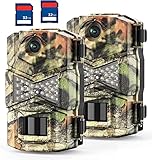
Overview: The WOSODA 2 Pack provides an accessible entry point into trail camera monitoring, combining affordability with essential features. Each camera captures 30MP images and 1080P HD video, triggered by motion within 60 feet. The 0.3-second trigger speed and 850nm low-glow infrared LEDs deliver reliable performance for daylight and nighttime observation. This bundle includes two 32GB SD cards, eliminating immediate accessory purchases. The camouflage housing blends into natural environments, while IP66 waterproofing protects against weather. Multiple recording modes and time functions add versatility for targeted monitoring applications.
What Makes It Stand Out: The inclusion of two 32GB SD cards represents genuine value rarely found in budget trail camera bundles. The mimetic camouflage pattern provides superior concealment compared to plain black or gray housings. Dedicated time-switch and timer functions allow precise control over active hours, reducing false triggers from diurnal wind-blown vegetation while focusing capture on peak activity periods. The twin-pack configuration with matched accessories simplifies deployment for users establishing their first multi-camera setup.
Value for Money: This is arguably the best budget proposition in trail cameras, offering dual units with memory cards at a price point below many single-camera competitors. While specifications trail premium models, the cost-per-camera makes widespread deployment financially feasible. For beginners testing camera placement strategies or property owners needing basic surveillance, the investment risk is minimal. The included SD cards alone represent $20+ in savings, making the effective camera price exceptionally competitive.
Strengths and Weaknesses: Strengths include unbeatable price-point, included SD cards, effective camouflage design, adequate 1080P video, and IP66 weatherproofing. Weaknesses include slower 0.3-second trigger speed that may miss fast action, limited 60-foot detection range, 850nm low-glow LEDs visible to some animals, and lower 30MP resolution insufficient for detailed study.
Bottom Line: An excellent starter set for novices, casual wildlife observers, and budget-conscious property owners. The WOSODA 2 Pack delivers functional monitoring capabilities without financial strain, making it ideal for learning optimal camera placement or covering low-priority areas where premium features aren’t justified. Manage expectations regarding trigger speed and invest savings in quality batteries for best results.
6. WOSODA Mini Trail Camera 4 Pack 24MP 1080P HD, Game Cam with SD Card, Waterproof Tiny Deer Camera Night Vision Motion Activated with Fast Trigger Time for Outdoor Wildlife Monitoring

Overview: The WOSODA Mini Trail Camera 4-Pack delivers comprehensive wildlife monitoring coverage with 24MP photos and 1080P video recording. Each compact unit features a 0.3-second trigger speed and operates on just four AA batteries, making deployment across multiple locations both economical and convenient. The package includes four 32GB SD cards and 16 AA batteries, providing everything needed for immediate setup in various outdoor applications from home security to wildlife observation.
What Makes It Stand Out: This bundle’s primary advantage is quantity without quality compromise. The miniaturized camouflage design ensures superior concealment compared to bulkier alternatives, while low-power consumption architecture extends field life significantly. The 0.3-second trigger reliably captures most wildlife activity, and the all-inclusive package eliminates additional accessory purchases, making it ideal for monitoring large properties or multiple game trails simultaneously.
Value for Money: At a per-camera cost substantially below individual units, this 4-pack represents exceptional value for property owners needing multi-point surveillance. The included batteries and SD cards add roughly $40 in immediate value. While lacking premium features like WiFi, the cost savings allow purchasing four cameras for the price of one high-end cellular model, maximizing coverage breadth over advanced connectivity.
Strengths and Weaknesses: Strengths include unbeatable multi-camera value, excellent concealment, low power requirements, and complete accessory inclusion. Weaknesses involve the moderate 0.3-second trigger speed (slower than premium 0.1s models), 1080P video resolution (not 4K), and lack of remote connectivity requiring manual SD card retrieval for footage access.
Bottom Line: Ideal for budget-conscious users requiring multiple observation points. The WOSODA 4-Pack sacrifices advanced connectivity for affordability and coverage breadth, making it perfect for large property monitoring where physical access isn’t problematic and quantity matters more than cutting-edge features.
7. SPYPOINT Flex G-36 Twin Pack Cellular Trail Camera, 36MP Photos and 1080p Videos with Sound, GPS Enabled, Dual-Sim LTE Connectivity, 100’ Flash & Detection Range, Responsive Trigger up to .3S

Overview: The SPYPOINT Flex G-36 Twin Pack revolutionizes remote wildlife monitoring through integrated cellular technology. These cameras transmit 36MP photos and 1080P videos with sound directly to your phone via the SPYPOINT app, eliminating field visits for SD card retrieval. GPS functionality and dual-SIM LTE connectivity ensure reliable operation across multiple carriers, while the 100-foot flash and detection range covers extensive territory.
What Makes It Stand Out: The cross-carrier dual-SIM system automatically selects the strongest available network, a game-changer for remote locations with spotty coverage. GPS tagging helps manage multiple camera locations, while instant mobile delivery keeps hunters and property owners continuously informed. The ability to scout from anywhere transforms traditional wildlife monitoring into real-time intelligence gathering.
Value for Money: While premium-priced, the twin pack saves approximately 15% versus individual units. The real value lies in time and fuel savings from eliminated field checks. Compared to traditional cameras requiring frequent visits, the cellular convenience justifies the higher upfront cost for serious users, though data subscription fees add ongoing expense that must be factored into total ownership costs.
Strengths and Weaknesses: Strengths include unmatched remote accessibility, exceptional 36MP image detail, dual-SIM reliability, GPS tracking, and impressive detection range. Weaknesses involve higher initial investment, required data plans, battery consumption from cellular transmission, and potential signal dead zones despite cross-carrier capability in extremely remote areas.
Bottom Line: The ultimate solution for dedicated hunters and remote property surveillance. The SPYPOINT Flex G-36 delivers professional-grade monitoring that pays dividends through convenience and timely intelligence, making it worth the premium for those who demand real-time access and can justify the subscription costs.
8. GardePro E6 WiFi Trail Camera (Non-Cellular), 48MP Photos, 1296P HD Video, App Control with Live View, 110° Wide-Angle, No-Glow Night Vision, Motion Activated

Overview: The GardePro E6 WiFi Trail Camera bridges the gap between basic and cellular models by offering app-based control without subscription fees. Capturing 48MP photos and 1296P HD video through a 110° wide-angle lens, this camera provides live viewing capabilities within a 45-foot range via its built-in WiFi and Bluetooth connectivity. It works exclusively with the GardePro Mobile App for seamless operation.
What Makes It Stand Out: The live view feature sets the E6 apart, allowing real-time positioning verification and wildlife observation without disturbing habitats. No-glow 940nm infrared LEDs ensure complete stealth during nighttime operation up to 75 feet. The ultra-low-power WiFi design preserves battery life while enabling smartphone integration, and support for optional solar panels extends deployment duration indefinitely.
Value for Money: Positioned in the mid-range price bracket, the E6 eliminates ongoing cellular costs while retaining modern conveniences. The ability to check camera positioning remotely saves time and improves setup accuracy. For users who can periodically visit their cameras, this represents the sweet spot between affordability and functionality, avoiding both premium cellular prices and basic model limitations.
Strengths and Weaknesses: Strengths include live view functionality, no subscription fees, excellent 48MP resolution, wide-angle coverage, and solar compatibility. Weaknesses involve the limited 45-foot WiFi range requiring proximity for access, lack of true remote monitoring, and no PC/laptop connectivity. Night vision range is moderate compared to premium models offering 100+ feet.
Bottom Line: Perfect for wildlife enthusiasts who want smartphone integration without monthly fees. The GardePro E6 excels in scenarios where periodic camera visits are acceptable but remote positioning verification proves invaluable. It delivers premium features at a reasonable price point for dedicated hobbyists and researchers.
9. LANTOOCAM Trail Camera, 60MP Hunting Camera with WiFi, 32GB TF Card, Night Vision, Motion Activated, IP66 Waterproof, 120°Wide-Angle for Deer Scouting or Home Security, APP Control, H.264 MP4 Video

Overview: The LANTOOCAM Trail Camera pushes resolution boundaries with 60MP photos and 1296P video while offering WiFi connectivity through the TrailCam GO app. Its 120° wide-angle lens and IP66 waterproof rating make it versatile for both wildlife monitoring and home security applications. The included 32GB TF card and compact camouflage design enhance its out-of-the-box readiness and concealment capabilities.
What Makes It Stand Out: The exceptional 60MP image resolution captures unprecedented detail for post-analysis, while the extra-wide 120° field of view monitors broader areas with fewer cameras. No-glow infrared LEDs provide stealthy night vision up to 50 feet. The compact design enhances portability and reduces theft risk, while H.264 encoding enables quick media preview without full downloads.
Value for Money: This camera delivers premium specifications—particularly the 60MP sensor—at a competitive mid-range price point. The included 32GB card adds immediate value. While WiFi connectivity lacks cellular range, it provides modern convenience without subscription costs, offering strong feature-to-price ratio for users prioritizing image quality over remote access.
Strengths and Weaknesses: Strengths include class-leading 60MP resolution, extra-wide 120° lens, WiFi app control, included memory card, and robust IP66 weatherproofing. Weaknesses involve limited brand recognition, moderate 50-foot night vision range, WiFi range constraints requiring field visits, and potential app reliability questions versus established competitors with larger user bases.
Bottom Line: An excellent choice for detail-oriented users wanting high resolution and wide coverage. The LANTOOCAM balances advanced imaging capabilities with WiFi convenience, making it ideal for wildlife research and comprehensive property monitoring where maximum image detail is paramount and subscription-free operation is preferred.
10. GardePro A3S Trail Camera (Non-Cellular, Non-WiFi), 64MP Photo & 1296P HD Video, 0.1s Trigger, 100ft No-Glow Night Vision, Motion Activated Wildlife Camera

Overview: The GardePro A3S represents the pinnacle of non-connected trail camera performance, delivering 64MP photos and 1296P video through a Starvis sensor optimized for low-light conditions. Its triple PIR sensor array achieves an industry-leading 0.1-second trigger speed with 100-foot no-glow night vision range, all without WiFi or cellular connectivity. This pure performance focus targets users prioritizing reliability over convenience.
What Makes It Stand Out: The A3S focuses entirely on capture excellence rather than connectivity. The Starvis sensor excels in dawn/dusk conditions where other cameras struggle, delivering usable images in marginal light. Three PIR sensors create a wider detection arc while enabling the lightning-fast trigger. The 100-foot invisible infrared flash reaches farther than most competitors, making it ideal for large clearings and remote corridors.
Value for Money: By eliminating wireless components, the A3S delivers premium imaging and speed at a price point below cellular models. For users prioritizing reliability and image quality over remote access, this represents exceptional value. The ultra-low power consumption translates to months of operation on one battery set, reducing maintenance costs and field visits significantly.
Strengths and Weaknesses: Strengths include fastest-in-class 0.1s trigger, superior Starvis low-light performance, exceptional 100-foot night vision, 64MP resolution, and minimal power consumption. Weaknesses require manual SD card retrieval, lack of remote positioning verification, and no immediate notification capability when captures occur.
Bottom Line: The ultimate choice for remote deployments and purists prioritizing capture reliability over convenience. The GardePro A3S excels where wireless connectivity fails—deep wilderness, long-term monitoring, and critical research applications demanding the fastest trigger and best low-light performance without battery-draining features.
Understanding Modern Trail Camera Technology
Evolution of Deer Monitoring Equipment
The journey from basic film cameras to today’s digital scouting tools represents one of the most significant technological leaps in hunting gear history. Early trail cameras were bulky, noisy, and often spooked more deer than they documented. Modern units have become virtually invisible to wildlife while delivering crystal-clear imagery that reveals not just that a deer passed by, but its age, health, antler development, and direction of travel. The integration of artificial intelligence, improved battery efficiency, and wireless connectivity has fundamentally changed how we interpret deer movement data.
Key Technical Specifications Explained
When evaluating trail cameras for deer monitoring, you’ll encounter a barrage of technical terms that manufacturers use to differentiate their products. Terms like “megapixels,” “trigger speed,” “detection zone,” and “PIR sensor angle” aren’t just marketing fluff—they represent measurable performance characteristics that directly impact your scouting effectiveness. Understanding these specifications helps you match camera capabilities to your specific hunting terrain, whether you’re watching a distant food plot or a narrow creek crossing.
Essential Features for Deer Hunting Trail Cameras
Image Quality and Resolution Standards
Image quality extends far beyond the megapixel number printed on the box. While high resolution helps when zooming in to count antler points or identify individual deer, sensor quality, lens clarity, and image processing software play equally crucial roles. For deer monitoring, look for cameras that produce sharp, well-exposed photos in various lighting conditions. The ability to capture detailed images at dawn and dusk—prime movement times—is often more valuable than maximum megapixel count. Consider how images look at full zoom rather than just thumbnail size.
Trigger Speed and Recovery Time
Trigger speed—the time between detecting motion and capturing an image—can mean the difference between photographing a deer’s full body or just its tail as it exits the frame. For trail monitoring, speeds under 0.5 seconds are generally considered adequate, but premium units now offer triggers approaching 0.1 seconds. Equally important is recovery time: how quickly the camera resets to capture a second image. When multiple deer travel together or a buck follows a doe, fast recovery ensures you don’t miss the second animal. Look for recovery times under 2 seconds for effective herd monitoring.
Detection Range and Sensor Technology
Detection range determines how far away an animal can trigger your camera, with modern units offering ranges from 60 to over 100 feet. However, range alone doesn’t tell the whole story. The detection zone’s shape—whether wide and shallow or narrow and deep—affects how the camera covers trails, fields, and pinch points. Advanced PIR (passive infrared) sensors with adjustable sensitivity help prevent false triggers from swaying grass while ensuring actual deer movement doesn’t go unnoticed. Consider your specific scouting locations when evaluating these parameters.
Night Vision Capabilities
Since many mature bucks move primarily under cover of darkness, night vision quality is arguably the most critical feature for serious deer hunters. Traditional infrared LEDs illuminate the area with light invisible to deer but visible to the camera. Black flash or no-glow technology uses LEDs that emit no visible light whatsoever, making them completely covert. The trade-off is typically shorter illumination distance. For monitoring deer without alerting them, no-glow is superior, but for maximum illumination range, low-glow infrared often performs better.
Battery Life and Power Options
Nothing sabotages a scouting plan like a dead camera in a prime location. Modern trail cameras have become remarkably efficient, with some units running 12+ months on a single set of lithium batteries. Battery life depends on trigger frequency, temperature, and whether you’re using wireless features. Consider cameras that accept external power sources like solar panels or rechargeable battery packs for long-term deployment. For remote locations where visits are infrequent, extended battery life isn’t just convenient—it’s mission-critical.
Advanced Features Worth Considering
Cellular and Wireless Connectivity
The ability to receive images directly on your phone without disturbing the area has revolutionized deer scouting. Cellular trail cameras transmit photos via 4G or 5G networks, though they require data plans and adequate signal strength. Wi-Fi-enabled cameras work for shorter distances but still require physical retrieval. For 2026, consider cameras with optimized data compression to reduce plan costs and those that allow you to adjust transmission settings—sending only the most important images rather than every squirrel that passes by.
Video Recording Features
Video reveals behavior patterns that still images miss: how deer interact, feeding duration, and alertness levels. Modern cameras offer HD video with audio, slow-motion capabilities, and time-lapse functions. For deer monitoring, video length options matter more than resolution alone. Being able to capture 30-60 seconds ensures you see complete behaviors rather than just brief snippets. Some advanced units now offer adjustable video length based on activity level, conserving battery and storage while capturing meaningful footage.
Audio Recording Considerations
While often overlooked, audio recording adds another dimension to understanding deer behavior. Capturing grunts, bleats, and footfall patterns helps identify rut activity and group dynamics. However, microphones can also record wind noise and rain, consuming storage space. Look for cameras with adjustable audio sensitivity or the ability to disable sound recording when unnecessary. In some jurisdictions, audio recording has legal implications, so verify local regulations before deploying cameras with this feature.
Weather Resistance and Durability
Your trail camera faces brutal conditions: extreme temperatures, humidity, rain, snow, and curious wildlife. Weather resistance ratings (IP ratings) indicate protection against dust and water. For deer hunting, IP66 or higher ensures your camera survives the season. Beyond ratings, consider build quality: latch durability, seal integrity, and camouflage pattern effectiveness. Cameras deployed from September through January experience temperature swings that can cause condensation inside poorly sealed units, fogging lenses and corroding electronics.
Memory and Data Management
Storage Capacity Options
Most trail cameras use SD cards, with capacities ranging from 32GB to 512GB. The right size depends on image resolution, video length, and retrieval frequency. A camera taking 20MP photos and 1080p videos fills storage much faster than one capturing 8MP stills. For long-term deployment, higher capacity cards prevent lost data when the card fills. Some 2026 models offer internal memory as backup when cards fail or reach capacity, ensuring you never miss critical shots.
Data Transfer Methods
Beyond cellular transmission, consider how you’ll retrieve images from non-wireless cameras. Some units feature built-in viewers, allowing you to check footage in the field without a laptop. Others offer USB connections for direct device transfers. For managing multiple cameras, consider how easily you can organize and analyze thousands of photos. Some advanced systems tag images with GPS coordinates, weather data, and moon phase information, creating a comprehensive database for pattern analysis.
Setup and Placement Strategies
Optimal Positioning for Deer Trails
Camera placement matters as much as camera quality. Position cameras 10-15 feet from trails, mounted 8-10 feet high and angled slightly downward to maximize the detection zone while minimizing sky exposure. For field edges, place cameras at natural funnels: trail intersections, creek crossings, or fence gaps. The sun’s position throughout the day affects image quality; avoid pointing east or west where possible. Consider prevailing wind directions and how human scent might contaminate the area during setup.
Security and Anti-Theft Measures
Trail camera theft remains a frustrating reality. Security boxes that bolt cameras to trees deter opportunistic thieves but add bulk and can reflect sunlight if not camouflaged. Python cable locks offer lighter security for lower-risk areas. Some cameras feature GPS tracking, though this adds cost and requires subscription services. For public land or high-traffic areas, consider placing cameras higher in trees with angled mounts, making them less noticeable from ground level. The best security is often making the camera difficult to spot in the first place.
Legal and Ethical Considerations
Regulations on Trail Camera Use
Trail camera regulations vary significantly by state and are evolving rapidly. Some jurisdictions now restrict cellular cameras during hunting season, while others limit placement on public lands. Before deploying cameras, verify current regulations through your state’s wildlife agency. Pay attention to rules about placing cameras near roads, property boundaries, and water sources. Regulations can change annually, so review them each season rather than relying on past practices.
Wildlife Photography Ethics
Beyond legal requirements, consider the ethical implications of your monitoring. Avoid placing cameras near bedding areas where frequent visits could pressure deer. Minimize disturbance when checking cameras—use scent control and visit during midday when deer are less active. The goal is to observe natural behavior, not alter it through excessive human presence. Responsible camera use means being a wildlife steward first and a hunter second.
Maintenance and Troubleshooting
Seasonal Maintenance Checklist
Pre-season preparation includes updating firmware, testing detection zones, cleaning lenses, and checking battery contacts for corrosion. Replace batteries before they die completely, as voltage drop can cause cameras to malfunction before shutting down. Format SD cards in-camera before deployment to prevent file system errors. Check seals and gaskets for wear, especially on units that have been stored through temperature extremes. A few minutes of maintenance prevents hours of frustration later.
Common Issues and Solutions
False triggers from vegetation movement waste battery and fill storage cards. Adjust sensitivity settings or trim vegetation within the detection zone. Blurry night images often indicate weak batteries or condensation on the lens. White-washed photos at night suggest the subject is too close to the camera—adjust positioning accordingly. If a camera stops working, remove and reinsert batteries to reset the system before assuming hardware failure. Many issues stem from simple power interruptions rather than actual malfunctions.
Cost Considerations and Value
Budget vs. Premium Features
Entry-level cameras ($80-$150) now offer performance that matched premium units five years ago, making them suitable for simple trail monitoring. Mid-range options ($150-$300) add better night vision, faster triggers, and improved battery life—often the sweet spot for most hunters. Premium cameras ($300+) provide cellular connectivity, superior image quality, and durability for serious property managers. The key is matching features to your actual needs rather than buying capabilities you’ll never utilize.
Long-term Investment Perspective
A trail camera’s true cost includes not just the purchase price, but batteries, data plans, memory cards, and security accessories. A $200 camera that lasts three seasons often provides better value than a $100 camera that fails after one year. Consider warranty terms and manufacturer reputation for customer service. Cameras with standardized battery types and readily available accessories reduce long-term ownership costs. Think of your purchase as a multi-season investment rather than a single-season expense.
Frequently Asked Questions
How many trail cameras do I need to effectively monitor deer movement on my property?
The number depends on your property size, terrain diversity, and monitoring goals. For a 40-acre parcel with varied habitat, 4-6 cameras typically provide adequate coverage of major trails, food sources, and bedding area perimeters. Start with high-traffic locations and expand based on the intelligence gathered. It’s better to thoroughly monitor a few key areas than to superficially cover too much ground.
What’s the best time of year to deploy trail cameras for deer scouting?
Begin deploying cameras in late summer (July-August) to establish baseline patterns before pre-rut activity shifts behavior. This timing also reveals bachelor group dynamics and antler development. Keep cameras active through hunting season and into winter to monitor post-rut recovery and late-season patterns. Year-round monitoring provides the most comprehensive understanding of deer movement cycles.
Are cellular trail cameras worth the additional cost and data plan expense?
For remote properties or situations where frequent visits would disturb deer, cellular cameras provide significant advantages. They allow real-time pattern adjustment and reduce human scent pressure. However, for accessible locations where you check cameras weekly, non-cellular units often provide better value. Consider hybrid systems: cellular cameras at prime locations and standard cameras for secondary monitoring.
How can I minimize false triggers from wind-blown vegetation?
Position cameras to avoid direct sunlight on moving leaves, adjust PIR sensitivity settings to medium or low, and trim vegetation within the detection zone. Some advanced cameras offer smart detection algorithms that differentiate between animal movement and vegetation sway. Pointing cameras slightly downward rather than straight out reduces the amount of background vegetation in the frame.
Do trail cameras spook deer, and how can I reduce their impact?
Modern no-glow infrared cameras have minimal impact on deer behavior when properly placed. Mount cameras 8-10 feet high to keep them above a deer’s normal line of sight. Avoid placing cameras directly over heavily used trails where deer might detect the slight sound of activation. Visit cameras infrequently and use scent control products when you do. Over time, deer typically become accustomed to stationary cameras.
What’s the difference between infrared, low-glow, and no-glow flash technology?
Infrared (or standard) LEDs emit a visible red glow that deer can see but doesn’t typically alarm them. Low-glow LEDs produce a faint red light that’s less noticeable but still slightly visible. No-glow (black flash) LEDs emit light completely invisible to both deer and humans, making them ideal for areas with heavy hunting pressure or for mature, cautious bucks. The trade-off is typically reduced illumination range.
How long should I leave a trail camera in one location before moving it?
Leave cameras in place for at least 10-14 days before making decisions about location effectiveness. Deer patterns can take time to establish, especially after the initial disturbance of camera installation. During rut season, you might move cameras more frequently to follow doe groups and shifting buck activity. For pre-season scouting, longer deployment (3-4 weeks) provides more reliable pattern data.
Can I use trail cameras on public hunting land?
Regulations vary dramatically by state and sometimes by individual public land units. Some states prohibit trail cameras entirely on public land, others restrict them during hunting season, while many have no specific regulations. Always check current rules with the managing agency before placing cameras. When allowed, use extra security measures and expect higher theft risk on public versus private land.
What’s the recommended height and angle for mounting trail cameras?
Mount cameras 8-10 feet high, angled downward at approximately 30-45 degrees. This height keeps cameras above deer eye level, reduces theft risk, and provides better identification of individual animals. The downward angle maximizes the detection zone on the trail while minimizing sky in the frame, which can cause exposure issues. Always test the detection zone after mounting by walking the area at various distances.
How do extreme cold temperatures affect trail camera performance?
Cold weather impacts battery performance, LCD screens, and mechanical components. Lithium batteries perform significantly better than alkaline in freezing temperatures, maintaining voltage in conditions below 0°F. Some cameras feature battery compartment insulation or external power options for winter deployment. Trigger speed may slow slightly in extreme cold, and condensation can form when moving cameras between temperature extremes, requiring careful acclimation before use.
Related Buying Guides
- Top 10 Best Hunting Trail Cameras for Deer Monitoring in 2026
- Top 10 Best Hunting Trail Cameras for Monitoring Game Trails in 2026
- Top 10 Best Hunting Trail Cameras for Monitoring Game in 2026
- 10 Best Value 1080p Trail Cameras for Affordable Deer Monitoring in 2026
- 10 Best Budget Hunting Trail Cameras Under $100 for Casual Scouting in 2026