Table of Contents
Imagine standing motionless in the pre-dawn chill, breath forming faint clouds in the crisp air, your senses straining against the fading stars. The forest is a tapestry of deep blues and grays, shapes indistinct, movement nearly invisible. This is the critical hour for many hunters, where success hinges on seeing the unseen as light transitions. Low-light hunting demands more than just patience; it requires optics that actively gather and transmit every precious photon, transforming murky shadows into clear, actionable detail. Choosing the right scope isn’t a luxury for these fleeting moments—it’s the difference between a clean, ethical shot and watching your opportunity vanish into the gloom.
The quest for the perfect low-light scope often leads hunters down a path cluttered with marketing hype and technical jargon. Terms like “twilight factor” and “exit pupil” get thrown around, but what do they really mean for your hunt when visibility is measured in minutes? Forget chasing specific brand names or this year’s “hottest” model—technology evolves, but the fundamental physics of light transmission remain constant. True low-light performance stems from a deliberate combination of optical design, material quality, and thoughtful feature integration. This guide cuts through the noise, focusing on the essential characteristics you must evaluate to ensure your scope performs when the light is at its absolute worst, turning those critical dawn and dusk hours into your most productive hunting windows.
Top 10 Hunting Scopes for Low-Light Conditions
Detailed Product Reviews
1. Bushnell Legend 3-9x40mm Illuminated Riflescope, Hunting Rifle Scope with Illuminated Multi-X Reticle

Overview: The Bushnell Legend 3-9x40mm is a versatile hunting riflescope designed for reliable performance in diverse field conditions. Its 3-9x magnification range and 40mm objective lens provide flexibility for medium-range shots, while the illuminated Multi-X reticle enhances target acquisition during low-light hours like dawn or dusk. Built for rugged outdoor use, it integrates weather-resistant technologies to maintain clarity in challenging environments.
What Makes It Stand Out: The etched-glass illuminated reticle with six brightness settings and quick-access off positions offers exceptional adaptability across lighting scenarios. Bushnell’s proprietary RainGuard HD coating ensures lenses repel water and resist fogging, a critical advantage during sudden weather changes. The one-piece aircraft-grade aluminum tube balances durability with lightweight portability, outperforming many budget scopes in longevity.
Value for Money: Priced mid-range, it delivers premium features typically found in costlier models, such as fully multi-coated optics and IPX7 waterproofing. While not as specialized as tactical LPVOs, it offers superior value for traditional hunters needing reliability without excessive complexity or expense compared to entry-level alternatives.
Strengths and Weaknesses: Strengths: Excellent low-light performance, robust weatherproofing, intuitive illumination controls, and consistent zero retention. Weaknesses: Limited magnification range for long-range shots, illumination battery life could be longer, and the Multi-X reticle lacks advanced holdover points for precise ballistic compensation.
Bottom Line: An outstanding choice for hunters prioritizing durability and low-light usability in a traditional magnified scope. Its weather resistance and illumination justify the price, making it a highly recommended workhorse for deer or elk seasons.
2. Aquilifer HT 3-12x56 SFP Rifle Scope, Red-Illuminated Mil Dot Reticle, 1/10 MRAD Turrets, 30mm Tube, Low-Light Hunting Optic, Waterproof Fogproof Shockproof Riflescope

Overview: The Aquilifer HT 3-12x56 is a high-performance riflescope targeting hunters and precision shooters needing extended magnification and tactical features. Its 3-12x range and large 56mm objective lens maximize light transmission for exceptional clarity in dim conditions, while the red-illuminated Mil Dot reticle and MRAD turrets cater to long-range accuracy demands.
What Makes It Stand Out: The 11-level red illumination provides superior low-light visibility compared to competitors’ 6–10 settings, and the precise 1/10 MRAD turrets (±60 MOA travel) enable exact windage/elevation adjustments. Fully multi-coated optics on the 56mm lens deliver outstanding brightness and edge-to-edge sharpness, outperforming similarly priced scopes in image quality during twilight hours.
Value for Money: Positioned as a budget-friendly tactical scope, it rivals premium brands with its robust aircraft-grade aluminum construction, IPX7 rating, and comprehensive feature set. The inclusion of MRAD turrets and wide illumination range at this price point offers exceptional value for shooters seeking precision without a $1,000+ investment.
Strengths and Weaknesses: Strengths: Superior low-light performance, highly adjustable illumination, precise MRAD turrets, and rugged waterproof/fogproof build. Weaknesses: Bulkier due to large objective lens, second focal plane reticle requires magnification consideration for holdovers, and turret reset may lack the tactile feedback of high-end models.
Bottom Line: A compelling option for budget-conscious shooters needing tactical precision and low-light capability. Its optical quality and adjustments justify the cost, making it ideal for hunters engaging targets beyond 300 yards.
3. SIG SAUER Tango-MSR LPVO 1-6x24mm Waterproof Fogproof Rugged Tactical Hunting Rifle Scope | Second Focal Plane/SFP/F2 | Illuminated FL-6 Hellfire Reticle, Black (SOTM61003)
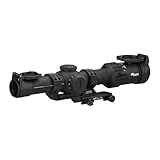
Overview: The SIG SAUER Tango-MSR 1-6x24mm is a premium low-power variable optic (LPVO) engineered for rapid target acquisition and tactical versatility. Featuring a 1-6x magnification range and second focal plane (SFP) illuminated FL-6 Hellfire reticle, it excels in dynamic shooting scenarios from close quarters to mid-range engagements while maintaining durability in harsh conditions.
What Makes It Stand Out: The FL-6 Hellfire reticle with 11 brightness settings ensures swift visibility in any light, and the integrated throw lever enables instant magnification shifts. Coupled with low-dispersion glass for exceptional edge-to-edge clarity and an included ALPHA-MSR cantilever mount, it delivers a turnkey solution for AR-platform rifles without additional accessories.
Value for Money: Though positioned at a premium price, its included mount, elite optical performance, and battle-tested construction justify the cost. It competes directly with $1,200+ LPVOs, offering SIG’s renowned reliability and optics at a slightly more accessible tier for serious tactical users or hunters.
Strengths and Weaknesses: Strengths: Outstanding light transmission, ultra-responsive illumination, seamless magnification changes via throw lever, and factory-mounted cantilever base. Weaknesses: Higher price than entry-level LPVOs, SFP reticle scaling requires holdover recalibration at different magnifications, and minimal eye relief at 1x.
Bottom Line: A top-tier LPVO for professionals and enthusiasts demanding reliability and speed. Its integrated mount and optical excellence make it a worthwhile investment for tactical applications or versatile hunting.
4. CVLIFE 4x32 Compact Rifle Scope Crosshair Optics Hunting Scope with 20mm Mounts
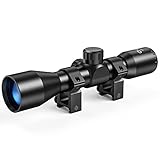
Overview: The CVLIFE 4x32 is a no-frills, fixed-magnification rifle scope designed for budget hunters seeking simplicity and portability. Its 4x magnification and compact 7.48-inch length cater to quick-target acquisition in dense woods or fast-paced hunting situations, while basic weatherproofing ensures functionality in mild conditions.
What Makes It Stand Out: Extreme portability is its hallmark—weighing little and fitting seamlessly on lightweight rifles or carbines. The fully coated optics provide adequate brightness for daylight hunting, and the included 20mm mounts simplify installation, making it ideal for beginners or as a secondary optic.
Value for Money: As an entry-level scope, it delivers surprising value under $100. While optical quality and durability can’t match premium models, it outperforms many ultra-cheap alternatives with its fog/water resistance and aluminum construction—perfect for casual use where cost is paramount.
Strengths and Weaknesses: Strengths: Ultra-compact and lightweight, affordable, easy installation with included mounts, and sufficient for close-range hunting. Weaknesses: Limited to fixed 4x magnification, narrow field of view, subpar low-light performance, and less robust recoil resistance for heavy-caliber rifles.
Bottom Line: A functional, economical choice for novice hunters or small-game shooters needing a simple, unobtrusive optic. Avoid for long-range or low-light scenarios, but ideal for budget builds where size matters.
5. SIG SAUER Tango-MSR LPVO 1-6X24mm Waterproof Fog-Proof Rugged Tactical Hunting Rifle Scope | Second Focal Plane/F2 | Illuminated MSR BDC-6 Reticle, Coyote Tan

Overview: The coyote tan variant of SIG’s Tango-MSR 1-6x24mm LPVO pairs tactical agility with hunting practicality. Featuring the illuminated MSR BDC-6 reticle in second focal plane (SFP), it supports rapid engagement from 1x to 6x magnification while offering ballistic drop compensation for ethical hunting at varying distances.
What Makes It Stand Out: The BDC-6 reticle simplifies holdovers for common hunting calibers without dialing turrets, a key advantage over the FL-6 Hellfire model for field shooters. Nitrogen-purged internals ensure fogproof reliability, and the included ALPHA-MSR cantilever mount—paired with flip-back covers—creates an all-in-one tactical package ready for immediate use.
Value for Money: Sharing the premium price of its black counterpart, it justifies cost through SIG’s optical excellence and specialized reticle. The coyote tan finish offers practical camouflage for hunters, while the BDC-6’s ballistic focus provides tangible utility over generic illuminated reticles at this tier.
Strengths and Weaknesses: Strengths: Ballistic drop compensation reticle, exceptional clarity, integrated mounting solution, and versatile 1-6x range. Weaknesses: Premium cost may deter casual users, SFP limitations for precise holds, and similar eye relief constraints as other LPVOs at 1x.
Bottom Line: A hunter-optimized LPVO that excels in versatility and field-ready design. The BDC-6 reticle and coyote tan finish make it a standout recommendation for hunters needing one optic for varied ranges and environments.
6. CVLIFE 3-9x40 Rifle Scope, Red & Green Illuminated Optical Riflescope, Mil-dot Reticle Scope for Hunting with Mounts

Overview: The CVLIFE 3-9x40 is an entry-level riflescope designed for hunters seeking reliability in varied lighting. It features a versatile magnification range, dual-color illumination, and includes mounting hardware straight out of the box. Constructed for practical field use, it targets budget-conscious shooters needing dependable performance. What Makes It Stand Out: Its standout features include 5-level red/green illumination for low-light adaptability, a 95% light-transmitting multi-coated lens system, and capped reset turrets offering precise 1/4 MOA adjustments. The included 20mm mounts and dioptric adjustment for vision correction add significant convenience, eliminating common accessory costs. Value for Money: Priced accessibly, it delivers exceptional value by bundling essential mounts and offering optical clarity rivaling more expensive models. While not top-tier, its robust nitrogen-filled aluminum housing and all-weather sealing provide reliability that justifies the cost for hunters prioritizing functionality over premium optics. Strengths and Weaknesses: Strengths: Affordable with included mounts; effective illumination; crisp mil-dot reticle; fog/rainproof; comfortable eye relief. Weaknesses: Turret clicks lack refinement; optical clarity diminishes at max magnification; build quality feels utilitarian versus premium scopes. Bottom Line: An outstanding budget option for novice hunters or those needing a durable backup scope. Its practical features and included accessories make it a highly recommended value pick for general hunting within its magnification range.
7. CVLIFE 1.5-5x32 Crossbow Scope, 20-100 Yards Rangefinder Ballistic Reticle, 300-460 FPS Red Green Illuminated Compact Crossbow Scope for Hunting with 20mm Scope Rings

Overview: Engineered specifically for crossbow users, the CVLIFE 1.5-5x32 features a ballistic reticle calibrated for 300-460 FPS bolts. Its compact design (8.2 inches), illuminated ranging stadia, and rugged construction cater to hunters needing quick target acquisition at varying distances in diverse conditions. What Makes It Stand Out: The dedicated 20-100 yard ballistic reticle with adjustable speed calibration is its key differentiator, simplifying holdovers without external tools. Fully multi-coated green lenses promise 95% light transmission, while the single-piece aircraft aluminum tube withstands extreme recoil (tested to 1000G), a critical crossbow requirement. Value for Money: Excellent value given the comprehensive package (scope, rings, caps, batteries, tools) and specialized crossbow optics. It outperforms generic rifle scopes on crossbows by addressing trajectory drop, making it a cost-effective solution versus adapting unsuitable optics. Strengths and Weaknesses: Strengths: Purpose-built ballistic reticle; exceptional shock resistance; clear low-light performance; compact size; full accessory kit. Weaknesses: Limited magnification unsuited for long-range; illumination can wash out reticle at highest settings; eye box is narrow at 5x. Bottom Line: A top-tier choice for crossbow hunters prioritizing speed and accuracy within 100 yards. Its specialized design, durability, and included accessories deliver unmatched value specifically for crossbow applications.
8. CVLIFE Hunting Rifle Scope 6-24x50 AOE Red and Green Illuminated Gun Scope with Free Mount
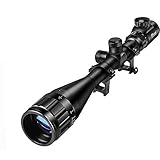
Overview: The CVLIFE 6-24x50 AOE targets hunters needing high magnification for long-range precision. Its large 50mm objective lens, adjustable objective (AO) for parallax correction, and dual-color illuminated reticle aim to provide clarity and accuracy at extended distances, complete with free mounting rings. What Makes It Stand Out: The standout feature is the high 6-24x magnification paired with the light-gathering 50mm objective, ideal for low-light, long-range scenarios. The adjustable objective (AOE) allows precise parallax adjustment, while 1/8 MOA click value offers finer windage/elevation tuning than typical budget scopes (usually 1/4 MOA). Value for Money: Represents strong value for high-magnification needs, as scopes in this range often command premium prices. The free mount inclusion enhances affordability, though optical performance at maximum zoom may not match significantly more expensive competitors despite the impressive specs. Strengths and Weaknesses: Strengths: High zoom range for distant targets; large objective gathers ample light; precise 1/8 MOA turrets; AO eliminates parallax; includes mounts. Weaknesses: Narrow field of view at 24x; bulkier/heavier than lower-mag scopes; illumination can cause glare; turrets lack crispness. Bottom Line: A compelling budget option for varmint or long-range hunters needing high magnification. While optics have limitations at max power, its features and price make it a worthwhile recommendation for dedicated long-distance shooting.
9. Hunters SFP 3-12 X44 Rifle Scope FFP VPR Illuminated Reticle 30mm Tube Waterproof Fog-Proof Rugged Tactical Hunting Scope (3-12X44)

Overview: The Techhunters 3-12x44 is a versatile riflescope blending hunting and tactical applications. Featuring a first focal plane (FFP) illuminated reticle, multi-coated optics, and a rugged 30mm tube, it promises edge-to-edge clarity and durability for serious shooters across various environments. What Makes It Stand Out: Its FFP VPR illuminated reticle scales with magnification for accurate holdovers at any zoom, a rarity in this price segment. Enhanced anti-reflective coatings boost light transmission, while the no-slip eyepiece grip and extended eye relief improve usability during fast-paced shooting sessions. Value for Money: Exceptional value due to the inclusion of FFP optics typically found in higher-priced models. The Techhunters Forever Warranty adds significant peace of mind, making it a smarter investment than comparable CVLIFE scopes despite a likely slightly higher price point. Strengths and Weaknesses: Strengths: True FFP reticle for ranging/holdovers; superior coatings and clarity; robust waterproof/fogproof construction; user-friendly eyepiece; strong warranty. Weaknesses: SFP labeling in title is confusing (product is FFP); limited illumination levels vs. competitors; turret reset mechanism not explicitly detailed. Bottom Line: Highly recommended for hunters and tactical users seeking genuine FFP performance without breaking the bank. Its optical quality, durability, and warranty make it a standout value in the mid-tier scope market.
10. CVLIFE EagleFeather 3-9x40 AO Rifle Scope for Hunting - Red and Green Illuminated Mil-Dot Reticle - 1-inch Tube SFP Rifle Scope with 20mm Scope Rings

Overview: The CVLIFE EagleFeather 3-9x40 AO is an upgraded SFP riflescope emphasizing speed and precision. It combines adjustable objective (AO) parallax correction, dual-color illumination, and aircraft-grade aluminum construction, targeting hunters who demand improved optics and durability in a familiar magnification range. What Makes It Stand Out: The adjustable objective (AO) is its prime differentiator among budget 3-9x40 scopes, enabling parallax-free shots at various distances—a feature often omitted at this price. Fully multi-coated lenses and resettable 1/4 MOA turrets with audible clicks further elevate its performance over standard CVLIFE models. Value for Money: Excellent value as the AO feature alone justifies a slight premium over non-AO equivalents. Bundled 20mm rings and enhanced shockproofing provide a complete, reliable package that competes effectively with entry-level scopes from major brands. Strengths and Weaknesses: Strengths: Adjustable objective for parallax correction; crisp resettable turrets; bright 5-level illumination; superior waterproofing; fast-focus eyepiece. Weaknesses: 1-inch tube limits internal adjustment range vs. 30mm; SFP reticle doesn’t scale for ranging; AO knob is small and stiff. Bottom Line: The best choice among budget 3-9x40 scopes for hunters needing parallax adjustment. Its thoughtful upgrades, durability, and included rings make it a highly recommended upgrade from basic models for serious field use.
Understanding the Physics of Low-Light Performance
The Critical Role of Objective Lens Diameter
The size of the front lens, known as the objective lens, is your scope’s primary light-gathering component. Larger diameters (typically 42mm, 50mm, or 56mm for hunting scopes) capture significantly more ambient light than smaller ones. Think of it as a wider bucket collecting raindrops; the bigger the bucket, the more water it holds. While a larger objective improves low-light capability, it also adds weight and bulk, potentially affecting balance and maneuverability in dense brush. Finding the optimal size involves balancing light grasp with the practical handling needs of your specific hunting environment and firearm.
Demystifying Exit Pupil and Its Real-World Impact
Exit pupil is calculated by dividing the objective lens diameter by the magnification (e.g., 50mm objective / 5x magnification = 10mm exit pupil). This figure represents the diameter of the cylinder of light exiting the scope and entering your eye. Crucially, the human eye’s pupil dilates to a maximum of about 5-7mm in complete darkness for most adults (less as we age). An exit pupil larger than your eye’s dilation capacity wastes light; one significantly smaller forces your eye to work harder, causing strain and reducing perceived brightness. For optimal low-light use, aim for an exit pupil close to your eye’s maximum dilation – often meaning lower magnification settings are essential during dawn/dusk.
Why Twilight Factor is Often Misleading
Manufacturers frequently tout “Twilight Factor” (square root of [magnification x objective diameter]) as a key low-light metric. While a higher number suggests better theoretical resolution in low light, it’s a poor predictor of actual perceived brightness. Twilight factor emphasizes resolution over luminance, and its calculation ignores critical factors like lens coatings and glass quality. A scope with a high twilight factor but mediocre coatings might appear dimmer in real-world low light than a scope with a slightly lower factor but superior optical transmission. Relying solely on twilight factor can lead to poor purchasing decisions.
Optical Quality: The Foundation of Light Transmission
The Non-Negotiable Importance of Premium Glass
Not all optical glass is created equal. High-quality, low-dispersion (LD) or extra-low dispersion (ED) glass elements are essential for minimizing chromatic aberration (color fringing) and maximizing light transmission, especially at the edges of the field of view. Inferior glass scatters light, reduces contrast, and creates hazy images in low light. While more expensive, scopes built with premium glass deliver significantly brighter, sharper, and higher-contrast images when light is scarce, making target identification clearer and more reliable.
How Multi-Coating Transforms Light Transmission
Every air-to-glass surface in a scope reflects a small percentage of light. Without coatings, a scope with 10+ lens elements could lose over 50% of incoming light through reflection alone. Multi-coating applies multiple microscopic layers of anti-reflective materials to all lens surfaces. Fully multi-coated (FMC) optics, where every surface has multiple coatings, are the gold standard. This drastically reduces reflections, minimizes glare, and ensures the maximum possible amount of gathered light reaches your eye, resulting in a visibly brighter and clearer image during low-light conditions.
The Subtle Power of Lens Shape and Alignment
Precision in lens shaping (aspheric elements) and meticulous alignment within the optical tube are paramount. Imperfectly shaped lenses or slight misalignments (decentering) scatter light, reduce edge-to-edge clarity, and diminish overall brightness. High-end manufacturing processes ensure lenses are ground to exacting tolerances and assembled with laser precision. This attention to detail translates directly to a more uniform, brighter image across the entire field of view, crucial when scanning shadowy terrain for subtle movement.
Magnification and Field of View Dynamics
The Low-Light Advantage of Lower Magnification
Higher magnification narrows the field of view and, critically, reduces the exit pupil size (Exit Pupil = Objective / Magnification). During low-light conditions, using the lowest practical magnification setting provides the largest possible exit pupil, maximizing the light entering your eye and delivering the brightest image. It also offers a wider field of view, making it easier to spot game movement and acquire targets quickly in dim, cluttered environments. Resisting the urge to crank up the magnification in poor light is often the key to better visibility.
Wide Field of View: Your Low-Light Scanning Ally
A wider field of view (FOV), typically measured in feet at 100 yards, allows you to see more of your surroundings without moving the rifle. This is invaluable in low light when scanning for game. A scope offering a generous FOV at its lowest magnification setting helps you cover ground faster, spot movement at the periphery, and maintain better situational awareness when shadows hide potential targets. Pairing wide FOV with lower magnification creates the optimal low-light scanning platform.
Balancing Zoom Range with Optical Performance
While variable magnification scopes offer flexibility, extremely wide zoom ranges (e.g., 1-8x, 1-10x) can sometimes compromise optical performance, particularly at the extremes, compared to scopes with more moderate ranges (e.g., 2.5-10x, 3-9x). The complex optics needed for wide zoom ranges can introduce slight light loss or reduced edge clarity. For dedicated low-light hunting, prioritize scopes where the magnification range suits your typical engagement distances without sacrificing the brightness and clarity achievable at the lower end of the zoom spectrum.
Reticle Design for Dim Conditions
Illuminated Reticles: Essential, But Choose Wisely
An illuminated reticle is practically mandatory for serious low-light hunting. It provides a clear aiming point against dark backgrounds where a standard black reticle vanishes. However, illumination quality varies wildly. Look for reticles offering a wide range of brightness settings, including very low intensities that won’t overwhelm your night vision during the very dimmest conditions. Consistent, even illumination across the entire reticle pattern and the ability to turn the illumination off completely for bright daylight are also critical features.
Optimal Reticle Patterns for Low-Light Target Acquisition
Simplicity often reigns supreme in low light. Complex reticles with heavy hash marks or large posts can obscure the target. Thinner, open designs like a simple duplex, illuminated dot, or fine crosshair with a subtle center dot offer maximum target visibility while still providing a clear aiming reference. Avoid overly bold or cluttered patterns that eat up precious image space when light is limited. The reticle should enhance, not obstruct, your view of the game.
Fiber Optic vs. Electronic Illumination: Pros and Cons
Fiber optic reticles gather ambient light to illuminate themselves, brightest during dawn/dusk and fading as it gets darker. They require no batteries but offer no illumination in near-total darkness. Electronic (LED) illumination, powered by batteries, provides consistent, adjustable brightness regardless of ambient light, working even in complete darkness. For reliable performance across the full spectrum of low-light conditions – from fading twilight into full night – electronic illumination is generally the more versatile and dependable choice, despite the battery dependency.
Mechanical Considerations for Reliability
Robust Construction for Harsh Environmental Conditions
Low-light hunting often means early mornings with dew, fog, or light rain. Your scope must be built to withstand these elements without fogging internally or failing. Look for scopes purged with inert gas (usually argon or nitrogen) and rigorously sealed (O-rings) to achieve true waterproof and fogproof performance. Durable, shock-resistant construction using high-grade aircraft aluminum is essential to handle the recoil of your specific caliber and the bumps encountered in the field, ensuring optical alignment stays true shot after shot.
Critical Importance of Precise and Repeatable Adjustments
In low light, precise shot placement is paramount, often at closer ranges where minor adjustment errors matter more. Windage and elevation turrets must be crisp, positive, and easy to manipulate, even with cold hands or gloves. Most importantly, adjustments must be repeatable – returning precisely to zero after dialing for long shots is non-negotiable for ethical hunting. Reliable, tactile clicks ensure you can confidently make the necessary holdovers or dial corrections when visibility is poor.
Eye Relief: Safety and Clarity in Low Light
Eye relief is the distance your eye must be from the ocular lens to see the full field of view. Sufficient eye relief (typically 3.5-4.5 inches for hunting scopes) is critical for safety with recoiling rifles, preventing “scope eye.” In low light, maintaining consistent eye position is harder. Adequate eye relief provides a more forgiving “sweet spot,” making it easier to quickly acquire the sight picture and maintain a full, bright image without straining, which is crucial when every second counts in fading light.
Choosing the Right Scope for Your Low-Light Needs
Matching Scope Features to Your Primary Hunting Scenario
Are you primarily hunting open country at longer ranges, or dense timber where shots are close and quick? Open country might favor a slightly higher magnification range (e.g., 3-12x) with a large objective (50mm), while dense woods often benefits more from a lower max magnification (e.g., 1-6x or 2.5-10x) with exceptional low-end brightness and wide FOV. Honestly assess your typical hunting environment and shot distances to prioritize the low-light features that will deliver the most real-world benefit.
Budget Realities: Where Investment Yields the Greatest Low-Light Return
While premium scopes offer the pinnacle of low-light performance, significant gains can be found at mid-tier price points. Prioritize spending on core optical elements: fully multi-coated lenses and quality glass are far more impactful for brightness than ultra-fine turrets or exotic reticle designs. A solid mid-range scope with excellent light transmission will outperform a budget scope with a large objective but poor coatings every single time in low light. Invest where it counts most for your specific need – gathering and delivering light.
The Often-Overlooked Factor of Mounting Height and Eye Position
How the scope sits on your rifle directly impacts your ability to achieve a proper cheek weld and consistent eye position – especially critical in low light when you need to get behind the scope quickly and reliably. Ensure your chosen rings or mounts position the scope at the correct height for your stock’s comb. An awkward eye position forces you to crane your neck, making it difficult to maintain the optimal eye relief and causing eye strain, which drastically reduces your ability to see detail in marginal light conditions.
Frequently Asked Questions
Frequently Asked Questions
What is the single most important feature for a scope in very low light? The combination of a large enough objective lens diameter (typically 42mm-50mm) coupled with fully multi-coated high-quality glass provides the most significant boost in actual light transmission and perceived brightness.
Can I effectively hunt in low light with a scope featuring a 40mm objective lens? Yes, especially if it features premium multi-coated optics and is used at lower magnification settings. A 40mm scope with excellent coatings can often outperform a poorly coated 50mm scope. However, for dedicated low-light hunting, 42mm or 50mm objectives generally offer a tangible advantage.
Why does my scope seem dimmer at higher magnification during dusk? Higher magnification reduces the exit pupil size (Objective Diameter / Magnification). A smaller exit pupil delivers less light to your eye. Always use the lowest practical magnification setting for the brightest image in low light.
Is an illuminated reticle necessary for dawn and dusk hunting? For most hunters, yes. As ambient light fades, a standard black reticle becomes difficult or impossible to see against dark backgrounds. An illuminated reticle provides a clear aiming point when it matters most.
How does my age affect what scope I should choose for low light? As we age, our pupils naturally dilate less in darkness (often maxing out around 4-5mm instead of 5-7mm in youth). This means a scope’s exit pupil exceeding 5mm becomes less beneficial. Prioritize optical quality and coatings over chasing the absolute largest exit pupil if you’re over 50.
Do higher-priced scopes always perform significantly better in low light? Generally, yes, due to superior glass, coatings, and build quality. However, the performance curve isn’t linear. Significant low-light gains occur moving from budget to mid-tier optics; the jump from mid-tier to premium is often more subtle, focusing on edge-to-edge clarity and extreme durability.
Can lens coatings wear off over time, reducing low-light performance? High-quality, factory-applied multi-coatings are extremely durable and bonded to the glass. They won’t wear off under normal field use. However, scratches on the lens surface (especially the objective) caused by impacts or improper cleaning will scatter light and degrade image quality, including in low light.
What’s more important: objective lens size or optical coatings? Both are critical, but premium multi-coatings on good glass often make a larger practical difference than a slightly larger objective lens with inferior coatings. A well-coated 42mm scope will typically outperform a poorly coated 50mm scope in low light.
How does eye relief impact low-light shooting specifically? Consistent eye relief is harder to maintain in low light. Adequate eye relief (3.5"+) provides a larger “forgiving” zone, making it easier to quickly achieve a full, bright sight picture without straining, which is essential when light is fading rapidly.
Should I avoid very high magnification ranges (like 1-8x) for low-light hunting? Not necessarily, but prioritize the brightness and clarity at the lowest magnification setting (e.g., 1x or 2x). If the low end delivers a large, bright exit pupil and wide FOV, a high-zoom-range scope can be excellent for low-light scanning and close shots, while still offering magnification for longer opportunities if light improves.
Related Buying Guides
- The 10 Best Low-Light Scopes Every Night Hunter Needs This Year
- 10 Best Night Vision Binoculars for Low-Light Hunting Situations in 2026
- 2026’s Top 10 Night Vision Binoculars for Low-Light Surveillance and Hunting
- 2026’s Top 10 Night Vision Binoculars for Low-Light Hunting Scenarios
- 10 Affordable Hunting Scopes That Don’t Sacrifice Quality in 2026