Table of Contents
There’s a quiet moment after the shot—a deep breath before the real work begins. For big game hunters, the success of the hunt doesn’t end with the trigger pull; it hinges on what happens next. Field dressing and butchering require precision, strength, and absolute reliability. A poorly chosen knife can turn a hard-earned trophy into a frustrating, messy ordeal, risking meat spoilage or even safety. In the wild, where conditions are unpredictable and every second counts, your knife isn’t just a tool—it’s an extension of your skill and respect for the animal. Choosing the right one demands far more than just sharpness; it requires understanding the intricate dance between design, material, and purpose.
Imagine kneeling in the predawn chill, adrenaline still coursing, facing a massive elk or moose. Your hands might be cold, your gloves slick with moisture, and fatigue setting in. This is when a knife’s true character reveals itself. Will the handle slip? Will the blade flex or snap under pressure? Can it maintain its edge through tough hide, sinew, and bone? The stakes are high, and compromising on your blade can mean lost meat, wasted effort, or even a compromised hunt. This guide cuts through the marketing hype to focus on the timeless, critical features that define a truly capable big game hunting knife—features that matter regardless of the year or trending gadgetry. Let’s explore what separates a field-worthy companion from a costly mistake.
Top 10 Hunting Knives for Big Game Hunters
Detailed Product Reviews
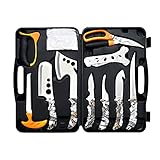
1. KNINE OUTDOORS Hunting Deer Knife Set Field Dressing Kit Portable Butcher Game Processor Set, 12 Pieces
Overview:
This 12-piece kit provides comprehensive tools for field dressing and processing game, including specialized knives (12" boning, gut-hook skinner, Hawkbill), a butcher axe, bone saw, ribcage spreader, gloves, and a portable cutting board. Designed for hunters needing an all-in-one solution straight from the field.
What Makes It Stand Out:
The inclusion of a gut-hook butcher axe and ribcage spreader addresses niche but critical tasks often overlooked in competitor sets. All blades use 7cr17mov steel with seven heat treatments for exceptional durability, while ergonomic camo handles ensure a secure, non-slip grip in wet conditions. The complete portability—tools nest neatly in the case—makes it ideal for remote hunts.
Value for Money:
Priced competitively for a 12-piece professional-grade set, it eliminates the need for separate tool purchases. While cheaper kits exist, they often lack specialized items like the spreader or heavy-duty axe, making this a cost-effective long-term investment for serious hunters.
Strengths and Weaknesses:
Strengths: Unmatched tool variety; durable, rust-resistant steel; thoughtful safety features (gloves, spreader); excellent portability. Weaknesses: Bulkier than minimalist kits; the 12" boning knife may be cumbersome for caping; gloves are basic textile (not cut-resistant).
Bottom Line:
A top-tier kit for hunters prioritizing completeness and durability over minimalism. Essential for processing large game solo, though overkill for casual use. Highly recommended for dedicated deer hunters.
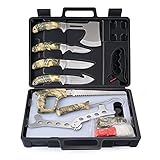
2. GVDV Hunting Knife Set - Deer Field Dressing Kit, Game Processor Set With Gut Hook Skinner, Spreader, Gloves - 14 Pieces Hunting Knives for Men for Christmas Presents
Overview:
This expansive 14-piece kit includes an axe, multiple knives (caping, butcher, gut-hook), bone saw, spreader, gloves, and even niche accessories like cable ties and a fishing hook. Targeted at hunters seeking an ultra-versatile, all-weather processing solution with professional-grade tools.
What Makes It Stand Out:
The one-handed axe stands out for splitting bone/wood efficiently, while the carbide sharpener ensures edge retention. The ergonomic handles feature finger grooves and thickened construction (0.9") for superior control. Unique inclusions like nylon rope and colored ribbon add unexpected utility for field repairs or marking.
Value for Money:
Offering 14 tools at a mid-range price, it delivers exceptional breadth. The 5Cr15mov steel blades rival pricier sets, and the durable carry case justifies the cost for frequent hunters. However, some accessories (e.g., fishing hook) feel gimmicky, slightly diluting value for purists.
Strengths and Weaknesses:
Strengths: Comprehensive tool selection; razor-sharp, rust-resistant blades; ergonomic, secure handles; useful carry case. Weaknesses: Questionable extras reduce focus; the axe’s 10" size may be unwieldy; gloves lack cut resistance; ribbon/rope seem superfluous.
Bottom Line:
An excellent gift for novice-to-intermediate hunters needing a do-all kit. Its versatility shines, but professionals might prefer stripping out non-essentials. Solid value if you’ll use every component.
3. Mossy Oak Fixed Blade Hunting Knife Set - 2 Piece, Full Tang Handle Straight Edge and Gut Hook Blades Game Processing Knife, Sheath Included - Green Camo

Overview:
A streamlined 2-piece set featuring a straight-edge skinning knife (10.375" overall) and a gut-hook blade (9.375" overall), both with full-tang green camo handles. Designed for hunters prioritizing simplicity, durability, and quick access during field dressing.
What Makes It Stand Out:
The full-tang construction ensures exceptional strength for heavy tasks, while the gut-hook blade excels at precise abdominal incisions without puncturing organs. The green camo pattern blends seamlessly in forest environments, and the dual-carry sheath (belt loop + snap) offers versatile carry options.
Value for Money:
Affordable for a premium 2-knife set, leveraging Mossy Oak’s trusted brand. While lacking the extras of larger kits, its focus on core blades means you pay only for proven essentials. Ideal for budget-conscious hunters or as a backup kit.
Strengths and Weaknesses:
Strengths: Rugged full-tang build; corrosion-resistant steel; comfortable non-slip grip; lightweight portability; reliable sheath. Weaknesses: Only two blades (no saw/spreader); limited versatility for full processing; no gloves/sharpener included.
Bottom Line:
A no-nonsense, dependable duo for hunters who already own supplementary tools or need a lightweight, reliable field set. Perfect as a secondary kit—skip if you require comprehensive processing gear.
4. Mossy Oak Fixed Blade Hunting Knife Set - 2 Piece, Full Tang Handle Straight Edge and Gut Hook Blades Game Processing Knife, Sheath Included - Yellow Camo

Overview:
Identical to the green-camo version but featuring a distinctive yellow camo pattern, this 2-piece set includes the same straight-edge skinning knife (10.375" overall) and gut-hook blade (9.375" overall). Tailored for hunters preferring high-visibility in certain terrains or aesthetic preference.
What Makes It Stand Out:
The yellow camo offers better visibility in open fields or snowy environments compared to traditional greens. Retains all core strengths: full-tang durability, razor-sharp clip-point blades, and ergonomic handles. The sheath’s dual-carry design ensures quick deployment regardless of setting.
Value for Money:
Priced identically to the green variant, it offers equal value. The color choice is purely situational—opt for yellow if you hunt in brushlands where bright camo aids location, but it holds no functional advantage over green in forests.
Strengths and Weaknesses:
Strengths: Same robust build and performance as green version; high-visibility handles aid gear recovery; excellent sheath security; corrosion-resistant blades. Weaknesses: Color may compromise concealment in dense woods; still lacks processing versatility of larger kits.
Bottom Line:
Choose based on terrain aesthetics—otherwise identical to the green kit. A smart pick for open-area hunters wanting reliable, minimalist tools. Not a standalone solution for full game processing.
5. Mossy Oak Hunting Field Dressing Kit - Portable Butcher Game Processor Set (8-Piece)

Overview:
An 8-piece kit balancing essentials and specialty tools, including a bone saw, caping knife, gut-hook skinner, boning knife, sharpener, and gloves. Targets hunters needing more than a basic knife set but preferring portability over bulk.
What Makes It Stand Out:
The bone saw’s blunt hooked tip prevents organ puncture—a critical safety feature—while the T-handle enhances control. The tungsten carbide sharpener outperforms basic models, and the camo-handled tools maintain Mossy Oak’s signature durability in a compact package.
Value for Money:
Superior value for mid-tier hunters. It includes professional tools (like the innovative saw) often sold separately, avoiding the bloat of 12+ piece sets. At its price point, it outperforms most competitors in focused utility.
Strengths and Weaknesses:
Strengths: Bone saw’s organ-safe design; high-quality sharpening tool; lightweight yet complete; gloves included; ideal size for backpacks. Weaknesses: No axe/cleaver for heavy bone work; handle ergonomics less refined than premium sets; limited blade count for large game.
Bottom Line:
The sweet spot between minimalism and comprehensiveness. Highly recommended for deer hunters wanting efficient, safe field dressing without excess weight. Avoid only if processing massive game like elk routinely.
6. OUTDOOR EDGE WildLite - 6-Piece Field to Freezer Hunting & Game Processing Knife Set with Gut Hook Blade, Caping Knife - Hunting Knives for Gutting Deer with Case - Deer & Elk Accessories
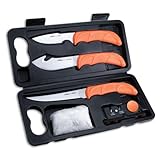
Overview: The OUTDOOR EDGE WildLite is a streamlined 6-piece fixed-blade kit designed for efficient field dressing and game processing. It includes essential knives (gutting/skinning, caping, boning), gloves, a sharpener, and a hard-side case, targeting hunters needing reliability for deer, elk, and similar game without excessive bulk.
What Makes It Stand Out: Its standout features are the razor-sharp, full-tang 420J2 stainless steel blades with proven edge retention and the highly visible, ergonomic blaze-orange TPR handles offering exceptional slip resistance in wet conditions. The compact, organized hard-side case ensures tool security and portability, while the “Service for Life” warranty provides unmatched peace of mind.
Value for Money: Priced competitively for a quality fixed-blade set, it offers excellent value. The inclusion of gloves and a dual-stage sharpener adds utility often found only in larger kits. While less comprehensive than 10-12 piece sets, its focus on core tools minimizes redundancy, making it ideal for hunters prioritizing essential, high-performance pieces over sheer quantity.
Strengths and Weaknesses: Strengths: Superior blade sharpness/retention; outstanding non-slip handles; compact, protective case; lifetime service policy; lightweight portability. Weaknesses: Limited piece count (no bone saw/shears); case lacks space for future additions; 420J2 steel, while good, isn’t the highest-end stainless available.
Bottom Line: A top-tier choice for hunters seeking a reliable, no-frills core kit. Its exceptional blades, secure grip, and lifetime warranty justify the price, making it highly recommended for those focused on fundamental field dressing tasks without needing every accessory.
7. Mossy Oak Hunting Field Dressing Kit - 10 Piece Portable Butcher Game Processing Set with Storage Case, for Deer Hunting, Fishing, Camping, Survival
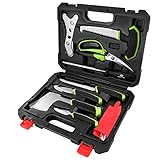
Overview: The Mossy Oak 10-Piece kit is a versatile field dressing solution packed with tools for comprehensive game processing. It includes seven blades (caping, gut-hook, boning, butcher), shears, a bone saw, rib spreader, sharpener, gloves, and a cutting board within a sturdy black case, suitable for deer, fish, and survival scenarios.
What Makes It Stand Out: Its extensive 10-piece count provides exceptional versatility right out of the box, notably including a specialized 9.5" bone saw with a blunt hook tip to prevent organ puncture. The distinctive green/black argyle-patterned bi-color TPR handles offer excellent grip and aesthetics, while the heat-treated HCS blades deliver solid durability for diverse tasks.
Value for Money: This kit represents strong value due to its high piece count and inclusion of critical accessories like the bone saw and rib spreader, which are often sold separately. It competes well against similarly sized kits, offering good utility for the price, especially for hunters needing a near-complete setup immediately.
Strengths and Weaknesses: Strengths: Comprehensive tool selection; effective bone saw design; comfortable, stylish non-slip handles; includes essential accessories (board, spreader, shears); robust case. Weaknesses: HCS steel lacks the corrosion resistance of premium stainless; case organization could be tighter; sharpener is basic HCS.
Bottom Line: An excellent all-in-one value proposition for hunters wanting extensive capability without buying add-ons. Its versatility and inclusion of specialized tools make it a highly recommended kit for those seeking a thorough, ready-to-use field processing solution.
8. KNINE OUTDOORS Hunting Deer Knife Set Field Dressing Kit Portable Game Processor Set Red Maple Camo Handle, 8 Pieces
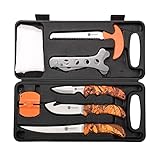
Overview: KNINE OUTDOORS offers an 8-piece field dressing kit focused on portability and core functionality. It features a gut-hook skinner, caping knife, bone saw, sharpener, and yellow camo handles, designed for hunters prioritizing a lightweight, belt-carriable setup for essential deer processing tasks.
What Makes It Stand Out: The standout aspect is its emphasis on extreme portability and belt carry via the compact case and ergonomic yellow camo handles, which aid concealment and provide a secure grip. The 7Cr17Mov steel blades undergo rigorous 7-time heat treatment, promising enhanced hardness and durability crucial for tough field use.
Value for Money: Positioned as a budget-friendly option, it delivers decent value for hunters needing only the absolute essentials on the go. The focus on fewer, well-made core tools (knives, saw, sharpener) avoids the cost of less frequently used accessories found in larger kits, making it economical for minimalist hunters.
Strengths and Weaknesses: Strengths: Highly portable and belt-friendly; durable 7Cr17Mov blades; effective non-slip camo handles; good core tool selection; affordable price point. Weaknesses: Lacks gloves and cutting board (common in larger kits); case organization might be basic; no bone saw guard mentioned; 7Cr17Mov requires diligent maintenance.
Bottom Line: A solid recommendation for hunters seeking a lightweight, no-nonsense, belt-carried kit focused purely on essential skinning and butchering tasks. Its value lies in portability and core functionality, though it sacrifices some conveniences of larger sets.
9. KNINE OUTDOORS Hunting Deer Knife Set Yellow Handle Field Dressing Kit Portable Butcher Game Processor Set, 12 Pieces

Overview: This expanded KNINE OUTDOORS kit is a comprehensive 12-piece game processor, packing numerous tools into a portable case. It includes diverse blades (boning, gut-hook, hawkbill, caping, butcher axe, cleaver), a bone saw, rib spreader, shears, board, sharpener, and gloves, all featuring distinctive yellow camo handles.
What Makes It Stand Out: Its sheer breadth of included tools is the key differentiator, offering near-complete processing capability – from the unique gut-hook butcher axe and skinning cleaver to the rib spreader and portable board. The ergonomic yellow camo handles provide consistent grip and concealment across all pieces, housed in an organized case for field or home use.
Value for Money: Offers significant perceived value due to the high 12-piece count and inclusion of specialized tools like the butcher axe and cleaver, which are rare in competitor kits. It provides extensive functionality for a mid-range price, appealing to hunters wanting maximum tools without assembling a custom set.
Strengths and Weaknesses: Strengths: Extremely comprehensive tool selection; includes unique items (butcher axe, cleaver); portable yet organized case; durable 7Cr17Mov blades; non-slip handles. Weaknesses: Potential for redundancy in field use; case bulk increases with 12 pieces; 7Cr17Mov steel demands careful cleaning; quality control may vary across so many components.
Bottom Line: Highly recommended for hunters desiring an all-in-one, feature-rich kit for both field and home processing, especially those valuing specialized tools. Its value is strong for the piece count, though portability suffers slightly compared to smaller kits.
10. Outdoor Edge Game Processor, PR-1, Complete 12-Piece Hunting Knife Kit for Processing Big Game, Full Tang 420J2 Stainless Razor Sharp Blades, TPR Non-Slip Handles, Sturdy Hide-Side Storage Case

Overview: The Outdoor Edge PR-1 is a premium 12-piece home butcher and field processing kit engineered for serious big game handling. It features four full-tang fixed blades, seven essential accessories, and a distinctive hide-side storage case, targeting hunters who demand professional-grade tools for processing elk, moose, or deer at home.
What Makes It Stand Out: Its defining features are the robust full-tang 420J2 stainless steel blades (known for Outdoor Edge’s sharpness), the unique hide-side storage case offering superior organization and protection, and the inclusion of a carving fork and sturdy rib spreader. The black TPR handles ensure a secure, comfortable grip during intensive use.
Value for Money: Represents premium value for a high-end home processing kit. The full-tang construction, proven blade steel, comprehensive accessory set (including saw, shears, board, gloves), and exceptional case justify its price point against competitors, offering durability and utility for frequent or demanding use.
Strengths and Weaknesses: Strengths: Excellent full-tang blade durability and sharpness; superior hide-side case organization; complete accessory suite; comfortable non-slip handles; strong warranty backing. Weaknesses: Hide-side case is less field-portable than clamshells; 420J2 requires maintenance; higher price than basic kits; limited blade length options.
Bottom Line: The top recommendation for hunters focused on home processing who prioritize blade quality, organization, and a complete professional setup. Its premium build and thoughtful case design make it worth the investment for serious game processors.
Understanding the Big Game Hunting Knife Essentials
Big game hunting presents unique challenges that demand specialized tools. Unlike smaller game or general camping, processing animals like deer, elk, or bear requires a blade that balances cutting performance with robust durability. The knife must handle thick hides, dense muscle, and occasional contact with bone without failing. It needs to be comfortable for extended, precise work, even when your hands are cold, wet, or tired. Prioritizing the right features ensures efficiency, safety, and respect for the harvest, transforming a potentially grueling task into a controlled, respectful process.
Blade Geometry and Its Critical Role
The shape of the blade dictates how it interacts with different tissues during field processing. Selecting the right geometry is fundamental to effective and safe butchering.
The Dominance of the Drop Point
The drop point design remains a top choice for big game hunters for compelling reasons. Its slightly curved spine that slopes gently downward towards the tip provides exceptional control for precise skinning and delicate caping work. The strong, reinforced tip is less prone to snagging or breaking when navigating around bones or through tougher sections of hide. This versatile shape offers a long, functional cutting edge while maintaining enough belly for efficient slicing through muscle and connective tissue.
Why Belly Curve Matters
The degree of curve along the cutting edge, known as the belly, significantly impacts slicing performance. A moderate belly curve is generally preferred for big game. Too much curve (like on a tanto) can make controlled, straight-line cuts difficult during skinning and butchering, while too little curve (a straight edge) lacks the slicing efficiency needed for large muscle groups. The ideal belly allows for smooth, long draw-cuts through hide and meat without requiring excessive hand movement, reducing fatigue during extended processing sessions.
Tip Strength vs. Precision
The tip is often the most vulnerable part of a blade. Big game knives require a tip that is robust enough to avoid bending or snapping if it encounters bone accidentally, yet fine enough to pierce hide cleanly and perform detailed work. A slightly reinforced tip, common in drop points and clip points with a secondary grind, offers the best compromise. Extremely fine needle points, while great for piercing, are too fragile for the realities of big game field dressing where bone contact is possible.
Steel Selection: Beyond Just Sharpness
The blade’s steel is the foundation of its performance. It dictates edge retention, ease of sharpening, resistance to corrosion, and overall toughness—factors that are non-negotiable in the field.
Edge Retention in Demanding Conditions
Processing large game involves cutting through abrasive materials like hide, hair, and connective tissue, which rapidly dulls a poor-quality edge. High-performance steels, often incorporating elements like vanadium and molybdenum, form very hard, wear-resistant carbides. This translates to maintaining a sharp edge significantly longer during the critical field dressing phase, reducing the need for frequent, potentially difficult sharpening in the woods. Don’t mistake initial sharpness for lasting performance; retention is key.
Toughness: Avoiding Catastrophic Failure
Toughness refers to the steel’s ability to resist chipping, cracking, or rolling under impact or stress. A knife that holds an edge well but chips easily when prying near bone is useless and dangerous. For big game, where accidental contact with bone is a reality, steels with a balanced alloy composition offering good toughness alongside edge retention are essential. Extremely high-hardness steels might stay sharp longer but can be brittle; the ideal steel finds the sweet spot for the task.
Corrosion Resistance for Longevity and Reliability
Blood, tissue fluids, and environmental moisture are constant threats to a blade. While no steel is completely rust-proof, especially high-carbon varieties, adequate corrosion resistance is vital. Stainless or high-stainless content alloys significantly reduce the risk of pitting and staining during and after the hunt, especially if immediate thorough cleaning isn’t possible. This protects your investment and ensures the knife performs reliably trip after trip, even in damp conditions.
Handle Ergonomics: Grip Under Pressure
A knife is only as good as your ability to control it. When hands are cold, wet, gloved, or fatigued, the handle design becomes paramount for safety and effectiveness.
Material Grip Qualities
Handle material must provide positive traction in all conditions. Textured synthetics like G10, Micarta, or stabilized wood offer excellent grip, even when wet with blood or water, and maintain consistency in extreme cold where some materials become slippery. Smooth materials like certain plastics or polished wood can become dangerously slick. Avoid anything overly glossy or prone to becoming slick when wet; aggressive, non-abrasive texture is key for secure handling during strenuous work.
Contouring for Comfort and Control
The handle shouldn’t just fit your hand; it should feel like a natural extension of it. Subtle contours that fill the palm comfortably, a slight palm swell for leverage, and defined finger grooves (without being restrictive) enhance control during both fine caping tasks and heavy butchering. The handle should sit securely without causing hot spots or requiring a death grip, reducing hand fatigue over long processing sessions. A well-contoured handle allows precise tip control for delicate work and solid power application for tougher cuts.
Size and Balance for Big Game Tasks
A handle that’s too small forces a cramped grip, leading to fatigue and reduced control. For processing large animals, a handle typically ranging from 4.5 to 5.5 inches in length provides ample space for a secure, full-handed grip, even with gloves on. Balance is equally important; the knife should feel stable and controllable, neither tip-heavy (which encourages stabbing motions) nor handle-heavy (which reduces cutting efficiency). The balance point should generally be near the guard or slightly forward for optimal control during draw-cuts.
Tang Construction: The Hidden Backbone
The tang – the part of the blade metal that extends into the handle – is crucial for structural integrity, especially when prying or applying significant force.
Full Tang Strength
A full tang, where the blade metal runs the entire length and width of the handle, sandwiched between scales, provides maximum strength and durability. This is highly recommended for big game knives. It prevents the blade from breaking at the handle junction under heavy stress, such as when separating joints or carefully working around bone. The added weight of a full tang also often contributes to better balance and heft for controlled cutting.
Hidden Tang Reliability
While full tang is ideal, well-executed hidden tangs (where the blade rod is permanently and securely fixed within a solid handle material like Micarta or G10) can also be very strong and reliable for hunting purposes. The critical factor is the quality of the construction – the tang must be long enough and the handle material must be securely bonded to it without any play. Avoid knives with poorly executed hidden tangs or friction-fit handles for serious big game work.
Avoiding Weak Points
Partial tangs (like rat-tail tangs) are generally unsuitable for big game processing. They create a significant weak point where the tang meets the thicker blade, prone to snapping under the torsional and bending stresses encountered when working on large animals. The risk of catastrophic failure is too high when processing requires leverage and force.
Sheath Design: Safety and Accessibility
Your knife is only useful if it’s safe to carry and instantly accessible when needed. The sheath is not an afterthought; it’s a critical component of the system.
Secure Retention Without Struggle
The sheath must hold the knife firmly to prevent accidental falls during strenuous movement, yet allow for a smooth, one-handed draw when seconds count. Adjustable retention mechanisms (like screws on kydex sheaths) are ideal, letting you customize the fit as the sheath wears or with different glove thicknesses. A sheath that’s too loose risks losing your knife; one that’s too tight can be dangerous to draw or damage the edge.
Belt Attachment Versatility
Consider how you carry your knife. A good sheath offers multiple carry options: vertical, horizontal, or cross-draw, often with adjustable cant. It should securely attach to a standard belt (1.5-2 inches wide) and potentially MOLLE webbing. The attachment method (e.g., Tek-Lok style) should be robust, easy to adjust, and not prone to snagging on brush or gear. Comfort during long hikes is also influenced by the sheath’s carry position and stability.
Protection and Drainage
The sheath must fully protect the cutting edge and tip from impact damage while holstered. Materials like kydex or heavy-duty molded nylon offer excellent edge protection and durability. Crucially, the sheath design should allow moisture (from rain, snow, or cleaning) to drain out easily to prevent corrosion inside the sheath. A small drainage hole or open-bottom design is a significant advantage for longevity.
Practical Considerations for Real-World Use
Beyond the core physical attributes, how the knife integrates into your hunting workflow and environment is vital for a successful experience.
Weight and Portability Balance
A big game knife needs sufficient heft for effective cutting but shouldn’t be cumbersome. Total weight (knife + sheath) typically between 8-12 ounces strikes a good balance – heavy enough for controlled cuts through dense material, light enough for comfortable all-day carry without adding unnecessary fatigue. Consider where you’ll carry it (belt, pack) and how it complements your other essential gear.
Glove Compatibility is Non-Negotiable
Assume you’ll be wearing gloves. Test the knife’s grip and sheath draw with your typical hunting gloves on. Can you maintain a secure hold during strenuous cuts? Can you draw and re-sheath the knife smoothly one-handed with gloves? Handle texture and size, as well as sheath retention, must function flawlessly with insulated or lightweight gloves, as removing them in cold conditions is often impractical.
Maintenance Realities in the Field
You won’t have a full workshop in the woods. Choose a knife that can be reasonably maintained with minimal tools. Steels that are moderately easy to sharpen in the field (using a stone or rod) are preferable to ultra-high-end steels that require specific, complex sharpening systems. Consider if the design allows for easy cleaning – no deep crevices where blood and tissue can trap and cause corrosion. Simplicity in maintenance translates to reliability.
Legal Compliance Awareness
Knife laws vary significantly by region, state, and even hunting unit. Be acutely aware of blade length restrictions, folding vs. fixed blade regulations, and carry laws specific to the areas where you hunt. A knife that’s perfect technically might be illegal to carry where you need it. Always prioritize legal compliance to avoid fines or complications during your hunt.
The Left-Handed Hunter Factor
Left-handed hunters face unique challenges. Ensure the blade geometry (especially the bevel) and handle ergonomics work effectively for a left-handed grip. Some knives are ambidextrous, while others have pronounced right-handed contours. Left-handed hunters often need to pay extra attention to sheath design for comfortable cross-draw carry on the opposite side. Don’t assume a knife marketed as “for everyone” will suit a lefty perfectly.
Building Confidence Through Preparation
Selecting the right knife is only the first step. True confidence comes from knowing your tool intimately before you need it in critical situations.
Practice Essential Field Skills
Long before the season opens, practice field dressing procedures on smaller game or training aids. Get comfortable with skinning techniques, quartering, and organ removal using your chosen knife. This builds muscle memory, reveals any handling issues with the knife, and significantly reduces stress during your actual big game harvest. Familiarity breeds efficiency and calm under pressure.
Develop a Reliable Sharpening Routine
A sharp knife is a safe knife. Establish and practice a quick, effective field sharpening method using your preferred tools (stone, rod, system). Know how your specific steel responds to sharpening. Regularly maintaining the edge during the hunt prevents the dangerous situation of forcing a dull blade. A few minutes of sharpening can save hours of difficult work and protect your meat.
Understand Your Knife’s Limits
No knife is indestructible. Recognize when a task requires more than your blade can safely handle – like attempting to split bone, which should be done with a dedicated bone saw or hatchet. Forcing a knife beyond its design leads to damage, potential injury, and ruined meat. Respect the tool’s purpose and know when to reach for another implement.
Frequently Asked Questions
Frequently Asked Questions
What’s the single most important feature for a big game hunting knife? Blade steel quality is paramount; it directly impacts edge retention during the demanding task of processing thick hides and connective tissue, ensuring the knife remains effective throughout the critical field dressing process without frequent, difficult sharpening.
How long should the blade be for processing elk or moose? A blade length between 3.5 and 4.5 inches offers the optimal balance; it provides sufficient reach for efficient skinning and butchering large animals while maintaining excellent control and tip precision for delicate tasks like caping, avoiding the unwieldiness of longer blades.
Can a folding knife be reliable for big game field dressing? While folding knives have improved, a fixed blade is overwhelmingly recommended for big game due to superior strength, ease of cleaning (no hinge mechanism to trap blood), and guaranteed lock-up security under heavy pressure, eliminating the risk of accidental closure during strenuous use.
How often should I sharpen my knife during field dressing? Sharpen whenever you notice the blade starting to drag or require excessive force; this could be multiple times during processing a large animal. Maintaining a keen edge prevents tearing meat, reduces effort, and significantly speeds up the entire process, preserving meat quality.
Is high-carbon steel better than stainless steel for hunting knives? It depends on priorities; high-carbon steel typically takes a sharper edge and is easier to sharpen in the field but requires diligent cleaning to prevent rust. Stainless steel offers better corrosion resistance for less maintenance but can be slightly harder to sharpen to a fine edge and may not hold it quite as long in abrasive conditions.
What handle material is best for cold, wet conditions? Textured, non-porous materials like G10 or Micarta are ideal; they provide exceptional grip even when wet with blood, water, or snow, remain stable in extreme cold (unlike some plastics that become slick), and resist absorbing moisture that could lead to swelling or bacterial growth.
Why is a full tang considered important for big game knives? A full tang provides maximum structural integrity by extending the blade steel the full length of the handle; this prevents the blade from breaking at the handle junction when applying leverage during tough cuts or accidental contact with bone, a critical safety and reliability factor.
How do I test if a sheath has the right retention for my gloves? Wearing your typical hunting gloves, practice drawing and re-sheathing the knife multiple times. The sheath should hold the knife securely during vigorous movement but allow a smooth, controlled draw with consistent pressure. Adjust retention screws if possible to achieve this balance with gloves on.
What’s the biggest mistake hunters make when choosing a big game knife? Prioritizing looks, extreme blade length, or ultra-hard steel for edge retention over practical ergonomics, manageable size, and balanced steel properties; a knife that doesn’t feel like a natural extension of your hand during cold, wet, tiring work will hinder the process regardless of its technical specs.
How can I ensure my knife stays legal while hunting across different regions? Research and document the specific knife laws (blade length limits, fixed vs. folding restrictions, carry regulations) for every state, province, and hunting unit you plan to visit well in advance; carry a knife that meets the strictest requirements of your intended hunting areas to avoid legal issues.
Related Buying Guides
- Top 10 Best Hunting Knives for Big Game in 2026
- The 10 Best Hunting Knives Every First-Time Hunter Needs This Year
- 10 Essential Hunting Gut Hook Knives Every Big Game Hunter Needs in 2026
- 10 Must-Have Camouflage Hunting Knives for Stealthy Hunters in 2026
- 10 Essential Tips for Choosing the Best Fixed Blade Knives for Big Game Hunting