Table of Contents
There’s something deeply primal about muzzleloader hunting—the slow, deliberate pace, the weight of history in your hands, the sharp scent of black powder hanging in the crisp morning air. Unlike modern firearms, this isn’t about speed or convenience; it’s a conversation with tradition, demanding patience, respect, and preparation that goes beyond simply packing a scope or extra ammo. Every step into the woods feels like stepping back in time, where self-reliance isn’t just a buzzword—it’s the difference between a successful harvest and a long, empty walk back to camp. And at the heart of that self-reliance? Your backpack. It’s not just a vessel for gear; it’s your mobile command center, your survival kit, and often, your most trusted companion when you’re miles from the trailhead with nothing but your wits and your weapon.
Forget the flashy, compartment-laden packs designed for weekend festival-goers or ultralight backpackers tackling long trails. Muzzleloader hunting throws a unique set of challenges at your gear: the lingering residue of black powder that clings to everything, the awkward bulk of long stocks and patch boxes, the absolute necessity of keeping critical components like percussion caps bone-dry, and the often-steep, brush-choked terrain you navigate while carrying heavier loads than you might with a centerfire rifle. Choosing the wrong pack isn’t just inconvenient—it can mean fumbling for primers in the critical moment, suffering debilitating fatigue that ruins your shot, or worse, compromising safety with unstable loads or exposed powder. Your pack needs to be an extension of your hunting strategy, built for the specific demands of black powder adventures, where every ounce matters and every feature must earn its place. Let’s dive into what truly makes a backpack worthy of your muzzleloader journey.
Top 10 Muzzleloader Hunting Packs
Detailed Product Reviews
1. Muzzle-Loaders Soft Field Carry Bag - Waist Pack & Possibles Bag - MZ1100

Overview: This versatile waist pack is engineered specifically for muzzleloader hunters needing organized, accessible storage for essential field accessories during extended hunts. Its rugged design prioritizes durability and quick access to critical components. What Makes It Stand Out: The expandable main compartment accommodates bulky items like speed loaders and brushes, while the dedicated interior possibles pouch with dual belt loops ensures small essentials (caps, patches) are instantly reachable. Four exterior D-rings allow secure tool attachment, and the high-visibility orange/black color enhances safety in dense terrain. The double-tab zipper offers flexible opening configurations. Value for Money: Priced competitively against generic tactical pouches, it delivers specialized muzzleloader functionality. Hunters avoid buying multiple separate pouches, as it consolidates possibles storage, main gear, and tool attachment points into one robust, purpose-built solution, justifying its cost for serious users. Strengths and Weaknesses: Strengths: Extremely durable nylon; excellent organization; superior visibility; versatile attachment options; comfortable waist carry. Weaknesses: Limited capacity for very large items; bright color may not suit all camouflage preferences; no internal dividers for main compartment. Bottom Line: An indispensable, well-considered field companion for muzzleloader hunters prioritizing organization, safety, and rapid access to critical gear; highly recommended for its tailored design and rugged reliability.
2. Shooter’s Choice Muzzleloader Accessory Pack

Overview: This comprehensive chemical kit provides all the essential solvents and lubricants needed for thorough muzzleloader cleaning and maintenance, specifically formulated for black powder and substitutes. What Makes It Stand Out: It covers the entire cleaning cycle: the potent MC-7 Bore Cleaner tackles stubborn residue, the Small Parts Soaker handles breech plugs, presaturated CLP patches clean and protect the bore, and the All-Weather Grease Syringe ensures smooth operation in harsh conditions. The pre-soaked patches save significant time and mess. Value for Money: Bundling these four specialized products offers substantial savings compared to purchasing them individually. The convenience of having a complete, optimized cleaning system in one pack provides excellent value, eliminating guesswork and ensuring compatibility for effective, safe maintenance. Strengths and Weaknesses: Strengths: Complete cleaning solution; high-performance, targeted formulas; time-saving presaturated patches; extreme condition suitability; safe for modern substitutes. Weaknesses: Quantities may be modest for very high-volume users; grease syringe could be prone to clogging if not stored perfectly. Bottom Line: A highly efficient and cost-effective essential for any muzzleloader owner; the tailored formulations and convenience make maintenance significantly easier and more effective, earning a strong recommendation.
3. Traditions Rifle Stock Pack Fits Most Muzzleloaders A1878

Overview: Marketed as a universal accessory pack for muzzleloader rifle stocks, this product lacks detailed feature information, making a comprehensive assessment challenging based solely on the title. What Makes It Stand Out: Without specific features provided, unique selling points cannot be reliably identified. It likely includes basic stock-related accessories like sling swivels, butt pads, or cleaning rod guides, but the absence of details is a major limitation. Value for Money: The lack of feature specification makes value assessment impossible. Potential buyers cannot determine if it offers essential components not included with their rifle or if it duplicates existing parts, leaving price justification unclear. Strengths and Weaknesses: Strengths: Potential convenience of a pre-packaged solution; possible compatibility with popular Traditions models. Weaknesses: Critical lack of disclosed features; uncertainty about contents or quality; impossible to verify “fits most” claim; significant risk for uninformed purchase. Bottom Line: Due to the complete absence of feature details, this product cannot be responsibly recommended. Hunters should seek alternatives with transparent specifications to ensure they receive necessary, compatible components for their specific rifle.
4. Muzzle-Loaders Inline Hunter Kit - Muzzleloader Supplies Starter Kit - MZ2001

Overview: This all-in-one starter kit provides the fundamental tools and consumables required for inline muzzleloader hunting, designed to get new shooters operational right out of the box. What Makes It Stand Out: It efficiently bundles seven core items: a practical waist pack for carry, essential tools (nipple wrench), cleaning supplies (patches, jags, bore brush), and critical hunting aids (speedloaders, bullet starter). This eliminates the hassle of sourcing individual components separately. Value for Money: Offers significant convenience and cost savings for beginners compared to assembling the same items piecemeal. The inclusion of the functional waist pack adds substantial utility, making the kit a budget-friendly entry point that covers immediate field and maintenance needs. Strengths and Weaknesses: Strengths: Ideal beginner solution; comprehensive core essentials; includes useful carry system; good value proposition; simplifies setup. Weaknesses: May contain redundant items for experienced users; quality of individual components isn’t specified; limited scope beyond absolute basics. Bottom Line: An excellent, hassle-free starter kit for new inline muzzleloader hunters, providing essential tools and organization at a smart price; highly recommended for those entering the sport.
5. Muzzleloader Deluxe Ramrod Accessories Pack - MZ1467
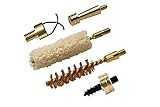
Overview: This specialized pack delivers essential brass tools designed to attach directly to a muzzleloader’s ramrod, enabling critical cleaning, loading, and maintenance functions in the field. What Makes It Stand Out: Its focus on ramrod-mounted accessories is key: the non-sparking brass construction (vital for safety with black powder) includes a bore brush, loading jag, patch puller, bullet puller, and cotton swab. This comprehensive set covers virtually every ramrod-based task a hunter needs. Value for Money: The inclusion of five precision brass tools at a competitive price offers strong value. Hunters avoid the expense and hassle of buying these individually, and the material quality ensures longevity and safety, making it a cost-effective investment for routine maintenance. Strengths and Weaknesses: Strengths: Essential brass safety; complete ramrod tool set; .50 cal universal fit; durable construction; compact and field-ready. Weaknesses: Limited to .50 caliber; no storage case included; cotton swab may feel basic compared to other components. Bottom Line: A must-have, safety-conscious accessory pack for .50 caliber inline muzzleloader owners, providing all necessary ramrod tools in reliable brass; highly recommended for practical, safe field operation.
6. Muzzleloader .45 Caliber Deluxe Ramrod Accessories Pack
Overview: This essential 5-piece kit provides critical maintenance tools specifically engineered for .45 caliber muzzleloaders. It includes a brass wire brush, cotton bore swab, brass jag, patch puller, and bullet puller, designed to streamline cleaning and loading processes directly in the field or at the range.
What Makes It Stand Out: Its caliber-specific engineering ensures optimal friction fit and functionality with .45 barrels, eliminating guesswork. The direct-thread attachment system works seamlessly with standard ramrods, offering unmatched convenience over universal kits. High-quality brass components resist corrosion and provide gentle yet effective bore cleaning.
Value for Money: Priced competitively against à la carte purchases, the bundle delivers significant savings while guaranteeing compatibility. Compared to generic kits, the precision fit justifies a slight premium by preventing damage to barrels and ensuring reliable tool performance during critical hunting moments.
Strengths and Weaknesses: Strengths: Caliber-specific precision; durable brass construction; comprehensive toolset for core maintenance; threads securely to ramrods. Weaknesses: Limited to .45 caliber only; lacks storage case; cotton swab may require frequent replacement during deep cleanings.
Bottom Line: An indispensable, well-engineered kit for .45 muzzleloader owners seeking reliable, efficient maintenance. Its targeted design and quality materials make it a worthwhile investment for preserving accuracy and longevity.
7. Muzzle-Loaders Traditional Hunter Basics Kit - All Essentials Included

Overview: This field-ready package delivers a curated selection of tools tailored for traditional sidelock muzzleloader hunters. It features a durable possibles bag with belt loops, plus essential accessories like a bullet starter, capper, wrenches, pullers, brushes, and 100 patches, prioritizing practicality over bulk.
What Makes It Stand Out: The kit’s hunter-first philosophy shines through its compact, belt-carried possibles bag and exclusion of range-specific items. Thoughtful inclusions like the #11 capper and nipple wrench address real field needs, while the bag’s extra space allows personalized expansion without redundancy.
Value for Money: Offers exceptional value by bundling frequently needed tools at a lower cost than individual purchases. The rugged bag alone justifies part of the price, and the focus on field essentials means no money is wasted on unnecessary range gear, making it cost-effective for active hunters.
Strengths and Weaknesses: Strengths: Ideal field-oriented organization; comprehensive core toolset; durable, customizable bag; perfect for traditional hunting scenarios. Weaknesses: Lacks powder measures or ramrod accessories; patches may be basic quality; bag size might be tight for larger hands/ammo.
Bottom Line: A superb starter or refresher kit for traditional muzzleloader hunters prioritizing mobility and essential functionality. Highly recommended for its practical design and field-ready utility.
8. Muzzleloader Ramrod Accessories Pack - .50 Caliber - Ramrod Accessory Pack - MZ1466

Overview: This streamlined 3-piece accessory pack delivers fundamental components for .50 caliber muzzleloader maintenance: a brass bore brush, brass loading jag, and cotton mop. Designed for direct attachment to standard ramrods, it focuses on core cleaning and loading tasks without extras.
What Makes It Stand Out: Its no-frills approach targets users needing only the absolute essentials. The caliber-specific brass construction ensures proper fit and gentle bore care, while the minimalist design reduces weight and cost compared to larger kits—ideal for hunters prioritizing simplicity.
Value for Money: Positioned as an affordable entry point, it’s significantly cheaper than multi-piece sets. While lacking specialized tools like pullers, it covers critical needs (cleaning, patching, swabbing) at a fraction of the cost, offering solid value for budget-conscious shooters or kit expanders.
Strengths and Weaknesses: Strengths: Caliber-specific precision; durable brass components; lightweight and portable; excellent value for core functions. Weaknesses: Very limited scope (no pullers, cappers, etc.); lacks storage; basic cotton mop may fray faster than premium alternatives.
Bottom Line: A reliable, economical choice for .50 caliber owners seeking only fundamental ramrod-mounted tools. Best suited as a starter set or supplement to a larger kit, not a complete solution.
9. Muzzle-Loaders™ Lubrticated .36 Caliber Black-Powder Revolver Wads - Pack of 100 Wads

Overview: This pack provides 100 pre-lubricated 3mm-thick wool felt wads engineered specifically for .36 caliber black-powder revolvers like the Pietta 1851 Navy. The fully lubed design aims to simplify loading while reducing fouling and improving consistency.
What Makes It Stand Out: The pre-applied lubrication eliminates the messy step of hand-lubing patches, crucial for maintaining steady revolvers during extended shooting. The 100% wool felt offers superior gas sealing and wad retention compared to synthetic alternatives, directly impacting reliability and accuracy.
Value for Money: Costing less per wad than high-end branded options, the 100-count pack delivers excellent economy for frequent shooters. The time saved by skipping manual lubing and reduced cleaning needs further enhance value, especially for competition or hunting scenarios requiring rapid reloading.
Strengths and Weaknesses: Strengths: Pre-lubed for convenience; wool felt ensures optimal performance; caliber-specific fit; promotes cleaner, drier shooting; bulk quantity saves money. Weaknesses: Lubricant may attract dust if stored improperly; thickness might require slight cylinder adjustment in some revolvers.
Bottom Line: A highly practical, cost-effective solution for .36 revolver enthusiasts seeking consistent performance and streamlined loading. Essential for maximizing reliability and minimizing maintenance.
10. Muzzle-Loaders™ Magnum Charge Tubes - BH209 150-Grain Tubes -10 Pack - MZ1616-10

Overview: These ten reusable charge tubes are engineered for magnum loads using Blackhorn 209 powder, holding up to 150 grains by volume. Featuring clear plastic construction, airtight caps, and volume markings, they enable fast, consistent field loading while protecting powder from moisture.
What Makes It Stand Out: The optimized 150-grain capacity caters specifically to modern magnum muzzleloader loads, and the airtight caps ensure powder remains pristine in harsh conditions. The transparent design allows quick visual charge verification—a critical safety and efficiency feature often missing in cheaper tubes.
Value for Money: The durable, reusable plastic justifies the price over single-use tubes, especially given the included cap reliability. While graduations aren’t precise for measurement, they’re invaluable for rapid reference. Bulk pricing makes them economical for regular shooters compared to reloading individual charges.
Strengths and Weaknesses: Strengths: Airtight sealing; magnum capacity; reusable durability; clear for visual checks; ideal for Blackhorn 209. Weaknesses: Graduations not measurement-precise; plastic may scratch over time; caps require careful handling to maintain seal.
Bottom Line: A top-tier choice for serious muzzleloader hunters using magnum charges. The reliability, speed, and moisture protection make these tubes a worthwhile upgrade for consistent field performance.
Understanding Muzzleloader-Specific Backpack Demands
Muzzleloader hunting isn’t merely a subset of big game hunting; it operates under its own distinct set of physical and logistical rules. The inherent weight of the firearm itself—often heavier than modern equivalents due to robust construction and materials—sets the baseline load. Factor in essential accessories like powder horns or flasks (requiring strict separation from sparks), multiple bullets or round balls, patches, lubricants, cleaning rods, spare nipples or caps, and potentially a dedicated knife for patch preparation, and the cumulative weight quickly becomes significant. Unlike centerfire hunters who might carry a compact box of cartridges, muzzleloader enthusiasts manage bulkier, more numerous components, all while navigating terrain that often favors remoteness and solitude—meaning longer carries and less margin for error in gear comfort or reliability. The pack must fundamentally accommodate this unique load profile without sacrificing stability or accessibility.
The Weight Distribution Imperative
Carrying concentrated weight high on your back, common in poorly designed packs, leads to rapid fatigue, compromised balance on uneven ground, and an unnatural forward lean that hinders steady shooting positions. For muzzleloader excursions, optimal weight distribution is non-negotiable. Look for packs featuring a robust, anatomically contoured hip belt that transfers 80-90% of the load weight directly onto your hips—your body’s natural carrying foundation. This isn’t just about comfort; it’s biomechanical necessity. A well-padded, wide hip belt with load lifters (adjustable straps connecting the top of the hip belt to the shoulder straps) allows precise tuning, pulling the pack’s center of gravity close to your torso. This minimizes sway, enhances stability when traversing slopes, and crucially, prevents the pack from riding up and interfering with shouldering your long gun smoothly. Shoulder straps should be thickly padded but not overly bulky, designed to guide weight down to the hips, not bear it themselves.
Managing Bulk and Awkward Gear Shapes
Muzzleloader accessories defy the neat geometry of modern ammunition boxes. Powder horns, bullet molds, long cleaning rods, and patch tubes are inherently irregular and often lengthy. A pack designed for standard rifle cartridges or camera gear will struggle here. Seek out models with dedicated, structured external attachment points—reinforced webbing, MOLLE/PALS grids, or specialized bungee cord systems—that allow secure, stable mounting of these odd-shaped items outside the main compartment. Internal organization is equally critical; a cavernous, unstructured void turns into a chaotic pit where finding a specific cap or patch becomes a frustrating dig. Prioritize packs with modular internal dividers, padded sleeves that can hold a horn upright, and multiple zippered pockets of varying sizes positioned for intuitive access without removing the pack. The goal is to secure bulky items externally to preserve internal space for essentials while keeping critical small parts organized and instantly reachable.
Critical Features Beyond Basic Hauling
Powder Containment and Safety Systems
Black powder residue is notoriously messy and potentially hazardous if it contacts sparks or static. A pack worthy of muzzleloader use must incorporate dedicated, secure storage for powder that minimizes spillage and contamination. Look for a fully enclosed, rigid or semi-rigid internal compartment specifically lined with non-sparking material (like tightly woven cotton canvas or specialized synthetics), ideally with a secondary zippered closure within the main compartment. External powder horn mounts are excellent, but ensure they feature a secure retention strap or clip to prevent the horn from swinging or detaching. Crucially, this powder storage must be physically isolated from potential ignition sources—keep it well away from pockets holding ferro rods, lighters, or even metal tools that could create sparks. Never store loose powder directly against nylon fabric; the residue can degrade the material over time and increase static risk.
Bullet and Primer Accessibility Under Pressure
When the buck of a lifetime steps into range, fumbling blindly in a deep pocket for a percussion cap or a ball is a recipe for disaster. Your pack needs “tactile access” to these mission-critical small items. Opt for exterior pockets positioned on the shoulder straps or top lid that are specifically sized for cap containers or small bullet tins—pockets with stiff, reinforced openings that won’t collapse when you reach in, allowing you to retrieve items by feel alone without looking. These pockets should have secure closures (magnetic flaps, double-zipper pulls, or stiff elastic) to prevent accidental loss but open with one swift motion. Internal organization should also feature a dedicated, padded, and easily identifiable section for your main bullet supply, perhaps with a removable liner for quick cleaning of lead residue. Speed and certainty in reloading are paramount with muzzleloaders; your pack layout must facilitate this.
Noise Reduction Engineering
The whisper-quiet approach defines successful muzzleloader hunting. A pack that rustles, clatters, or creaks with every step instantly alerts wary game. Material choice is foundational: tightly woven, coated fabrics like high-denier Cordura or specialized silent nylons are vastly superior to loose-weave mesh or stiff, noisy laminates. Pay meticulous attention to hardware—zippers should be robust coil zippers (quieter than metal teeth), pulls should be covered in soft fabric or rubber, and all buckles, clips, and D-rings must be secured with soft rubber keepers or tucked into fabric sleeves to prevent metal-on-metal contact. Internal framesheets should be padded or wrapped in fabric to muffle against gear. Even the stitching matters; bar-tacked stress points prevent loose threads from fluttering. Before buying, handle the pack aggressively—shake it, rub panels together, snap buckles—listening intently for any noise that could spook a deer at 30 yards.
Sizing and Capacity Considerations
Day Trip vs. Multi-Day Load Requirements
Capacity needs diverge sharply based on trip duration. For day hunts, where you carry only essentials (firearm, ammo, water, minimal food, first-aid, rain gear), a streamlined 1500-2500 cubic inch (25-40L) pack often suffices. This size prioritizes mobility, low profile, and ease of shouldering the rifle without interference. However, multi-day excursions demand significantly more volume—3500-5000 cubic inches (55-80L)—to accommodate shelter, sleeping system, cooking gear, extra food, and clothing. Crucially, muzzleloader-specific volume needs differ: that extra space isn’t just for sleeping bags; it’s for the bulk of powder horns, multiple bullet molds, extra patches, and potentially game bags. Avoid the temptation to over-pack a small day pack; fatigue from an overloaded compact bag is worse than the minor inconvenience of a slightly larger, properly loaded one. Conversely, a cavernous expedition pack for a day hunt creates unnecessary drag and instability.
Frame Type: Internal vs. External for Stability
The choice between internal and external frames hinges on load weight and terrain. Internal frame packs dominate the market for good reason: they offer a sleeker profile, better weight transfer for moderate loads (under 40 lbs), and sit closer to the body, enhancing balance on technical trails. For typical day hunts or lighter multi-day trips carrying muzzleloader-specific loads, a well-designed internal frame with a rigid, load-bearing hip belt is usually optimal. However, when consistently hauling very heavy loads (50+ lbs) typical of extended backcountry muzzleloader trips—especially with bulky items like game quarters—external frames shine. They lift the load higher off the back, improving ventilation in hot weather, and excel at stabilizing irregular, heavy cargo. The rigid frame provides a stable platform, preventing the pack from swaying or shifting during long carries over rugged ground. Test packs weighted realistically; stability trumps tradition.
Material Durability and Weather Resistance
Fabric Denier and Coating Technologies
Muzzleloader hunting often means brushing through thorny undergrowth, sliding down rocky slopes, or setting the pack down on abrasive terrain. Skimping on fabric durability is a false economy. Prioritize packs constructed from high-denier (1000D or higher) ballistic nylon or Cordura nylon for high-wear areas like the base and back panel. These tightly woven fabrics resist tears, punctures, and abrasion far better than lighter 200D or 400D materials. Crucially, look for durable water repellent (DWR) coatings applied to the fabric face. While not making the pack fully waterproof, a quality DWR causes water to bead and roll off, preventing the fabric from becoming saturated and heavy in light rain or morning dew. For the absolute best weather protection, seek packs using laminated fabrics (like those with a polyurethane or TPU backing) which offer true waterproofing, though they may sacrifice some breathability. Avoid packs relying solely on removable rain covers for core weather defense.
Seam Sealing and Closure Integrity
Even the toughest fabric fails if water seeps through the seams. Fully taped seams—where a waterproof tape is bonded over the stitched seam on the inside—are essential for genuine weather resistance, particularly on the bottom panel and main compartment. Pay close attention to closure points: zippers must be waterproof coil zippers (not standard separating zippers), ideally covered by a storm flap with a secure closure (hook-and-loop plus snap). Roll-top closures, common on dry bags, offer excellent waterproofing but can be slower to access. Check that all external attachment points (webbing, MOLLE) are bar-tacked multiple times at stress points; single stitching will fail under heavy, dynamic loads. Buckles should be high-strength polymer (like Duraflex) that won’t shatter in cold weather. Remember, residue from pine sap, blood, or powder can degrade materials over time; robust construction ensures longevity.
Comfort and Ergonomics for Long Hauls
Hip Belt Design: Padding, Contour, and Adjustability
Your hip belt is the cornerstone of comfort. It needs substantial, multi-density foam padding that contours to your hip bones without creating pressure points, especially during long, slow stalks where fatigue sets in subtly. A pre-curved, anatomical shape that wraps around your hips (rather than sitting flat) distributes pressure more evenly. Width is critical—aim for 4-5 inches minimum—to spread the load across a larger surface area of your pelvis. Look for belts with multiple adjustment points: a primary buckle for gross adjustment and load-lifter straps on top for fine-tuning the angle and pull of the shoulder straps. The belt should sit firmly on your iliac crest (hip bones), not on your waist, and have a secure, non-slip finish (like silicone dots or textured fabric) to prevent “ride-up” during movement. A poorly fitting hip belt turns even a moderately loaded pack into an instrument of torture by mile five.
Shoulder Strap Ergonomics and Breathability
While the hip belt carries the weight, shoulder straps guide and stabilize the load. They should be ergonomically shaped—not straight bars—to follow the natural slope of your shoulders, with extra padding at the top near the neck to prevent chafing. Sufficient width (2-3 inches) prevents digging, but avoid excessive bulk that impedes rifle shouldering. Integrated lumbar padding on the back panel, connecting to the hip belt, significantly enhances stability and comfort by filling the gap between your lower back and the pack. For breathability, especially during late-season hikes or in humid conditions, look for suspension systems featuring a substantial air channel (at least 1.5 inches wide) running vertically down the center of the back panel, combined with highly breathable mesh on contact points. This allows hot air to escape, reducing sweat build-up that leads to chills and discomfort during long sits in a stand.
Strategic Organization and Accessibility
Compartmentalization Philosophy
Effective organization isn’t about having the most pockets; it’s about having the right pockets, positioned for instinctive access. A pack with one giant sack invites chaos. Prioritize a logical flow: critical immediate-access items (caps, bullets, rangefinder, calls) in top-lid or shoulder-strap pockets; frequently needed gear (water, snacks, rain shell, first-aid) in front stash pockets or side pockets; core survival items (shelter, sleeping bag, stove) in the main compartment, ideally compressed at the bottom; and bulky, less critical muzzleloader-specific items (powder horn, cleaning kit) secured externally or in dedicated side compartments. Avoid overly complex systems with tiny, hard-to-reach pockets. Every pocket should serve a clear, specific purpose related to your muzzleloader routine. The goal is to build “muscle memory” so you can access what you need blindfolded in the pre-dawn light.
Hydration Integration Without Compromise
Staying hydrated is non-negotiable, but integrating a water reservoir shouldn’t sacrifice organization or muzzleloader-specific needs. Look for packs with a dedicated, insulated reservoir sleeve within the main compartment, positioned vertically for optimal tube routing. The sleeve must be large enough (3L+) and have a hose port that exits cleanly near the shoulder strap, with a secure clip to hold the bite valve. Crucially, the reservoir compartment should be separate from your main gear storage—ideally with its own access zipper—to allow refilling without dumping out your entire pack. Ensure the hose routing path doesn’t interfere with shouldering your rifle or accessing critical pockets. Some packs offer magnetic bite valve keepers on the shoulder strap, a small feature that makes a huge difference in quickly securing the valve while drawing your weapon.
Safety and Practical Field Considerations
Blaze Orange Integration and Visibility
Safety is paramount. While many states require external blaze orange, integrating it into your pack avoids the hassle of an extra vest. Seek packs with dedicated, removable blaze orange rain covers that deploy in seconds—far superior to awkwardly draped vests that snag on branches. Some packs feature built-in blaze orange elements in the hip belt wings, shoulder strap padding, or even as a reversible side panel. Ensure any integrated blaze is highly visible from multiple angles and meets your state’s minimum coverage requirements. Never compromise safety visibility for aesthetics; a pack that disappears into the forest background is a dangerous liability. Test the visibility in various lighting conditions before committing.
Game Retrieval and Field Dressing Support
Your pack isn’t just for getting to the animal; it’s crucial for getting the meat out. Look for robust, reinforced haul loops sewn directly into the frame or top panel—significantly stronger than flimsy webbing loops—to securely attach game bags, gambrels, or drag ropes. Some packs feature dedicated external lash points specifically designed for securing quartered game or antlers. Consider packs with a removable, heavy-duty butcher-proof panel on the front or side—made of abrasion-resistant material like PVC-backed fabric—that can be unzipped and laid flat as a clean surface for field dressing, protecting your main pack fabric from blood and fluids. This is a small feature with immense practical value when processing your harvest in the woods.
Maintenance and Long-Term Value
Cleaning Protocols for Powder Residue
Black powder leaves corrosive, hygroscopic residue that degrades fabrics and hardware over time. Standard washing is insufficient. After every hunt, thoroughly vacuum out the main compartment and all pockets to remove loose powder grains and lead shavings. Spot clean interior surfaces, especially near powder storage areas, using a slightly damp cloth with a very mild soap solution—avoid harsh detergents. Never machine wash a pack heavily contaminated with powder; the agitation can force residue deeper into fibers and damage coatings. For stubborn residue, use a specialized gun cleaning solvent safe for fabrics (test in an inconspicuous area first) applied sparingly with a soft brush. Always air dry completely away from direct heat before storage. Regular, meticulous cleaning extends pack life exponentially.
Repairability and Warranty Realities
Even the toughest packs suffer wear and tear. Prioritize brands known for exceptional customer service and repair programs—ideally offering field repair kits (patches, replacement buckles, thread) and accessible professional repair services. Check warranty terms: a lifetime warranty against manufacturing defects is standard among premium brands, but understand what’s covered (usually stitching, buckles, zippers) versus what’s not (fabric tears from abrasion, accidental damage). Learn basic field repairs: carrying a small needle, strong thread (like bonded nylon), Tenacious Tape, and replacement buckles lets you fix minor issues on the trail. A pack designed with replaceable components (like hip belt padding or shoulder straps) offers significantly longer service life than one where a single broken buckle renders the whole unit useless.
Future-Proofing Your Investment
Adaptable Attachment Systems
Terrain, regulations, and personal needs evolve. Your pack should adapt. MOLLE/PALS webbing grids offer unparalleled versatility, allowing you to attach aftermarket pouches for specific needs—like a dedicated cap caddy, extra ammo carrier, or specialized game pouch—as your requirements change. However, ensure the webbing is robustly sewn (bar-tacked at every intersection) and placed strategically (on front, sides, hip belt) without creating uncomfortable pressure points. Bungee cord systems with reinforced anchor points provide simple, elastic lash points for items like raingear, extra clothing, or antlers. Avoid packs with proprietary attachment systems; standardization ensures compatibility with future gear innovations. Flexibility today means relevance for years to come.
Considering the Evolving Muzzleloader Landscape
While core principles remain, muzzleloader technology and regulations shift. Polymer stocks, in-line designs, and even limited cartridge-based systems change gear profiles slightly. Choose a pack with adaptable internal organization—removable dividers, stretchy side pockets that can accommodate varying horn sizes, and external mounts that work with both traditional and modern muzzleloader shapes. Consider if the pack layout supports potential future additions like compact thermal monoculars or specialized electronic calls. The best investment isn’t tied to today’s specific gear but can seamlessly integrate tomorrow’s innovations without requiring a complete replacement. Build for the long hunt, not just the next season.
Frequently Asked Questions
Frequently Asked Questions
Can I use a standard hiking backpack for muzzleloader hunting?
While possible for very short trips, standard hiking packs lack critical muzzleloader-specific features like secure powder containment, optimized organization for bulky accessories, and noise-reducing materials. They often fail to manage weight distribution effectively for the unique load profile, leading to fatigue and instability.
How do I prevent black powder residue from damaging my pack?
Store powder only in dedicated, lined internal compartments or secure external horn mounts. After every hunt, vacuum out all compartments thoroughly to remove loose grains. Spot clean interiors with mild soap and water, avoiding harsh chemicals. Always air dry completely before storage to prevent corrosion and fabric degradation.
What’s the ideal capacity for a 2-3 day muzzleloader backpack?
Aim for 3500-4500 cubic inches (55-75 liters). This provides sufficient space for essential survival gear, food, and water while accommodating the bulk of muzzleloader-specific items like powder horns, multiple bullets, patches, and cleaning equipment without forcing dangerous over-packing.
Why is hip belt fit more important than shoulder strap comfort?
Your hips, not shoulders, are designed to carry heavy loads. A properly fitted hip belt transfers 80-90% of the pack’s weight to your skeletal structure, preventing shoulder strain, enhancing balance on steep terrain, and allowing stable rifle shouldering. Ill-fitting hip belts cause rapid fatigue and instability, regardless of shoulder strap padding.
How do I keep percussion caps dry in heavy rain?
Store caps in a dedicated, waterproof container (like a small silicone vial) placed within a zippered internal pocket lined with a moisture-wicking fabric. Never rely solely on the pack’s external weather resistance; the double barrier of container plus lined pocket provides critical redundancy against dampness.
Are external frame packs better for heavy muzzleloader loads?
Yes, for consistently heavy loads (50+ lbs) typical of multi-day trips with game retrieval. External frames excel at stabilizing irregular, bulky cargo and lifting the load off your back for better ventilation. However, internal frames are generally superior for lighter loads and offer a lower profile for maneuvering in dense cover.
What fabric denier is essential for durability?
Prioritize 500D to 1000D+ ballistic nylon or Cordura in high-wear areas like the base and back panel. This high denier count provides critical resistance against abrasion from rocks, branches, and rough handling during long carries, significantly extending the pack’s lifespan in demanding hunting environments.
How can I reduce pack noise while moving through brush?
Choose packs made with tightly woven, coated fabrics (not mesh), ensure all buckles and hardware have rubber silencers or fabric sleeves, use coil zippers instead of metal teeth, and secure loose straps with elastic keepers. Always test the pack by shaking and rubbing it before purchase to detect any potential noise sources.
Should I prioritize waterproofing or breathability?
Balance is key. Opt for packs with fully taped seams and waterproof zippers/storm flaps for critical weather protection, combined with a ventilated suspension system (air channel back panel, breathable mesh) to manage sweat during exertion. Avoid fully coated waterproof packs without ventilation, as they trap moisture internally.
How often should I deep clean my muzzleloader backpack?
Perform a thorough vacuum and spot cleaning after every hunt to remove powder residue. Conduct a deeper clean with mild soap only when visibly soiled or after heavy exposure to moisture/blood, ensuring complete air drying. Regular light maintenance prevents residue buildup that damages fabrics and hardware over time.
Related Buying Guides
- 10 Affordable Hunting Backpacks That Don’t Sacrifice Durability in 2026
- 10 Affordable Hunting Backpacks That Don’t Sacrifice Quality in 2026
- The 10 Best Bow Hunting Backpacks for Archery Hunters in 2026
- 10 Best Budget Hunting Backpacks Under $100 for Beginners in 2026
- 10 Best Budget Hunting Backpacks Under $100 for First-Time Hunters in 2026