Table of Contents
There’s something uniquely challenging about laying out a spread across a sprawling agricultural field where geese can spot your setup from a mile away. In these wide-open spaces, your decoys aren’t just tools—they’re your entire sales pitch to flocks of wary Canadas or snows scanning the landscape for any sign of danger. The right spread can turn a barren cut cornfield into an irresistible sanctuary, while the wrong choices leave you watching birds slide off to distant horizons.
Choosing decoys for spacious field setups requires a different mindset than hunting tight ponds or timber holes. You need volume to create visual mass, realism that holds up under scrutiny from high altitudes, and durability to withstand months of deployment in brutal conditions. This guide breaks down everything you should evaluate when building your field spread, from decoy types and materials to strategic setup principles that maximize your effectiveness across vast terrain.
Top 10 Goose Decoys
Detailed Product Reviews
1. Final Approach Last Pass Canada Goose Floater Decoys, 6 Pack

Overview: The Final Approach Last Pass floater decoys represent a collaboration with World Champion Carver Wayne Simkin, delivering six one-piece Canada goose floaters designed for durability and realism on the water. These decoys feature rugged FA Construction with integrated weighted keels, making them ideal for hunters needing reliable water spreads that perform season after season.
What Makes It Stand Out: The Wayne Simkin carving pedigree sets these apart from mass-produced alternatives, offering championship-level detail in a production decoy. The one-piece design eliminates common failure points where heads separate from bodies, while the weighted keel with cord lock system ensures they ride naturally in current and wind without flipping or drifting unnaturally.
Value for Money: Positioned in the mid-to-premium range, these floaters justify their cost through exceptional durability. The one-piece construction means fewer replacements over seasons compared to two-piece models. For water hunters, this translates to better long-term value than budget foam decoys that crack or fade after a single season.
Strengths and Weaknesses: Strengths include superior carving detail, bombproof one-piece construction, and reliable water performance. The weighted keel system is excellent for open water applications. Weaknesses include limited posture variety (all similar floating positions) and higher upfront cost than basic decoys. The lack of flocked heads may reduce realism in certain light conditions.
Bottom Line: Perfect for serious waterfowlers prioritizing durability and water performance. The Simkin carving detail provides an edge over generic floaters, making them worth the investment for hunters who run large water spreads season after season.
2. Avery GHG Hunter Series Canada Harvester Goose Full Body Pack Decoys | Bodies with Flocked Heads, RealMotion Stakes (71597)

Overview: The Avery GHG Hunter Series Harvester Pack delivers six full-body Canada goose decoys engineered for serious field hunting, featuring four feeders, one rester, and one active posture. Each decoy combines anatomically precise bodies with flocked heads and RealMotion stakes for creating dynamic, convincing spreads that fool wary birds.
What Makes It Stand Out: The PermaLoc threaded stud system revolutionizes head attachment, virtually eliminating the frustration of broken or lost heads during transport. The RealMotion stakes enable subtle, lifelike movement in minimal wind, creating visual cues that draw birds from distances. High-resolution feather detailing provides exceptional realism whether viewed from the air or ground level.
Value for Money: These sit in the premium tier but deliver professional-grade durability. The advanced paint adhesion technology resists UV fading and wear far better than standard decoys. While pricier than entry-level options, the season-after-season longevity and reduced replacement costs make them economical for serious hunters building quality spreads.
Strengths and Weaknesses: Strengths include rock-solid PermaLoc head connections, excellent motion system, and superior paint durability. The variety of postures creates natural-looking spreads. Weaknesses include higher weight for packing into remote fields, and the motion stakes can bend in rocky soil. The premium price may deter casual hunters on tight budgets.
Bottom Line: An exceptional choice for dedicated field hunters seeking maximum realism and durability. The motion system and head security features make these worth every penny for those hunting pressured birds where detail matters most.
3. VEVOR Canada Goose Decoys, Outdoors Goose Decoy for Waterfowl Hunting, Durable Plastic Floaters with Ultra Realistic Paint, for Pool, Pond, Lake, Garden Yard Decoration, Easy to Carry and Use, 6-Pack

Overview: VEVOR’s six-pack offers a versatile solution for both hunting and decoration, featuring three alert and three resting postures crafted from high-density XPE material. These lightweight decoys utilize bionic painting technology for realistic feather detail and can compress for transport, making them ideal for mobile hunters covering lots of ground.
What Makes It Stand Out: The XPE foam construction is remarkably innovative—resistant to -40°C temperatures, impact-proof, and completely silent when handled. The compression storage capability is a game-changer for hunters hiking long distances or with limited boat space, collapsing to a fraction of traditional decoy volume while maintaining shape memory.
Value for Money: Extremely budget-friendly, these decoys punch well above their price class. The durability of XPE versus traditional plastic means fewer cold-weather cracks. For hunters needing large numbers or decorators wanting seasonal displays, the affordability allows buying multiple sets without breaking the bank compared to premium brands.
Strengths and Weaknesses: Strengths include incredible portability, silent handling, excellent cold-weather performance, and versatile dual-use design. At just 3.53 pounds for six, they’re effortless to transport. Weaknesses include less detailed paint than premium brands, potential for foam degradation over years of UV exposure, and the lightweight design may require additional anchoring in strong winds.
Bottom Line: Outstanding value for mobile hunters, beginners, or decorators. The compression feature and durability make them perfect for remote hunts where weight matters, though serious hunters may want them as supplemental decoys rather than primary spread components for pressured birds.
4. Final Approach HD Full Body Lesser Canada Goose Decoys, 12 Pack

Overview: This twelve-pack from Final Approach targets hunters needing high-volume spreads of Lesser Canada geese, featuring rugged HDPE plastic construction and an upgraded paint scheme. The dual locking head connection and Zero Gravity Motion System provide enhanced realism and durability for field applications where numbers and movement matter most.
What Makes It Stand Out: The Zero Gravity Motion System delivers incredibly natural movement with minimal wind resistance, making decoys come alive in conditions where others remain static. The dual locking head connection provides redundancy—if one lock fails, the second maintains integrity, crucial for high-volume hunts with frequent setup and teardown cycles.
Value for Money: Offering twelve decoys per pack, these provide excellent per-unit value in the mid-premium category. The HDPE plastic resists cracking better than standard polyethylene, while the upgraded paint extends usable lifespan. For hunters building large spreads, buying in bulk reduces overall investment compared to purchasing smaller six-packs repeatedly.
Strengths and Weaknesses: Strengths include superior motion system, robust dual-lock head design, quantity-per-package value, and durable HDPE construction. The paint upgrade significantly improves realism over previous generations. Weaknesses include limited posture variety across twelve decoys and the weight of transporting a dozen full-bodies. Some users report the motion system requires occasional adjustment.
Bottom Line: Ideal for hunters building large field spreads for Lesser Canadas. The motion system and durability features make them a smart choice for those hunting open fields where movement and numbers matter. Excellent bulk value for serious waterfowlers who need volume without sacrificing quality.
5. Avian X AXP Honkers Fusion Pack Full Body Canada Goose Decoys with Ultra Realistic Paint, Flocked Heads, 1 Sentry, 2 Walkers, and 3 Feeders, Set of 12
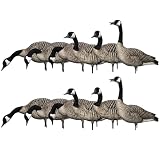
Overview: Avian X’s AXP Honkers Fusion Pack delivers twelve ultra-realistic full-body decoys with factory-attached flocked heads and collapsing motion bases. The set includes six distinct postures from sentries to feeders, designed for hunters prioritizing realism and rapid deployment in pressured hunting scenarios where every minute counts.
What Makes It Stand Out: The collapsing motion bases integrate seamlessly into decoy bodies for storage, eliminating separate bagging and reducing setup time by half. Factory-attached flocked heads ensure perfect alignment and eliminate assembly hassles. The variety pack includes specialized postures like Stretch-Neck and Walking feeders that mimic authentic flock behavior patterns.
Value for Money: Premium-priced but justifiable through time-saving design and exceptional detail. The collapsing bases reduce wear during transport, extending decoy lifespan significantly. For hunters who frequently relocate or hunt mornings with limited setup time, the efficiency gains offset the higher initial cost versus standard decoys requiring individual bagging.
Strengths and Weaknesses: Strengths include revolutionary collapsing base system, factory-attached heads, diverse posture variety, and superior paint adhesion. The convenience factor is unmatched for mobile hunters. Weaknesses include premium pricing and slightly heavier individual decoys due to integrated base mechanisms. The complex bases may require maintenance after seasons of hard use in muddy conditions.
Bottom Line: The ultimate choice for time-conscious hunters hunting educated birds. The throw-and-go design saves precious morning minutes while maintaining championship-level realism. Worth the investment for serious hunters who value efficiency and detail equally in their waterfowl pursuits.
6. Higdon Outdoors Full-Size Half Shell Canada Goose Decoys for Waterfowl Hunting | 6pk

Overview: The Higdon Outdoors Half Shell decoys represent a premium option for hunters seeking full-body realism without the full-body weight penalty. These six-pack sets feature interchangeable heads and exceptional detailing from an award-winning wildlife carver.
What Makes It Stand Out: The removable head system with five distinct positions (Tru Sentry, Rester, two Tru Walkers, two Feeders) allows unprecedented spread customization. The proprietary UV painting process minimizes glare while highlighting individual feather details, creating unmatched realism. Their stackable design solves the traditional half-shell transport problem, letting you carry several dozen into the field with ease.
Value for Money: Positioned in the mid-to-high range, these decoys justify their cost through durability and versatility. Compared to full-body decoys at $100+ each, this six-pack offers similar visual impact at a fraction of the price per decoy. The modular head system essentially gives you multiple decoy styles in one package, increasing value.
Strengths and Weaknesses: Strengths include exceptional realism, versatile head positioning, stackable portability, and UV paint technology. Weaknesses include the half-shell profile being less effective at certain angles, individual weights up to 24 ounces (heavier than silhouettes), and premium pricing that may deter budget-conscious hunters.
Bottom Line: Ideal for serious hunters prioritizing realism and versatility, the Higdon Half Shells deliver full-body impact with improved portability. The innovative head system and transportability make them worth the investment for mobile hunters targeting pressured birds.
7. Flambeau Outdoors Storm Front 2 Canada Goose Decoy, 8091SHU Classic Floaters (4-Pack)
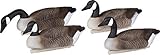
Overview: The Storm Front 2 series from Flambeau delivers premium floating decoys designed for water hunters demanding uncompromising realism. This four-pack provides oversized profiles that create an imposing presence on any water spread, from small ponds to large lakes.
What Makes It Stand Out: Patented UVision paint technology replicates the actual ultraviolet signature of goose plumage, scientifically proven to attract live birds. The proprietary keel design features four tie-off points and a depth-adjusting anchor eyelet, enabling versatile motion in current or wind. Master carvers Tom Christie, Dave Van Lanen, and Rich Smoker contributed to the hyper-realistic sculpting and anatomy.
Value for Money: While pricier than budget floaters, these decoys compete with premium brands at a moderate price point. The four-pack configuration allows hunters to build water spreads incrementally. Compared to field decoys, the specialized floating design and UVision technology justify the investment for water-specific hunting scenarios where realism is critical.
Strengths and Weaknesses: Strengths include unparalleled water realism, UVision paint technology, excellent keel system for motion, and oversized 24-inch profiles. Weaknesses include limited pack quantity (only four decoys), water-only application limiting versatility, and rotatable flocked heads that may require maintenance over time.
Bottom Line: For waterfowl hunters focusing on water setups, the Storm Front 2 floaters are a top-tier choice. The UVision technology and master-carved details make these essential for finishing wary birds over water, despite the smaller pack size.
8. Avery GHG Pro-Grade Silhouette Goose Decoys – Realistic, Stackable Decoys with Steel Stakes (Dozen, 6 Poses), Canada Goose w/Flocked Heads

Overview: Avery’s GHG Pro-Grade Silhouettes offer a practical solution for hunters needing maximum realism with minimal bulk. This dozen-pack with six distinct poses provides photographic-quality visuals at a budget-friendly price point that undercuts full-body decoys significantly.
What Makes It Stand Out: The high-definition photographic printing delivers exceptional detail across the entire decoy surface, while the matte finish eliminates sun glare—a common silhouette flaw. The one-piece steel stakes feature double-pronged feet and ergonomic handles, enabling tool-free setup even in frozen ground. Flocked heads add three-dimensional realism to the otherwise flat profile.
Value for Money: Exceptional value for a dozen decoys at this price point. Silhouettes typically cost 50-70% less than full-body decoys while providing 80% of the visual effectiveness. The included steel stakes (often a separate purchase) and dozen-pack quantity make this an economical choice for building large spreads quickly without sacrificing too much realism.
Strengths and Weaknesses: Strengths include cost-effective realism, six varied poses, stackable portability, durable construction, and excellent stake design. Weaknesses include silhouette limitations at close range, flocked heads prone to wear and ice buildup, and less effectiveness in areas with high hunting pressure where full bodies dominate.
Bottom Line: Perfect for hunters building their first serious spread or expanding existing setups, these silhouettes deliver impressive realism per dollar. The flocked heads and quality stakes make them superior to basic silhouette options without breaking the bank.
9. Avery GHG Pro-Grade Silhouette Goose Decoys – Realistic, Stackable Decoys with Steel Stakes (Dozen, 6 Poses), Canada Goose

Overview: This version of Avery’s GHG Pro-Grade Silhouettes delivers the same photographic realism and practical design as the flocked-head model, but with printed heads for hunters prioritizing low maintenance and maximum durability in harsh conditions.
What Makes It Stand Out: The high-definition photographic printing extends across the entire decoy, creating consistent detail without the maintenance concerns of flocked surfaces. The six natural poses, matte finish, and robust steel stake system remain identical to the premium version, ensuring setup speed and portability across various terrains.
Value for Money: Typically priced slightly below the flocked-head version, this model offers even better value for budget-conscious hunters. You lose some three-dimensional realism but gain longevity and weather resistance. For hunters in wet climates or those running large spreads where maintenance time adds up, the cost savings and durability benefits compound significantly.
Strengths and Weaknesses: Strengths include photographic detail, six varied poses, exceptional portability, durable one-piece stakes, and printed heads that resist icing and wear. Weaknesses include reduced realism compared to flocked heads, silhouette limitations in certain light conditions, and potential glare on head area in bright sun despite the matte finish.
Bottom Line: An excellent choice for hunters wanting maximum durability and minimal upkeep. While sacrificing some head realism, these decoys excel in harsh weather and large-volume spreads where maintenance-free operation outweighs marginal detail improvements.
10. Heerweiyi Realistic Specklebelly Goose Decoys - Durable and Detailed Hunting Decoy Set with Lifelike Feather Patterns - 6-Pack Floating Water for Outdoor Sports and Waterfowl Hunting

Overview: Heerweiyi offers an affordable entry into specklebelly goose decoying with this six-pack of floating EVA decoys. Designed for versatility, these decoys serve hunters, photographers, and pond decorators seeking budget-friendly realism without premium brand pricing.
What Makes It Stand Out: The EVA foam construction provides exceptional lightweight durability and waterproof performance at a fraction of traditional decoy weight. Detailed feather patterns based on actual waterfowl photography create visual authenticity. Their multi-purpose design extends beyond hunting to wildlife education and decorative pond use, maximizing utility.
Value for Money: Among the most affordable floating decoys available, this six-pack delivers remarkable value for beginners or as supplemental decoys. While not matching premium brands in paint durability or anatomical precision, the price-per-decoy makes them accessible for building starter spreads or adding numbers to existing setups without significant financial investment.
Strengths and Weaknesses: Strengths include extremely low cost, lightweight EVA construction, versatile applications, and adequate detail for the price point. Weaknesses include unknown brand longevity, less durable paint than premium options, generic poses lacking variety, and specklebelly-specific design limiting Canada goose hunting effectiveness.
Bottom Line: Ideal for novice hunters, as filler decoys, or for decorative purposes. While serious hunters will eventually upgrade, these provide an accessible entry point into waterfowl hunting without the typical financial barrier, performing adequately for early-season or less-pressured birds.
Understanding Spacious Field Hunting Dynamics
Why Field Size Changes Everything
Spacious field hunting transforms every aspect of your decoy strategy. Unlike confined water setups where a dozen decoys might suffice, agricultural fields demand spreads that create visible “bird density” across hundreds of yards. Geese approaching from 1,000 feet need to see a cluster that reads as a substantial feeding flock, not a scattered handful of suspicious blobs. This visual requirement pushes serious field hunters toward spreads of 60-150 decoys minimum, with some snow goose hunters deploying 1,000+ units.
The distance factor also changes how geese evaluate your spread. At 500 yards, they won’t notice fine paint details but will absolutely spot unnatural spacing, inconsistent silhouettes, or lack of motion. Your decoys must work as a cohesive unit, creating a living, breathing scene that convinces birds to commit from extreme distances and then holds their confidence as they circle overhead at 100 yards and closer.
Species-Specific Considerations
Canada geese and snow geese demand different approaches in spacious fields. Canadas typically feed in tighter family groups with distinct sentries, requiring realistic spacing and posture variety. Snow geese, conversely, form massive, dense concentrations where sheer numbers trump individual detail. Your decoy selection should reflect these behavioral differences—magnum Canada decoys with excellent detail for smaller, refined spreads versus high-volume, cost-effective snow goose shells for building “the blob” that attracts other snows.
Key Features to Evaluate in Field Goose Decoys
Shell Decoys: The Field Workhorse
Shell decoys dominate spacious field setups for good reason. These one-piece or two-piece units stack efficiently for transport, deploy quickly with simple stakes, and create excellent bulk at affordable price points. Look for shells with reinforced stake holes that won’t crack after repeated insertion into frozen ground. The best field shells feature slightly oversized bodies that cast more prominent shadows and remain visible in rolling terrain. Check that the head and body connection points include sturdy locking mechanisms—flimsy tabs break when you’re assembling your 80th decoy in pre-dawn darkness.
Full-Body Decoys: Maximum Realism
Full-body decoys deliver unmatched realism for finishing birds in the final approach, making them valuable as “confidence decoys” within larger shell spreads. In spacious fields, position these around your blind or landing zone where geese get their closest look. Evaluate weight and portability carefully—premium full-bodies with detailed paint and flocked heads can weigh 5-7 pounds each, making a 12-decoy addition feel like a significant load. For field use, prioritize models with flat-bottomed bases that sit stable on tilled ground without rocking in wind.
Silhouette Decoys: Volume and Value
Modern silhouette decoys have evolved far beyond the cheap plywood cutouts of decades past. Today’s versions feature photographic prints on corrugated plastic or metal, creating stunning realism from the side while offering extreme portability. For spacious fields, silhouettes let you double or triple your spread size without doubling your budget. The key is selecting designs with 3D head attachments or subtle texturing that breaks up the “flat” appearance when birds view them from oblique angles. Consider mixing silhouettes in a 3:1 ratio with shells—place shells in the central feeding area and silhouettes on the perimeter to create depth.
Windsock Decoys: Motion Advantage
Windsocks bring life to static spreads, crucial for catching the eye of distant geese. In spacious fields where wind flows uninterrupted, a 30-50 piece windsock addition creates constant, natural movement that flags birds from miles away. Evaluate fabric quality—polyester blends with UV-resistant coatings maintain color through seasons of sun exposure. The best field windsocks include flexible internal springs or wireframes that keep the head upright in light winds while collapsing for compact storage. Pay attention to stake systems; fiberglass rods with sharpened tips penetrate hardpan soil better than aluminum alternatives.
Size and Scale Considerations for Open Spaces
Size Options: Standard, Magnum, and Super Magnum
Decoy size directly impacts visibility in spacious fields. Standard-sized decoys (roughly 22-24 inches for Canadas) work for small spreads or close-range hunting but disappear in vast agricultural settings. Magnum decoys (26-30 inches) hit the sweet spot for most field hunters, offering enhanced visibility without excessive weight or storage demands. Super magnums (32+ inches) create incredible presence for extreme long-range attraction but require serious commitment in transport and storage space.
Consider your typical hunting location’s topography. In flat, treeless plains, super magnums help your spread compete with the horizon. In rolling terrain with natural draws and hills, magnums often suffice since elevation changes help decoys stand out. Snow goose hunters frequently use “super magnum” shells exclusively—the white color provides natural contrast, making size less critical than pure numbers.
Material Matters: Durability in Harsh Conditions
Plastic Blends and Construction
Field decoys face relentless abuse: tractor ruts, frozen ground, barbed wire fences, and months of UV exposure. High-density polyethylene (HDPE) bodies resist cracking in sub-zero temperatures better than standard polyethylene. Some manufacturers use ABS plastic for heads and necks, providing rigid detail that won’t warp in summer heat. Check wall thickness by gently squeezing the body—premium decoys use thicker plastic that doesn’t flex excessively, indicating better durability against shotgun pellets and errant tractor tires.
Foam-Filled vs. Hollow Bodies
Foam-filled decoys offer two key advantages: they won’t sink into mud and they remain buoyant if shot or cracked. In spacious fields, the mud factor matters less than water hunting, but the durability benefit remains significant. Hollow decoys weigh less and stack more compactly, critical when you’re hauling 80+ units across a quarter-mile of plowed ground. Some hybrid designs foam-fill only the bottom half, providing stability without excessive weight. For pure field use, hollow bodies typically win unless you hunt areas with persistent standing water.
Flock Realism: Postures and Behaviors
Active vs. Feeder vs. Sentry Postures
Realistic goose flocks display distinct behavioral groups. Feeder postures (head down, body angled forward) should dominate your spread—70-80% of your decoys—to signal active feeding. Active feeders (head up, alert but not alarmed) fill another 15-20%, while true sentry postures (neck erect, watchful) should appear sparingly, perhaps 5-10% of your spread. Overdoing sentries creates an unnatural “nervous” flock appearance that spooks approaching birds.
In spacious fields, posture variety becomes even more critical because birds observe your spread from multiple angles during long circling approaches. Position feeders in the main concentration, active geese in transition zones, and sentries on the periphery facing different directions to mimic natural flock security behavior.
Flocked Heads and Detail Work
Flocked heads—the fuzzy, fabric-like coating applied to plastic heads—eliminate plastic shine that flashes unnaturally in sunlight. For spacious field setups where sun angles constantly change across morning flights, flocked heads provide consistent realism. Evaluate flocking quality by rubbing it gently; premium applications resist peeling and maintain their texture through seasons of abrasion against decoy bags and other decoys. Some manufacturers flock entire necks and heads, while others flock just the head crown—full coverage offers better anti-glare performance in open fields.
Coloration and Paint Schemes
Natural Color Phases
Canada geese show regional color variations—from the dark, chocolate-brown birds of the Atlantic flyway to the silvery-backed giants of the Pacific. Select paint schemes matching your local geese for maximum authenticity. In spacious fields where birds get extended viewing time, subtle color mismatches become more apparent. Look for airbrushed feather detail with multiple tone layers rather than single-color dips. For snow geese, avoid pure white plastics—real snows show gray wingtips, rusty head staining, and subtle body shading. The best decoys incorporate these variations.
Motion Systems for Distant Visibility
Wind-Driven Motion Decoys
Spacious fields often experience steady winds perfect for motion systems. Wind-driven decoys range from simple spinning-wing flags to complex flapping-wing full-bodies. Evaluate mechanical simplicity—fewer moving parts mean fewer failure points when you’re miles from the truck. Look for sealed bearings in rotating units that resist dust and moisture. The stake connection must be robust; flimsy plastic adapters snap under wind load. Some advanced designs use magnetic connections that release under extreme gusts, preventing damage.
Battery-Powered Options
Battery-powered motion decoys provide consistency on still mornings when wind fails. In spacious fields, a few strategically placed active decoys can animate an entire spread. Consider battery life specifications carefully—units running 8+ hours on a single charge eliminate mid-hunt battery swaps. Remote control capability lets you activate motion when distant birds approach while keeping still during close passes. Evaluate noise levels; cheap motors whine audibly, while quality units operate near-silent. Waterproof battery compartments are non-negotiable for field use.
Portability and Setup Efficiency
Weight Systems and Ground Anchors
Fields present varied anchoring challenges: soft tilled soil, frozen ground, thick stubble. Decoy stakes must adapt. Look for systems with interchangeable tips—sharp points for frozen ground and wide paddles for mud. Some premium stakes feature built-in weight systems using steel cores that add stability without separate sandbags. For extreme conditions, consider decoys with integrated ground anchors that screw into soil, preventing wind drift across days-long setups.
Transport Solutions for Large Spreads
Hauling 100+ decoys across vast fields demands efficient transport. Decoy bags with rigid frames protect paint and flocking while allowing stacking. Evaluate strap systems—padded, adjustable straps distribute weight for long carries. Some hunters use plastic sleds or game carts for truly massive spreads. Consider decoys designed for “nesting” storage, where bodies stack inside each other, reducing volume by 40-50%. This nesting capability becomes invaluable when you’re loading a spread for remote field access.
Weather Resistance and Longevity
Waterproofing and UV Protection
Spacious field decoys bake under summer sun, freeze in winter, and endure every precipitation type between. UV inhibitors in plastic prevent brittleness and fading—check manufacturer specs for UV stabilization ratings. Paint should be applied over primed surfaces with clear topcoats; cheap decoys have paint that flakes after one season. For snow goose decoys, pure white plastics yellow without UV protection, destroying realism. Store decoys out of direct sunlight between seasons to maximize lifespan.
Crack Resistance in Cold Weather
Nothing destroys a decoy faster than dropping it on frozen ground at 5°F. Cold-crack resistance depends on plastic formulation and wall thickness. Premium field decoys use plastics rated to -20°F or lower. Test this by flexing the decoy body in store—if it feels rigid and brittle, it won’t survive winter. Foam-filled decoys have an advantage here; the foam core prevents catastrophic failure even if the shell cracks. For hollow decoys, look for reinforced stress points around stake holes and neck attachments.
Budget Planning for Large Spreads
Cost Per Decoy vs. Total Spread Investment
Spacious field hunting demands volume, forcing a cost-per-decoy calculation. Premium full-bodies at $150 each make no sense for a 100-decoy spread ($15,000 total). Instead, build a foundation with mid-range shells ($30-50 each) and augment with a dozen premium full-bodies for close-range confidence. Silhouettes ($10-20 each) let you scale quickly without breaking the bank. Calculate your target spread size first, then allocate budget across decoy types accordingly.
Starter Sets vs. Building Custom Spreads
Pre-packaged starter sets offer convenience and cost savings but often include postures you don’t need (too many sentries) or skimp on quality. For spacious fields, custom building typically yields better results. Purchase feeders in bulk, add smaller quantities of active and sentry postures, and mix in motion decoys strategically. Many retailers offer “field hunter bundles” with posture ratios optimized for agricultural setups—these can provide starter set savings without the generic composition problems.
Legal Considerations and Regulations
Before investing in hundreds of decoys, verify local regulations. Some states restrict motion decoy types during certain seasons. Federal guidelines govern permanent blinds and baiting distances, affecting where you can legally place spreads. Waterfowl identification requirements mean your decoys must match species you’re licensed for—mixing Canada and snow goose decoys requires appropriate tags for both. Check field access rules; some agricultural programs restrict hunting activities on enrolled land, including decoy placement duration.
Setup Strategies for Maximum Effectiveness
The “X” and “U” Formations
Spacious fields reward specific spread shapes. The “X” formation places your blind at the intersection, with decoy arms extending in four directions—perfect for fields with unpredictable wind directions. The “U” shape opens a landing pocket directly upwind of your position, ideal for consistent prevailing winds. In both cases, maintain tighter decoy spacing (2-3 feet) in the main concentration and widen to 5-6 feet on the periphery to suggest natural flock expansion.
Using Terrain Features
Even flat fields have subtle topography. Use drainage ditches, slight rises, and fence lines to hide portions of your spread, creating the illusion of depth. Place your densest decoy concentration in low spots where approaching geese expect to see birds feeding out of the wind. Position sentries on slight elevations where real geese would post lookouts. In spacious fields, these micro-terrain features become force multipliers, making 80 decoys look like 200 from the air.
Maintenance and Storage Solutions
Cleaning and Touch-Up Protocols
Field decoys accumulate mud, manure, and crop residue that dulls paint and adds unnatural scent. Establish a cleaning routine: rinse with water after each hunt, scrub with mild soap monthly, and inspect for damage. Keep touch-up paint matched to your decoys’ specific colors—most manufacturers sell repair kits. Flocked heads can be refreshed with spray-on flocking adhesive and fibers. Replace cracked stakes immediately; broken stakes lead to decoys tipping or blowing away.
Off-Season Storage
Proper storage extends decoy life exponentially. Stack decoys in cool, dark locations—basements or climate-controlled garages, not attics where heat warps plastic. Use decoy bags or original boxes to prevent paint rub. Store motion decoys with batteries removed to prevent corrosion. For massive spreads, consider renting a small storage unit; the annual cost is less than replacing sun-damaged decoys. Catalog your inventory each spring, noting damaged units to replace during off-season sales.
Frequently Asked Questions
How many decoys do I need for a spacious field setup?
For Canada geese in open fields, start with 60-80 decoys as a baseline. Snow goose hunters typically need 200-500 decoys to be competitive. The key is creating visible density; in truly vast fields, more decoys equal more attraction power. Build your spread gradually, adding 12-24 decoys per season until you see consistent improvement in bird response.
Are full-body decoys worth the cost for field hunting?
Full-bodies excel as finishing tools within larger spreads. Use 6-12 full-bodies around your blind and landing zone, backed by 60+ shells or silhouettes. This hybrid approach gives you close-range realism without the $10,000+ cost of a full full-body spread. The weight and storage penalty only makes sense for these premium positions.
What’s better for spacious fields: shells or silhouettes?
Neither is definitively better—they’re complementary. Shells provide 3D realism critical for finishing birds. Silhouettes offer incredible volume and portability for building mass. A 3:1 silhouette-to-shell ratio creates visual density while maintaining realism in the core area. In flat, open terrain, silhouettes can be less effective on calm days when birds see them edge-on; add motion decoys to compensate.
How do I keep my spread from blowing away in high winds?
Use stakes with corkscrew or auger tips that twist into soil. Add 4-6 ounce weights to decoy keels or tie lines. In extreme conditions, cluster decoys in groups of 3-5 and anchor them together with shared weights. Windsock decoys often include built-in ground stakes designed for wind resistance. Consider removing motion decoys during gusts over 25 mph to prevent damage.
Should I mix different goose species in my field spread?
Mix species only where it’s natural. Canada and snow geese rarely feed together, so mixed spreads can appear unnatural. However, mixing Canada and cackler goose decoys works in areas where both subspecies intermingle. White-fronted goose decoys can be mixed with Canadas in grain fields where both species feed. Research local flock composition during scouting trips.
How often should I replace field decoys?
Quality field decoys last 5-10 seasons with proper care. Replace units when paint flakes expose bright plastic, flocking peels completely, or cracks compromise structural integrity. Many hunters rotate 10-15% of their spread annually, replacing the worst units while slowly upgrading quality. Store decoys properly and they’ll outlast your hunting dog.
What’s the ideal decoy spacing in a spacious field?
Create a natural gradient: 2-3 feet apart in the main feeding concentration, 4-5 feet in transition zones, and 6-8 feet on the spread’s outer edges. This mimics real flock behavior where birds pack tightly in prime feeding areas but spread out when moving. Avoid perfect grid patterns—introduce random clusters and occasional outliers to break symmetry.
Are motion decoys necessary in large field spreads?
Motion isn’t mandatory but provides significant advantage, especially on calm days when static spreads look lifeless from a distance. Even 3-4 wind socks or spinners can animate 100+ static decoys. In spacious fields, motion acts as a long-range beacon, flagging birds before they can evaluate your spread’s fine details. Start with simple wind-driven options before investing in expensive battery units.
How do I transport large numbers of decoys to remote fields?
Use decoy sleds or game carts with oversized tires that roll across tilled ground. Load decoys in rigid bags that stack securely. For truly massive spreads, make multiple trips or hunt with partners who share transport duties. Some hunters park ATVs at field edges where legal. Consider leaving spreads assembled in fields overnight where permitted, using tarps to protect from dew and crop damage.
Can I leave my decoys set up all season?
Check local regulations first—some areas prohibit permanent setups. Where legal, leaving decoys saves enormous time but accelerates wear. Use heavy-duty decoys designed for extended exposure. Anchor them securely to prevent wind drift. Cover with tarps during non-hunting days to reduce UV damage and bird droppings. Inspect weekly for damage, and expect to replace 20-30% of your spread annually if left out full-time.