Table of Contents
When you’re staring down at a massive game animal and your heart is pounding in your chest, the last thing you want to worry about is whether your broadhead will punch deep enough to reach the vitals. Deep penetration isn’t just a buzzword in the archery community—it’s the critical difference between a clean, ethical harvest and a heartbreaking tracking job that might not end well. Fixed blade broadheads have earned their reputation as the penetration kings of the bowhunting world, offering simplicity, reliability, and bone-crushing performance that mechanical heads simply can’t match.
But here’s the thing: not all fixed blade broadheads are created equal when it comes to driving through hide, muscle, and potentially bone to reach those vital organs. The market is flooded with options featuring different blade configurations, materials, and design philosophies that all claim to offer superior penetration. This comprehensive guide cuts through the marketing noise to arm you with the knowledge you need to evaluate broadheads based on real physics, field performance, and how they match your specific hunting setup. We’re diving deep into what actually makes a broadhead penetrate better, so you can make an informed decision that matches your bow, your arrows, and the game you’re pursuing.
Top 10 Fixed Blade Broadheads
Detailed Product Reviews
1. KEAUP 6 Pack Hunting Broadhead 100 Grain 420 Stainless Steel Fixed Blade Broadhead Arrow Tips Archery Arrowhead for Crossbow and Compound Bow

Overview: The KEAUP 6 Pack offers budget-conscious hunters a practical entry into fixed-blade broadheads. Constructed from 420 stainless steel with three fixed blades, these 100-grain tips feature one-piece metal injection molding and a vented design to minimize wind drag during flight. The standard 8-32 threading ensures compatibility across crossbows, compound bows, and recurves, making this a versatile choice for archers of all disciplines.
What Makes It Stand Out: The six-pack quantity immediately distinguishes this offering from competitors typically sold in three-packs. Each broadhead undergoes spin-testing for balance, while the MIM construction eliminates weak points found in welded designs. The vented profile reduces wind resistance, potentially improving long-range accuracy. This combination of quality control and aerodynamic engineering at a budget price point is rare in the broadhead market.
Value for Money: At roughly half the cost per broadhead compared to premium brands, this six-pack delivers exceptional practice and backup value. While not matching top-tier sharpness out of the box, the re-sharpenable 420 steel extends lifespan significantly, making it ideal for hunters wanting quantity without sacrificing basic quality. The value proposition strengthens when considering the included spin-testing, a feature usually reserved for higher-priced options.
Strengths and Weaknesses: Strengths include the six-pack quantity, spin-tested consistency, MIM construction, and re-sharpenable blades. Weaknesses involve unknown brand longevity, potentially requiring initial sharpening, and less refined finish than premium options. The 1-1/8" cut provides adequate wound channels for deer-sized game, though experienced hunters might notice slightly less refined flight characteristics compared to flagship brands.
Bottom Line: Perfect for beginners, practice sessions, or hunters needing reliable backups, the KEAUP six-pack delivers functional performance at an unbeatable price point. Don’t expect custom-grade precision, but count on dependable terminal performance for standard hunting scenarios. This offering democratizes quality broadhead features for budget-minded archers.
2. G5 Outdoors Montec 100 Grain 1-1/16" Cut Broadheads (3 Pack)
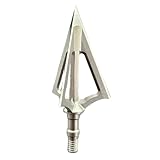
Overview: The G5 Montec represents the gold standard in fixed-blade broadheads, featuring uncompromising all-steel construction through advanced metal injection molding. These 100-grain broadheads deliver a 1-1/16" cutting diameter with diamond-cut sharpness that serious hunters demand for clean, ethical kills. The one-piece design eliminates structural weaknesses entirely, creating a tool built for reliability season after season.
What Makes It Stand Out: G5’s reputation for precision manufacturing shines through spin-tested perfection and cut-on-contact design that initiates penetration immediately upon impact. The diamond-cut sharpening technology creates a scalpel-like edge that maintains its bite through hide and bone. Available in 85, 100, and 125-grain options, the Montec line offers customization for specific bow setups and game animals, a flexibility rarely found in fixed-blade designs.
Value for Money: While priced at a premium over budget alternatives, the Montec’s durability justifies the investment. These broadheads can be resharpened and reused across multiple seasons, effectively reducing long-term cost per use. The three-pack configuration targets serious hunters rather than volume buyers. When factoring in the elimination of potential failures and wounded game, the upfront premium translates to ethical hunting value.
Strengths and Weaknesses: Strengths include exceptional durability, superior out-of-box sharpness, proven accuracy from spin-testing, and brand reliability. The all-steel construction withstands impacts that would destroy lesser broadheads. Weaknesses center on the higher price point and limited three-pack quantity. The all-steel design adds minimal weight but may be overbuilt for smaller game like turkeys or varmints.
Bottom Line: For hunters prioritizing reliability and ethical kills, the G5 Montec delivers professional-grade performance. The upfront cost pays dividends in durability and consistency. This is your go-to choice for trophy hunts where failure isn’t an option. The Montec’s reputation is earned through consistent field performance, making it a worthy investment for serious archers.
3. TenPoint EVO-X Montec Fixed Blade Broadhead - Pack of 3 - 100-Grain, Three-Blade Design
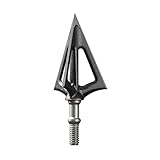
Overview: Developed exclusively for TenPoint by G5, the EVO-X Montec addresses the unique demands of high-speed crossbows. This 100-grain fixed-blade broadhead combines the proven Montec design with enhancements specifically engineered to withstand extreme velocities and kinetic energy from modern crossbow platforms. The collaboration ensures seamless integration with TenPoint’s hunting systems.
What Makes It Stand Out: The partnership between TenPoint and G5 guarantees compatibility with high-performance crossbows exceeding 400 FPS. The reinforced construction maintains structural integrity under extreme forces that would compromise standard broadheads. The 1-1/8" cut-on-contact design delivers devastating wound channels optimized for crossbow energy transfer. This specialization eliminates guesswork for TenPoint owners seeking maximum performance from their investment.
Value for Money: Positioned at the premium tier, the EVO-X justifies its price through specialized engineering. For TenPoint crossbow owners, the guaranteed compatibility and enhanced durability eliminate compatibility concerns. The cost-per-use becomes reasonable when considering reusability across multiple seasons. The broadhead’s ability to maintain accuracy at extreme speeds prevents costly missed opportunities and ensures ethical harvests.
Strengths and Weaknesses: Strengths include crossbow-specific reinforcement, G5’s precision manufacturing, devastating cutting diameter, and brand synergy. The rugged steel ferrule and scalpel-sharp blades perform flawlessly under high-energy impacts. Weaknesses involve premium pricing that doesn’t benefit compound bow users and over-engineering for lower-speed setups. Limited to three heads per package, requiring additional purchases for practice.
Bottom Line: TenPoint crossbow owners should consider this their default choice. The EVO-X Montec eliminates compatibility concerns while delivering lethal performance at extreme velocities. While unnecessary for compound bows, it’s unmatched for high-speed crossbow applications. The premium is justified when protecting your primary hunting investment and ensuring clean kills at long range.
4. Sososhoot 12Pcs Stainless Steel 100 Grain Broadheads 2 Blades Hunting Tips for Crossbow Compound Bow Archery Hunting,Black
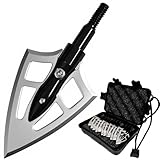
Overview: The Sososhoot 12-pack delivers bulk value for hunters prioritizing quantity over premium branding. These 100-grain broadheads feature surgical-grade 420 stainless steel construction with two fixed blades, creating a 1.14-inch cutting diameter suitable for medium to large game. The universal 8-32 threading ensures broad compatibility across equipment types.
What Makes It Stand Out: The twelve-pack quantity dominates the value proposition, providing enough broadheads for an entire season of practice and hunting. The two-blade design simplifies maintenance while maintaining adequate cutting surface. The universal threading works with most arrow shafts, making this ideal for outfitting multiple hunters or high-volume shooters who prefer fresh broadheads frequently without financial guilt.
Value for Money: No competitor matches the per-unit cost efficiency. These function as disposable yet effective broadheads for hunters who prefer fresh edges each outing. While not heirloom-quality, the 420 steel provides sufficient durability for several uses before replacement. For hunting camps, youth programs, or archers shooting dozens of practice heads annually, the economics are unbeatable.
Strengths and Weaknesses: Strengths include unbeatable quantity, universal compatibility, easy maintenance, and ultra-low cost. The black finish provides corrosion resistance. Weaknesses involve two-blade limitations compared to three-blade designs, unknown brand quality control consistency, and potentially shorter lifespan than premium options. May require initial sharpening and lack the refinement of spin-tested competitors.
Bottom Line: Ideal for high-volume shooters, practice sessions, or outfitting multiple hunters economically. Don’t expect premium performance, but anticipate reliable function for standard hunting situations. Perfect as backup broadheads or for hunters learning arrow tuning. The quantity alone makes this worthwhile for anyone tired of rationing expensive practice heads.
5. Dead Ringer unisex adult Dead Ringer The Butcher Broadhead 100 gr 3 pk , Silver, gra US

Overview: The Dead Ringer Butcher broadhead takes a specialized approach to terminal performance, prioritizing bone-shattering penetration over cutting diameter. This 100-grain fixed-blade features a robust three-blade design with a modest 1-1/16" cutting diameter but an impressive 1.725" total cutting surface engineered for devastating wound channels through heavy bone.
What Makes It Stand Out: Explicitly designed for lower kinetic energy setups, the Butcher’s reinforced structure and optimized blade geometry excel at smashing through bone rather than deflecting. This makes it ideal for traditional archers or shorter-draw compound users who need guaranteed penetration. The design philosophy recognizes that a penetrating hit beats a wide deflection every time in marginal energy situations.
Value for Money: The three-pack pricing reflects specialized engineering rather than mass-market appeal. For hunters with marginal energy setups, this premium prevents wounded game and ensures ethical kills. The durability allows multiple uses, improving long-term value for its niche application. When your setup limits energy output, this broadhead transforms marginal shots into recoverable game.
Strengths and Weaknesses: Strengths include exceptional penetration on heavy bone, lower kinetic energy optimization, robust construction, and unique design philosophy. The three-blade configuration maintains stability while the reinforced tip powers through obstacles. Weaknesses involve the smaller cutting diameter limiting blood trails and specialized nature not benefiting high-energy setups. Limited versatility across game species.
Bottom Line: Choose the Butcher when penetration trumps all other considerations. Traditional bowhunters and low-poundage shooters will appreciate its bone-crushing reliability. High-energy crossbow users should look elsewhere, but for marginal setups, this broadhead transforms questionable shots into successful harvests. It’s a specialized tool that excels within its designed parameters.
6. LEANPRO 6-Pack 420 Stainless Steel Fixed Blade Broadheads 100 Grain 1-1/8" Cut Premium Solid Arrow Tip for Archery Hunting for Crossbow and Compound Bow

Overview: The LEANPRO 6-Pack delivers functional fixed-blade broadheads for hunters seeking quantity without sacrificing core performance. These 100-grain heads feature a standard 8-32 thread pattern, ensuring compatibility across crossbows, compound, and recurve bows. The vented design and 1-1/8-inch cutting diameter provide reliable penetration for medium-sized game.
What Makes It Stand Out: The vented blade design distinguishes this budget-friendly option, reducing wind drag and improving flight stability compared to solid-blade alternatives. The 420 stainless steel construction offers decent durability while remaining easy to resharpen in the field. The six-piece quantity provides excellent backup for multiple hunts or target practice sessions without breaking the bank.
Value for Money: At a typical price point under $30 for six broadheads, this pack delivers exceptional cost-per-unit value. While premium one-piece broadheads can cost $10-15 each, LEANPRO provides functional heads at roughly one-third the price. The resharpenable nature extends their lifespan, making them ideal for beginners practicing extensively or hunters wanting spare ammunition.
Strengths and Weaknesses: Strengths: Excellent quantity-to-price ratio; vented design improves accuracy; resharpenable 420 steel extends usability; universal thread compatibility; suitable for both hunting and practice. Weaknesses: 420 steel isn’t as durable as premium 440C or tool steel; two-piece construction may separate on hard impacts; lacks spin-testing certification; blades may require frequent touching up on tough game.
Bottom Line: These broadheads serve budget-conscious hunters and archers perfectly. While not matching premium performance, they deliver reliable results for practice and hunting when properly maintained. Buy them for quantity, not ultimate quality.
7. e5e10 12pcs Archery Broadheads 3 Fixed Steel Blade 125 Grain Hunting Arrowheads Fit for Compound Bow and Crossbow with One Black Plastic Portable Broadheads Case (Green)

Overview: The e5e10 12-piece set targets high-volume shooters with a comprehensive kit including a portable storage case. These 125-grain broadheads feature an anodized aluminum shaft married to stainless steel tips, creating a lightweight yet penetrative design. The three-blade configuration suits both hunting and extended practice sessions across multiple bow platforms.
What Makes It Stand Out: The included plastic case provides organized, safe transport for all twelve broadheads—a feature often costing extra with other brands. The 125-grain weight offers enhanced kinetic energy transfer for crossbow users or those seeking deeper penetration. The vibrant green color aids visibility during retrieval from targets or game.
Value for Money: Offering twelve broadheads plus storage case typically under $35, this package delivers one of the lowest cost-per-unit values available. Equivalent quantities from established brands would exceed $100. The aluminum construction keeps costs down while maintaining adequate performance for deer-sized game, making it economical for hunters who shoot frequently.
Strengths and Weaknesses: Strengths: Unbeatable quantity for price; protective case included; 125-grain weight adds penetration; universal compatibility; lightweight aluminum shafts; excellent for practice and backup. Weaknesses: Multi-material design may fail under extreme stress; anodized finish wears quickly; inconsistent quality control reported; blades dull faster than premium options; not spin-tested for precision.
Bottom Line: This bulk set excels as practice ammunition and backup hunting heads. Serious hunters should verify consistency before field use, but the value proposition is undeniable for shooters burning through dozens of broadheads annually.
8. G5 Outdoors Montec 1-1/8-Inch Cut Broadheads (3-Pack), 125 Grain

Overview: The G5 Montec represents premium broadhead engineering with its revolutionary one-piece Metal Injection Molding construction. These 125-grain heads eliminate separate components entirely, creating a virtually indestructible broadhead. The diamond-cut sharpness and cut-on-contact design ensure devastating penetration and wound channels for ethical, efficient harvests.
What Makes It Stand Out: G5’s spin-testing protocol guarantees each broadhead flies identical to field points, eliminating tuning headaches. The MIM construction removes all potential failure points—no loose blades, no separated ferrules. Multiple grain options (85, 100, 125) allow precise bow matching, while the diamond-sharpened edges maintain razor sharpness longer than conventionally ground blades.
Value for Money: Priced around $35-40 for three heads, the Montec commands premium rates but delivers proportional value. The reusable, resharpenable design lasts multiple seasons, amortizing the initial investment. Compared to replacing cheaper broadheads annually, the Montec’s durability makes it cost-effective for serious hunters prioritizing reliability over initial price.
Strengths and Weaknesses: Strengths: Unmatched one-piece durability; 100% spin-tested accuracy; exceptional edge retention; cut-on-contact penetration; no replacement parts needed; consistent flight characteristics. Weaknesses: Higher upfront cost; only three per pack; sharpening requires diamond stone due to hardness; slightly smaller 1-inch cutting diameter on some models; limited availability in retail stores.
Bottom Line: For hunters demanding zero compromises on reliability and accuracy, the Montec stands as the gold standard. The investment pays dividends through season-after-season performance and the confidence that comes from using indestructible equipment.
9. JIANZD Archery Broadheads 100 Grain Fixed Blades Stainless Steel X1 Hunting Broadheads for Crossbow Recurve Bow and Compound Bow

Overview: JIANZD’s X1 broadheads blend one-piece steel construction with spin-tested accuracy at a mid-market price point. These 100-grain fixed-blade heads target hunters seeking premium features without premium pricing. The all-steel design eliminates assembly concerns while promising field-point-like flight characteristics across all bow types through standardized 8-32 threading.
What Makes It Stand Out: The manufacturer emphasizes after-sales support—a rarity in the broadhead market—providing peace of mind for buyers. The one-piece construction mirrors high-end designs at a fraction of the cost, while spin-testing ensures consistency typically found in $10+ heads. The easily resharpened blades extend service life beyond single-use alternatives.
Value for Money: Positioned around $20-25 for a three-pack, these offer compelling value for all-steel construction. They undercut premium brands like G5 by 30-40% while maintaining similar specifications. For hunters wanting durability and accuracy testing without paying flagship prices, JIANZD bridges the gap between budget and premium segments effectively.
Strengths and Weaknesses: Strengths: Solid one-piece steel construction; spin-tested for accuracy; resharpenable blades; universal compatibility; responsive customer support; true flight performance. Weaknesses: Brand lacks long-term reputation; limited distribution channels; blade sharpness may vary batch-to-batch; no included storage case; cutting diameter not specified in listing.
Bottom Line: These broadheads deliver premium features at a reasonable price, making them ideal for intermediate hunters upgrading from budget options. Verify sharpness upon arrival, but the construction quality and accuracy testing make them a smart, reliable choice.
10. ARCTIRA 12Pcs Hunting Broadheads with Solid Case 3 Fixed Blades for Crossbow Bolts and Compound Bow Arrows Portable Broad Heads Box Archery Arrowheads for Adults (Black, 100 Grains)

Overview: ARCTIRA bundles twelve 100-grain broadheads with a robust locking case, creating a complete hunting system. Each head features precision-machined aluminum shafts supporting three stainless steel blades, balancing weight reduction with cutting efficiency. The 2.87-inch length and standard threading ensure compatibility with modern crossbow bolts and compound bow arrows.
What Makes It Stand Out: The protective case features a secure locking mechanism that prevents accidental opening while allowing quick access—superior to basic plastic boxes. Precision machining ensures consistent weight across all twelve broadheads, promoting uniform arrow flight. The aluminum-stainless steel hybrid design maximizes sharpness while maintaining structural integrity for pass-through shots.
Value for Money: Typically priced under $40 for twelve heads plus a professional-grade case, this package rivals the e5e10 set while offering superior storage. The case alone would cost $10-15 separately. For hunters requiring organized, protected transport of multiple broadheads across extended trips, the bundled value exceeds purchasing components individually.
Strengths and Weaknesses: Strengths: Excellent protective case with lock; twelve-head quantity; precision weight consistency; hybrid construction balances strength and sharpness; professional presentation; ideal for travel. Weaknesses: Aluminum shafts less durable than one-piece steel; blades may loosen under extreme impact; case adds bulk to pack; limited brand history; not specified as spin-tested.
Bottom Line: The ARCTIRA set serves traveling hunters and those prioritizing organization. While not the most rugged individual broadhead, the complete system’s convenience and protection make it perfect for multi-day hunts where gear management matters as much as performance.
The Science Behind Deep Penetration
Understanding Kinetic Energy Transfer
Deep penetration starts long before the broadhead touches the animal—it begins with how efficiently your arrow system transfers energy on impact. Kinetic energy is just a number on paper until it’s converted into real-world tissue disruption and forward momentum. The key is energy retention; a broadhead that maintains its structural integrity and continues driving forward without deflecting wastes less energy. Factors like blade angle, tip design, and ferrule strength directly impact how much of your arrow’s energy goes into pushing the broadhead deeper versus being lost to friction, blade deformation, or arrow deflection.
Blade Design Physics
The physics of blade design plays a massive role in penetration dynamics. A blade’s angle of attack determines how easily it parts tissue and how much resistance it encounters. Steeper angles might cut more aggressively but create drag, while shallower angles slide through with less resistance but might not open wound channels as effectively. The relationship between the leading tip and the following blades creates a pressure wave that either helps or hinders penetration. Understanding these principles helps you see why certain designs excel on light-bodied deer while others are built for heavy elk or moose.
Material Strength Considerations
You can have the most aerodynamic design in the world, but if the materials can’t hold up to impact stress, penetration stops abruptly. Modern broadheads use various steel alloys, each with different hardness ratings, tensile strength, and edge-holding capabilities. The metallurgy affects not only durability but also how thin manufacturers can grind the blades without risking failure. Harder steels maintain razor edges longer but can be brittle, while softer steels might bend but won’t shatter. This balance directly impacts how well a broadhead maintains its profile during penetration through tough tissue and bone.
Key Features That Drive Penetration
Blade Sharpness and Edge Geometry
Razor-sharp blades aren’t just about cutting—they’re about reducing friction and resistance. A truly sharp blade creates micro-separation in tissue rather than tearing it, which significantly reduces the force needed to penetrate. The edge geometry matters just as much as sharpness; a hollow grind offers extreme sharpness but fragile edges, while a convex grind provides durability at the cost of ultimate sharpness. For deep penetration, you need a blade that arrives at the animal scary-sharp and maintains that edge through the entire wound channel, especially if bone is encountered.
Cutting Diameter Trade-offs
Here’s where many hunters get it wrong: bigger isn’t always better when it comes to penetration. A massive cutting diameter creates more tissue resistance and drag, requiring significantly more kinetic energy to achieve the same penetration depth as a smaller head. The relationship between cutting diameter and penetration is directly inverse—every extra fraction of an inch in diameter increases surface area and friction exponentially. For deep penetration, particularly on larger game, a more modest cutting diameter often outperforms those giant “mega-cut” heads that look impressive in photos but stop short in real animals.
Ferrule Construction Materials
The ferrule is the backbone of your broadhead, and its material properties affect penetration in subtle but important ways. Steel ferrules offer maximum strength and can be sharpened to contribute to cutting, but they add weight. Aluminum ferrules reduce overall weight, potentially increasing arrow velocity, but can deform on hard impacts. Titanium sits in the sweet spot—stronger than steel at a fraction of the weight—but commands premium prices. The ferrule’s ability to maintain its shape when hitting bone determines whether the broadhead continues on its path or deflects, losing precious penetration.
Blade Thickness Impact
Thicker blades sound tougher, but they come with a penetration penalty. Every thousandth of an inch in blade thickness increases the frontal surface area and creates more tissue displacement and drag. However, blades that are too thin can flex or break on impact, especially when encountering bone. The sweet spot for deep penetration is typically in the 0.040" to 0.060" range, where you get enough stiffness for structural integrity without unnecessary bulk. Some designs use tapered blades that are thicker at the ferrule for strength and thinner at the edges for cutting efficiency.
Anatomy of a Penetrating Broadhead
Single-Bevel vs Double-Bevel Blades
Single-bevel blades are the secret weapon of penetration fanatics. These blades are sharpened on only one side, creating a spiral effect as they pass through tissue. This rotation helps the broadhead continue driving forward rather than being deflected by bone or dense muscle. The twisting action also creates devastating wound channels and can actually help split bone rather than glance off. Double-bevel blades are easier to sharpen and more common, but they lack this rotational advantage. For absolute maximum penetration on heavy game, single-bevel designs have a proven track record.
Chisel Tip vs Cut-on-Contact Designs
The tip is your first point of contact and sets the stage for everything that follows. Chisel tips feature a blunt, reinforced point designed to smash through bone before cutting begins. They’re incredibly durable but require more energy to initiate penetration. Cut-on-contact tips merge directly into the blades, starting the cutting process immediately upon impact with minimal resistance. These excel on lighter game or when shots might hit ribs but can be more fragile if heavy bone is encountered. Your choice depends on your target animal and your confidence in shot placement.
Blade Count Considerations
Two-blade heads are the undisputed penetration champions. With only two cutting edges, they encounter less tissue resistance and create a smaller frontal profile, allowing them to slip between ribs and through muscle more efficiently. Three-blade heads offer better blood trails and more forgiving wound channels if the animal moves during arrow passage, but that third blade increases resistance. Four-blade designs create devastating wounds but sacrifice significant penetration energy. For pure penetration, fewer blades almost always win, especially when kinetic energy is marginal.
Tapered vs Straight Ferrules
A tapered ferrule that narrows from the threads to the tip can significantly improve penetration by reducing friction after the initial cut. The taper allows tissue to close slightly behind the cutting edges, minimizing drag on the ferrule body. Straight ferrules maintain consistent diameter and are generally stronger and easier to manufacture, but they maintain full contact with tissue throughout penetration. Some premium designs feature micro-grooves or fluting on the ferrule to further reduce surface tension and improve penetration through viscous tissue.
Matching Broadheads to Your Setup
Draw Weight and Kinetic Energy Requirements
Your bow’s draw weight directly impacts the kinetic energy available for penetration, but it’s not the whole story. A 70-pound compound might generate more energy than needed for deer, while a 50-pound recurve might be marginal for elk. The key is matching broadhead efficiency to your energy output. Lower energy setups (under 50 ft-lbs) should stick with two-blade, cut-on-contact designs with smaller diameters. Higher energy setups can handle three-blade heads or slightly larger diameters, but even then, efficient designs penetrate deeper than aggressive ones.
Arrow Spine and Weight Matching
Your arrow’s spine and total weight work with the broadhead to determine penetration. A properly spined arrow flexes correctly on impact, keeping energy directed forward rather than dissipating sideways. Heavier arrows retain more momentum downrange, which is crucial for penetration, especially after the initial impact. A 500-grain arrow with an efficient fixed blade head will often outperform a 400-grain arrow with the same head, even if the lighter arrow started faster. The broadhead’s weight must be factored into your total arrow weight and FOC calculations.
Bow Type Compatibility
Compound bows, with their high energy storage and let-off, can drive almost any fixed blade design to adequate penetration if properly tuned. Traditional bows (recurves and longbows) are less forgiving and require the most efficient heads available—typically two-blade, cut-on-contact designs. Crossbows generate tremendous energy but also extreme acceleration, which can affect broadhead flight and integrity. The best broadhead for your bow type considers not just energy but also how the arrow is launched and how much tuning flexibility you have.
FOC (Front of Center) Considerations
FOC affects how your arrow behaves on impact. A higher FOC (12-15%) drives the broadhead forward more aggressively and helps maintain momentum during penetration. However, extreme FOC can cause arrow flight issues and requires stiffer spines. Fixed blade broadheads, being heavier than field points, naturally increase FOC. This is generally beneficial for penetration but must be balanced against overall arrow flight. Some hunters add weight to the insert or use heavier broadheads specifically to boost FOC for better penetration on large game.
Field Performance Factors
Bone-Breaking Ability
The real test of penetration comes when bone is encountered. A broadhead that can break or split bone while continuing into the vitals is worth its weight in gold. Chisel tips and reinforced single-bevel designs excel here, as they’re engineered to withstand the immense forces of bone impact without deflecting. The angle of the leading edges determines whether the head will glance off or dig in. For heavy game where quartering shots are likely, bone-breaking ability can be more important than initial sharpness.
Flight Characteristics
The most penetrative broadhead in the world is useless if it doesn’t hit where you aim. Fixed blade heads catch more wind than field points, and their flight characteristics depend on blade profile, ferrule design, and overall balance. Heads with compact blade geometry and smooth ferrules fly more like field points, requiring less bow tuning. Larger, more aggressive heads might need significant rest and nock point adjustments to achieve acceptable accuracy. Always test broadheads at multiple distances before hunting, as some designs that fly great at 20 yards can wander at 40.
Durability and Edge Retention
A broadhead that deforms or dulls on the first few inches of penetration loses efficiency rapidly. Quality steel that holds an edge through hide, hair, and tissue is crucial for maintaining penetration momentum. Some designs feature replaceable blades, allowing you to hunt with a fresh edge every time. Others are one-piece heads that can be resharpened. Consider how easy it is to maintain that razor edge, because a dull broadhead on a follow-up shot or on a second animal costs you penetration performance.
Blood Trail Creation
While deep penetration is the primary goal, you also need to recover your animal. The trade-off between penetration and blood trail size is real. Two-blade heads that penetrate deepest sometimes create narrower wound channels that can seal up, especially in fatty tissue. Three-blade designs create more tissue damage and better bleeding but sacrifice some penetration. Consider your tracking ability and hunting terrain—open country allows for easier tracking with less blood, while thick cover demands more visible blood trails.
Practical Selection Guide
Assessing Your Target Game
Your target species should drive your broadhead choice more than any other factor. For whitetail deer, most quality fixed blade heads will provide adequate penetration, allowing you to prioritize blood trail and accuracy. For elk, moose, or bear, penetration becomes paramount, and you should lean toward two-blade, single-bevel designs that can handle heavy bone. Antelope and other thin-skinned game allow for more aggressive designs, while hogs with their tough hide and gristle plates demand maximum penetration capability.
Understanding Penetration vs Cutting Diameter
This is the fundamental trade-off in broadhead design. A 1-inch diameter head will almost always penetrate deeper than a 1.5-inch head from the same bow, all else being equal. The question is whether the extra cutting radius creates enough additional blood trail to justify the penetration loss. For marginal shots or heavy game, penetration wins. For perfect broadside shots on deer-sized game, a larger diameter might be acceptable. Most experienced hunters settle in the 1-1/8" to 1-1/4" range as the sweet spot for both penetration and wound channel size.
Budget vs Premium Features
You don’t have to spend a fortune to get good penetration, but premium features often justify their cost. Budget heads might use softer steel that dulls faster or have less precise manufacturing tolerances that affect flight. Premium heads offer better metallurgy, tighter tolerances, and designs refined through years of field testing. However, a well-sharpened budget two-blade head that flies true from your bow will penetrate better than a premium head that doesn’t group well. Focus on basic quality first, then consider premium features that match your specific needs.
Tuning Requirements
Some fixed blade heads are plug-and-play, flying nearly identically to field points. Others require extensive bow tuning to achieve acceptable accuracy. Before buying, research how much tuning a particular design typically needs. If you’re not comfortable adjusting your rest, nock point, and potentially your cam timing, stick with heads known for easy tuning. Remember that perfect penetration is meaningless if you can’t hit the vital zone. Sometimes a slightly less aggressive head that groups perfectly is better than a “better” penetrating head that you can’t shoot accurately.
Frequently Asked Questions
What makes a fixed blade broadhead penetrate better than a mechanical head?
Fixed blade heads start cutting immediately upon impact with no energy loss to blade deployment. Their rigid construction directs all kinetic energy forward into penetration rather than using some of that energy to open blades. They also typically have smaller profiles and less surface area, creating less drag through tissue.
How much kinetic energy do I need for adequate penetration on elk?
For elk-sized game, most experts recommend at least 60-65 ft-lbs of kinetic energy with a heavy arrow (500+ grains) and an efficient two-blade fixed head. However, shot placement and broadhead design matter more than raw energy numbers. A well-placed arrow from a 50-pound traditional bow with a single-bevel head has killed plenty of elk.
Can I get good penetration with a three-blade head?
Yes, but it requires more kinetic energy. Three-blade heads create about 50% more tissue resistance than two-blade designs. If you’re shooting a modern compound with 65+ ft-lbs of energy, a quality three-blade head will penetrate adequately on deer and even elk with good shot placement. For marginal energy setups, stick with two blades.
How important is blade sharpness really?
It’s absolutely critical. A dull broadhead requires exponentially more force to penetrate and will be deflected more easily by bone and cartilage. You should be able to shave hair with your broadheads before every hunt. Many penetration failures blamed on “not enough energy” are actually due to inadequate sharpness.
What’s the best broadhead weight for penetration?
Heavier is generally better for penetration because it increases momentum and FOC. Most hunters find 125-grain heads offer the best balance, but 150-grain heads can provide even better penetration if your arrows are properly spined. Don’t go heavier than your arrow spine can stabilize, as poor flight kills penetration.
Should I choose a chisel tip or cut-on-contact for deep penetration?
For heavy bone, chisel tips are more durable and less likely to deflect. For soft tissue penetration and lighter game, cut-on-contact tips start cutting immediately with less resistance. If you’re hunting elk or moose where you might hit shoulder blade, go chisel tip. For deer or antelope, cut-on-contact often penetrates deeper.
How do I know if my broadheads are flying true?
Shoot them at 20, 30, and 40 yards alongside field points. If your broadheads group differently than field points by more than 2-3 inches, you have a tuning issue. Broadheads magnify any arrow flight imperfections, so perfect broadhead flight indicates your entire system is dialed in.
Can a broadhead be too sharp?
Not really. The concern with extreme sharpness is edge fragility—super thin edges can roll or chip on hair and hide before reaching the vitals. However, quality steel properly heat-treated can be both razor-sharp and durable. Don’t sacrifice sharpness for durability; instead, choose a head made from quality steel that offers both.
What’s the ideal cutting diameter for maximum penetration?
For most setups, 1-1/8" to 1-1/4" offers the best compromise. Two-blade heads can go smaller (1" or even 7/8") for extreme penetration on heavy game. Three-blade heads at 1-1/8" penetrate better than 1-1/2" versions while still creating good blood trails. Match diameter to your energy and target animal.
How do I maintain my fixed blade broadheads for optimal penetration?
Store them in a protective case to prevent edge damage. Before each hunt, touch up the edges with a fine diamond stone or leather strop. Check for any nicks or rolls under magnification. After shooting an animal, inspect the head—if you plan to reuse it, sharpen it properly rather than just touching it up. A truly sharp broadhead is your best penetration tool.
Related Buying Guides
- 10 Most Revolutionary Fixed Blade Broadheads of 2026
- 10 Must-Have Replaceable Blade Broadheads for Field Adjustments in 2026
- How to Solve Poor Penetration with the 10 Best High Penetration Broadheads in 2026
- The 10 Most Revolutionary Crossbow Broadheads of 2026
- 10 Top-Rated Crossbow Broadheads According to Experts in 2026