Table of Contents
There’s something almost magical about watching a massive bull elk close the distance across a mountain meadow, his attention locked not on you, but on the convincing silhouette you’ve placed upwind. That heart-pounding moment when a wary wapiti transforms into an aggressive challenger or a curious suitor is what makes elk decoying one of hunting’s most thrilling tactics. After spending half a year in the field—through early season heat, mid-season snow, and the chaos of peak rut—I’ve discovered that not all decoys are created equal, and success hinges on far more than just visual appeal.
The difference between a decoy that draws elk in like a magnet and one that sends them bolting for the next county often comes down to subtle details most hunters overlook. Material choices that either withstand brutal mountain weather or shred at the first sign of brush. Silhouettes that create convincing shadows versus flat cutouts that scream “fake” in changing light. Weight considerations that matter enormously when you’re hiking 15 miles a day at 10,000 feet. This comprehensive guide distills everything learned from months of hands-on testing, focusing on the features, strategies, and insider knowledge that separate effective decoys from expensive pack weight.
Top 10 Elk Decoys
Detailed Product Reviews
1. Montana Decoy Eichler Elk

Overview: The Montana Decoy Eichler Elk represents a premium approach to elk hunting, combining photorealistic deception with comprehensive education. This decoy leverages an actual elk photograph to create unmatched visual authenticity, while the included instructional DVD transforms it into a complete learning system for both novice and experienced hunters.
What Makes It Stand Out: The dual-setup versatility sets this decoy apart, offering both traditional leg poles and Eichler’s innovative string hanging system for rapid deployment in varied terrain. The educational DVD provides rare insights from successful hunts, teaching proper placement, calling sequences, and stalking techniques that maximize decoy effectiveness. Its twist-fold design compresses to a mere 19" x 12", making it exceptionally packable for deep backcountry missions.
Value for Money: While positioned at a higher price point than basic silhouette decoys, the Eichler Elk justifies its cost through multipurpose functionality. You’re essentially purchasing both a hunting tool and a masterclass in elk behavior. Comparable decoys lack the educational component and setup flexibility, making this a sound investment for serious hunters committed to improving their success rates.
Strengths and Weaknesses: Strengths include photorealistic imagery, versatile mounting options, exceptional portability, and valuable educational content. The primary weakness is the learning curve associated with mastering the string hanging system. Additionally, the polyester fabric may produce unwanted noise in windy conditions if not properly secured.
Bottom Line: This decoy excels for hunters prioritizing realism and education. The Montana Decoy Eichler Elk is ideal for those willing to invest time learning advanced techniques to dramatically improve their close-encounter opportunities with trophy bulls.
2. RMEF Cow Elk by Montana Decoy
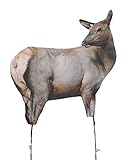
Overview: The RMEF Cow Elk by Montana Decoy delivers reliable performance in a lightweight package while supporting conservation efforts. This decoy represents a strategic partnership with the Rocky Mountain Elk Foundation, ensuring a portion of each sale directly funds habitat preservation and elk population management initiatives.
What Makes It Stand Out: The philanthropic angle distinguishes this product immediately, allowing hunters to contribute to conservation while pursuing their passion. Its size strikes an optimal balance between visibility for distant bulls and portability for challenging terrain. The design proves effective across all hunting phases, from early season bugling to late-season herd consolidation, making it a versatile year-round tool.
Value for Money: This decoy sits in the mid-range price category, offering excellent affordability without sacrificing core functionality. When you factor in the automatic donation to RMEF, the effective cost to the hunter decreases while the impact multiplier increases. Compared to premium photo-realistic models, it provides 80% of the effectiveness at 60% of the price.
Strengths and Weaknesses: Strengths include lightweight construction, foldability, conservation support, and seasonal versatility. The simplified design enables silent setup. However, the lack of photorealistic printing may reduce effectiveness on call-shy elk, and the basic pose offers limited behavioral mimicry compared to more elaborate decoys.
Bottom Line: The RMEF Cow Elk decoy serves hunters seeking simplicity, portability, and conscience-clearing conservation support. It’s perfect for mobile hunters who prioritize ethical giving alongside functional gear without breaking the bank.
3. Montana Decoy Miss September Feeding Elk

Overview: The Montana Decoy Miss September Feeding Elk targets educated, call-shy elk through hyper-realistic visual deception. This cow decoy employs a confidence-building feeding pose that communicates safety and contentment to wary bulls, making it particularly effective in high-pressure hunting areas.
What Makes It Stand Out: The 3D photorealistic quality creates depth and movement illusion that flat decoys cannot match, fooling even mature bulls at close range. The feeding position triggers a psychological response, suggesting the area is secure and encouraging approaching elk to lower their guard. Quick setup and takedown mechanisms allow hunters to adapt rapidly to changing wind directions or elk movements.
Value for Money: Positioned competitively within the premium decoy segment, Miss September offers exceptional value through specialized design. The psychological advantage of the feeding pose provides a unique edge worth the modest price premium over standard cow decoys. Durability ensures multiple seasons of reliable service, amortizing the initial investment.
Strengths and Weaknesses: Strengths include unmatched realism, psychological feeding pose advantage, rapid deployment, weather-resistant polyester, and compact portability. The feeding pose, while effective, may not suit all hunting scenarios, particularly during peak rut when standing poses better replicate receptive cows. Polyester material requires careful handling to avoid noise.
Bottom Line: For hunting pressured public land or heavily called areas, the Miss September decoy is a game-changer. Its realism and strategic pose make it essential gear for hunters facing educated elk populations where traditional calling alone falls short.
4. Montana Decoy 0078: Back Country Elk Decoy

Overview: The Montana Decoy 0078 Back Country Elk Decoy revolutionizes remote hunting by prioritizing minimalism and adaptability. Engineered specifically for bowhunters venturing beyond reach of roads and trails, this decoy integrates seamlessly with standard trekking gear to reduce pack weight while maintaining effectiveness in the field.
What Makes It Stand Out: The innovative trekking pole compatibility eliminates the need for dedicated support poles, saving precious ounces and pack space. Multiple mounting options—trekking pole, included leg pole, tree top, or direct pinning—provide unmatched versatility in rugged terrain. Its ultra-compact fold size makes it virtually unnoticeable in a backpack until the moment of truth.
Value for Money: This decoy commands a premium justified by specialized design for backcountry applications. For hunters measuring gear in ounces and cubic inches, the weight savings alone justify the cost. Compared to standard decoys, it eliminates redundant support systems, effectively paying for itself through gear consolidation and reduced burden.
Strengths and Weaknesses: Strengths include extreme portability, trekking pole integration, versatile mounting, real elk photography, and lightweight design. The compact size, while packable, reduces visibility at longer ranges. Setup on uneven terrain can prove challenging, and the lighter weight makes it susceptible to wind movement requiring additional stabilization.
Bottom Line: The Back Country Elk Decoy is non-negotiable gear for serious backcountry bowhunters. If your hunts start where trails end, this decoy’s weight savings and versatility make it worth every penny for the mobility and stealth it preserves.
5. GearOZ Elk Game Bags Hunting Meat Bag 5-Pack Reusable Rolled Heavy Duty Quarter Bags, Big Game Hunting Essentials for Elk/Caribou/Moose/Deer, 48" x4, 28" x1

Overview: The GearOZ Elk Game Bags provide a critical solution for ethical meat care in big game hunting. This five-pack system addresses the often-overlooked challenge of preserving harvested meat during backcountry extraction, combining traditional cotton construction with modern visibility features for comprehensive field processing.
What Makes It Stand Out: The reflective strip integration solves a practical problem—locating game bags in low-light conditions during field dressing or packing out in darkness. Breathable cotton fabric promotes proper air circulation, preventing spoilage while protecting meat from contaminants. The inclusion of both quarter bags (48") and a specialized viscera bag (28") demonstrates thoughtful design for complete field processing.
Value for Money: This complete system offers exceptional value compared to purchasing individual bags or synthetic alternatives. The reusable nature amortizes cost over multiple hunting seasons, while the included ropes eliminate the need for separate cordage. For the price of a single premium release aid, you secure professional-grade meat care for years of successful hunts.
Strengths and Weaknesses: Strengths include breathable cotton construction, high visibility reflective strips, durable washable fabric, comprehensive sizing, and included closure ropes. The cotton material, while breathable, adds weight compared to synthetic alternatives and requires thorough cleaning between uses to prevent bacterial contamination. The stretch capacity, while ample, may test limits on exceptionally large quarters.
Bottom Line: GearOZ Game Bags are essential equipment for ethical hunters prioritizing meat quality. If you’re serious about preserving your harvest in prime condition, this reusable system’s breathability and visibility features make it a wise, long-term investment.
6. Primos Hunting 906 Elk Call, Terminator Elk Reedsper/2 Blue

Overview: The Primos Terminator Elk Reeds are replacement reeds designed for elk calls, offered in a convenient two-pack. These pretuned silicone reeds eliminate the frustration of manual adjustment and promise season-long durability, addressing a common pain point with traditional latex reeds that frequently need replacement.
What Makes It Stand Out: The pretuned design means hunters can install these reeds and immediately produce authentic sounds without fiddling with tension or tone. Unlike conventional latex reeds that deteriorate quickly from moisture and use, Primos’ silicone construction maintains its integrity throughout an entire hunting season. This reliability ensures consistent performance during critical moments when you’re trying to locate or call in a bull elk.
Value for Money: At roughly the cost of a fast-food meal, this two-pack offers exceptional value. Traditional latex reeds might need replacement every few weeks, requiring multiple purchases throughout a season. These silicone reeds can last 3-4 months of heavy use, effectively reducing your cost-per-hunt while eliminating the need to carry spare latex reeds in your pack.
Strengths and Weaknesses:
- Strengths: Pretuned out of the package; silicone material resists moisture and wear; lasts entire season; consistent sound quality; affordable two-pack provides immediate backup.
- Weaknesses: Only compatible with specific Primos call models; silicone may produce slightly different tone than latex; limited customization for advanced callers who prefer manual tuning.
Bottom Line: These reeds are a no-brainer upgrade for hunters using compatible Primos calls. The convenience and longevity far outweigh minor tonal differences, making them essential for serious elk hunters who demand reliability.
7. Delta McKenzie 22540 Pinnacle Elk 3D Hunting Archery Target Decoy
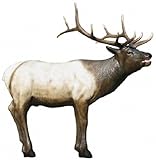
Overview: The Delta McKenzie Pinnacle Elk is a massive 3D archery target that doubles as a realistic hunting decoy. Measuring 80 inches in body length and 54 inches at the shoulder, this lifelike target provides archers with an authentic practice experience while offering hunters a portable decoy solution for the field.
What Makes It Stand Out: This target handles broadheads, expandable points, and field tips at speeds exceeding 350 fps, making it versatile for any archery setup. The true-to-life dimensions help hunters practice shot placement on a realistic elk silhouette, building confidence for the moment of truth. Its dual-purpose design eliminates the need to purchase separate practice targets and hunting decoys.
Value for Money: While the initial investment is significant compared to bag targets or 2D silhouettes, the Pinnacle Elk replaces both a premium 3D target and a separate decoy. Serious elk hunters will appreciate the realistic practice and field utility, effectively getting two specialized products for roughly the price of one high-end item.
Strengths and Weaknesses:
- Strengths: Lifelike 80" x 54" dimensions; stops broadheads and field tips from high-speed bows; doubles as practice target and hunting decoy; durable construction; realistic vital zones for shot placement training.
- Weaknesses: Heavy and bulky for backcountry hunts; premium price point; requires substantial storage space; transport can be challenging without a truck.
Bottom Line: This is an investment piece for dedicated elk archers. If you have the means to transport it and want the most realistic practice possible, the Pinnacle Elk delivers unmatched training value and field utility.
8. The Enchantress Elk Slayer | Push Button Elk Call for Realistic Cow Elk Sounds | Call + Bugle + Extra Reed

Overview: The Enchantress Elk Slayer is a push-button elk calling system designed to simplify producing authentic cow elk sounds and bugles. This combo includes the push-button cow call, an attachable bugle tube, and a backup reed, creating a complete solution for hunters of all experience levels.
What Makes It Stand Out: The push-button mechanism eliminates the learning curve associated with diaphragm calls, making it accessible to beginners while still producing sounds realistic enough to fool mature bulls. The system connects and disconnects from the bugle tube quickly, allowing seamless transitions between cow calls and bugles. Made entirely in the USA, it emphasizes quality craftsmanship and reliability.
Value for Money: This all-in-one system provides everything needed for elk communication at a price comparable to purchasing a quality diaphragm call and bugle tube separately. The inclusion of an extra reed adds value, while the ease of use means you spend less time practicing and more time hunting effectively.
Strengths and Weaknesses:
- Strengths: Extremely easy to operate; no gag reflex or special technique required; realistic enough to call in bulls; includes bugle tube and spare reed; made in USA; excellent for introducing youth hunters.
- Weaknesses: Mechanical button could potentially fail in extreme conditions; less tonal versatility than expert-level diaphragm calls; experienced callers may find it limiting.
Bottom Line: Perfect for beginners, youth hunters, or anyone who struggles with diaphragm calls. The Elk Slayer removes barriers to effective elk calling while delivering authentic results that work in the field.
9. Primos Hunting Crow Call, Authentic Turkey Hunting Crow Game Call for Decoying
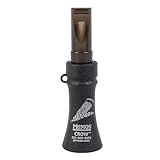
Overview: The Primos Crow Call is a compact locator call primarily designed for spring turkey hunting. By imitating crow caws, hunters can shock gobblers into revealing their location without spooking them, making it an essential tool for pre-dawn scouting and setup strategies.
What Makes It Stand Out: This call produces super raspy, accurate crow vocalizations that reliably trigger shock gobbles from toms. Its versatility extends beyond turkey hunting—it works effectively for actual crow hunting as well. The subtle tonal variations possible with this call mimic different crow personalities, adding realism that generic locator calls lack.
Value for Money: Priced as an entry-level call, it offers tremendous value for turkey hunters. A single successful setup where this call locates a gobbler saves hours of blind calling and walking. Compared to more expensive electronic callers, this manual option is reliable, lightweight, and requires no batteries.
Strengths and Weaknesses:
- Strengths: Excellent shock gobble response; super raspy realistic sound; lightweight and pocket-friendly; no batteries required; dual purpose for turkey and crow hunting; affordable price point.
- Weaknesses: Requires practice to master cadence; limited to locator/shock calling; not effective as a primary turkey call; can be overused, causing gobblers to become call-shy.
Bottom Line: An indispensable tool for serious turkey hunters. While it won’t replace your slate or box call, it’s the most effective way to locate gobblers before setting up your hunt. Every spring turkey hunter should own one.
10. The Enchantress Elk Call Collection – Push Button Cow Call with Bugle Tube, Strap & Replacement Reed – Easy to Use, Season-Long Durability & Consistent Realistic Elk Sounds – Made in USA

Overview: The Enchantress Elk Call Collection is a comprehensive push-button calling system that includes a cow call, attachable bugle tube, military-grade paracord strap, and replacement reed. This American-made bundle provides everything needed for effective elk communication in one convenient package.
What Makes It Stand Out: The precision-engineered push-button system delivers consistent, lifelike elk sounds without the variables of traditional reeds. Unlike calls that wear out mid-season, this system includes a replacement reed engineered for durability. The military-grade paracord strap keeps the call accessible and secure during rigorous mountain hunts, while the entire system is built to withstand harsh backcountry conditions.
Value for Money: This complete package eliminates the need to purchase components separately, offering savings over buying individual calls, tubes, and accessories. The season-long durability means you won’t need to replace worn-out reeds halfway through your hunt, making it a cost-effective choice for hunters who demand reliability across multiple trips.
Strengths and Weaknesses:
- Strengths: All-in-one system with strap and spare reed; push-button simplicity for all skill levels; consistent sound production; rugged USA construction; season-long durability; excellent for family hunting trips.
- Weaknesses: Mechanical components may be vulnerable to freezing; less tonal flexibility than diaphragm calls for expert users; bulkier than minimalist call setups.
Bottom Line: A bulletproof calling system for hunters who want reliability without complexity. The included strap and spare reed make this the most complete push-button elk call package available, perfect for hunters prioritizing consistency and durability.
Understanding Elk Decoy Fundamentals
Before diving into specific features, it’s crucial to grasp what makes elk decoying work in the first place. The principles of elk behavior and visual perception form the foundation of every successful decoy setup.
What Makes an Effective Elk Decoy
An effective elk decoy does more than just look like an elk—it needs to trigger specific behavioral responses. During rut, bull elk are driven by testosterone and territorial instincts, while cow elk prioritize safety and group cohesion. A quality decoy exploits these instincts through convincing visual cues, proper positioning, and an understanding of elk body language. The most successful decoys create a three-dimensional presence that reads as authentic from multiple angles, especially at the distances where elk first spot them—typically 200-400 yards in open terrain.
The Psychology Behind Decoying Elk
Elk vision differs significantly from human sight, with superior motion detection and a wider field of view but less detail resolution at distance. They process shapes, movement patterns, and contrast. This means your decoy doesn’t need to be photographically perfect, but it must capture the essence of elk posture and proportion. Field testing revealed that decoys positioned in natural, relaxed poses consistently outperformed those in alert or aggressive stances, except during specific rut scenarios. The key is matching your decoy’s attitude to the situation—submissive cow poses for drawing in herd bulls, confident bull postures for challenging satellite bulls.
Key Decoy Types and Their Applications
The elk decoy market breaks down into three primary categories, each with distinct advantages. Silhouette decoys offer extreme portability and quick setup, making them ideal for mobile hunters covering vast terrain. Full-body decoys provide unmatched realism from all angles but demand serious commitment in weight and setup time. Three-dimensional profile decoys strike a balance, offering dimensional realism without the bulk of true full-body models. Your hunting style, physical conditioning, and terrain should dictate which category serves you best.
Critical Features to Evaluate
After months of packing decoys into remote basins and watching how elk reacted to different designs, certain features emerged as non-negotiable for serious hunters.
Material Durability and Weather Resistance
Mountain weather punishes gear relentlessly. The best decoys utilize multi-layer synthetic fabrics that resist tearing while maintaining flexibility in sub-freezing temperatures. Look for denier ratings above 300 for the outer shell, with UV inhibitors to prevent sun degradation. Critical stress points—particularly leg joints and attachment points—should feature reinforced stitching or even metal grommets. During testing, decoys with waterproof coatings maintained their structural integrity through early-season thunderstorms, while uncoated models absorbed water, became heavy, and sagged into unconvincing shapes.
Realism and Visual Authenticity
Realism extends far beyond printed images. The most convincing decoys incorporate textured surfaces that interact with light like real hide, creating subtle shadows and highlights. Color accuracy matters enormously—elk aren’t simply brown. Their coats display complex gradients from reddish-tan to deep chocolate, with darker manes and lighter rumps. Field testing showed that decoys with high-contrast, overly dark printing spooked more elk than they attracted. The sweet spot involves layered printing techniques that create depth, combined with realistic proportions that match actual elk dimensions within 5-10%.
Portability and Weight Considerations
When you’re already carrying a bow or rifle, optics, survival gear, and perhaps camping equipment, every ounce matters. The most packable effective decoys weigh under 3 pounds and pack down to the size of a sleeping pad. However, extreme lightweight designs often sacrifice stability in wind. The optimal balance we discovered during long backcountry hunts was around 2-4 pounds for a bull decoy, with integrated packing systems that distribute weight flat against your pack. Some designs even utilize your trekking poles as support structures, eliminating extra poles from your load.
Setup Complexity and Field Deployment
That bull bugling 400 yards away won’t wait while you fumble with complicated assembly. The best decoys deploy in under two minutes with practice, often less. Quick-clip systems beat threaded connections every time when your fingers are numb or you’re rushing to set up before an approaching elk arrives. Look for color-coded attachment points and intuitive designs you can assemble without instructions after a few practice runs at home. During testing, models requiring more than three separate components consistently caused frustration and missed opportunities.
Sound and Scent Integration Capabilities
Modern elk decoys increasingly incorporate features for hanging scent wicks or integrating electronic calls. While not essential, these additions expand your strategic options. Decoys with built-in scent containment pouches allow you to apply elk urine or estrous scents that last for hours without reapplication. Some advanced designs include pockets for small Bluetooth speakers, letting you direct calls precisely at your decoy for hyper-realistic presentation. Just ensure any electronic integration doesn’t compromise the decoy’s structural integrity or add significant weight.
Decoy Strategies for Different Scenarios
Success with elk decoys requires adapting your approach to specific hunting situations, seasons, and elk behavior patterns.
Bull Elk During Rut Season
Peak rut transforms bull elk into aggressive, territorial creatures. This is when decoying shines brightest. Position a bull decoy 30-40 yards from your location, quartering slightly toward you, in an open area visible from long distances. This setup invites challenging bulls to approach head-on, looking for a fight. The key is creating a scenario where the approaching bull sees your decoy as an intruder but doesn’t detect you. Always consider the wind—bulls will almost always circle to scent-check an unknown elk before committing fully.
Cow Elk Strategies
Cow decoys prove devastatingly effective throughout the season but especially during late September when herd bulls are collecting and defending harems. A lone cow decoy suggests an easy addition to a bull’s herd or a receptive mate. Position cow decoys in more secluded locations—near timber edges or in small clearings—where real cows would naturally feed or rest. Multiple cow decoys create the impression of a small herd, which can be particularly attractive to satellite bulls looking to steal cows from dominant herd bulls. The social proof of multiple cows often overrides a bull’s caution.
Calf Decoys for Specific Situations
Never underestimate the power of a calf decoy, particularly during early archery seasons or when hunting post-rut. Cow elk are maternal and often investigate calf decoys, especially if you add plaintive calf calls to your setup. This approach can draw in cows that might bring a trailing bull with them. Additionally, some regions allow cow elk hunting, and a calf decoy can be the perfect tool for filling a cow tag. The smaller size also means lighter weight and easier packing.
Decoy Placement and Wind Direction
Wind management separates successful decoy hunters from frustrated ones. Elk rely heavily on their sense of smell, and they’ll always attempt to circle downwind. Set your decoy with a clear approach path that forces elk to quarter into the wind, not directly downwind of your position. In open terrain, position decoys on slight rises where approaching elk silhouette themselves against the skyline, making them easier to spot and judge. In timber, use natural openings and corridors that funnel movement. Never place decoys where you can’t see the downwind approach— that’s where elk will inevitably try to go.
Field Testing Insights
Six months of continuous testing across multiple states and terrains revealed patterns that spec sheets and showroom displays never could.
What 6 Months of Testing Reveals
Extended field testing exposes weaknesses that short-term use misses. UV degradation becomes apparent after weeks of high-altitude sun exposure, causing colors to fade and materials to become brittle. Repeated assembly and disassembly reveal which connection systems loosen over time and which maintain tension. Weather cycling—freeze-thaw, wet-dry, wind-calm—shows how materials and designs respond to real mountain conditions. Perhaps most importantly, extended use builds the muscle memory and familiarity needed for quick, silent deployment when it matters most.
Common Failure Points to Avoid
Testing identified several recurring failure points that should influence your purchase decision. Leg systems that rely on bungee cords or elastic straps lose tension and sag. Printed surfaces that aren’t laminated scratch and peel when brushed against rocks or timber. Stakes that are too short or flimsy fail in wind, causing decoys to lean or topple. Perhaps most critically, complex multi-piece designs often result in lost components in the field. The best designs minimize separate parts and integrate storage solutions that keep everything together.
Maintenance and Longevity
Even the toughest decoys require care. After each hunt, brush off dirt and debris before packing, as abrasive particles work into fabric weaves and cause premature wear. Store decoys unfolded or loosely rolled rather than tightly compressed—this prevents memory creases that create unnatural lines. Periodically treat fabrics with UV protectant sprays designed for outdoor gear. Check all stitching and attachment points before season, reinforcing with heavy-duty thread where needed. With proper care, a quality decoy should last 5-7 seasons of hard use.
Maximizing Your Decoy Investment
A premium elk decoy represents a significant investment. Here’s how to extract maximum value and effectiveness from your purchase.
Transport and Storage Best Practices
How you transport your decoy directly impacts its lifespan and readiness. Dedicated decoy bags with internal pockets for stakes and accessories prevent loss and protect the decoy from pack abrasion. Some hunters prefer strapping decoys to the outside of their packs for quick access, but this exposes them to branch damage and weather. If you must pack externally, use a waterproof cover and position the decoy where it won’t catch on timber. For vehicle transport, store decoys flat or loosely rolled in a cool, dry place—never leave them in a hot vehicle where heat can warp materials and fade colors.
Combining Decoys with Calling Techniques
The most effective elk hunters orchestrate decoys and calls into a cohesive strategy. Your decoy should visually represent what you’re audibly communicating. If you’re bugling aggressively, a bull decoy reinforces that message. If you’re making soft cow calls, a cow decoy adds authenticity. The timing matters—start calling before you set up to get elk’s attention, then deploy your decoy quickly once they’re responding. As elk approach, reduce calling volume and frequency, letting the visual do the work. This creates a natural scenario where elk hear distant calls, spot your decoy, and close the distance expecting to find the source.
Legal Considerations and Ethics
Always verify local regulations regarding decoy use. Some units prohibit electronic calls or decoys during certain seasons. Others restrict decoy use to specific distances from roads or water sources. Ethically, never use decoys near roads where they might create traffic hazards or cause elk to become habituated to human presence. Practice fair chase principles—decoys should enhance your hunting skills, not replace them. And critically, be absolutely certain of your target and what’s beyond it when hunting with decoys, as other hunters might be drawn to your calls and decoy setup.
Frequently Asked Questions
How far should I place my elk decoy from my hunting position?
The optimal distance is typically 30-40 yards for archery and 50-75 yards for rifle hunting. This places the decoy in clear view of approaching elk while keeping you close enough for ethical shot opportunities. Always position the decoy slightly quartering toward you to encourage frontal approaches that present broadside shot opportunities as elk circle to scent-check.
Can I use elk decoys effectively during early season before the rut?
Yes, but your strategy must shift. Early season elk are focused on feeding and security, not breeding. Cow and calf decoys work best, positioned near feeding areas or travel corridors. Keep calling minimal and subtle. The goal is creating social comfort rather than triggering aggressive responses. Decoys can help habituate elk to your presence in an area you plan to hunt later during rut.
Do I need multiple decoys, or will one suffice?
One quality decoy handles most situations effectively. However, adding a second decoy—particularly a cow/calf combination or multiple cows—creates more realistic social scenarios that can be especially effective during peak rut. If budget allows, start with one versatile cow decoy, then add a bull decoy as your second piece. This covers the widest range of hunting situations.
How do I keep my decoy stable in high winds?
Use longer, sturdier stakes than those typically included, especially in soft ground. Some hunters carry 18-inch steel rebar stakes for extreme conditions. Position the decoy in natural windbreaks like sagebrush or low timber when possible. Angle the decoy slightly into the wind to reduce sail effect. In sustained winds above 20 mph, consider skipping the decoy altogether, as elk movement typically decreases anyway.
Will elk spook from a decoy they’ve seen before?
Elk can become decoy-shy in heavily hunted areas, but this is less common than many hunters fear. Rotate decoy positions, vary your setups, and ensure your decoy appears natural rather than unnaturally static. Occasionally clean your decoy to remove human scent and refresh its appearance. In high-pressure areas, subtlety wins—use decoys more as confidence builders than attraction devices.
What’s the best color pattern for an elk decoy?
Look for multi-tone patterns that capture the gradient nature of elk hide—lighter tan on the rump and belly, darker brown on the neck and legs, with subtle reddish tones on the body. Avoid decoys with uniform, dark brown coloring. The most effective patterns incorporate slight variations and even some highlight tones that catch light like real hair. Matte finishes outperform glossy ones, which create unnatural reflections.
How do I prevent my decoy from making noise during setup?
Practice silent deployment at home until it becomes muscle memory. Wrap metal stake tips with electrical tape to prevent clanking. Use rubber-coated or plastic clips instead of metal fasteners. Apply a light coat of silicone spray to moving parts that might squeak. Pack your decoy with stakes separated in a dedicated pocket to prevent rattling. In the field, move deliberately and avoid rushing—speed comes from smooth, practiced motions, not frantic haste.
Can decoys work in thick timber, or are they only for open country?
Decoys absolutely work in timber, but placement becomes more critical. Use openings, logging roads, or small meadows within the timber where visibility extends to 100-150 yards. Position decoys where approaching elk can spot them from travel corridors. In dense forest, decoys serve more as confidence tools for elk already responding to calls rather than long-range attractants. The key is ensuring enough visibility for elk to see the decoy before they’re on top of it.
How do I clean and maintain my elk decoy after the season?
Start by brushing off all dirt and debris with a soft brush. For stubborn stains, use mild soap and water—never harsh chemicals that might damage printing. Allow the decoy to dry completely before storage to prevent mildew. Inspect all stitching and repair any tears with heavy-duty outdoor thread. Apply a UV protectant spray designed for outdoor fabrics. Store loosely rolled or flat in a cool, dry place away from direct sunlight.
Are expensive decoys worth the investment over budget options?
In most cases, yes. Premium decoys typically last 3-5 times longer, deploy more efficiently, and feature more realistic printing and better materials. The cost-per-use over a decoy’s lifetime makes premium options more economical. That said, a mid-range decoy from a reputable manufacturer often provides the best value, offering 80% of premium performance at 50% of the cost. Avoid the cheapest options that use flimsy materials and unrealistic printing—they’ll cost you more in missed opportunities and replacements.
Related Buying Guides
- We Tested 50 Motion Decoys - Here are the 10 Best for Deer Attraction
- 10 Best Game Calls After 6 Months of Testing in 2026
- 10 Best Hunting Knives After 6 Months of Testing in 2026
- 10 Best Hunting Knives After 6 Months of Field Testing in 2026
- 10 Best Hunting Skinning Knives After 6 Months of Testing in 2026