Table of Contents
The thrill of big game hunting demands equipment that matches the challenge, and modern crossbow technology has evolved to deliver unprecedented power, accuracy, and reliability. As we look ahead to the 2026 hunting season, understanding what separates a capable crossbow from an exceptional one can mean the difference between a successful harvest and a missed opportunity. Whether you’re pursuing whitetail in dense timber or elk across open mountain terrain, the right crossbow becomes an extension of your hunting skill rather than a limitation.
Today’s crossbows offer features that were science fiction just a decade ago—intelligent cocking systems, vibration-dampening technologies that whisper on release, and optics that perform in the lowest light conditions. But with these advancements comes complexity. This guide cuts through the marketing noise to focus on the practical features and considerations that truly matter when selecting a hunting tool capable of ethically and effectively taking big game. We’ll explore everything from kinetic energy requirements to legal considerations, ensuring you make an informed decision based on performance metrics, not flashy advertisements.
Top 10 Crossbows for Hunting
Detailed Product Reviews
1. Barnett Whitetail Hunter II Crossbow, with 4x32 Multi-Reticle Scope, 2 Headhunter Arrows, Lightweight Quiver

Overview: The Barnett Whitetail Hunter II delivers a complete entry-to-mid-level hunting package in a lightweight, maneuverable design. This compound crossbow fires arrows at 350 feet per second from an ultra-compact 16.125-inch axle-to-axle platform that weighs just 6.4 pounds, making it accessible for hunters of all sizes. The RealTree Extra camouflage finish provides effective concealment while mostly-assembled shipping gets you field-ready quickly.
What Makes It Stand Out: Barnett integrates premium safety technologies typically found on higher-end models, including the Soft Lok Floating Bristle Arrow Retainer, Anti-Dry Fire (ADF) Trigger System, and TriggerTech’s 3-pound zero-creep frictionless release. These features provide confidence for newer crossbow users while maintaining the crisp trigger response experienced hunters demand. The ready-to-hunt package eliminates guesswork with properly matched accessories.
Value for Money: Positioned as a mid-range option, this bundle offers exceptional value for beginners and intermediate hunters. While 350 FPS won’t break records, it’s more than adequate for whitetail deer at typical hunting distances. The inclusion of two Headhunter arrows, a quality 4x32 multi-reticle scope, rope cocker, quiver, and wax covers all essential needs without requiring immediate additional purchases.
Strengths and Weaknesses: Strengths include outstanding safety features, lightweight portability, trusted Barnett reliability, and a comprehensive accessory package. The TriggerTech trigger is remarkably crisp for this price class. Weaknesses are modest arrow velocity compared to modern high-performance models, inclusion of only two arrows requiring immediate additional investment, and the basic rope cocker that demands more physical effort than crank systems.
Bottom Line: The Whitetail Hunter II is an ideal choice for new crossbow hunters prioritizing safety, ease of use, and value over raw speed. It provides everything needed for successful deer hunting without overwhelming complexity or budget strain.
2. Bear X Desire XL Pistol Hunting Crossbow, Self-Cocking, Adjustable Stock up to 2.5", Compact Design, Includes 3 Premium Bolts, Dependable Accuracy
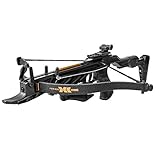
Overview: The Bear X Desire XL redefines portability in the crossbow market as a pistol-style hunting tool that prioritizes convenience and compactness over raw power. This self-cocking crossbow generates arrow speeds up to 175 FPS from a diminutive frame, featuring an adjustable stock that extends up to 2.5 inches for improved stability. The package includes three premium bolts and represents a unique approach for hunters needing maximum maneuverability in tight spaces.
What Makes It Stand Out: The user-friendly self-cocking mechanism eliminates the physical strain of traditional crossbow cocking, making it accessible to youth hunters or those with limited strength. Its pistol-grip design and forearm grip create an intuitive shooting platform that feels more like a firearm than a conventional crossbow. The adjustable stock, though limited to 2.5 inches, provides customization rarely seen in pistol crossbows.
Value for Money: As an entry-level specialty crossbow, the Desire XL offers reasonable value for specific applications like small game hunting or recreational target shooting. However, its 175 FPS velocity severely limits its effectiveness for deer-sized game, reducing its overall hunting value proposition compared to full-sized alternatives in a similar price range.
Strengths and Weaknesses: Strengths include exceptional portability, effortless self-cocking operation, minimal learning curve, and suitability for close-range pest control or target practice. The compact design stores easily in vehicles or small blinds. Weaknesses are inadequate power for ethical deer hunting, limited effective range, basic accessory package, and accuracy degradation beyond 20 yards due to the short power stroke.
Bottom Line: The Desire XL serves niche purposes excellently but falls short as a primary hunting crossbow. Choose it for small game, pest control, or as a training tool, not for serious big-game hunting where higher velocities are essential.
3. Xpedition Archery Xpedite 420 Crossbow with Rope and Crank Cocking Device, Compound Crossbow Package with Illuminated 4X32 Scope, 420 Feet Per Second

Overview: The Xpedite 420 catapults into the high-performance crossbow category with blistering 420 FPS speeds from an incredibly compact 8-inch cocked axle-to-axle width. Weighing 7.7 pounds, this crossbow challenges conventional design limits while delivering serious power for demanding hunters. The package includes an illuminated 4x32 scope, three Xit-20 bolts, a five-bolt quiver, and both rope and crank cocking devices, creating a field-ready system for any hunting scenario.
What Makes It Stand Out: Extreme narrowness defines the Xpedite 420, allowing hunters to navigate dense brush and shoot from cramped tree stands with unprecedented ease. The inclusion of both rope and crank cocking devices provides flexibility based on physical capability or preference. A crisp 3-pound trigger with anti-dry fire technology ensures safe, accurate shot execution at this crossbow’s impressive velocity.
Value for Money: Positioned in the premium tier, the Xpedite 420 justifies its price through class-leading speed and compactness. The comprehensive accessory package eliminates immediate additional costs, though the illuminated scope quality may not match dedicated high-end optics. Competitors offering similar speeds typically measure several inches wider and cost significantly more.
Strengths and Weaknesses: Strengths include exceptional velocity, remarkable compactness for tight hunting quarters, dual cocking options, and solid safety features. The narrow profile is a genuine game-changer for tree stand hunters. Weaknesses include a slightly heavier weight than some rivals, potentially shorter string life at extreme speeds, and the need for premium bolts to maximize accuracy. The stock design may feel bulky to smaller-framed shooters.
Bottom Line: For hunters prioritizing speed and maneuverability above all else, the Xpedite 420 delivers an impressive performance-to-size ratio. It’s ideal for experienced archers hunting dense terrain where every inch of width matters.
4. Barnett Hyper Whitetail 410 Crossbow Bundle – 410 FPS HyperFlite Technology + 5-Pack Arrows + Sling – Illuminated 4x32 Scope, Rope Cocking Sled & String Dampeners for Precision Hunting

Overview: Barnett’s Hyper Whitetail 410 combines cutting-edge arrow technology with serious speed, launching HyperFlite small-diameter arrows at 410 FPS for enhanced penetration. This bundle elevates the hunting experience with five HyperFlite arrows, a crossbow sling, illuminated 4x32 scope, rope cocking sled, and pre-installed string dampeners. The pass-through foregrip and rubber touchpoints provide comfortable, stable control during the hunt, while aluminum construction ensures durability.
What Makes It Stand Out: HyperFlite technology represents a significant advancement, delivering 25% deeper penetration through reduced surface area and increased kinetic energy concentration. The comprehensive bundle approach means no immediate accessory shopping—everything required for precision hunting arrives in one package. Pre-installed string dampeners reduce noise and vibration, crucial for not spooking game on follow-up shots.
Value for Money: This bundle offers excellent value by including premium accessories that would cost $150+ separately. The five-arrow pack and sling add immediate utility, while the HyperFlite system’s performance justifies the mid-to-premium price point. Standard-diameter arrow compatibility is maintained, though performance peaks with HyperFlite bolts. This eliminates the typical hidden costs of upgrading accessories after purchase.
Strengths and Weaknesses: Strengths include impressive speed, innovative HyperFlite penetration, comprehensive accessory bundle, reduced noise signature, and Barnett’s proven reliability. The illuminated scope performs well in low-light conditions. Weaknesses involve proprietary HyperFlite arrows costing more than standard bolts, the rope cocker requiring physical effort, and the wider axle-to-axle measurement limiting tight-space maneuverability compared to ultra-narrow models.
Bottom Line: The Hyper Whitetail 410 suits experienced hunters seeking maximum penetration and a complete package. The HyperFlite system provides a genuine performance edge for those willing to invest in specialized arrows, making it a smart choice for hunters demanding top-tier equipment.
5. Barnett Whitetail Pro STR Crossbow, with 4x32mm Illuminated Scope, 2 Arrows, Lightweight Quiver, without Crank Device

Overview: The Whitetail Pro STR represents Barnett’s safety-conscious evolution, delivering 400 FPS performance in a manageable 6.9-pound package measuring 36.5 inches long. This crossbow emphasizes user protection through innovative safety features while maintaining the speed needed for ethical whitetail harvests. The TruBark camo finish provides effective concealment, and the design accommodates Barnett’s crank cocking device for those preferring mechanical assistance.
What Makes It Stand Out: The Nock Sensor and Anti-Dry Fire Trigger System provide dual-layer protection against dangerous dry fires, while finger guards and safety reminders protect the shooter’s hand during operation. These features make it exceptionally suitable for newer hunters or families prioritizing safety. The 187-pound draw weight generates 140 foot-pounds of kinetic energy, ample for most North American big game.
Value for Money: Without the crank device included, this package sits at a competitive mid-range price point. The illuminated scope adds value for dawn and dusk hunting, though only two arrows limits immediate field readiness. Purchasing the crank device separately adds $100-150 to the total investment, which should factor into budget considerations when comparing options.
Strengths and Weaknesses: Strengths include best-in-class safety features, solid 400 FPS performance, trusted Barnett manufacturing quality, and crank device compatibility. The illuminated scope enhances low-light accuracy. Weaknesses are the missing crank device requiring additional purchase, heavier weight than the Hunter II model, and minimal arrow inclusion. The wider 17.625-inch axle-to-axle measurement reduces maneuverability in dense cover.
Bottom Line: The Whitetail Pro STR is perfect for safety-focused hunters who value protection features over ultra-compact design. It’s a reliable, powerful crossbow that becomes truly excellent once you add the crank cocking device for comfortable, consistent cocking in any hunting situation.
6. Xpedition Archery Scrapeline 390X Crossbow, 6.7LB 390 Feet Per Second Compound Crossbow Package with 4X32 Scope

Overview: The Xpedition Archery Scrapeline 390X positions itself as an ideal entry point for hunters venturing into crossbow territory. This ready-to-hunt package delivers impressive 390 FPS velocities from a relatively lightweight 6.7-pound frame, striking a balance between performance and maneuverability that new shooters will appreciate. The comprehensive kit eliminates guesswork by including essential accessories right out of the box, making it field-ready with minimal setup.
What Makes It Stand Out: This crossbow distinguishes itself through its complete package approach at a competitive price point. The inclusion of a 4x32 illuminated scope, rope cocker, five-bolt quiver, and three premium carbon bolts means beginners can head straight to the range without additional purchases. The 100% carbon shafts with shield cut fletchings demonstrate attention to detail rarely seen in budget-friendly options, while the 390 FPS rating provides legitimate hunting capability for deer-sized game at moderate ranges.
Value for Money: Positioned in the entry-level segment, the Scrapeline 390X represents solid value by bundling approximately $150-$200 worth of accessories with the bow itself. Comparable crossbows from established brands often require separate optic and bolt purchases, making this package particularly attractive for budget-conscious hunters. The performance-to-price ratio challenges competitors in the sub-$500 category, though long-term durability remains unproven compared to legacy manufacturers.
Strengths and Weaknesses: Strengths: Complete hunting package eliminates additional purchases; lightweight 6.7-lb design enhances portability; impressive 390 FPS speed for entry-level category; quality carbon bolts included; illuminated scope enhances low-light shooting visibility. Weaknesses: Restricted to proprietary XIT-20 bolts only, limiting replacement options; extensive safety warnings suggest potential durability concerns; limited brand recognition compared to Barnett or TenPoint; rope cocker requires more physical effort than integrated crank systems.
Bottom Line: The Scrapeline 390X serves as a capable, cost-effective introduction to crossbow hunting for beginners who follow instructions meticulously. While brand heritage and proprietary bolt requirements may give some pause, the performance and included accessories make it a legitimate contender for first-time buyers prioritizing value over name recognition. Ideal for those wanting maximum features at minimum investment.
7. Barnett Whitetail Hunter Crossbow, with 4x32mm Multi-Reticle Scope, 2 Arrows, Lightweight Quiver, STR without Crank Device

Overview: Barnett leverages six decades of crossbow expertise in the Whitetail Hunter STR, creating an ultra-compact hunting platform that prioritizes safety and accessibility. Weighing merely 6.6 pounds and featuring innovative Step-Through Riser technology, this crossbow generates 375 FPS velocities while maintaining a manageable profile for hunters of all statures. The package ships mostly assembled, reducing setup complexity for those eager to hit the woods quickly.
What Makes It Stand Out: The STR design fundamentally reduces overall length without sacrificing power, creating an exceptionally maneuverable weapon for tight blinds and tree stands. Barnett’s comprehensive safety suite—including the Soft Lok Floating Bristle Arrow Retainer, Anti-Dry Fire Trigger System, and Finger Safety reminders—demonstrates industry-leading commitment to shooter protection. The TriggerTech Frictionless Release Technology provides a crisp, predictable break that enhances accuracy for hunters at any skill level.
Value for Money: As a mid-range offering from the “most trusted name in crossbows since 1962,” this package delivers brand reliability that budget competitors cannot match. The included 4x32mm multi-reticle scope, rope cocker, and quiver represent solid value, though the provision of only two arrows feels somewhat stingy. The safety technology alone justifies the price premium over entry-level alternatives, particularly for hunters who prioritize peace of mind.
Strengths and Weaknesses: Strengths: Exceptional safety features including ADF and Finger Safety reminders; proven STR technology reduces length; lightweight 6.6-lb design; TriggerTech frictionless release; established brand reputation; Mossy Oak Bottomland camo finish. Weaknesses: Only includes two arrows; 375 FPS lags behind 400 FPS competitors; no integrated crank device; rope cocker requires more effort; mostly assembled (not fully).
Bottom Line: The Barnett Whitetail Hunter STR represents a smart investment for safety-conscious hunters seeking a proven brand with innovative design. While the 375 FPS speed and limited arrow count may disappoint some, the exceptional safety features and compact profile make it an excellent choice for tree stand hunting where maneuverability and confidence matter most.
8. TenPoint Titan X De-Cock, Vektra - 400 FPS - Our #1-Selling Crossbow - Equipped with Pro-View 400 Lighted Scope + ACUdraw De-Cock System

Overview: TenPoint’s flagship Titan X De-Cock represents the pinnacle of consumer crossbow innovation, combining 400 FPS performance with revolutionary safety and convenience features. This #1-selling model builds upon the Titan’s legendary durability while introducing game-changing technologies that address real-world hunting challenges. The 9.75-inch axle-to-axle width creates an exceptionally compact platform for maneuvering in confined spaces.
What Makes It Stand Out: The patented ACUdraw De-Cock system fundamentally transforms the hunting experience, allowing silent de-cocking with just five pounds of effort and an Auto-Brake that prevents accidental slippage. The D-1 trigger’s push-button de-cock mode eliminates the dangerous practice of firing unloading bolts. A rigid metal barrel reduces flex and friction, extending string life while rubber touch points on the stock, cheek piece, butt plate, and pistol grip enhance comfort during long hunts.
Value for Money: Priced in the premium tier, the Titan X De-Cock justifies its cost through exclusive features that cheaper alternatives simply cannot replicate. The integrated de-cocking system alone represents a $200-$300 value over competitor models requiring discharge bolts or risky manual methods. When factoring in the Pro-View 400 lighted scope and TenPoint’s renowned accuracy, serious hunters will find the investment worthwhile for the added safety and convenience.
Strengths and Weaknesses: Strengths: Revolutionary ACUdraw De-Cock system; patented D-1 trigger with dry-fire protection; 400 FPS speed; ultra-narrow 9.75-inch profile; metal barrel enhances durability; fully integrated silent cocking; rubberized comfort features. Weaknesses: Premium pricing may exceed beginner budgets; proprietary systems limit third-party accessory compatibility; complexity may overwhelm novices; weight not specified (likely heavier than basic models).
Bottom Line: The Titan X De-Cock sets the standard for premium crossbows, delivering unmatched safety and convenience for serious hunters. While the price demands commitment, the ability to safely de-cock without firing and the ultra-narrow profile make it worth every penny for those who prioritize innovation and field-ready reliability above all else.
9. TenPoint Titan 400 Crossbow, Vektra - 400 FPS - Includes Pro-View 400 Scope, ACUdraw Silent Cocking Device & Three Pro Elite 400 Carbon Arrows

Overview: TenPoint enhances its legendary Titan platform with the 400, delivering 40 FPS more velocity while maintaining the series’ reputation for reliability and accuracy. This evolutionary model integrates the ACUdraw Silent cocking system and ships fully assembled, representing one of the most user-friendly premium crossbows available. At just 6 pounds, it achieves an exceptional power-to-weight ratio that mobile hunters will appreciate.
What Makes It Stand Out: The ACUdraw Silent system reduces draw weight to a mere five pounds while operating silently, eliminating the noise that can spook game during cocking. Unlike removable cocking aids, this integrated solution ensures you never leave it behind. The Pro-View 400 scope features illuminated aimpoints out to an impressive 70 yards, providing exceptional down-range accuracy. Shipping fully assembled and pre-sighted means you can verify zero and hunt the same day.
Value for Money: While priced below the Titan X De-Cock, the Titan 400 still commands a premium over entry-level options. The value proposition centers on convenience: the integrated silent cocking system, included Pro Elite 400 carbon arrows, and factory pre-sighting save hours of setup time. For hunters wanting TenPoint quality without the flagship price, this model hits the sweet spot between features and affordability.
Strengths and Weaknesses: Strengths: Silent integrated cocking system; ships fully assembled and pre-sighted; lightweight 6-lb design; 400 FPS performance; 70-yard illuminated scope; narrow 9.75-inch profile; includes three premium carbon arrows. Weaknesses: Lacks the de-cocking feature of the Titan X; premium pricing over basic models; proprietary ACUdraw system; limited color options.
Bottom Line: The Titan 400 delivers premium TenPoint performance and convenience at a more accessible price point than the flagship model. The silent cocking and ready-to-hunt delivery make it perfect for hunters who value efficiency and stealth. While missing the de-cock innovation, it remains a top-tier choice for those seeking proven reliability with modern amenities.
10. Killer Instinct Boss 405 FPS Crossbow Package with Backpack Case and Broadheads Bundle (3 Items)

Overview: The Killer Instinct Boss 405 carves its niche as a high-performance, budget-conscious crossbow that refuses to compromise on speed or customization. Delivering 405 FPS from a compact frame, this package includes a backpack case and three broadheads, creating a complete hunting solution at an aggressive price point. The adjustable ergonomics cater to shooters of various sizes and preferences, making it versatile for different hunting scenarios.
What Makes It Stand Out: This crossbow boasts the highest velocity in our comparison while maintaining a compact, easy-to-handle profile. The six-position buttstock and adjustable X-Lok foregrip provide a tailored fit rarely found in this price range, enhancing accuracy and comfort. The Micro-Lite aluminum barrel reduces weight while maintaining rigidity, and the 3.5-pound KillerTech trigger delivers consistent, crisp releases. The bundle approach includes essential hunting accessories that competitors often omit.
Value for Money: Exceptional value defines the Boss 405, offering premium features like adjustable ergonomics and 405 FPS performance at a price point that undercuts established brands by $100-$200. The included backpack case and broadheads eliminate additional purchases, making this a true ready-to-hunt package. While brand recognition lags behind TenPoint or Barnett, the feature set and speed make it a compelling budget alternative for practical hunters.
Strengths and Weaknesses: Strengths: Highest 405 FPS speed in category; highly adjustable stock and foregrip; includes backpack case and broadheads; lightweight Micro-Lite barrel; crisp 3.5-lb trigger; compact frame; exceptional price-to-performance ratio. Weaknesses: Lesser-known brand with shorter track record; may sacrifice refinement for raw speed; limited safety feature description; warranty support unknown compared to premium brands; finish quality may not match premium options.
Bottom Line: The Boss 405 dominates the budget category for hunters prioritizing speed and customization. While it lacks the brand heritage and advanced safety features of pricier alternatives, its adjustable ergonomics and included accessories make it an unbeatable value. Perfect for hunters wanting maximum performance per dollar without sacrificing essential features.
Understanding Crossbow Power for Big Game
Kinetic Energy Requirements
When hunting big game, kinetic energy determines whether your bolt delivers a quick, ethical kill or merely wounds an animal. For 2026, the standard remains clear: you need at least 65 foot-pounds of kinetic energy for deer-sized game and 80+ for elk or moose. This measurement combines bolt speed and weight into a single performance metric that predicts penetration through hide, muscle, and bone. Modern crossbows achieve this through advanced cam designs and higher draw weights, but don’t be fooled by speed alone—a heavier bolt at moderate velocity often outperforms a light bolt at blistering speeds when it comes to actual hunting scenarios.
Velocity vs. Penetration Balance
The industry’s obsession with feet-per-second (FPS) ratings can mislead hunters into prioritizing the wrong metrics. While speeds exceeding 400 FPS certainly flatten trajectory and reduce wind drift, they mean little if the bolt can’t maintain momentum through vitals. The sweet spot for big game hunting lies between 380-420 FPS when paired with bolts weighing 425-500 grains total. This combination delivers both a forgiving trajectory and the bone-crushing penetration needed for quartering shots. Consider that a 30-yard shot on a bull elk quartering away requires punching through ribs, lung tissue, and potentially the opposite shoulder—velocity without mass fails this test every time.
Essential Features for 2026 Crossbow Hunters
Advanced Cam Systems
Crossbow cam technology has revolutionized how we store and release energy. Dual-cam systems now feature synchronized rotation that eliminates timing issues, while hybrid cam designs offer smoother draw cycles with reduced cocking effort. Look for systems with machined aluminum cams rather than plastic composites—they maintain their shape under extreme temperatures and repeated use. The latest designs incorporate let-off characteristics similar to compound bows, reducing the holding weight at full draw and making cocking safer and more controlled. This technology directly translates to more consistent accuracy and reduced string wear over thousands of shots.
Stock Design and Comfort
A crossbow’s stock affects everything from accuracy to how quietly you can maneuver in a blind. Modern thumbhole and pistol-grip designs provide better control during the shot sequence, while adjustable length-of-pull accommodates hunters wearing heavy clothing or using a face mask. The most significant 2026 advancement lies in vibration-dampening inserts within the stock itself, which absorb recoil before it reaches your shoulder. This not only improves comfort but prevents the subtle flinching that develops after repeated shooting sessions. Pay attention to cheek weld height—an adjustable comb ensures proper eye alignment with your scope without straining your neck during long waits.
Draw Weight and Speed Considerations
Minimum Draw Weights by Game Species
Regulations vary by state, but ethical hunting demands specific draw weights for clean kills. For deer and antelope, 150 pounds of draw weight represents the absolute minimum when paired with proper bolt weight. Elk and bear require 175-200 pounds to generate the necessary kinetic energy, especially at ranges beyond 40 yards. Some crossbows now offer adjustable draw weights, allowing you to increase power for larger game or decrease it for practice sessions. Remember that advertised draw weight assumes a clean, well-lubricated rail—neglect maintenance and you can lose 10-15 pounds of effective power, directly impacting penetration.
FPS Ratings Explained
That impressive FPS number on the box comes from testing with lightweight bolts that aren’t suitable for hunting. Manufacturers test with 350-grain bolts to achieve maximum velocity ratings, but you’ll hunt with 425+ grain projectiles. Always calculate your actual hunting setup’s speed, which will be 30-50 FPS slower than advertised. More importantly, understand that FPS drops significantly with each yard of distance—by 40 yards, you’ve lost 25-30 FPS from muzzle velocity. This affects trajectory and energy delivery, making those high-speed ratings less critical than consistent performance across typical hunting distances of 20-50 yards.
Crossbow Size and Maneuverability
Axle-to-Axle Length Considerations
Narrow crossbows measuring under 12 inches axle-to-axle when cocked dominate the market for good reason—they move effortlessly through brush and fit comfortably in ground blinds and tree stands. However, this compactness comes at a cost: increased string angle creates more vibration and noise. Wider models around 16-18 inches provide smoother draws and quieter shots, making them ideal for open-country hunting where maneuverability matters less. For 2026, the trend favors modular designs that allow you to swap limbs and cams, effectively changing axle-to-axle length based on your hunting environment. This adaptability means one crossbow can excel in both dense woods and spot-and-stalk situations.
Weight Distribution for Tree Stands
Holding a crossbow at ready for hours in a tree stand reveals the importance of balance over total weight. A 7-pound crossbow with poor weight distribution feels heavier than an 8-pound model with the center of gravity positioned over the trigger assembly. Look for models with the stirrup integrated into the riser rather than extending forward—this shifts weight rearward and reduces arm fatigue. Carbon fiber barrels and magnesium risers have trimmed significant weight from the front end, while still maintaining the rigidity needed for accuracy. When evaluating balance, hold the crossbow at full draw for two minutes; if your arms shake, the weight distribution won’t work for all-day sits.
Optics and Sighting Systems
Scope Magnification Needs
Big game hunting rarely requires high magnification—most shots occur under 50 yards where 4x magnification provides plenty of target clarity. Variable power scopes offering 2-7x range give flexibility for scanning fields and precise aiming, but add weight and complexity. The real advancement in 2026 optics lies in light transmission rather than magnification. Look for scopes with 30mm tubes and fully multi-coated lenses that gather light during dawn and dusk when big game is most active. Some models now feature fiber optic pins similar to bow sights, providing an uncluttered view of your target while still offering reticle reference points for distance estimation.
Illuminated Reticle Benefits
Legal hunting hours often begin and end in near-darkness, exactly when illuminated reticles prove their worth. Modern battery-powered systems last an entire season on one cell, while tritium-filled reticles glow for years without power. The key is adjustable brightness—too bright and the reticle washes out your target; too dim and it disappears against a dark animal. The best systems offer 5-7 brightness settings and automatically adjust based on ambient light. Red illumination preserves night vision better than green, though green appears brighter to the human eye. Consider models with motion-activated illumination that shuts off after 5 minutes of inactivity, preserving battery life during long sits.
Noise Reduction Technology
Dampening Systems
The sound of a crossbow firing travels hundreds of yards in still woods, alerting every animal within earshot. Modern dampening systems use string leeches, limb dampeners, and barrel-mounted suppressors to reduce noise by 30-40%. The most effective approach combines multiple technologies: limb dampeners absorb vibration at the source, string suppressors stop string oscillation after the shot, and barrel-mounted systems catch residual noise. These additions add 6-8 ounces of weight but transform a crossbow from a noisy club into a stealthy hunting tool. Test fire any crossbow you’re considering—if it makes your ears ring without hearing protection, game animals will certainly hear it at distance.
String Suppression Technology
String jump—the reaction of animals to the sound of your shot—has ended countless hunts. String suppressors, or “string stops,” positioned just forward of the string’s resting position, reduce oscillation and noise simultaneously. The latest designs use polymer materials that absorb energy without creating a twang sound common with older rubber versions. Some crossbows now feature dual suppressors that contact the string at two points, further reducing vibration. This technology proves especially critical when hunting alert animals like elk or when shots stretch beyond 40 yards, giving the animal time to react before the bolt arrives. A quiet crossbow provides a vital split-second advantage.
Safety Features Modern Hunters Need
Anti-Dry Fire Mechanisms
Dry firing a crossbow—releasing without a bolt—can destroy limbs, cams, and strings while potentially injuring the shooter. Modern anti-dry fire mechanisms automatically engage when the crossbow is cocked, preventing trigger release until a bolt is properly seated. The most reliable systems use a physical block that only retracts when bolt weight depresses a sensor in the flight rail. This isn’t just a convenience feature; it’s essential insurance against costly mistakes in the field when cold fingers or excitement might cause you to bump the trigger prematurely. Always test this mechanism before purchase by attempting to fire without a bolt—the mechanism should positively prevent any movement.
Finger Guards and Wings
The narrow design of modern crossbows brings the string dangerously close to your fingers and thumb during shooting. Removable finger guards and fixed wings keep digits safely below the string path, but their design varies widely. The best guards attach securely without rattling and allow a natural grip on the forend. Some models integrate wings into the barrel itself, creating a sleek profile that won’t snag on brush. For 2026, look for asymmetrical designs that accommodate both left and right-handed shooters while providing maximum protection. Remember that gloves add bulk—test finger clearance while wearing your cold-weather hunting gloves to ensure adequate protection.
Bolt Selection for Big Game Success
Bolt Weight and Spine
Your crossbow is only as effective as the projectiles it launches. For big game, total bolt weight—including broadhead—should range from 425 to 500 grains. This weight provides the momentum needed for deep penetration while maintaining reasonable trajectory. Bolt spine, or stiffness, must match your crossbow’s draw weight and power stroke. Too flexible and the bolt wobbles in flight, losing accuracy and energy; too stiff and it won’t flex properly during launch, potentially damaging the bolt or crossbow. Most manufacturers specify recommended bolt spines for their models—deviating from these specs voids warranties and compromises performance. Carbon bolts dominate the market for their strength-to-weight ratio and consistent spine.
Broadhead Compatibility
Fixed-blade broadheads remain the most reliable choice for big game, offering simplicity and durability that mechanical heads can’t match. However, modern crossbows generate enough energy to open mechanical heads reliably, and their improved flight characteristics make them viable options. The key is matching broadhead weight to your bolt’s front-of-center (FOC) balance point. A 100-grain head on a 425-grain bolt provides adequate FOC for most setups, while 125-grain heads improve penetration on larger game. Always test broadheads at hunting distances—some crossbows require tuning to achieve consistent flight with specific head designs. For 2026, consider hybrid broadheads that combine fixed and mechanical features, offering field-point accuracy with devastating cutting diameters.
Maintenance and Durability Factors
Weather Resistance Features
Hunting big game means enduring harsh conditions—rain, snow, and temperature extremes that test equipment integrity. Modern crossbows use anodized aluminum and stainless steel hardware to resist corrosion, but seals around triggers and cams remain vulnerable. Look for models with O-ring sealed components and weatherproof coatings on strings and cables. Some manufacturers now offer hydrophobic treatments on limbs and risers that repel water and prevent ice buildup during late-season hunts. These features extend beyond convenience; moisture in the trigger mechanism can cause misfires or failures to fire when that once-in-a-lifetime bull steps into view.
Rail Lubrication Schedules
The friction between bolt and rail directly affects both speed and accuracy. Modern synthetic rail lubes last longer than traditional waxes, but still require regular application. For heavy hunting use, lubricate every 20-30 shots or after each day in wet conditions. Over-lubrication attracts dirt and debris, actually increasing friction and wear. The 2026 standard includes dry-film lubricants that bond to the rail surface, requiring application only every 100 shots. These advanced lubricants don’t freeze in cold weather and won’t sling off onto your scope lens. Always clean the rail with a dry cloth before applying fresh lubricant—buildup creates uneven surfaces that degrade accuracy.
Budget Planning for Serious Hunters
Price vs. Performance Reality
Quality crossbows for big game hunting start around $800 and climb past $2,500 for flagship models. The sweet spot for most hunters lies between $1,200-$1,800, where you get premium features without paying for marginal gains. Crossbows in this range offer machined aluminum construction, quality optics, and proven reliability. Budget models below $600 often use plastic components in critical areas like the trigger housing or cam system, compromising durability when you need it most. Remember that the crossbow itself represents only half your total investment—bolts, broadheads, optics, and accessories easily add another $400-$600 to your setup.
Hidden Costs to Budget For
Beyond the crossbow and bolts, serious hunters must account for a quality cocking device ($75-$150), a hard case for transport ($100-$200), and a target capable of stopping high-speed bolts ($150+). String replacement every two years or 500 shots costs $50-$100 plus labor if you’re not comfortable doing it yourself. Then there’s the ongoing expense of practice bolts and broadheads for tuning—plan on $200 annually. Some states require special crossbow permits adding to license costs. Factor in these expenses when setting your budget; a $900 crossbow quickly becomes a $1,500 investment by the time you’re field-ready.
Legal Considerations for 2026
Tagging and Registration Updates
Crossbow regulations continue evolving, with several states implementing electronic tagging systems that integrate with your crossbow’s serial number. Some jurisdictions now require crossbows to be registered annually, similar to firearms, with fees supporting wildlife management programs. Always verify your specific state’s requirements before the season—regulations posted online may reflect 2025 rules that change for 2026. Keep copies of registration paperwork in your hunting pack; conservation officers can confiscate equipment if you can’t produce documentation on demand. The trend toward stricter regulation reflects crossbows’ growing effectiveness and popularity.
Season Date Changes
Many wildlife agencies have adjusted crossbow season dates for 2026, either expanding opportunities or restricting them to manage harvest numbers. Some states now open crossbow seasons earlier to reduce archery season crowding, while others have created separate crossbow-only weeks. Pay attention to boundary changes too—previously restricted areas may open to crossbows while traditional zones close. These changes often come with minimum draw weight or kinetic energy requirements that your crossbow must meet. Check regulations 90 days before your hunt to allow time for equipment changes if needed.
Practice and Proficiency Requirements
Building Muscle Memory
Shooting a crossbow accurately requires developing consistent form, especially for off-hand shots in field conditions. Practice should include shooting from kneeling, sitting, and awkward positions that mimic actual hunting scenarios. Dry fire practice with a training aid (never without one) builds trigger control without consuming bolts. The goal is making the shot sequence automatic—shouldering the crossbow, finding the target, and releasing without conscious thought about mechanics. This muscle memory proves invaluable during high-stress encounters when adrenaline clouds thinking. Dedicate at least one practice session weekly for two months before season, focusing on shots from 20-50 yards.
Effective Practice Distances
While modern crossbows are capable of 100-yard accuracy, ethical big game hunting demands proficiency at realistic distances. Limit your practice to 60 yards maximum, with 80% of your shots at 40 yards and under. This builds confidence in your maximum effective range while reinforcing the trajectory and holdover needed for closer shots. Practice in wind conditions, as even 10 mph breezes drift bolts significantly at 50 yards. Set up 3D targets at unknown distances to develop ranging skills—many hunters miss because they misjudge distance rather than due to equipment limitations. Your practice should simulate hunting conditions, including shooting from elevated positions if you hunt from stands.
Accessories That Actually Matter
Sling and Carrying Systems
Carrying a crossbow through rugged terrain for miles demands a quality sling system. Single-point slings allow quick shouldering but let the crossbow swing freely, potentially catching on branches. Two-point slings distribute weight better and keep the crossbow secure against your back while climbing or crawling. The latest designs incorporate bungee sections that absorb shock and prevent the crossbow from bouncing during hikes. Look for quick-detach swivels that let you remove the sling when shooting from a blind or stand, where it can tangle in gear. A good sling system transforms a cumbersome crossbow into a manageable hunting tool during long approaches to remote areas.
Cocking Device Options
Rope cockers reduce draw weight by 50% but require practice to maintain consistent string alignment. Crank cocking devices guarantee perfect alignment every time and allow hunters with physical limitations to use powerful crossbows, but add weight and noise. The newest integrated crank systems stow inside the stock and deploy silently, addressing both concerns. For 2026, consider electric cocking devices that reduce effort to near zero—though they require battery management in cold weather. Whichever system you choose, practice until cocking becomes second nature; fumbling with a cocking device when a trophy animal approaches has ruined many hunts.
Pre-Season Preparation Checklist
Pre-Season Inspection Routine
Thirty days before season, conduct a complete crossbow inspection. Check strings and cables for fraying or broken strands, especially near servings and cam contact points. Inspect limbs for cracks or delamination, tapping them lightly to listen for changes in tone that indicate internal damage. Verify all screws and bolts are torqued to specification—vibration loosens hardware over time. Test the safety and anti-dry fire mechanism for positive engagement. This inspection reveals issues while there’s still time for professional repair. Document the inspection with photos; if a failure occurs during season, these help with warranty claims and identifying recurring problems.
Zeroing Your Setup
Zero your crossbow at 20 yards, then verify point of impact at 30, 40, and 50 yards to confirm scope tracking. Use the exact bolts and broadheads you’ll hunt with—field points and broadheads rarely impact the same point without tuning. Shoot groups of three bolts to establish consistency; if you can’t keep bolts within a 3-inch circle at 40 yards, something needs adjustment. Check scope mount screws after every 20 shots—recoil loosens them, causing point of impact shifts. Once zeroed, mark all adjustable components with paint pen to quickly identify if anything moves. A properly zeroed crossbow that holds zero is worth more than one shooting slightly faster but requiring constant adjustment.
Ethical Shot Placement Fundamentals
Anatomy for Crossbow Hunters
Crossbows produce massive trauma, but poor shot placement still results in wounded animals. Study the anatomy of your target species, focusing on the location of lungs, heart, and major arteries relative to external features. The boiler room sits lower and further forward than many hunters realize—aiming for the shoulder often results in non-vital hits. For quartering-away shots, visualize the path to the opposite shoulder, placing your aiming point to drive the bolt through both lungs. Broadside shots should target the crease behind the front leg, one-third up from the brisket. Understanding three-dimensional anatomy prevents shots that look good from your angle but miss vital organs.
Recovery Tracking Basics
Even perfect shots sometimes result in animals running out of sight. Bright-colored fletching helps track bolt flight and locate impact sites, while lighted nocks make finding your bolt and tracking blood trails easier in low light. Carry trail-marking tape to flag blood spots, creating a visual path of the animal’s travel. Mark the exact spot where the animal stood when shot, then wait 30 minutes before tracking. Rushing too soon pushes wounded animals further. Learn to distinguish lung blood (bright red, bubbly) from muscle hits (dark red, sparse). A well-placed crossbow shot typically results in death within 100 yards, but patience and proper tracking ensure you recover your animal.
Frequently Asked Questions
What draw weight is legal for hunting elk with a crossbow in 2026?
Most states require a minimum draw weight of 150-175 pounds for elk, but several have increased requirements to 200 pounds for the 2026 season. Always check your specific state’s regulations, as some also mandate minimum kinetic energy levels rather than draw weight alone.
How far can I ethically shoot a crossbow at big game?
While crossbows are accurate beyond 60 yards, ethical big game hunting typically limits shots to 40-50 yards maximum. This accounts for animal movement during bolt flight and ensures adequate energy for penetration. Practice extensively at your maximum intended range before hunting.
Do I need a special target for high-speed crossbows?
Yes, standard archery targets won’t stop bolts from modern high-speed crossbows and will be damaged quickly. Invest in a crossbow-specific target rated for speeds exceeding your crossbow’s capability, or use a layered foam target designed for field points and broadheads.
How often should I replace my crossbow string?
Replace strings every 2 years or 500 shots, whichever comes first. Heavy hunters shooting year-round may need annual replacement. Inspect strings monthly during hunting season for fraying, broken strands, or serving separation, and replace immediately if damage is found.
Can I use mechanical broadheads with any crossbow?
Most modern crossbows generate sufficient energy to open mechanical broadheads reliably, but verify compatibility with your specific model. Some manufacturers void warranties if using mechanical heads, while others design their crossbows specifically for them. Test any broadhead at hunting distances before use.
What’s the difference between reverse-draw and standard crossbows?
Reverse-draw crossbows mount limbs facing backward, creating longer power strokes in more compact packages. This design typically produces less vibration and noise while increasing speed. Standard designs are simpler, often more durable, and usually less expensive. Both are effective for big game when properly configured.
How do I transport my crossbow legally?
Transport laws vary by state, but generally require crossbows to be uncocked and enclosed in a case during vehicle transport. Some states mandate bolts be stored separately. For air travel, crossbows must be in locked hard cases and declared with airlines. Always verify regulations for each state you’ll travel through.
Is a crank cocking device worth the extra weight?
For hunters with shoulder issues or those using 200+ pound draw weights, crank devices are invaluable. They ensure perfect string alignment and reduce cocking effort by 90%. The weight penalty of 12-16 ounces is negligible compared to the consistency and safety benefits, especially for tree stand hunting where awkward positions make manual cocking difficult.
What scope magnification do I need for crossbow hunting?
Fixed 4x magnification suffices for most hunting situations, as shots typically occur inside 50 yards. Variable 2-7x scopes offer flexibility for scanning and precise shot placement but add weight. Prioritize light-gathering capability over magnification—quality glass matters more than power in low-light conditions.
Can I leave my crossbow cocked overnight in a tree stand?
Never leave a crossbow cocked for more than a few hours. Doing so stretches the string and weakens limbs, reducing performance and creating safety hazards. Cock your crossbow when you settle into your stand, and discharge it safely at day’s end using a discharge target or by firing a practice bolt into soft ground. The habit of cocking only when game is likely prevents unnecessary wear and ensures peak performance when it matters most.