Table of Contents
As we approach 2026, the evolution of compound crossbow technology continues to push the boundaries of what’s possible for both hunting enthusiasts and target shooters. The quest for the perfect balance between blistering arrow speeds and pinpoint accuracy has driven manufacturers to innovate in ways that would have seemed impossible just a few years ago. Whether you’re a seasoned archer looking to upgrade your setup or a newcomer trying to navigate the complex world of modern crossbows, understanding the key features that contribute to performance has never been more critical.
The market is flooded with options promising revolutionary performance, but separating genuine innovation from marketing hype requires a solid grasp of crossbow mechanics and design principles. Accuracy and speed aren’t just numbers on a spec sheet—they’re the result of careful engineering decisions that impact everything from cam design to stock geometry. This comprehensive guide will walk you through the essential factors to consider when evaluating compound crossbows, helping you make an informed decision based on your specific needs, shooting style, and budget constraints.
Top 10 Compound Crossbows
Detailed Product Reviews
1. Barnett Whitetail Hunter II Crossbow, with 4x32 Multi-Reticle Scope, 2 Headhunter Arrows, Lightweight Quiver

Overview: The Barnett Whitetail Hunter II is a purpose-built entry-to-mid-level hunting crossbow that delivers reliable performance in a manageable package. Shooting 350 FPS with a 16.125-inch axle-to-axle width and weighing just 6.4 pounds, this Realtree Extra camo crossbow prioritizes maneuverability without sacrificing essential power for whitetail and similar-sized game. The package ships mostly assembled with everything needed for immediate field use.
What Makes It Stand Out: Barnett’s legendary legacy since 1962 shows in the safety engineering. The Soft Lok Floating Bristle Arrow Retainer, Anti-Dry Fire (ADF) Trigger System, and TriggerTech’s 3lb zero-creep frictionless release deliver exceptional security and shot consistency rarely seen at this price point. The ultra-compact profile makes it ideal for ground blinds and tree stands where space is premium, while the complete ready-to-hunt package eliminates guesswork for newcomers.
Value for Money: Positioned in the mid-range segment, this crossbow justifies its price through proven brand reliability and comprehensive included accessories. While competitors may offer higher FPS for similar money, Barnett’s safety features and customer support network add intangible value. The package includes a rope cocking device, scope, quiver, and arrows—saving approximately $100-150 in separate purchases compared to bare-bow premium alternatives.
Strengths and Weaknesses: Strengths: Exceptional safety suite; lightweight and highly maneuverable; trusted brand reputation; minimal assembly required; comfortable for smaller-framed shooters. Weaknesses: 350 FPS lags behind similarly priced competitors; only includes two arrows; basic non-illuminated scope limits low-light performance; string wear reports after heavy use.
Bottom Line: The Whitetail Hunter II is an excellent choice for beginners and intermediate hunters prioritizing safety and handling over raw speed. It’s a trustworthy, no-surprises package that will ethically harvest game while building shooter confidence.
2. Xpedition Archery Scrapeline 390X Crossbow, 6.7LB 390 Feet Per Second Compound Crossbow Package with 4X32 Scope

Overview: The Scrapeline 390X targets budget-conscious hunters seeking performance beyond entry-level specs. Delivering 390 FPS from a 6.7-pound platform, this crossbow includes an illuminated 4x32 scope, three carbon bolts, and a five-bolt quiver. Designed specifically for Xpedition’s XIT-20 bolts, the package provides a cohesive shooting system for those new to crossbow hunting without overwhelming complexity.
What Makes It Stand Out: The 390 FPS speed punches above its weight class, outperforming many crossbows costing $100-200 more. The illuminated scope is a standout inclusion at this price point, significantly improving dawn and dusk visibility. The 100% carbon shafts with clip-on nocks and shield-cut fletchings demonstrate attention to detail often sacrificed in budget packages, providing better consistency and durability than standard aluminum bolts.
Value for Money: This represents exceptional budget value, delivering near-mid-tier performance for entry-level pricing. The illuminated scope alone typically costs $60-80 separately. However, the strict bolt compatibility limits aftermarket flexibility, and the lesser-known brand name may concern some buyers compared to Barnett or TenPoint stalwarts. Still, the performance-per-dollar ratio is difficult to match for cost-conscious hunters.
Strengths and Weaknesses: Strengths: Impressive 390 FPS speed; illuminated scope included; quality carbon bolts; lightweight design; affordable price point. Weaknesses: Brand lacks long-term track record; mandatory XIT-20 bolt usage restricts options; safety disclaimer suggests quality control concerns; only three bolts included; resale value uncertain.
Bottom Line: For hunters prioritizing performance over brand prestige, the Scrapeline 390X delivers surprising capability. It’s an ideal starter crossbow that won’t require immediate upgrading, though brand loyalty and proprietary bolt requirements demand consideration.
3. Xpedition Archery Xpedite 420 Crossbow with Rope and Crank Cocking Device, Compound Crossbow Package with Illuminated 4X32 Scope, 420 Feet Per Second

Overview: The Xpedite 420 bridges the gap between mid-range affordability and high-end performance, launching bolts at 420 FPS from an incredibly compact 8-inch cocked axle-to-axle width. Weighing 7.7 pounds, this ready-to-hunt package includes an illuminated scope, three XIT-20 bolts, quiver, and both rope and crank cocking devices. It’s engineered for hunters demanding mobility without sacrificing speed.
What Makes It Stand Out: The 8-inch cocked width is class-leading, allowing navigation through dense brush and tight tree stands where traditional crossbows cannot operate. Including both rope and crank cocking devices provides flexibility for different hunting situations and physical capabilities. The 420 FPS speed competes with crossbows costing significantly more, while the anti-dry fire technology and crisp 3-pound trigger demonstrate serious engineering investment.
Value for Money: This crossbow delivers premium compact-design features at a mid-range price point roughly 30-40% below comparable TenPoint or Ravin models. The dual cocking devices add $100+ in value, and the extreme narrowness justifies the price alone for mobile hunters. However, the brand’s shorter market history means long-term durability data is limited compared to legacy manufacturers, representing a calculated risk for the savings.
Strengths and Weaknesses: Strengths: Ultra-compact 8" width; high 420 FPS velocity; dual cocking devices included; illuminated scope; lightweight for its power class. Weaknesses: Proprietary XIT-20 bolt requirement; brand reputation still developing; slightly heavier than slower models; limited dealer network for service; only three bolts provided.
Bottom Line: The Xpedite 420 excels for mobile hunters needing extreme maneuverability. It outperforms its price class in specs, making it a smart buy for experienced archers comfortable with a newer brand who prioritize compact power above all else.
4. CenterPoint Wrath 430X 430 FPS Compound Crossbow - 9 Inch Axle-to-Axle with Silent Crank and Illuminated Scope
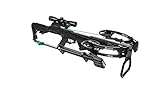
Overview: The Wrath 430X represents CenterPoint’s flagship offering, delivering hard-hitting 430 FPS performance with 164 ft-lbs of kinetic energy. The ultra-narrow 9-inch cocked width, folding stock, and inverted cam design create an exceptionally compact and powerful hunting tool. The complete package includes a silent crank system, illuminated scope, three 20-inch arrows, and rail lube, targeting serious hunters who refuse to compromise.
What Makes It Stand Out: The silent crank is a game-changer for hunting, eliminating the telltale clicking of traditional cocking mechanisms that spooks game. The inverted cam compound system with CNC-machined aluminum components provides smooth draw cycles and enhanced durability. The folding stock and stirrup reduce length for transport, while the dry-fire prevention technology offers robust protection. This is a feature set typically reserved for crossbows double the price.
Value for Money: While priced at the upper end of the mid-range market, the Wrath 430X undercuts premium brands by hundreds while matching or exceeding their specifications. The integrated silent crank system alone values $150-200, and the build quality rivals $1,500+ crossbows. For hunters seeking maximum performance without flagship pricing, the value proposition is compelling, though the total investment still exceeds beginner budgets.
Strengths and Weaknesses: Strengths: Class-leading 430 FPS speed; whisper-quiet crank system; ultra-compact 9" width; robust dry-fire protection; folding stock enhances portability; high energy output for large game. Weaknesses: Heavier than spec sheets suggest with accessories; complex design may intimidate beginners; string serving wear reports; customer service can be slow; requires proper maintenance for reliability.
Bottom Line: The Wrath 430X is a performance powerhouse for dedicated hunters. If you demand top-tier speed and stealth without paying premium brand tax, this crossbow delivers exceptional capability with features that genuinely improve hunting success.
5. Bear X Desire XL Pistol Hunting Crossbow, Self-Cocking, Adjustable Stock up to 2.5", Compact Design, Includes 3 Premium Bolts, Dependable Accuracy
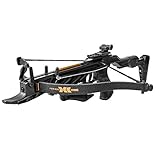
Overview: The Bear X Desire XL occupies a unique niche as a pistol-grip crossbow designed for small game hunting and recreational shooting. Delivering 175 FPS in an ultra-compact form factor, this self-cocking crossbow features a 2.5-inch adjustable stock and forearm grip for improved stability. The package includes three premium bolts and emphasizes portability and simplicity over raw power, making it fundamentally different from full-size hunting crossbows.
What Makes It Stand Out: The self-cocking mechanism eliminates the need for ropes or cranks, allowing near-instant reloading that’s ideal for pest control or follow-up shots on small game. The adjustable stock adapts to different hand sizes and shooting styles, a rare feature in pistol crossbows. Bear Archery’s reputation for dependable accuracy translates well to this platform, providing consistency that budget pistol crossbows lack. Its compactness allows storage in vehicles or packs for opportunistic shooting.
Value for Money: Priced significantly below full-power crossbows, the Desire XL offers fair value for its specialized application. However, hunters must understand this is NOT a whitetail tool—its 175 FPS limits ethical use to small game and target practice. Compared to full-size crossbows, it’s inexpensive, but for its pistol class, it’s premium-priced. The included bolts and self-cocking convenience justify the cost for those specifically seeking this form factor.
Strengths and Weaknesses: Strengths: Effortless self-cocking; extremely compact and portable; adjustable stock enhances comfort; Bear brand quality; quick to deploy; ideal for small game. Weaknesses: 175 FPS unsuitable for deer-sized game; limited accuracy beyond 20 yards; pistol grip less stable than shoulder stock; small bolt selection; niche application limits versatility.
Bottom Line: The Desire XL excels as a specialized tool for small game hunters and recreational shooters. Don’t mistake it for a primary hunting crossbow—purchase it as a convenient, fun secondary weapon where legal, understanding its power limitations for ethical hunting scenarios.
6. BALLISTA BAT Compound Mini Crossbow - Small Crossbow for Hunting, Fishing and Target - 300 FPS, 130 Lbs, 2.46 lbs

Overview:
The BALLISTA BAT Compound Mini Crossbow redefines portability in the crossbow market. Weighing just 2.46 pounds and measuring 16"x5", this ultra-compact weapon delivers 300 FPS velocity with a 130-pound draw weight, making it viable for small game hunting, bowfishing, and recreational target shooting. Its diminutive size allows it to fit in a standard backpack while maintaining enough power for ethical hunting within its class.
What Makes It Stand Out:
The three-second silent loading mechanism is genuinely innovative for a crossbow this size, eliminating the traditional crank noise that spooks game. The weight-to-power ratio is exceptional—you’re getting legitimate hunting capability in a package lighter than most binoculars. This crossbow bridges the gap between toy and tool, offering serious functionality without the bulk of conventional models.
Value for Money:
Priced competitively against entry-level full-size crossbows, this mini delivers specialized portability that larger units cannot match. While you sacrifice some raw power, you gain unprecedented mobility. For hunters covering vast terrain or those needing a compact fishing tool, the value proposition is strong compared to carrying a 6+ pound alternative.
Strengths and Weaknesses:
Strengths include extreme portability, lightning-fast setup, silent operation, and legitimate hunting capability for small game. The lightweight design prevents fatigue during extended use. Weaknesses involve legal restrictions in some jurisdictions for hunting, limited kinetic energy for larger game, and the learning curve associated with mini crossbow accuracy. The 130-pound draw requires strength despite the assisted loading.
Bottom Line:
Ideal for mobile hunters and outdoor enthusiasts prioritizing packability over maximum power. Perfect for rabbit, turkey, or bowfishing applications where traditional crossbows prove cumbersome. Not recommended for deer-sized game or beginners seeking maximum forgiveness.
7. Barnett Whitetail Pro STR Crossbow, with 4x32mm Illuminated Scope, 2 Arrows, Lightweight Quiver, without Crank Device

Overview:
Barnett’s Whitetail Pro STR represents a complete hunting solution delivering 400 FPS from a manageable 187-pound draw weight. This compound crossbow features an ultra-compact 36.5" length and TruBark camo finish, packaged with essential accessories including a 4x32mm illuminated scope, two 22" Headhunter arrows, rope cocking device, and quiver. The mostly-assembled design gets hunters into the field quickly.
What Makes It Stand Out:
The integrated Nock Sensor and Anti-Dry Fire Trigger System provide industry-leading safety, preventing costly and dangerous misfires. Barnett’s six-decade legacy ensures proven reliability and extensive service support. The 140 ft-lbs of kinetic energy generates devastating terminal performance for whitetail and similar-sized game at ethical ranges.
Value for Money:
As a turnkey package from a premium brand, this crossbow eliminates guesswork for new crossbow hunters. The included illuminated scope alone represents significant value. While heavier at 6.9 pounds and lacking an integrated crank, the comprehensive accessory bundle and Barnett’s warranty justify the mid-to-upper-tier pricing compared to bare-bones competitors.
Strengths and Weaknesses:
Strengths include exceptional speed, robust safety systems, trusted brand reputation, and complete accessory package. The manageable axle-to-axle width aids maneuverability in blinds and stands. Weaknesses involve the high draw weight requiring physical capability or separate crank purchase, substantial weight for mountain hunting, and the need for regular string waxing maintenance.
Bottom Line:
A superb choice for tree stand and ground blind hunters seeking a reliable, fast crossbow from America’s most trusted brand. Perfect for whitetail hunters who value safety and performance over ultra-lightweight design. Serious hunters should budget for the optional crank cocking device.
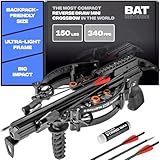
8. BALLISTA BAT Reverse Draw Compound Mini Crossbow - Crossbow for Hunting, Fishing and Target - Fast 340 fps, Powerful 150lbs, Lightweight 3lbs
Overview:
This upgraded mini crossbow incorporates reverse-draw technology into a 16"x5" frame, boosting performance to 340 FPS with a 150-pound draw weight while maintaining a feathery 3-pound mass. The reverse-draw configuration increases power stroke efficiency, delivering flatter trajectories and enhanced accuracy compared to standard mini crossbows. It remains backpack-friendly while pushing the boundaries of compact crossbow capability.
What Makes It Stand Out:
Reverse-draw limb configuration in a mini crossbow is genuinely innovative, typically reserved for full-size premium models. This design choice reduces vibration and noise while maximizing energy transfer. The three-second silent loading system carries over, now handling the increased draw weight effortlessly. You’re getting near full-size performance in a package that fits inside a daypack.
Value for Money:
Positioned as a premium mini crossbow, the price reflects its advanced engineering. For hunters demanding maximum portability without sacrificing significant power, it outperforms conventional mini crossbows by a wide margin. Compared to full-size reverse-draw models costing twice as much, this represents accessible innovation for mobile hunting strategies.
Strengths and Weaknesses:
Strengths include reverse-draw smoothness, impressive 340 FPS speed, extreme portability, and silent operation. The increased draw weight expands hunting applications to larger small game. Weaknesses include potential legal limitations for hunting in some states, reduced stability compared to full-stock crossbows, and the premium pricing over standard mini models. The compact grip may challenge shooters with large hands.
Bottom Line:
The ultimate portable hunting tool for serious outdoorsmen who refuse to compromise on performance. Excellent for backcountry small game hunting and bowfishing where every ounce matters. Delivers genuine innovation in a miniature package, though hunters must verify local regulations before purchasing.
9. Wicked Ridge by TenPoint RDX 410, Peak XT - 410 FPS - Shorter, Faster & Includes Silent Cocking - with ACUdraw Silent, Pro-View 400 Scope & Three Match 400 Carbon Arrows

Overview:
TenPoint’s Wicked Ridge RDX 410 showcases American engineering at its finest, delivering 410 FPS from a revolutionary 29-inch reverse-draw platform. The integrated ACUdraw Silent cocking mechanism reduces draw weight to a mere 5 pounds, eliminating noise and physical strain. This ultra-narrow 9-inch axle-to-axle crossbow comes pre-sighted at 20 yards and includes a Pro-View 400 scope with 70-yard illuminated reticle and three Match 400 carbon arrows.
What Makes It Stand Out:
The ACUdraw Silent system represents a breakthrough in cocking technology, fully integrated and completely silent—critical for follow-up shots. The reverse-draw design delivers same-hole accuracy with reduced vibration. Being pre-sighted by American technicians ensures immediate field readiness, a unique factory-service feature. At 410 FPS, it’s among the fastest compact crossbows available.
Value for Money:
Premium pricing delivers premium performance and convenience. The integrated cocking system alone justifies the cost compared to adding aftermarket solutions. When factoring in the high-quality scope, carbon arrows, and factory pre-sighting, the package offers substantial savings over piecing together comparable components. This is an investment-grade hunting tool built for discriminating hunters.
Strengths and Weaknesses:
Strengths include effortless cocking, blistering speed, exceptional accuracy, compact maneuverability, and immediate out-of-box readiness. The reverse-draw design provides a smoother shot cycle. Weaknesses center on the premium price point, which may exceed casual hunter budgets. The specialized design limits DIY maintenance options, requiring professional service for complex repairs.
Bottom Line:
The pinnacle of compact crossbow technology for hunters demanding the absolute best in performance and convenience. Perfect for mobile hunters, older sportsmen, or anyone prioritizing stealth and ease of use. The investment pays dividends in harvested game and reduced frustration. Simply unmatched in its class.
10. BALLISTA BAT Reverse L-Stock Draw Compound Crossbow for Hunting, Fishing and Target - Fast 340 fps, Powerful 150 lbs, Lightweight 4 lbs

Overview:
BALLISTA’s Reverse L-Stock model merges reverse-draw power with ergonomic rifle-style architecture, delivering 340 FPS and 150 pounds of draw weight in a stable 4-pound platform. The L-stock design provides superior cheek weld and shoulder mounting compared to pistol-grip mini crossbows, while maintaining reasonable portability. Three 13-inch practice bolts are included, ensuring immediate range readiness.
What Makes It Stand Out:
The L-stock configuration solves the stability issues plaguing mini crossbows without adding substantial weight. This hybrid approach offers rifle-like ergonomics for improved accuracy during extended shooting sessions. The reverse-draw system maintains the compact 16"x5" limb assembly while the extended stock provides proper sight alignment and recoil management, creating a unique blend of portability and shootability.
Value for Money:
This model bridges the price gap between basic mini crossbows and full-size hunting rigs. The included bolts and enhanced ergonomics deliver tangible value for shooters frustrated by compact models’ limitations. While slightly heavier and less packable than its mini siblings, the accuracy improvements justify the modest weight increase for hunters not requiring extreme ultralight gear.
Strengths and Weaknesses:
Strengths include improved ergonomics, reverse-draw efficiency, maintained portability, included accessories, and enhanced accuracy over pistol-grip designs. The 4-pound weight remains exceptionally light for a stocked crossbow. Weaknesses include reduced compactness compared to true mini crossbows, potential stock interference in tight blinds, and the same legal restrictions affecting all mini crossbows in certain jurisdictions.
Bottom Line:
The perfect compromise for shooters wanting mini crossbow portability with full-size accuracy. Excellent for youth hunters, women, or anyone prioritizing proper shooting form over ultimate packability. Delivers reverse-draw performance in an ergonomic package without the premium pricing of major brands. Verify local hunting regulations before purchasing.
Understanding Compound Crossbow Technology
What Makes a Compound Crossbow Different?
Compound crossbows distinguish themselves through their intricate pulley and cam systems that provide mechanical advantage during both cocking and shooting. Unlike recurve crossbows that rely solely on limb flexion, compound systems store energy more efficiently through the let-off effect created by eccentric cams. This design allows archers to achieve higher draw weights with less physical effort while maintaining full draw for extended periods. The mechanical complexity translates to significant performance benefits, including increased arrow velocities, reduced holding weight, and generally more compact frame designs that excel in tight hunting situations.
The Physics Behind Arrow Velocity
Arrow speed isn’t merely about bragging rights—it directly impacts trajectory flatness, kinetic energy delivery, and effective range. Velocity is primarily determined by the interplay between draw weight, power stroke length, and the efficiency of energy transfer from the limbs to the arrow. Modern crossbows achieve speeds exceeding 400 feet per second by optimizing each component in this energy chain. However, raw speed must be balanced against arrow stability, as excessively fast launches can amplify imperfections in arrow spine or fletching alignment, ultimately compromising accuracy at longer distances.
Key Features Impacting Accuracy
Cam Systems and Their Impact on Performance
The cam profile fundamentally shapes how a crossbow feels and performs. Aggressive cams generate higher speeds but often produce a harsher draw cycle and increased vibration. More moderate cam designs prioritize smoothness and consistency, which many shooters find translates to better real-world accuracy. Dual-cam systems must remain perfectly synchronized to prevent uneven limb loading and arrow flight disruption. This synchronization becomes increasingly critical as you pursue higher performance thresholds, making quality manufacturing and precise tolerances non-negotiable features in any serious accuracy-focused crossbow.
Barrel Design and Rail Systems
The barrel or rail serves as the arrow’s launch track, and its construction directly influences consistency. CNC-machined aluminum rails with anodized finishes provide the smooth, uniform surface necessary for repeatable arrow flight. Some designs incorporate flight grooves or specialized coatings to reduce friction and minimize string wear. The rail’s straightness and rigidity prevent arrow wobble during release, while the string’s engagement point must remain consistent shot after shot. Pay attention to rail width and how it matches your chosen arrow diameter—excessive clearance allows unwanted movement, while too little creates binding and accuracy-killing friction.
Scope Quality and Optics
Your scope is the interface between you and your crossbow’s potential accuracy. High-quality optics feature fully multi-coated lenses that maximize light transmission during dawn and dusk hunting hours. Look for scopes with ballistic reticles designed specifically for crossbow trajectories, allowing you to compensate for arrow drop at various distances without manual adjustment. The best scopes offer tool-less windage and elevation adjustments with positive clicks that hold zero reliably. Consider eye relief carefully—crossbows produce significant forward movement, and inadequate eye relief risks scope eye injuries while making it difficult to maintain consistent cheek weld.
Trigger Mechanism Considerations
A crisp, predictable trigger break separates accurate crossbows from merely fast ones. Premium trigger systems exhibit minimal creep, clean breaks in the 3-4 pound range, and zero overtravel. Some designs incorporate two-stage triggers that provide tactile feedback during the initial take-up, helping shooters prepare for the shot. The trigger’s connection to the sear must remain consistent regardless of temperature, humidity, or cocking method. Dry-fire prevention mechanisms are essential safety features that also protect your investment by preventing catastrophic failure if triggered without an arrow properly seated.
Stock Design and Stability
The stock’s ergonomics directly affect your ability to hold steady and execute consistent shots. Adjustable stocks allow customization of length of pull and comb height to fit your body and shooting style. A wide, stable foregrip helps manage front-end weight and reduces torque during aiming. Textured grip surfaces maintain control in wet or cold conditions. The stock’s overall weight distribution influences how the crossbow balances—front-heavy designs steady your hold but fatigue you faster, while rear-biased crossbows feel lively but may require more conscious stabilization effort.
Speed Features and Specifications
Understanding Arrow Speed Ratings
Manufacturers advertise speed ratings achieved under specific, often unrealistic conditions—typically using the lightest arrow that safely functions with that crossbow. Real-world speeds with hunting-weight arrows will be 20-40 FPS slower than advertised. Focus on the crossbow’s power stroke and draw weight as more reliable performance indicators. A longer power stroke generally produces smoother acceleration and better efficiency than simply increasing draw weight. When comparing models, calculate kinetic energy using your intended arrow weight to understand true terminal performance potential.
Power Stroke Length Explained
Power stroke—the distance the string travels from full draw to rest position—plays a crucial role in both speed and shooting comfort. Longer power strokes accelerate arrows more gradually, reducing peak stress on components and often producing quieter shots. Shorter power strokes require higher draw weights to achieve equivalent speeds, resulting in more aggressive shot cycles. For hunters using ground blinds or tree stands with limited space, compact power strokes offer maneuverability advantages. Target shooters typically prefer longer power strokes for their smoother feel and reduced vibration signature.
Draw Weight vs. Kinetic Energy
While draw weight contributes to speed, it’s not the sole determinant of hunting effectiveness. Kinetic energy—the actual destructive power delivered to the target—depends on both arrow weight and velocity. A 400-grain arrow at 350 FPS delivers approximately 109 foot-pounds of kinetic energy, sufficient for any North American game. Increasing arrow weight while maintaining reasonable speed often improves penetration and downrange energy retention more effectively than chasing maximum velocity with ultra-light arrows. Consider your target game species and typical shooting distances when balancing these variables.
Practical Buying Considerations
Camo Patterns and Stealth Considerations
Your crossbow’s finish serves functional purposes beyond aesthetics. Modern camouflage patterns break up the crossbow’s outline in specific environments, but effectiveness varies by region and season. Matte finishes reduce glare that could alert game animals, while glossy surfaces might look attractive but create reflective signatures. Some manufacturers offer interchangeable skins or hydro-dipping services for complete customization. Consider your primary hunting terrain—tree stand hunters need different patterns than spot-and-stalk hunters in open country. Durability matters too; finishes should resist chipping and scratching from field use.
Noise and Vibration Dampening
Every crossbow produces noise and vibration upon firing, but quality designs minimize these disruptive forces. String suppressors, limb dampeners, and vibration-absorbing bolts all contribute to a quieter shot. Why does this matter for accuracy? Excessive vibration causes scope shake and can loosen screws and components over time. More importantly for hunters, loud crossbows educate animals and can cause string-jumping at distances beyond 30 yards. Look for integrated suppression systems rather than aftermarket add-ons, as factory-engineered solutions typically perform better and maintain the crossbow’s balance.
Weight and Maneuverability Trade-offs
Crossbows range from under six pounds to over eight pounds bare, with accessories adding another pound or more. Lightweight crossbows are easier to carry during long hunts and quicker to shoulder, but they absorb less vibration and can feel twitchy during aiming. Heavier crossbows steady your hold but fatigue you faster and become cumbersome in tight spaces. Consider your physical condition, typical hunt duration, and shooting scenarios. Backcountry hunters should prioritize weight savings, while stand hunters might appreciate the stability of a heavier platform. Remember that adding a quiver, arrows, and a sling increases total carry weight significantly.
Budget vs. Performance Expectations
Entry-level compound crossbows deliver impressive performance compared to premium models from a decade ago, but they make compromises in materials, tolerances, and features. Mid-range options often represent the sweet spot for most shooters, offering 90% of flagship performance at 60% of the cost. Premium crossbows justify their price through exceptional triggers, tighter tolerances, better materials, and comprehensive accessory packages. Determine your budget early, but factor in the cost of essential accessories: quality arrows, broadheads, a cocking device, and a suitable target. A $600 crossbow with $400 in proper accessories outperforms an $800 crossbow shot with inadequate components.
Warranty and Manufacturer Support
A crossbow is a significant investment that experiences substantial stress with every shot. Comprehensive warranties covering limbs, cams, and the stock provide peace of mind and protect against manufacturing defects. Read warranty terms carefully—some cover only the original owner, while others are transferable. Consider the manufacturer’s reputation for customer service and parts availability. A company with responsive support and quick parts shipping minimizes downtime during hunting season. Some manufacturers offer lifetime warranties on certain components, reflecting confidence in their engineering and materials.
Safety and Maintenance Essentials
Essential Safety Features
Modern crossbows incorporate multiple safety mechanisms that protect both the shooter and the equipment. Anti-dry-fire devices prevent firing without an arrow properly seated, which can destroy limbs and cams. Automatic safety engagement ensures the crossbow cannot fire accidentally after cocking. Finger guards and flared foregrips keep hands clear of the string’s path. Some designs include de-cocking mechanisms that allow safe uncocking without firing an arrow—a valuable feature for hunters who don’t take a shot. Never disable or modify safety features, and test them regularly to ensure proper function.
Proper Cocking Techniques
Consistent cocking is fundamental to accuracy. Even slight variations in string placement create uneven limb loading and erratic arrow flight. Rope cocking devices reduce draw weight by half and help center the string automatically, making them essential for most shooters. Crank cocking systems offer effortless cocking with perfect consistency, ideal for hunters with physical limitations or those using maximum-draw-weight crossbows. Whichever method you choose, practice until it becomes muscle memory. Always cock the crossbow before loading an arrow, and keep your fingers away from the trigger until you’re ready to shoot.
String and Cable Maintenance
Strings and cables are wearable items that require regular inspection and replacement. Check for fraying, separated servings, or broken strands before each shooting session. Apply rail lube every 5-10 shots to reduce friction and extend string life—avoid over-lubing, which attracts dirt. Wax the string and cables regularly, especially after exposure to moisture. Most manufacturers recommend string replacement every 2-3 years or 200-300 shots, whichever comes first. Replace cables simultaneously, as they work as a system. Using a string with worn servings damages the rail and compromises accuracy.
Storage and Transportation Best Practices
Store your crossbow uncocked in a climate-controlled environment to prevent limb fatigue and string stretching. Use a padded case that supports the crossbow without putting pressure on the limbs or scope. For long-term storage, remove the scope and store it separately to prevent seal damage. Never leave a crossbow cocked overnight or in a hot vehicle—heat increases string stretch and limb stress. During transport, ensure arrows are secured in a quiver and the crossbow cannot shift or bounce. Some jurisdictions require crossbows to be cased and unloaded during vehicle transport, so familiarize yourself with local regulations.
Frequently Asked Questions
How fast does a compound crossbow need to be for ethical hunting?
For most North American big game, a crossbow delivering 80-90 foot-pounds of kinetic energy provides sufficient penetration for ethical kills. This typically requires speeds of 300-350 FPS with hunting-weight arrows (400-450 grains). Speeds beyond 400 FPS offer diminishing returns for hunting purposes and may actually reduce penetration if using arrows that are too light to maintain momentum.
What’s more important for accuracy: speed or a smooth trigger?
A quality trigger contributes more to practical accuracy than raw speed. A crisp, predictable break allows precise shot execution without disturbing aim. Excessive speed amplifies any inconsistencies in arrow spine, release execution, or form. Most shooters achieve better groups with moderately fast crossbows equipped with excellent triggers than with ultra-fast models featuring mediocre trigger systems.
Can I use the same arrows for practice and hunting?
While possible, it’s not ideal. Practice arrows endure repeated impacts that can weaken them, potentially causing dangerous failures if used for hunting. Hunting arrows should remain pristine, with sharp broadheads that aren’t dulled by target practice. Additionally, using identical weight practice arrows ensures your point of impact matches your hunting setup without wasting expensive broadheads on targets.
How often should I replace my crossbow strings?
Replace strings and cables every 2-3 years or after 200-300 shots, whichever occurs first. Heavy shooters may need annual replacement. Inspect strings before each use for serving separation, fraying, or broken strands. Replace immediately if damage is found. Using worn strings risks catastrophic failure that can destroy your crossbow and cause injury.
Do I need a special target for high-speed crossbows?
Yes. Standard bag targets may not stop arrows from crossbows exceeding 350 FPS, leading to pass-throughs or difficult arrow removal. Invest in targets specifically rated for high-speed crossbows, typically featuring multiple high-density foam layers or specialized self-healing materials. These targets preserve arrow integrity and make retrieval easier while lasting longer under crossbow use.
What’s the effective range of a modern compound crossbow?
While crossbows can send arrows much farther, the ethical hunting range for most shooters is 40-50 yards. Beyond this distance, arrow drop becomes significant, and minor errors in range estimation or wind reading dramatically affect point of impact. Target shooters can achieve consistent accuracy at 80-100 yards, but this requires extensive practice and ideal conditions.
Are crank cocking devices worth the extra cost?
For shooters using crossbows with draw weights over 175 pounds, or those with physical limitations, crank devices are invaluable. They ensure perfectly consistent string alignment, reduce cocking effort to near zero, and often include anti-reverse mechanisms for safety. Even on lighter crossbows, they improve accuracy by eliminating cocking-induced variations that plague manual methods.
How do I choose the right arrow weight for my crossbow?
Follow manufacturer recommendations, which typically specify a minimum arrow weight (often 400-425 grains total weight including point). Using arrows below this minimum voids warranties and creates dangerous conditions. For hunting, heavier arrows (450-500 grains) provide better penetration and quieter shots, while lighter arrows maximize speed and flat trajectory for target shooting.
What’s the best way to sight in a new crossbow?
Start at 20 yards, shooting from a stable rest to eliminate human error. Adjust windage and elevation to achieve perfect point-of-impact alignment. Move to 30 yards and fine-tune, then verify at 40 yards. Most scopes feature multiple reticle dots or lines for different distances—confirm each marks the correct yardage. Allow the crossbow to cool between shots during initial sight-in, as barrel heat can affect point of impact.
Can I leave my crossbow cocked during an all-day hunt?
No. Manufacturers recommend cocking only when ready to shoot, and never leaving a crossbow cocked for more than 3-4 hours. Prolonged cocking stretches strings, fatigues limbs, and increases the risk of accidental discharge. Cock your crossbow after settling into your stand and decock safely if you don’t take a shot. Some modern crossbows feature safe de-cocking mechanisms that make this process practical in the field.
Related Buying Guides
- 10 Best Compound Crossbows for Accuracy and Power in 2026
- 10 Best Compound Bows with Sights for Pinpoint Accuracy in 2026
- How to Solve Accuracy Issues with the 10 Best Target Compound Bows in 2026
- The 10 Ultimate Best Compound Bows for Long-Range Accuracy in 2026
- The 10 Ultimate Best Left-Handed Compound Bows for Accuracy in 2026