Table of Contents
The wilderness has always kept its secrets close, but modern technology is rewriting the rules of wildlife observation. Cellular trail cameras have revolutionized how researchers, conservationists, and nature enthusiasts connect with the natural world, transforming weeks of waiting into instant digital encounters. These sophisticated devices don’t just capture images—they create a live bridge between remote habitats and your smartphone, delivering real-time glimpses into the hidden lives of animals that was once the stuff of scientific fantasy.
As we look toward 2026, the landscape of cellular trail camera technology continues to evolve at a remarkable pace. From enhanced image sensors that perform in near-total darkness to AI-powered species recognition and ultra-efficient power management, today’s devices offer capabilities that would have seemed impossible just a few years ago. Whether you’re monitoring migration patterns, conducting research, or simply want to know what visits your backyard after dark, understanding what separates exceptional cameras from mediocre ones has never been more critical. This comprehensive guide walks you through everything you need to know to make an informed decision without getting lost in technical jargon or marketing hype.
Top 10 Cellular Trail Cameras
Detailed Product Reviews
1. SPYPOINT Flex-M Twin Pack Cellular Trail Cameras - Best Hunting Accessories, No WiFi Needed, GPS, Night Vision, Dual-Sim LTE, IP65 Water-Resistant Game Camera, 28MP Photos, 720p Videos + Sound (2)

Overview: The SPYPOINT Flex-M Twin Pack delivers cellular trail camera technology at an accessible price point, making it ideal for hunters expanding their property coverage. These cameras capture 28MP photos and 720p videos with audio, featuring GPS tagging, night vision capabilities, and IP65 weather resistance. The dual-Sim LTE design automatically connects to the strongest available network without manual carrier selection, ensuring reliable transmission from remote locations.
What Makes It Stand Out: The free photo transmission plan offering 100 monthly images sets this apart from competitors charging for basic service. The cross-carrier coverage seamlessly switches between networks for reliable connectivity in challenging terrain. Multi-function capture modes include standard photo/video, time-lapse, and Time-Lapse+ that combines interval shooting with motion detection. The user-friendly SPYPOINT app provides real-time weather, personalized maps, and BUCK TRACKER AI for species filtering.
Value for Money: This twin pack offers exceptional value for budget-conscious hunters. The complimentary monthly photo allowance eliminates ongoing costs for casual users, while affordable paid plans ($5-$15/month) accommodate heavy usage. Comparable cellular cameras often require immediate paid subscriptions, making the Flex-M’s free tier a significant advantage that pays for itself within months.
Strengths and Weaknesses: Pros include the free transmission plan, automatic cross-carrier connectivity, versatile capture modes, and intuitive app interface. Cons are limited 720p video resolution, lack of included microSD card, and solar panel sold separately. The 28MP sensor, while adequate, lags behind premium alternatives but suffices for most scouting needs.
Bottom Line: The SPYPOINT Flex-M Twin Pack is perfect for hunters seeking affordable cellular monitoring across multiple locations. The free data tier and reliable connectivity make it an excellent entry point into cellular trail cameras without financial commitment.
2. SPYPOINT Flex G-36 Twin Pack Cellular Trail Camera, 36MP Photos and 1080p Videos with Sound, GPS Enabled, Dual-Sim LTE Connectivity, 100’ Flash & Detection Range, Responsive Trigger up to .3S

Overview: The SPYPOINT Flex G-36 Twin Pack represents a significant upgrade for serious hunters demanding superior image quality. These cellular trail cameras deliver stunning 36MP photos and 1080p videos with sound, transmitting directly to your device via the SPYPOINT app. With GPS functionality, dual-Sim LTE connectivity, and a 100-foot flash/detection range, the G-36 provides comprehensive scouting capabilities for discerning sportsmen.
What Makes It Stand Out: The enhanced 36MP resolution captures exceptional detail for identifying specific animals and assessing trophy quality. The improved battery life reduces maintenance visits, crucial for minimizing human scent and disturbance. Cross-carrier coverage automatically selects the strongest signal from multiple networks, ensuring reliable transmission even in challenging terrain. The responsive 0.3-second trigger speed captures fast-moving subjects effectively while preserving battery.
Value for Money: While pricier than the Flex-M, the twin pack justifies its cost through superior photo resolution, full HD video with audio, and extended battery performance. The absence of activation fees and flexible monthly plans enhances long-term value. For hunters prioritizing image clarity, the investment pays dividends in scouting effectiveness and identification confidence.
Strengths and Weaknesses: Pros include outstanding 36MP image quality, 1080p video with sound, robust battery life, and seamless cross-carrier connectivity. Cons feature a 0.3-second trigger that’s slower than some competitors, no free plan mentioned, and premium pricing. The lack of included solar panel requires separate purchase for extended autonomy.
Bottom Line: The SPYPOINT Flex G-36 Twin Pack excels for hunters who refuse to compromise on image quality. The superior resolution and reliable connectivity make it worth the premium for serious scouting operations where detail matters most.
3. SEHMUA 4G LTE Cellular Trail Cameras 3rd Gen with Live Streaming, Game Camera Built-in SIM Card with Motion Activated 0.2s Trigger Time Solar Trail Camera IP66 Waterproof

Overview: The SEHMUA 4G LTE Cellular Trail Camera 3rd Gen pushes technological boundaries with live streaming capabilities and integrated solar power. This innovative game camera delivers 2K real-time video accessible via the Ucon app, featuring a built-in SIM card, 0.2-second trigger speed, and IP66 waterproof rating. The 120-degree wide view and 850nm low-glow night vision extend coverage up to 82 feet in complete darkness.
What Makes It Stand Out: Live streaming sets this apart, allowing real-time wildlife viewing and sharing experiences with others remotely. The included 4W solar panel with 7800mAh rechargeable battery provides continuous power, eliminating frequent battery changes. The lightning-fast 0.2-second trigger ensures minimal missed shots. Motion-activated alerts keep you instantly informed of activity, while the wide detection angle maximizes coverage area.
Value for Money: The included solar panel adds significant value, saving $50-100 in separate accessories. However, data plans range from $19.9 monthly to $169.9 yearly—steeper than competitors. The 7-day unlimited trial helps evaluate the service, but long-term costs add up for multiple cameras, making it better suited for single-camera deployments.
Strengths and Weaknesses: Pros include 2K live streaming, integrated solar power, rapid 0.2s trigger, wide 120° field of view, and strong night vision. Cons feature expensive data plans, locked SIM card (non-detachable), mandatory Ucon app usage, and cloud storage requiring subscription after 30-day trial. The SIM only works within the U.S., limiting flexibility.
Bottom Line: The SEHMUA camera suits tech-savvy users prioritizing live viewing and solar convenience. Accept the higher data costs for cutting-edge features and hassle-free power management that eliminates field visits for battery changes.
4. TACTACAM Reveal X Gen 3.0 Cellular Trail Camera: Auto Connect 4G LTE, 4K Photo, 1080p Video, Low-Glow IR Flash, No SD Card Needed, Long Battery Life – Best Hunting, Game & Property Monitoring Camera

Overview: The TACTACAM Reveal X Gen 3.0 positions itself as a reliable entry-level cellular trail camera focused on simplicity and performance. This hard-working camera automatically connects to 4G LTE networks, sending 4K photos and 1080p videos directly to your phone. The standout feature is its built-in memory, eliminating the need for SD cards—a unique convenience that removes a common failure point.
What Makes It Stand Out: The no-SD-card design removes a common pain point, ensuring you never forget storage or lose data to card corruption. The powerful app includes deer analytics, mapping tools, and weather integration for comprehensive scouting intelligence. Low-glow IR flash maintains discreet operation during nighttime captures. Adjustable motion activation and long battery life reduce field visits and human disturbance.
Value for Money: As an entry-level model, it offers competitive pricing while eliminating SD card expenses. The built-in storage provides immediate cost savings and operational simplicity. For hunters wanting cellular connectivity without technical complexity, this represents strong value compared to competitors requiring additional purchases and setup.
Strengths and Weaknesses: Pros include innovative built-in memory, 4K photo resolution, user-friendly setup, low-glow IR flash, and robust app features. Cons feature unspecified trigger speed (likely entry-level), limited advanced settings compared to premium brands, and smaller brand recognition. The lack of solar panel inclusion requires separate purchase for extended deployments.
Bottom Line: The TACTACAM Reveal X Gen 3.0 is ideal for beginners seeking hassle-free cellular monitoring. The no-SD design and reliable performance make it a smart entry point into smart scouting without the learning curve of more complex systems.
5. Moultrie Edge 3 Cellular Trail Camera - 2 Pack - 40MP HD Photo Capture - 1080p Low-Glow Flash - GPS - Multi-Carrier Auto-Connect - Built-in Memory - 0.5s Trigger Speed - AI Buck Detection
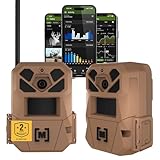
Overview: The Moultrie Edge 3 Twin Pack represents the pinnacle of smart trail camera technology, combining high-resolution imaging with artificial intelligence. These cameras capture 40MP photos and 1080p videos, featuring multi-carrier auto-connect, GPS tagging, and AI-powered buck detection. The 0.5-second trigger speed and low-glow flash ensure comprehensive coverage day and night while minimizing false triggers.
What Makes It Stand Out: AI Buck Detection automatically identifies and tags deer in images, saving hours of manual review. Integration with onX Hunt Elite (3-month membership included) provides premium mapping and land data for strategic placement. Unique remote feeder control via Moultrie Connect allows adjusting feed schedules and monitoring levels through the same app. Built-in memory eliminates SD card dependency and potential failures.
Value for Money: The twin pack delivers premium features at competitive pricing. Data plans start at just $9.99/month—among the most affordable in the market. The included onX Hunt membership ($30 value) and built-in memory offset the higher initial cost, making it economical for serious hunters building an integrated ecosystem across multiple devices.
Strengths and Weaknesses: Pros include highest 40MP resolution, AI detection, feeder integration, 4-carrier connectivity, and built-in memory. Cons feature 0.5-second trigger speed slower than competitors, premium pricing, and complexity that may overwhelm casual users. Requires commitment to Moultrie ecosystem for full benefits, limiting cross-brand flexibility.
Bottom Line: The Moultrie Edge 3 Twin Pack excels for dedicated hunters wanting AI assistance and ecosystem integration. The intelligent features justify the investment for serious scouting operations where automated analysis and feeder management provide measurable advantages.
6. SEHMUA Trail Camera 2 Packs, Cellular Trail Cameras 4G LTE Live View with Built-in SIM Card 0.2s Trigger Speed Game Camera with Night Vision Motion Activated Waterproof Trail Cam

Overview: The SEHMUA 2-pack cellular trail camera system delivers remote monitoring capabilities for locations lacking WiFi and electricity. These cameras operate on 4G LTE networks with a built-in SIM card, offering a 7-day unlimited data trial before requiring a subscription. Designed for farms, ranches, and construction sites, each unit features a 4W solar panel paired with a 7800mAh rechargeable battery for continuous operation.
What Makes It Stand Out: The combination of solar power and cellular connectivity eliminates infrastructure concerns, while the 0.2-second trigger speed ensures timely capture of motion events. The 120° wide-angle lens and 850nm low-glow infrared system provide 82-foot night vision coverage. Supporting Verizon, T-Mobile, and AT&T networks, these cameras store footage locally on memory cards (up to 128GB) or in cloud storage with a trial period.
Value for Money: At approximately $19.90 monthly or $169 annually per camera for data, the subscription costs align with industry standards. The 2-pack configuration offers better value than buying individual units separately. While the initial investment is moderate, the elimination of battery replacement and wiring costs provides long-term savings for remote surveillance needs.
Strengths and Weaknesses: Strengths include maintenance-free solar power, fast trigger response, wide field of view, IP66 waterproof rating, and multi-network compatibility. Weaknesses involve additional costs for memory cards, mandatory data subscriptions after trial, and low-glow LEDs that may be slightly visible to wildlife. The requirement for individual data plans per camera increases multi-unit deployment costs.
Bottom Line: Ideal for property owners needing reliable off-grid monitoring, this 2-pack delivers consistent performance despite ongoing subscription requirements. Best suited for security and general wildlife observation rather than stealth-focused game monitoring.
7. Moultrie Edge 2 Cellular Trail Camera - Auto Connect Nationwide 4G LTE - On Demand 36MP Photo - 1080P Video with HD Audio - 100 Ft Detection Range - Low Glow Flash

Overview: The Moultrie Edge 2 represents a user-friendly cellular trail camera solution from a US-based manufacturer, featuring Auto Connect technology that seamlessly accesses major 4G LTE networks without SIM card swapping. This camera captures impressive 36MP still images and 1080p HD video with audio, making it versatile for both game scouting and property surveillance.
What Makes It Stand Out: Moultrie’s Auto Connect system automatically selects the strongest network among major carriers, eliminating coverage guesswork. The 100-foot detection range and low-glow infrared flash provide excellent nighttime performance. With data plans starting at just $9.99 monthly with no annual contract, it offers flexible, affordable connectivity managed through the intuitive Moultrie Mobile app.
Value for Money: The competitive $9.99 entry-level data plan significantly undercuts many competitors, providing budget-conscious users with professional-grade features. USA-based customer support adds value for troubleshooting assistance. The high-resolution 36MP sensor delivers exceptional image quality that justifies the investment for serious hunters and property managers seeking detailed visual documentation.
Strengths and Weaknesses: Strengths include nationwide automatic carrier selection, high-resolution imaging, HD video with audio, extended detection range, and flexible month-to-month data plans. Weaknesses comprise the single-camera purchase option (no multi-pack savings), low-glow flash that may be detectable by sensitive game, and reliance on Moultrie’s proprietary data ecosystem.
Bottom Line: An excellent choice for users prioritizing image quality, network reliability, and affordable subscription options. The Moultrie Edge 2 excels in straightforward deployment scenarios where US-based support and flexible data plans outweigh multi-camera package considerations.
8. SEHMUA Cellular Trail Camera 2 Pack, 2K Solar Powered Game Cameras with Unlimited Data Plan, 4G LTE Built-in SIM Card PIR Motion Detection 360° Rotating Viewing for Outdoor Security

Overview: This advanced SEHMUA 2-pack elevates remote monitoring with 2K resolution video and 360° rotating viewing capabilities. Each camera features a built-in 4G LTE SIM compatible with major US carriers, powered by a robust 6W solar panel and 7800mAh battery. Designed for comprehensive outdoor coverage, the system operates reliably from -4°F to 122°F with IP65 weatherproofing.
What Makes It Stand Out: The 355° horizontal pan and 100° vertical tilt deliver near-complete 360° visibility, eliminating blind spots across large properties. Two-way talk functionality enables real-time communication through the UBox app, useful for both security warnings and wildlife observation. The highly sensitive PIR sensor triggers in 0.2 seconds, sending instant motion alerts while capturing detailed 2K footage day and night.
Value for Money: While commanding a premium over fixed-lens models, the PTZ capability and two-way audio justify the investment for users requiring interactive surveillance. Data plans at $19.90 monthly or $169.90 annually per camera are competitively priced. The 2-pack bundling provides cost savings compared to purchasing PTZ cameras individually, making it economical for multi-angle property coverage.
Strengths and Weaknesses: Strengths encompass full rotational viewing, two-way communication, powerful solar charging, 2K clarity, and 98-foot night vision range. Weaknesses include IP65 rating (slightly less robust than IP66), higher price point, and mechanical PTZ components that could require maintenance in harsh conditions. Individual data plans remain necessary for each camera.
Bottom Line: Perfect for property managers needing flexible, interactive surveillance across broad areas. The 360° viewing and two-way audio make it superior for security applications, though wildlife purists may prefer fixed, no-glow alternatives for minimal disturbance.
9. SEHMUA 3rd Cellular Trail Cameras with 48MP Photo 2K Live Streaming, 4G LTE Unlimited Data Plan Built-in SIM Card, 4W Solar Powered Game/Deer Cam No Glow Flash with Motion Activated

Overview: The SEHMUA 3rd-generation cellular trail camera targets wildlife enthusiasts with exceptional 48MP photo resolution and 2K video streaming. Featuring a 940nm no-glow infrared LED, it captures natural animal behavior without detection. The integrated 4W solar panel and 7800mAh battery enable true year-round operation in remote locations, from woodlands to orchards.
What Makes It Stand Out: This camera uniquely provides color night vision under natural low-light conditions (moonlight), automatically switching to sharp black-and-white infrared in complete darkness. The 0.1-second trigger speed ranks among the fastest available, while the 120° wide-angle lens covers extensive territory. The no-glow flash remains completely invisible to animals and humans, ideal for sensitive wildlife observation and discreet property monitoring.
Value for Money: Subscription options include $19.9 monthly or a discounted $299.9 two-year plan per camera, offering savings for long-term users. The 48MP sensor delivers professional-grade image detail that surpasses most competitors. For wildlife researchers and serious observers, the no-glow technology and color night vision capabilities provide research-quality documentation that justifies the investment.
Strengths and Weaknesses: Strengths include ultra-high resolution, no-glow infrared, color night vision, lightning-fast trigger, solar reliability, and IP66 waterproofing. Weaknesses feature a relatively short 65-foot detection range, single-camera packaging, and the two-year plan’s upfront commitment. The 4W solar panel is smaller than some premium models.
Bottom Line: An outstanding tool for dedicated wildlife observers and researchers prioritizing image quality and stealth. The no-glow flash and color night vision are game-changers for natural behavior documentation, though security-focused users may desire longer detection ranges.
10. Oculview Cellular Trail Camera with 360° Live Streaming, Solar Powered, Built-in 4G SIM Card, Remote Access, Motion Activated, 2K Night Vision, No WiFi Needed’s Cellular Security Camera

Overview: The Oculview cellular trail camera combines 2K live streaming with full PTZ (pan-tilt-zoom) functionality for comprehensive remote surveillance. Featuring a built-in 4G SIM card that auto-connects to the strongest carrier signal, this camera eliminates WiFi and memory card retrieval requirements. The 6W adjustable solar panel provides continuous power for year-round operation.
What Makes It Stand Out: The 355° pan, 100° tilt, and 4x digital zoom deliver complete area surveillance without physically repositioning the camera. Unlimited data during subscription periods ensures uninterrupted live viewing and downloading. The system automatically selects optimal networks among Verizon, AT&T, and T-Mobile, providing stable connectivity for farms, construction sites, and vacation properties.
Value for Money: At $19.90 monthly or $169.90 annually, the unlimited data plan offers predictable costs for heavy users. The adjustable 6W solar panel maximizes energy harvest throughout seasons. While priced higher than fixed-lens alternatives, the PTZ functionality replaces multiple static cameras, potentially reducing overall equipment costs for large-area coverage.
Strengths and Weaknesses: Strengths include full remote PTZ control, 4x digital zoom, powerful adjustable solar panel, unlimited data allowance, automatic network selection, and IP65 weather resistance. Weaknesses encompass the single-camera offering, mechanical complexity requiring eventual maintenance, and IP65 rating that trails some rugged competitors. The PTZ mechanism may attract unwanted attention in high-security scenarios.
Bottom Line: Excellent for property owners requiring flexible, interactive monitoring of expansive areas. The 360° viewing capability and unlimited data make it ideal for active surveillance, though minimalist users seeking simple game monitoring may find it unnecessarily sophisticated.
Understanding Cellular Trail Camera Technology
How Cellular Transmission Works in Remote Areas
Cellular trail cameras function as specialized remote sensing devices that combine traditional motion-activated photography with wireless data transmission capabilities. Unlike standard Wi-Fi cameras that require proximity to a router, these units contain built-in cellular modems that connect to mobile networks much like your smartphone. When the camera’s passive infrared (PIR) sensor detects motion and heat, it triggers the capture sequence and immediately attempts to transmit the file through cellular towers to a cloud server, which then pushes notifications to your device.
The Evolution from 4G to 5G Connectivity
The transition from 4G LTE to 5G networks represents more than just faster speeds for wildlife cameras. While 4G remains the dominant standard in most remote areas, emerging 5G capabilities enable significantly reduced latency, meaning you’ll receive alerts within seconds rather than minutes. More importantly, 5G’s improved network efficiency allows cameras to transmit larger video files and higher resolution images while consuming less power per transmission—a game-changer for battery life in backcountry deployments.
AI Integration and Smart Detection Features
Artificial intelligence has moved from novelty to necessity in modern trail cameras. Advanced models now employ edge computing to analyze images before transmission, distinguishing between swaying branches and actual animal movement. This smart filtering reduces false alerts by up to 90% and conserves both battery life and data plan usage. Some systems can even identify species, count individuals, and note behavioral patterns directly on the device, sending summarized data rather than raw image files.
Key Features That Define Performance in 2026
Trigger Speed and Recovery Time
Trigger speed—the time between motion detection and image capture—remains a critical performance metric. Premium cameras now achieve sub-0.2-second triggers, essential for capturing fast-moving subjects like birds or running predators. Equally important is recovery time, which determines how quickly the camera can capture a second shot. Look for devices with recovery times under 5 seconds to ensure you don’t miss sequential action, such as a mother bear followed by her cubs.
Detection Range and Zone Coverage
Detection range typically spans 80 to 120 feet on high-quality models, but raw distance numbers tell only part of the story. The detection zone’s shape and width matter immensely. Wide-angle PIR sensors create broader coverage areas, reducing the chance of animals passing undetected. Advanced units feature adjustable sensitivity settings and multi-zone detection that can differentiate between small and large heat signatures, preventing squirrel triggers while still capturing distant deer.
No-Glow vs. Low-Glow Infrared Flash
Infrared flash technology directly impacts your ability to capture nocturnal wildlife without disturbing them. No-glow (black) LEDs emit infrared light at 940nm, completely invisible to animals and humans but producing slightly darker night images. Low-glow (red) LEDs operate at 850nm, producing a faint red glow detectable by some animals but delivering brighter, clearer nighttime footage. Your choice depends on whether prioritizing image quality or minimizing human and animal disturbance.
Network Connectivity Considerations
Multi-Carrier vs. Single-Carrier Compatibility
Camera manufacturers approach cellular connectivity differently. Single-carrier models lock you into one network provider, typically offering lower upfront costs but potentially poor coverage in your specific area. Multi-carrier or “universal” cameras automatically switch between networks to find the strongest signal, invaluable for remote locations where one carrier’s tower might be obstructed while another remains clear. This flexibility often justifies the higher initial investment.
Understanding Signal Strength Requirements
Even the most advanced camera fails if it can’t maintain reliable connectivity. Signal strength, measured in decibel milliwatts (dBm), needs to be at least -100 dBm for consistent performance, with -85 dBm or better considered excellent. Many modern cameras include external antenna ports, allowing you to mount high-gain antennas on trees or masts to capture signals that would otherwise be too weak. Some premium models even feature signal booster technology built directly into the hardware.
Roaming Capabilities for Border Regions
If you monitor wildlife near international borders, roaming capabilities become crucial. Some cellular cameras can connect to partner networks across boundaries, though this often requires specific data plans and may incur additional costs. Understanding your carrier’s roaming policies prevents unexpected expenses and ensures continuous monitoring of transboundary migration corridors or habitats spanning multiple countries.
Image and Video Quality Metrics
Megapixel Myths vs. Sensor Reality
Manufacturers often advertise cameras with 30+ megapixels, but these numbers can be misleading. Many devices achieve high megapixel counts through interpolation—digitally upscaling lower-resolution images—rather than using physically larger sensors. What truly matters is the sensor’s actual size and quality. A 4MP camera with a high-quality sensor and excellent lens will produce superior images to a 20MP camera with a tiny, noisy sensor. Look for specifications mentioning “native resolution” or “true sensor megapixels.”
Video Resolution and Frame Rate Options
While 1080p remains the standard, 4K video capture is becoming increasingly common, offering four times the detail for behavioral analysis. However, higher resolution demands more storage, battery power, and data plan capacity. Frame rates matter too—60fps captures smooth motion for studying gait and movement, while 30fps conserves resources. The best cameras offer adjustable resolution and frame rate settings, letting you optimize based on your research needs and data constraints.
Audio Capture Capabilities
Often overlooked, audio recording adds a crucial dimension to wildlife documentation. The ability to capture vocalizations, alarm calls, and environmental sounds provides context that visual data alone cannot. Premium models feature directional microphones with wind noise reduction and adjustable sensitivity. Some even offer separate audio transmission, sending sound files independent of video to conserve data when visual confirmation isn’t necessary.
Power Management Solutions
Battery Types and Longevity Expectations
Lithium batteries dominate the cellular trail camera market for good reason—they perform reliably in extreme temperatures from -40°F to 140°F and maintain consistent voltage output as they deplete. A quality camera with lithium batteries should operate 6-12 months on standby, though frequent transmissions shorten this significantly. Alkaline batteries remain an option for budget-conscious users but suffer rapid capacity loss in cold weather and may leak, damaging expensive equipment.
Solar Panel Integration
External solar panels have become essential accessories for long-term deployments. Modern panels feature built-in charge controllers that prevent battery overcharging and regulate power flow. Look for panels with at least 6 watts of power output and monocrystalline cells for maximum efficiency. The best systems include battery level monitoring in their companion apps, alerting you when panels aren’t providing sufficient charge due to shading or seasonal sun angle changes.
Power Consumption in Standby vs. Transmission Modes
Understanding power draw patterns helps optimize deployment strategies. Cameras consume minimal power in standby—often less than 0.2mA—but transmission spikes can draw 2-3A for 30-60 seconds. This is why frequent video transmissions drain batteries rapidly. Advanced cameras offer power management settings that batch transmissions, sending multiple files in a single session rather than powering up the cellular modem repeatedly throughout the day.
Data Plans and Subscription Models
Tiered vs. Unlimited Data Options
Cellular trail camera data plans typically fall into two categories: tiered data packages with set monthly limits or unlimited plans with fair-use policies. Tiered plans ranging from 1GB to 20GB monthly work well for image-only transmission, while video-heavy monitoring demands unlimited options. Be wary of “unlimited” plans that throttle speeds after reaching hidden thresholds, potentially delaying critical wildlife alerts during peak activity periods.
Pay-As-You-Go vs. Annual Contracts
Flexibility in payment structures matters for seasonal wildlife projects. Pay-as-you-go plans let you activate cameras only during migration seasons or breeding periods, avoiding year-round costs. Annual contracts often provide significant discounts—sometimes 30-40% cheaper—but lock you into continuous service. Some innovative providers now offer “hibernation” modes, letting you pause service for minimal monthly fees while retaining your device on the network.
Multi-Camera Data Sharing Pools
For researchers deploying camera arrays, data pooling across multiple devices provides substantial savings. Rather than paying for separate plans on each of 20 cameras, shared pool plans aggregate data allowances. If one camera in a dense forest uses minimal data while another in an open meadow transmits frequently, they balance each other out. This approach typically requires 5+ cameras but can reduce total data costs by 25-50%.
Durability and Weather Resistance
IP Rating Standards Explained
Weatherproofing ratings follow International Protection (IP) codes, with IP66, IP67, and IP68 being most common in trail cameras. IP66 means complete dust protection and powerful water jets; IP67 adds temporary submersion capability; IP68 indicates continuous underwater operation. For most wildlife applications, IP66 suffices, but flood-prone areas or coastal deployments warrant IP67 ratings. Be skeptical of vague “weatherproof” claims without specific IP certifications.
Camouflage and Concealment Design
Effective wildlife monitoring requires cameras that blend seamlessly into their environment. Modern housings feature textured, non-reflective surfaces in patterns designed through field testing. Colors should match local bark and foliage—dark olive for evergreen forests, lighter tan for deciduous areas, and gray for rocky terrain. Some manufacturers offer interchangeable faceplates, letting you adapt a single camera for different habitats throughout the year.
Anti-Theft and Security Features
Remote cameras face theft risks from both humans and animals. Steel security boxes with tamper-proof bolts provide physical protection, while cable locks threaded through camera bodies and around trees deter opportunistic theft. Digital security features include GPS tracking in premium models, remote data wiping if stolen, and password-protected settings menus. Some cameras even capture a photo when unauthorized users attempt to access the device, emailing you a potential thief’s image.
Storage and Data Management
Local SD Card vs. Cloud Storage Balancing
While cellular transmission sends images to the cloud, local SD cards serve as crucial backup. Cameras should simultaneously save to internal storage and transmit, ensuring no data loss during network outages. Card capacity matters—32GB handles approximately 15,000 high-resolution photos or 500 minutes of 1080p video. For 4K video, 64GB or 128GB cards become necessary. The best systems automatically manage storage, overwriting oldest files when full while prioritizing cloud backup of all new captures.
File Compression and Transmission Optimization
Advanced compression algorithms reduce file sizes without noticeable quality loss. HEIF (High Efficiency Image Format) cuts image sizes by 50% compared to JPEG, while H.265 video compression achieves similar savings over H.264. Some cameras offer “smart preview” modes, transmitting a low-resolution thumbnail first for immediate review, then allowing you to request the full-resolution file only if the preview warrants closer examination. This approach can reduce data usage by 70-80% while maintaining rapid alert delivery.
Metadata and Automated Tagging
Modern wildlife research demands more than just images—it requires data about those images. GPS coordinates, temperature, moon phase, barometric pressure, and camera orientation automatically embed in file metadata. AI-powered systems can tag species, count individuals, and note behaviors, creating searchable databases without manual data entry. This metadata integrates with research platforms like eMammal or iNaturalist, streamlining citizen science and professional studies alike.
Installation and Placement Strategies
Height and Angle Optimization
Camera placement dramatically affects detection success. Mounting at 8-10 feet high, angled downward at 15-20 degrees, captures larger animals while minimizing sky exposure that can trigger false alerts. For monitoring trails, position cameras 10-15 feet back from the path at a 45-degree angle to capture approaching and departing animals. Water sources require different strategies—mount cameras 6-8 feet high and 20-30 feet away to capture multiple species using the same resource.
Avoiding False Triggers from Vegetation
Wind-driven vegetation causes more false triggers than any other factor. Clear all vegetation within the detection zone, especially tall grass and small branches within 15 feet of the camera. Point cameras north whenever possible to avoid direct sunlight and sunrise/sunset glare that can trigger sensors. In areas with dense undergrowth, consider mounting cameras higher and angling them downward to “see over” problematic vegetation while maintaining effective coverage.
Creating Effective Camera Arrays
Single-camera monitoring provides limited perspective. Deploying three cameras in a triangular pattern around a key resource like a waterhole or game trail creates comprehensive coverage. Overlapping detection zones ensure no animal passes undetected, while different angles reveal social interactions and group dynamics. Synchronize timestamps across all devices and consider mounting one camera higher for wide-angle context shots while others capture detail at ground level.
Legal and Ethical Considerations
Public Land Regulations and Permitting
Deploying cameras on public lands requires navigating complex regulatory landscapes. National parks generally prohibit trail cameras entirely, while national forests allow them with permits for research purposes. State wildlife agencies often have seasonal restrictions to avoid disturbing animals during sensitive breeding or wintering periods. Always contact local land managers before installation, and be prepared to provide project justifications, camera locations, and data management plans. Violations can result in equipment confiscation and fines.
Privacy Laws and Human Detection
Trail cameras increasingly capture human activity, raising legal and ethical questions. Many states prohibit cameras on private property from recording neighboring properties without consent. Some jurisdictions require signs warning of camera surveillance. Advanced cameras now offer “human blur” features that automatically obscure human faces or entire bodies in transmitted images, protecting privacy while still documenting wildlife. Always understand local surveillance laws before deploying cameras near property boundaries, trails, or public access points.
Minimizing Wildlife Disturbance
Ethical wildlife monitoring prioritizes animal welfare over data collection. Avoid placing cameras near nests, dens, or bedding areas during sensitive periods. Use no-glow infrared flash around nocturnal species prone to light disturbance. Check cameras minimally—once every 4-6 weeks reduces human scent and disturbance. Some researchers use long-term deployment strategies, installing cameras for entire seasons without checking them, maximizing data while minimizing impact. Remember, the goal is observing natural behavior, not altering it through excessive human presence.
Troubleshooting Common Issues
Diagnosing Connectivity Problems
When cameras stop transmitting, systematic diagnosis saves time and frustration. First, check signal strength at the device using the camera’s built-in signal test feature. If signal is adequate, verify data plan status—expired plans are the most common culprit. Next, examine antenna connections for corrosion or loosening, common in humid environments. Finally, check for firmware updates; carriers occasionally change network protocols that require camera software updates to maintain compatibility.
Managing Battery Drain Issues
Rapid battery depletion usually stems from excessive false triggers, poor signal strength forcing repeated transmission attempts, or extreme temperatures. Review your transmission logs to identify patterns—are you receiving hundreds of vegetation-triggered images daily? Is the camera attempting uploads every 5 minutes due to weak signal? Adjust sensitivity settings, reposition the camera, or add external antennas. In cold climates, switch to lithium batteries and consider insulating the camera body while keeping the lens and sensors exposed.
Image Quality Degradation Over Time
If image quality deteriorates months after deployment, several factors could be responsible. Condensation inside the lens housing causes fogging; ensure all seals are intact and consider adding silica gel packets inside the case. Spider webs across the lens create hazy images; apply a thin layer of insect repellent around the camera body (never on the lens). Finally, check for lens scratches from curious animals; protective lens shields are inexpensive insurance for high-value camera deployments.
Future Trends in Wildlife Monitoring Tech
Satellite Integration for True Off-Grid Coverage
The next frontier extends beyond cellular networks. Emerging hybrid cameras combine cellular connectivity with satellite transmission, automatically switching to satellite networks when outside cellular coverage. While currently expensive and data-limited, this technology enables monitoring in the most remote wilderness areas, from alpine meadows to deep desert canyons. As costs decrease, expect satellite backup to become standard on premium models within the next few years.
Machine Learning and Predictive Analytics
Future cameras won’t just document wildlife—they’ll predict it. Machine learning algorithms analyzing months of data can identify individual animals, track movement patterns, and predict when specific species will likely appear. This enables researchers to deploy additional resources during peak activity windows or receive alerts when rare species are detected. Conservation applications include predicting human-wildlife conflict zones before incidents occur, allowing proactive management rather than reactive responses.
Integration with Drone and Fixed-Wing Monitoring
Cellular trail cameras are beginning to integrate with aerial monitoring systems. When a camera detects movement, it can automatically trigger a drone launch from a nearby base station, sending visual confirmation of the event within minutes. Fixed-wing aircraft with thermal imaging can receive camera alerts and adjust flight paths to investigate anomalies. This multi-layered approach creates comprehensive monitoring networks that combine ground-level detail with landscape-scale perspective.
Frequently Asked Questions
How much data does a cellular trail camera use monthly?
Typical usage ranges from 500MB to 5GB monthly depending on settings. Image-only transmission with standard compression uses 2-5MB per photo, so 100 photos monthly equals 200-500MB. Video dramatically increases usage—one minute of 1080p footage requires 60-100MB. Adjust resolution, frame rates, and transmission frequency to match your data plan and research needs.
Can I use my existing phone plan for a trail camera?
No, cellular trail cameras require specialized IoT (Internet of Things) data plans. These plans use different network protocols optimized for low-data, intermittent transmissions. While some carriers offer add-on devices to consumer plans, dedicated trail camera plans provide better reliability, lower costs, and features like pooled data across multiple devices.
What’s the realistic battery life in cold weather?
In temperatures below freezing, expect 30-50% shorter battery life compared to mild conditions. Lithium batteries perform best in cold, maintaining capacity down to -40°F. Alkaline batteries lose capacity rapidly below 32°F and may stop functioning entirely around 0°F. For winter deployments, use lithium batteries exclusively and consider external battery packs or solar panels to extend operational time.
Do cellular trail cameras work in areas with weak cell phone signal?
Often yes, because they use higher-gain antennas than phones. Many cameras can maintain connectivity at -110 dBm signal strength where phones show no bars. External antenna ports allow mounting high-gain directional antennas that can capture usable signals from towers 10+ miles away in favorable terrain.
How do I prevent my camera from being stolen?
Use steel security boxes bolted around the camera body and cable locks securing it to trees. Mount cameras 10+ feet high requiring a ladder for access. Enable GPS tracking if available. Place cameras in less obvious locations away from trails. Some researchers use decoy cameras in visible spots while hiding primary units nearby.
Will infrared flash spook nocturnal animals?
Low-glow infrared (850nm) can startle some sensitive species initially, but most habituate within days. No-glow infrared (940nm) is completely invisible and causes no disturbance. For research on shy species or in areas with high human activity, no-glow is strongly recommended despite slightly reduced image brightness.
Can cellular cameras transmit through dense forest canopy?
Cellular signals penetrate forest canopy better than you might expect, especially on lower frequency bands. However, dense foliage can reduce signal strength by 20-40 dBm. Mount cameras in small clearings or aim for canopy gaps. Position external antennas vertically and as high as possible to catch signals passing over treetops rather than through them.
What’s the difference between detection range and flash range?
Detection range (80-120 feet) refers to how far the PIR sensor can sense heat and motion. Flash range (50-100 feet) indicates how far infrared illuminators can effectively light subjects for night photography. A camera with 100-foot detection but 60-foot flash will detect distant animals but produce dark images. Match these ranges based on your monitoring goals.
How often should I check my cameras in the field?
For most applications, checking every 4-6 weeks balances data retrieval with minimizing disturbance. Research in sensitive habitats may extend this to 8-12 weeks. Use cellular connectivity to reduce field visits—download images remotely and only visit for battery changes or maintenance. Always check cameras during midday when most wildlife is less active.
Are there restrictions on monitoring endangered species?
Yes, the Endangered Species Act and similar regulations often require permits for any monitoring that might disturb listed species. This includes camera placement near nests, dens, or critical habitat during breeding seasons. Consult with state and federal wildlife agencies before deploying cameras targeting endangered species. Some agencies require data sharing as a permit condition to aid conservation efforts.
Related Buying Guides
- The 10 Best Cellular Trail Cameras for Real-Time Alerts in 2026
- The 10 Best Cellular Trail Cameras for Real-Time Wildlife Alerts in 2026
- How to Set Up Cellular Trail Cameras for Real-Time Wildlife Monitoring
- The 10 Ultimate Best Cellular Trail Cameras for Real-Time Alerts in 2026
- The 10 Most Revolutionary Cellular Trail Cameras of 2026